REVIEW · SEVILLE
Seville Former Jewish Quarter Walking Tour: Santa Cruz
Book on Viator →Operated by Amsterdam Guías & Tours · Bookable on Viator
Santa Cruz tells a complex story in two hours. This Seville Jewish quarter walking tour in the old Santa Cruz area connects what’s still visible today with the people who shaped the neighborhood, using both history and local stories. It’s a focused way to understand why certain streets and buildings feel like clues, not just scenery.
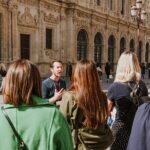
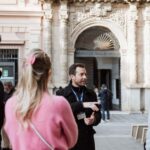
What I like most is the small group size (max 15), which keeps the questions flowing and helps the guide steer attention through the tight lanes. I also like that it’s set up for real comprehension, with English or Spanish commentary and clear explanations at each stop.
One drawback to flag: the walk is short, so if you’re hoping for very detailed daily-life history of Jewish families or a heavy focus on the ghetto itself, you might finish with more questions than answers.
In This Review
- Key things to know before you go
- Why the Santa Cruz streets matter for Seville’s Jewish past
- Plaza del Triunfo to Santa Cruz: a route that gives you bearings fast
- Your 10-stop walk through Seville’s former Judería
- 1) Plaza del Triunfo: royal energy at the edge of the old town
- 2) Fuente de la Plaza de la Alianza: a quiet square with a social past
- 3) Plaza de Doña Elvira: romantic legends meet local memory
- 4) Calle Susona: a name that preserves tragedy
- 5) Hospital de los Venerables: Baroque beauty with a moral mission
- 6) Casa de Murillo: art, light, and 17th-century Seville
- 7) Calle Sierpes: an iconic street with old urban legends
- 8) Rosina’s Balcony: the opera connection that locals love
- 9) Callejón del Agua: the cool, narrow passage of water memory
- 10) Plaza Patio de Banderas: behind the Alcázar walls, royal echoes
- What makes the guides here click for most people
- Price and value: what $18.02 buys you in Seville
- How to get more from the walk (and suffer less in the old lanes)
- Who should book this Santa Cruz Jewish Quarter tour
- Should you book this tour? My take
- FAQ
- Is the tour offered in English?
- How long is the walking tour?
- How big is the group?
- Where does the tour start and end?
- Do I need a printed ticket?
- Are there admissions or entry fees at the stops?
- Is hotel pickup included?
- Can I cancel if my plans change?
Key things to know before you go
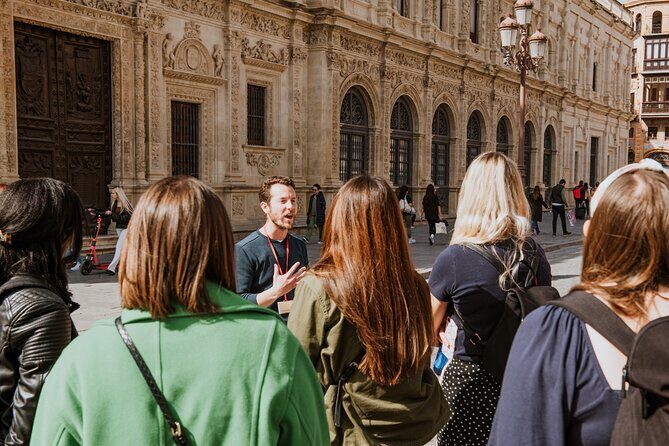
- Small group attention: max 15 people keeps it interactive.
- Two languages: English and Spanish are available.
- Myths tied to real places: Susona, Rosina’s Balcony, and other stories get explained on the ground.
- Landmarks with layers: Hospital de los Venerables and Casa de Murillo show different eras of Seville life.
- A cool water stop: Callejón del Agua connects the Royal Alcázar water story to the walking route.
- Easy-to-follow old-town end point: you close near Plaza de Santa Cruz for an even smoother next move.
Why the Santa Cruz streets matter for Seville’s Jewish past
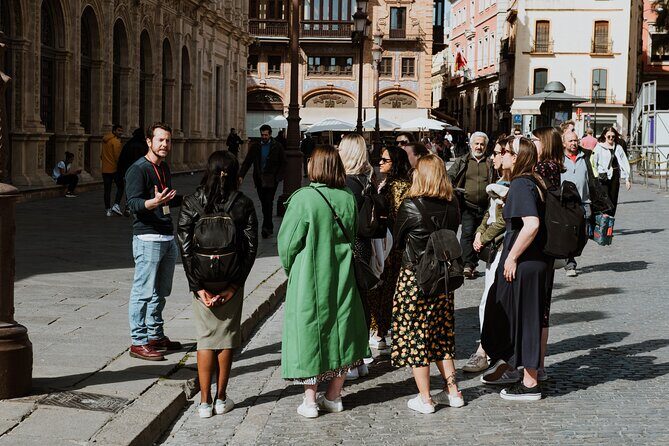
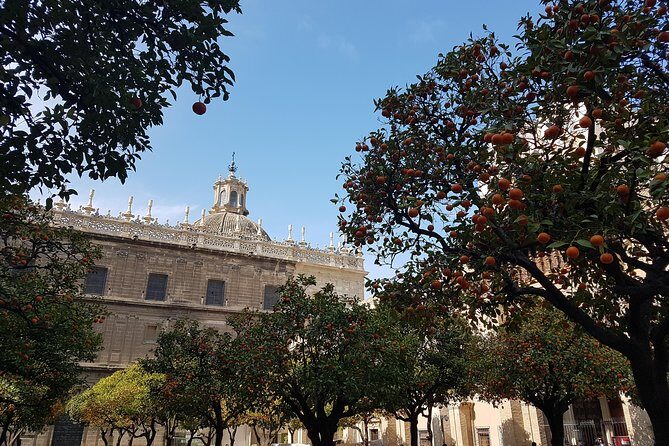
Seville’s Santa Cruz area is one of those places where the city looks unchanged until you start paying attention. The Jewish quarter is not “loud” in the way some historic sites are. Instead, it’s subtle: a plaque here, a name on a street there, and a building that makes you think, who lived here, and what happened next?
That’s exactly why a guided walk works so well. A good guide can point out what your eyes would likely miss—street names that preserve memory, squares that match where daily social life used to happen, and key buildings that anchor the story in something tangible. In this case, the route focuses on a tight loop through the old lanes around Santa Cruz and ends in the heart of the neighborhood.
You’ll also get a rhythm to the information. Each stop is short, so the tour keeps momentum instead of turning into a lecture marathon. And you’ll hear both legend and historical framing where it fits—useful in Seville, where stories often cling to stone longer than written records.
Guides named in past groups include Julio, Lara, Maria, Ana, and Anna, and the common thread in their approach is what you want from a walking tour: clear pacing, lots of Q&A, and a knack for making the place feel human.
You can also read our reviews of more walking tours in Seville



Plaza del Triunfo to Santa Cruz: a route that gives you bearings fast
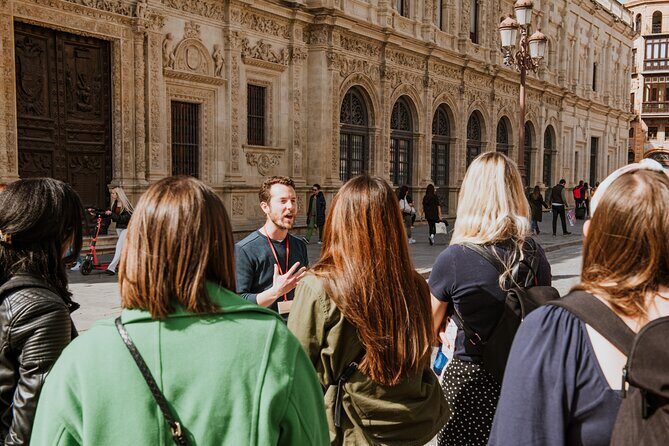
The walk starts at Plaza del Triunfo, in the Casco Antiguo, and finishes at Plaza de Santa Cruz. That matters because the Santa Cruz quarter is a maze. If you try to do this area alone, you can end up “collecting pretty corners” without understanding the pattern.
With a guide, you get the order. You also get the logic of why you’re walking where you’re walking—why a square matters, why a narrow lane matters, and why certain sites are placed so close together. It’s the kind of tour that helps you get your bearings fast, so the rest of your time in Seville makes more sense.
The tour lasts about 2 hours. That’s long enough to cover meaningful ground and still short enough that you’re not exhausted by the time you’re done. The schedule is built from quick stops—about 10 of them—so you’re constantly changing scenes: open squares, quiet corners, and narrow passageways.
You’ll also be issued a mobile ticket, and the experience runs in English (with Spanish available as well). Service animals are allowed, and it’s described as something most people can join.
Your 10-stop walk through Seville’s former Judería
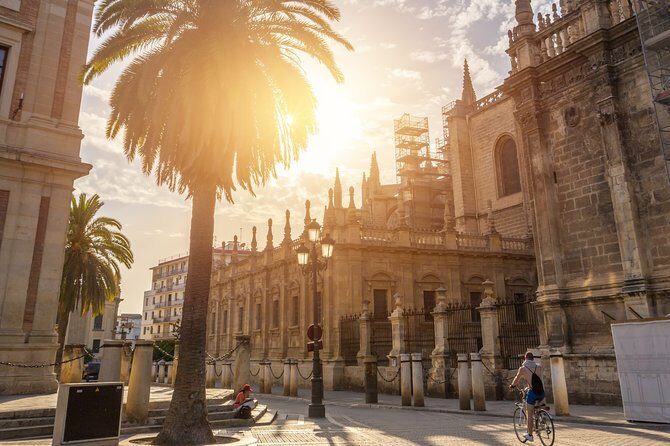
Think of this as a guided “spot-the-story” route. Each location is brief, but the guide’s job is to connect the dots—what the place looked like, what it meant, and why its memory survives in a name, a building, or a legend.
1) Plaza del Triunfo: royal energy at the edge of the old town
Your first stop, Plaza del Triunfo, sits right in the center of Seville’s historic core. The square has the kind of weight you feel just standing there—events, power, and public life have all brushed past this place over centuries.
For the tour’s theme, it works like an opening chapter. You get context for how central plazas functioned in the city’s social map, and then you start walking into the tighter Santa Cruz lanes where private life and community identity took on a different feel.
2) Fuente de la Plaza de la Alianza: a quiet square with a social past
Next is Fuente de la Plaza de la Alianza, tucked into Santa Cruz’s narrow streets. This is the kind of stop that reminds you Seville is not just monuments; it’s everyday gathering spaces.
The tour frames the area as a past meeting place for nobles and the kind of setting where medieval court intrigue could unfold. Even if you don’t know the details before you arrive, the guide helps you see how a simple fountain and a small square can become loaded with drama over time.






3) Plaza de Doña Elvira: romantic legends meet local memory
At Plaza de Doña Elvira, you’re in one of the prettier corners of the neighborhood. The point here is less about a single “fact” and more about how memory sticks to places—how a square can hold nostalgia, romance, and layered local storytelling.
The guide uses this stop to underline how Santa Cruz has always been a place of narrative. It’s a neighborhood you experience through sights and stories, and this plaza is one of the places where that works immediately.
4) Calle Susona: a name that preserves tragedy
Calle Susona is short, but it lands hard. The tour connects the street name to the tragic tale of Susona—a young Jewish woman pulled between love and betrayal, with the story preserved in local memory.
This is one of the stops where the guide’s style really matters. The best versions of this walk don’t treat tragedy like a costume story. They tie it to the cultural reality of the neighborhood and the lasting impact of conflict and persecution—without turning the whole tour into gloom.
5) Hospital de los Venerables: Baroque beauty with a moral mission
Now you shift to Hospital de los Venerables, a striking Baroque building. The tour explains it as a former home for retired priests, now filled with sacred art and tied to Seville’s Golden Age spirit.
This stop is useful because it shows how Santa Cruz’s area history isn’t frozen in time. The community story changed, the buildings shifted roles, and the neighborhood absorbed new layers. It’s a good reminder that “history of a place” often means “history of reuse.”
6) Casa de Murillo: art, light, and 17th-century Seville
At Casa de Murillo, you meet the painter Bartolomé Esteban Murillo, linked to 17th-century Seville through his artwork. The tour uses this stop to talk about how artists captured the city’s feeling—its light, its spirit, its mood.
Even if you don’t think of yourself as an art person, this works because it connects the idea of place to how people used to portray it. It also gives you a breather from the heavier story threads.
7) Calle Sierpes: an iconic street with old urban legends
Calle Sierpes is one of Seville’s classic streets, and the tour uses it to reference mysterious disappearances that helped spawn some of the city’s oldest urban legends.
This is where the walk leans into how oral stories shape a city’s identity. It’s not about turning Seville into a spooky theme park. It’s about understanding how fear, rumor, and uncertainty can become part of local memory.
8) Rosina’s Balcony: the opera connection that locals love
At Rosina’s Balcony, the tour points out the opera The Barber of Seville and Rosina’s place in it—framed as a playful, clever character inspired by the neighborhood spirit.
This stop is surprisingly effective. It adds humor and pop culture relevance without pretending that opera equals history. Instead, it shows how Santa Cruz’s character has been imagined in art—and how that imagination feeds back into the way people experience the streets today.
9) Callejón del Agua: the cool, narrow passage of water memory
Callejón del Agua is a narrow passage that’s described as cool, and the tour explains that water from the Royal Alcázar once flowed here. The guide connects that detail to poems, love stories, and whispered secrets tied to the place.
This is a great stop if you like texture—small spaces, sensory cues, and human stories. It also makes the route feel real rather than “checklist tourism.” You can almost feel why legends get born in places like this.
10) Plaza Patio de Banderas: behind the Alcázar walls, royal echoes
The final stop is Plaza Patio de Banderas, behind the walls of the Alcázar. This is where the tour zooms out a bit, framing the courtyard as a space connected to empires, royal ceremonies, and the changing evolution of Seville.
Finishing here gives you a sense of scale. You started in a public square with royal energy, and you end in a space that feels more enclosed and ceremonial. It’s a satisfying “bookend” effect.
What makes the guides here click for most people

The most praised aspect of this experience is the way the guide turns a set of streets into a story you can actually hold. You’ll hear strong examples of that from guides like Julio (storytelling and humor), Lara (slow, careful explanations and lots of Q&A), and Ana/Anna/Maria (warm delivery, clear answers, and making the area feel understandable even in rain).
One reason this matters is that the Jewish quarter is subtle on the ground. Some of the “evidence” you might want simply isn’t there anymore, and that can make self-guided wandering frustrating. A strong guide helps you build a mental map even when you can’t see original artifacts.
There’s also an important balance in how the best guides present the material: legend versus historical truth. In several accounts, the guides explicitly contrast story and fact while still respecting why stories persist. That keeps the tour from feeling like either pure mythology or dry lecture.
Price and value: what $18.02 buys you in Seville
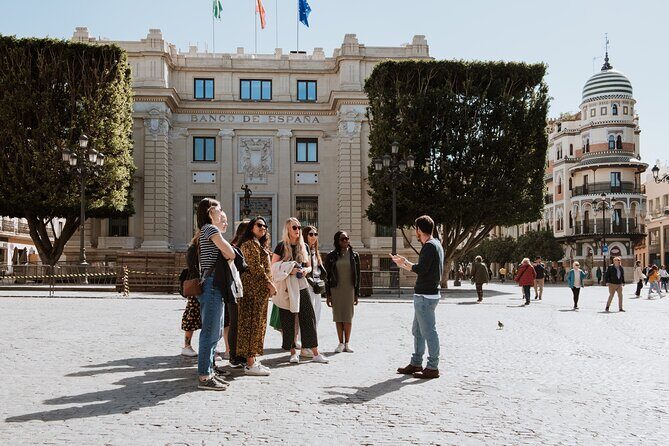
At about $18.02 per person for an approx. 2-hour small-group walk, you’re paying for three things: interpretation, pacing, and access to local framing.
First, you’re not just seeing streets—you’re getting a guided lens for why those streets matter. Second, the structure is tight, with about 10 stops and quick explanations at each one, so your time stays productive. Third, with a maximum of 15 people, you’re less likely to get the “headphones on, speed-walk by” feeling.
Compared to doing Santa Cruz on your own, this is good value if you want understanding, not only photos. And since the listed stops are free to access from the tour schedule, you’re not stacking additional admission costs to make the price climb.
How to get more from the walk (and suffer less in the old lanes)
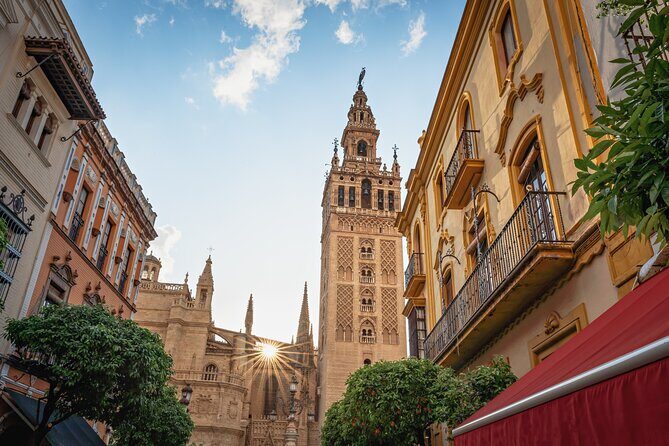
Santa Cruz is made for strolling, but it can be a bit of a shoe test. I’d plan on comfortable footwear and a bit of patience with narrow sidewalks.
A few practical moves that help:
- Go into the tour thinking in names. Street and square names here often carry the weight of memory.
- Ask questions early. If you’re curious about the Jewish community’s role in Seville’s life, this tour format is set up for that back-and-forth.
- Expect a mix of story types: legend, cultural memory, and historical framing. That’s part of what makes it feel like Seville.
One review highlight in the record was doing the tour even in damp weather. That tells you the route is workable as long as you dress for it and don’t expect wide open walking paths the whole time.
Who should book this Santa Cruz Jewish Quarter tour
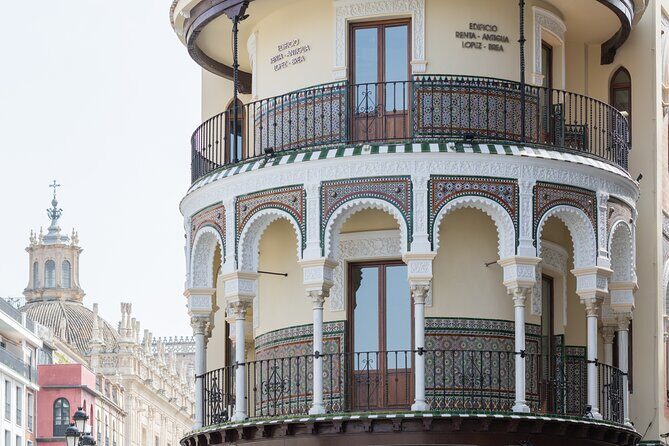
This works best if you want:
- A clear, guided introduction to Seville’s former Jewish quarter centered in Santa Cruz.
- A walk where storytelling is tied to specific locations, not just generic history talk.
- An English or Spanish guide so you can ask follow-ups and stay engaged for the full 2 hours.
It’s also a great choice for families who want something more active than sitting. The pace and the location variety can keep kids interested—especially when legends get explained in a way that makes sense.
If you’re the type who wants extremely detailed breakdowns of Jewish daily life in the ghetto—down to specific institutions and practices—you might still enjoy the route and the context. Just know the format is a walking introduction, so you may want to pair it with other reading afterward if that’s your main goal.
Should you book this tour? My take
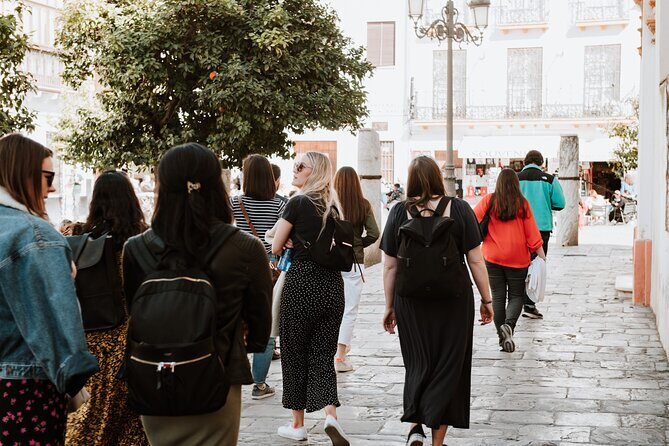
Book it if you want a smart way to connect Santa Cruz’s streets to Seville’s Jewish past, with a guide who can explain why each place matters. The combination of small-group size, short stops, and story-driven clarity is exactly what makes this a standout early move in your Seville days.
Skip it or add a different history source if you’re coming with very specific expectations about deep, everyday ghetto life details. In that case, this tour may feel more like a guided route through memory and place than a full academic treatment.
FAQ
Is the tour offered in English?
Yes. The experience is offered in English, and tours are also available in Spanish.
How long is the walking tour?
It lasts about 2 hours.
How big is the group?
The tour has a maximum size of 15 travelers.
Where does the tour start and end?
It starts at Plaza del Triunfo (Pl. del Triunfo, Casco Antiguo, 41004 Sevilla) and ends at Plaza de Santa Cruz (Pl. de Sta Cruz, Casco Antiguo, 41004 Sevilla).
Do I need a printed ticket?
No. The tour uses a mobile ticket.
Are there admissions or entry fees at the stops?
The itinerary lists each stop with Admission Ticket Free, so you should not need separate entry tickets for the locations included in the walk.
Is hotel pickup included?
No. Hotel pickup is not included.
Can I cancel if my plans change?
Yes, you can cancel for a full refund if you cancel at least 24 hours in advance of the experience start time.