REVIEW · SEVILLE
Cultural Walking Tour of Seville Monumental
Book on Viator →Operated by Sevilla Free Tours · Bookable on Viator
Seville has a way of telling stories fast. This walking tour strings together major landmarks with clear context and a guide to keep the pace moving. I especially love the short, focused stops that help you understand what you’re seeing without needing to commit to long museum time. I also like that the tour starts with a proper welcome at Plaza Nueva, then groups you by language so the explanations stay useful. One thing to consider: several of the biggest sights here are viewed from the outside, and their entry tickets are not included, so you may still want a second visit if you want interiors.
If you’re the type who likes history that makes the streets click, this is a smart way to begin. Guides such as Fernando, Francisco, Valentin, and Lidia are mentioned often, and the common thread is animated, story-driven narration that makes the monuments feel connected instead of random. The route ends at Plaza de España, so you finish with a built-in place to wander. The possible drawback is simple: city noise and crowds can make it harder to hear, and the pace can feel chatty if your guide runs long.
Quick take: Great value for orientation and big-picture context, best on a first or second day, and plan on adding ticketed time later for the places you fall in love with.
In This Review
- Key highlights you should clock before you go
- Plaza Nueva start: where your Seville story actually begins
- Seville Cathedral and the Giralda: Gothic power plus Islamic roots
- The Cathedral squares and Real Alcázar zone: where Seville’s public power shows up
- Archivo General de Indias and Puerta de Jerez: empire through documents, then through gates
- Torre del Oro and the Guadalquivir: navigation, control, and river power
- Alfonso XIII and Real Fábrica de Tabacos: Seville’s famous edges of wealth and work
- Plaza de España finale: Expo 1929 in a walking-tour friendly time slot
- Price and logistics: why $8.45 feels like a bargain (and when it won’t)
- When this tour fits best (and when another plan is smarter)
- Should you book this Seville monumental walking tour?
- FAQ
- How long is the Cultural Walking Tour of Seville Monumental?
- How much does the tour cost?
- Is the tour offered in English?
- Is a mobile ticket used?
- Are entry tickets included for the main sights?
- What happens if weather is poor?
Key highlights you should clock before you go
- Plaza Nueva to Plaza de España route: A logical spine through Seville’s monumental core
- Language-split groups: Your explanation time is less diluted because tours are divided by guide and language
- Gothic + Islamic layers: Seville Cathedral and the Giralda get explained as linked chapters
- Colonial documents spotlight: The Archivo General de Indias is framed in a way that’s easy to remember
- River power points: Torre del Oro and the surrounding river-wall context give meaning to where you’re standing
- Finish at Plaza de España: Expo-era grandeur with room to linger after the walk
Plaza Nueva start: where your Seville story actually begins
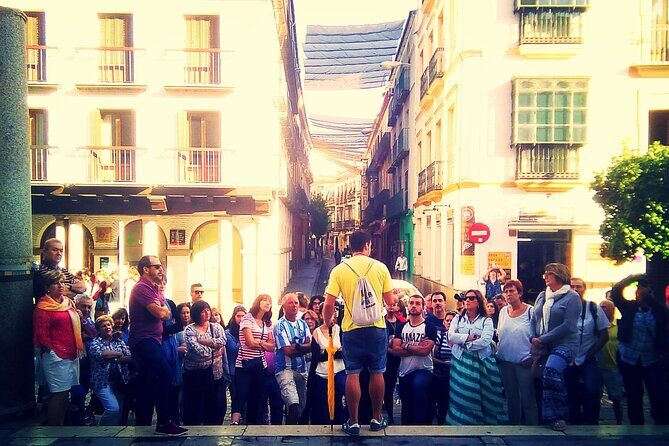
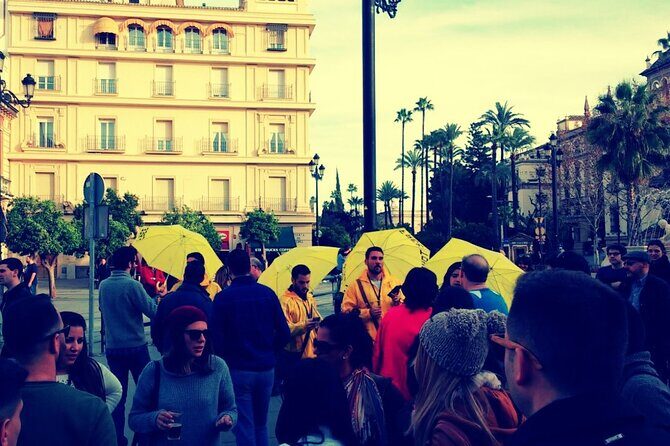
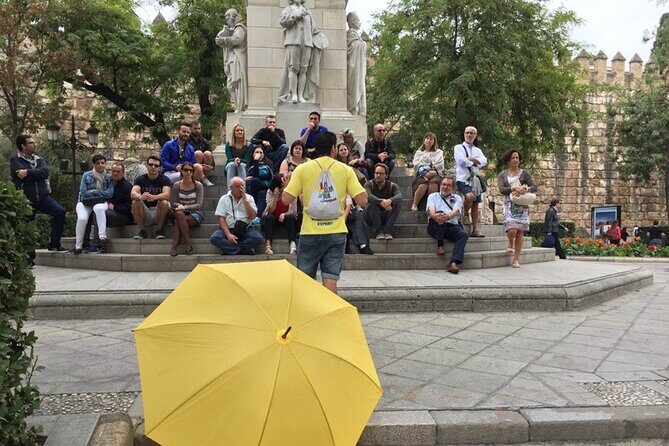
The meeting point is at Ayuntamiento de Sevilla, Pl. Nueva 1 in the Casco Antiguo, right in front of Plaza Nueva. You’ll gather, get a quick welcome, and your group will be split by the guide and language. That matters more than it sounds. If you’ve ever joined a city tour where half the group can’t hear or the guide is constantly switching lanes, you’ll appreciate this setup.
The tour starts with a short presentation and then moves into the route. Expect the first chunk to feel like a roadmap: what you’re seeing, why it matters, and what to watch for as you walk. It’s a nice way to keep your brain from turning the day into one long photo sprint.
Also, the entry ticket at this stop is free, which is a small but welcome detail for a tour that focuses on viewing and understanding rather than purchasing multiple attractions right away.
Practical tip: arrive a few minutes early, since the group is organized on-site. Seville’s streets are pretty, but they also get crowded fast near major squares.
You can also read our reviews of more walking tours in Seville



Seville Cathedral and the Giralda: Gothic power plus Islamic roots
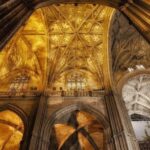
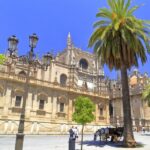
Next comes Catedral de Sevilla, presented as the history of the largest Gothic cathedral in the world. Even if you already know Seville is famous for the Cathedral, the value here is the guide’s framing—how the building’s story connects to the city around it. You spend about 20 minutes at this stop, which is long enough for context and short enough to keep moving.
Right after, you get Torre Giralda in roughly 10 minutes. This is where the tour’s layered approach really pays off. Instead of treating the Giralda as a standalone landmark, it’s explained as revealing the Islamic part of the Cathedral of Seville. That’s the kind of detail that makes the skyline make more sense, especially if this is your first time in Seville.
One drawback to keep in mind: admission is not included for these stops. So you’ll likely be looking from the outside or at the immediate perimeter experience, not doing the full interior visit. If you want to climb, tour chapels, or spend time inside, you’ll need to plan separate entry tickets and schedule them around your interest level.
But for orientation, this is a strong combo: Cathedral context first, then Giralda sightlines and historical layers immediately after.
The Cathedral squares and Real Alcázar zone: where Seville’s public power shows up
After the Cathedral and Giralda, you’ll move through an area tied to one of the busiest squares in Seville, where the guide connects you to the broader story of the Cathedral of Seville. This section is designed to help you understand that the city isn’t just about monuments. It’s about where those monuments sit inside everyday life.
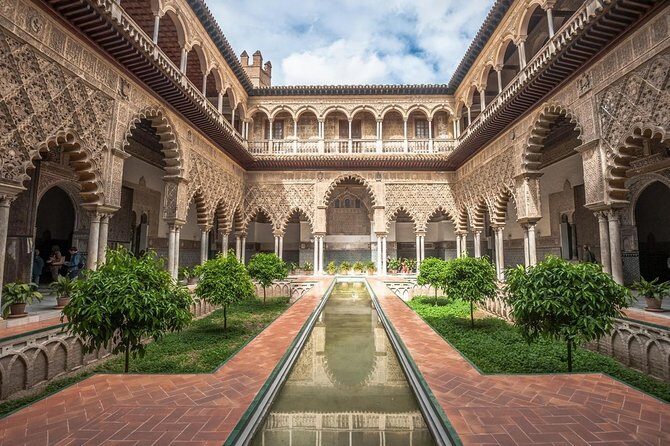
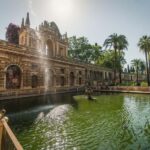
Then comes Real Alcázar de Sevilla, described as the most visited and oldest monument in Seville. You’ll get around 15 minutes here—enough time to anchor what you’re seeing with key historical ideas. The tour highlights the area as a major crossroads of ancient Seville life, including links to the Alcázar, the Cathedral, and the General Archive of the Indies nearby.
Admission at Real Alcázar is also not included, so the stop is more about perspective than entry. Still, it’s extremely useful if you’re trying to decide what to prioritize later. When you’re standing close to these places, you’ll feel what type of visit you actually want: a quick exterior loop, a guided interior tour, or a slower return.
Tip for your planning: if you know you’ll want a long time inside Real Alcázar, consider using this walk as your earlier-day orientation and schedule your ticketed visit for later when you’re more focused.
Archivo General de Indias and Puerta de Jerez: empire through documents, then through gates
One of the more memorable stops on the route is Archivo General de Indias. The tour frames it as the largest collection of documents preserved from the colonial period, covering more than 400 years of American colonization. You get about 15 minutes here. That’s not enough time to read anything of course, but it is enough time to understand why the building and its archives matter.
Why this works on a walking tour: most Seville routes focus on architecture and ignore what the city built its future on—paper, bureaucracy, trade, and administration. Even a quick explanation makes the landmark feel more human and less abstract.
Then you move to a section tied to Puerta de Jerez, presented as marking where access and exit walls were located, plus its role as an important door toward Jerez de la Frontera. This is a good reminder that old Seville was structured for movement and control. When you see gates and walls, the city stops being a set of pretty facades and becomes a living system.
This portion is one of the best examples of the tour’s style: you’re not only looking at big names like Cathedral and Alcázar—you’re also learning how Seville functioned.
Torre del Oro and the Guadalquivir: navigation, control, and river power
Next is Torre del Oro, with context tied to Puerta and Puerto de Indias, plus the city’s navigation, control, and surveillance of the Guadalquivir River. The stop is around 15 minutes.
This is a great moment for your brain. Seville sits on the river, but it’s easy to treat the river as scenery. This tour nudges you to see it as infrastructure. If you spend any time later along the Guadalquivir, you’ll likely remember this stop when you notice how bridges, docks, and viewpoints line up.
As with other major points, admission is not included, so think of it as a guided interpretation stop. You’re there to understand the “why” behind the “what,” not to run through an interior program.
If you like cities where history is written into geography, you’ll probably find this part especially satisfying.




Alfonso XIII and Real Fábrica de Tabacos: Seville’s famous edges of wealth and work
You’ll also pass by Hotel Alfonso XIII, described as a luxury hotel and one of Seville’s standout properties. The stop is short—about 10 minutes—but it gives you a quick cultural anchor. Big cities always have a connection between power, comfort, and prestige. In Seville, the guide ties that prestige into the wider city story rather than letting it feel like a random photo op.
Then you get Real Fábrica de Tabacos, labeled as an economic engine of Seville in the 18th century. Expect around 10 minutes here. This stop helps balance the monument-heavy feel of earlier stops. While Cathedrals and palaces get the spotlight, the city also depended on industry—production, labor, and economic momentum.
This is a nice reminder for your day: history isn’t just about the people on top. It’s also about the systems that paid for the city’s grandest statements.
Plaza de España finale: Expo 1929 in a walking-tour friendly time slot
The tour ends at Plaza de España, with the route positioned as a “jewel in the crown” of Seville. The area is connected to the Expo 1929, when it served as the pavilion of Spain. You get about 10 minutes as part of the tour, and the stop notes admission is free.
The big advantage of finishing here is timing. Plaza de España is built for lingering—big sightlines, space to wander, and an easy place to keep exploring after the guide wraps up. Even if the official tour time is short, you finish at a place where your own pace makes sense.
If you take this tour early, you’ll likely return later for longer photos, a slow stroll, and a better look at the details you didn’t catch during the guided run.
Price and logistics: why $8.45 feels like a bargain (and when it won’t)
At $8.45 per person for about 2 hours, this is priced for value. You’re not paying for museum entry fees; you’re paying for guided interpretation of major sites across a tight walk. The stops cover Cathedral/Giral da, Alcázar area, Archivo de Indias, the river-tied Torre del Oro, and the Expo-ready Plaza de España—so you’re buying context, direction, and help choosing what matters to you.
A key detail: many stops note that admission is not included. That doesn’t make the tour bad. It just changes what you should expect. You’re getting a high-level guided overview and orientation, not a full ticketed sightseeing itinerary.
If you come with a plan like this, the price is a win:
- Use this walk to understand what’s where and what each monument represents
- Then buy separate tickets for the places you want to spend real time inside
If you come expecting full interior access at every major stop, you’ll feel the gap. This tour works best as a “Seville primer.”
A note on group size: the tour caps at 35 travelers and divides groups by guide and language, which helps the experience stay organized. Still, it’s a city walking tour in peak areas—so crowds and sound will be part of the day. If you’re sensitive to noise or struggle to hear in loud places, wear ear-friendly clothing and pick a spot closer to the guide when possible.
When this tour fits best (and when another plan is smarter)
This is ideal if:
- You’re on a first day in Seville and want the big landmarks connected by story
- You like history explained in plain language, with practical meaning for what you see
- You want to choose later where you want extra time based on what catches your interest
It may be less ideal if:
- You mainly want interior visits and long ticketed time inside specific attractions
- You’re easily frustrated by crowd noise and would prefer smaller, quieter settings
- You want an itinerary that’s built for deep time at one or two sites rather than an “all the highlights” walk
Language is offered in English, and confirmation is provided after booking. You’ll use a mobile ticket, and the tour allows service animals.
Should you book this Seville monumental walking tour?
If you want a smart start, I’d book it. The route is built to give you orientation plus historical context in about two hours, and the finish at Plaza de España gives you an easy place to keep wandering on your own. At $8.45, the value is hard to beat as long as you’re okay with viewing major sights from the outside and adding ticketed visits later.
Skip it only if your priority is guaranteed interior access at every landmark. For everyone else—especially first-timers—this is the kind of walk that helps Seville click faster.
FAQ
How long is the Cultural Walking Tour of Seville Monumental?
It lasts about 2 hours (approx.).
How much does the tour cost?
The price is $8.45 per person.
Is the tour offered in English?
Yes, it is offered in English.
Is a mobile ticket used?
Yes, the tour uses a mobile ticket.
Are entry tickets included for the main sights?
No. Some stops are marked free, but admission is not included for major sites like Catedral de Sevilla, Torre Giralda, Real Alcázar de Sevilla, Archivo General de Indias, and others listed as not included.
What happens if weather is poor?
The tour requires good weather. If it’s canceled due to poor weather, you’ll be offered a different date or a full refund.