REVIEW · SEVILLE
Seville Guided Small-Group Walking Tour
Book on Viator →Operated by Amsterdam Guías & Tours · Bookable on Viator
Seville makes sense after one good walk. This small-group guided tour strings together Seville’s biggest sights with a story that helps you remember what you’re seeing and why it matters. You also get the option to add breakfast for extra views around the city’s most famous modern landmark.
Two things I really like: the route hits major icons like Torre Giralda and the Real Alcázar area without dragging you through long ticket lines, and the guides bring Seville to life with clear explanations you can actually use while you explore on your own. Plus, with a maximum group size of 15, you’re close enough to hear every answer.
One possible drawback: this is an exterior-only style tour, so you won’t go inside the Cathedral or Alcázar as part of the ticket. If you want deep interior time, you’ll likely need to plan those entrances separately.
In This Review
- Key highlights worth planning for
- Why this 2-hour Seville walk works for first-timers (and everyone else)
- Meeting near Plaza de España, then heading into the oldest streets
- Plaza de San Francisco: the old main square mood-setter
- Ayuntamiento (City Hall): Plateresque architecture in plain sight
- Giralda and the Cathedral area: the story of minaret-to-bell-tower power
- Real Alcázar exterior: styles that don’t feel random
- Archivo General de Indias: the stop that makes Seville’s empire real
- Puerta de Jerez: a city entrance with old-world weight
- Real Fábrica de Tabacos: industry, empire, and opera connections
- Plaza de España: 1929 exhibition glamour and movie-set angles
- The breakfast option and what changes near Metropol Parasol (Setas)
- Guides matter here: Julio, Patricia, Rosa, and how the best ones teach
- Price and value: what you’re really paying for
- Who should book this Seville walking tour
- Should you book this guided walking tour?
- FAQ
- FAQ
- How long is the Seville guided walking tour?
- Is the tour offered in English?
- Are entrance tickets to monuments included?
- What stops will I see on the tour?
- Is breakfast available, and what time is it?
- How big is the group?
- Where do I meet for the tour?
Key highlights worth planning for
- A tight 2-hour loop through Seville’s core landmarks, made for orientation on day one
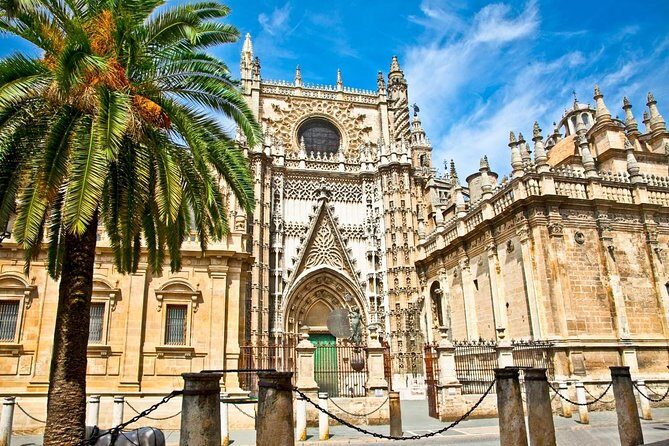
- Exterior views of La Giralda, Seville Cathedral area, and Royal Alcázar without admission tickets
- Plateresque and Gothic contrasts you can spot in the architecture as you walk
- Archivo General de Indias stop that connects Seville to Spain’s overseas history
- Puerta de Jerez and Real Fábrica de Tabacos for the less-obvious stories between the big icons
- Breakfast add-on can unlock extra time near Metropol Parasol (Setas) and an architectural pass behind walls
Why this 2-hour Seville walk works for first-timers (and everyone else)
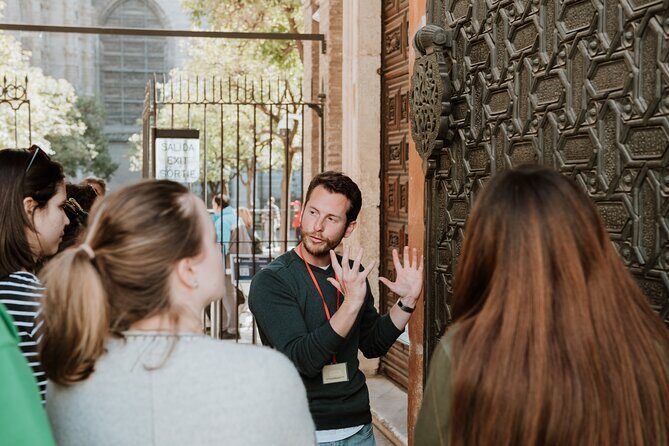
Seville is gorgeous, but it’s also easy to get turned around. A guide does something simple and powerful here: you start seeing patterns. You’ll understand how the city’s layers—Islamic-era influence, royal power, overseas empire, and 20th-century reinvention—fit together instead of feeling like a random set of postcard stops.
What makes this tour feel efficient is the pace. About two hours is long enough to cover several of the city’s headline monuments, but short enough that you won’t spend your whole day queued up for details you could get faster on foot. It’s also designed around conversation: people ask questions, and the guide keeps the explanations moving at a walking-friendly speed.
And yes, the price is surprisingly fair for what you get: major-name landmarks, expert local storytelling, and a group capped at 15 people. At $21.78 per person, you’re paying for interpretation—someone doing the heavy lifting so you can enjoy the city instead of studying a map like it’s an escape-room puzzle.
You can also read our reviews of more walking tours in Seville



Meeting near Plaza de España, then heading into the oldest streets
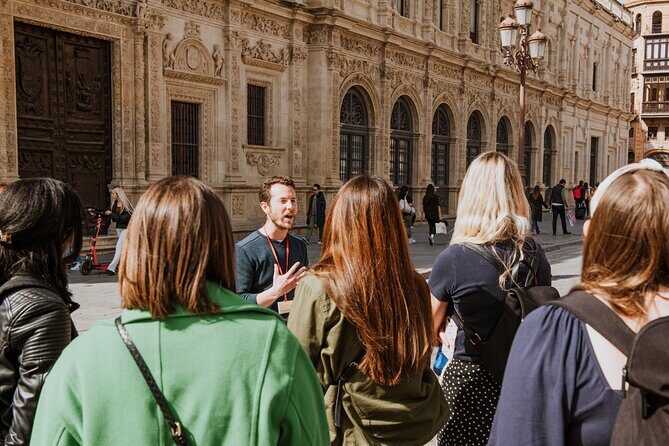
The tour meets at Plaza de España (Av. Isabel la Católica, 41004 Sevilla) and ends back there. From that starting point, you’ll move into the historic center for the main sequence of stops.
There’s one practical thing I’d take seriously: double-check your exact meeting spot details and arrive a bit early. One visitor issue in the supplied information centers on a mismatched meeting point, and that’s exactly the kind of avoidable hiccup that can steal your first-tour momentum. If you’re doing this early in your trip, get there early, then let the guide handle the rest.
It also helps that the tour is offered in English and uses a mobile ticket, so you’re not wrestling with printed paperwork while you’re looking for your group. The meeting is also near public transportation, which makes it easier if you’re hopping between neighborhoods.
Plaza de San Francisco: the old main square mood-setter
Your first major stop is Plaza de San Francisco, one of Seville’s older squares and a former main hub of city life. You’ll get a quick orientation moment here—why this area mattered historically, and how the city’s “center” shifted over time.
This is a good beginning stop because the square is open enough to gather, listen, and reset your expectations. After that, Seville goes vertical and layered: architecture gets more detailed, streets get tighter, and you start noticing what you’d otherwise miss.
Time-wise, it’s short—about 15 minutes—but that’s often the right length for a “set the stage” stop. You’ll want that energy for what’s next.
Ayuntamiento (City Hall): Plateresque architecture in plain sight
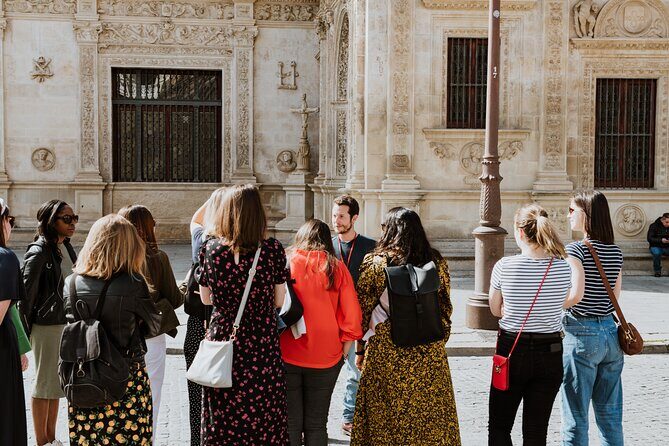
Next up is Ayuntamiento, Seville’s City Hall, noted for Plateresque architecture. Plateresque is basically Seville saying, in stone, we don’t do subtle.
You won’t just get a name-drop. You’ll understand what you’re looking at—ornamental facades, decorative style, and why this kind of design shows civic pride and power. Even if you’re not an architecture nerd, you’ll likely start spotting elements like carved detail and formal symmetry once your guide points them out.
The stay is about 15 minutes. If you’re the type who likes to look closely, lean in at a couple of specific points rather than trying to read the whole facade like a textbook.
Giralda and the Cathedral area: the story of minaret-to-bell-tower power
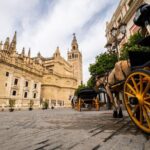
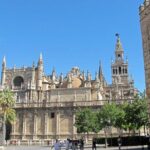
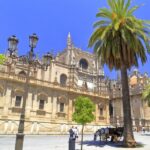
Torre Giralda is Seville’s iconic skyline marker. You’ll learn how it began as a minaret and became the bell tower you recognize today. That single transformation is a perfect summary of Seville’s long history of cultural shifts—one structure, multiple eras.
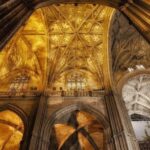
From there, you move into the Catedral de Sevilla area. Even without entrance tickets on this tour, you’ll still get the key context: it’s the largest Gothic Cathedral in the world, and la Giralda is the dominating feature. The guide also points out the Cathedral’s role as a burial place for important people tied to the city.
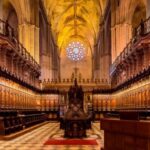
Here’s the practical consideration: because this is exterior-only, you won’t go inside for the big interior wow-factor (stained glass, chapels, and all the Cathedral’s interior scale). If you want that, plan separate entry timed tickets for your preferred day.
Still, as an orientation stop, it works well. Seeing Giralda from the right angle helps you later navigate streets and understand how Seville is organized around these landmarks.
You can also read our reviews of more guided tours in Seville
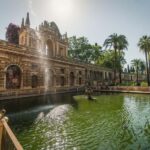


Real Alcázar exterior: styles that don’t feel random
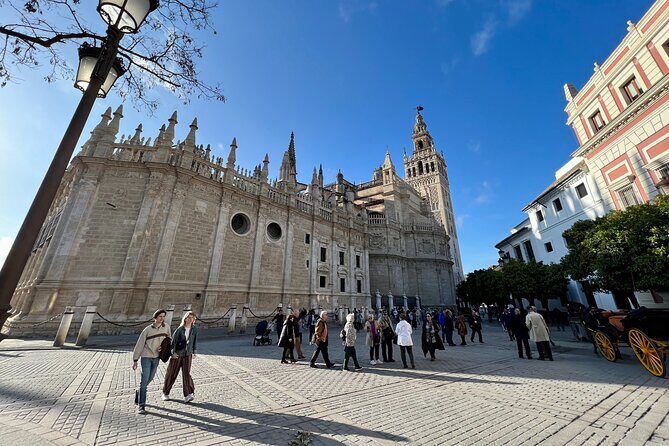
The Royal Alcázar of Seville is a place people either love immediately or get overwhelmed by because there’s so much beauty and so many layers. The good news: this tour keeps it manageable.
You’ll be treated to an overview of the Alcázar as a masterpiece of mixed styles—Mudéjar, Gothic, Renaissance, and Baroque. What your guide helps you do is connect the styles to the era that produced them, so the palace doesn’t feel like a grab bag of pretty rooms. You start seeing a logic.
This stop is about 15 minutes and stays outside. If you want the full Alcázar experience, you’ll likely want a separate visit with an entrance ticket. But as a “this is what you’re walking into later” preview, it’s excellent.
Archivo General de Indias: the stop that makes Seville’s empire real
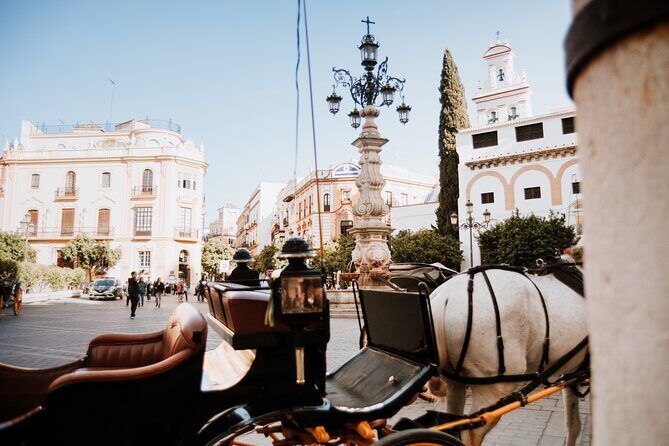
One of my favorite types of stops is the one that expands the story beyond monuments. Archivo General de Indias does that by focusing on documents that trace Spain and America’s intertwined past.
Even if you’re more of a street-walker than a museum person, this is a useful pause. It gives your “why Seville mattered” answer. You’ll connect the city’s wealth and influence to the paperwork and navigation of an expanding empire—something you don’t always get from just looking at palaces and cathedrals.
Time is about 15 minutes. That’s enough to reset your mental frame for the remainder of the walk.
Puerta de Jerez: a city entrance with old-world weight
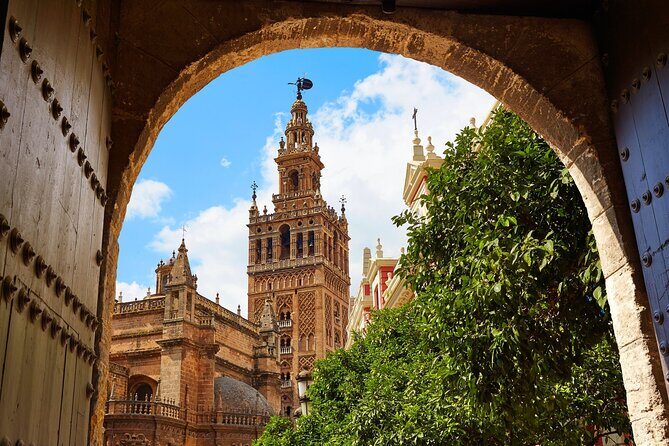
Puerta de Jerez is one of Seville’s old entrances to the city, and it’s significance shows when you treat it like more than a photo spot. You’ll learn why gates like this mattered: they were checkpoints, defense points, and symbols of power.
This stop is about 15 minutes and includes a free admission note. Since you’re not paying for an internal visit anyway, this is a great place to slow down for a moment—look at the structure, then look at where it would connect into the streets around it.
It’s also a nice break before you hit the more “big landmark” finale with Plaza de España.
Real Fábrica de Tabacos: industry, empire, and opera connections
Real Fábrica de Tabacos (royal tobacco factory) is the kind of stop that surprises people—in a good way. You’ll learn it dates to the 18th century and was used for cigar production.
But the story doesn’t stop at industry. You’ll also hear how it connects to theater, including its role as a setting connected to one of the great opera productions in Seville. That contrast—factory plus performance—makes the building feel alive instead of stiff history.
It’s a shorter stop (around 10 minutes). If you like architecture and cultural crossovers, this is the stop that gives you a reason to return to Seville’s “non-postcard” corners later.
Plaza de España: 1929 exhibition glamour and movie-set angles
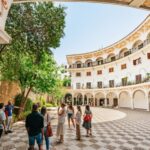
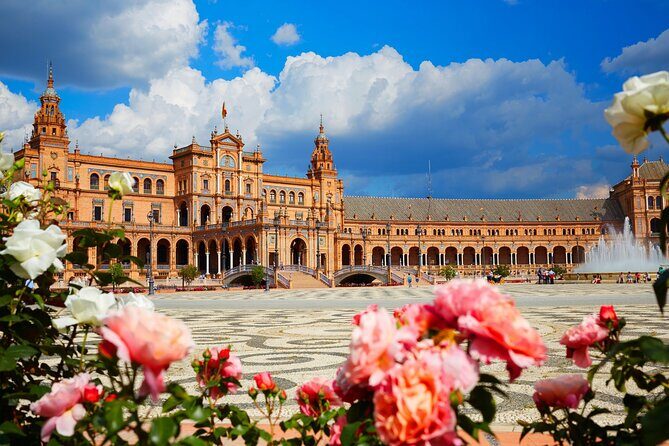
Your last stop is Plaza de España, one of Seville’s most famous sights. You’ll get the origin story: it was created for the 1929 Ibero-American exhibition, designed with neo-Andalusian style.
This is the part where your photos usually start making sense. The plaza’s brickwork, iron details, and tilework create patterns you can’t fully appreciate from one angle. Your guide will also point out why it became a major movie set—so you’ll recognize it faster when you see it later on screen.
Time is about 10 minutes on the tour. If you want to wander longer, do it after the tour. The plaza rewards slow walking, especially if you like water features, bridges, and people-watching.
The breakfast option and what changes near Metropol Parasol (Setas)
Now the fun part: the tour’s breakfast add-on can change what you pass by. If you select breakfast included, you’ll pass two extra elements that don’t appear in the standard walk.
First, you’ll pass by what’s described as the most important mosque of Seville, with baroque architecture, and a hidden gem behind its walls. That “behind the walls” detail matters here because it hints you’re not just seeing a facade—you’re learning that Seville’s best moments sometimes sit out of sight until someone points them out.
Second, breakfast included also adds the massive wooden structure known as Metropol Parasol (Setas de Sevilla). You’ll learn it hides important ruins found during excavations for a completely different project. That’s the kind of “wait, how did that happen?” detail that makes this modern landmark feel connected to Seville’s deeper timeline.
Breakfast is offered at 9:30 AM. If you love early starts and want extra context around Metropol Parasol, this option is a strong pick. If you’d rather keep mornings free for a relaxed neighborhood stroll, the standard tour still gives you the core Seville overview.
Guides matter here: Julio, Patricia, Rosa, and how the best ones teach
This is one of those tours where the guide can seriously shape your whole trip. The supplied guide names you might encounter—Julio, Patricia, Anna, Rosa, Valentin, Carolina—share a common theme in the way they teach: clear explanations and an easy, friendly tone.
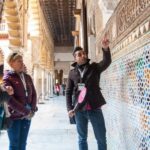
In the information you provided, multiple guides are described as warm, engaging, and willing to answer questions. One standout pattern is that guides don’t just recite dates; they connect buildings to the people and politics behind them, then give you practical ideas for what to revisit next.
So here’s my advice: show up with a few questions in mind. Ask how to best pair the exterior tour with interior visits you’ll want later. Ask what streets to walk next for the vibe you’re after. If your guide is in a talkative mood (and many are), you’ll leave with a mental map that makes Seville easier.
Price and value: what you’re really paying for
At $21.78 for about two hours, this tour is priced like an entry-level city overview. But you’re paying for three things that add up quickly in Seville:
1) Time saved: you see several major landmarks in one coordinated walk.
2) Context: exterior-only can still be powerful if the story is strong, and these guides focus heavily on historical connections.
3) Small-group comfort: max 15 means you’re not stuck behind a crowd you can’t see over.
Also note: the tour is often booked about 24 days in advance. That’s not a guarantee of sellouts, but it’s a good sign to book earlier rather than later—especially if you’re planning around specific days for Cathedral or Alcázar interior visits.
Who should book this Seville walking tour
This tour is a great fit if you:
- Want a fast orientation day-one experience without committing to a long museum schedule
- Like getting the “why” behind famous monuments, not just the “what”
- Prefer a smaller group and direct Q&A while you walk
- Are okay with exterior visits and plan interior entrances separately if you want them
It might be less ideal if you:
- Only have time for one attraction and want entrances included
- Hate walking in heat and want maximum indoor time (since this is an outdoor walking format)
- Want complete solitude while sightseeing, since even a small group can feel social
Should you book this guided walking tour?
Yes—if you want Seville to click. This is the type of tour that helps you understand the city’s symbols (Giralda, Cathedral area, Alcázar) and also gives you stories that go beyond the obvious (Archivo General de Indias, Puerta de Jerez, Real Fábrica de Tabacos).
Book it especially early in your trip, then use what you learn to decide what to do next: where to return for interiors, what to explore off-route, and how to time your Cathedral and Alcázar visits.
If you’re deciding between standard and breakfast included, my simple rule is this: if you want extra passes tied to Metropol Parasol and the mosque-area story, go breakfast. If you’d rather save breakfast for your own schedule, the core walk still delivers a strong overview.
Either way, show up on time, keep some water handy, and lean into the Q&A. A good guide turns a walk into a plan—and Seville rewards the effort.
FAQ
FAQ
How long is the Seville guided walking tour?
It lasts about 2 hours.
Is the tour offered in English?
Yes, the tour is offered in English.
Are entrance tickets to monuments included?
No. This tour includes exterior visits only, so entrance tickets are not included.
What stops will I see on the tour?
You’ll pass landmarks such as La Giralda, the Seville Cathedral area (exterior), the Royal Alcázar area (exterior), Archivo General de Indias, Puerta de Jerez, Real Fábrica de Tabacos, and end at Plaza de España.
Is breakfast available, and what time is it?
Yes. You can add a traditional Andalusian breakfast option, offered at 9:30 AM.
How big is the group?
The tour has a maximum group size of 15 people.
Where do I meet for the tour?
The meeting and end point is Plaza de España, Av. Isabel la Católica, 41004 Sevilla, Spain.