REVIEW · SEVILLE
Private Half Day Walking Tour of Seville
Book on Viator →Operated by Tours in Sevilla, Don Carlos · Bookable on Viator
Seville clicks into place fast on foot. This private half-day walk guides you through the city’s layers of power and faith, from old gates and mosques to Gothic masterpieces. I like that you don’t just see sights—you get stories you can use to read the streets.
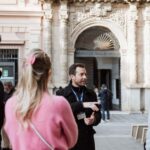
Two things I really love: first, the Guia-style pacing with a professional local guide (30 years of experience) who keeps the route moving without feeling rushed. Second, the way the tour connects Seville’s biggest landmarks to details most people miss, like the former Royal Tobacco Factory and what the city built for America’s voyages.
One drawback to plan for: many stops are exteriors and street-level viewing, so if you’re hoping for lots of indoor time, you may want a museum-plus add-on.
In This Review
- Key takeaways before you go
- Why this private half-day walking tour is such good value
- Starting at Puerta de Jerez: the easiest way to get oriented
- Jerez Gate to the old Tobacco Factory: Seville’s global center in one corridor
- Palacio de San Telmo and the Maria Luisa Park link you’ll actually remember
- Torre del Oro and the Postigo Arch: reading the city like a map
- Plaza del Cabildo and the Cathedral zone: UNESCO-level scale without the stress
- General Archive of the Indies: where America’s paperwork lives
- Real Alcázar: royal power and Game of Thrones filming in the same conversation
- Santa Cruz walking: the old Jewish Quarter, now Seville’s most photogenic maze
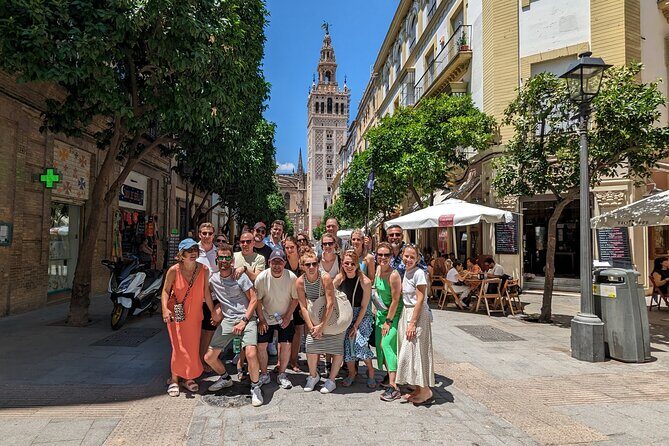
- Giralda from the outside: why the bell tower became the symbol
- Seville City Hall (16th century) and the Renaissance of Carlos V’s era
- Church of El Salvador: the mosque origins you can still sense
- Calle Sierpes and the Metropol Parasol: between commerce and modern icons
- Finishing at Plaza de San Francisco: the heart of Seville’s old center
- Who this tour is best for
- Small practical tips that make the day easier
- Should you book this Seville walking tour?
- FAQ
- How long is the Private Half Day Walking Tour of Seville?
- What language is the tour offered in?
- Where does the tour start and end?
- Is this a private tour?
- What is included in the tour price?
- What is not included?
- How do I receive my ticket?
- Is the tour suitable for people who want a low walking level?
- Can I cancel and get a refund?
- What happens if weather is bad?
Key takeaways before you go
- A true “orientation” walk: you end near the Cathedral area, with a mental map that sticks
- Islamic + Christian Seville in one route: Giralda, former mosques, and Gothic architecture side by side
- Real context for major landmarks: UNESCO sites like the Cathedral, Alcázar, and the Archive of the Indies
- Game of Thrones spotting built in: filming locations at the Alcázar and Royal Shipyards
- Heat-smart guidance: this tour is designed to work in typical Seville conditions, with shade and pacing in mind
- Comfortable walking, moderate fitness only: short blocks and steady pace, but you still need comfy shoes
Why this private half-day walking tour is such good value
For $133.03 per person and about 2 to 3 hours of walking, you’re paying for a focused guided route—exactly the kind of time Seville deserves. Seville can feel like a lot at once. This tour helps you catch the big picture quickly, then layer in the why behind it: who built what, why Seville mattered to trade, and how power shifted across centuries.
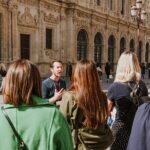
I also like that it’s private. That matters more than people think. With just your group, you can set a pace that works for your legs, and your guide can tailor explanations to your interests—history, architecture, or stories tied to what you’re seeing.
Just know that the tour leans heavily on exterior views: city gates, façades, towers, and monumental walls. You’ll still get a lot out of it because the guide turns these into a connected narrative. But if your ideal day is “enter every major site,” you’ll likely want a separate ticketed visit for places like the Cathedral or Alcázar interior.
You can also read our reviews of more walking tours in Seville


Starting at Puerta de Jerez: the easiest way to get oriented

You begin at Puerta de Jerez (Puerta de Jerez, Casco Antiguo). That’s a smart starting point because it’s right in the historical heart of town. From here, you can immediately link Seville’s past defenses with its later prestige and global connections.
Your guide starts with the Jerez Gate area, where the Hotel Alfonso XIII stands. This hotel was built for the Ibero-American Exposition in 1929, so even the setting gives you a quick lesson in how Seville reinvented itself in the 20th century. Nearby, you’ll also see the Palacio de San Telmo and the old Tobacco Factory—two anchors for understanding why Seville was so central to empire, education, and commerce.
This start sets the tone for the whole walk: instead of random stops, you’re moving along a line that shows Seville’s “gate-to-greatness” story.
Jerez Gate to the old Tobacco Factory: Seville’s global center in one corridor
From Puerta de Jerez, you move into an area where buildings feel like chapters. You’ll see the exteriors of major sites tied to Seville’s rise as a gateway.
Next up is the old Royal Tobacco Factory of Seville. The guide points out that its scale is legendary—considered the largest in Spain after the Escorial. Today, it’s the Rectorate of the University of Seville. That contrast is worth noticing: a huge commercial/industrial building becomes an academic one, which says a lot about how cities repurpose power.
And then there’s the cultural connection most people love. The Tobacco Factory is the setting that inspired Carmen by George Bizet. Even if you’re not a big opera person, it helps you remember Seville as more than monuments—it’s also art and legend.
Practical note: this part of the route is a good time to hydrate and settle into the walking rhythm. It’s also where you’ll start seeing how the guide uses architectural clues to explain eras.
Palacio de San Telmo and the Maria Luisa Park link you’ll actually remember
You’ll also see the exteriors of the Palacio de San Telmo. The big idea here is transformation across time: it was a school for navigators during the Discovery of America era, and later it became a royal residence.
What I liked about this kind of stop is that it doesn’t treat the palace as a museum object. Instead, you get the function story: ships, navigation, and why Seville mattered for travel and trade beyond Spain.
The guide then connects San Telmo’s garden to today’s Maria Luisa Park, which is tied to the Ibero-American Exposition of 1929. So even if you don’t stop inside the park, you walk away understanding why it feels like part of the city’s identity, not just “a place to sit.”
Torre del Oro and the Postigo Arch: reading the city like a map
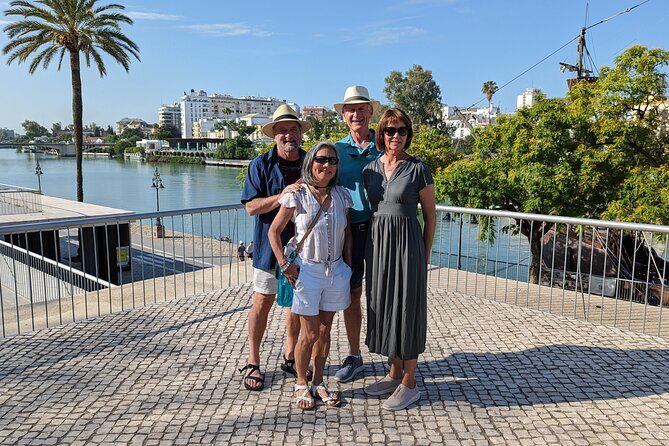
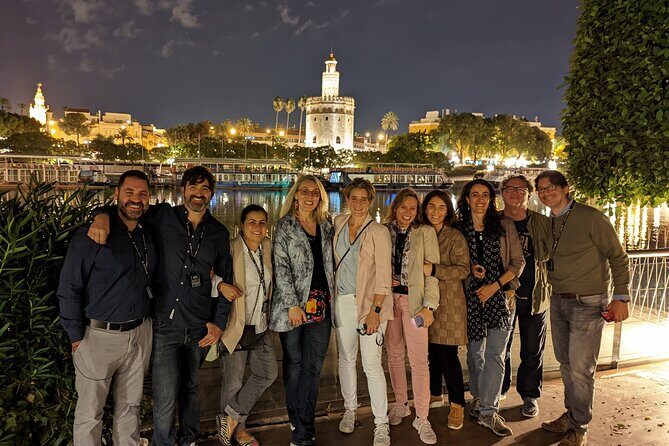
Next, you’ll see the Torre del Oro from the outside. This tower is an example of Islamic architecture from the 13th century and it mattered for maritime traffic. It’s one of those structures where the explanation is as important as the shape—once you know it was tied to Seville’s movement of goods and ships, you notice its significance immediately.
You’ll then look at the Postigo Arch, one of the old gates still preserved. Gates aren’t just “old entrances.” They’re how cities controlled flow—who came in, what moved through, and what protected valuable areas.
From there, you also see exteriors of the Royal Shipyards, where ships built for America were constructed. This is one of the spots that gives a modern pop-culture angle: the series Game of Thrones was recently filmed in the area, and your guide helps you connect that back to the real historical function.
If you like history with a hook you can share later, this is a good stretch of the tour.
You can also read our reviews of more private tours in Seville





Plaza del Cabildo and the Cathedral zone: UNESCO-level scale without the stress
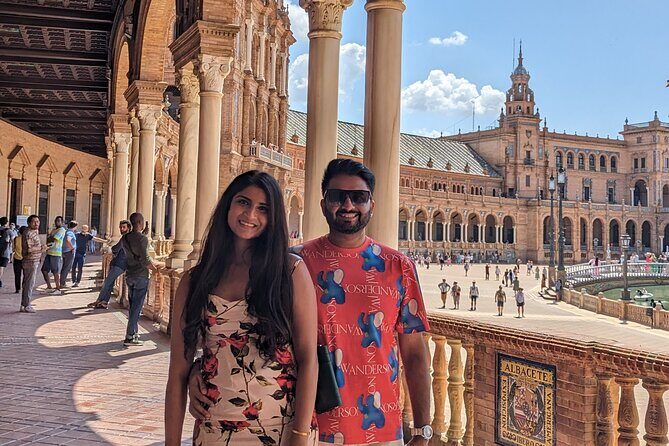
You move to the Plaza del Cabildo, described as one of Seville’s most beautiful and special squares. One detail to listen for: it’s associated with the canons of the Cathedral, and an old antiques market still runs on Sundays.
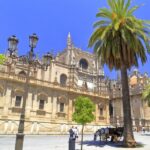
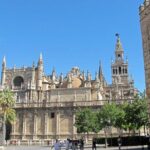
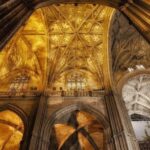
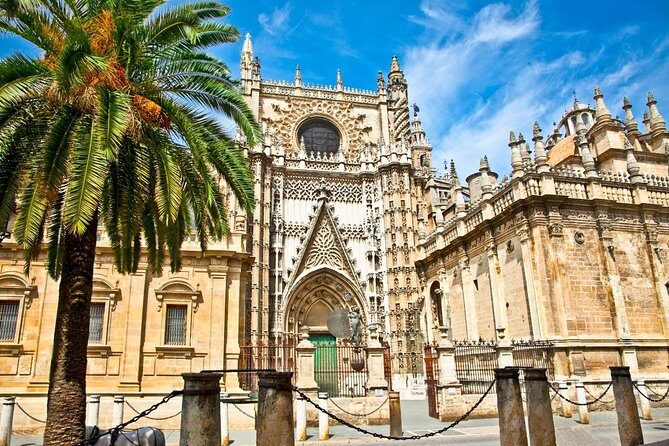
From there, you’ll see the exteriors of the Cathedral of Seville, the largest Gothic temple in the world and a UNESCO World Heritage Site (listed since 1987). This stop is where the tour’s “layered Seville” theme becomes obvious. You see a Gothic icon fused with the Islamic past of the building, which originally served as the main mosque of Seville.
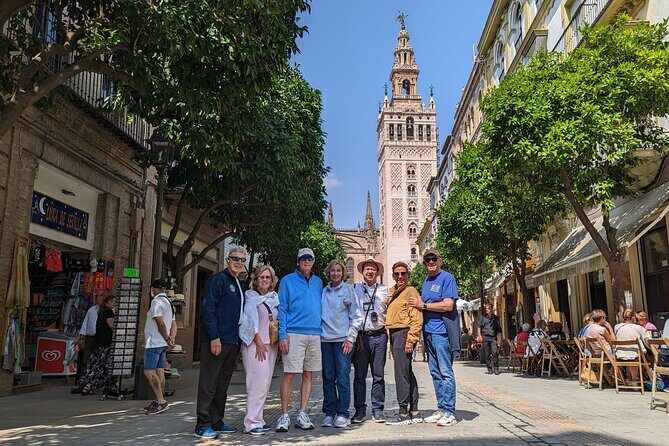
And then you get the signature symbol: the Giralda bell tower. The tour doesn’t depend on a ticketed interior to make you feel the scale; you get the exterior impression and the story behind why this tower became the city’s emblem.
Possible drawback? If you’ve dreamed of walking inside the Cathedral, the outdoor focus may leave you wanting more. The good news is you’ll finish with a clearer sense of what to prioritize if you decide to book a separate interior visit.
General Archive of the Indies: where America’s paperwork lives
One of the most interesting stops is outside the General Archive of the Indies. This is UNESCO-listed and, as your guide explains, it holds more than 40,000 documents tied to America.
You’ll also hear about the kind of material stored here: maps, the document of the Treaty of Tordesillas, and autograph texts of Christopher Columbus. Even without entering, you’ll leave understanding that Seville didn’t just send ships—it kept records, plans, and legal paperwork that shaped what happened across the Atlantic.
This is a stop that can be very moving if you like the “human paper trail” side of history. It’s not only about stone and skyline. It’s also about what empires wrote down and then acted on.
Real Alcázar: royal power and Game of Thrones filming in the same conversation
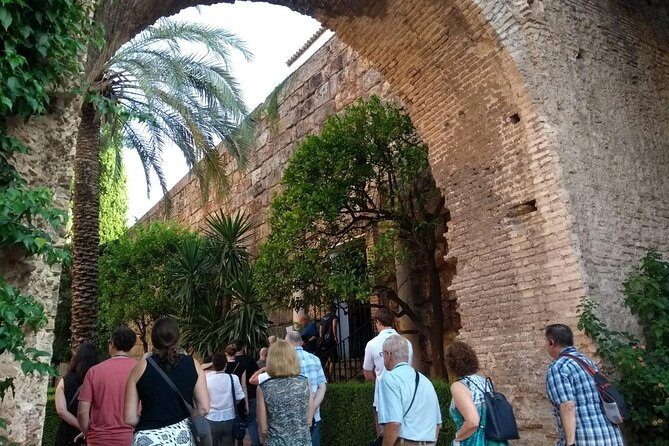
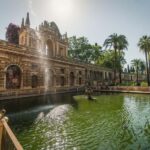
Next comes the Real Alcázar, another UNESCO World Heritage Site. You’ll view it from the outside, focusing on the walls and hearing stories about the kings who lived there. The tour also frames the Alcázar as the oldest royal palace in Europe still in use.
Here’s the extra hook: this palace is linked to Game of Thrones. Your guide specifically calls out Dorne as a location filmed in the Alcázar. If you’ve seen the show, this part helps you “translate” what you’re seeing into something visual and memorable.
I think this works best if you’re the type of traveler who likes architectural atmospheres plus a bit of pop-culture recognition. You’ll get enough to understand why the place is a top stop in Seville, without spending the entire day waiting in lines.
Santa Cruz walking: the old Jewish Quarter, now Seville’s most photogenic maze
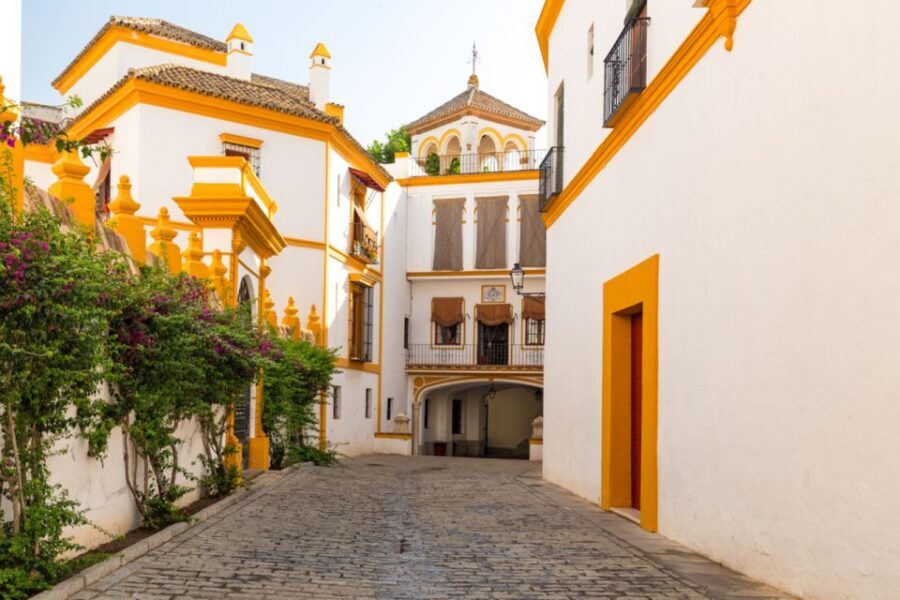
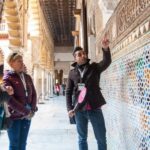
Then you walk through the Barrio de Santa Cruz, the old Jewish Quarter. This is where the tour shifts from monumental façades to intimate streets: charming squares, alleys with patios and flowers, and the kind of neighborhood texture that makes Seville feel like Seville.
Your guide highlights specific squares, including Doña Elvira, Los Venerables, Agua y Vida, and Plaza de Santa Cruz. You’ll also hear how operas connect to the area, including The Barber of Seville.
What I like about this segment is that it slows you down just enough to enjoy the city. You’re still on a guided walk, but the focus becomes atmosphere: small spaces, visual details, and the way the neighborhood is arranged.
Practical thought: this is also a good time to look for shade and plan your bathroom break, especially if you’re visiting during hot months. One of the strongest points from guide feedback is that the guide stays responsive to comfort needs like shade and rest stops.
Giralda from the outside: why the bell tower became the symbol
You see the Giralda Tower again, this time framed as an Islamic architectural example from the 12th century that later became a bell tower when the mosque was transformed into a cathedral.
This is a great moment to connect dots. If you’ve paid attention earlier, you’ll see how the city’s identity didn’t erase the past—it layered it. The guide’s explanation makes the tower feel less like a random skyline silhouette and more like a story in stone.
This is also one of those “stand back and look” moments. Even though you’re walking, take a second to stop and let the view settle.
Seville City Hall (16th century) and the Renaissance of Carlos V’s era
Next, you’ll see the Seville City Hall exterior, built in the 16th century during the time of Emperor Carlos V. The tour flags it as a wonderful example of Renaissance architecture in Seville.
This stop fits the theme perfectly: Seville’s wealth and influence peaked when it was the port and gateway to America. You can feel that prosperity in how buildings look and how they were designed to represent power.
If you’re into architecture, you’ll probably enjoy the way the guide points out what changed between eras. If you’re not, it still works because it’s tied to Seville’s practical role in the larger world.
Church of El Salvador: the mosque origins you can still sense
You’ll see the Church of El Salvador exterior. The guide explains that it was originally the first mosque in Seville in the 9th century, then transformed into a collegiate church in the 13th century under Fernando III el Santo.
The most useful detail here is that the church preserves the old ablution courtyard of the mosque. It’s one of the clearest ways to understand continuity in the city: religious buildings can change hands, but architecture can keep traces.
The tour also notes that the church is surrounded by shops, which recalls the Islamic times when this area was central to the medina. That street-level blend is part of why Seville feels alive rather than “frozen.”
Calle Sierpes and the Metropol Parasol: between commerce and modern icons
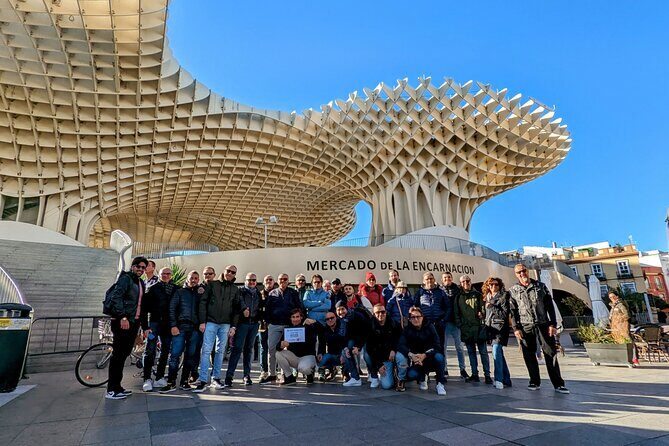
From the old Islamic medina streets (now the commercial area), you arrive at Plaza de la Encarnación and the famous Setas de Sevilla, also known as the mushrooms and the Metrosol Parasol. The architect named here is Jürgen Mayer (German).
I like this stop because it gives Seville two lives in one glance: centuries of history around you, and then a modern wooden/steel structure that Seville adopted as an identity symbol. It’s a reminder that Seville is still evolving.
Then you walk down Calle Sierpes, one of the best-known streets in the city. It’s full of shops and cafes, and you’ll also learn about the historic Royal Prison, where Miguel de Cervantes was a prisoner.
That Cervantes connection turns a shopping street into a story lane. Even if you’re not stopping for shopping, you’ll start noticing the city’s layers as you move.
Finishing at Plaza de San Francisco: the heart of Seville’s old center
You end in Plaza de San Francisco. It’s very close to the Cathedral area and effectively in the center of Seville’s historical core.
This ending matters because you’ll finish with the orientation you need. After a tour like this, you’re not just tired—you’re oriented. You’ll know what you saw, where it is, and what to come back to if something grabbed you.
Who this tour is best for
This private half-day walk is a strong fit if you:
- Want a fast, high-impact way to understand Seville’s major eras
- Like architecture with context (Islamic past, Gothic Cathedral, royal palaces, and Renaissance civic buildings)
- Enjoy pop-culture crossovers like Game of Thrones filming locations
- Prefer a guided pacing that still allows you to stop and look
It’s less ideal if you:
- Want lots of interior visits and museum time
- Don’t enjoy walking across a long route (even at a moderate level)
Small practical tips that make the day easier
- Wear shoes you can walk in for 2 to 3 hours on uneven streets.
- Bring water, and plan for shade. The guides are used to comfort needs during warmer conditions.
- Use the mobile ticket so you’re not fumbling at the start.
- If you’re combining this with another timed attraction, schedule the next thing for after you’ve rested. This route covers a lot of ground even when it feels like a stroll.
Should you book this Seville walking tour?
I’d book it if you want a guided “Seville decoder ring” in a single afternoon: you’ll learn how gates, mosques, palaces, and maritime trade all connect, and you’ll see key UNESCO sites from the outside with explanations that make them make sense.
Skip it if your top priority is interior ticket time at major monuments. This is built for stories you can carry while walking, not for long stays inside.
If your idea of a great trip is to leave with a mental map and a few standout scenes—Giralda, Alcázar walls, the Archive of the Indies, Santa Cruz alleys—this tour is a smart way to get there without spending the whole day planning.
FAQ
How long is the Private Half Day Walking Tour of Seville?
It runs about 2 to 3 hours.
What language is the tour offered in?
The tour is offered in English.
Where does the tour start and end?
It starts at Puerta de Jerez and ends at Plaza de San Francisco.
Is this a private tour?
Yes. It’s a private tour/activity, and only your group participates.
What is included in the tour price?
An official professional guide of Seville is included, along with tour photos.
What is not included?
Private transportation is not included.
How do I receive my ticket?
You’ll get a mobile ticket.
Is the tour suitable for people who want a low walking level?
It’s listed for travelers with a moderate physical fitness level, and it’s a walking tour, so comfortable shoes help.
Can I cancel and get a refund?
Yes. Free cancellation is available up to 24 hours in advance for a full refund.
What happens if weather is bad?
This experience requires good weather. If it’s canceled due to poor weather, you’ll be offered a different date or a full refund.