REVIEW · SEVILLE
Flamenco Dance Masterclass
Book on Viator →Operated by Flamenco A Compás · Bookable on Viator
One hour can teach real flamenco rhythm.
In Seville, the birthplace city vibe is the whole point, and this masterclass turns it into a learnable skill set with palmas, footwork, and a short choreography. I like that it’s beginner-friendly, with an instructor-led structure that builds from basics to performance fast.
The class also has a nice “you’re part of the culture” finish: you can record your little routine and take photos with flamenco accessories. My only caution is simple: it’s just about 60 minutes, so you’ll leave with a starter piece, not total flamenco mastery.
In This Review
- Key points I’d mark on your map
- Seville’s flamenco energy: why this masterclass actually fits the city
- The 60-minute game plan: what you learn step by step
- Studio setup in Seville: mirrors, wooden floor, and real sound
- Instructors who bring patience and precision (Eliza and Diaz, too)
- Price and value: how $48 turns into a real memory, not just a demo
- Getting there: Casco Antiguo meeting point and what that means for your day
- Who should take this class, and who might want something longer
- Tips to get more out of your first hour
- Should you book this Flamenco Dance Masterclass in Seville?
- FAQ
- How long is the Flamenco Dance Masterclass?
- Is it offered in English?
- What is the group size?
- Where do I meet for the class?
- Will I learn a choreography or just basics?
- Is there free cancellation?
Key points I’d mark on your map
- Seville-focused flamenco training: you learn in the city that shaped the form.
- A clear rhythm ladder: palmas first, then footwork, then arms and body moves.
- An end-of-class keepsake: record the choreography and take photos with accessories.
- Beginner-friendly pace: you end up doing a short routine even on day one.
- Small group size: maximum 15 people, which helps you get real attention.
Seville’s flamenco energy: why this masterclass actually fits the city
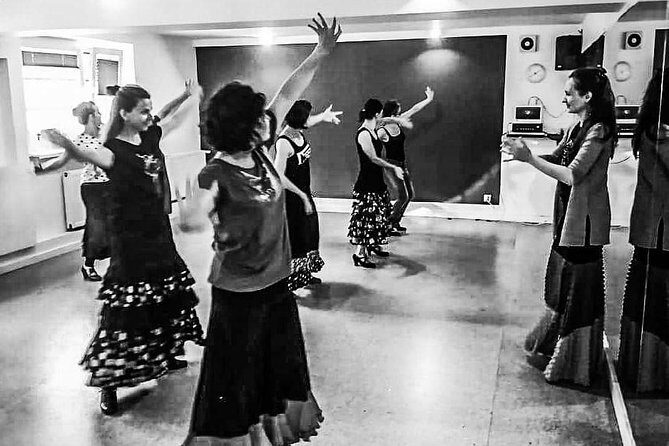
Flamenco isn’t just a show in Seville. It’s a way of listening with your body. That’s why taking a dance lesson here feels different than doing it in a random studio abroad.
This masterclass is built around the basics of flamenco in a way that makes sense for visitors. You start with a brief introduction to the origins of flamenco and its core elements, then move quickly into the practical stuff: rhythm, structure, and body coordination. You aren’t asked to “be a natural dancer.” You’re guided to understand what flamenco is doing and then to copy the mechanics—clap patterns, foot accents, and how arms and posture signal the music.
If you’re the kind of person who likes to understand what you’re seeing (before you see another flamenco performance that night), this is a great warm-up. One hour is short, but it can give you a working vocabulary: you’ll know what people mean when they talk about rhythm, timing, and the feel of a palmas pattern.
You can also read our reviews of more tours and experiences in Seville.

The 60-minute game plan: what you learn step by step
The class runs about one hour, and it’s structured like a mini lesson plan. That matters, because flamenco is rhythmic and physical, and you learn it best when you build in steps.
First comes the intro: you get a quick look at where flamenco comes from and what its main elements are. It’s not a long lecture. It’s more like context-setting so the movements don’t feel random.
Next, you start on palmas, the hand clapping that drives flamenco rhythm. This is usually the part where most first-timers realize they’ve been thinking about rhythm the wrong way. You’re not just clapping; you’re placing accents and staying aligned with the beat.
Then the class adds footwork and the body mechanics that go with it. You practice basic steps and learn how the feet create the percussion side of flamenco. After that, you bring in traditional arm and body movements—so it becomes coordinated, not just separate pieces.
Finally, the instructor pulls it together into a short, easy-to-follow choreography. The goal is confidence: by the end, you should be able to perform a small sequence with energy, even if it’s your first time.
At the end of class, you can also record the choreography as a memory and pose for photos with flamenco accessories. That closing moment is a smart touch. It turns the class from instruction into something you can actually take home—muscle memory plus a photo you’ll remember next time you listen to flamenco.
Studio setup in Seville: mirrors, wooden floor, and real sound
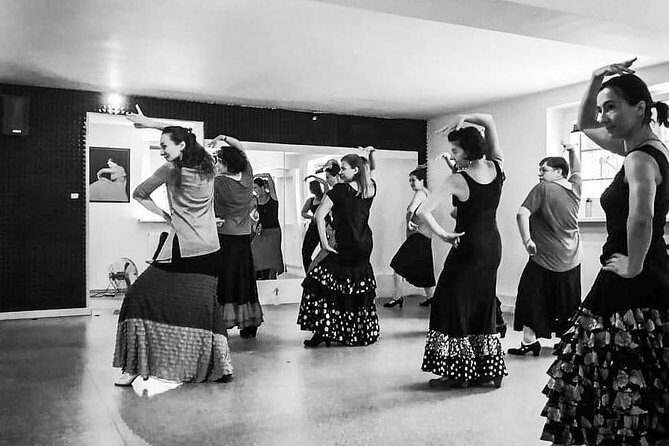
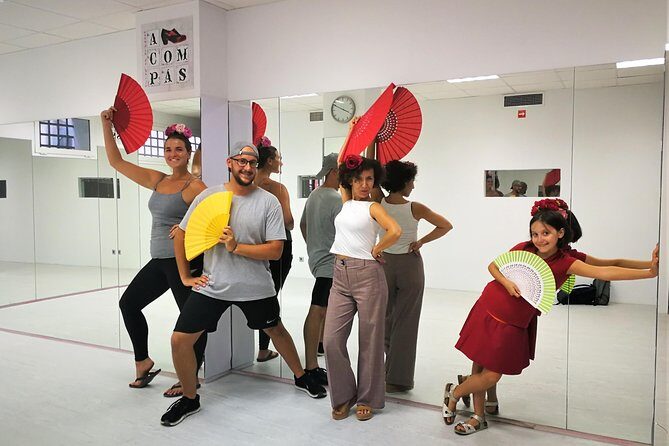
This happens in a spacious, bright dance studio. You’ve got a professional wooden floor, mirrors, and a sound system—so you’re not fighting the environment.
The wooden floor is practical. Flamenco footwork needs a solid, responsive surface. Softer floors make timing harder, and slick floors can make you lose control. A dance studio setup also means the class stays focused on movement rather than improvising around lighting and space.
Mirrors matter more than you might think. Flamenco includes posture and arm angles that can be hard to “feel” correctly at first. Seeing yourself helps you correct quickly without waiting for constant verbal coaching.
And the sound system keeps the rhythm consistent. When you’re learning palmas and footwork, you need dependable audio so your timing stays aligned with the music.
Instructors who bring patience and precision (Eliza and Diaz, too)
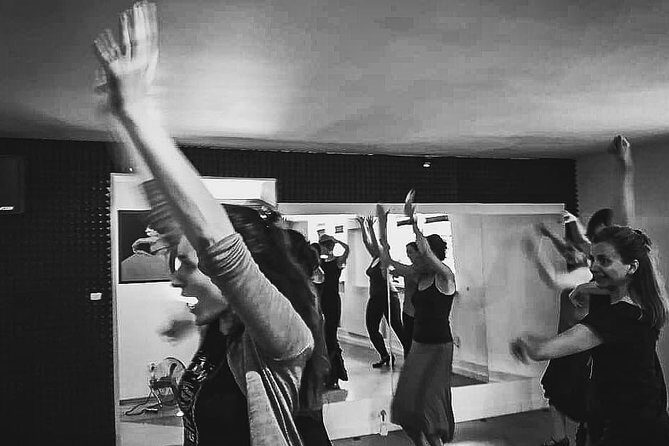
The biggest difference between a fun dance class and a genuinely good one is how the instructor teaches when you’re new. The class is designed for beginners, and the teaching style shows up in the results: people end the hour with a short choreography they can actually perform.
Instructors you may encounter include Elisa (often described as professional, patient, and attentive) and Diaz (praised for being talented, knowledgeable, and passionate). Eliza is noted for taking people through steps progressively, and even managing to get first-timers into a small choreography within the hour.
One theme stands out: the lessons don’t just show you a move and hope you catch it. They break movements down, explain what matters, and then build back up into sequence. That’s why you’ll likely feel comfortable even if your dancing experience is basically zero.
Price and value: how $48 turns into a real memory, not just a demo
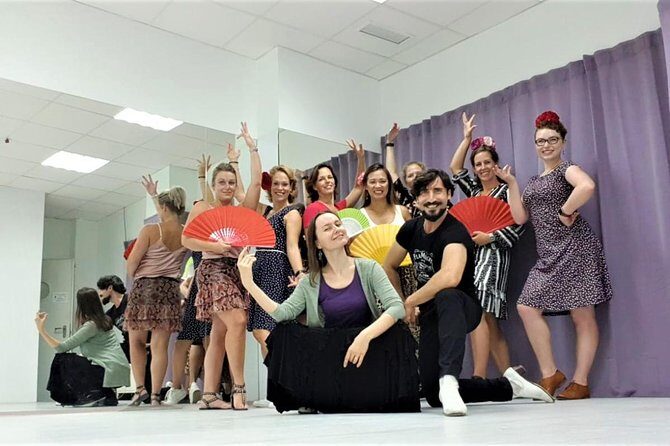
At $48.01 per person for about an hour, this isn’t a tiny activity, but it can still be good value because of what you leave with.
You’re paying for:
- a structured lesson (not a casual cultural talk)
- hands-on practice with rhythm (palmas) and coordination (arms, body, feet)
- a short choreography you can perform
- an end-of-class recording opportunity and photos with flamenco accessories
- a small group format, with a maximum of 15 travelers
Also, this is booked fairly ahead on average—around 16 days in advance—so there’s demand. That usually means the class is consistent enough that people plan around it.
Is it worth it if you want to become a flamenco dancer? No. But if you want a flamenco experience that actually teaches you something you can use that day and talk about afterward, it’s priced like an activity with value behind it.

Getting there: Casco Antiguo meeting point and what that means for your day
The meeting point is at C. Castellar, 52a, local 26, Casco Antiguo, 41003 Sevilla. The activity ends back at the meeting point, which keeps your afternoon from turning into a logistics puzzle.
It’s also noted as being near public transportation, so you can fit it into a typical Seville day without a long trip across town. And because it’s a one-hour class, it works well as a bridge activity: do it in the late morning or early afternoon, then go find flamenco in the evening with a better sense of what you’re watching.
Average booking timing suggests many people slot this into the middle of their stay. If you’re arriving and want to catch something quickly, book early, since it’s popular.
Who should take this class, and who might want something longer
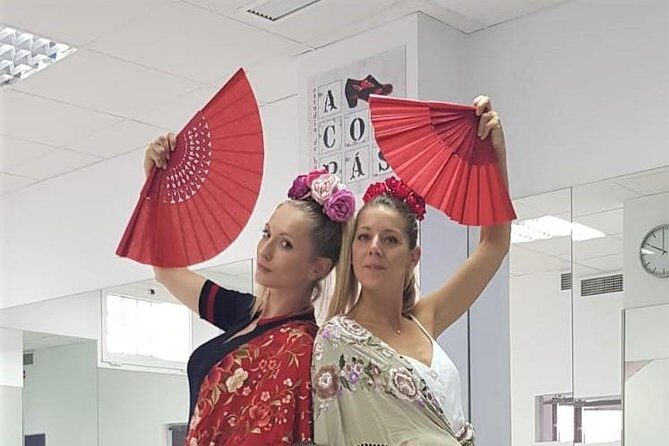
I’d put this masterclass at the top of the list if you:
- are a beginner and want clear steps instead of guessing
- want to understand flamenco rhythm beyond just watching shows
- like hands-on activities with a small group size
- want a fun family-friendly experience (it’s been done with a family group including teenagers)
It’s also a great fit for friends who want a shared memory. The “record and photos at the end” part makes it feel like an event, not a worksheet.
You might want a longer or more advanced class if you’re expecting a deeper dive into multiple palos or extended training. The structure is designed for quick learning, not long-term technique-building. After one hour, you’ll have a start—useful, but not a full education.
Tips to get more out of your first hour
You don’t need to be athletic or have dance training, but you’ll get more if you treat it like rhythm practice.
Here’s how to approach it:
- Focus on timing first. If your feet and claps land together, everything else improves.
- Watch for posture and arm positions when you’re using the mirrors. Flamenco body language matters.
- Don’t rush. The choreography is short for a reason—it’s meant to be achievable while you’re learning.
- At the end, take advantage of the recording and photos. It locks the routine into memory, which helps you revisit it later when you hear flamenco again.
And if you’re the type who wants context, listen for the origins and element explanations. That short history piece helps you connect what you did in class to what you’ll see at night.
Should you book this Flamenco Dance Masterclass in Seville?
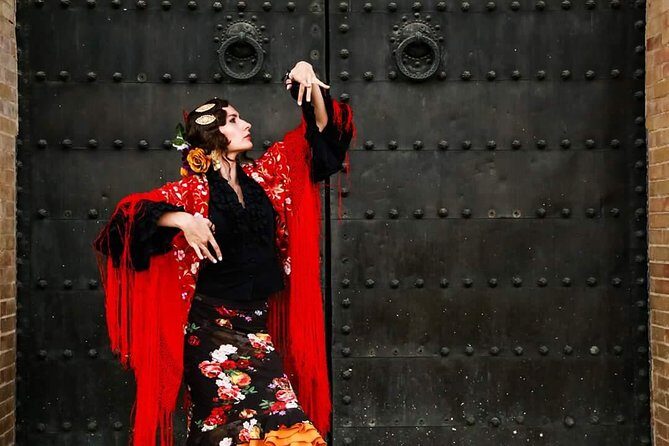
If you want a real flamenco experience that gives you something you can do—not just something you watch—book it. The value comes from the combination of structured beginner teaching, small-group attention (up to 15), and a payoff at the end with recording and photos.
Skip it only if you’re looking for a long, technique-heavy training program. For most first-timers, though, this is one of the most efficient ways to turn Seville’s flamenco culture into a skill you actually carry home.
FAQ
How long is the Flamenco Dance Masterclass?
The class is about 1 hour.
Is it offered in English?
Yes. Languages available include English and Spanish.
What is the group size?
The class has a maximum of 15 travelers.
Where do I meet for the class?
The meeting point is at C. Castellar, 52a, local 26, Casco Antiguo, 41003 Sevilla, Spain. The activity ends back at the meeting point.
Will I learn a choreography or just basics?
You’ll learn the core movements and then put them together into a short, easy-to-follow choreography. You can also record it and pose for photos with flamenco accessories at the end.
Is there free cancellation?
Yes. You can cancel for a full refund up to 24 hours before the experience starts. If you cancel less than 24 hours before, the amount paid isn’t refunded.