REVIEW · SEVILLE
Walking tour through the monumental and historical area of Seville
Book on Viator →Operated by Sevilla Moving · Bookable on Viator
Seville clicks into place fast with a guide. I love the small-group feel and the way guides give you personal attention while walking you through Seville’s big turning points. You’re not just sightseeing—you’re learning how the city’s Muslim, Jewish, and Catholic layers fit together on the ground.
What makes it especially useful is the route itself: you move from early foundations to the cathedral zone, then cut through Santa Cruz, pause in classic gardens, and end at the grand 1929 sights in Parque de María Luisa and Plaza de España. In my experience with guides like Francisco and Miguel, the stories come with practical orientation and local recommendations you can actually use later.
One thing to plan for: it’s an active walk on mixed surfaces, including cobblestones and uneven pavement, with some stairs. If weather is rough, the tour can change or be canceled since it requires good conditions.
In This Review
- Key highlights you should know before you go
- Walking Seville With a Mission: Mosques, Jews, and Cathedral Stones
- Starting at Eglise du Divin Sauveur: Why Seville’s Origins Matter
- Plaza de San Francisco: Spanish Plateresque in Plain View
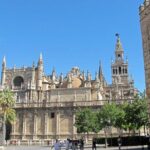
- Catedral de Sevilla and La Giralda: A Guided Way to Read the Facade
- Real Alcázar: Patio de Banderas and the Feeling of a Living Palace
- Archivo de Indias and Santa Cruz: Empire Paperwork Meets Street-Level Memory
- Jardines de Murillo: When the Walk Finally Slows Down
- Real Fábrica de Tabacos, Plaza de España, and the 1929 Story
- Parque de María Luisa and Torre del Oro: Green Lung to River Watchtower
- Pace, Shoes, and How Much You’ll Really Get Out of It
- Price: Is $49.37 Worth It?
- Who Should Book This Seville Historical Walk
- Should You Book It? My Take
- FAQ
- How long is the walking tour?
- How much does the tour cost?
- What language is the tour offered in?
- Is this tour private?
- Where does the tour start?
- What time does it start?
- Is admission included for the stops?
- What kind of walking should I expect?
- Do I need good weather?
- What is the cancellation policy?
Key highlights you should know before you go
- Mosque-to-cathedral connections: you’ll see courtyard spaces tied to Seville’s older foundations.
- Cathedral focus without museum overload: key exterior views plus signature courtyards like the orange-tree patio.
- A “city layers” route: Santa Cruz (former Jewish quarter) connects history to street-level walking.
- Real gardens break time: Murillo Gardens and Parque de María Luisa keep the pace human.
- Plaza de España isn’t just pretty: you get the 1929 exposition story behind the design.
- Bring sturdy shoes: cobbles, dirt, and uneven ground mean comfort matters.
Walking Seville With a Mission: Mosques, Jews, and Cathedral Stones
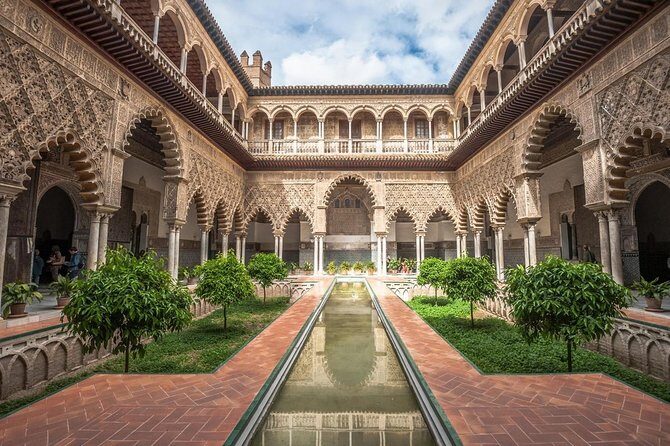
A good Seville walk should do two things fast: give you direction and give you context. This one does both. You start in the monumental-historic area and keep moving through sites that explain how Seville became the city you see today.
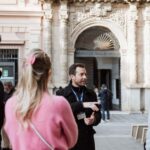
The guide isn’t a voice-over. In the best moments, they connect what you’re looking at with what came before. Francisco, Miguel, Luis, and others (you may get different guides depending on your date) are all praised for making the history feel personal, with answers to questions as you go. That matters because Seville’s buildings often look similar at first glance—until someone points out the specific architectural leftovers and the why behind them.
Because it’s a private tour for your group, you don’t have to wedge into a crowd. That usually makes it easier to ask questions, stop for photos, and get practical advice afterward—like where to eat or what to look for when you wander on your own.
You can also read our reviews of more walking tours in Seville


Starting at Eglise du Divin Sauveur: Why Seville’s Origins Matter
You kick off at Eglise du Divin Sauveur, where the early story of the city is the main course. The highlight here is the visit to the courtyard tied to an older mosque—an early reminder that Seville’s “main attractions” weren’t built from scratch in one era.
If you like history that shows up as real stone and real spaces, you’ll appreciate this start. Many guided walks in Seville jump straight to the headline monuments. This one begins earlier, so later stops make more sense. You’re basically learning the city’s layering system before you start naming domes and towers.
At this first stop, you’re also in a good position to set expectations. The tour is not just a quick photo line. It’s short explanations, short stops, and then movement—so by the time you reach the Cathedral zone, you’ll know what you’re looking for.
Plaza de San Francisco: Spanish Plateresque in Plain View
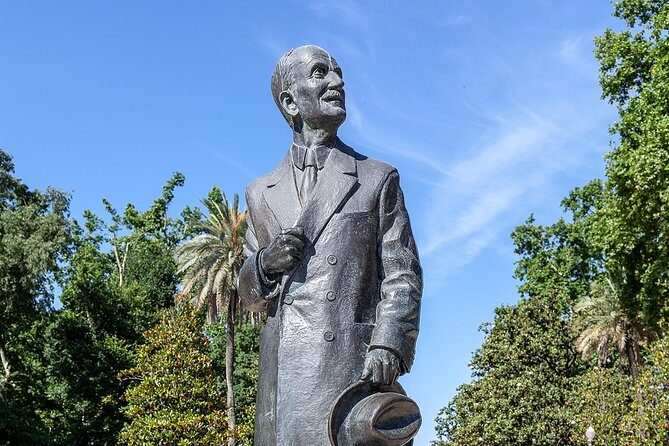
Next comes Plaza de San Francisco, where you get a taste of Spanish plateresque art. That word can sound academic, but on the street it’s easier to grasp: think ornate stonework, carved detail, and a decorative style that signals prestige and power.
The stop is brief, so don’t expect a long lecture. Instead, it works like a palate cleanser—this is where the tour starts to shift from origins to the showpieces of Seville’s later eras. If you’re the type who notices façades, carved doorways, and decorative patterns, this stop will reward your attention.
Catedral de Sevilla and La Giralda: A Guided Way to Read the Facade
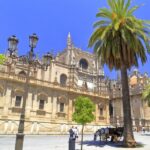
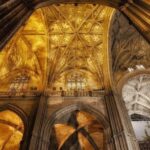
The Cathedral is the headline, but what you do at this stage is more than admire height. At Catedral de Sevilla, you’ll focus on specific elements: the Door of Forgiveness, the patio of the orange trees (often called out as an ancient element connected to the mosque heritage), and the big exterior elements of the royal chapel zone.
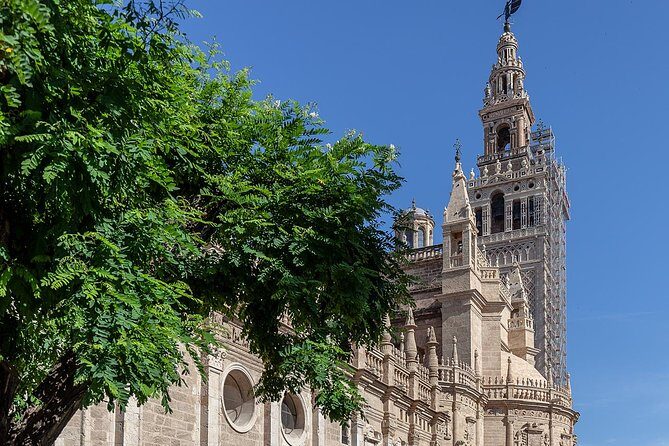
You’ll also get La Giralda, the Cathedral’s tower and Seville’s most recognizable skyline marker. The practical value here is learning how Seville’s most famous silhouette ties back to the city’s older architecture. Even if you’ve seen photos, you’ll understand the landmark more once someone explains what’s older, what’s adapted, and what was added later.
Important note: this stop emphasizes major highlights and key views, not an all-day cathedral interior marathon. If you love the idea of cathedral spaces but you prefer walking and storytelling over long ticket lines, this format fits well.
Real Alcázar: Patio de Banderas and the Feeling of a Living Palace
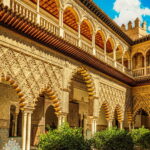
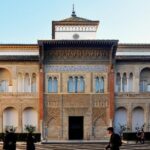
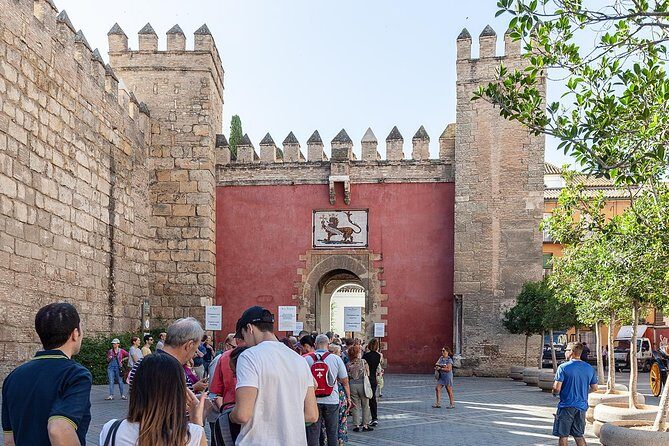
From the Cathedral zone you head to the Real Alcázar de Sevilla, with attention on the facade and Patio de Banderas. The Alcázar can be overwhelming if you try to absorb everything alone. Here, the guide helps you aim your eyes.
What I like about stopping at the patio level is that it’s where a palace becomes human-sized. Courtyards show you scale, light, and the way different styles share space. And if you’re already primed by the mosque-and-cathedral connections earlier, you’ll catch more of the cultural layering without needing a textbook.
You get a snapshot rather than a complete deep-dive. That’s a good thing on a walking tour. It keeps you moving toward the next “aha” moment instead of bogging down.
You can also read our reviews of more historical tours in Seville



Archivo de Indias and Santa Cruz: Empire Paperwork Meets Street-Level Memory
Next is Archivo de Indias, described as the key archive preserving documents tied to Spain’s relationship with American colonies. Even though your time here is short, the effect is big: it anchors Seville’s grandeur in the bureaucracy and decisions of empire, not just the architecture.
Then you walk through Barrio Santa Cruz, the former Jewish district. This is where the tour shifts from buildings to neighborhoods. You’re walking the streets with a story in mind, so it stops being a pretty postcard area and starts being a place shaped by real communities and historical change.
The route also sets up what comes next. Santa Cruz isn’t the end goal. It’s a bridge to the gardens, and you’ll feel the change in mood as the streets give way to green space.
Jardines de Murillo: When the Walk Finally Slows Down
At Jardines de Murillo, you enter old orchards turned public gardens. This is one of the best “reset” moments on the walk. The tour spends focused time here, and it feels earned after stone and streets.
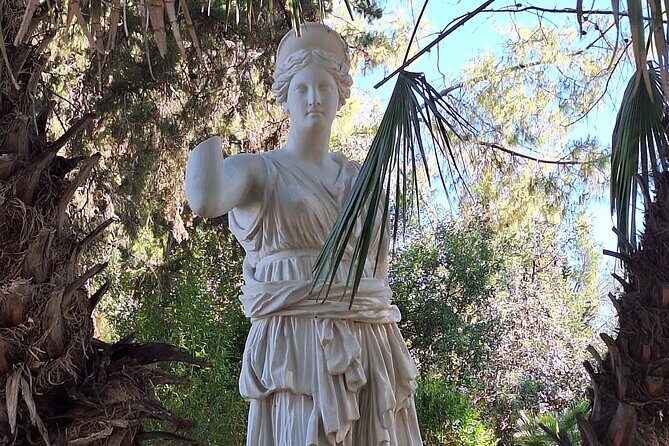
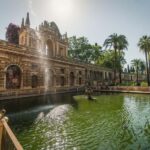
You’ll notice the plant list mentioned on the tour—magnolias, orange trees, ficus, and also ladies at night—plus features like gazebos, fountains, ceramics, and monuments. The guide’s job at this stop is to point out what you can see quickly and what to look for if you slow down for a minute.
This is also a timing strategy. Gardens are where you can catch your breath, get photos without rushing, and mentally organize the history you just heard. If your feet start complaining, this stop is your friend.
Real Fábrica de Tabacos, Plaza de España, and the 1929 Story
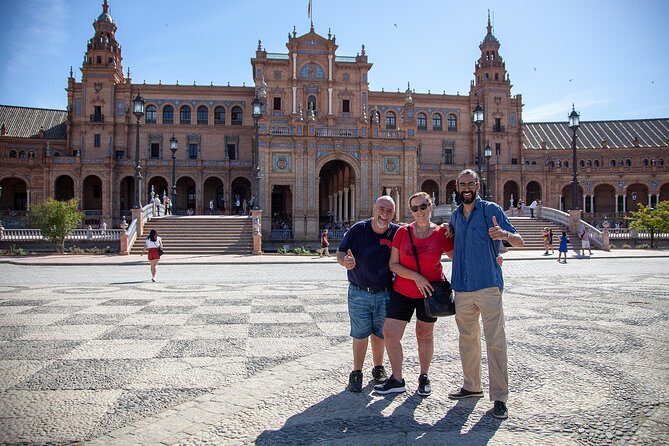
One of the most interesting transitions comes at Real Fábrica de Tabacos. The site’s current role is the headquarters of the University of Seville, but it also has a past as the most important tobacco factory in Europe. On the tour, you move through huge corridors and patios to reach the next big set piece: Plaza de España.
Why this matters for your money and time: the route doesn’t treat Plaza de España as just a pretty square. You get the backstory of the 1929 Ibero-American Exposition, when pavilions from American countries were part of the official presence. That context helps you look past the symmetry and start noticing the intention.
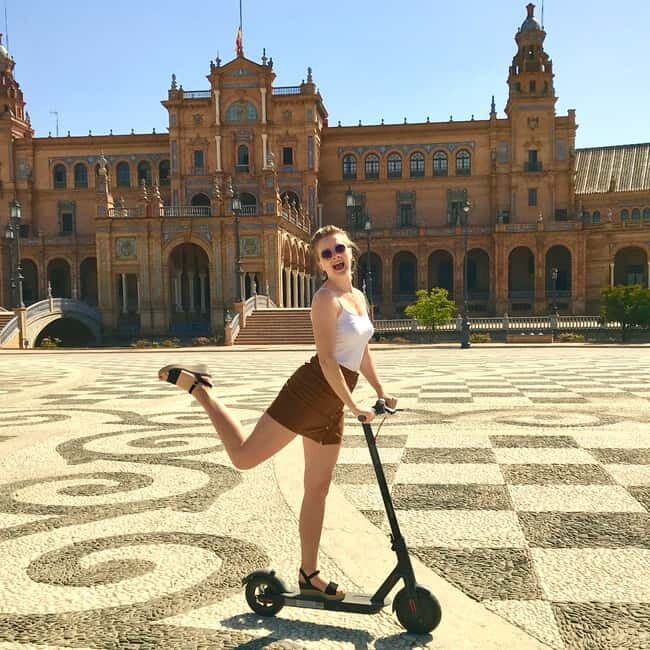
At Plaza de España, you’ll spend the longest stretch of time—enough to actually walk parts of it, take photos, and understand why it became Seville’s modern icon. If you’ve been to other Spanish plazas, this one feels extra because it carries that exposition energy, a mix of ceremony and spectacle.
Parque de María Luisa and Torre del Oro: Green Lung to River Watchtower
After Plaza de España, the walk continues into Parque de María Luisa, described as the city’s first urban park and one of Seville’s green lungs. You’ll also get the garden timeline: it’s been recognized as a Historical Garden and was inaugurated in 1914 as an urban park connected to Infanta María Luisa Fernanda.
This part of the tour works well because it doesn’t just add scenery. It changes your rhythm. Instead of stone surfaces and tight street turns, you get space to breathe and look at the park’s structure and details.
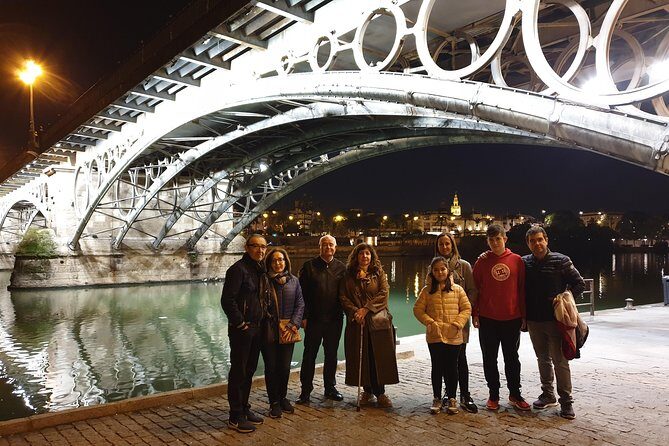
Then you finish with Torre del Oro, an albarrana tower on the left bank of the Guadalquivir River. It served as a surveillance point for the old port, and it was designated a historical-artistic monument in 1931. Ending with the tower and river link is a smart move: it returns you to Seville’s practical geography—trade, watching, and movement—after the cultural and ceremonial stops.
Pace, Shoes, and How Much You’ll Really Get Out of It
The tour is listed as about 2 hours, but in practice you should plan for a slightly longer experience if your guide is answering questions and you’re stopping for photos. Reviews point to around 3 hours for some groups, and that tracks with the number of stops and short explanations.
The biggest practical detail: this is real walking on mixed surfaces. You can expect pavement, dirt, and cobblestones, which can be uneven. There are some stairs, though they sound mostly optional. Either way, sturdy shoes are not optional if you want to enjoy this without foot pain taking over.
Group size is the other key. Even though the route is set, the small-group setup means the guide can slow down when someone asks something unexpected. That’s where you get value. If your goal is to leave with a mental map and a shortlist of where to go next, this tour supports that goal.
Also, I like that guides help with practical needs. One review specifically called out restroom planning, which is genuinely important in historic areas where facilities aren’t always easy to find.
Price: Is $49.37 Worth It?
At $49.37 per person, this walk is priced like an efficient orientation tour with a lot of top-tier stops. What makes it feel like good value isn’t just the famous names—it’s the way you’re moving between them with interpretation that connects eras.
Several stops are listed with free admission tickets in the tour info, which helps your overall budget. And because the tour is guided and private for your group, you’re paying for someone to translate what you’re seeing: mosque-linked courtyard spaces, orange-tree patio context, Jewish-quarter storytelling, and the 1929 exposition explanation behind Plaza de España.
If you’re thinking, I can just wander these places myself, you’re not wrong. You can. But the main difference is time and confusion. With a guide, you get a workable storyline in a single morning, and you’ll know what to revisit later on your own.
This is also a smart buy for first-time Seville visitors. You’ll learn where the “main monuments zone” sits relative to Santa Cruz, the gardens, and the river.
Who Should Book This Seville Historical Walk
Book it if:
- You want a guided orientation that turns monuments into a story you can remember.
- You like walking but prefer a route with direction instead of guessing street by street.
- You want the big hits—Cathedral, Alcázar area, Plaza de España—paired with neighborhood and garden context.
Skip or adjust your expectations if:
- You don’t do well with cobblestones, uneven pavement, and a moderate pace.
- You want long, unhurried museum-style time inside major buildings. This walk is designed for highlights and understanding, not for spending hours in one place.
Should You Book It? My Take
I’d book this tour if you’re spending limited time in Seville and want your first morning to pay off. It hits the famous sites, yes, but it’s the connections that make it useful: mosque heritage tied into later Cathedral spaces, Santa Cruz framed as living street memory, and Plaza de España explained as part of the 1929 exposition rather than random beauty.
The main trade-off is physical: you need comfortable shoes and a willingness to walk through mixed surfaces. If you can handle that, the payoff is a clearer Seville in a short stretch of time—plus guide recommendations you can build on once you’re done.
FAQ
How long is the walking tour?
The tour is listed at about 2 hours. Some groups report closer to 3 hours depending on pace, photos, and questions.
How much does the tour cost?
It costs $49.37 per person.
What language is the tour offered in?
The tour is offered in English.
Is this tour private?
Yes. It’s described as private, meaning only your group will participate.
Where does the tour start?
The meeting point is Sevilla Moving at C. Luis Montoto, 19, Local Bajo, 41003 Sevilla, Spain.
What time does it start?
It starts at 10:00 am.
Is admission included for the stops?
The tour information lists admission ticket free for the stops included in the walk.
What kind of walking should I expect?
It’s a walking tour with mixed surfaces such as pavement, dirt, and cobblestones, plus some stairs (often optional). Sturdy shoes are a good idea.
Do I need good weather?
Yes. The experience requires good weather. If it’s canceled due to poor weather, you’ll be offered a different date or a full refund.
What is the cancellation policy?
You can cancel for free up to 24 hours in advance for a full refund. If you cancel less than 24 hours before the start time, the amount paid is not refunded.