REVIEW · SEVILLE
Seville Jewish Quarter Small-Group Walking Tour: History & Gems
Book on Viator →Operated by Seville Unique Experiences · Bookable on Viator
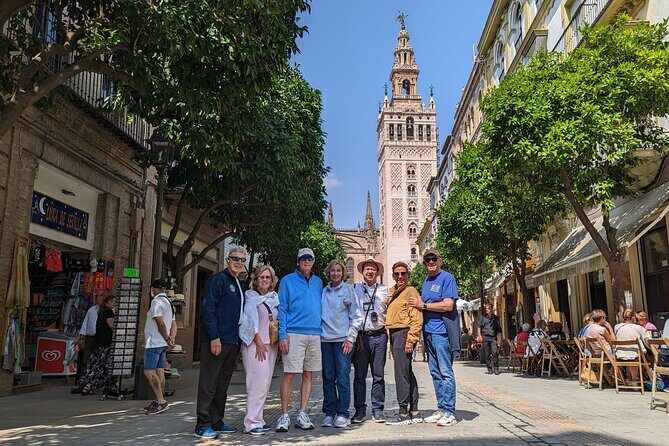
Tiny streets, big history, and a small group. This Seville Jewish Quarter walking tour uses stories and street-level clues to explain how Jewish life shaped medieval Seville, even when little remains to point at. I like the maximum of 10 people, because it keeps the pace relaxed and leaves room for questions without anyone getting rushed.
I also like how the walk is built around places you’ll actually recognize: it starts near the Alcázar area and ends at Iglesia de Santa Maria la Blanca, threading through plazas and gardens that many visitors speed past. A fair consideration: there are limited physical leftovers, so you’ll need imagination. If you’re hoping for lots of intact buildings, expect more interpretation than monuments.
In This Review
- Key things I’d highlight before you go
- Seville Jewish Quarter in 90 minutes: what the walk feels like
- Price and value: why $32.65 works for this route
- Start near the Alcázar: Plaza Patio de Banderas sets the medieval stage
- Plaza de Doña Elvira: learning the neighborhood through a small square
- Plaza de Santa Cruz: synagogues, what’s missing, and why it matters
- Jardines de Murillo: a breath of calm while the story continues
- Calle Cano y Cueto: the only physical remains (underground archaeology)
- Iglesia de Santa Maria la Blanca: finishing where the story meets the present
- Guides make the difference: how names reflect the tour’s style
- Who should book this walking tour (and who might not love it)
- Should you book this Seville Jewish Quarter tour?
- FAQ
- How long is the Seville Jewish Quarter Small-Group Walking Tour?
- What is the group size?
- Is the tour offered in English?
- Where does the tour start and where does it end?
- What stops are included on the walk?
- Do I need to pay admission tickets at the stops?
- What ticket do I receive?
- When should I book?
- Is free cancellation available?
- Are service animals allowed?
Key things I’d highlight before you go
- Max 10 people keeps it personal and makes Q&A easy
- 90 minutes works well as a first-day orientation walk
- Every stop is free to enter (ticket-free listed stops)
- You see the only physical remains in an underground archaeological site
- A story-first route that links Jewish Seville to today’s city layout
- Guides like Miguel, Marta, and Valentín get praised for pace, humor, and clear English
Seville Jewish Quarter in 90 minutes: what the walk feels like
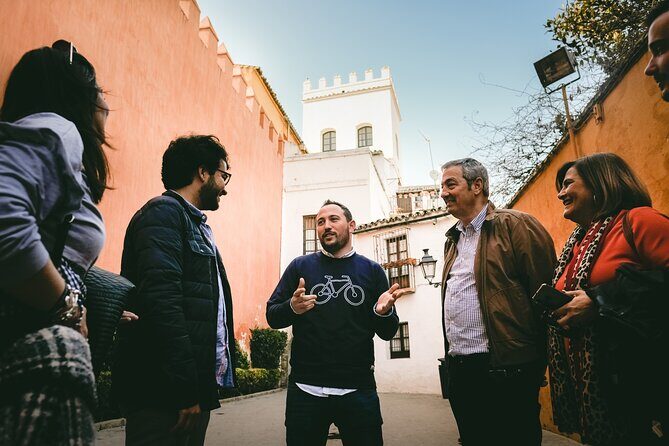
This is a short, focused walk through the heart of what used to be the Jewish quarter, often called Santa Cruz. It’s not a museum tour where you park yourself and stare at artifacts. Instead, you move street by street, with your guide using context, comparisons, and local references to help you “see” what’s no longer standing.
The small-group size matters more here than on bigger sightseeing tours. Old neighborhoods can feel abstract when you’re learning dates and names, and a bigger group can turn that into listening-only. With a group capped at 10 people, the vibe stays conversational. If something doesn’t click—like how one community fit into Seville’s broader medieval story—you’re more likely to get a clear answer.
And yes, the route leans into history that can feel heavy. Reviews mention sadness around the expulsion of the Jews, and at least one person wished there was more on daily life during the thriving years. That’s a good heads-up: this walk is built around what can be reconstructed from surviving records and traces, which can tilt toward loss and change. You’ll still learn a lot about Jewish presence and influence, but the emotional tone may not be light.
You can also read our reviews of more walking tours in Seville



Price and value: why $32.65 works for this route
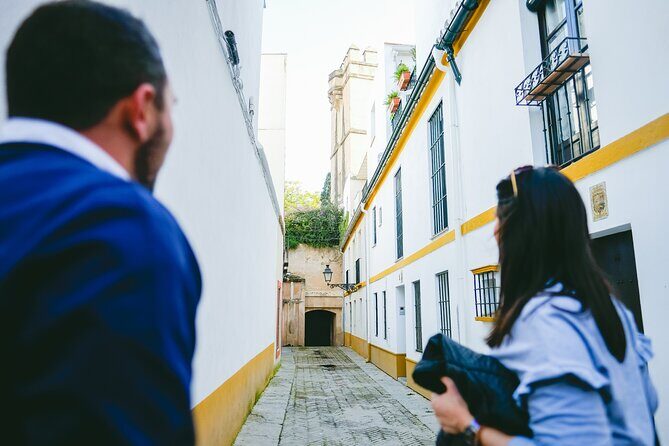
At $32.65 per person for about 1 hour 30 minutes, you’re paying for guidance, storytelling, and time in the right spots—not for expensive entry tickets. The listed stops each note admission ticket free, which is an important value marker. You’re essentially buying the context and local expertise that transforms ordinary squares and alleys into a coherent narrative.
If you’re deciding between doing this or spending that money on a single attraction, think about what you want from Seville. If you want one-hour-and-change to connect Seville’s layers—Moorish-era surroundings, medieval Jewish community life, and later Christian-era landmarks—this tour is a smart way to get that mental map quickly.
Start near the Alcázar: Plaza Patio de Banderas sets the medieval stage
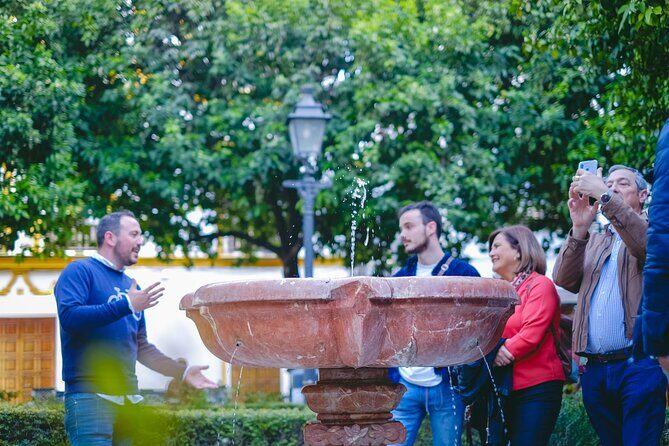
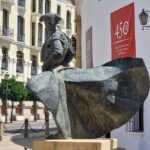
The walk begins at Monumento a la Inmaculada Concepción (Casco Antiguo). From there, you head toward the Plaza Patio de Banderas area, close to the Alcázar surroundings, which connects to Moorish-era Seville and the way the city’s medieval story is often built on earlier chapters.
This first stop is practical. Before you enter the Jewish quarter proper, you get the bigger frame: how medieval Seville grew and changed, and why that matters when you’re later hearing about Jewish communities. Guides use this orientation moment to stop you from treating the quarter like an isolated pocket. Seville wasn’t a sealed village—it was a living city shaped by multiple cultures and power shifts.
What to watch for: when your guide mentions Moorish history and medieval transitions, pay attention to the city layout you see around you. Later stops work better if you’ve already mentally placed the neighborhood inside the wider old-city geography.
Plaza de Doña Elvira: learning the neighborhood through a small square
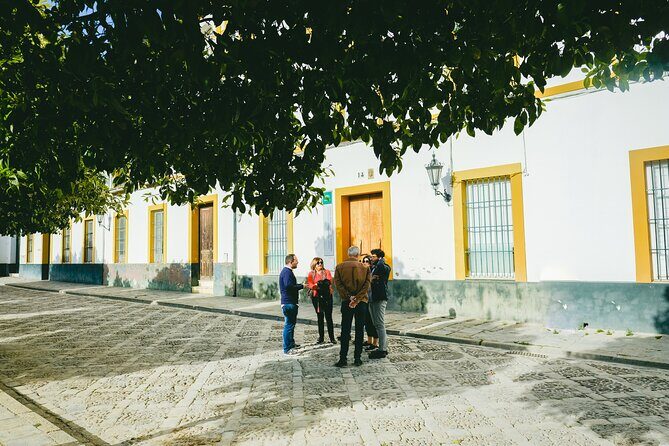
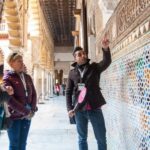
Next you move to Plaza de Doña Elvira, a compact square that becomes more than a pretty pause point. This stop is about communities that once inhabited the area—how the people were organized in space, and how local identity formed within Seville’s older streets.
A small square can sound like a quick photo stop, but the tour uses it for understanding. This is where a good guide makes the difference. People in reviews mention guides answering lots of questions and keeping the flow steady; that’s especially important early on, when you’re learning names and timelines and you want clarity before the story accelerates.
Possible drawback: because it’s a walking tour with short stops (about 15 minutes each), you’ll want to bring a curious mindset. If you’re the type who likes to linger and read everything slowly on your own, this format may feel a little fast.
Plaza de Santa Cruz: synagogues, what’s missing, and why it matters

At Plaza de Santa Cruz, the tour shifts directly to the past synagogues of the city. Even if you’re not a history buff, this stop has a built-in emotional effect. The quarter is famous, but the physical record is thin—so the guide has to do more than point. They explain what once existed and how the loss changes what you can actually see.
One review summed it up in a way that matches what you should expect: the Jewish quarter mostly survives as memory rather than buildings. That doesn’t make the tour less meaningful. It makes it more about context, and about learning how to read a city that has been remodeled over centuries.
My advice to you: keep an eye on the street alignments and nearby landmarks your guide references. When artifacts are scarce, your best clues become spatial—where things likely were relative to churches, plazas, and major pathways.
You can also read our reviews of more historical tours in Seville





Jardines de Murillo: a breath of calm while the story continues
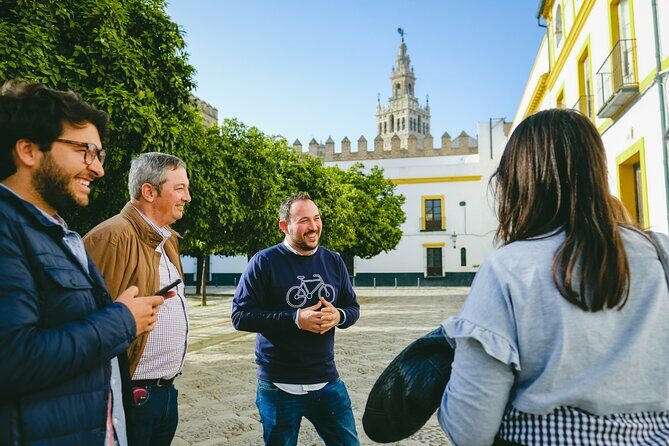
You then pass through the Jardines de Murillo. This stop works as a palate cleanser. While you’re not learning a new chapter as intensely as at the synagogues point, you’re still getting neighborhood history tied to the feel of the area.
Gardens can sound like a break from history, but in this kind of tour they’re useful. They show how land use changes over time. What was once one kind of space can become something else, while the surrounding streets keep channeling people the same direction.
What you’ll get here: a smoother transition between the heavy history moments. It also helps with pacing. With six stops at about 15 minutes each, the tour stays manageable without you feeling like you’re trapped in one lecture.
Calle Cano y Cueto: the only physical remains (underground archaeology)
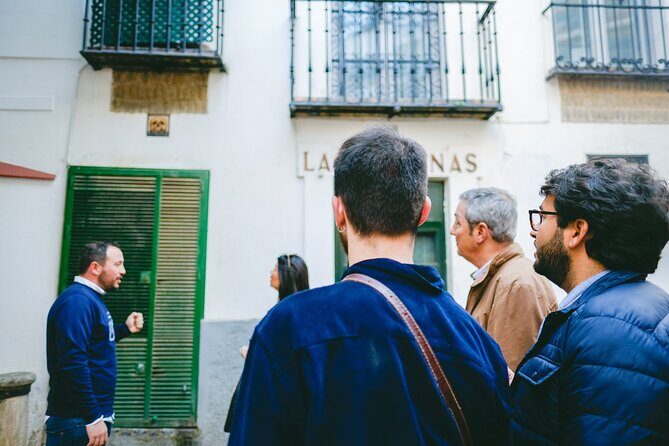
This is one of the most concrete parts of the route: Calle Cano y Cueto. Here you’ll see the only physical remains of the medieval Jewish quarter, located in an archaeological site inside an underground car park.
That detail matters. It’s not just a line on a map—it’s a reminder that the quarter’s material footprint was overwritten, built over, or otherwise altered. When you finally get something you can point at, it lands harder. And because it’s in an underground setting, it also changes how you experience the narrative: you’re literally stepping down from street level to reach the traces of the past.
Good to know: since the stop is brief, don’t expect a long, lingering archaeological visit. The value is in what your guide helps you infer from what’s physically present. If you love “seeing the evidence,” this is the stop to pay extra attention to.
Iglesia de Santa Maria la Blanca: finishing where the story meets the present
The tour ends in front of Iglesia de Santa Maria la Blanca on C. Sta. María la Blanca. Finishing at a major landmark gives the walk a clean landing. It helps you connect what you learned back to something visible and current.
Reviews repeatedly highlight how guides connect the Jewish story to the city’s overall fabric, even when people today don’t encounter obvious traces. This church stop is part of that idea: the neighborhood’s history is layered, and later structures became part of the same physical zone.
If you’re thinking ahead: once the tour ends, take a moment before you keep walking. Read the space around you with the tour’s context in mind. That final pause is how you turn a good explanation into a personal map you can carry all day.
Guides make the difference: how names reflect the tour’s style
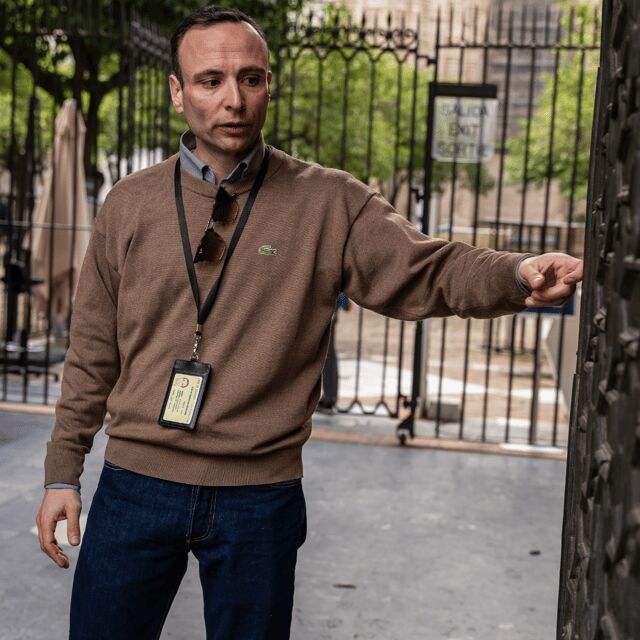
Even though tour content follows the same core route, the guide’s delivery shapes the experience. Reviews praise several guides by name, including Miguel, Marta, José, Guillermo, Valentín, Clara, Barbara, and Carmen.
Common praise points across these names:
- keeping a relaxed pace
- giving clear English explanations
- answering questions without brushing them off
- bringing emotion and empathy into the story
One review mentions learning Ladino expressions with Valentín. Another notes how a guide like Marta explained how Jewish roles were woven into Seville in the 13th and 14th centuries, even though Jewish presence today is extremely limited. That aligns with what this tour is aiming to do: not just list facts, but help you understand how one community’s presence can echo through a city long after that community is gone.
Who should book this walking tour (and who might not love it)
You’ll likely enjoy this tour if:
- you like history explained through real streets and places
- you want a small-group setting with time for questions
- you’re okay with learning through storytelling when physical traces are limited
- you want an efficient way to connect Seville’s medieval layers
You might want to think twice if:
- you strongly prefer tours where you can physically inspect lots of surviving structures
- you expect a focus on everyday Jewish culture during the peak years (some people wanted more of that balance)
- you’re sensitive to heavy historical themes like expulsion and persecution
The walk is short and manageable for most people because it’s only about 90 minutes, but it still takes place on older streets in a historic center. Wear shoes that can handle uneven pavement and plan for a bit of walking throughout.
Should you book this Seville Jewish Quarter tour?
Yes, I think it’s a good booking for the right kind of traveler. At $32.65 with free admission at each listed stop, plus a group capped at 10 people, you get strong value for your time—especially if you’re trying to understand Seville beyond its most photographed corners.
The biggest reason to book is simple: this isn’t just sightseeing. It’s a guided attempt to reconstruct a neighborhood when architecture can’t fully do the job anymore. If that appeals to you, you’ll come away with a better sense of how Seville’s Jewish past fits into the city you see today. If what you crave most is intact monuments, you may find yourself wanting more physical proof—and you should be ready to lean on your imagination.
FAQ
How long is the Seville Jewish Quarter Small-Group Walking Tour?
It lasts about 1 hour 30 minutes.
What is the group size?
The tour has a maximum of 10 travelers, which keeps it very small-group.
Is the tour offered in English?
Yes, it’s offered in English.
Where does the tour start and where does it end?
It starts at Monumento a la Inmaculada Concepción (C. Joaquín Romero Murube, Casco Antiguo, 41004 Sevilla) and ends in front of Iglesia de Santa María la Blanca (C. Sta. María la Blanca, 5, Casco Antiguo, 41004 Sevilla).
What stops are included on the walk?
The route includes Plaza Patio de Banderas, Plaza de Doña Elvira, Plaza de Santa Cruz, Jardines de Murillo, Calle Cano y Cueto, and ends at Iglesia de Santa Maria la Blanca.
Do I need to pay admission tickets at the stops?
The listed stops show admission ticket free.
What ticket do I receive?
You receive a mobile ticket.
When should I book?
On average, this tour is booked about 17 days in advance.
Is free cancellation available?
Yes. You can cancel up to 24 hours in advance for a full refund.
Are service animals allowed?
Yes, service animals are allowed.