REVIEW · SEVILLE
Historical Italica: Half-Day Guided Tour from Seville
Book on Viator →Operated by Naturanda Turismo Ambiental · Bookable on Viator
Roman Italica feels close enough to touch.
This half-day trip is a smart way to see ancient Roman remains without losing the whole day to transit. I especially love the scale of the amphitheater and the way the preserved mosaics and upper-class home details make Italica feel real, not just textbook. One drawback to plan around: timing can get tight if the shared transfer runs late, and then you may feel a bit rushed.
You’ll start in Seville with a round-trip shared transfer and an English-speaking professional guide, then get guided time at Italica’s big archaeological ensemble plus a stop at the medieval monastery of San Isidoro del Campo. The group size cap (up to 60 people) helps keep things moving, but it also means you’ll want solid walking shoes and patience at a site that’s outdoors and spread out.
If you like Roman history and archaeology, this is a good, focused half-day. Just bring water and sun protection, because the walk can be brutal in warm months—and food and drinks aren’t included.
In This Review
- Quick Hits Before You Go
- Why Italica Is Worth Your Half Day From Seville
- Entering the Roman Amphitheater: More Than Big Stones
- Mosaics and Upper-Class Domus Houses: The Details You’ll Remember
- The Medieval Monastery Stop: San Isidoro del Campo
- How the 4-Hour Flow Works in Real Life
- Price and Value: Is $47.18 a Good Deal?
- Guide Matters: The Difference Between Seeing and Understanding
- Practical Tips to Avoid the Common Frustrations
- Who This Tour Fits Best (And Who Might Want a Different Option)
- Final Call: Should You Book This Italica + Monastery Tour?
- FAQ
- How long is the Historical Italica half-day guided tour?
- How much does the tour cost?
- Is the tour offered in English?
- What stops are included during the tour?
- Are admission tickets included?
- Are food and drinks included?
- Will I be picked up and transported back to Seville?
- What’s the maximum group size?
- What is the cancellation policy?
- When will I receive confirmation after booking?
Quick Hits Before You Go
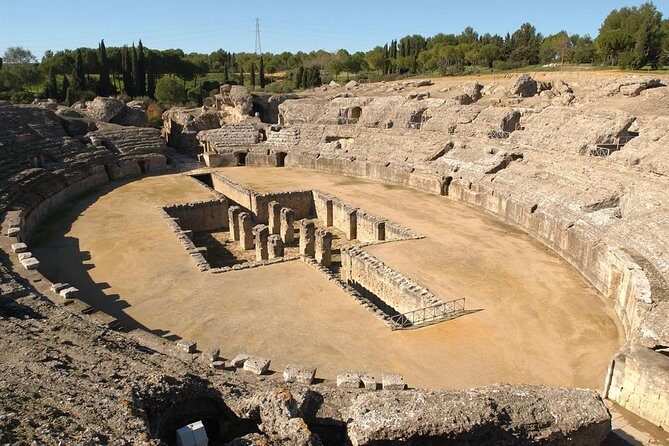
- Roman amphitheater scale: Italica’s theater is considered one of the largest in the Roman world and held about 25,000 spectators
- Mosaics + domus houses: you get guided look at floor mosaics and examples of upper-class Roman homes
- A medieval detour with Roman echoes: the monastery stop fits naturally into the same complex area
- English guide and small-ish group: capped at 60 people, conducted in English
- Two guided stops, admissions handled: entry tickets are included for both main stops
- Half-day pacing: plan on about 4 hours, which is great for busy Sevilla days
Why Italica Is Worth Your Half Day From Seville
Italica sits just outside Seville, and the short ride is a big part of the value. Instead of committing to a long day trip, you get a concentrated hit of Roman Spain in about half the time.
What makes Italica special is its status as the first major Roman settlement on the Iberian Peninsula. That matters, because the site doesn’t just show off random ruins—it shows you how Rome planted itself here, and how a wealthy town left behind durable artwork like mosaics and the bones of high-status residences.
I also like that the tour is built around “seeing with context.” The guide doesn’t just point at stones. They explain what you’re looking at and why it mattered to the people who lived here.
You can also read our reviews of more guided tours in Seville

Entering the Roman Amphitheater: More Than Big Stones
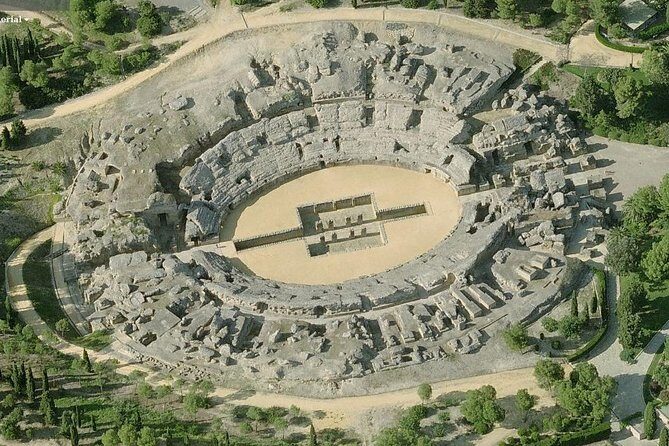
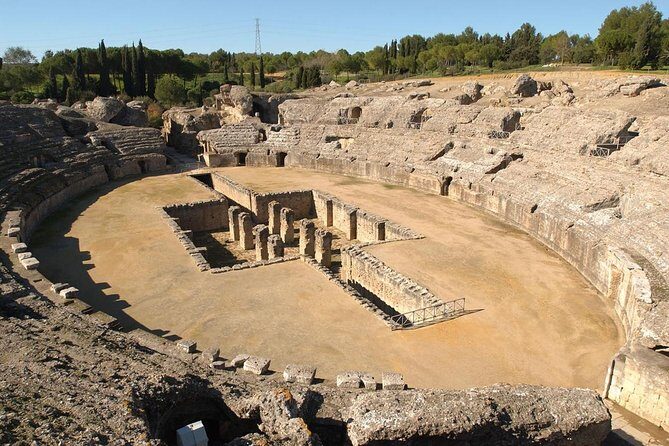
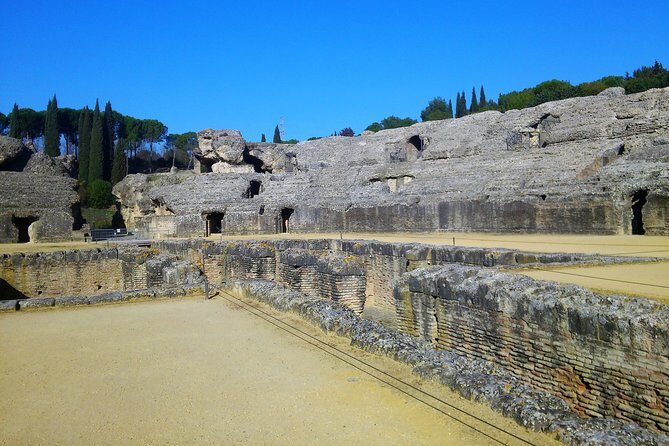
The morning (or first) stop is the Anfiteatro de Italica area, part of the larger Archaeological Ensemble. This is where the site’s scale grabs you fast. The amphitheater is described as one of the biggest in the Roman empire, with a capacity of around 25,000.
When you’re standing there, that number stops being trivia. You can literally sense how a place built for that many people would shape the town—traffic, noise, status, even who got to see what from where. That’s the kind of “why this place exists” moment that makes a guided stop worth it.
Your time here is guided and includes admission. In a few hours, that’s the practical sweet spot: enough time to appreciate the architecture and preserved details, without turning your day into an all-day museum marathon.
Mosaics and Upper-Class Domus Houses: The Details You’ll Remember
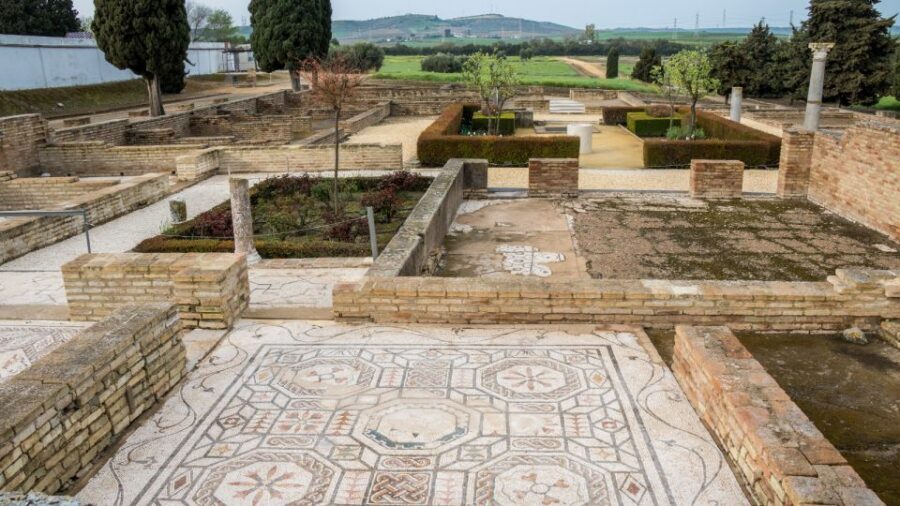
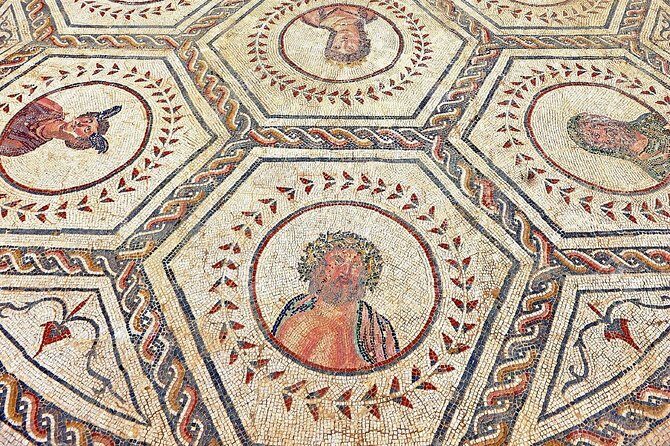
The tour highlights include Italica’s mosaics and excellent examples of domus houses—Roman homes connected to the upper classes. Even if you’re not a “mosaic person,” this is one of the easiest parts of the tour to fall in love with, because the designs are visual, personal, and durable.
Look at how the mosaic floors relate to daily movement. In a domus, the layout and decorative choices weren’t random. They were part of showing status and taste. A good guide helps you notice what you might otherwise gloss over, like how the art ties into the space’s function.
This is also a place where photos actually make sense. Compared to ruins that are mostly walls, mosaics are “message-bearing.” You can zoom in (carefully) and still get the story, even later.
The Medieval Monastery Stop: San Isidoro del Campo
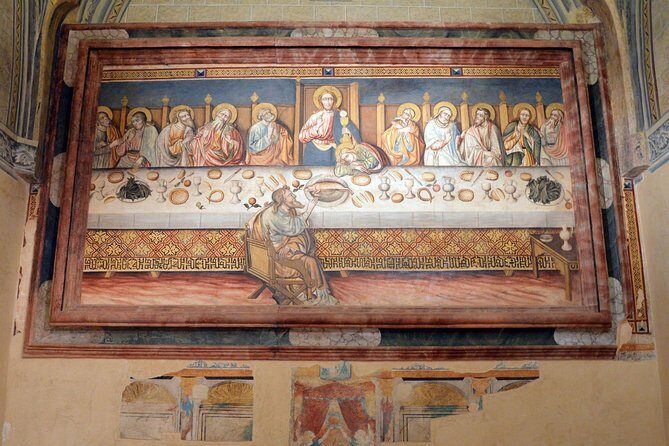
On the way from the amphitheater complex area, you’ll visit Monasterio de San Isidoro del Campo. This stop lasts about an hour, with admission included.
It’s a nice shift in tone: you go from Roman engineering and domestic luxury to a medieval religious setting. And because the monastery is physically connected to the broader visit, it doesn’t feel like a random add-on.
That said, it’s still a monastery church environment—so the experience may depend on your interests. If you’re mostly there for Rome, you might treat this as a beautiful break in scenery and perspective. If you like art history too, it can feel like the story of the site continuing long after the Romans left.
How the 4-Hour Flow Works in Real Life
This tour runs about 4 hours, and it’s offered in English. There’s a professional guide, and you get round-trip shared transfer.
In theory, it’s straightforward. In real life, the biggest variable is timing. Some people have mentioned late pickup or late return, which can be frustrating if you’re trying to catch a train or keep a tight schedule. The route is short, so you shouldn’t expect huge travel delays—but shared transportation can still be a thing.
Group size is capped at 60 people. That’s not tiny, so you’ll want to listen for the key explanations and use your free moments wisely. When you’re in a big archaeological site, drifting off can cost you context that your guide is actively building.
You can also read our reviews of more historical tours in Seville






Price and Value: Is $47.18 a Good Deal?
At about $47.18 per person for roughly half a day, this isn’t a bargain tour—but it’s also not priced like a luxury private guide.
Here’s what you’re paying for that justifies the cost:
- Guided time at both the amphitheater complex and the monastery
- Admission included for the two main stops
- Round-trip shared transfer from Seville
- Professional guide (English)
The trade-off is what you don’t get: food and drinks are not included. For a half-day walk in warm weather, that’s the one place where you can easily feel underprepared. Bring a bottle of water and consider a snack so you don’t end up bargaining with heat and thirst.
If you’re already planning to visit Italica, the guide and included admissions can make this feel like a time-saver. You’re buying structure: the order of sights, what to pay attention to, and how to connect the Roman and medieval parts into one visit.
Guide Matters: The Difference Between Seeing and Understanding
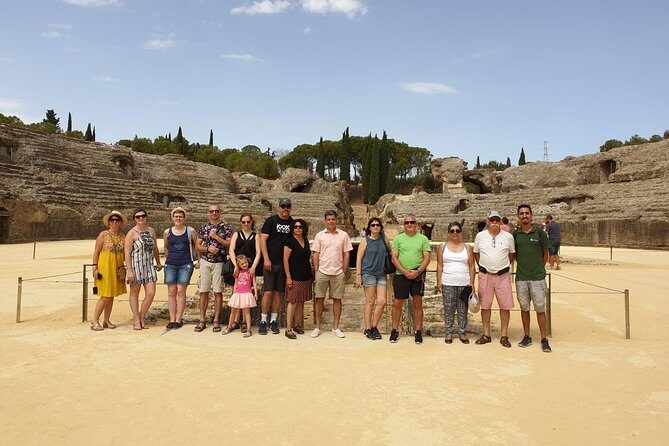
What really lifts this tour is the guide style. Multiple guides have been praised for strong storytelling and solid command of Roman history, and that shows in how the site lands.
You’ll see names come up like Jesús, Rebecca, Miguel, Juanra, Alberto, Leon, and Catherine—and the consistent theme is that they connect Italica to broader Roman life. One review-style theme (that I think you can count on) is that when a guide is passionate, the tour turns from a list of features into a coherent picture of a Roman town.
That’s also why I’d treat this as a “book the tour, not just the entrance ticket” kind of experience. Italica can look like piles of stone at first glance. A good guide helps you see the function of spaces, and the human choices behind the art.
Practical Tips to Avoid the Common Frustrations
Here are the things that make or break your enjoyment on a half-day like this:
- Wear shoes you trust. Italica is an archaeological walk, and you’ll cover enough ground that blister-level foot pain would ruin the day.
- Bring water and sun protection. Food and drinks aren’t provided, and August can be especially hot. Even when it’s not August, heat can sneak up on you at open-air sites.
- Plan your schedule with buffer time. Because shared transfers can run late, don’t book an ultra-tight train connection right after you expect to return.
- Listen for the names of places as you go. Some guides may use different language for site terms. If you hear something unfamiliar, ask right then—don’t wait until you’re back on the bus.
- Prioritize mosaics and domus details. If you want the biggest payoff from the time allotted, spend extra attention here, not just on the biggest structure.
Who This Tour Fits Best (And Who Might Want a Different Option)
This is ideal for:
- Roman history and archaeology fans who want a guided overview in a half day
- People who like when the tour connects art (mosaics, homes) to everyday life
- Visitors staying in Seville who want a day plan that doesn’t swallow the afternoon
It may be less ideal if:
- You’re extremely schedule-sensitive and can’t tolerate any delay
- You only want churches or only want Rome, period, and don’t care about the monastery stop
- You dislike walking in heat (in summer, the outdoor parts can be tough)
Final Call: Should You Book This Italica + Monastery Tour?
Yes, I’d book it if you want a structured Roman escape from Seville. For the money, you’re getting exactly what most self-guided visits lack: a guide who helps you read the site and a fast, efficient pairing of Italica and San Isidoro del Campo.
If your plans are tight, add slack time for the shared transfer. And if you’re going in hot weather, pack water and sun protection like you mean it. Do those two things, and you’ll get a memorable, high-impact half day—Roman amphitheater scale, mosaics that still look stunning, and a medieval stop that makes sense in the same setting.
FAQ
How long is the Historical Italica half-day guided tour?
It runs about 4 hours (approx.).
How much does the tour cost?
The price is $47.18 per person.
Is the tour offered in English?
Yes, it’s offered in English.
What stops are included during the tour?
You’ll visit the Anfiteatro de Italica (Archaeological Ensemble of Italica) and then Monasterio de San Isidoro del Campo.
Are admission tickets included?
Yes. Admission tickets are included for both the Italica stop and the monastery stop.
Are food and drinks included?
No. Food and drinks are not included.
Will I be picked up and transported back to Seville?
Yes. It includes round-trip shared transfer.
What’s the maximum group size?
The tour has a maximum of 60 people.
What is the cancellation policy?
You can cancel for a full refund if you cancel up to 24 hours in advance of the experience’s start time.
When will I receive confirmation after booking?
Confirmation is received at time of booking.