REVIEW · SEVILLE
Seville: Tiny-Group Jewish Quarter Discovery Walking Tour
Book on GetYourGuide →Operated by Sevillaconguía · Bookable on GetYourGuide
Seville’s backstreets tell you everything in 90 minutes. This tiny-group Santa Cruz Jewish Quarter walk turns the maze of patios and plazas into a story of Seville’s Jewish community, with sharp street-level anecdotes and excellent French guidance. One thing to consider: it’s still a walking tour through tight lanes, so you’ll want solid shoes and patience with the pace.
I especially like how the route is built around recognizable places like Plaza de Doña Elvira and the Callejón del Agua, not just vague “see this area” directions. You get short guided pauses that help you connect what you’re looking at with what the neighborhood meant. It’s also timed well for a half-day in Seville without eating your whole schedule.
At about $46 per person, it can feel like a fair price for a guided history walk that also links the district to the world of opera and literature. Just bring water and a hat, since you’ll be outside for the whole experience.
In This Review
- Key highlights you’ll feel on the walk
- Santa Cruz in 90 minutes: what this Seville Jewish Quarter walk really does
- Where you meet: Plaza del Triunfo (cathedral and Alcázar area)
- Patio de Banderas: a courtyard stop that changes how you see the neighborhood
- Plaza de Doña Elvira and Calle Vida: romance, resilience, and street-level clues
- Callejón del Agua: where the stories feel the most atmospheric
- Jardines de Murillo and the shift from lanes to calm
- How the tour ties the Jewish Quarter to opera and literature
- Guide quality: why Anaïs and Roberto’s style matters
- Price and value: is $46 worth a 1.5-hour walk?
- What to bring, wear, and expect while walking Santa Cruz
- Who this tour suits best (and who should reconsider)
- Should you book this Seville Jewish Quarter discovery tour?
- FAQ
- How long is the Seville Tiny-Group Jewish Quarter Discovery Walking Tour?
- Where does the tour start?
- Where does the tour end?
- What language is the live tour guide?
- What is the tour focused on?
- Is food or drinks included?
- What should I bring?
- What’s the cancellation policy?
Key highlights you’ll feel on the walk
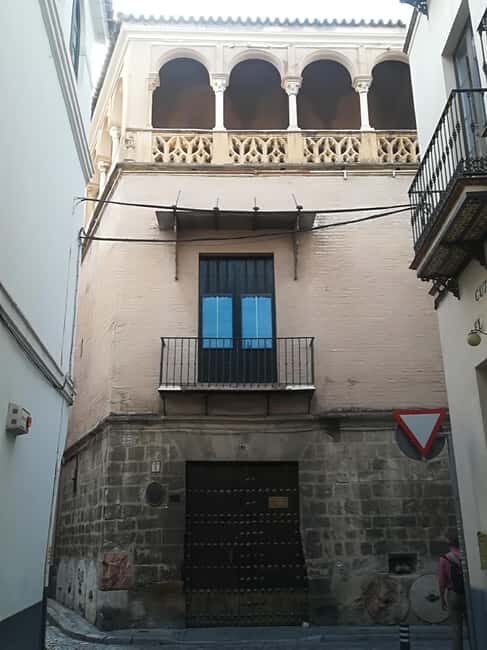
- Small-group atmosphere designed to keep questions in the mix (guides like Anaïs and Roberto were praised for helpful, fluent French and Q&A).
- Iconic Santa Cruz stops such as Plaza de Doña Elvira, Calle Vida, and Callejón del Agua.
- Courtyard and patio storytelling with a stop at Patio de Banderas and views of classic Andalusian architecture.
- Literature and opera connections tied to works like Carmen and The Barber of Seville.
- A satisfying route arc that starts near the cathedral/Alcázar area and finishes at Iglesia de Santa María la Blanca.
Santa Cruz in 90 minutes: what this Seville Jewish Quarter walk really does
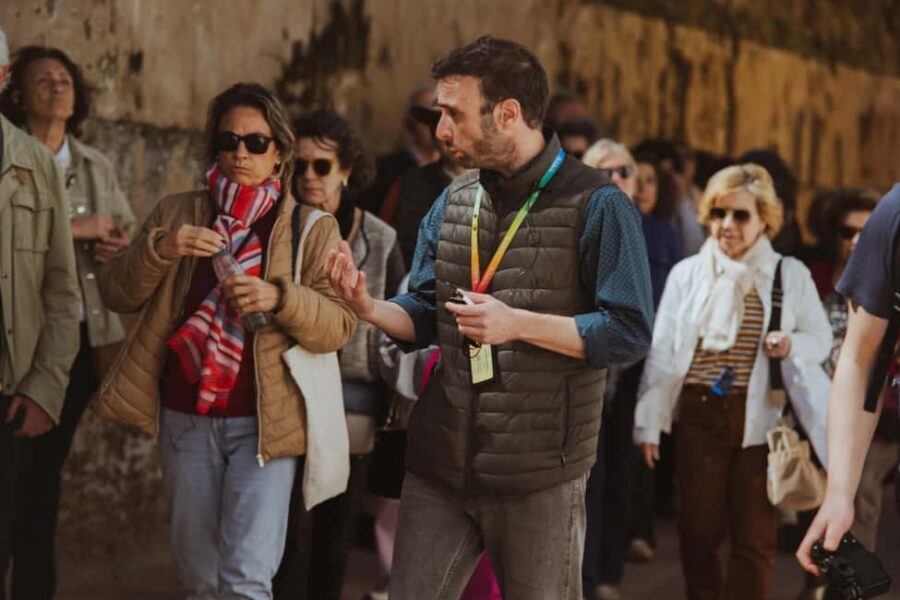
This tour is aimed at one goal: helping you read the Santa Cruz district like a text, not just a pretty postcard. Seville’s old quarter can look like an endless tangle of lanes and small squares. The difference here is the way the guide gives you story anchors as you go—so each bend in the street or quiet courtyard has a reason for existing.
You’ll also notice the emphasis on everyday culture: architecture, patios, street corners, and local crafts and customs. That matters, because a neighborhood becomes more real when it’s explained through daily life, not only big historical events. And in your case, you get that through a 1.5-hour format that doesn’t stall out or drag.
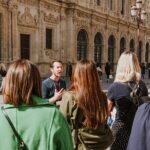
The “tiny group” piece is part of the value, too. With fewer people, you get more conversational moments. In the reviews, guides were specifically praised for answering tangential questions, which is exactly what you want when the guide spots something you’re curious about and you want a real explanation—not a rushed one.
You can also read our reviews of more walking tours in Seville



Where you meet: Plaza del Triunfo (cathedral and Alcázar area)
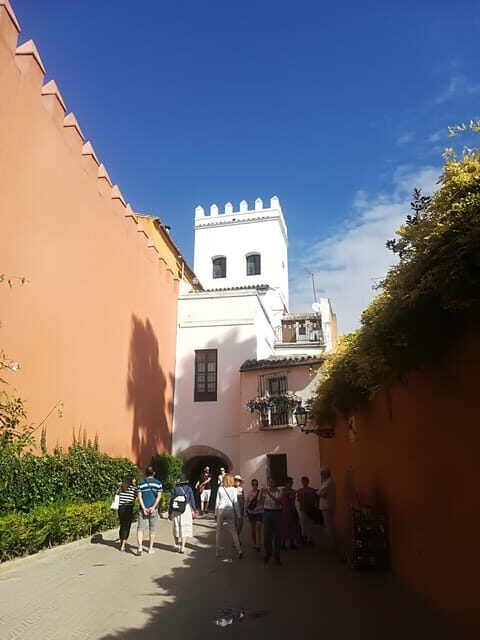
Your starting point is the foot of the monument to the Virgin Mary, in the center of Plaza del Triunfo, positioned between the cathedral and the Royal Alcázar. This is a smart setup. You begin right where many people already want to be, so the tour doesn’t feel like a detour to a random corner.
It also gives you an easy mental map from the start. You’re not wondering where you are or where you’re going next. You begin in a recognizable hub, then move into the smaller streets where Santa Cruz gets its maze-like character.
The end point is Iglesia de Santa María la Blanca, and the tour finishes back at the meeting point. That means you’re not stuck wondering how to retrace your steps later. It’s the kind of loop that helps you keep your bearings for the rest of the day.
Patio de Banderas: a courtyard stop that changes how you see the neighborhood
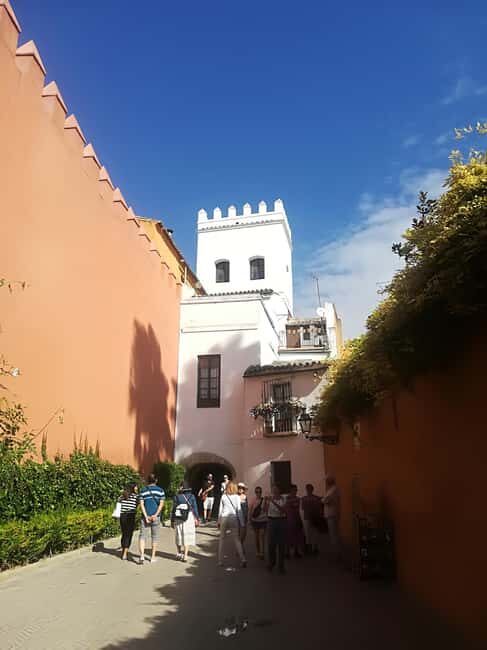
One of the first story pauses is at Patio de Banderas, with a guided explanation lasting around 15 minutes. This kind of stop is where a walking tour can turn from “I saw some streets” into “I understand why these streets are the way they are.”
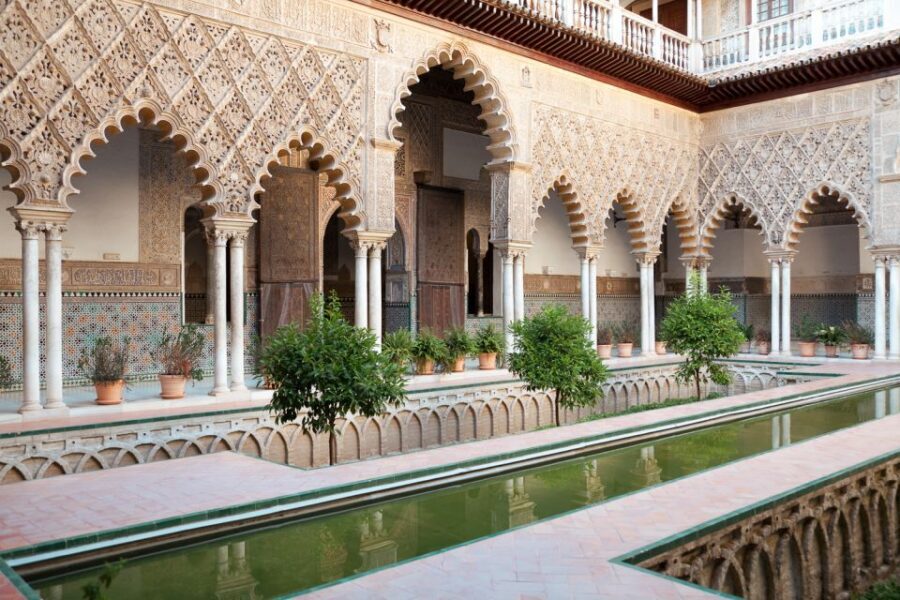
Courtyards and patios are a big part of Seville’s visual identity, especially in the old quarters. In your case, the tour uses those classic Andalusian elements—like traditional architecture, wrought-iron balconies, and vibrant patio spaces—as clues to local customs. Instead of treating these details like decoration, you’ll get a sense of how the neighborhood’s design supported daily life and community rhythms.
Practical tip: even if you’re just taking a quick break for photos, treat it like part of the tour. The guide’s comments here are the ones that make later stops feel more connected rather than disconnected photo ops.
Plaza de Doña Elvira and Calle Vida: romance, resilience, and street-level clues

As you continue, the tour calls out key Santa Cruz landmarks—especially Plaza de Doña Elvira and Calle Vida—with multiple short guided stops (each about 15 minutes). These pauses are ideal for the way Santa Cruz works: you see an open square, then you’re pulled into a narrow lane again. Without guidance, it’s easy to forget what you just learned at the previous stop. With guidance, the stories stick.
What I like about these kinds of stops is that they often include small, human-scale themes. The tour frames the area’s past with tales of romance, resilience, and intrigue, which is exactly the tone you want in a quarter like this. It keeps the history from feeling like a lecture while still giving you context.
Also, Calle Vida is the sort of street that invites you to slow down. Santa Cruz street life is visual—doors, ironwork, wall textures, and the way people move between shaded corners. The guide’s job is to translate what you’re seeing into a bigger picture. When the commentary is good, you end up noticing details you would have otherwise walked right past.
Callejón del Agua: where the stories feel the most atmospheric
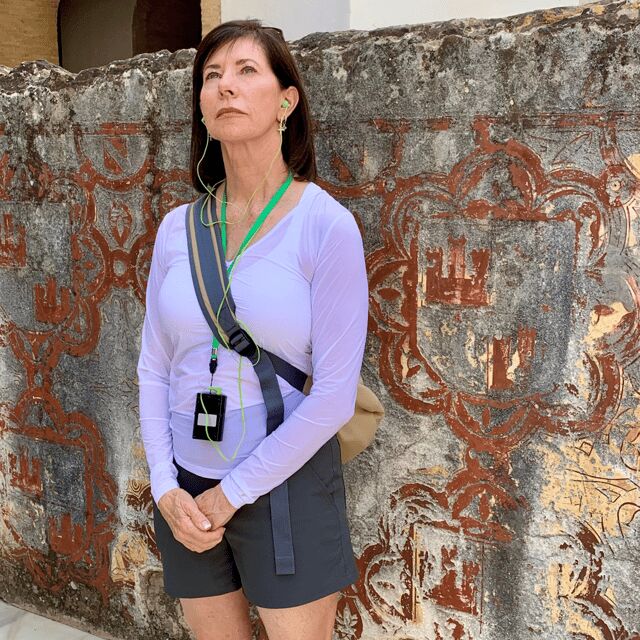
One of the signature stops is Callejón del Agua, again with guided time built in. This alley is famous for a reason: it feels like the kind of passage where Seville’s past is close enough to touch. And that’s the right match for the tour’s approach.
The tour focuses on the Jewish community’s influence on the city’s history and culture, and Callejón del Agua provides a setting where you can feel the neighborhood’s atmosphere. You’re not just learning abstract facts. You’re standing in a place shaped by the same kind of tight, layered urban design that helped communities live, adapt, and endure through changing eras.
Drawback to keep in mind: alleyways mean uneven walking surfaces and less room to move around. If you’re uncomfortable in crowds or dislike narrow lanes, this is the section where you’ll want to be extra mindful of your space and footing.






Jardines de Murillo and the shift from lanes to calm
Later, you reach Jardines de Murillo for another guided segment of around 15 minutes. This is a smart counterbalance. After the tighter lanes and story-heavy streets, you get a visual and sensory breather.
Even if you’re not there to “tour gardens,” this stop helps you reset. Your brain can re-sort what you learned so far: the architecture cues, the cultural influence, and the opera-literature connections. Then you continue with more context instead of feeling like you’re just collecting random facts.
If you like your tours to have a rhythm, this part helps. It breaks up the walk so you finish feeling like you saw the quarter’s variety, not just its tightest streets.
How the tour ties the Jewish Quarter to opera and literature
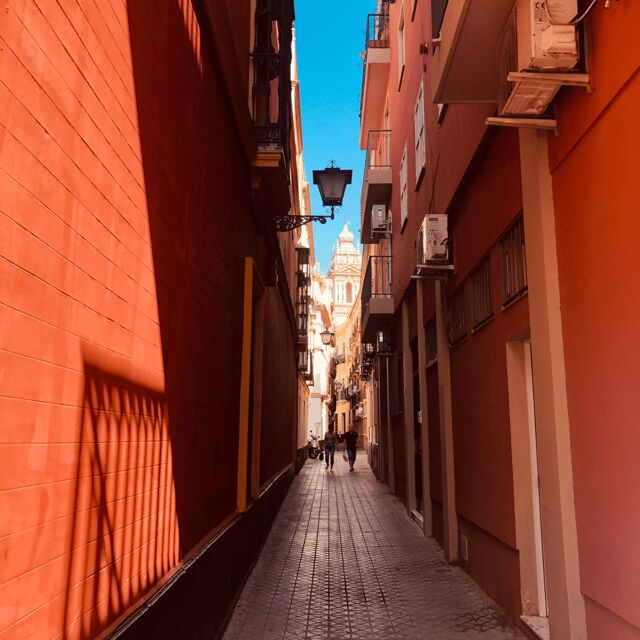
One of the distinctive angles here is the connection the guide makes between the Jewish history of Santa Cruz and the world of opera and literature. You’ll hear about links to works like Carmen and The Barber of Seville as part of the story told through the neighborhood.
That might sound like a curveball at first—until you realize what a neighborhood walk is really doing. You’re learning how culture travels. It’s not only what happened locally; it’s how those impressions, ideas, and perceptions end up shaping art and stories that spread beyond the region.
For you, this added layer gives the tour more than one use. Yes, you leave with place names and architecture details. But you also leave with a cultural lens you can use later when you’re reading, watching, or listening. Even if you’re not planning to go to a performance, it makes the titles you already know feel more grounded in a real geography.
Guide quality: why Anaïs and Roberto’s style matters
This is a tiny-group tour, and reviews highlight that the guide experience is a major part of the satisfaction. In particular:
- Anaïs received praise for excellent French and for sharing plenty of small anecdotes throughout the visit.
- Roberto received praise for real knowledge and for being accommodating when people asked follow-up questions, including questions that branched beyond the planned route.
- There’s also a note that when the group got slightly overbooked, the tour was adjusted so that people still got the quality experience, with a cut made at around 8 people.
That last detail tells you something practical: you’re not signing up for a tour that turns into a crowd. It aims to keep the guide-to-group relationship real.
When you compare this to a standard large-group history walk, the difference is simple. In a small group, you get clearer explanations, quicker answers, and more chances to ask why something matters—not only what it is.
Price and value: is $46 worth a 1.5-hour walk?
$46 per person for about 1.5 hours is not the cheapest thing you’ll do in Seville. But it’s also not priced like a private tour. The value comes from what you get for that time:
- An expert guide who connects stories to specific, recognizable stops in Santa Cruz
- A route that includes multiple named landmarks and architecture moments
- A small-group format aimed at keeping the experience interactive
- The added cultural framing (including opera and literature links)
If you’re the type of traveler who likes your history told through streets and buildings, $46 often lands in the “good trade” category. If you prefer to walk around with an offline app and pick your own stops, you might feel it’s extra. My take: this tour is worth it when you want the explanations as you go and you don’t want to assemble the story yourself.
What to bring, wear, and expect while walking Santa Cruz
This tour is outdoors and walking-heavy by nature. You’ll want:
- Comfortable shoes (non-negotiable on old streets)
- A hat
- Water, especially on hot days
Timing also matters. The experience runs about 1.5 hours, and it includes multiple guided segments that keep you moving but also keep you stopping. That’s usually a good fit for travelers who want a structured window without rushing.
One more note: the information provided includes both wheelchair accessibility and a statement that it’s not suitable for wheelchair users and not suitable for people with mobility impairments. If mobility is a concern for you or someone in your group, it’s worth contacting the provider to get a clear, practical answer about surfaces, crowd flow, and the ability to stay comfortable during narrow sections.
Who this tour suits best (and who should reconsider)
This tour is a great match if:
- You want a guided way to understand Seville’s Santa Cruz Jewish Quarter story through specific places
- You enjoy small anecdotes and conversational Q&A
- You’re interested in how local history connects to broader art and literature themes
- You like walking routes that end at a meaningful spot like a historic church
It may not be ideal if:
- You struggle with walking on uneven or narrow streets
- You’re looking for something with food, drinks, or indoor time (none are included)
- You want a long, slow pace with lots of free time to wander without guidance
Should you book this Seville Jewish Quarter discovery tour?
I’d book it if you want a guided, street-based understanding of Santa Cruz that gives you named stops, cultural context, and a guide who answers questions in real time. The strongest reason is the combo of small-group feel and guides praised for fluent French and lots of on-the-spot anecdotes—plus a route that actually covers the places most people are curious about, from Plaza de Doña Elvira to Callejón del Agua.
I’d hesitate only if mobility is a big issue or if you’re the kind of traveler who prefers self-guided wandering. In those cases, you might get more comfort and control doing your own route with a map and a guidebook.
FAQ
How long is the Seville Tiny-Group Jewish Quarter Discovery Walking Tour?
It lasts 1.5 hours.
Where does the tour start?
It starts at the foot of the monument to the Virgin Mary in the center of Plaza del Triunfo, between the cathedral and the Royal Alcázar.
Where does the tour end?
It ends at Iglesia de Santa María la Blanca, and the activity finishes back at the meeting point.
What language is the live tour guide?
The live tour guide speaks French.
What is the tour focused on?
The tour explores Jewish history in the Santa Cruz district, along with stories tied to local arts, crafts, and customs, and connections to opera and literature such as Carmen and The Barber of Seville.
Is food or drinks included?
No. Food and drinks are not included.
What should I bring?
Wear comfortable walking shoes, and bring a hat and water (especially on hot days).
What’s the cancellation policy?
Free cancellation is available up to 24 hours in advance for a full refund.