REVIEW · SEVILLE
The Seville of the 3 Cultures
Book on Viator →Operated by Sevilla&ME · Bookable on Viator
Seville changes when you follow its footsteps. This 2-hour walk threads Roman, Al-Andalus, Jewish, and Christian stories through real streets, from the Medina-like alleys toward the river, with mobile tickets and a small group size that keeps it conversational. You get a clear sense of how each era left marks you can still spot today, especially in the three-cultures crossroads areas where the city layout itself does the storytelling.
I love how fast it gives you context—not just names, but what those places meant and why the city grew in that particular shape. I also like the photo-friendly pacing: you’ll hit viewpoint moments, big-square landmarks, and small hidden corners close enough together that your brain stays in “Seville mode” without feeling rushed.
One consideration: you’ll see a lot from the outside and from squares and streets, so if your dream includes long inside visits to specific major sites, you may want to add extra time or a second plan for those buildings.
In This Review
- Key highlights I’d prioritize
- A fast way to understand Seville’s layers in 2 hours
- From Ayuntamiento to Puerta del Perdon: getting your bearings
- The Cathedral/Giralda area and the Archbishop’s power story
- Santa Marta to Judería: the Jewish Quarter streets that stick with you
- Alcázar area gates and the royal transitions you can feel in stone
- Archives, inmaculada monument, and Giralda-linked viewpoints
- Triana and the Torre del Oro: crossing from Arenal to the river
- Price and value: what $13.88 buys you
- Who should book, and who might want a different plan
- Quick FAQ
- FAQ
- How long is the Seville of the 3 Cultures tour?
- Where does the tour start and end?
- Do I get a ticket on my phone?
- How much does it cost?
- Is the group size limited?
- Are there admission fees during the tour?
- Is service for people with mobility needs mentioned?
- What’s the cancellation policy?
- Are service animals allowed?
- Should you book it?
Key highlights I’d prioritize
- A tight 2-hour route linking the old commercial core to the Triana riverfront.
- Three-cultures focus mapped onto Seville’s real neighborhoods like Santa Cruz and the Arenal.
- Photo moments at major symbols like the Giralda zone and the Torre del Oro area.
- Story-led guiding in the style of local legends, curiosities, and character-driven history.
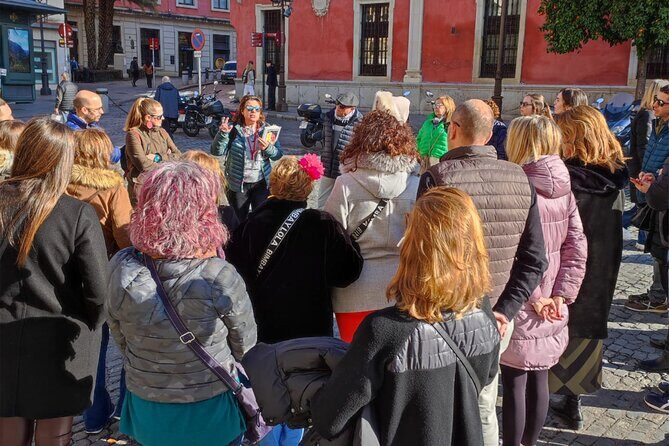
- Small group max (20 people), which helps questions land and the pace stay human.
- Mix of major squares and lesser-known plazas, so it’s not just the usual postcard stops.
A fast way to understand Seville’s layers in 2 hours
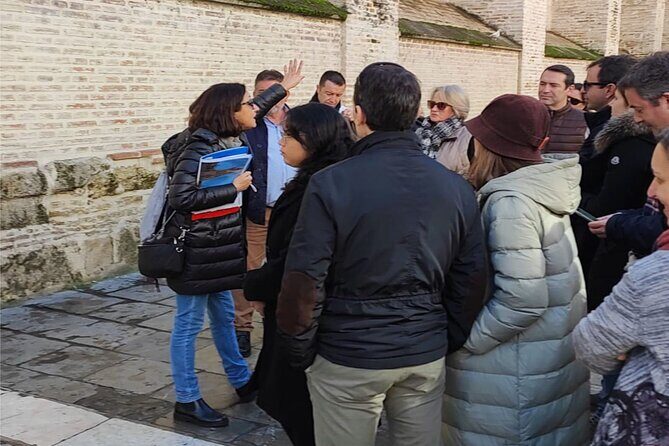
If Seville feels like a maze, this walk helps you read it. You start at Pl. de S. Francisco and end near Torre del Oro, with the route designed so the city doesn’t just look pretty—you start seeing the logic behind the walls, gates, plazas, and neighborhood boundaries.
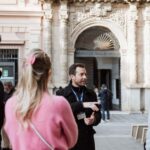
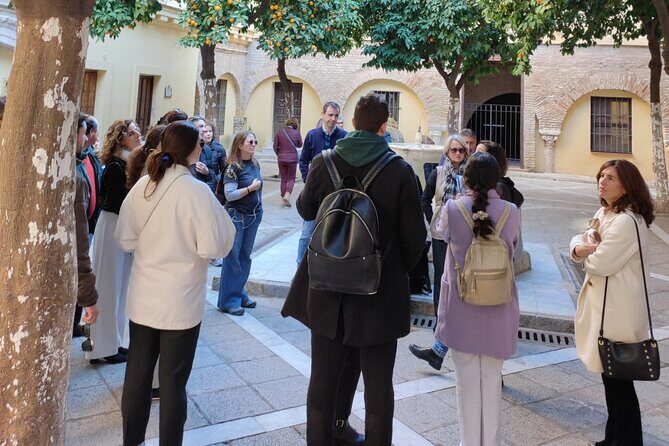
The other practical win is pacing. You’re out for about 2 hours, which is long enough to connect dots, short enough to keep your energy for tapas after. And with a maximum of 20 travelers, it’s not a cattle-line tour; it’s easier to hear the guide and keep moving without getting squeezed.
You’ll also get a mobile ticket, so you can spend less time hunting for paperwork and more time walking. And it’s near public transportation, which matters because Seville’s old center is best done on foot—but starting points can still be tricky if you’re tired.
One more thing I really appreciate: this route isn’t trying to cover everything. It’s choosing key crossroads where Roman administration, Al-Andalus importance, Almohad splendor, Reconquest Christianity, and a visible Jewish imprint all overlap in the same urban fabric. That’s why it works for first-timers.
You can also read our reviews of more tours and experiences in Seville.


From Ayuntamiento to Puerta del Perdon: getting your bearings
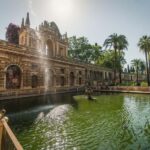
The early stops are about orientation, not overload. You begin at the Ayuntamiento de Sevilla area, in the square that divides Seville between the older commercial zones (think Calle Sierpes) and the more monumental side. This is a smart starting point because it gives you a mental map before you go deeper into smaller streets.
Then you walk toward Puerta del Perdon, a classic “look up and look around” moment. The tour highlights the collapse of the Giralda as part of the story here, and you’ll get a chance to aim for a strong picture of Seville. Even if you’re not a history nerd, this kind of guided framing helps you notice details you’d normally miss—like how certain spots functioned as thresholds between areas.
What I like about this opening stretch is the rhythm. You’re not stuck standing still for long, but you’re also not sprinting past key symbols. It’s a balance that keeps the tour friendly for people who want history with energy.
The Cathedral/Giralda area and the Archbishop’s power story
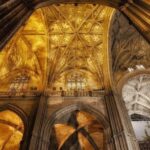
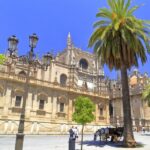
Next comes Plaza de la Virgen de los Reyes, where the cathedral complex attached to the Giralda sits at the center of your attention. This is one of those moments where it’s easy to say, yes, that’s impressive, and move on. The tour tries to do more: it points out that you won’t just see what’s obvious—you’ll notice what’s behind it, how it fits into the city’s story, and what it meant in Christian Seville after the Reconquest.
Right after, you’ll stop at Palacio Arzobispal (admission not included). The tour description calls it an example of the Archbishopric’s Horror Vacui, which basically means an obsession with filling space and making presence unavoidable. If you’re the type who wonders why certain buildings feel visually “full,” this is a helpful theme.
A small practical note: since some stops have admission not included, expect that part of the experience here is viewing and storytelling rather than a long ticketed interior visit. That can be a plus if you like moving through neighborhoods, but it might feel different if you were hoping for guaranteed inside access.
Santa Marta to Judería: the Jewish Quarter streets that stick with you
This is the heart of the “three cultures” feeling, and it’s where the tour’s character-driven storytelling really comes alive. The itinerary threads through areas linked to the Jewish community—especially around plazas and street names that carry old memories in the modern city.
You’ll arrive at Plaza de Santa Marta and then move to Plaza de la Alianza, both positioned as key stops for understanding large Jewish presence in Seville. The tour frames these spaces as more than scenery: they’re treated like social centers in the city’s past, where everyday life, identity, and community mattered.
Then you get Plaza de Doña Elvira, a spot that’s mostly about the Santa Cruz neighborhood’s photo routes—plus the guide’s attention to how minority communities lived with unusual superstitions and local beliefs. Even if you don’t buy into folklore, it’s the human side of history that makes it memorable.
Two street-name stops are especially fun for your imagination: Calle Susona and Calle Vida. The tour leans into legends and symbolism here—almost like a story you can walk through. And that’s a big part of why people enjoy this style of city tour: you start reading street names as clues, not just labels.
Finally, the tour heads through Judería, where you should expect color, atmosphere, and sensory overload in the best way. If you’re trying to connect Seville’s Jewish Quarter layout to later Christian-era changes, this section gives you that bridge just by walking.
Alcázar area gates and the royal transitions you can feel in stone
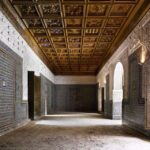
After the Jewish Quarter section, the tour shifts toward monumental power and royal change. Plaza del Patio de Banderas is positioned as your doorway toward the Royal Alcázars of Seville zone, with the tour framing it around succession—who came after whom, and what each era left behind.
This approach is useful because it avoids the common trap of listing facts. You’re not just seeing a palace area; you’re learning to think in layers. Seville didn’t freeze in time. It kept changing rulers, styles, and cultural priorities, and the city’s stonework reflects those handoffs.
Next up is Puerta del Leon (admission not included). This is presented through its symbolism: defense, heraldry, customs, and kings connected to its walls. Even from outside, the point is clear—you should pay attention to what entrances were built to do: control movement, project authority, and mark transitions.
If you like walking tours that make architecture feel like a story, this middle-late section is one of the strongest parts.




Archives, inmaculada monument, and Giralda-linked viewpoints
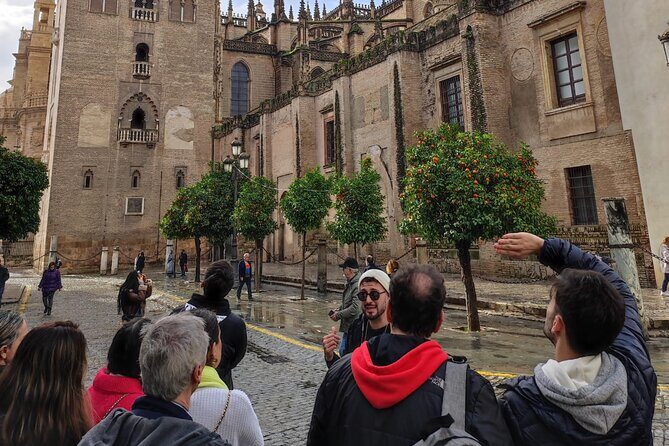
Then the tour climbs back toward iconic city markers.
At Archivo General de Indias (admission not included), you’ll hear a playful angle tied to piracy themes. The tour description says the place is linked to pirates and explains why the archive matters so much—so you can understand why something would be so protected and so valuable.
After that, Monumento a la Inmaculada Concepcion offers a different kind of context. It’s framed around Seville as a crossroads for artists and Baroque influence, plus a surprising reference to the first marketing campaign in history. If your brain enjoys connections between culture and commerce, this is a good moment to pause and think about how ideas spread.
The tour then returns to one of the city’s most famous symbols with Giralldillo. The key advice here is about the viewpoint: the tour warns that the view deceives, so you should take the time to look, then look again from the guide’s framing. That’s often where the “wow” moment lands—when you realize what looks one way from one angle becomes something else after a small shift.
Finally, there’s Torre Abdel Aziz (admission free for the stop as described). The focus is on learning to see greatness in towers and walls—especially when you’re standing where photos often flatten buildings. You’ll get “photo location” guidance, but the bigger value is learning how to read scale.
Triana and the Torre del Oro: crossing from Arenal to the river
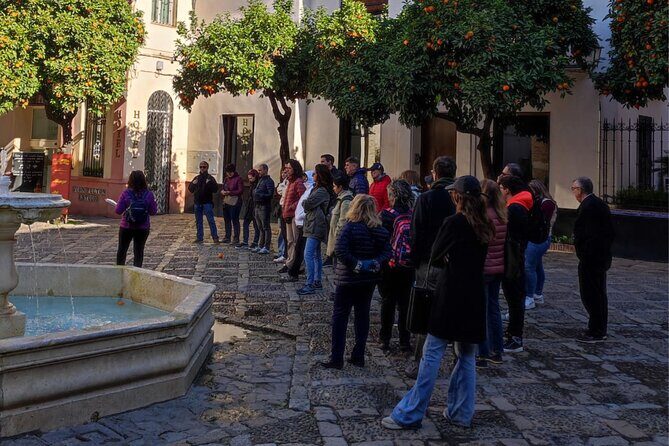
The final stretch brings you toward the Arenal and Triana feel, with a sense that Seville’s story isn’t just central squares—it’s also the riverfront and the neighborhoods across from power.
You’ll stop at Arco del Postigo del Aceite and the tour description leans into how places can feel like they’re straight out of stories, with good times and bad times in the mix. That sets the tone for the Arenal area: it’s where Seville feels more everyday, even when it’s tied to major historical currents.
Then you hit Plaza Del Cabildo, which the tour treats as a “don’t miss” passageway. The language around it suggests you’ll understand how people lived and why you’ll want to linger. And even if you only have a short stop, it’s a useful moment to reset your bearings before heading into the craft-and-market zone.
Next comes Mercado Artesania El Postigo, described as a place that keeps the best of each village that settled here. You can treat it as a sensory pause—an excuse to look at what locals might have today while the guide connects it back to the city’s mix of origins.
Then you cross via Puente de Isabel II (Puente de Triana) with time for photos and “comparisons.” This is one of those tourist routes that works because it gives you a side-by-side feeling: you look at Seville from one angle, then you turn and see it differently. The tour also hints at pilgrim stories tied to characters who crossed here, so the bridge isn’t just an exit—it’s part of the narrative.
You end at Torre del Oro (admission not included for the stop as described). The tour promises that at this point understanding becomes almost absolute, and that they save the ending for when you see the tower. Even without an interior ticket, the exterior and the riverside setting help “close” the story you started at the city’s administrative/monumental divide.
Price and value: what $13.88 buys you
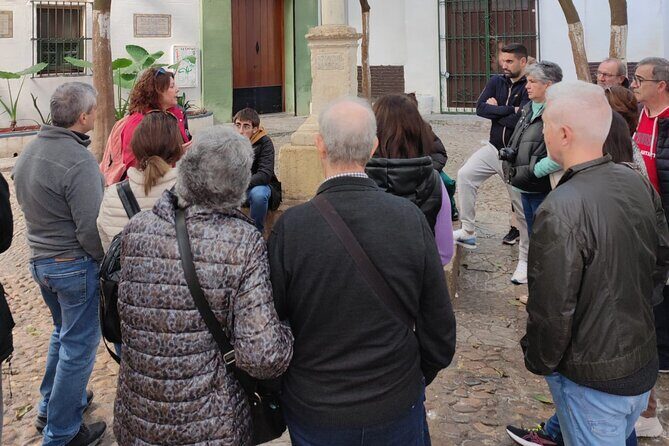
At $13.88 per person, this is priced like a budget-friendly guided introduction that aims to be worth it even if you never enter paid interiors. And the itinerary supports that.
Many stops are described as admission ticket free, which means you’re not constantly paying to get the “real” experience. You’ll still hear the stories, get key viewpoint moments, and cover a sweep of Seville’s most telling public spaces. The tour also lists a few stops where admission is not included—like the Archbishop’s palace area, Puerta del Leon, Archivo General de Indias, and Torre del Oro—so your wallet stays safer if you’re not planning extra tickets.
Where the price really matters is the guide work. The feedback I saw gives strong weight to storytelling and making corners feel connected. Names like Alfredo and Jose show up in the guide mentions, and the common theme is that the walk feels pleasant, professional, and easy to enjoy.
If you’re in Seville for a short visit, this kind of walking framework can actually save money. Instead of entering a bunch of pricey sites with no context, you get the “map in your head” first—then you can decide which places deserve your ticket time.
Who should book, and who might want a different plan
You should book this if you:
- want a 2-hour Seville overview that connects Roman, Al-Andalus, Jewish, and Christian layers,
- like walking and photos more than long museum sessions,
- enjoy legends, character stories, and street-name symbolism,
- want a manageable group setting (max 20).
You might want a different option if you:
- expect guaranteed long interior access to major attractions every time,
- want a slow, stop-everywhere deep research style visit rather than a guided sprint through the city’s key “story nodes.”
Also, this route is a good match for the kind of traveler who likes structure without feeling controlled. The stops are short, but they’re curated, so you’re not aimlessly drifting through the old center.
Quick FAQ
FAQ
How long is the Seville of the 3 Cultures tour?
It runs for about 2 hours.
Where does the tour start and end?
It starts at Pl. de S. Francisco, 17, Casco Antiguo, 41004 Sevilla, Spain and ends near Torre del Oro at P.º de Cristóbal Colón, s/n, Casco Antiguo, 41001 Sevilla.
Do I get a ticket on my phone?
Yes. The tour uses a mobile ticket.
How much does it cost?
The price is $13.88 per person.
Is the group size limited?
Yes. The tour has a maximum of 20 travelers.
Are there admission fees during the tour?
Many stops are listed as free, but some have admission not included (like Palacio Arzobispal, Puerta del Leon, Archivo General de Indias, and Torre del Oro).
Is service for people with mobility needs mentioned?
Most travelers can participate, and the tour is near public transportation, but accessibility specifics are not detailed in the provided info.
What’s the cancellation policy?
Free cancellation is available. You can cancel up to 24 hours in advance for a full refund.
Are service animals allowed?
Yes, service animals are allowed.
Should you book it?
Yes—if you want a smart, walkable Seville story that connects neighborhoods to the city’s changing cultures. For $13.88, you get a route that’s short enough to fit a busy day, long enough to make sense of the old center, and focused on the crossroads between Roman, Al-Andalus, Jewish, and Christian Seville. If your priority is inside tickets at major sites, plan those separately—but as a way to get your bearings fast and see Seville with more meaning, this one is easy to recommend.