REVIEW · SEVILLE
Enchanted Seville Walking Tour
Book on GetYourGuide →Operated by Naturanda Turismo Ambiental · Bookable on GetYourGuide
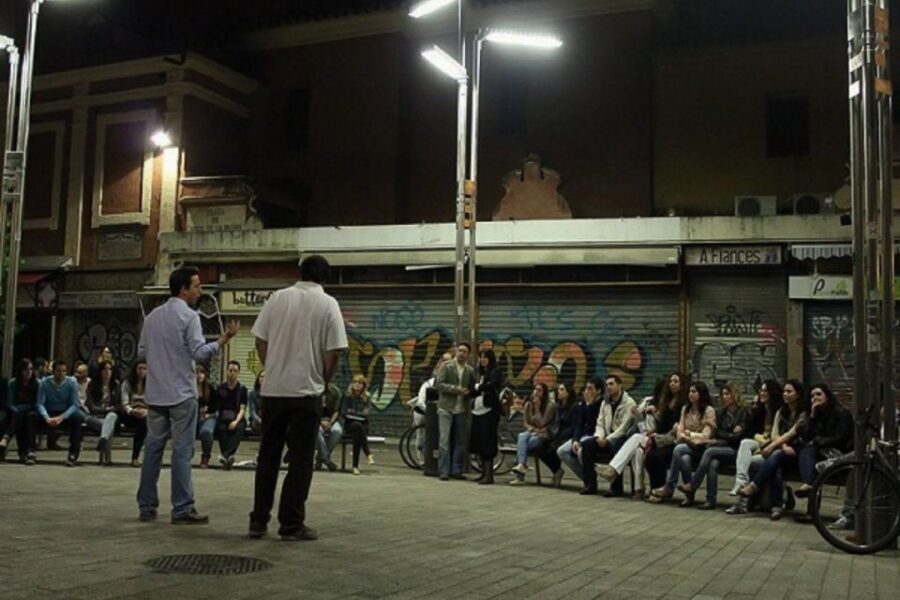
A good legend makes a city feel alive. This Enchanted Seville walk uses nighttime storytelling to connect Seville’s cultures, from an earthquake tale to the eerie corners of the old Jewish quarter, all starting at Plaza del Triunfo. I really like how the guide turns regular streets into a route you can remember, with myths and history tied to specific squares and housefronts.
I also love the way the walk stitches together different Seville eras in a short time: the Judería stories (starting with 1248) lead into the Roman columns area, then onward to Muslim-era underground passages in Alfalfa. You end at Las Setas in Plaza de la Encarnación, so the modern contrast lands right when you’re still keyed into the older layers.
One drawback to plan around: it’s about 2 hours of walking on uneven old-town streets, and it’s not suitable for wheelchair users. If you’re sensitive to cobblestones or you want slow museum-style pacing, this may feel like a fast, story-heavy stroll.
In This Review
- Key things to know before you go
- Plaza del Triunfo, Lisbon 1755, and why the night matters
- Patio de Banderas and the short intro that sets your mental map
- Walking the Judería: Seville’s old Jewish quarter in real street-scale
- Plaza squares you’ll actually remember: Doña Elvira, Susona, Alfaro
- Calle Mármoles and the Roman columns: where the city shows its layers
- Calle Cabeza del Rey Don Pedro: a street-story you can hear
- Alfalfa underground passages: Muslim-era details you can picture
- Las Setas at Plaza de la Encarnación: the modern ending that snaps into focus
- Price and what $17 gets you in a city like Seville
- Who this night walk suits (and who should skip it)
- Guides: what strong guiding looks like here
- Should you book Enchanted Seville?
- FAQ
- Where does the tour meet?
- How long is the walking tour?
- What languages are available?
- Is it wheelchair accessible?
- What should I bring?
- Is food and drink included?
Key things to know before you go
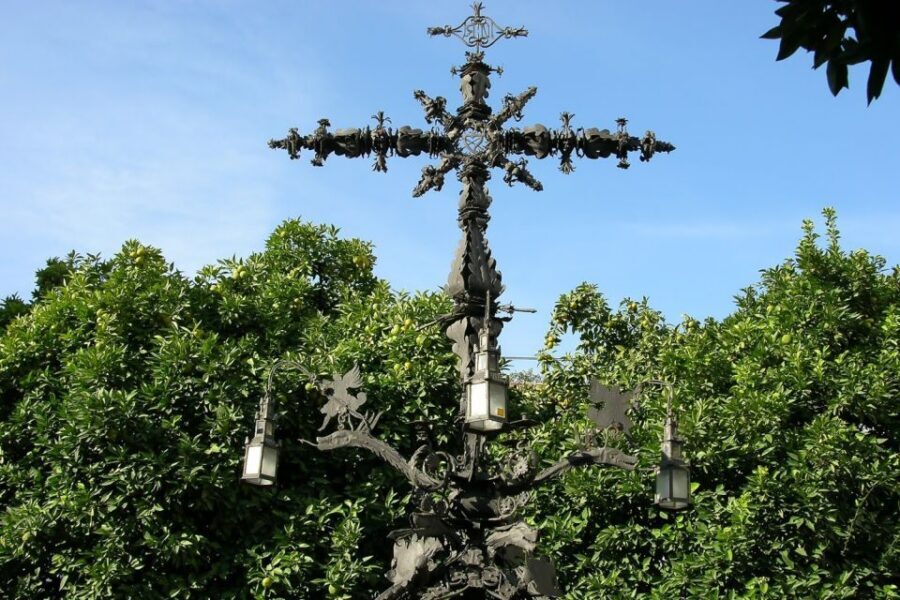
- Plaza del Triunfo at night: the tour starts with the Lisbon 1755 earthquake felt in Seville and the plaza’s name and buildings explained.
- Judería focus: you spend meaningful time in Seville’s old Jewish quarter with stops like Plaza de Doña Elvira, Plaza de Susona, and Plaza de Alfaro.
- Haunted-house style stories: you’ll hear spooky, neighborhood-based legends connected to specific streets and squares.
- Roman-to-Muslim transitions: Calle Mármoles (Roman columns) leads into Calle Cabeza del Rey Don Pedro, then on to Alfalfa’s underground passages.
- Modern ending at Las Setas: you finish in Plaza de la Encarnación, where the setting feels very different from the medieval lanes.
- Small-group energy from strong guides: several guides (including Emilio and Valentine) are singled out for being friendly, engaging, and responsive.
Plaza del Triunfo, Lisbon 1755, and why the night matters
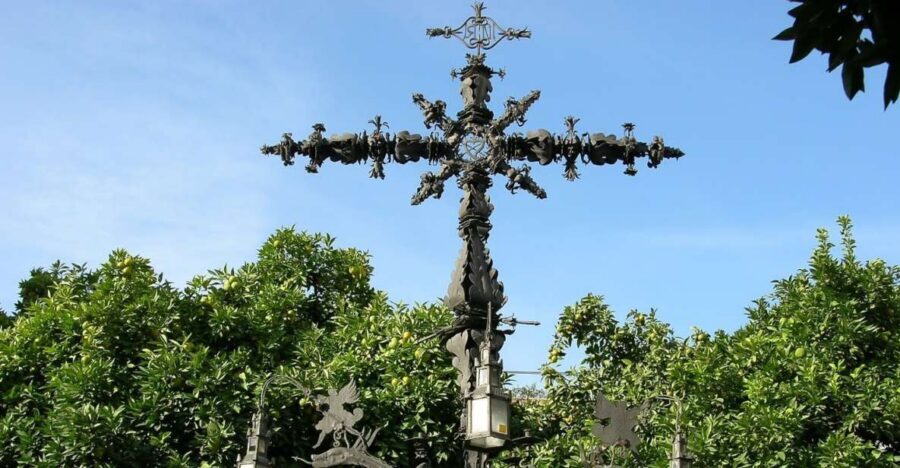
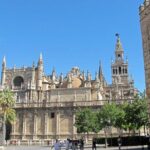
The walk begins at Plaza del Triunfo, near the Immaculate statue. This is a smart starting point because the plaza isn’t just pretty—it has a real “Seville caught up in world events” story baked into it. Your guide sets the tone with the 1755 Lisbon earthquake, which was also felt in Seville, and then connects it to the reason for Plaza del Triunfo’s name. You’ll also hear about the history of the three buildings you encounter there, so you’re not just memorizing facts. You’re learning how Seville people interpreted those shocks in the language of place.
Starting at night is more than a marketing hook. Old streets are made for atmosphere, and legends land better after sunset. You’ll get the sense that the city is speaking in fragments—names, corners, and façades—rather than as one neat museum timeline.
What I like: you’re not thrown immediately into a crowd of monuments. You begin with a narrative anchor, and then the route grows from there.
What to watch: because you’re in the center of town early on, it can be busier around major landmarks. Arrive a little early so you’re not rushing to find the group.
You can also read our reviews of more walking tours in Seville

Patio de Banderas and the short intro that sets your mental map
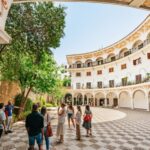
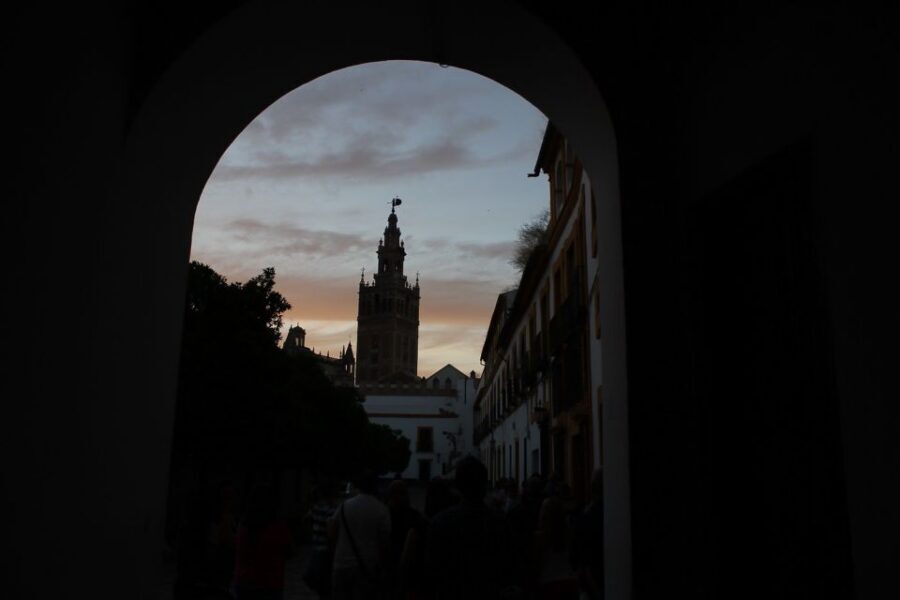
Right after the start, you move toward Patio de Banderas for a guided moment. This is one of those quick “get oriented” stops. In tours like this, the first minutes matter: you need names of streets, squares, and neighborhoods in your head before the stories start stacking.
Even though the guidance here is brief, it helps you understand the route you’re going to walk—so later, when the narrative jumps from Jewish quarter to Roman columns to Alfalfa, it feels like a deliberate path instead of random wandering.
For you: if you like tours where the guide helps you follow the city, this early orientation is a big plus.
Walking the Judería: Seville’s old Jewish quarter in real street-scale
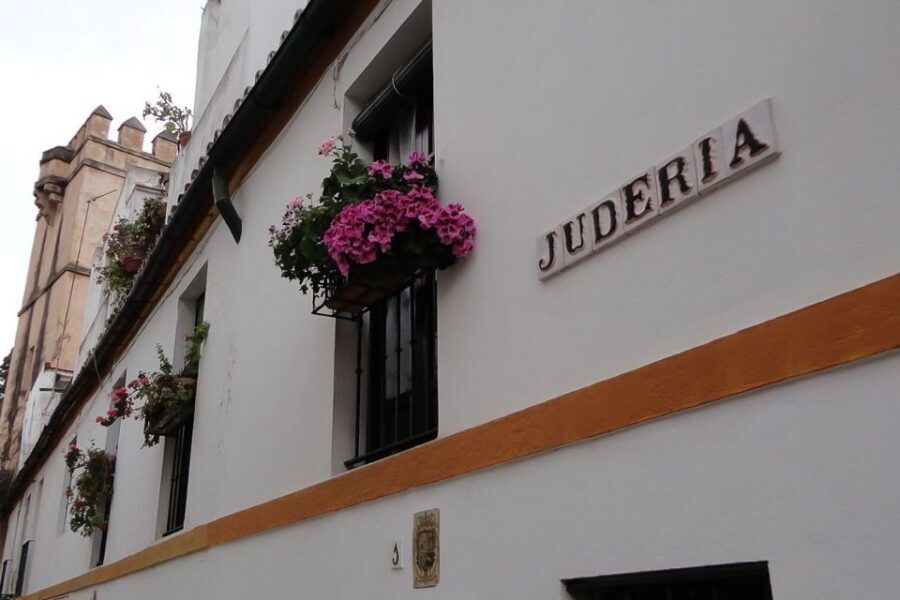
After the opening, the tour shifts into the old town zone known as the Judería. This section is the emotional core. You’ll walk through narrow lanes and stop in small squares where the guide can connect stories to exact spots—Plaza de Doña Elvira, Plaza de Susona, Plaza de Alfaro, and more.
What makes this part useful is the time-spanning framing. You’re told about happenings from 1248 until now, which gives the neighborhood more than one “snapshot” identity. You’re also warned, in a friendly way, that some stories have that haunted quality. The guide treats the area like a living set of legends, tied to haunted houses and special neighborhood tales.
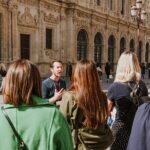
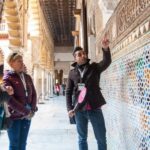
This is where a good guide makes a difference. When you get a guide who can answer follow-up questions, the Judería stops become memorable because they’re interactive. In the guide feedback I saw, people highlighted guides like Emilio and Valentine as being engaging and willing to respond with real explanations rather than quick buzzwords.
Possible drawback: the streets here are narrow, and the tour leans into walking and listening. If you want plenty of quiet time, this section may feel like it moves quickly.
Plaza squares you’ll actually remember: Doña Elvira, Susona, Alfaro
One reason I like this tour’s pace is that it names the places you’ll pass through, instead of only describing “the area.” Those squares—especially Plaza de Doña Elvira, Plaza de Susona, and Plaza de Alfaro—aren’t random. They give your brain little “labels” to hang the stories on.
Here’s what that buys you later: when you come back on your own, you’ll recognize these spots and connect them to what you learned at night. In Seville, many streets look similar until you know one or two story anchors.
Tip for you: take note of one or two square names. Even if you forget the details, the names help you retrace the route with less effort.
Calle Mármoles and the Roman columns: where the city shows its layers
Once you finish the Judería portion, the walk heads toward Calle Mármoles, known for its Roman columns. This is a valuable shift because it stops the story pattern from staying only in one cultural lane. Instead, the guide points out physical remnants—columns you can see with your own eyes—so the legends don’t float. They attach to stone.
Roman columns in Seville are a reminder that the city kept collecting layers: old empires, new faiths, changing neighborhoods, and the same streets getting reused and reinterpreted over centuries.
Why this works: it gives you a “proof point” after the more story-forward spooky neighborhood tales.
What to watch: wear comfortable shoes. Even if the walking distances are short per segment, Seville’s paving can be unforgiving at night.



Calle Cabeza del Rey Don Pedro: a street-story you can hear
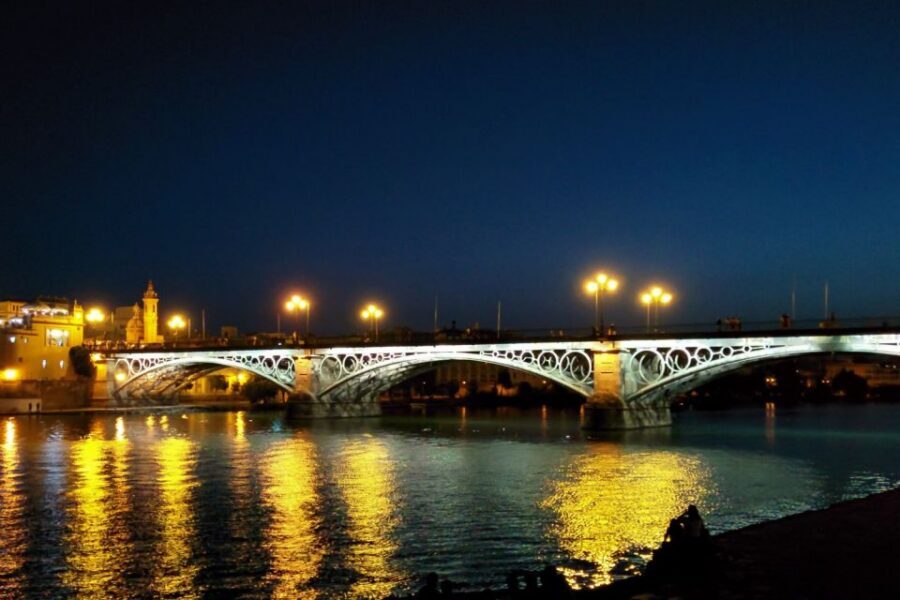
Next comes Calle Cabeza del Rey Don Pedro. This stop is specifically framed as a story street—the kind of place where a guide can explain why a name matters and what the street symbolizes in Seville’s shifting power and folklore.
This segment is only about guided minutes, so it’s not the place to expect a long stop like a full museum visit. Instead, the value is in how quickly you learn to read a street name and a street’s vibe as something historical.
For you: if you like interpretive walking tours—where the point is understanding what you’re looking at—this part will land.
Alfalfa underground passages: Muslim-era details you can picture
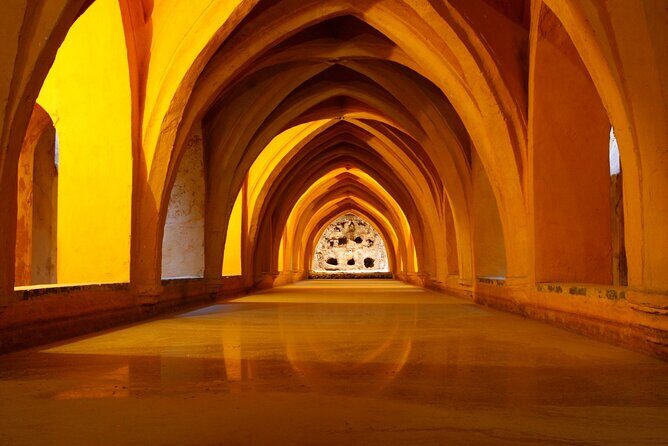
After Calle Cabeza del Rey Don Pedro, you reach Alfalfa, where you’ll hear about underground passages and small shops created during the Muslim period. This is one of the most practical “imagination activators” in the whole route, because you’re learning that the city wasn’t just surface-level. There were ways of moving, working, and living with hidden or semi-hidden infrastructure.
Even if you can’t see everything yourself in the moment, the guide helps you picture how the neighborhood was designed. It’s the kind of detail that makes you walk through later streets differently, thinking about how people used them before.
Possible drawback: if you’re hoping for a full underground visit, the format here is still a walking tour, so don’t expect a long exploration. You’re there to understand the location and its stories.
Las Setas at Plaza de la Encarnación: the modern ending that snaps into focus
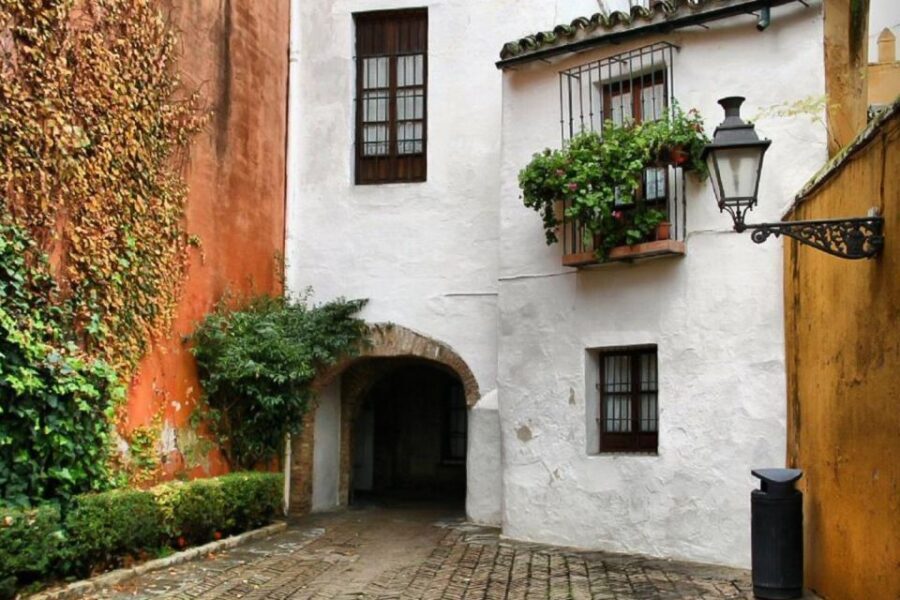
The walk finishes at Las Setas, in Plaza de la Encarnación. This ending is clever because it flips your perspective. After hearing about medieval quarters and older infrastructure, you arrive at a modern Seville landmark that feels like a different city.
This contrast helps you absorb the big picture: Seville doesn’t replace its past—it builds over it, keeps using it, and keeps reimagining it.
What I like about this finish: you don’t end on a dead-end street. You end in a place where you can look around, regroup, and decide what to explore next on your own.
Price and what $17 gets you in a city like Seville
At $17 per person for about 2 hours, this is the kind of price that works well for a first or second night in Seville. It’s not competing with big-ticket attractions. It’s doing something more useful: guiding you through neighborhoods where you’d otherwise have to guess what matters.
You’re paying for three things that add real value:
- A professional local guide who connects names and legends to exact spots.
- A focused route that touches multiple eras in one night.
- Enough time to learn the big stories without exhausting yourself.
If you’re on a budget, walking tours often give the best cost-to-knowledge ratio. And since food and drinks aren’t included, you can keep your evening simple: just eat before or after, and use the tour time for what you can’t replicate alone—story context.
Who this night walk suits (and who should skip it)
This tour is a great fit if you:
- Like story-based history tied to places, not just dates.
- Want a compact route through Seville’s Jewish quarter, Roman references, and Muslim-era details.
- Enjoy evening walks where the city feels more atmospheric.
You might want to choose something else if you:
- Need wheelchair access or step-free routes (this one isn’t suitable).
- Prefer long stops, museums, or slow pacing.
- Don’t like walking on uneven streets at night.
Guides: what strong guiding looks like here
Even with a set route, the experience lives or dies on the guide. In the feedback I saw, people consistently praised guides for being friendly, engaging, and willing to answer questions. Emilio came up as especially warm and capable of making the walk interesting, and Valentine was noted for being informative and responsive based on research.
That matters because this tour includes legend-heavy moments. A guide who can explain the reasoning behind stories, and then answer your follow-ups, turns spooky atmosphere into actual understanding.
One consideration: there’s also a hint that the length or full program may vary sometimes. If your time in Seville is tight and you’re trying to fit in specific plans immediately after, build in a small buffer.
Should you book Enchanted Seville?
Yes—if you’re the kind of traveler who enjoys learning by walking and you want a single night to connect Seville’s cultures. The value at $17 is strong for a guided route that covers multiple eras, ends at a major modern landmark, and doesn’t require museum tickets or long detours.
Don’t book it if you can’t handle uneven streets, or if you want a slow, sit-down style history lesson. It’s a moving, story-forward walk.
If you do book it, I’d plan this as your first or second evening in the city. It gives you a mental map fast, so the rest of Seville starts making sense.
FAQ
Where does the tour meet?
It meets at Plaza del Triunfo, by the Immaculate statue in Seville.
How long is the walking tour?
The tour lasts about 2 hours.
What languages are available?
You can join in Spanish or English.
Is it wheelchair accessible?
No. It is not suitable for wheelchair users.
What should I bring?
Wear comfortable shoes, since it’s a walking tour on historic streets.
Is food and drink included?
No. Food and drinks are not included.