REVIEW · SEVILLE
Seville Small-Group Monumental Highlights Walking Tour
Book on Viator →Operated by Seville Unique Experiences · Bookable on Viator
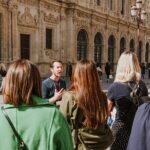
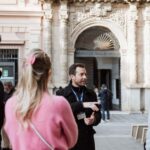
Two hours, and Seville starts making sense. This small-group walk is built for real-time orientation: you follow a licensed English guide along key sights and you get the why behind them, not just the what. I love the pace and the focus on being outside, where Seville’s layers of culture show up right in front of you, whether you’re listening to Carmen’s stories or Marta’s quick-fire facts.
I also like that you leave with a clear mental map of the city’s big eras, from Moorish Seville to the New World trade to the 1900s showpiece at Plaza de España. One thing to consider: monument entry tickets are not included, so if you want to go inside, you’ll need to plan those extras (and Plaza de España may be temporarily closed if there’s heavy wind).
In This Review
- Key things I’d watch for before you go
- Why this 2-hour “highlights” walk is such a smart first step
- Meeting point on Pl. de S. Francisco, 17, and the end at Plaza de España
- City Hall and Seville’s 1500s importance
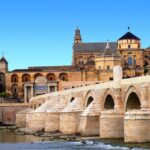
- Former mosque connections and the Giralda Tower from street level
- Seville as the Port of the Indies and the New World trade center
- Real Alcázar: a Royal Palace still in use, with rulers since the early centuries
- Torre del Oro: the last Muslim building as a city watchtower
- Tobacco Factory architecture from the 1700s and industrial Seville
- Plaza de España and the Ibero-American Exhibition urban shift
- What you get for the price, and what you’ll still need to add
- How to make your guide part of your day (not just background talk)
- Who this tour fits best (and who might want something else)
- Should you book this Seville highlights walking tour?
- FAQ
- How long is the tour?
- How much does the Seville Monumental Highlights Walking Tour cost?
- How big is the group?
- Is the tour offered in English?
- Where does the tour start and where does it end?
- Do I need to print tickets?
- Are monument entry tickets included?
- Can Plaza de España close during the tour?
- Is free cancellation available?
Key things I’d watch for before you go
- Max 10 people means more questions and less queueing-by-crowd
- Outdoor-first route helps you read Seville’s history on the street level
- 1500s to 1900s in one sweep so the city’s timeline stays coherent
- Monuments inside are not included, so bring a plan for what you’ll do next
- Plaza de España can close during heavy wind alerts
- Guides adjust on the fly, with examples like Carmen adapting to the group
Why this 2-hour “highlights” walk is such a smart first step
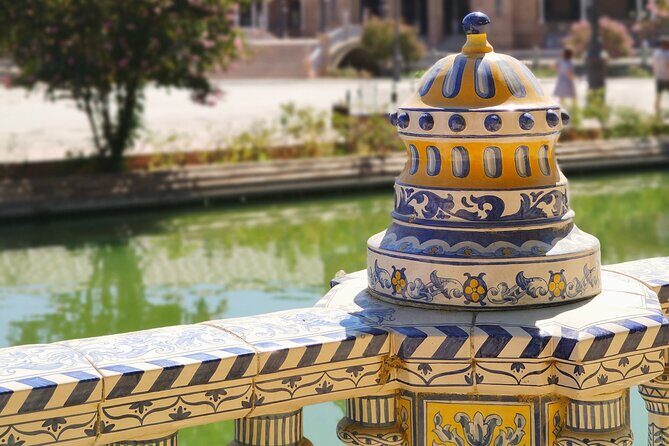
Seville can feel like a maze, especially around the historic center where streets twist and squares appear out of nowhere. This tour is designed to help you get your bearings fast by linking major landmarks with the story of what made them matter. In practice, that means you understand why people built there, who used it, and how different cultures reshaped what you see today.
The 2 hours length is also a plus for short stays. You can fit it early on day one, then spend the rest of your trip returning to the places that caught your interest. And because the group stays small (up to 10), the guide can pace the walk around your questions and energy level rather than marching everyone like a school group.
You can also read our reviews of more walking tours in Seville


Meeting point on Pl. de S. Francisco, 17, and the end at Plaza de España
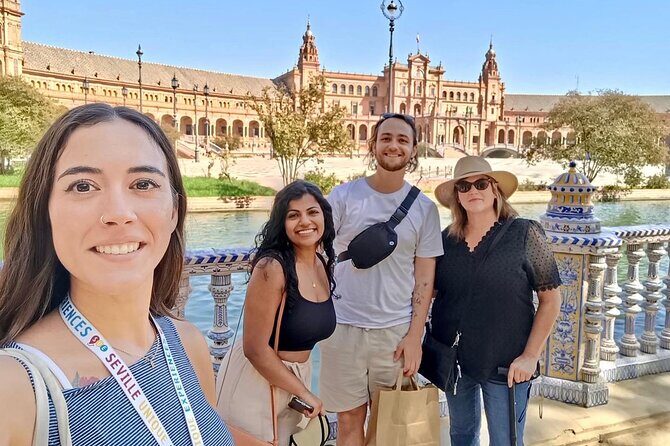
You’ll start at Pl. de S. Francisco, 17, in Seville’s Casco Antiguo (near lots of central connections). The tour ends at Plaza de España, Av. Isabel la Católica, so you finish in one of the most photogenic locations in the city.
If you like planning your day in blocks, this setup is helpful. You start in the older core near City Hall-related sights, then you gradually shift toward the more modern-looking showpiece at Plaza de España. Also, you’ll get a mobile ticket, which keeps things simple when you’re hopping between stops without digging for paper confirmations.
City Hall and Seville’s 1500s importance
One of the first stops centers on Seville’s City Hall and what it represented when the city was at the top of its game. The guide explains why Seville mattered in the 1500s, connecting civic power with the city’s role in Atlantic trade and the flow of money, people, and ideas.
What I like here is that it sets the tone for everything you’ll see next. You’re not just walking past impressive buildings; you’re learning what kind of city Seville was becoming. When you understand that Seville wasn’t a sleepy backwater, the later landmarks stop feeling random and start feeling like a system.
This opening also helps you frame your photos. Instead of just snapping towers and facades, you start capturing the details that relate to the city’s status and ambition.
Former mosque connections and the Giralda Tower from street level
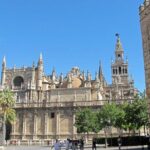
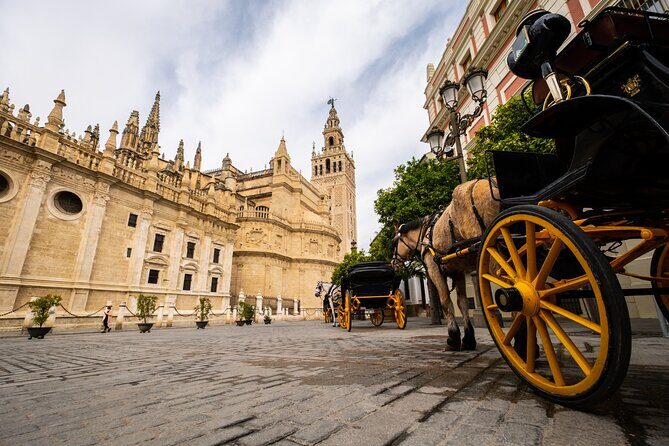
Next comes a big outdoor overview involving the former mosque context and the Giralda Tower. The point isn’t to lecture you in the abstract. You look outward, see the monumental shapes, and connect them to how one culture’s building traditions influenced what came after.
This is where the tour earns its keep for first-timers. Seville’s architecture often looks like it was assembled over time (because it was). When the guide explains the chain of cultural change, the Giralda becomes more than a famous silhouette. It becomes a marker in a longer story of conquest, adaptation, and identity.
If you’re the kind of traveler who usually wonders why a city looks the way it does, this stop is where that curiosity becomes useful. You start noticing transitions in style and function, not just decoration.
Seville as the Port of the Indies and the New World trade center
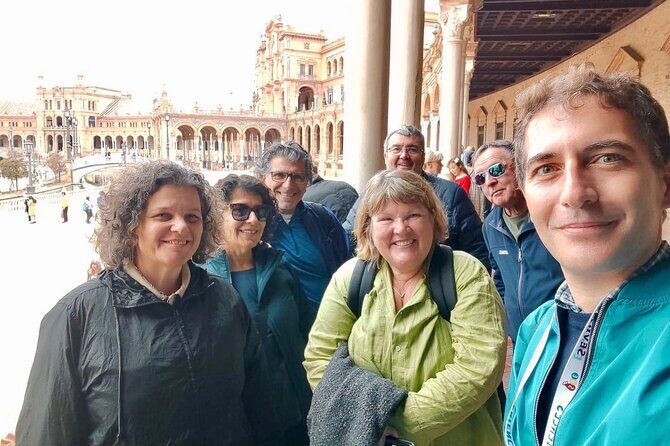
Then you move into the part of the tour that helps you understand Seville’s global impact: the city as the Port of the Indies, and the trade center tied to the so-called New World.
Even if you don’t consider yourself a history person, you’ll get value here because trade history explains a lot of what visitors feel but can’t name. It explains why the city grew, why wealth concentrated where it did, and why so many monuments in central Seville relate back to power and movement.
I also like that this section doesn’t stay stuck in dates. It helps you connect economic gravity to real neighborhoods and real architecture, so you walk away with a practical sense of how Seville worked.





Real Alcázar: a Royal Palace still in use, with rulers since the early centuries
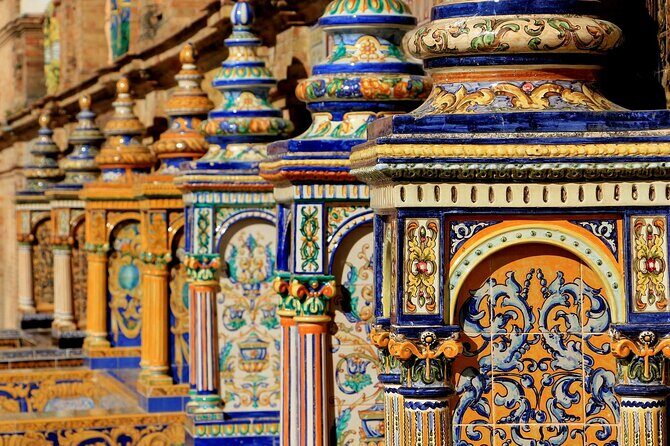
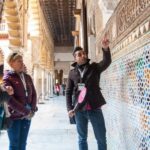
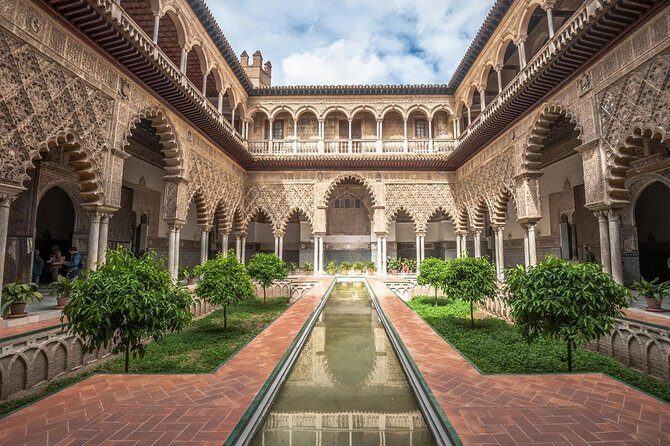
One of the most memorable stops is the Real Alcázar area, framed as the oldest royal palace still in use in Europe (as the tour presents it) and used by rulers since very early medieval times.
Here’s the value: since monument entry isn’t included, the guide keeps it outdoors and story-driven. You get the sense of continuity—how a palace isn’t just a one-time build. It’s something that got maintained, adapted, and re-used because leaders kept finding it strategically and symbolically important.
From the street, you can still appreciate why this place has staying power. Once you hear how long rulers used the space, the scale and location feel less like coincidence and more like intent.
And if you’re the kind of traveler who wants the interior experience, this stop works as a teaser. You’ll know what to look for when you later buy entry tickets on your own.
Torre del Oro: the last Muslim building as a city watchtower
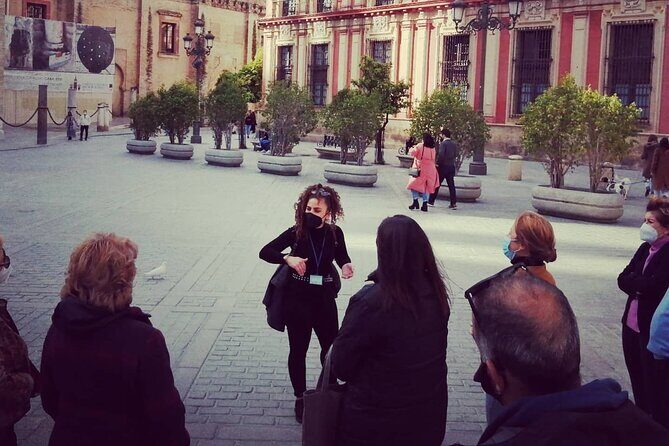
Another highlight focuses on what the tour describes as the last Muslim building in Seville, a watchtower that later became an entry point associated with the ocean approach.
Torre del Oro is one of those landmarks that looks instantly recognizable in photos, but the tour helps you understand why it existed where it did. Watchtowers are practical infrastructure, not just skyline decoration. They signal defense, control, and information—especially for cities tied to maritime traffic.
I like that the guide ties this stop back to the idea of Seville as a city shaped by movement: ships arrive, people travel, and the city has to know what’s coming. That makes the tower feel less like an object and more like a tool the city relied on.
If you’re thinking about where to spend more time later, this is a good place to decide. The tower area gives you both visual impact and clear context.
Tobacco Factory architecture from the 1700s and industrial Seville
The route also passes the old Tobacco factory building, built in the 1700s, used here as an example of Seville’s industrial architecture.
This stop is useful for balancing the tour’s more storybook monuments. Palaces and towers are easy to romanticize. A former industrial building reminds you that Seville wasn’t only about courts and ceremonies. It was also about production, labor, and large-scale systems that employed people and helped drive the economy.
And because this is again an outdoor stop (entries not included), the guide keeps it readable. You’ll learn what to notice in the architecture without needing to step inside.
It’s a great reminder if you tend to overlook everyday-city buildings. In Seville, even the less famous structures can reveal how power and work shaped daily life.
Plaza de España and the Ibero-American Exhibition urban shift
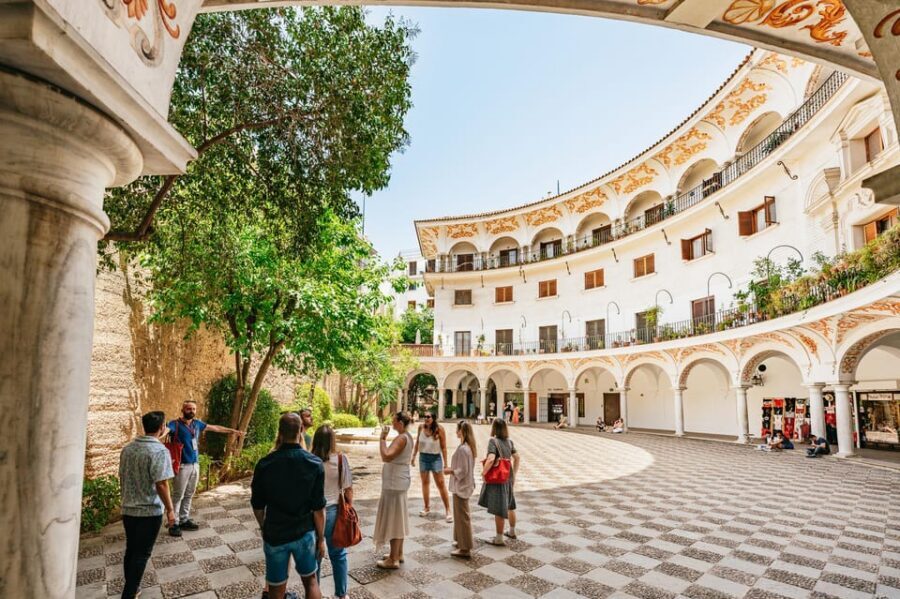
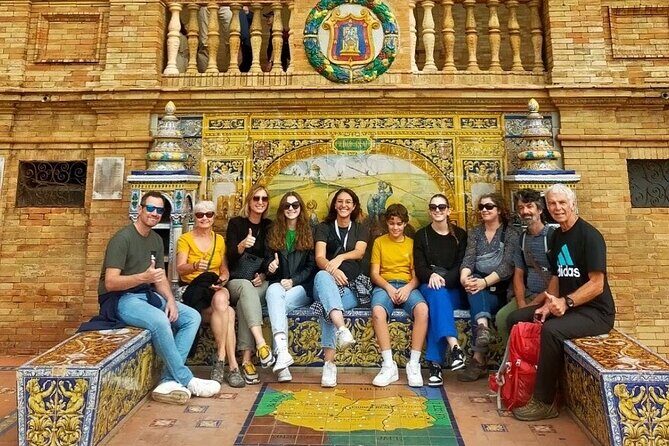
Finally, the tour reaches the Ibero-American Exhibition legacy and explains how it changed the city’s urbanism. The key example is Plaza de España, described as the best illustration of the exhibition’s impact and its host country pavilion.
Plaza de España can feel like a different world compared to older quarters. That’s exactly why it’s a smart finish: it shows how Seville reinvented parts of itself when new cultural and political goals shaped public space.
One practical note: the tour notes that Plaza de España can close due to heavy wind alerts. If that happens, expect the guide to adjust rather than just show up and shrug. The storytelling still matters, but you may not get the full access you were counting on.
If you want photos, plan to linger a bit after the tour if the plaza is open. This is one of the few places in the city where the layout practically invites you to slow down.
What you get for the price, and what you’ll still need to add
At $30.25 per person, you’re paying for an English guided walk with a licensed guide, focused on multiple major sites in about two hours, in a group capped at 10. For a city like Seville, where transit time and confusion can eat your morning, that efficiency is part of the value.
What’s not included is the big one: tickets and visits inside the monuments. So think of this as the orientation ticket, not the full sightseeing package. If you want interiors, you’ll need to budget additional entry fees and time afterward.
That said, this is still good value for most people. You’ll know what to prioritize. After the walk, you can decide what’s worth spending your precious hours and euros on.
How to make your guide part of your day (not just background talk)
The best thing about small-group tours is that you can steer them. A lot of the guides on this route get praised for being funny, adapting to the group, and answering questions even when the questions get specific.
In particular, I’d watch for details like:
- The guide creating a clear timeline so the city feels organized
- The pace staying comfortable and not rushing you past important viewpoints
- The guide being willing to adjust where you stand based on sun and shade
If you’ve got specific interests—architecture changes, Seville’s maritime role, or how Moorish and Christian eras overlap—ask early. The tour is built to be interactive, and that’s where you’ll get the most out of it.
Also, wear shoes you can walk in for a couple hours. Seville’s historic center is uneven in spots, and you’ll be outside most of the time.
Who this tour fits best (and who might want something else)
This tour is ideal if:
- You’re in Seville for a short time and want a fast, organized overview
- You want the big monuments, but you also care about the connecting story
- You’d rather walk with a guide than self-tour while guessing the meaning behind each landmark
- You’re traveling with limited time for ticket lines and want a flexible day plan
It may not be the best choice if your main goal is interior monument visits during the tour window, because entries aren’t included. In that case, you can still use this as your planning base, then add separate tickets for the places that grabbed you most.
Should you book this Seville highlights walking tour?
If it’s your first or second day in Seville, I think you should book it. This is the kind of experience that helps you see the city in layers, not in random stops. The combination of small group size, guided outdoor context, and a timeline stretching from Moorish influences to trade to the Ibero-American Exhibition gives you a strong foundation for what you’ll do next.
Book it even more confidently if you like asking questions and getting practical, clear explanations. The guides associated with this tour have a track record of making the walk feel personal and of keeping the conversation going, whether you’re hearing from Carmen, Laura, or Manuel.
If you’re only planning to spend a few hours in Seville overall, this can be the fastest way to turn “I saw stuff” into “I understand what I saw.” Just remember: bring extra time and budget for monument entrances afterward, and keep an eye on weather-related changes around Plaza de España.
FAQ
How long is the tour?
It runs about 2 hours.
How much does the Seville Monumental Highlights Walking Tour cost?
The price is $30.25 per person.
How big is the group?
The tour has a maximum of 10 travelers.
Is the tour offered in English?
Yes, the tour is offered in English.
Where does the tour start and where does it end?
It starts at Pl. de S. Francisco, 17, Casco Antiguo, 41004 Sevilla, Spain and ends at Plaza de España, Av. Isabel la Católica, 41004 Sevilla, Spain.
Do I need to print tickets?
No. It uses a mobile ticket.
Are monument entry tickets included?
No. Tickets and visits inside the monuments are not included.
Can Plaza de España close during the tour?
Yes. The city council can close Plaza de España due to heavy wind alert.
Is free cancellation available?
Yes. You can cancel for a full refund up to 24 hours in advance of the experience’s start time.