REVIEW · SEVILLE
Private Monumental Walking Tour in Seville
Book on Viator →Operated by Carmen González García · Bookable on Viator
Seville’s big monuments feel less confusing after this walk. This private route strings together the city’s most important sights, mostly from the outside, with stories that connect Moorish roots to Christian power.
I really like the way the tour is built for orientation: you start in the old center near Plaza de San Francisco, then end at the picture-perfect Plaza de España. Two more things I’d book for: the personal pace of a private group and the depth of context you get along the way, with guide Carmen’s emphasis on details you would miss on your own.
One thing to consider: tickets inside monuments are not included, so plan your day expecting exterior viewing and explanations rather than a full “walk through everything” experience.
In This Review
- Key highlights you’ll feel right away
- Meeting at Plaza de San Francisco: a smart starting point
- A regionalist street stop for early-20th-century Sevilla
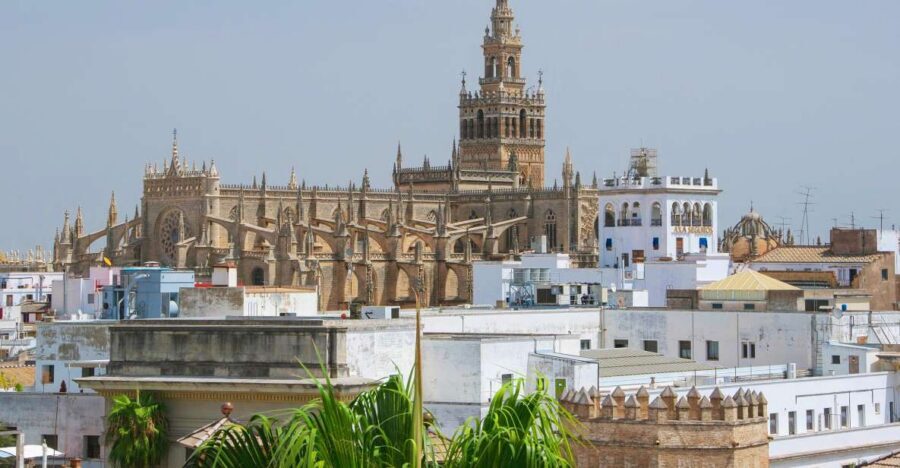
- Seville Cathedral and the Giralda: Moorish origins meet Gothic power
- The Giralda: a minaret that became a bell tower
- Plaza del Triunfo: your quick UNESCO comparison station
- Real Alcázar de Sevilla exteriors: the oldest living royal palace feel
- General Archive of the Indies: Seville’s link to the Americas
- Puerta de Jerez and the city’s nerve center energy
- Hotel Alfonso XIII: an elegant pause with royal connections
- The tobacco factory turned University of Seville: Carmen the story lives on
- Plaza de España: the final wow and where you should linger
- Price and value for a $150.85 private 2-hour tour
- How good is Carmen González García at guiding this route?
- Who should book this monumental walk?
- Should you book this Seville walking tour?
- FAQ
- FAQ
- How long is the Private Monumental Walking Tour in Seville?
- Is this tour private?
- What language is the tour offered in?
- What’s included in the tour price?
- Are monument tickets included?
- Where does the tour start and end?
- Can I cancel for a full refund?
Key highlights you’ll feel right away
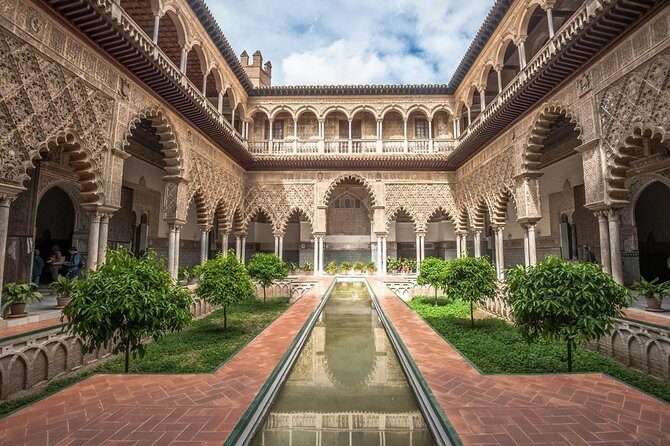
- A true private walk: only your group joins, so questions don’t get squeezed.
- Carmen González García’s on-the-spot storytelling that links eras (Muslim, Christian, and Seville as a trading hub).
- Cathedral + Giralda explained as layered history, not just a postcard stop.
- UNESCO orbit around Plaza del Triunfo, where major sites sit close enough to compare visually.
- Literary and opera connections around the tobacco factory and the world-famous story of Carmen.
Meeting at Plaza de San Francisco: a smart starting point
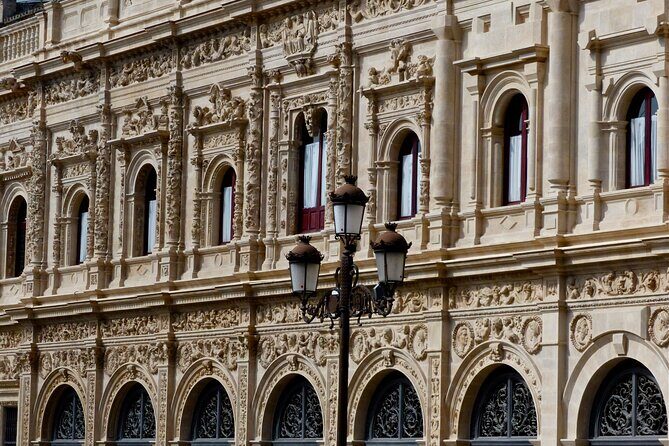
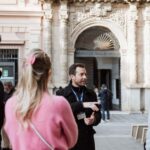
Your tour begins at Plaza de San Francisco, right in Seville’s historic core. It’s a practical place to start because it’s central and easy to reach, and it sets the tone: this city loves to stack history on top of history.
From here, you’ll be oriented to how Seville’s civic and religious power emerged in the same neighborhoods. Expect the guide to point out what you’re looking at quickly—where to stand, what lines to notice, and how to read the “why” behind the buildings.
If you’re trying to make the most of only a couple of days in Seville, starting here is a win. It helps you stop feeling like you’re just passing monuments and start seeing patterns—especially the city’s Moorish-to-Christian transition.
You can also read our reviews of more walking tours in Seville

A regionalist street stop for early-20th-century Sevilla
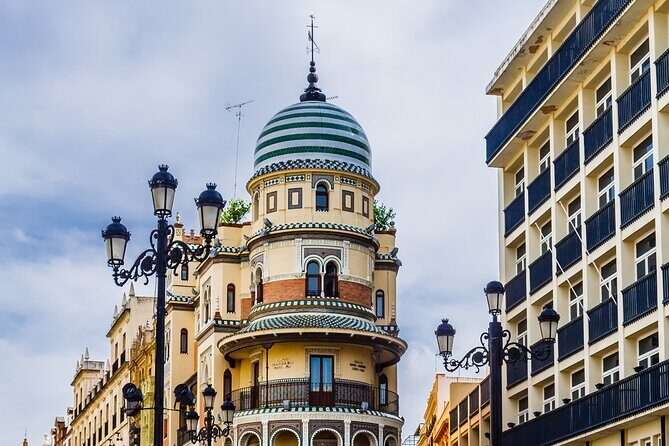
After the first plaza, the route includes a main street known for regionalist-style buildings from the early 1900s. This isn’t the usual “only Gothic and Moorish” approach, and that’s a big part of why the walk feels useful.
This stop gives you a second lens on Seville: not just the distant past, but the city shaping itself in modern times. You’ll get context for the design choices that made Seville feel unmistakably Seville—materials, façades, and the kind of regional pride that shows up in architecture.
The only drawback here is time. With a ~2-hour format, every extra street scene is a tradeoff, so you’ll want your guide’s pace to work for you. For most people, the benefit is that you leave with a wider sense of the city’s “style eras,” not just one.
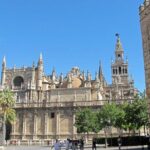
Seville Cathedral and the Giralda: Moorish origins meet Gothic power
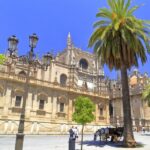
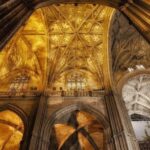
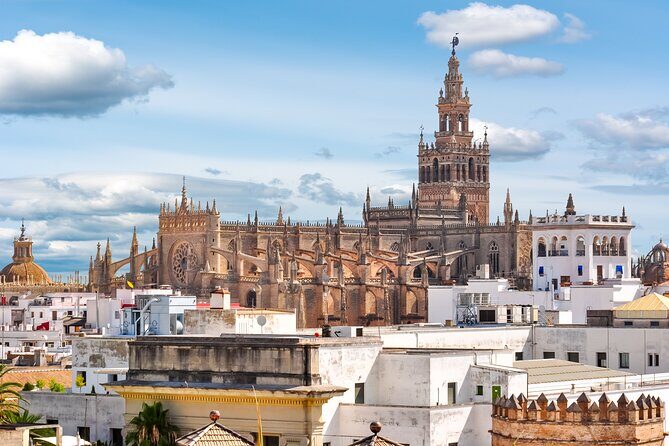
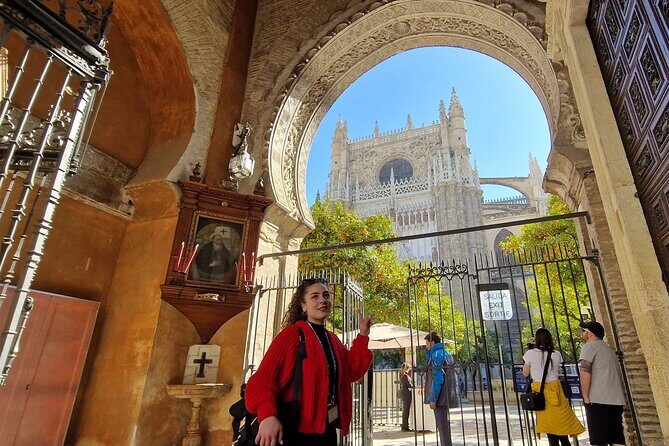
The tour’s centerpiece is the Catedral de Sevilla, famous as the largest Gothic church in the world. What makes the explanation on this stop so valuable is how it treats the Cathedral as a timeline, not a single moment.
You’ll learn that the Cathedral’s site connects to Seville’s Muslim period, including the idea of the Cathedral’s earlier role before it became what you see today. That matters because once you understand the layering, the details make more sense—like why certain shapes and structures feel like they belong together even though they come from different hands and faiths.
The Giralda: a minaret that became a bell tower
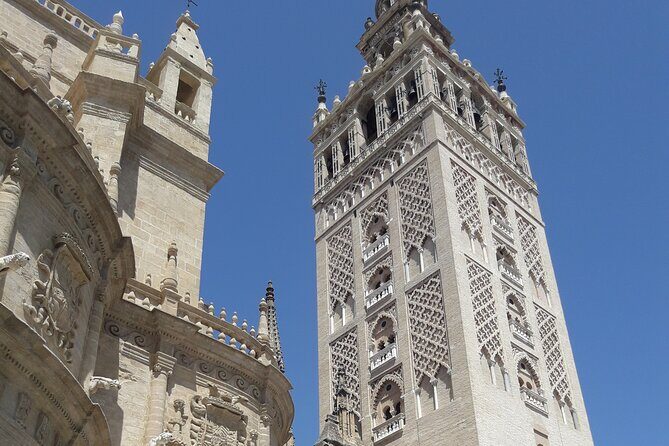
Right after, you’ll spend time at Torre Giralda, the bell tower that grew from a 12th-century minaret tradition. The guide’s job here is to help you notice what’s old, what was adapted, and how a landmark can keep its identity while changing function.
Even if you’re not going inside (interior tickets aren’t included), you still get a lot from standing at the right angle. You’ll come away with the key idea: Seville didn’t erase the past—it repurposed it.
One consideration: if you’re hoping for a full tower climb or interior visit, you’ll need separate tickets and time. Since the tour focuses on exteriors and guidance, don’t build your expectations around entering the Cathedral or ascending the Giralda during this specific experience.
Plaza del Triunfo: your quick UNESCO comparison station
Next is Plaza del Triunfo, a prime viewing area surrounded by UNESCO-listed landmarks: the Cathedral, the Royal Alcázar, and the General Archive of the Indies. This is a great “compare and connect” moment.
From this square, your brain can finally hold multiple monuments at once. You’re not only seeing buildings; you’re seeing how close the Cathedral and Alcázar are in real geography, and how the city arranged its power centers.
Also, it’s a good pause for photos because the space gives you options—front, side, and wide views—without needing to rush. The stop is short enough to keep the momentum, but long enough that you can reframe what you already saw.
You can also read our reviews of more private tours in Seville




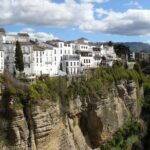
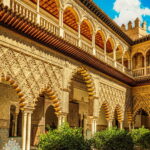
Real Alcázar de Sevilla exteriors: the oldest living royal palace feel
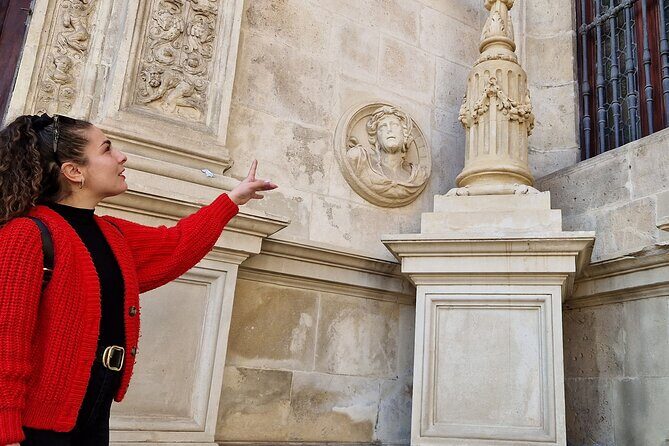
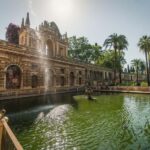
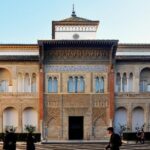
The tour then includes the Real Alcázar de Sevilla, described as the oldest active royal palace in Europe. What makes this stop worth your time is the story of continuity: built during the Muslim era, then reused by Christian monarchs after Seville’s conquest.
That detail changes how you look. Instead of thinking “two totally different palaces,” you start noticing the adaptations—how rule and taste shifted, while the site itself remained important.
You won’t be walking deep into the palace interiors on this tour because the listing notes that tour inside monuments is not included. Still, the exterior view and the guide’s framing can make your later visit (if you choose to go inside) much more rewarding. You’ll know what to look for and what themes to track.
General Archive of the Indies: Seville’s link to the Americas
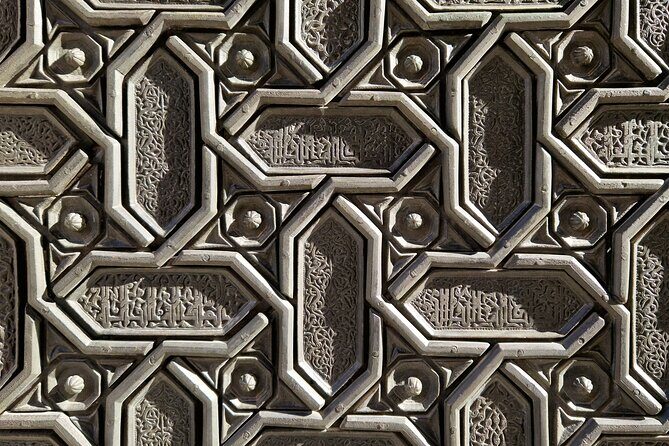
Another stop takes you to the building used for the General Archive of the Indies, originally established in the late 16th century to house trade-related documents tied to the Indies (America). This is one of the most interesting “Seville was global” moments on the route.
You’re walking through a piece of Seville’s real economic engine: the port connection between Europe and the American continent for about 200 years. The fact that it’s now an archival repository makes the site feel grounded in records, not just legends.
Even without an interior visit, you’ll likely get a clearer sense of why Seville mattered far beyond Spain. You’ll see how a city can become a hub for information as well as goods—paper trails, official documents, and the machinery of empire and trade.
Practical note: archival buildings can be quiet and less “photo-friendly” than plazas. Still, the story here is the payoff. If you love context, this is a stop you’ll remember.
Puerta de Jerez and the city’s nerve center energy
The tour includes Puerta de Jerez, described as one of Seville’s nerve centers and an entrance to ancient Seville. This helps you understand Seville not just as monuments, but as a city built on movement—arrivals, routes, and gates.
Think of it as the “before the icons” moment. You’re seeing where traffic would have mattered, where the city would have managed access, and where daily life would have met big political geography.
Even if you’ve never studied Seville’s old layout, the guide’s explanation typically helps you map the modern streets onto the older city logic.
Hotel Alfonso XIII: an elegant pause with royal connections
There’s also a stop by Hotel Alfonso XIII, described as an early 20th-century building and one of the oldest hotels in Seville. It’s known as a place where dignitaries and personalities stay while visiting.
This part of the walk is useful because it shows how Seville continued to “perform” for the world after the age of Moorish and Gothic dominance. The building becomes a symbol of how the city welcomed power, tourism, and major events.
You won’t be touring the hotel (not listed as an included entrance), but you will get a sense of its status and timing. It’s a nice contrast to the medieval stone around it.
The tobacco factory turned University of Seville: Carmen the story lives on
One of the most memorable stops is the area tied to the former tobacco factory, now part of the University of Seville. The building dates to the 18th century and was the workplace of cigarette makers, connected to the inspiration behind the popular opera Carmen.
If you like culture that connects art to real locations, this is a smart stop. You’re not just hearing about an opera in theory—you’re standing near a place shaped by work, industry, and social life.
Even if opera isn’t your thing, the building’s presence helps you understand how Seville’s economy changed over time. It’s the city shifting from empire and trade documents to manufacturing and education.
Plaza de España: the final wow and where you should linger
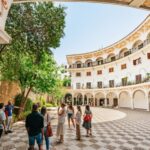
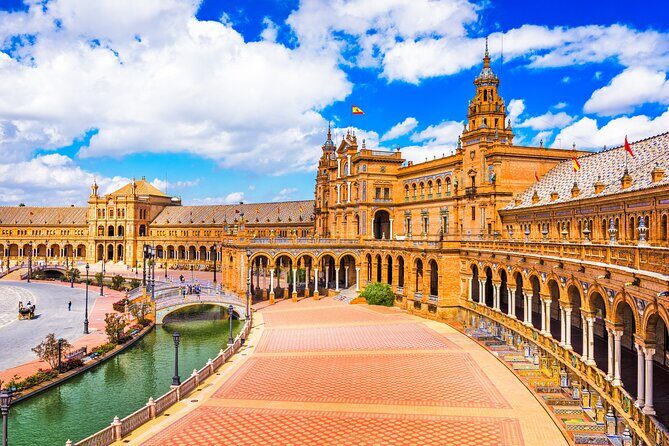
The tour ends at Plaza de España, one of the most iconic places in Seville. This site was built for the Ibero-American Exhibition held in 1929, and it’s credited with transforming the city with a landmark that visitors photograph endlessly.
Here, you’ll get about 25 minutes, which is long enough to reset your eyes after dense monuments. This is also where you’ll likely appreciate the value of a guide-led walk: by the time you reach the plaza, you’ve got a mental “Seville map.” That makes the views feel earned, not random.
This is a great place to linger after the tour too. Your walking “orientation” pays off when you can choose where to go next—whether you want more architecture photos, a sit-down break, or just a slow wander.
Price and value for a $150.85 private 2-hour tour
At $150.85 per person, this isn’t a budget option. But it’s also not priced like a full-day, heavy-ticket itinerary. The value comes from the fact that it’s private, runs about 2 hours, and includes a local guide (English) with guidance designed to help you see more than surface views.
Also, the tour includes admission ticket free viewing at each listed monument stop. That matters if you’re trying to keep costs predictable and avoid surprise lines for entrances you don’t plan to use anyway.
Where the price really makes sense is when one of these is true:
- You want a fast orientation and don’t want to spend your limited time figuring things out.
- You’re the type of person who likes to ask questions and get specific answers.
- You’d rather pay for a guide than pay for multiple separate timed entries.
The only real “gotcha” is what’s not included: tickets are not included, and tour inside the monument is not included. If you want interiors (especially at the Cathedral or other major sites), you’ll likely pay additional ticket costs on separate visits.
If you’re comparing to a standard group tour, the private format can feel like the smarter math, especially if you’re traveling with family or friends who want a shared pace.
How good is Carmen González García at guiding this route?
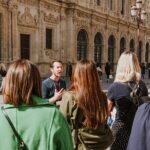
Everything about this experience points to strong guide performance. The name Carmen González García is listed as the provider, and the details around the tour experience emphasize communication, punctual timing, and a style that makes history feel usable.
I especially like the idea of the guide helping you find the meeting place easily—some guides send a generic meeting reminder. Here, there’s mention of sending a photo ahead of time, which can be a small thing that saves stress.
Another practical plus: the tour has been described as flexible when weather changes. Since this is an outdoor guided tour, that adaptability matters. Even a short rain shift can ruin plans, and having a guide who can adjust the schedule helps keep your day from turning into a scramble.
Who should book this monumental walk?
This is a great match if you want:
- A private Seville introduction that doesn’t waste time.
- A focus on architecture and context, not just sweeping statements.
- A route that connects major sites in a way that helps you plan the rest of your trip.
It’s also a strong choice if you already know you’ll return to the Cathedral or Alcázar later for interiors, because the guided exterior route can set you up with the right questions. You’ll be able to walk in with a sharper idea of what you want to see.
If your top priority is spending most of your time inside monuments, you’ll probably want to pair this with separate ticketed visits. This is guidance and orientation first; entry experiences are not included.
Should you book this Seville walking tour?
I’d book it if you want a clear, high-impact overview of Seville’s most important monuments in about two hours, with a guide who can explain the connections between eras. The private format and the exterior-focused route are a strong value for people who hate wandering without a plan.
I’d pass or adjust expectations if you’re only interested in inside-the-building time. This tour doesn’t sell itself as an all-access monument crawl—it’s designed to help you understand what you’re seeing and where it all fits together.
If you’re thinking of going, book ahead. The tour is often reserved around a month in advance, so waiting until the last minute can squeeze your options.
FAQ
FAQ
How long is the Private Monumental Walking Tour in Seville?
It lasts about 2 hours.
Is this tour private?
Yes. It is a private tour/activity, so only your group participates.
What language is the tour offered in?
The tour is offered in English, with languages available including English and Spanish.
What’s included in the tour price?
It includes a local guide, a walking historical tour, and an outdoor guided tour.
Are monument tickets included?
No. Tickets are not included, and tours inside the monument are also not included.
Where does the tour start and end?
It starts at Plaza de San Francisco (Pl. de S. Francisco, Casco Antiguo, Sevilla) and ends at Plaza de España (41013 Sevilla).
Can I cancel for a full refund?
Yes, you can cancel for a full refund up to 24 hours before the experience’s start time.