REVIEW · SEVILLE
Seville Jewish Quarter walking tour: Santa Cruz District
Book on GetYourGuide →Operated by Guides and Tours · Bookable on GetYourGuide
Santa Cruz tells stories at every corner. This guided walking tour in Seville’s Santa Cruz District brings the former Jewish Quarter to life with expert local storytelling, whitewashed streets, and Andalusian courtyards. It’s the kind of walk where you start noticing details you’d miss on your own.
I especially love how the guide connects names and legends to what you’re actually looking at. The route highlights stories tied to Susona, Miguel Mañara (and the Don Juan connection), and even the ghost folklore of Barrabás.
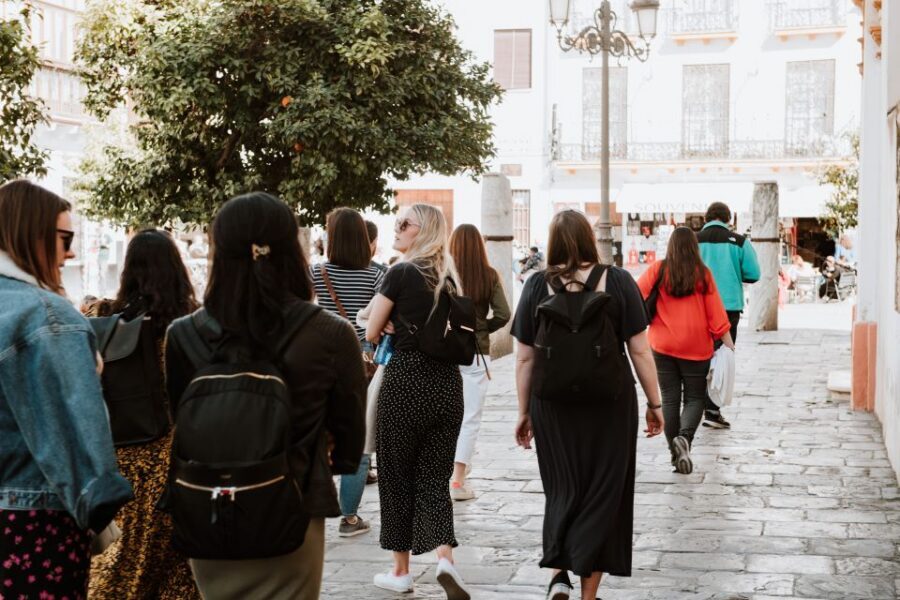
A second reason I like this tour: it’s structured enough to keep you moving, but relaxed enough to ask questions. You’ll hit key plazas and corners like Plaza de Doña Elvira and Calle Susona, then end near Patio de Banderas. The one drawback to weigh is that 1.5 hours means you’ll be on cobblestones at a steady pace, so bring comfortable shoes and plan for walking.
In This Review
- Key things that make this tour worth your time
- Santa Cruz, Seville’s Old Jewish Quarter in 90 Minutes
- Starting at Plaza del Triunfo: the easiest way to meet your guide
- Plaza de la Alianza: where the neighborhood’s Golden Age starts feeling real
- Plaza de Doña Elvira and its orange-tree pause
- Calle Susona: where legend meets a real street
- The quiet power of narrow alleys (and why Callejón del Agua fits)
- Hospital de los Venerables: history with an identity
- Casa Murillo and Rosina’s Balcony: Seville’s storybook corners
- Calle Ópera Carmen and Patio de Banderas: the walk ends with style
- The guides: what you should look for (and why it matters here)
- Price and value: why $15 works when the guide is strong
- What to wear and how to pace yourself in Santa Cruz
- Who this tour is best for
- Optional flamenco: how to add it without overplanning
- Should you book this Santa Cruz Jewish Quarter walking tour?
- FAQ
- Where do I meet for the Seville Jewish Quarter walking tour?
- How long is the tour?
- How much does the tour cost?
- What languages are the guides?
- Is the tour wheelchair accessible?
- Is flamenco included?
Key things that make this tour worth your time
- Susona, Miguel Mañara, and Barrabás tied directly to street names and local folklore
- Courtyards and plazas that show why Santa Cruz feels so theatrical
- Small-group energy is common, with guides happy to tailor attention to your interests
- Iconic stops like Plaza de Doña Elvira and the Hospital de los Venerables area
- Story-first navigation so you don’t just see Santa Cruz—you understand it
- English or Spanish guiding, with guides known for strong explanations
Santa Cruz, Seville’s Old Jewish Quarter in 90 Minutes
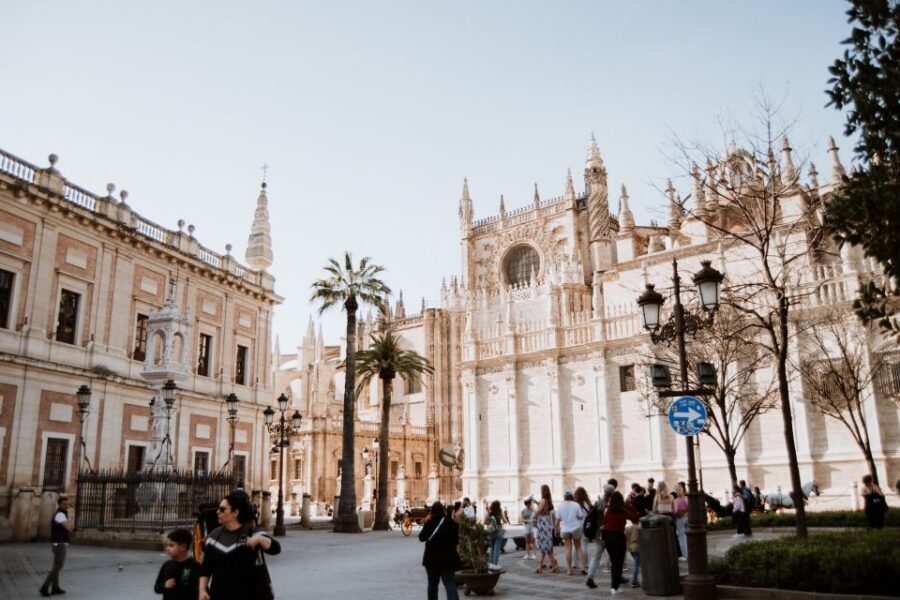
Santa Cruz is one of those neighborhoods where you quickly realize Seville doesn’t do things halfway. You get narrow lanes, bright patio corners, orange-tree shade, and those sudden glimpses of history you can almost feel under your feet.
This walk is built for people who want more than postcard scenery. Instead of treating the area like a maze you should just wander, the guide explains what you’re seeing—why the streets matter, how the neighborhood’s identity formed, and why some stories stick around. It’s also a nice fit for first-timers because you’re covering a dense slice of Seville’s historic center without committing to a full half-day.
And yes, it still has the romance. Santa Cruz is known for courtyards with flowers and hidden fountains, plus little corners that look like they were designed for slow conversation. The tour leans into that atmosphere while keeping the pace practical.
You can also read our reviews of more walking tours in Seville



Starting at Plaza del Triunfo: the easiest way to meet your guide
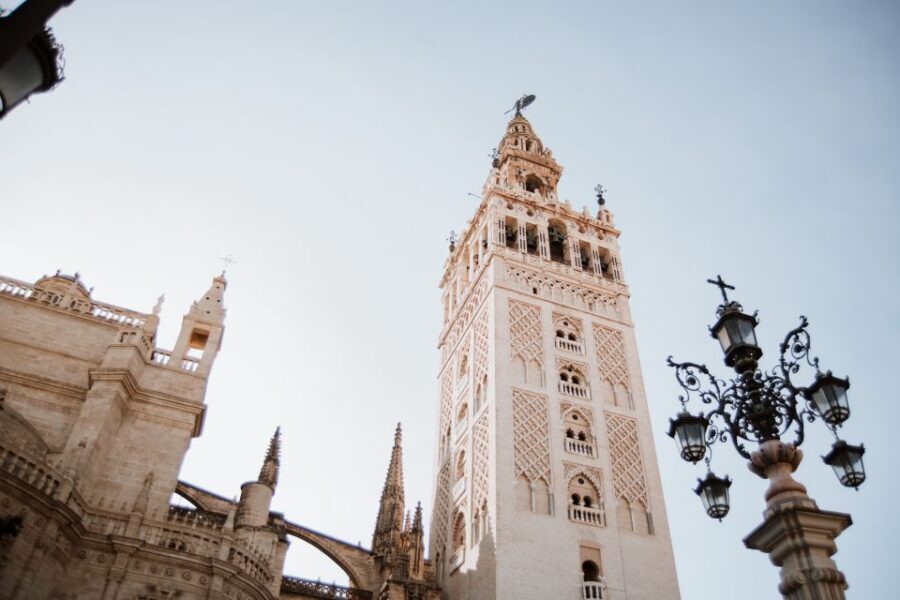
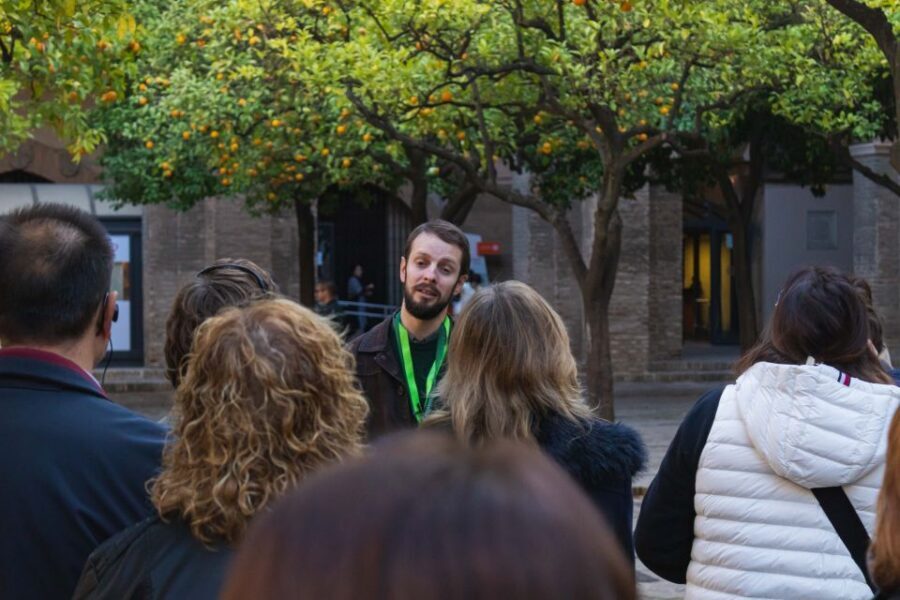
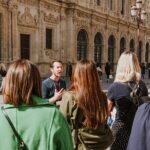
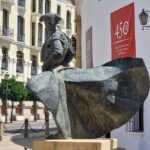
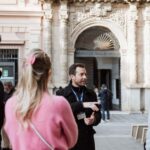
You meet in Plaza del Triunfo under the Virgen de la Inmaculada statue. Your guide is easy to spot, either holding a blue umbrella or wearing a nametag with the Sevilla Guías & Tours logo.
This matters because meeting points in Seville can be busy, and Plaza del Triunfo sits right in the flow of sightseeing. If you’re arriving late, it can get awkward fast. So I’d give yourself a little extra time to get oriented and find your guide before the group starts moving.
Plaza de la Alianza: where the neighborhood’s Golden Age starts feeling real
Your first real stop within the neighborhood vibe is Plaza de la Alianza. This is the kind of place where Seville’s old layers show up in small signals: stone, angles, and that sense that multiple eras overlap here.
From there, you continue walking into Santa Cruz with the guide putting stories into context. Even if you don’t catch every detail, you’ll still come away with a better sense of why the Jewish Quarter is considered so emblematic in Seville. The tour is designed to make the area’s identity make sense, not just sound impressive.
Plaza de Doña Elvira and its orange-tree pause
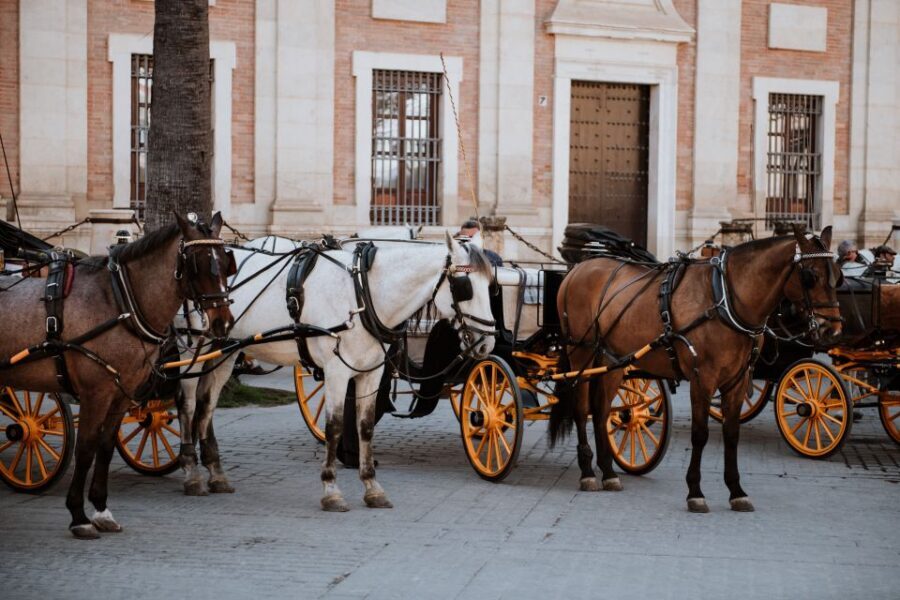
Plaza de Doña Elvira is the calm, picturesque break in the middle of all the turns. Expect orange trees and that gentle, romantic atmosphere that makes people slow down—sometimes without realizing they’re doing it.
This stop is a smart choice on a short tour. If you’re only walking through streets, you’ll miss the emotional rhythm of Santa Cruz. Plazas like this give you a breathing space while the guide connects legends and local culture to the setting.
If the day is hot (Seville often is), this plaza also gives you a natural moment to reset. Think water, shade, and a quick look around before you head back into the narrow lanes.
Calle Susona: where legend meets a real street
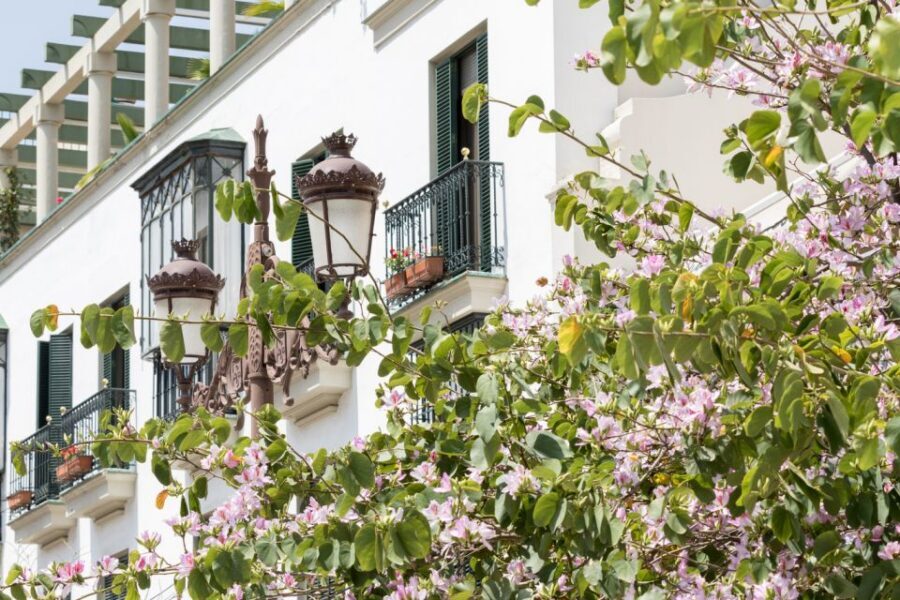
Calle Susona is one of the tour’s headline moments, and it’s exactly the kind of street that feels made for stories. This is where you hear the legend of Susona, a young Jewish woman whose tale revolves around love, betrayal, and identity—and why it still echoes through the neighborhood’s memory.
What I like about doing this here, on foot, is that you can see how legends survive in plain sight. Street names become little signposts for old stories, even when the modern city keeps moving. You’re not just memorizing folklore; you’re learning how people kept culture alive through language, places, and retellings.
If you enjoy history that reads like theater, you’ll probably latch onto Susona quickly. And if you prefer facts over drama, the guide still ties the legend back into the neighborhood’s broader story.






The quiet power of narrow alleys (and why Callejón del Agua fits)
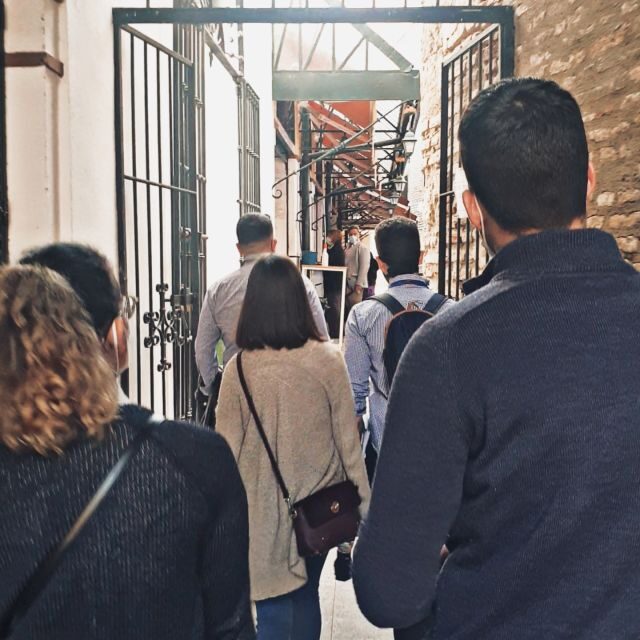
Santa Cruz isn’t only plazas. It’s the in-between spaces: the narrow lanes where whispers seem plausible, and the corners where water stories feel personal. The tour experience specifically points you toward Callejón del Agua, a place tied to poetry and rumor-like local echoes.
Even if you don’t spend long here, it’s a great example of why guided walking wins. You’d likely pass a small alley like this without thinking much. With a guide, you learn why it matters and what to notice—turning a quick sight into something that sticks.
This is also where Seville’s courtyard culture helps. You start looking for openings, inner spaces, and the ways people used architecture to shape daily life. Those “how did they live like that?” moments are often the best part of Santa Cruz.
Hospital de los Venerables: history with an identity
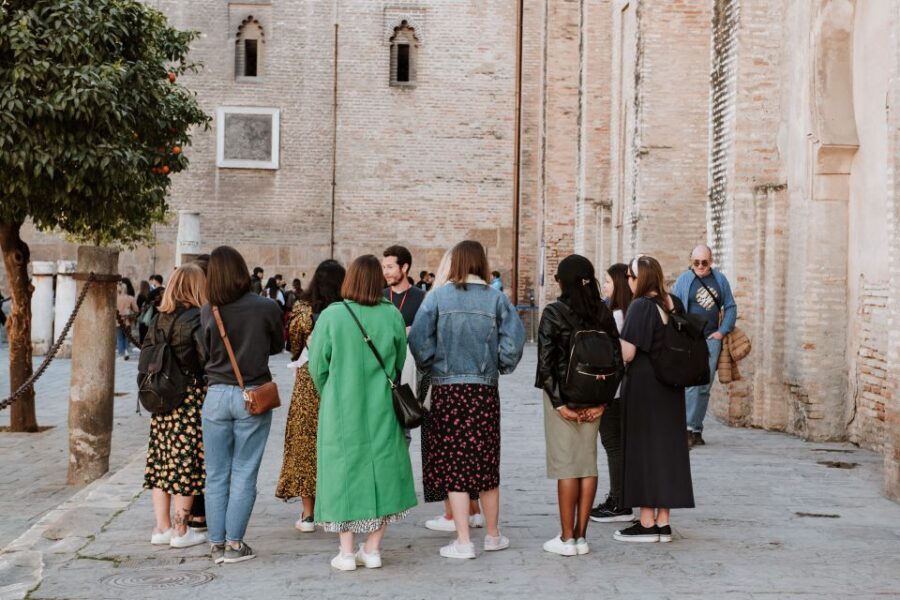
The route takes you to the Hospital de los Venerables area, another key stop that helps you understand Seville’s past without needing a museum ticket. It’s the kind of place where architecture and atmosphere do most of the talking—then the guide provides the story to connect the dots.
This stop is valuable because it broadens the picture beyond just Jewish Quarter legends. You start seeing how religious, civic, and cultural threads intertwined in Seville’s wider historic center. That’s one reason the tour works even if you’re not there specifically for religious history—you still learn how neighborhoods evolve.
From a practical standpoint, it also helps break up the route so you’re not only trudging through lanes. You get different textures of the city: open squares, tight streets, then a more substantial historic setting.
Casa Murillo and Rosina’s Balcony: Seville’s storybook corners
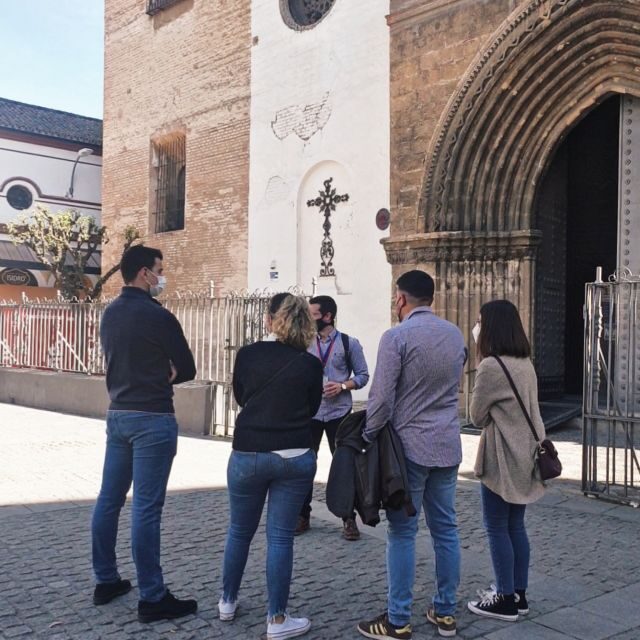
The walking tour continues through some of Santa Cruz’s more story-loaded streets and viewpoints. You’ll visit Casa Murillo and stop at Rosina’s Balcony, two locations that carry local storytelling energy.
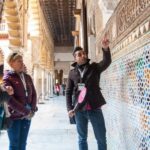
These aren’t just “pretty photo spots.” When a guide connects what you’re seeing to the legend (and to how Seville shaped that kind of drama), the details start making emotional sense. You’ll likely find yourself looking up more than usual in Santa Cruz, which is exactly the point.
If you’ve ever felt overwhelmed in Seville—too many buildings, too many names—this is the antidote. Your guide gives the narrative thread. Without that, balconies and facades are just background.
Calle Ópera Carmen and Patio de Banderas: the walk ends with style
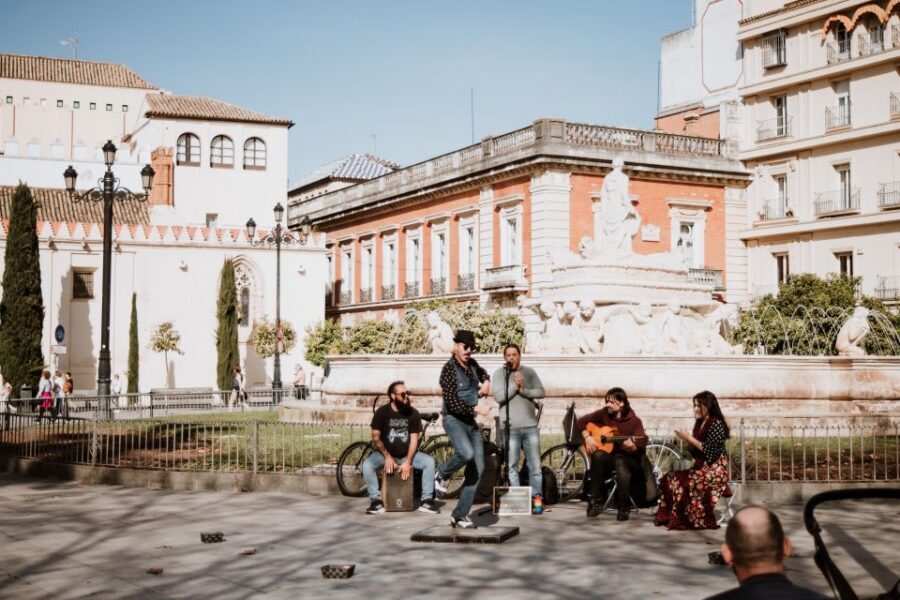
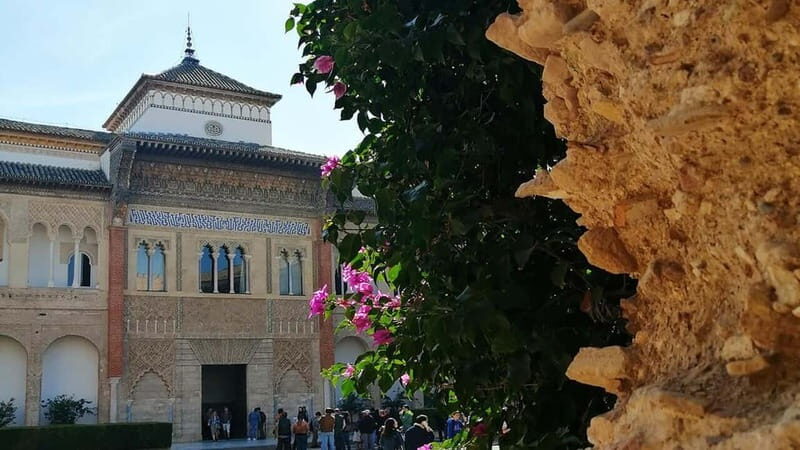
As you move toward the end, you reach Calle Ópera Carmen, a street that ties the city’s theatrical spirit to its real places. Then you finish around Patio de Banderas.
This ending matters because Patio de Banderas is a useful “come-down” point. You end near a central area where it’s easier to keep sightseeing or shift to a meal without feeling stranded.
You also get a natural stop for context. Santa Cruz can feel like a bubble while you walk through it. Reaching Patio de Banderas gives you the chance to re-enter the larger city with clearer mental maps.
The guides: what you should look for (and why it matters here)
The tour’s quality hinges on the guide’s storytelling skills. The strongest feedback I saw points to people like Juan, Alfredo, Julio, and Anna—guides who stay engaging and answer questions with real depth. One highlight from guide performance: a few were described as adjusting the tour when the group was small, even customizing around interests.
A good sign to look for in your own booking experience is how the guide handles questions. In Santa Cruz, you’ll probably wonder about street names, why certain stories connect to specific corners, and how these legends relate to Seville today. Guides who can explain those links make the walk feel worth repeating.
Also: more than one guide was noted for being able to connect folklore to what you can still see—like older walls or water-system details in the neighborhood fabric. That’s where your experience stops being a lecture and becomes sightseeing with meaning.
Price and value: why $15 works when the guide is strong
At $15 per person for 1.5 hours, this tour sits in the “good value” zone for Seville. You’re paying for two things: expert context and a guided path through a compact historic area.
If you try to do Santa Cruz on your own, you can absolutely enjoy the streets. But you’ll likely miss the “why.” The guide’s stories about Susona, Miguel Mañara, and Barrabás turn your walk from scenery into comprehension. And comprehension is what helps Seville stick in your memory long after the photos fade.
There’s also the practical value. With a guided route, you spend less time guessing which alley is worth it. You’re still free to wander after, but you start with a foundation.
This is not a ticket to a long museum day. It’s a fast, story-driven tour. If you want lots of sit-down time, you may prefer a longer format. If you want the neighborhood’s pulse, this price-to-time ratio is hard to beat.
What to wear and how to pace yourself in Santa Cruz
This is a walking tour with comfortable shoes as the main requirement. Santa Cruz streets are narrow and often uneven, so your feet will thank you for planning ahead.
Seville sun can be strong. Bring sunblock and drink water when you can. The route includes pauses in plazas, but you’ll still be walking a lot in 90 minutes.
Finally, bring curiosity. If you like history but don’t want a heavy lecture, you’re in the right place. The best tours here are the ones where you ask questions after each stop. The guide’s role is to turn your questions into clear answers tied to real corners of the city.
Who this tour is best for
This Seville Jewish Quarter walking tour is a strong match if you:
- Want Santa Cruz context fast (especially on a first Seville trip)
- Like legends that connect to real locations, not just generic descriptions
- Prefer a guided route in dense neighborhoods
- Enjoy small-group attention, since the tour can feel more personal when fewer people are on it
It may be less ideal if you:
- Want extensive museum time or long interior visits
- Hate walking on cobblestones and tight streets
- Prefer strictly factual history with almost no folklore storytelling
Optional flamenco: how to add it without overplanning
The tour includes an optional flamenco show. You check availability with the guide at the meeting point or by contacting in advance. If flamenco is on your Seville checklist, this can be a convenient way to stack your evening plans around your morning or afternoon sightseeing.
Should you book this Santa Cruz Jewish Quarter walking tour?
If you’re aiming to understand Santa Cruz instead of just photographing it, I’d book it. The combination of compact timing (1.5 hours), strong storytelling locations (Plaza de Doña Elvira, Calle Susona, Hospital de los Venerables, and more), and guides who handle questions well makes this an efficient way to learn Seville’s layers.
I’d choose it especially if you want legends like Susona and Barrabás explained in a way that helps you visualize the neighborhood as a living place. If your travel style is short, focused, and meaning-first, this tour fits.
FAQ
Where do I meet for the Seville Jewish Quarter walking tour?
Meet in Plaza del Triunfo under the Virgen de la Inmaculada statue. Your guide will be holding a blue umbrella or wearing a nametag with the Sevilla Guías & Tours logo.
How long is the tour?
The duration is about 1.5 hours.
How much does the tour cost?
It’s $15 per person.
What languages are the guides?
The guided tour is offered in English or Spanish.
Is the tour wheelchair accessible?
Yes, the tour is wheelchair accessible.
Is flamenco included?
Flamenco is optional. You can ask the guide at the meeting point or contact in advance to check availability.