REVIEW · SEVILLE
Seville: Guided Walking Tour with Optional Breakfast
Book on GetYourGuide →Operated by Guides and Tours · Bookable on GetYourGuide
Seville’s best stories start on foot. This guided walking tour is built for orientation and atmosphere, mixing major landmarks with the legends and history that make the city click. You can also add the optional traditional Sevillian breakfast at 9:30 AM, which turns your first hours in Seville into a very local morning.
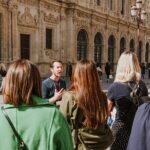
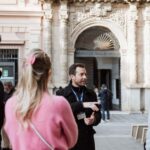
I really like the focus on context: the guide ties together Phoenician roots, Roman and Moorish heritage, and the impact of Fernando III, so the big monuments feel less like checkboxes and more like chapters. My other favorite part is the guide style—people like Julio, plus guides such as Elena or Ana depending on the day, are direct, friendly, and happy to answer questions while keeping the pace relaxed for a small group.
One thing to consider: the tour involves some walking, and the monument stops are exterior views only, so if you’re hoping for interior tickets (especially for the Cathedral or Royal Alcázar), you’ll need to plan that separately.
In This Review
- Key things to know before you go
- Why this Seville walk works so well for a first visit
- Breakfast at Purita Café: a true Sevillian start at 9:30
- Getting oriented at Plaza de San Francisco
- Seville City Hall and the Cathedral area: power, faith, and city identity
- Alcázar of Seville exteriors: Moorish detail without the ticket stress
- General Archive of the Indies, Puerta de Jerez, and the old-city trade story
- Antigua Fábrica de Tabacos: when Seville’s industry became part of its legend
- Plaza de España: the moment Seville turns postcard-perfect
- What you actually get for the price ($21): value that feels fair
- Group size and pacing: friendly, but bring comfy shoes
- Language, guide style, and the question-friendly vibe
- Who should book this walking tour
- Should you book this Seville guided walking tour?
- FAQ
- Is the breakfast included in the tour price?
- Do I need tickets to enter the Cathedral or Royal Alcázar on this tour?
- How long is the walking tour?
- Where does the tour start?
- What languages is the guide available in?
- How big is the group?
Key things to know before you go
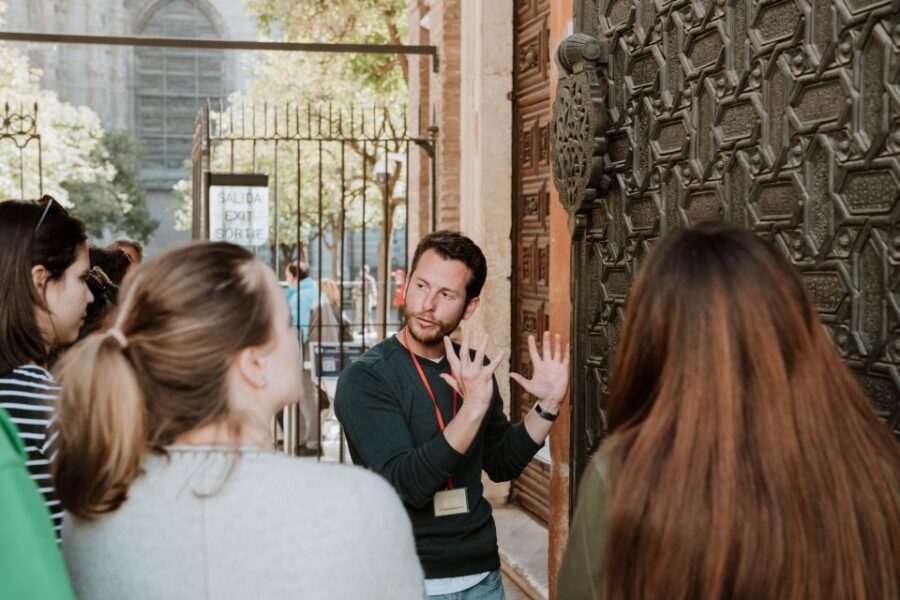
- Small-group pace with a cap listed at 10 participants, designed for real conversation (not a shuffle of strangers).
- Breakfast option at 9:30 AM at Purita Café for coffee and toast, with a vegan toast option available.
- Iconic sights from the outside, including the Cathedral area and Royal Alcázar, plus Plaza de España.
- Strong storytelling beats: Seville’s layered past runs through the whole walk, not just at one stop.
- Practical local tips often come bundled in, especially on what and where to eat after the tour.
Why this Seville walk works so well for a first visit
Seville can feel like a puzzle at first—pretty, huge, and easy to wander past the parts that matter. This tour is designed to solve that problem quickly. You start near the historic core, then you move through the city’s headline sites in a way that helps you build your internal map.
What makes it work isn’t only the places. It’s how they’re explained. Instead of treating the Cathedral, Alcázar, and Plaza de España like isolated postcards, the guide threads the city’s identity through the walk—older cultures before the Spanish empire era, and the Moorish and Christian layers that shaped today’s streets.
It also helps that the group stays small. When you can actually ask a question and get a real answer, you leave with sharper understanding, not just a stack of photos.
You can also read our reviews of more walking tours in Seville


Breakfast at Purita Café: a true Sevillian start at 9:30
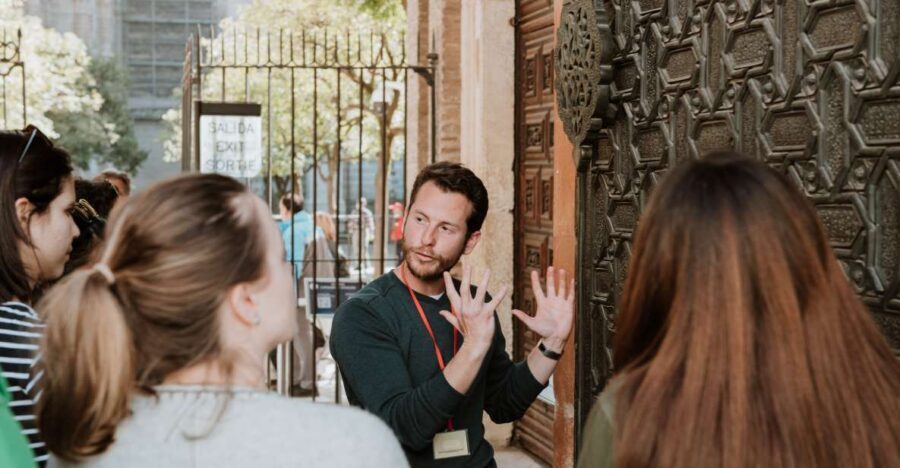
If you choose the breakfast option, the tone of the day changes fast—in a good way. Breakfast starts at 9:30 AM at Purita Café in Plaza de la Encarnación. The format is simple and local: you get coffee of your choice, a toast of your choice (including a vegan option), and a warm, comfortable setting where the neighborhood energy shows up right away.
A couple details you’ll appreciate:
- The breakfast style is very Sevillian. In addition to toast, you’ll likely see the classic bread-and-tomato feel that’s common in the city’s morning culture.
- There’s an option around Iberian ham. If you don’t want it, you can skip it and still enjoy the core breakfast components.
This is not a giant buffet. It’s a short, friendly meal that prepares you for walking. If you tend to under-eat in the morning while traveling, this solves that early energy dip.
If you don’t do breakfast, the tour still gives you enough orientation to enjoy the rest of your Seville day. But starting with breakfast is one of the easiest ways to feel like you’re part of the city instead of just passing through.
Getting oriented at Plaza de San Francisco
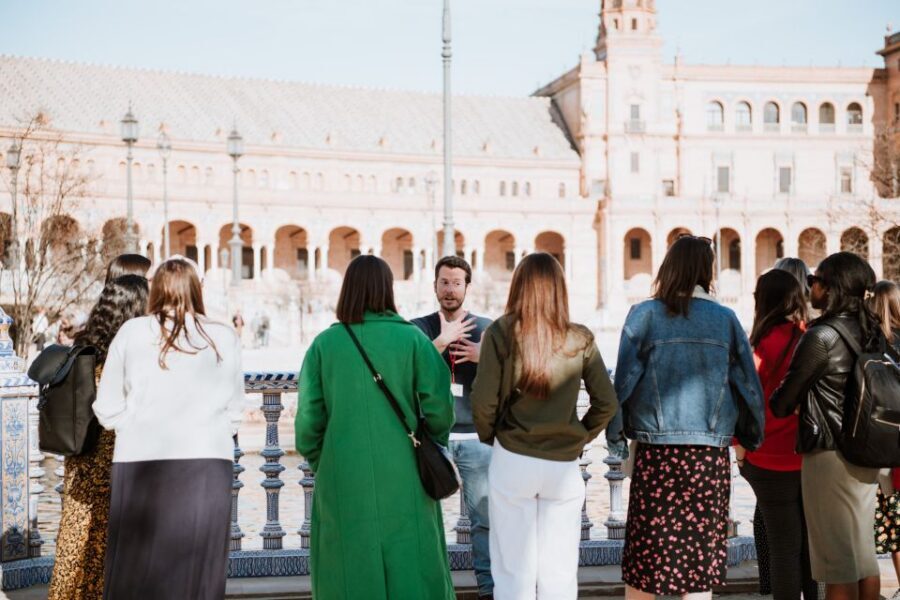
You’ll begin with one of two starting options depending on what’s booked, and the tour typically starts at Plaza de San Francisco for a short guided meet-up. From there, the walk pushes you toward the civic and historic spine of Seville.
Why this matters: Seville’s center can look uniform until you understand where the power moved over time—religious influence, royal authority, imperial trade, and later industrial life. Starting in the right place makes the later stops easier to decode.
During this early stretch, the guide usually sets expectations and drops in background so that what you see next lands properly. Think of it as mental warm-up, not a lecture.
Seville City Hall and the Cathedral area: power, faith, and city identity
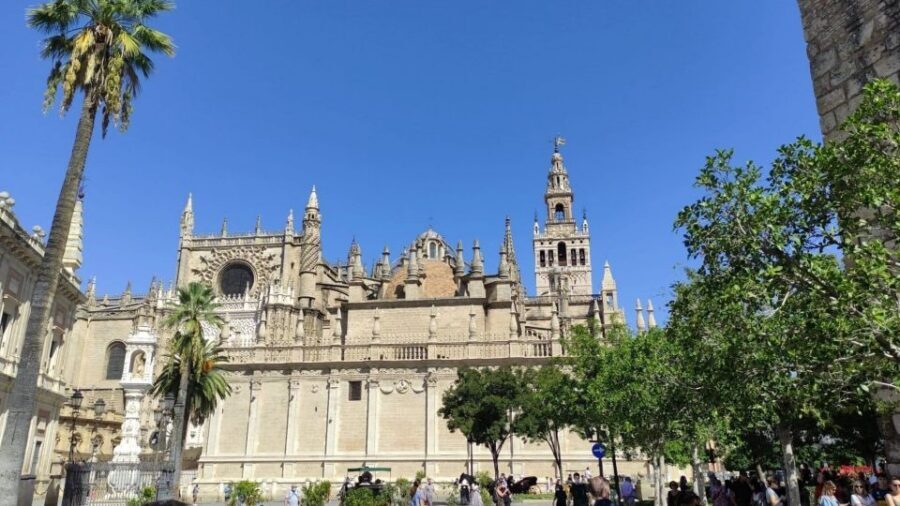
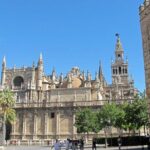
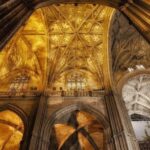
As the route moves along, you’ll hit major civic stops and then the Seville Cathedral area. Even though the tour focuses on exteriors (entrance tickets are not included), the Cathedral still lands hard from the outside. It’s one of those buildings where the scale alone tells you this city takes faith seriously.
What I like about this portion is the way the guide explains the Cathedral’s place in Seville’s story. You don’t just hear facts about the structure. You hear about why it mattered, and how the city’s identity evolved around it.
Important reality check: you’ll be viewing the Cathedral exterior, not going inside on this tour. If you want to step into the Cathedral (and you usually do), plan that as a separate ticketed visit later.
Alcázar of Seville exteriors: Moorish detail without the ticket stress
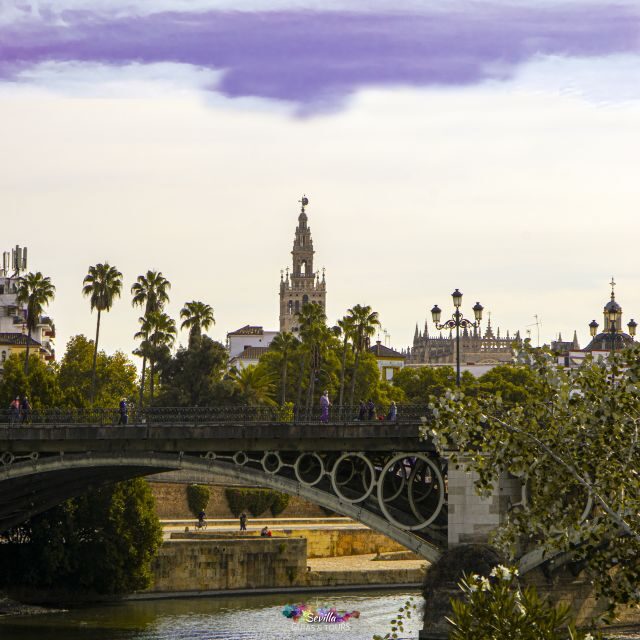
Next up is the Royal Alcázar. From the outside, it’s still dramatic—this is a palace with architectural confidence. The benefit of a walking tour format is that you don’t spend your day hunting for entrances and timing lines. You get the big visual impact and the story behind it.
Again, this is exterior viewing, so the Alcázar’s most famous interiors aren’t part of the included experience. But what you do get is useful: you’ll understand how Seville’s mixed heritage shows up in the palace’s look and reputation.
If you’re comparing “guided exterior” tours vs. “go inside” tours, I’d treat this one as your orientation layer. Then, if the Alcázar and Cathedral interiors call to you, you can choose the ticketed visit with a clearer idea of what you’re looking for.
You can also read our reviews of more guided tours in Seville


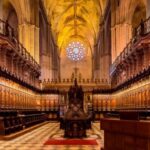
General Archive of the Indies, Puerta de Jerez, and the old-city trade story
As the tour continues, you reach stops tied to Seville’s role in empire and exchange. You’ll pass by the General Archive of the Indies area, plus the Puerta de Jerez gate, and other key historic zones.
Even if you’re not a hardcore history person, this part helps you see Seville as more than architecture. The city wasn’t only about palaces and churches—it was also about administration, records, and the movement of goods and people that helped shape Spain’s global story.
The guide also weaves in the older background—Phoenician, Roman, and Moorish threads—so the “why” behind the modern city layout becomes clearer. You’ll likely catch references to Fernando III, described as The Saint, and how rulers influenced Seville’s trajectory over time.
This is also where the small-group format shines. When you’re walking past powerful buildings, you can ask quick questions and keep going without losing the day.
Antigua Fábrica de Tabacos: when Seville’s industry became part of its legend
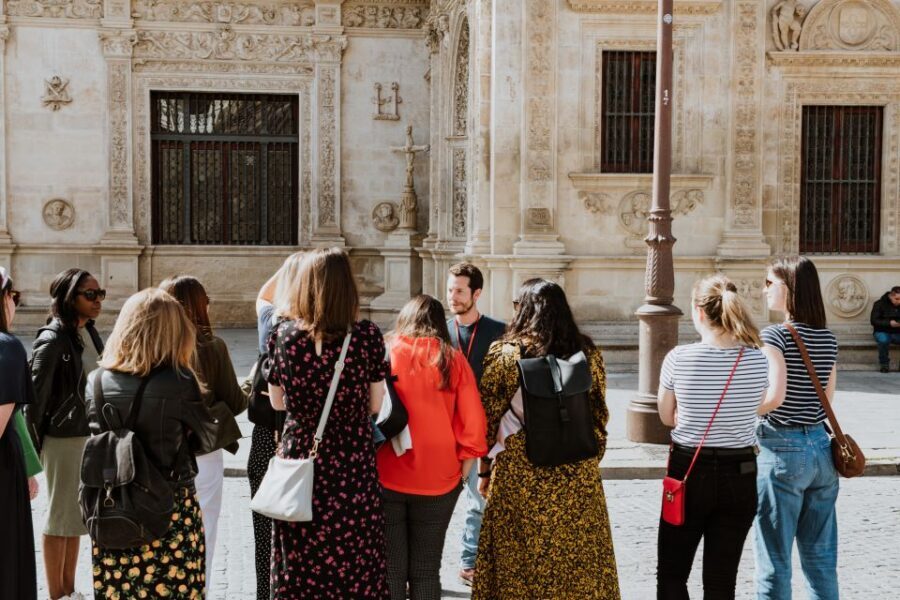
One stop that adds texture is the Antigua Fábrica de Tabacos. It’s a reminder that historic Seville wasn’t only royal and sacred—it was working. Industrial life left its mark, and the city’s identity includes those eras too.
The tour uses this kind of stop to keep things from becoming one long monument parade. You’ll still see the big headline sites, but you also get pieces of Seville’s everyday impact across time.
If your brain likes patterns, this is a good moment. The guide tends to connect how Seville’s power structures and economic roles evolved, so the city feels like it changed over centuries rather than staying stuck in one image.
Plaza de España: the moment Seville turns postcard-perfect
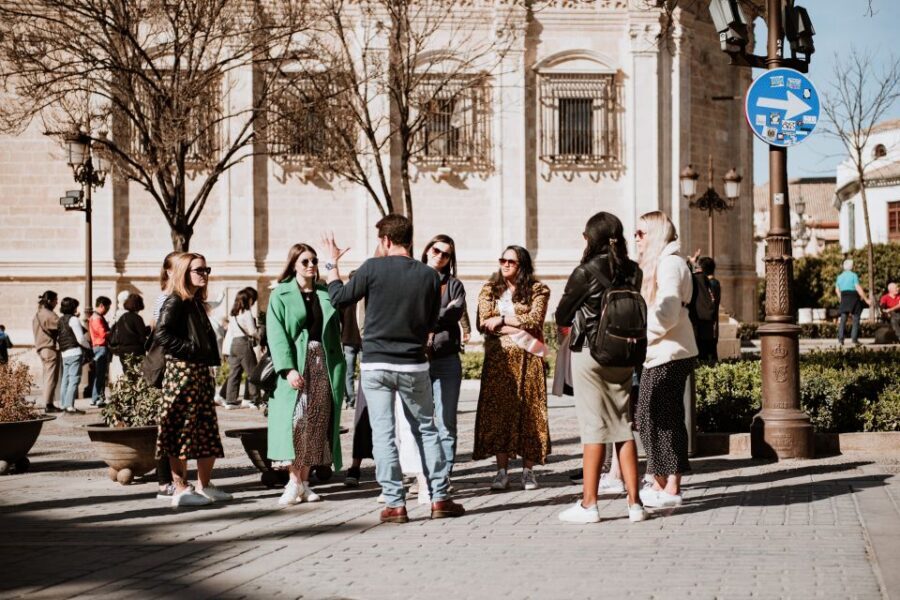
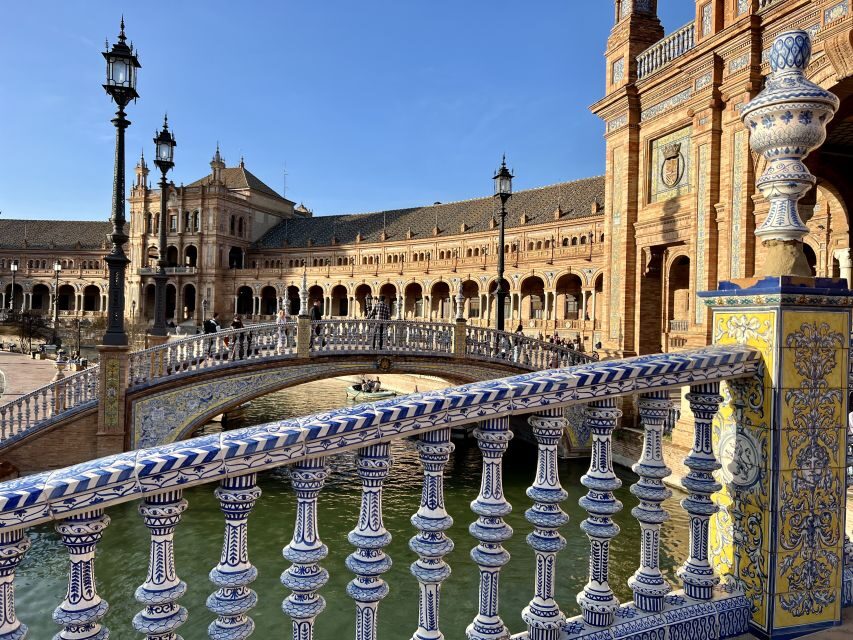
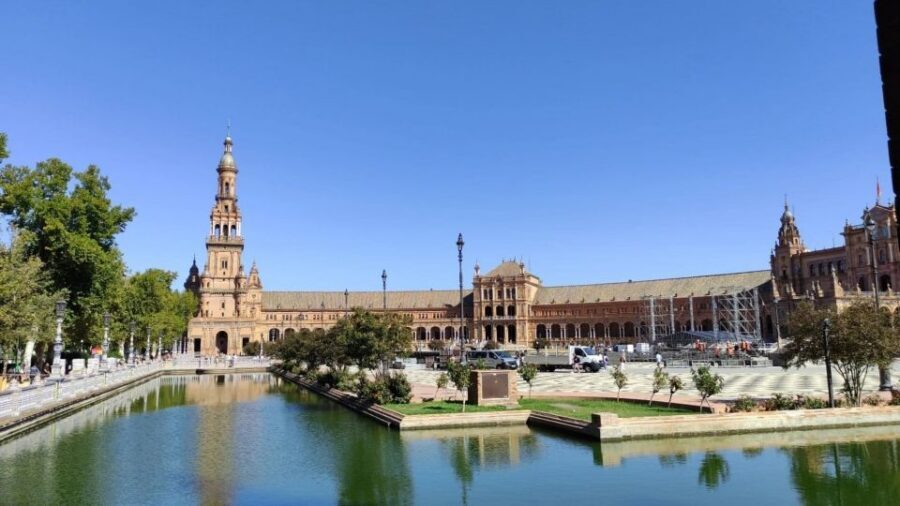
The walk finishes at Plaza de España, which makes sense because it’s one of Seville’s most visual “wow” spaces. You’ll spend time here during the hop-on hop-off style segment, and it’s the kind of place where you’ll want photos from multiple angles.
This part is also where the architecture talk becomes practical. Plaza de España isn’t just pretty tiles and arches; it’s a symbol of Andalusian design and pride. If you’ve been listening for the city’s identity through the walk, the plaza ties it together nicely.
Even if you’re tired by then (you will be a little), this finale gives you a satisfying payoff: you end in a space that feels designed for lingering.
What you actually get for the price ($21): value that feels fair
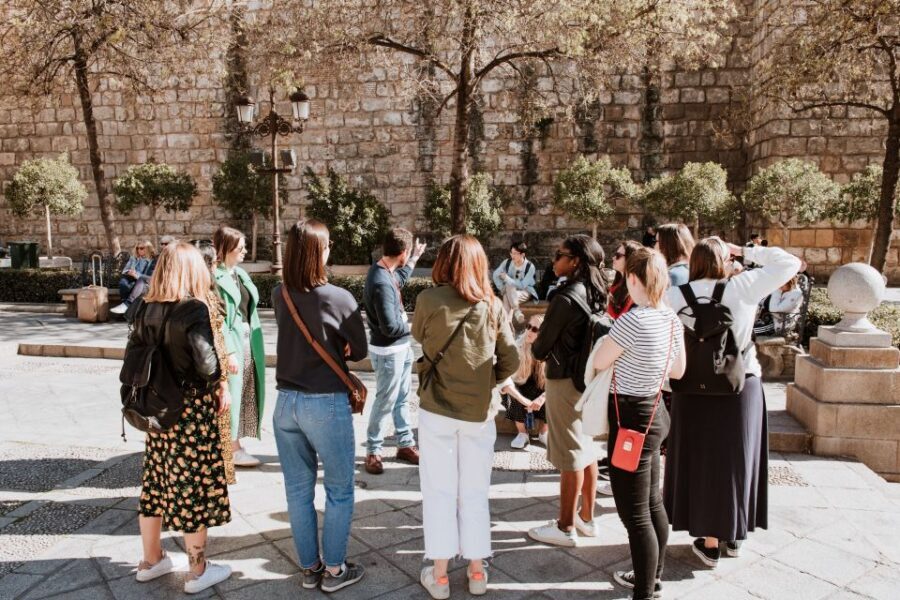
At around $21 per person for a 2.5–3.5 hour small-group walk, the price is mostly about access to a good local guide and a structured route. The tour doesn’t include monument entrances, and food is only included if you pick breakfast. So yes, you’ll still need to pay for any interior tickets you want.
That said, the value comes from three things you can feel the minute you start:
- You get the big landmarks in the right order, so you don’t waste your first day figuring out where everything sits.
- The guide’s storytelling adds meaning, so photos later feel more connected.
- The group size keeps it interactive. When your guide is the main attraction, the small format matters.
If you’re in Seville for a short time and you want to hit the highlights without planning a complex day, this is a solid buy. If you already have strong architecture knowledge and want mostly interior time, you might prefer a ticket-focused tour instead.
Group size and pacing: friendly, but bring comfy shoes
The tour is listed as wheelchair accessible, and the group size is small, capped at 10 participants in the details. Some documents also mention a maximum group size of 15 for the experience format, but either way the goal is the same: keep it controlled and chatty.
The walking component is real. You’ll be moving through Seville’s center, and you’ll spend time standing and looking. Wear shoes you trust.
I’d also plan your day around the idea that the tour is your foundation. After you finish at Plaza de España, you’ll be in a great position to explore nearby streets on your own, or to choose one interior ticketed stop with better context.
Language, guide style, and the question-friendly vibe
The tour runs in Spanish and English, and the guide quality shows up in the details. In past bookings, guides such as Julio were singled out for being friendly and highly engaged, with excellent English and a genuine passion for Seville’s history. Others like Elena and Ana also came across as thoughtful and knowledgeable.
A recurring theme: guides are happy to answer questions. That matters because Seville has a lot going on. When you can ask why the city looks the way it does, or how one era connects to the next, you stop feeling lost.
If you prefer tours that are interactive rather than strict lectures, you’ll probably like this format.
Who should book this walking tour
I think this tour is a great fit if you:
- Want a strong first-day orientation in Seville
- Like your history explained with human stories, not just dates
- Plan to do some additional monument visits later (because entrances aren’t included)
- Appreciate small groups and conversation
It’s also a good choice if you’re traveling solo or as a couple, since the small size keeps the vibe from feeling like a factory line.
If you hate walking or you only care about interior sites, you might find the exterior-only approach frustrating. In that case, pair this with a separate ticketed Cathedral or Alcázar visit, or skip the walking-heavy version.
Should you book this Seville guided walking tour?
Yes—if you want your first encounter with Seville to feel guided, logical, and alive. For $21, you’re paying for a route that hits major landmarks, plus a guide who explains the layers that most people miss. Add the 9:30 AM Purita Café breakfast if you want your day to start like a local and keep energy levels up for walking.
Book it especially if you’re short on time. This tour helps you get your bearings fast, and it gives you enough context to enjoy Seville’s big sights without needing a guidebook in your hand the whole day. Just bring comfy shoes, and plan any monument interior tickets separately if that’s part of your must-do list.
FAQ
Is the breakfast included in the tour price?
Breakfast is optional. If you choose it, breakfast starts at 9:30 AM at Purita Café in Plaza de la Encarnación, and includes coffee and toast (with a vegan toast option available).
Do I need tickets to enter the Cathedral or Royal Alcázar on this tour?
No. The tour includes exterior visits only, so entrance tickets to monuments are not included.
How long is the walking tour?
The tour is listed as lasting about 2.5 to 3.5 hours, and it’s described as a small-group walking tour of around two hours.
Where does the tour start?
The meeting point can vary depending on the option booked, with starting location options listed around C. Jerónimo Hernández 14 and Plaza de San Francisco.
What languages is the guide available in?
The tour is offered with live guidance in Spanish and English.
How big is the group?
The details list a small group limited to 10 participants. The experience description also mentions a maximum group size of 15 in the format details.