REVIEW · SEVILLE
Guided walking tour to Setas, La Macarena and Dueña’s Palace in Seville
Book on Viator →Operated by Naturanda Turismo Ambiental · Bookable on Viator
Seville has a way of stacking time on top of itself, and this guided walk keeps it practical: you start at Setas de Sevilla and work through districts, churches, and palaces that explain the city’s story as you go. I especially like that Dueñas Palace tickets are included (so you’re not hunting for an entry time later), and that the route mixes big landmarks with local religious sites like the Basilica of the Macarena Brotherhood. One thing to keep in mind: it’s a steady 3.5-hour walk, so wear shoes you trust.
In This Review
- Good shoes matter, especially in old streets
- Key highlights you’ll feel on the walk
- Where you meet, how the timing works, and how much you’ll walk
- Roman remnants and Setas: a fast way to understand Seville’s “layers”
- Macarena district stops: Basilica vibes and the famous Virgen de la Macarena
- San Juan de la Palma and the traditional street market energy
- Omnium Sanctorum and the Marquis of Aljaba: Mudejar details you can actually notice
- Cardo Máximo and Seville’s ancient backbone
- Santa Marina: Mudejar church surroundings and the point of the finish
- Palacio de Dueñas inside: where the ticket included payoff happens
- Guide quality: why Mari Paz and Julian keep getting praised
- Price and value: what $44.71 buys you in real terms
- Should you book this Seville walking tour?
- FAQ
- What time does the tour start?
- How long is the walking tour?
- Where do I meet the guide?
- What’s included in the price?
- What isn’t included?
- Is there a limit on group size?
- Do I need good weather?
Good shoes matter, especially in old streets
The tour runs in the historic center, mostly on foot, and it depends on good weather. If you’re sensitive to heat or you hate uneven old-stone streets, plan for that up front and bring water (bottled water and snacks aren’t included).
Key highlights you’ll feel on the walk
- Setas de Sevilla meeting point at Plaza de la Encarnación, right in the old center flow
- Roman archeologic remains early on, for that quick reality-check of Seville’s deeper past
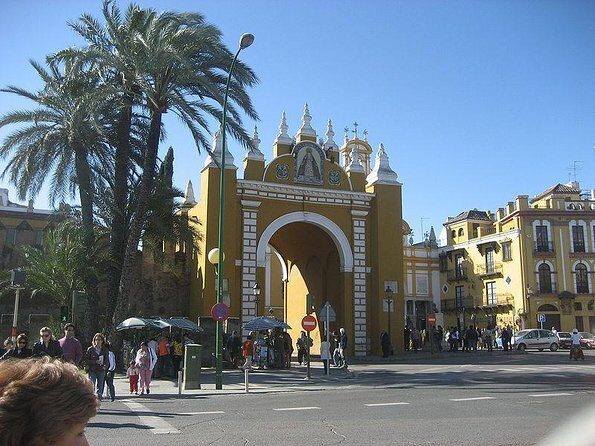
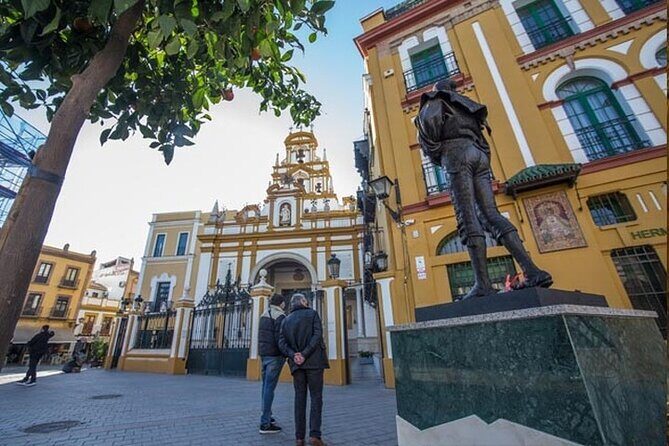
- Macarena district stops, including the Basilica area and the city gate vibe
- San Juan de la Palma and its traditional street-market atmosphere
- Mudejar-era flavor at the Marquis of Aljaba’s palace area and Santa Marina’s church
- Finish at Palacio de Dueñas, with time to go inside the palace (ticket included)
You can also read our reviews of more walking tours in Seville

Where you meet, how the timing works, and how much you’ll walk
This is a 3 hours 30 minutes walking tour, starting at 10:00 am. You meet at Setas de Sevilla, Plaza de la Encarnación s/n, Casco Antiguo, and you’ll end at the Palacio de las Dueñas at C. Dueñas, 5 (at the entrance gate).
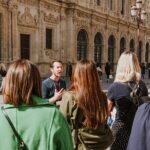
The schedule matters because the tour is built around movement through the historic center. That means you should come ready for foot traffic, narrow sidewalks, and turns that feel like you’re constantly switching neighborhoods. With a maximum of 30 travelers, it should stay coordinated without feeling like a human wave.
Also note the small but important practical point: the tour doesn’t include bottled water or snacks. On a 3.5-hour walk, I’d rather have that sorted than gamble on buying something last-minute.
Roman remnants and Setas: a fast way to understand Seville’s “layers”
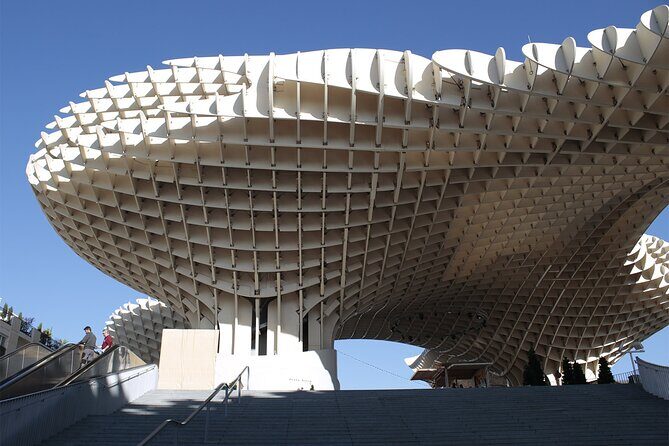
You begin at Setas de Sevilla, the modern landmark that helps you spot the contrast: new and old share the same square. Then the route moves to Roman archeologic remains in Seville, which is a smart way to reset your brain early. Even if you’re not a hardcore archaeology person, seeing the older fabric right away helps everything else make sense.
This is the kind of opening that turns the tour from a checklist into an actual map in your head. You start by anchoring the city’s timeline, then you keep walking and the clues start connecting: street alignments, old religious sites, and later palace culture all sit on top of earlier patterns.
If you like history in a human scale, this first step is a good payoff because it doesn’t feel abstract. It’s right there, in the streets.
Macarena district stops: Basilica vibes and the famous Virgen de la Macarena
The heart of the walk swings into the Macarena district, and it does it through places with strong local identity. You’ll see the Basilica of Macarena’s Brotherhood and the city gate area, and you also get the chance to see the city’s famous Marian image: la Virgen de la Macarena.
That matters because Seville’s monuments aren’t just stone. They’re tied to devotion, processions, and everyday neighborhood rhythms. This is one of those tours where the guide’s job isn’t only to describe architecture. It’s to explain why these sites matter to locals, and what you’re actually looking at when you see the Virgen de la Macarena.
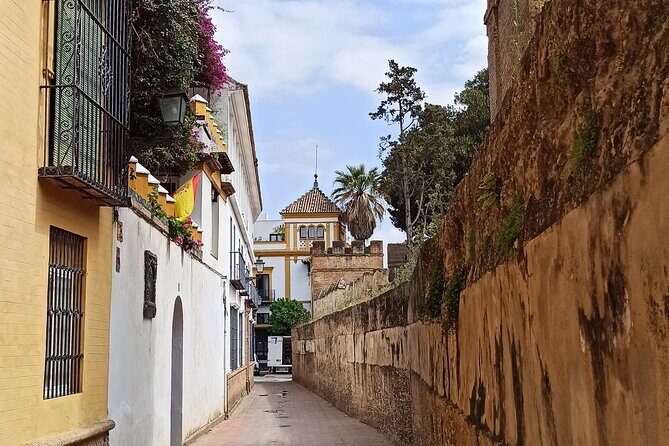
Then the walk keeps going through San Luis street and toward Plaza del Pumarejo. These are the kinds of places where the city feels lived-in, not staged. Even on a guided schedule, you’re still getting streets that help you understand how Seville works as a city, not just a museum.
San Juan de la Palma and the traditional street market energy
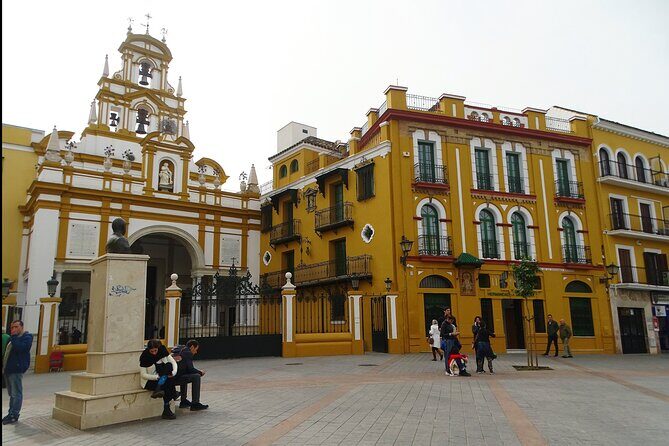
One of the most interesting stops is the Church of San Juan de la Palma. It’s described as an emblematic place of the city, and the big reason it’s on this route is practical and sensory: it’s where you’ll find one of the most traditional street markets in the world.
When a tour includes a market-adjacent church, you get more than sight-seeing. You get a chance to see how food culture and daily life spill into sacred spaces. That’s not something you’d get from a pure palace-and-cathedral day, so it balances the itinerary nicely.
If you like taking in smells and small street scenes without committing to a full food tour, this stop is worth your time. Even if you just pause and listen, it helps you place Seville’s identity beyond monuments.
You can also read our reviews of more guided tours in Seville
Omnium Sanctorum and the Marquis of Aljaba: Mudejar details you can actually notice
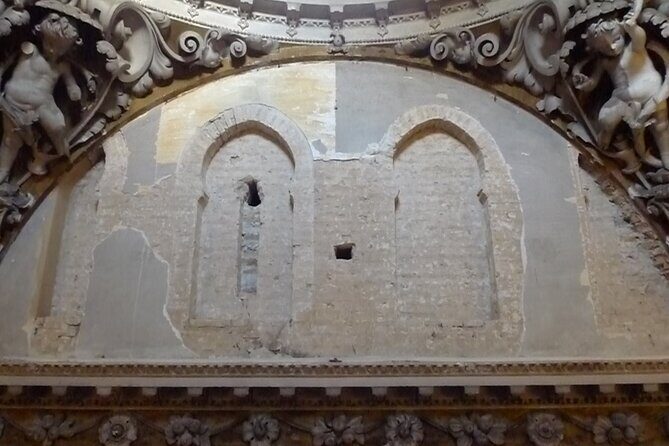
The route continues toward a Mudejar Palace of the Marquis of Aljaba, positioned next to the Omnium Sanctorum Church. This is a great pairing because it gives you an easy visual contrast: the palace and the church sit close enough that the guide can point out how Mudejar influences show up in the urban fabric.
Mudejar style can sound like academic trivia until someone helps you see it. In this tour, the point is to connect the look—materials, decorative touches, and design patterns—to the city’s medieval past. That’s why this stop isn’t just a photo-op. It’s a clue about how Seville absorbed and reworked different cultural influences.
If you enjoy walking with your eyes open and picking up details you might otherwise miss, this is one of the stronger parts of the tour.
Cardo Máximo and Seville’s ancient backbone
Between the Macarena area and the Mudejar church area, the tour follows the ancient Cardo Máximo, described as the route marker for your path. This is valuable because it gives you a sense of direction and continuity.
A “Cardo Máximo” is the kind of ancient street concept that explains why cities grow the way they do. When you walk it with a guide, you’re not just passing landmarks—you’re moving along an old framework that shaped movement, commerce, and daily life over centuries.
The route then continues along Calle San Luis and toward Plaza del Pumarejo, setting you up for the church stop that comes next.
Santa Marina: Mudejar church surroundings and the point of the finish
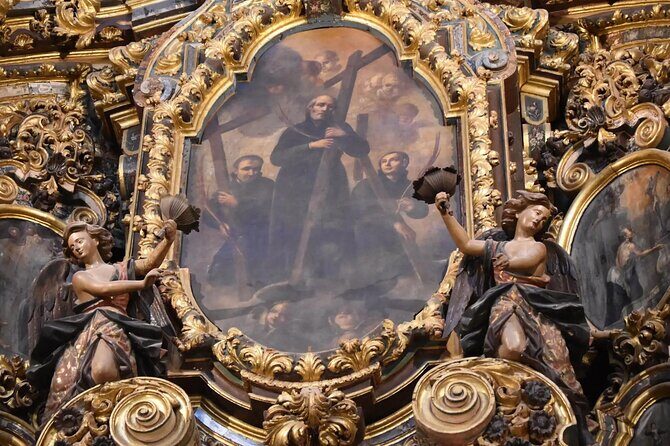
The walk reaches the Mudejar Church of Santa Marina, where you get to know the temple and its surroundings. Even without getting lost in architectural jargon, this stop works because it slows the tour just enough to let you notice the immediate setting.
By the time you reach Santa Marina, you’ve already seen Roman remains, Macarena devotion, market life near San Juan de la Palma, and Mudejar architecture hints around the Marquis of Aljaba and Omnium Sanctorum. Santa Marina ties that pattern together. It’s basically the tour saying: this is what the medieval city looked like in everyday religious life.
And then, just when you’re ready for the real grand finale, the tour turns toward the Palacio de Dueñas.
Palacio de Dueñas inside: where the ticket included payoff happens
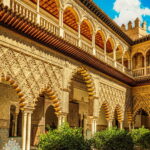
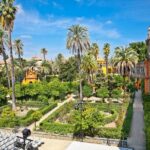
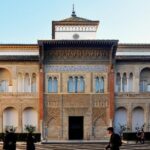
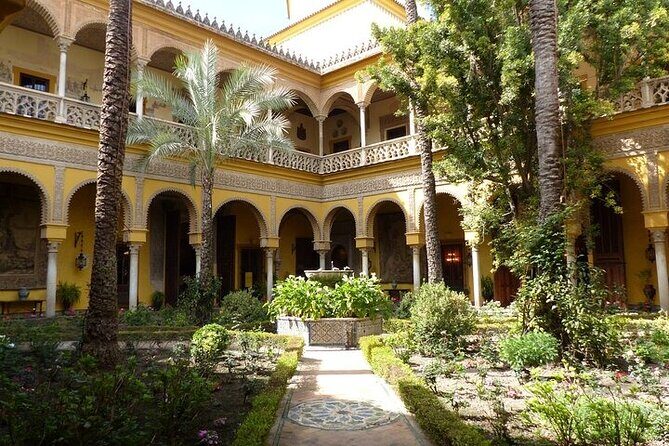
You end at Palacio de las Dueñas and the tour culminates inside the palace. This is the centerpiece: it’s described as the house palace of Alba’s dukes, and it was the last residence of the Duchess of Alba.
The key value here is simple: the tour includes tickets to the House Palace of Dueñas, and you’ll have about 1 hour there. That means you’re not just viewing from outside or waiting for an independent timed entry. The guide can place the palace within the bigger story you’ve been walking through all morning.
It also helps your pacing. The tour keeps your energy manageable by ending with the most structured stop. You finish with context already in your head, which makes the interior visit feel more meaningful.
Practical tip: this is an indoor final stop, so bring whatever you need to stay comfortable after walking. If you’re sensitive to pace, you’ll probably appreciate that the palace time is capped at around an hour.
Guide quality: why Mari Paz and Julian keep getting praised
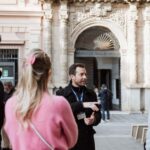
The best walking tours rise or fall on the guide. Here, you can see a consistent pattern: guides are praised for being professional, friendly, and clear. Names show up in the feedback, including Mary Paz (spelled Mari Paz in one place) and Julian, both described as explaining well and shaping a route that feels complete.
One reason that matters: this tour isn’t only a list of monuments. It’s a route that moves through different layers of Seville—Roman remains, Macarena devotion, market life, and Mudejar design—so you need someone who can connect it all. When the guide is strong, you end the day feeling like you learned how Seville fits together, not just where famous things are.
If you like your guides to do more than recite facts—if you want them to point out what you’re actually looking at—this is the kind of tour that tends to deliver.
Price and value: what $44.71 buys you in real terms
At $44.71 per person for about 3.5 hours, this is priced like a guided historic-center walking tour with a major included admission. The value piece isn’t just the guide—it’s that Dueñas Palace tickets are included and you spend around 1 hour inside.
You still have to plan for a couple extras: bottled water and snacks are not included. That’s not a deal-breaker, but it means you should budget small spending on your own during the walk.
Booking can also help. The tour is often reserved around 26 days in advance on average, so if your dates are fixed, I’d grab it sooner rather than later. The limit of up to 30 travelers is another quiet value point; smaller groups typically make it easier to hear directions and stay together.
Should you book this Seville walking tour?
Book it if:
- You like walking a route that connects neighborhoods, not bouncing between far-flung stops.
- You want a guided visit that includes Dueñas Palace tickets rather than treating the palace as a separate plan.
- You’re interested in more than just the headline sights—Macarena devotion, Mudejar sites, and the market atmosphere at San Juan de la Palma are part of the appeal.
Skip it (or rethink) if:
- You hate long walks or uneven old-street conditions.
- You’re traveling during unstable weather, since the experience requires good weather to run.
If you’re aiming for a morning that helps you understand Seville in layers—Roman roots through medieval styles, ending with Alba’s palace—this tour is a strong fit.
FAQ
What time does the tour start?
The tour starts at 10:00 am.
How long is the walking tour?
It lasts about 3 hours 30 minutes.
Where do I meet the guide?
Meet at Setas de Sevilla, Plaza de la Encarnación, s/n, Casco Antiguo, 41003 Sevilla (near the landmark at the meeting point).
What’s included in the price?
The price includes a professional guide and tickets to the House Palace of Dueñas.
What isn’t included?
Bottled water and snacks aren’t included.
Is there a limit on group size?
Yes. The tour has a maximum of 30 travelers.
Do I need good weather?
Yes. The experience requires good weather. If it’s canceled due to poor weather, you’ll be offered a different date or a full refund.