REVIEW · SEVILLE
From Seville: Full-Day Essential Córdoba Tour
Book on GetYourGuide →Operated by Descubre · Bookable on GetYourGuide
Córdoba moves fast, in the best way. This full-day trip turns the history of Islamic Spain into something you can actually walk through, with a guided walk that connects the city’s Caliphate-era power to street-level customs. I like that you also get an efficient visit to the Mezquita–Cathedral, but the day is tight, so it can feel a bit rushing if you’re aiming for lots of slow photos.
You start from Seville (Calle Rastro, 12a, 41004) and head out with transfers built into the schedule. The whole experience runs about 10 to 10.5 hours, with a live Spanish or English guide, and it can be private or in a small group.
In This Review
- Key things you’ll notice on this Córdoba day trip
- A Full-Day Schedule From Seville That Still Feels Like You Win
- Carmona Photo Stop: A Quick Andalusian Warm-Up
- Córdoba Walking Tour: From Roman Settlements to Caliphate Capital
- Jewish Quarter and Synagogue: One City, Many Layers
- Chapel of San Bartolomé and Door of Almodóvar: Small Stops With Big Orientation
- Alcázar of the Christian Monarchs: The Rule Change You Can Walk Into
- Mosque–Cathedral of Córdoba (Mezquita–Cathedral): Why This One Stops You
- Lunch and Free Time: Make the Most of the 1.5 Hours
- Transportation, Transfers, and What This Means for Your Feet
- Price Value: What You Get for $128 Per Person
- Who Should Book This Córdoba Tour (and Who Might Want to Skip It)
- Should You Book This Tour?
- FAQ
- How long is the Córdoba day tour from Seville?
- Where is the meeting point in Seville?
- What is included in the tour price?
- Are meals included?
- What are the tour languages?
- Is this tour private or small group?
- Which sites will we visit in Córdoba?
- Is the tour suitable for people with mobility impairments?
- Can I cancel for a full refund?
- What should I bring for the day?
Key things you’ll notice on this Córdoba day trip
- Caliphate-of-Córdoba context while you walk, not just dates and names
- Jewish Quarter + synagogue visit, framed inside the city’s layered past
- The Alcázar of the Christian Monarchs, which adds the Christian takeover story right after the Islamic era
- Door of Almodóvar and Chapel of San Bartolomé stops, small waypoints that help you orient
- Mezquita–Cathedral tickets included, so you spend time in the building, not waiting for logistics
- A lunch window with free time, letting you choose your own pace within the schedule
A Full-Day Schedule From Seville That Still Feels Like You Win
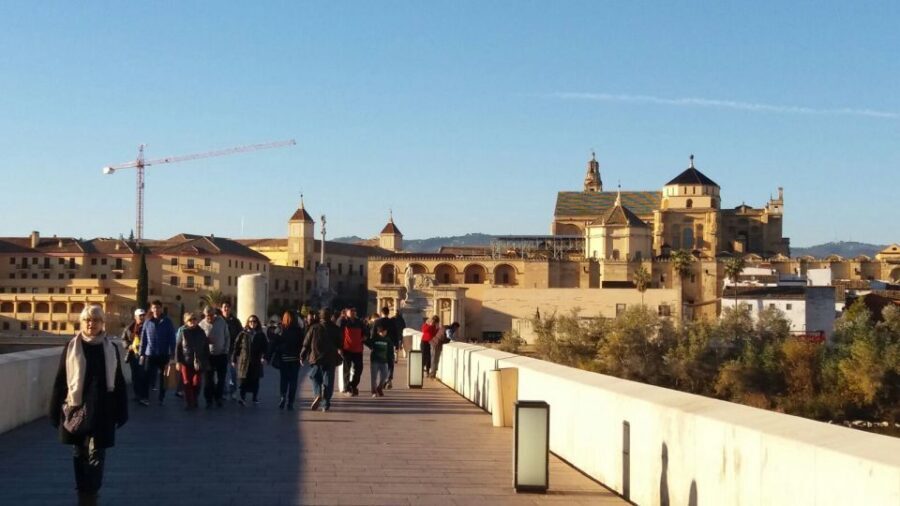
This is a long, full day, clocking in around 10 to 10.5 hours. That means you’ll be moving for much of the day, but the tradeoff is clear: you get Córdoba’s major highlights packed into one outing instead of eating up an entire separate day planning routes and ticket timing.
I like that the day is structured with guided blocks and transfer time, so you’re not constantly wondering what comes next. The itinerary also includes time for a photo stop in Carmona, then a guided introduction to Córdoba before the big-ticket stop at the Mosque–Cathedral.
One practical consideration: you’ll be on your feet a lot. Wear comfortable shoes, and expect that “free time” is meant for lunch and quick wandering, not a deep, unhurried second round of every monument.
You can also read our reviews of more tours and experiences in Seville
Carmona Photo Stop: A Quick Andalusian Warm-Up
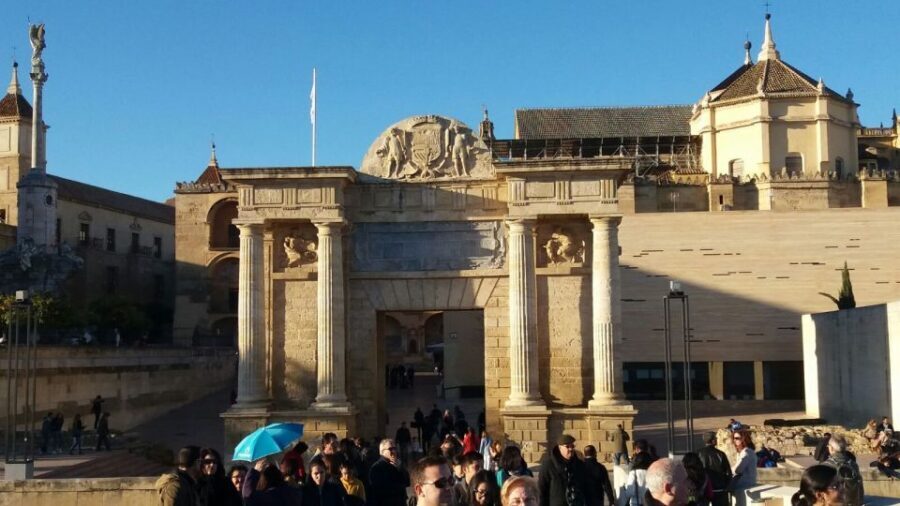
Before you even get to Córdoba, you’ll make a stop in Carmona. You’ll get a photo stop and a guided tour segment (about an hour), which is a nice palate cleanser on a day that otherwise focuses tightly on one city.
This part matters because it helps set the tone. Andalusia’s cities don’t all feel identical, and Carmona can give you a snapshot of the region’s look and rhythm before Córdoba throws its biggest story at you.
In real life, a one-hour stop like this is also a reminder to keep your camera ready. You won’t have time for a deep dive here, but you will get the kind of views that make the drive feel worthwhile.
Córdoba Walking Tour: From Roman Settlements to Caliphate Capital
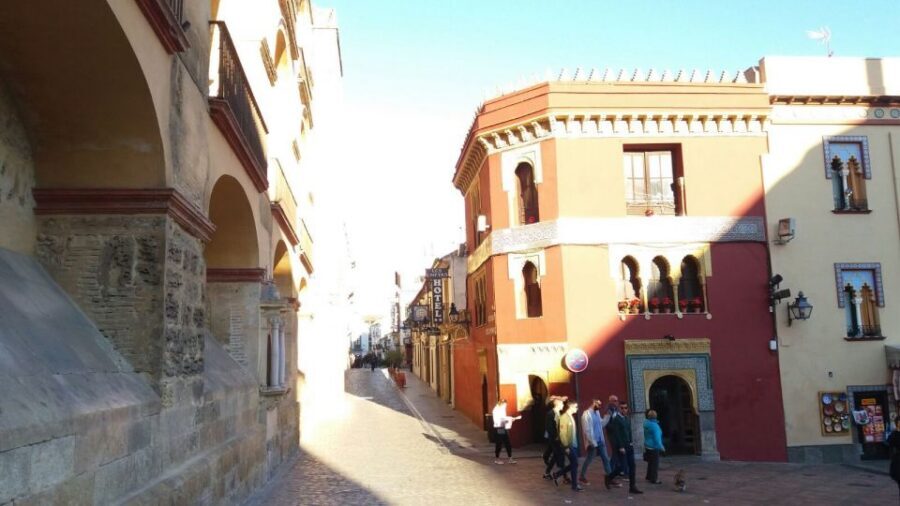
Once you arrive in Córdoba, you start with a photo stop and a guided exploration segment (about 1.5 hours). This is where the guide’s job is most valuable: you’re not just being shown places, you’re being given a framework for what you’re seeing.
You’ll learn how Córdoba started as a Roman settlement, then became a major center during the Islamic period, including the Caliphate of Córdoba. The tour also talks about the city’s role as a hub for trade, politics, and Andalusian customs, which is important because it explains why Córdoba looked the way it did, and why different communities left marks in the same streets.
I like this approach because it changes your experience of everything later. When you understand the city’s logic—how power and culture shaped neighborhoods—you read the buildings differently. Instead of seeing landmarks as isolated masterpieces, you start seeing them as parts of one long conversation.
Jewish Quarter and Synagogue: One City, Many Layers
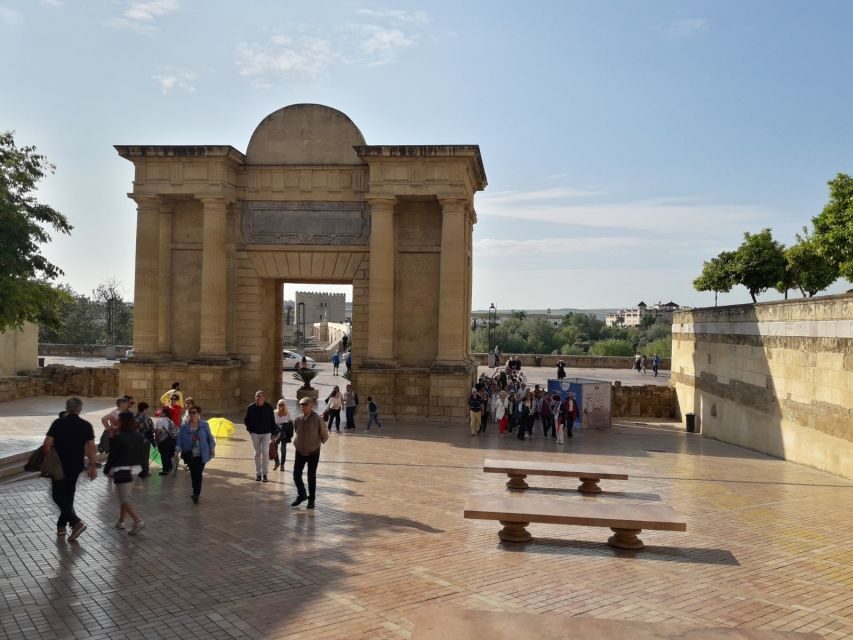
A highlight is the time spent in the Jewish District, including a stop at the synagogue. This visit is valuable because it adds a crucial piece to Córdoba’s story: the city wasn’t only defined by one rule or one faith, even when political power shifted.
You’ll also hear about the historical relationships between communities through the lens of the city’s broader Islamic-era governance. That makes the synagogue stop feel less like a standalone museum moment and more like a clue about how life worked here.
If you care about the human side of history—how people actually lived next to each other—this segment is one of the best reasons to pick a guided day. The guide can point out what you might otherwise miss if you were wandering alone.
Chapel of San Bartolomé and Door of Almodóvar: Small Stops With Big Orientation
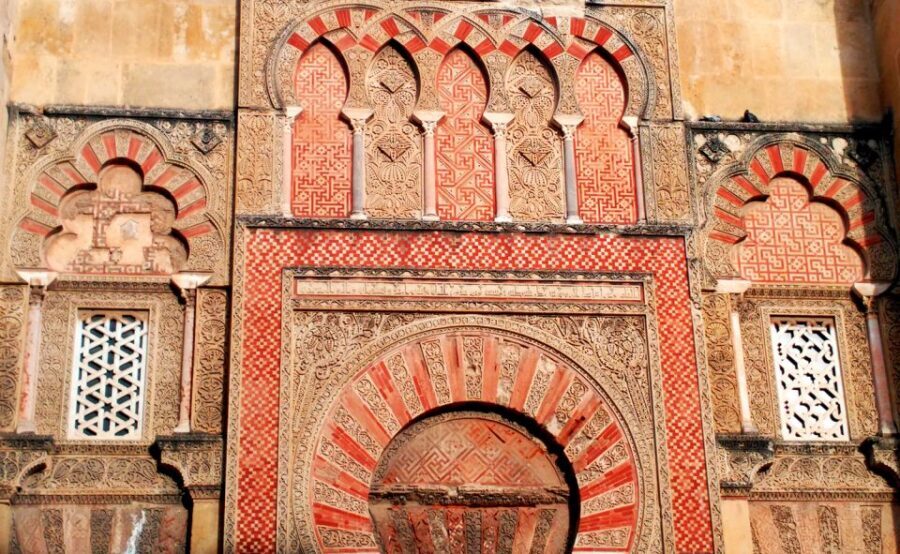
Between the neighborhood stories and the major monuments, you’ll pass through smaller, specific waypoints: the Chapel of San Bartolomé and the Door of Almodóvar. These aren’t the biggest headline names, but they help you orient yourself in Córdoba’s maze-like layout.
I like stops like this because they give you anchor points. After a few of them, you stop feeling like you’re just collecting buildings and start recognizing how the city is organized—what connects what, and why certain routes matter.
Also, these kinds of details tend to make photos look more meaningful. They help your pictures tell a story, not just capture pretty stone.


Alcázar of the Christian Monarchs: The Rule Change You Can Walk Into
After the Islamic-era focus, the tour includes a stroll through the Alcázar of the Christian Monarchs. This works well on a day like this because it bridges eras without making you feel like you’ve switched tours halfway through.
The idea is straightforward: Córdoba’s story didn’t stop when Islamic rule ended. The Christian monarchy period reshaped power and identity, and the Alcázar is one of the tangible places where you can feel that transition.
Some groups have had guides such as Lidya for the Alcázar segment, and they’re praised for bringing real energy and clarity to the visit. That matters because palace-and-fortress places can turn into “look at this wall” moments if the explanations are flat. A good guide keeps you focused on what the setting was for and how people moved through it.
Mosque–Cathedral of Córdoba (Mezquita–Cathedral): Why This One Stops You
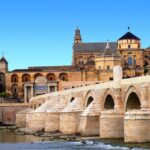
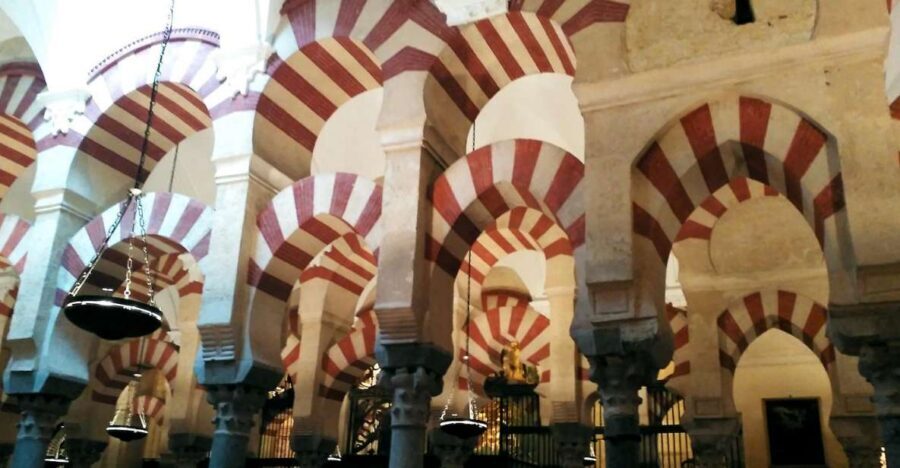
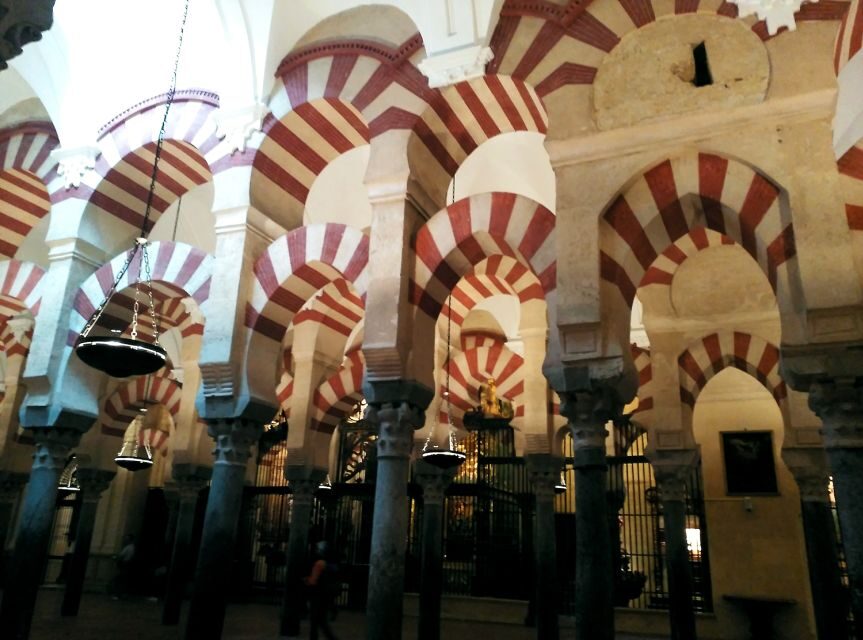
Then comes the star: the Mosque–Cathedral of Córdoba, also called the Mezquita–Cathedral. This is the landmark people come for, and it’s included via guided time plus Mezquita tickets—a practical win because it removes one big headache from planning.
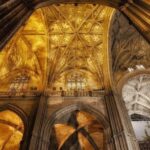
The architecture is the main attraction, but the tour’s payoff is how the guide connects the building’s design to its identity: a place shaped by Islamic Spain and later adapted through Christian history. In other words, you’re not just looking at pretty patterns; you’re seeing a record of changing rule, beliefs, and artistic priorities.
One reason the Mesquita segment tends to feel so memorable is the guidance quality. Some groups have had a guide such as Atakar specifically for the Mezquita visit, and the feedback highlights how effectively they explain what you’re looking at. That’s the difference between a quick walk inside and a visit that makes the space click.
Photo reality check: the day is organized and efficient, but it’s also easy to feel pressed for extra time inside the Mezquita. If photography is your top priority, go in with a plan for what you want most, and don’t expect long, slow wandering in every corner.
Lunch and Free Time: Make the Most of the 1.5 Hours
You’ll get a lunch break with free time (about 1.5 hours). Meals and drinks aren’t included, so you’ll be choosing your own spot and paying your own way.
This free window is best used with one simple mindset: think short and local. You’ll want something convenient to your route so you don’t waste time crossing back and forth, especially on a day with transfers and a timed return.
If you’re the type who likes to sit down and people-watch, plan to do that here. The rest of the day is structured around walking with the guide and covering major sites.
Transportation, Transfers, and What This Means for Your Feet
Transfers run through the day—starting with a pickup and then multiple travel segments (including time on the road and between stops). The day also includes time in Carmona and then backtracking into Córdoba.
That setup usually works well if you want an organized day without thinking too much. It also helps explain why the day feels full: you’re paying with time for convenience, and you’re getting a lot of landmarks back-to-back as a result.
This tour isn’t listed as suitable for people with mobility impairments. And regardless of your pace, it’s smart to treat the day as a walk-heavy outing. Comfortable shoes are non-negotiable.
Price Value: What You Get for $128 Per Person
At about $128 per person, the price makes sense when you look at what’s actually included. You get a professional guide and Mezquita tickets. That inclusion matters because the Mezquita is the major-ticket item, and ticket hassles can swallow time on crowded sightseeing days.
You also get guided context across multiple Córdoba stops, plus the transfers and the Carmona stop. If you tried to build a DIY day trip, the biggest friction points usually are: figuring out timing, securing entry tickets, and keeping your day from turning into a series of disconnected monuments.
What’s not included is also important. Meals and drinks, plus breakfast and lunch, are on you. So you’ll want to budget for at least one paid meal during the free-time window.
Who Should Book This Córdoba Tour (and Who Might Want to Skip It)
This is a strong fit if you want:
- A one-day overview with guided storytelling through Islamic Spain and later Christian-era changes
- A structured walk that covers the Jewish Quarter, the Alcázar, and the Mezquita–Cathedral
- A day that’s efficient without needing to research everything yourself
It may be less ideal if:
- You hate time pressure and want long, slow museum-style visits
- You’re planning to do lots of photography and want extra time to set up shots in every key area
- You have mobility needs that make walking difficult
I’d also say it works especially well for first-timers in Córdoba who want the big landmarks plus the context that helps them understand what they’re seeing.
Should You Book This Tour?
Yes, if your goal is a focused, high-value day that gives you Córdoba’s most important layers—Islamic Spain, Jewish history, and the Christian monarchy period—without the stress of planning entry tickets and routes. The inclusion of Mezquita tickets and a professional guide makes it the kind of tour where your money goes toward time and clarity.
If you prefer unhurried wandering or you’re deeply focused on one site, consider whether a same-day schedule will frustrate you. For most people, though, the balance is good: you’ll come away with a strong understanding of Córdoba, plus photos and memories that actually connect to a story.
FAQ
How long is the Córdoba day tour from Seville?
It runs about 10 to 10.5 hours.
Where is the meeting point in Seville?
The meeting point is Calle Rastro, 12a, 41004 Sevilla, Spain.
What is included in the tour price?
The tour includes a professional guide and Mezquita tickets.
Are meals included?
No. Meals and drinks are not included, and breakfast and lunch are also not included.
What are the tour languages?
The live guide is available in Spanish and English.
Is this tour private or small group?
It can be private or small groups, depending on the option you choose.
Which sites will we visit in Córdoba?
You’ll visit areas including the Jewish Quarter and synagogue, the Alcázar of the Christian Monarchs, and the Mosque–Cathedral of Córdoba (Mezquita–Cathedral).
Is the tour suitable for people with mobility impairments?
No, it is not listed as suitable for people with mobility impairments.
Can I cancel for a full refund?
Yes. Free cancellation is available up to 24 hours in advance.
What should I bring for the day?
Bring comfortable shoes.