REVIEW · SEVILLE
A Fantastic Visit To The Museum Of Illusions Seville
Book on Viator →Operated by Museum Of Illusions Sevilla · Bookable on Viator
Reality gets a sense of humor here. I love the touch-friendly exhibits and the way rooms like the vortex tunnel turn simple movement into mind-bending effects. The one thing to watch: the museum is small, so if you expect a long, deep museum visit, it may feel short for the price.
This is an easy, low-stress outing in central Seville: a mobile ticket in English, with an experience time listed around 45 minutes to 1 hour 15 minutes. You’ll be moving room to room, interacting with illusions, and getting chances for goofy photos without needing any special skills.
In This Review
- Key things I’d bet on before you go
- What This Museum Is Like (And Why It Works in Seville)
- Price and Timing: Getting Value From an Around-1-Hour Visit
- Your One-Stop Itinerary: From the Museum Entrance to the Big Illusion Rooms
- Step into the interactive flow
- Vortex tunnel: where your brain does overtime
- Anti-gravity room: the classic “wait, what?” moment
- 3D puzzles: hands-on problem solving
- The infinity room: the photo highlight
- Hands-On Illusions: Touch, Move, and Use Your Senses
- Photo Tricks and Staff Help: How to Get Better Results
- The Crowds and the Real-World Limits
- Is $18.15 Worth It? My Balanced Take
- Who This Museum Fits Best
- Should You Book the Museum of Illusions Sevilla?
- FAQ
- How long does the Museum of Illusions Sevilla visit take?
- What is the price per person?
- What language is the experience offered in?
- Is the ticket mobile?
- What is included in the ticket?
- Are souvenirs included?
- Can I take photos?
- Do I need to bring anything to participate?
- Are service animals allowed?
- What if my plans change?
Key things I’d bet on before you go
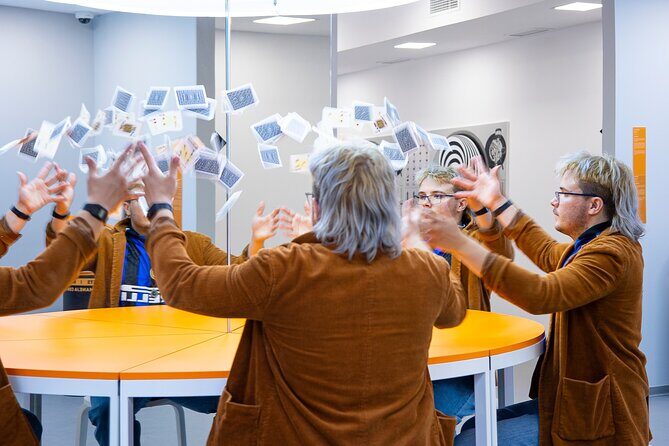
- Vortex tunnel and anti-gravity room: the big “wow” experiences built around your senses and body position
- 3D puzzles you solve on the spot: not passive viewing, more hands-on problem solving
- Infinity room is a must: a favorite moment when you want that extra optical effect
- Camera-perspective photo tricks: fun photo ops designed around the illusions
- A good fit for a quick indoor plan: ideal when you want something that won’t steal your whole day
- Crowds and motion sensitivity are the real variables: some spots can feel a bit much if you’re sensitive to visual effects
What This Museum Is Like (And Why It Works in Seville)
The Museum of Illusions Sevilla is exactly what it sounds like: a hands-on, optical, sensory playground. In a city where you can easily spend half a day outdoors, this is a welcome switch. It’s also one of those rare attractions where the main “activity” is you—your movement, your angle, your focus.
I like that the ticket isn’t set up like a lecture. Instead, you work through a series of interactive rooms and installations. Some are designed for touch and interaction, others for visual trickery, and a few are built around perspective and positioning. That matters because it makes the experience feel fresh even if you’ve seen optical illusions before.
Also, this isn’t a huge museum. That’s a plus when you want a contained visit that doesn’t balloon into a multi-hour commitment. It can be a drawback if you’re hoping for a full day of rooms, storytelling, and variety.
You can also read our reviews of more museum experiences in Seville

Price and Timing: Getting Value From an Around-1-Hour Visit
The ticket price is $18.15 per person, and the visit is listed at about 45 minutes to 1 hour 15 minutes. Some people end up closer to two hours, but the key idea is the same: this is meant to be a quick indoor stop.
So is it good value? I think it can be, as long as you match expectations to the format.
- If you go wanting hands-on illusions, tactile exhibits, and playful photo moments, the timing is about right.
- If you go expecting a long museum with lots of galleries and deep content, you might feel like you flew through it.
One of the most repeated themes is that the museum is small. That’s why the “value” question comes down to what you came for:
- For a fun, sensory hour with photo opportunities, it’s easy to justify.
- For a slow, expansive museum day, it may not feel like enough.
A practical note: you’ll likely do the whole route efficiently. Plan it like you would a theater show—arrive, enjoy the rooms in order, and don’t expect to “browse” for hours.
Your One-Stop Itinerary: From the Museum Entrance to the Big Illusion Rooms
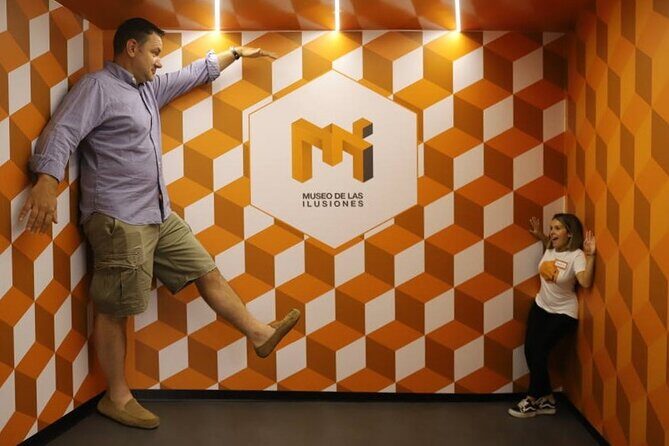
This experience is all about one main stop: Museum of Illusions Sevilla. The best way to think of it is as a sequence. You start, you explore, you interact, and you end having a bunch of photo-ready moments and a few “how is that even possible?” reactions.
Step into the interactive flow
Right away, the museum sets the tone. The spaces are built so you can walk in, start trying things, and move from illusion to illusion without a bunch of setup. Most visitors can participate, and the overall vibe is casual and practical—there’s no special knowledge required.
Vortex tunnel: where your brain does overtime
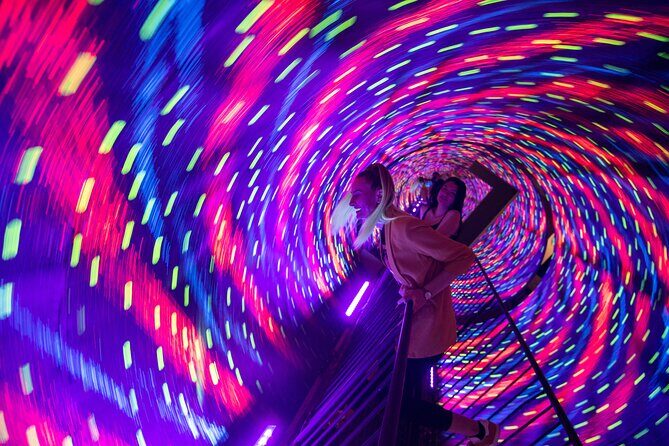
One of the headline experiences is the vortex tunnel. The concept is simple: you enter and move through an optical effect that plays tricks with perception. The result is the kind of moment where your body and your eyes don’t agree. That’s part of the fun.
If you’re sensitive to spinning sensations or visual effects that may feel intense, take it slow. I’m not saying you should avoid it, but you should be aware that some people find certain illusions a little queasy.






Anti-gravity room: the classic “wait, what?” moment
Another major room is the anti-gravity room. This is the kind of installation where you test how your brain reads motion and weight. It’s a favorite because it turns you into the subject. You don’t just watch—you pose, adjust, and try to get your angle right.
3D puzzles: hands-on problem solving
As you continue through the museum, you’ll hit 3D puzzles and other interactive displays. These are not just visual tricks; they ask you to engage. That’s a huge part of why the museum can feel more satisfying than a “look-and-move-on” attraction.
The upside: you get a small sense of accomplishment.
The tradeoff: if you’re not in the mood for a bit of trial-and-error, you may go faster than you’d like.
The infinity room: the photo highlight
The infinity room is repeatedly singled out as a must. It’s the type of optical setup that rewards patience and perspective. If you want at least one “wow” picture, this is usually where you’ll get it.
Hands-On Illusions: Touch, Move, and Use Your Senses
What makes this museum work is that it doesn’t treat you like a spectator. It treats you like a participant.
You’ll find exhibits where touching and interacting are part of the experience, not an afterthought. You’ll also test your senses as you move through the rooms. That sensory angle is what makes the illusions feel educational in a light way—more like learning how perception works than memorizing facts.
And yes, that interactive design is why kids often have an easier time staying engaged. But it’s also why adults can enjoy it: you’re doing something physical and visual at the same time, which pulls you out of “just looking.”
Photo Tricks and Staff Help: How to Get Better Results
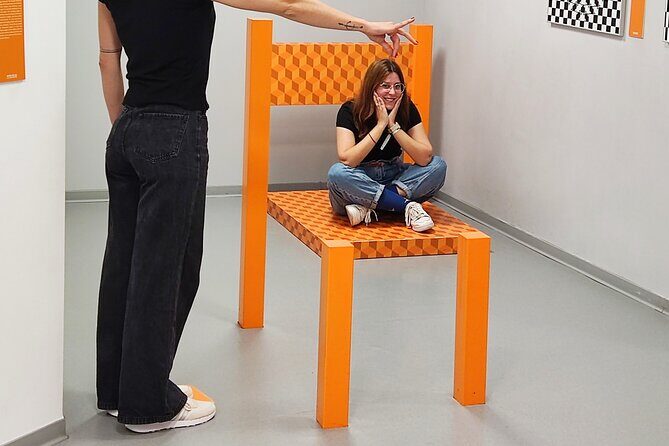
A big part of the appeal here is the camera-perspective play. The museum is built for “hilarious photos” and goofy moments—especially in rooms where your angle changes the effect.
Here’s what to do if you want better photos without turning it into a half-hour production:
- Keep moving room to room and do photos as you reach each illusion
- Try a couple of positions quickly, then switch to the next setup
- Use staff when you need help lining up a shot
Staff are described as attentive and helpful, including assisting with photos and explaining what you’re looking at. That’s worth taking advantage of because optical illusions often depend on just small changes in angle.
If the photo ops are a big priority for you, this museum is unusually cooperative. It doesn’t feel like you’re crashing a serious art space; it feels like you’re playing.
The Crowds and the Real-World Limits
This is where you should be realistic. The museum is small, and it can get busy—especially with groups. One practical detail from experience: there can be waiting if multiple groups move through at once, and it can be noisy when there are children in the mix.
If you want a quieter visit, consider going at a time that avoids the heaviest family activity periods. I can’t tell you exact hours from the information given, but the general strategy helps: aim for a slot that’s not smack in the middle of a school or preschool rush.
Also, remember that some rooms involve intense visual effects. If you’re sensitive to illusions that cause dizziness or a “sick” feeling, you may want to take breaks and move more slowly through the strongest setups like the vortex tunnel.
Is $18.15 Worth It? My Balanced Take
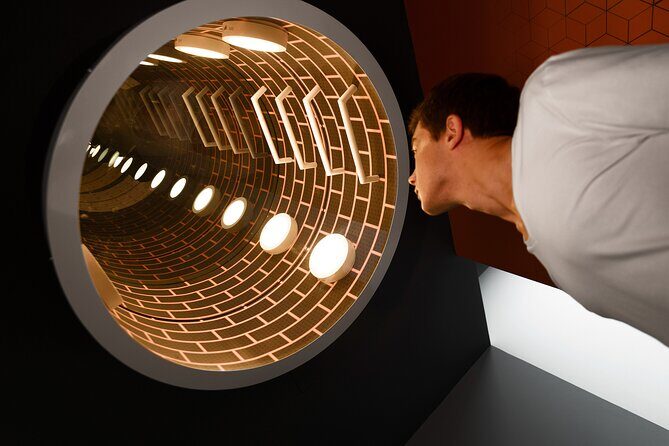
At $18.15 per person, you’re paying for a controlled, indoor experience with a clear purpose: interactive illusions and photo moments for about 45 minutes to 1 hour 15 minutes.
Here’s where the value calculation gets interesting:
- The people who love it tend to frame it as a fun hour or so, often with kids, and they mention impressive illusions plus great photo opportunities.
- The people who didn’t like it often point to the small size and the feeling that it’s not stimulating enough for the price, or that some illusions felt familiar.
My take: the ticket makes sense if you treat it like entertainment with interactive elements. It’s not trying to be a massive museum with nonstop content. It’s trying to be a fast, playful sensory circuit.
If you’re the kind of traveler who enjoys doing things—touching exhibits, solving puzzles, posing for optical photos—this is a strong buy. If you mostly want quiet galleries and long explanations, you might feel it’s too short and too light.
Who This Museum Fits Best
I’d book this if you want:
- a rainy-day or hot-day indoor break in Seville
- a low-effort activity that still feels hands-on
- something family-friendly that works for kids and adults
- photo opportunities you can get without specialist gear
I’d think twice if:
- you hate visual effects that can feel intense or disorienting
- you’re expecting a large museum experience or lots of written content
- you’re sensitive to crowd noise and prefer quieter attractions
Should You Book the Museum of Illusions Sevilla?
Yes, you should book it if you want a quick, playful indoor stop that leans into hands-on perception tricks and photo-ready rooms. The visit length is manageable, the ticket is in English, and the standout illusions like the vortex tunnel, anti-gravity room, and infinity room are exactly the kind of experiences that make a short trip feel memorable.
Book with one expectation-setting mindset: this is an experience circuit, not a long museum day. If that matches your travel style, Museum of Illusions Sevilla is a great use of an hour in the city.
If you want something calmer and longer-form, you may be happier with a different Seville museum. But if you want silly, sensory, and interactive, this one is built for you.
FAQ
How long does the Museum of Illusions Sevilla visit take?
The experience is listed at about 45 minutes to 1 hour 15 minutes.
What is the price per person?
The price is $18.15 per person.
What language is the experience offered in?
It’s offered in English.
Is the ticket mobile?
Yes, the tour uses a mobile ticket.
What is included in the ticket?
Your ticket includes access to the Museum of Illusions.
Are souvenirs included?
No, souvenirs are not included.
Can I take photos?
The experience includes photo opportunities where you can trick camera perspective, and photos are possible throughout the museum.
Do I need to bring anything to participate?
You can participate without special preparation, since it’s designed around interactive exhibits and illusions.
Are service animals allowed?
Yes, service animals are allowed.
What if my plans change?
You can cancel up to 24 hours in advance for a full refund.