REVIEW · SEVILLE
Seville Triana Quarter and River Small-Group Walking Tour
Book on Viator →Operated by Seville Unique Experiences · Bookable on Viator
Triana makes you want to slow down. This 90-minute walk strings together the river and neighborhood stories you’d miss wandering alone. I like how it’s built around real places, from old defenses along the water to churches that still shape local life.
Two things I really appreciate: the group stays small (max 10), so you can ask questions without feeling rushed, and the tour is heavy on history you can actually point to—bridge ironwork, market stalls, workshop ceramics, and specific religious sites. In the guides you may encounter, Marta is mentioned as clear and organized, and Miguel is praised for turning history into something you can connect to Spain today.
One possible drawback: it’s mostly walking and standing, and the stops touch serious themes (the Inquisition) and major religious celebrations (Holy Week). If you prefer purely light sightseeing, you might find a couple segments emotionally weighty.
In This Review
- Key takeaways
- Torre del Oro to Triana: a route that makes the city make sense
- The riverfront monuments and the 1800s iron bridge
- Triana’s market: food culture you can picture right away
- Crafts and ceramics workshops: where art meets work
- Castle of San Jorge: defensive walls and the Inquisition’s footprint
- Holy Week chapel and the Mudéjar Cathedral of Triana
- Why the small group makes the walk feel personal
- Price and value: $30 for 90 minutes with real stops
- Practical tips for your walk in Seville
- Should you book the Seville Triana Quarter and River Small-Group Walk?
- FAQ
- FAQ
- Where does the tour start?
- Where does the tour end?
- How long is the Seville Triana Quarter and River walking tour?
- What group size should I expect?
- Is the tour offered in English?
- Do I receive a mobile ticket?
- Are there different start times available?
- Is service animal access allowed?
- Is the meeting point near public transportation?
- How far in advance is this tour commonly booked?
- What is the cancellation policy?
Key takeaways
- Max 10 people keeps the feel personal and question-friendly
- River-to-Triana route links the Guadalquivir and the neighborhood across it
- Food + crafts focus (market products and ceramics workshops) makes the culture concrete
- Castle of San Jorge + Inquisition adds a darker chapter you can see with your own eyes
- Holy Week church visit connects you to local traditions still taken seriously
Torre del Oro to Triana: a route that makes the city make sense
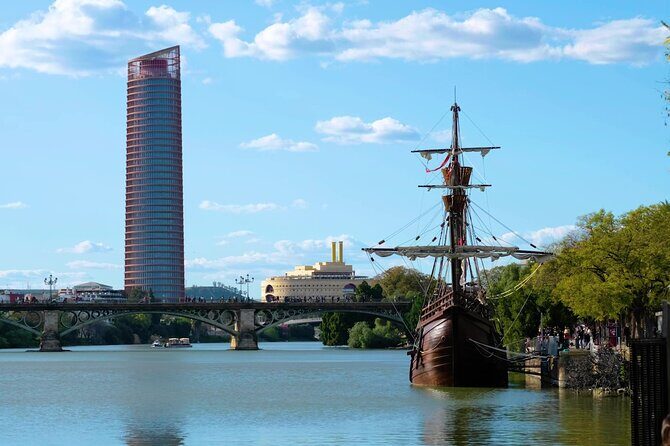
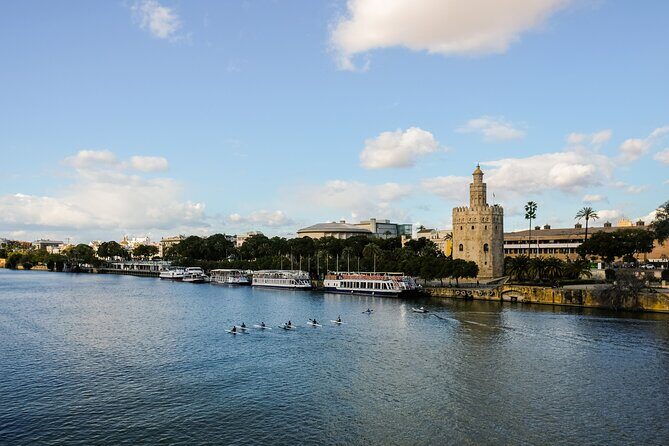
Most Seville walks are either all old monuments or all neighborhoods. This one connects the dots fast, starting at Torre del Oro. That watchtower is described as being built over 800 years ago to defend access of ships to the city, which instantly reframes the riverfront. You’re not just looking at pretty architecture—you’re standing where Seville’s maritime access mattered.
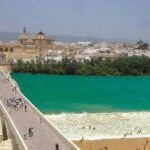
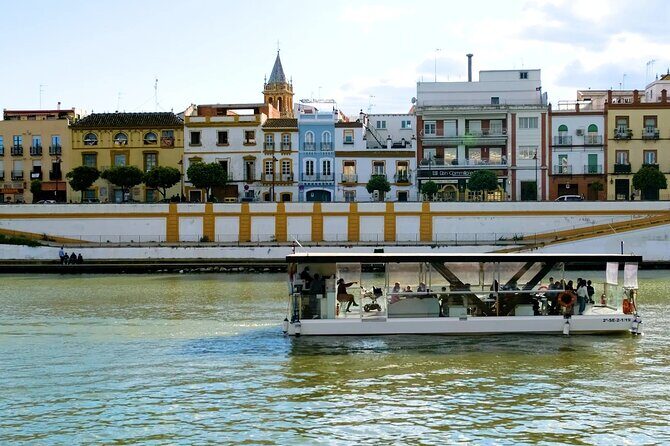
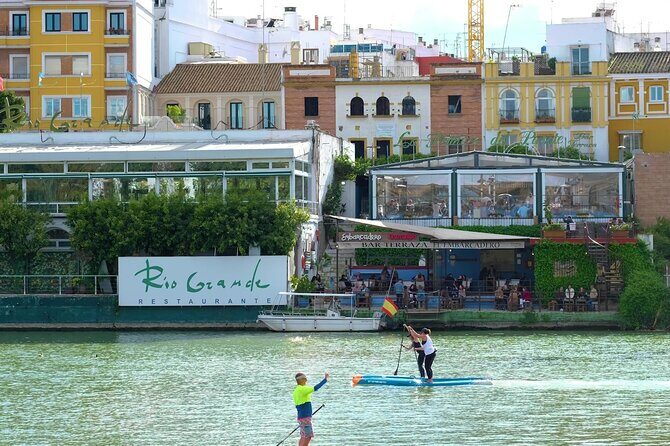
From there, you move along toward Triana, and the route stays easy to manage. The area on both sides of the Guadalquivir River is described as flat and simple on foot, so you’re not spending the whole tour fighting hills or stairs.
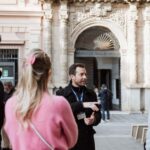
You’ll also get that small-group advantage early. With a cap of 10 travelers, it’s the kind of walk where the guide can pace the group and adjust questions in the moment. If you’re the type who likes to understand why something exists—not just what it looks like—you’ll feel right at home.
You can also read our reviews of more walking tours in Seville

The riverfront monuments and the 1800s iron bridge
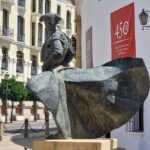
Seville has layers, and this tour treats them like clues. One stop is a modern monument meant to represent the different cultures that have called Seville home and coexisted for centuries. It’s a quick visual reminder that the story isn’t one single chapter.
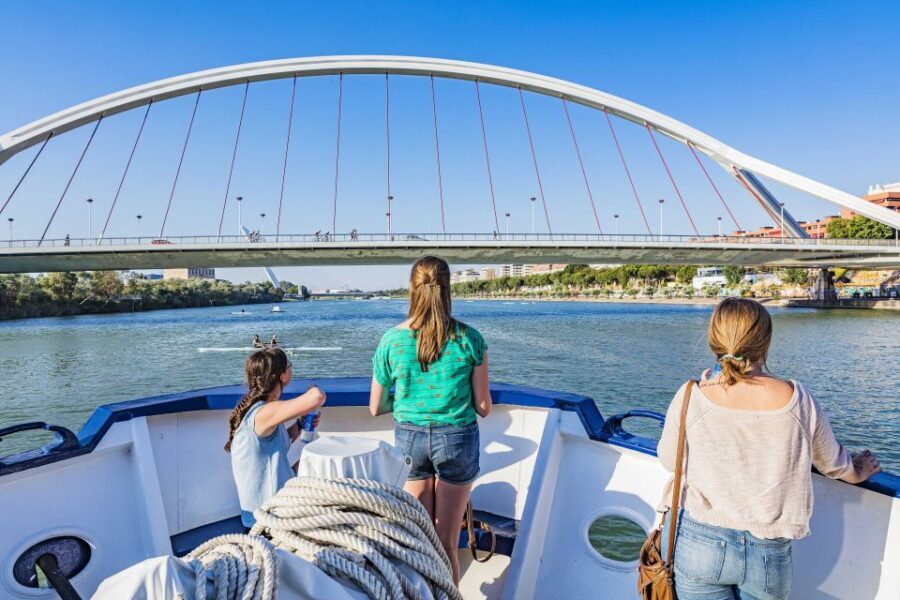
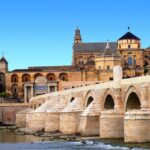
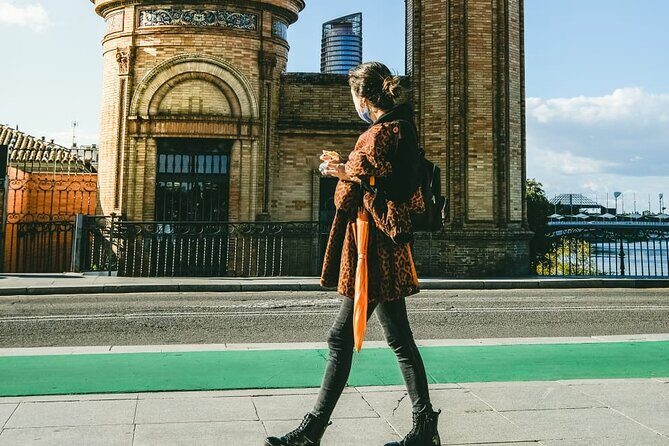
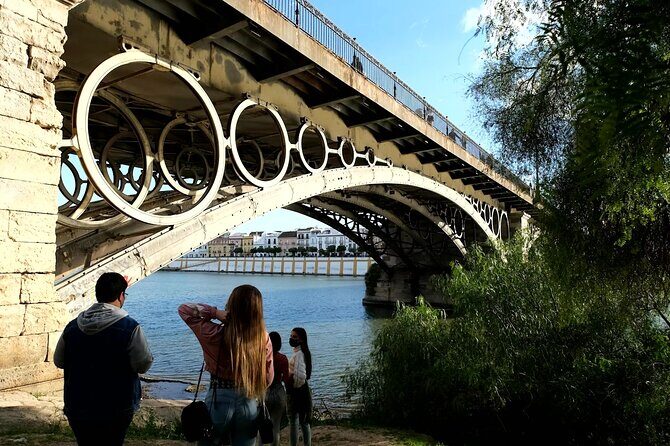
Then you reach the first fixed bridge of Seville, built to replace an earlier floating connection between the city and Triana. What makes this stop interesting is the attention to the ironwork style from the 1800s. If you’re even mildly into how cities evolve, this is where you get to see how technology and infrastructure changed day-to-day life—how crossing the river shifted from temporary to permanent.
Practical note: bridges can be windy and exposed. If you’re doing an afternoon start, consider bringing a light layer so you don’t get chilled halfway through photos.
Triana’s market: food culture you can picture right away
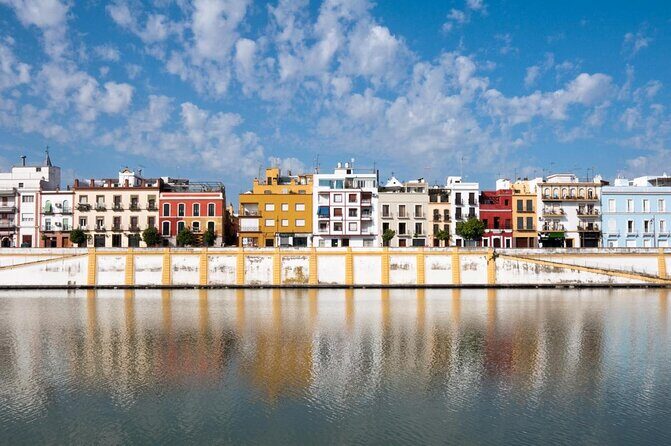
Triana isn’t just a pretty area to wander. This tour builds you a mental picture of how people ate, what they bought, and why certain flavors made sense there.
The traditional neighborhood market stop is designed to connect local products to Mediterranean cuisine. You’re not required to know culinary history before you go—this part is about getting you to look at ingredients, not just buildings. When the guide ties a market scene to how dishes developed, you’ll start noticing how food routes and daily shopping habits shape a region.
What I like about including a market stop is that it prevents the tour from becoming only architectural sightseeing. After the bridge and monuments, this brings you back to human scale: commerce, everyday needs, and local tastes.
Crafts and ceramics workshops: where art meets work
Right after the market, you shift from what’s eaten to what’s made. The tour explains the importance of local crafts and how they contributed to the arts, with a special emphasis on ceramics.
This is also where Triana’s identity becomes tangible. Instead of abstract “arts” talk, you’re pointed toward traditional artisan workshops and how they helped make Triana relevant in the craft world. If you’ve ever bought a souvenir and wondered why that particular style exists, this is the moment you’ll understand the backstory.
One more reason I think this stop is valuable: it gives context for the kind of shops and studios you’ll see around Triana. Even if you don’t do extra shopping, you’ll walk away with better instincts for what’s traditional and what’s just generic tourist stuff.
Castle of San Jorge: defensive walls and the Inquisition’s footprint
Then the tone shifts. At the Castle of San Jorge, you get the only defensive structure in the area and the headquarters of the Inquisition, along with an explanation of that religious court and its importance in local history.
This part works because it’s not vague. You’re visiting an actual defensive site, so the “power and control” theme stops being a lesson from a textbook. It’s visible in how the place functions. And the tour doesn’t just toss out the name—it frames why that institution mattered to Seville’s past.
If you’re sensitive to dark historical topics, plan for it. You don’t have to get lost in details, but it helps to mentally switch gears here: this is where the walk becomes less postcard and more historical reckoning.




Holy Week chapel and the Mudéjar Cathedral of Triana
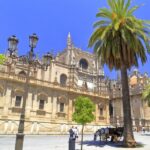
After the castle stop, the tour moves into religious life and local tradition. You visit a small church tied to one of Seville’s most important religious festivities: Holy Week. It’s described as being the site of some of the most beloved brotherhoods of Triana, and the chapel is still treated as a required stop for people visiting the suburb.
This can be surprisingly moving, even if you aren’t religious. It shows how a neighborhood’s identity can be carried by rituals that persist long after a single event passes.
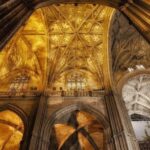
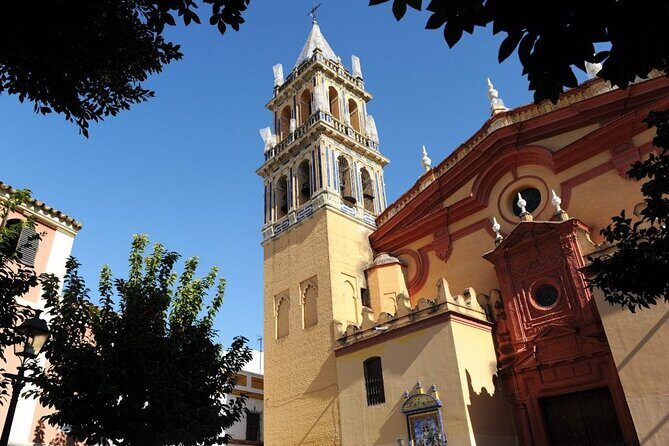
Finally, you end at the Real Parroquia de Señora Santa Ana, described as the most important church of Triana and the first one built after the Christian conquest of 1248. This church is noted as a strong example of Mudéjar architecture, and it’s sometimes called the Cathedral of Triana—a nickname that makes sense once you see its prominence for the neighborhood.
Ending at a place like this gives the tour a clean finish: you started with maritime defense, you traced cultural changes and engineering, you grounded the story in food and crafts, and then you brought it home with the architectural and spiritual center of Triana.
Why the small group makes the walk feel personal
With a maximum of 10 travelers, this isn’t a “stand-and-sprint” tour. You’re more likely to get time to absorb details like bridge ironwork, ceramics craft themes, and specific church significance—without having to keep up with a large crowd.
The reviews also suggest something useful: if attendance is low, it can feel like a one-on-one experience. That matters because history tours are better when you can ask follow-up questions, not just hear a prepared script.
Guide styles also seem to make a difference. Marta is singled out for enthusiastic, organized delivery, and Miguel is praised for connecting Spanish and European history to today’s world. Even if your own interests lean toward architecture, food, or religious traditions, a flexible guide helps you get more value out of each stop.
Price and value: $30 for 90 minutes with real stops
At $30.04 per person for about 1 hour 30 minutes, the value is mostly about depth-per-minute. You’re not paying for a long bus ride or a slow circuit. You’re paying for concentrated context at the key places: Torre del Oro, the bridge, the market, craft workshops, San Jorge, and the final church.
If you plan to spend time in Triana anyway, this tour can act like a shortcut to understanding. Instead of doing a self-guided walk where you only catch the obvious highlights, you get explanations that turn “I see a church” into “I understand why this church matters here.”
And if you’re trying to prioritize a few experiences in Seville, the timing helps. You can pick a morning or afternoon start, which makes it easier to pair with museum visits, meal breaks, or sunset wandering.
Practical tips for your walk in Seville
A few simple things will make your time smoother:
- Wear comfortable shoes. The tour is walking-heavy, and even when the route is flat, you’ll still be on your feet.
- Bring water. It’s a river-and-neighborhood route, and you’ll likely spend time outdoors around monuments and stops.
- Dress for shade or sun. Midday can be hot; morning walks often feel gentler.
- Have your map app ready. The end point is at Real Parroquia de Señora Santa Ana, so you’ll finish in Triana where it’s easy to keep exploring.
Also, the tour is described as near public transportation, which is handy. If you’re coming from farther across Seville, you won’t be stuck guessing your last-mile route.
Should you book the Seville Triana Quarter and River Small-Group Walk?
I think this is a strong pick if you want Seville with context. You’ll likely enjoy it most if you care about how neighborhoods form—through river access, bridges, daily markets, craft traditions like ceramics, and major religious institutions.
Book it if:
- You like history that stays tied to specific buildings and streets
- You want a small-group experience capped at 10
- You plan to spend time in Triana anyway and want to understand it fast
Skip it or consider carefully if:
- Religious and institutional history (including the Inquisition) will feel too heavy for your current mood
- You prefer a purely relaxed sightseeing pace with fewer structured explanations
FAQ
FAQ
Where does the tour start?
The tour starts at Torre del Oro (Golden Tower), P.º de Cristóbal Colón, s/n, Casco Antiguo, 41001 Sevilla, Spain.
Where does the tour end?
The tour ends at Real Parroquia de Señora Santa Ana, Párroco don Eugenio, 1, 41010 Sevilla, Spain.
How long is the Seville Triana Quarter and River walking tour?
It runs for approximately 1 hour 30 minutes.
What group size should I expect?
The tour has a maximum of 10 travelers.
Is the tour offered in English?
Yes, it is offered in English.
Do I receive a mobile ticket?
Yes, the tour includes a mobile ticket.
Are there different start times available?
Yes. You can choose between morning and afternoon start times.
Is service animal access allowed?
Service animals are allowed.
Is the meeting point near public transportation?
Yes, the tour is near public transportation.
How far in advance is this tour commonly booked?
On average, it is booked about 28 days in advance.
What is the cancellation policy?
You can cancel for a full refund up to 24 hours in advance of the experience start time.