REVIEW · SEVILLE
Seville: Roman City of Itálica 2 Hour Tour
Book on GetYourGuide →Operated by ANDALUCIA EXPERIENCIAS · Bookable on GetYourGuide
Roman ruins with a big-emperor origin. This 2-hour guided walk through Itálica helps you connect the stones to the lives of Trajan and Hadrian, then points you toward the amphitheater that made Roman spectacle feel local.
I especially like two things: the mosaics and Hadrian-era building layouts that show how people really lived, and the clear, practical way the guide ties Roman architecture to the city’s political and economic role.
One possible drawback: it’s a compact 2 hours and it’s not suitable for wheelchair users, so go in with comfortable shoes and a plan to keep moving.
In This Review
- Key highlights before you go
- Roman Itálica in 2 hours: what you’ll actually see
- Where you meet in Santiponce (and how not to stress)
- The guide experience: small group, multiple languages, real Q&A
- Touring Itálica’s Hadrian-era buildings: how Roman life shows up in stone
- The amphitheater: one of the empire’s largest, and why that’s a big deal
- Roman architecture techniques: learning the language of the ruins
- Timing and pacing: what 2 hours feels like on the ground
- Price and value: is $105 per person worth it?
- Practical tips: shoes, food rules, and what to plan for
- Who should book this Itálica tour
- Should you book Seville’s Roman Itálica 2-hour tour?
- FAQ
- How long is the Seville Roman City of Itálica tour?
- What time does the tour start?
- What days of the week is the tour available?
- Where is the meeting point?
- Is entrance to Itálica included in the price?
- How big is the group?
- What languages are available for the guide?
- What should I bring?
- Is food allowed during the tour?
- Is this tour suitable for wheelchair users?
Key highlights before you go
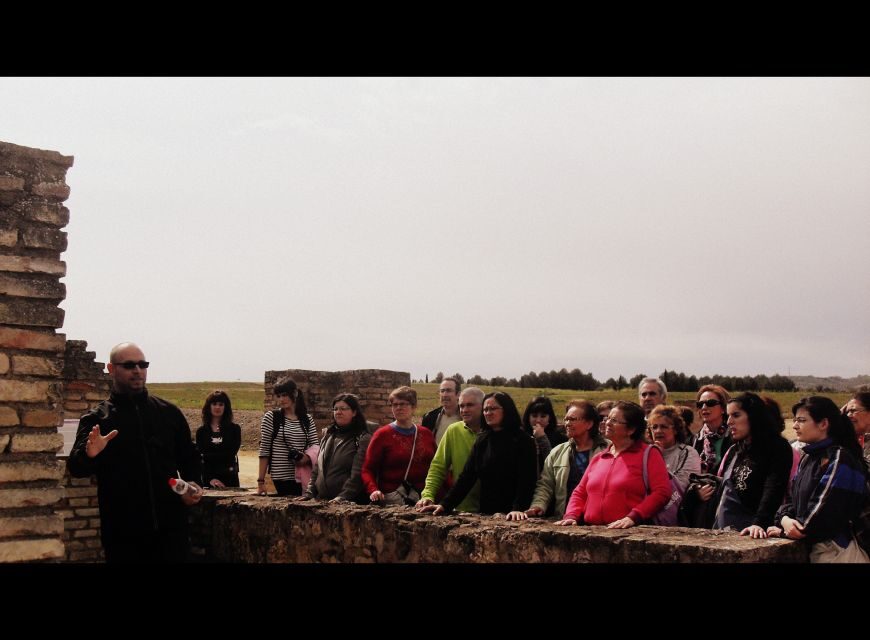
- Trajan and Hadrian connections: you’re visiting the birthplace of both emperors.
- Mosaics and daily-life spaces: public areas and private homes from Hadrian’s reign.
- A major Roman amphitheater: one of the largest in the empire.
- Small-group format: limited to 6 participants for faster questions and tighter pacing.
- Multiple language options: Spanish, English, Italian, and French.
Roman Itálica in 2 hours: what you’ll actually see
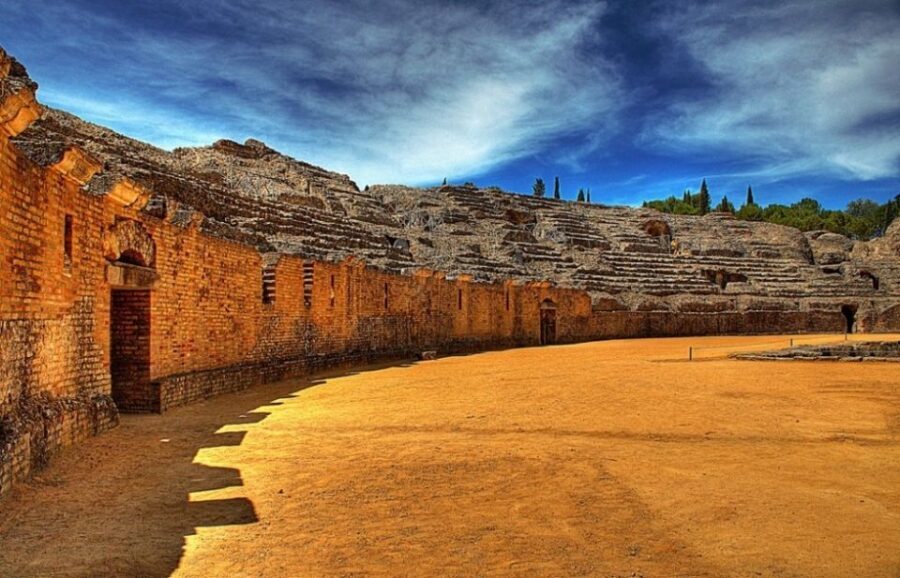
Itálica is the kind of place where big claims become obvious fast. In two hours, you’ll go from the idea of Roman power to the physical evidence: street-space, building remains, and decorative floors that still look impressive even after centuries outdoors.
This tour is built for clarity. You won’t just wander. With a live guide, you’ll learn why Itálica mattered politically, militarily, and economically, and how that shows up in what’s been preserved.
And yes, the amphitheater is the headline. Even if you’ve seen other Roman sites, Itálica’s scale helps you understand why emperors and cities invested so heavily in public entertainment.
You can also read our reviews of more city tours in Seville



Where you meet in Santiponce (and how not to stress)
You meet at the main entrance to the archaeological complex of Itálica, Av. Extremadura, 2, 41970 Santiponce, Sevilla, España. That’s important because this tour doesn’t include hotel pickup or drop-off, and there’s no transportation from Seville included.
So plan on getting yourself there. If you’re staying in Seville, give yourself extra time to arrive early and check in calmly. A small-group tour runs on real time, and the site is easier to navigate when you’re not rushing at the gate.
A practical note: there have been good experiences when a guide handled late arrivals kindly, including a guide named Lara who reportedly called and waited. Still, don’t count on a reset. Build in buffer time.
The guide experience: small group, multiple languages, real Q&A
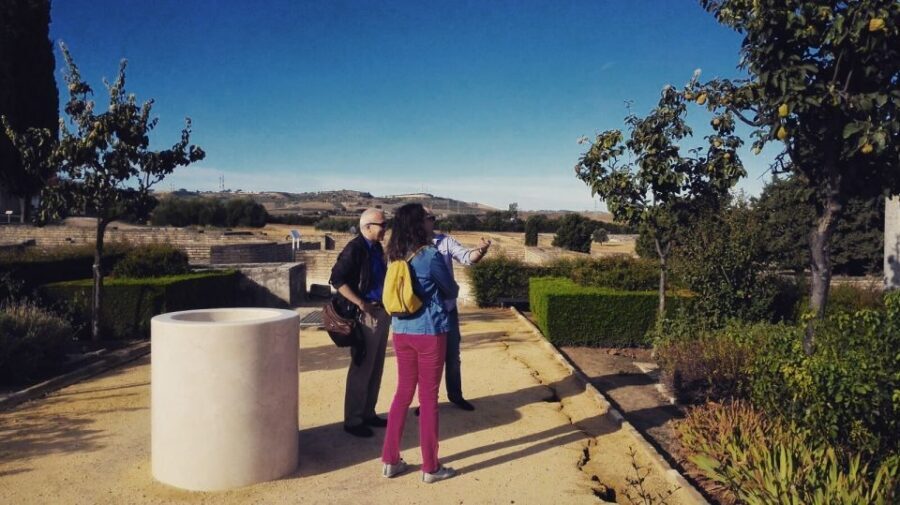
This is a small-group tour capped at 6 participants, and that changes the feel. You can actually ask follow-up questions without competing with a crowd, and you’re less likely to get lost while the group regroups.
The tour runs with a live guide in Spanish, English, Italian, or French. If you’re in Seville for a short visit and want a language you’re comfortable with, this setup is one of the biggest conveniences.
I also appreciate the human side. Guides on this route have been described as friendly and strong on the Roman story, including names like David and Lara. That matters because Itálica is archaeological. You benefit when someone explains what you’re looking at, not just where it is.
That said, keep your expectations realistic. One drawback that’s been mentioned is that, on some occasions, the rendezvous timing wasn’t as smooth as it should be and explanations felt too surface-level with a shorter-than-expected visit. To avoid disappointment, show up early and be ready for the tour to start on schedule.
Touring Itálica’s Hadrian-era buildings: how Roman life shows up in stone
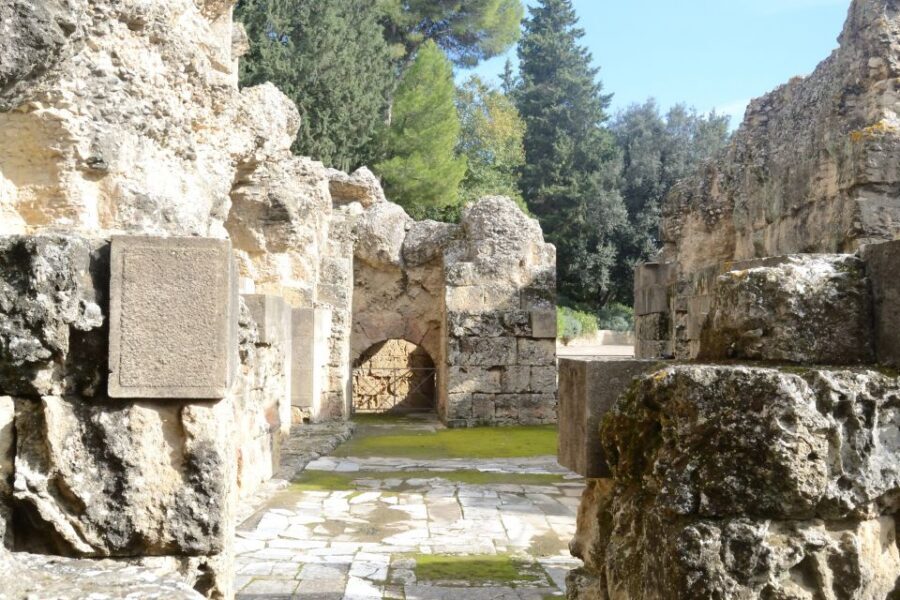
The heart of the visit focuses on how the city was built and used. You’ll see public buildings as well as private homes constructed during the reign of Hadrian. That time period gives the tour a concrete theme: this wasn’t a random Roman settlement. It was shaped by imperial planning and by the needs of people living there.
What I like about this part is that the tour connects architecture to purpose. You’re not just seeing wall lines. You’re learning about construction choices and what they suggest about daily routines—where people gathered, how homes were arranged, and how the city functioned as a lived-in place.
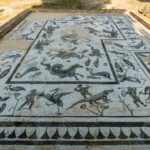
This is also where the mosaics come in. Roman mosaics are never just decoration; they’re a statement about taste, wealth, and the workshop culture behind the scenes. Here, the mosaics are highlighted as one of the standout ancient treasures, and they’re the kind of feature that rewards slow looking—something you can do in short pauses between larger site areas.
If you’re traveling with family or friends, this segment often lands well. It gives you variety: bigger communal spaces to break up the walking, then quieter domestic details that feel more human.
The amphitheater: one of the empire’s largest, and why that’s a big deal
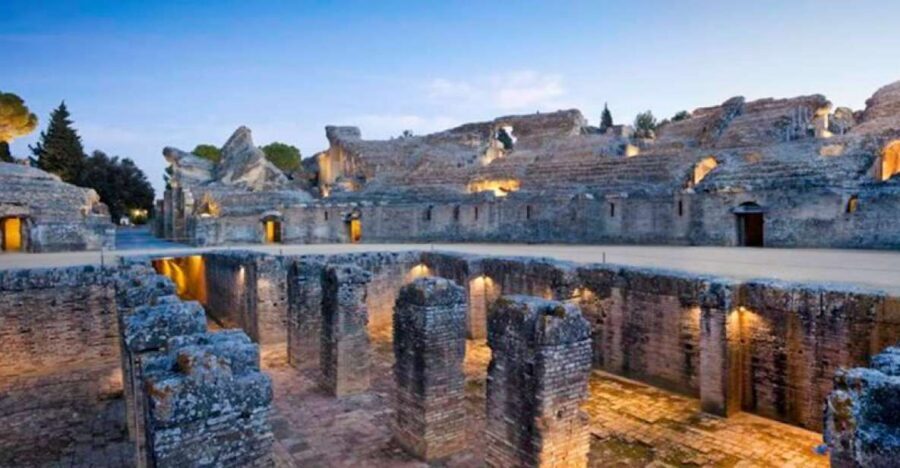
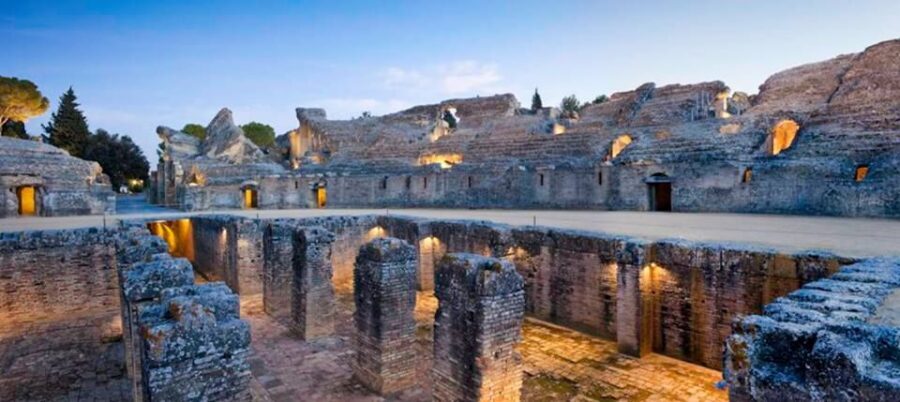
The amphitheater is the feature most people want, and the tour delivers. You’ll see one of the largest amphitheaters of the Roman Empire at Itálica, and the guide will explain why it’s tied to the city’s importance.
Here’s the practical takeaway: an amphitheater on this scale isn’t just about entertainment. It signals money, organization, and a political message. A big venue means the city could host events that drew attention and reinforced Roman identity, even far from the old centers.
When you stand in the remains, you start noticing the logic of Roman design—how space is carved and how sightlines and audience areas are meant to work. Even without detailed engineering knowledge, you can feel the intention behind the form.
If you love ruins that explain themselves, this is the best payoff moment. It turns abstract talk about Roman power into something you can see and imagine.
You can also read our reviews of more tours and experiences in Seville




Roman architecture techniques: learning the language of the ruins
A major value of a guided tour here is that Roman architecture has patterns. Once someone points them out, you start seeing structure everywhere—how buildings were made to last, how styles were carried and adjusted, and how city planning shaped movement.
The tour specifically highlights the techniques and styles of Roman architecture. That matters because Itálica isn’t just a collection of stones. It’s a strategic city tied to major imperial power. The guide helps you understand that the city’s layout and construction weren’t accidental.
I also think this is a good Roman “starter lesson.” If you’ve visited one Roman site and felt like you were missing the bigger picture, a focused 2-hour tour like this can get you reading the site like a map.
Timing and pacing: what 2 hours feels like on the ground
Duration is 2 hours, operating Tuesday to Sunday at 10:00 AM. That schedule matters. Itálica is outdoors and archaeological, and you’ll want to be there ready to move at a steady pace.
Because the tour is small-group and time-limited, it’s best thought of as a guided overview with high-impact stops—mosaics, key building areas, and the amphitheater. You’ll come away with a solid sense of why Itálica was important, not an exhaustive site-by-site survey.
For families and friends groups, this is usually a sweet spot. It’s long enough to learn and see the highlights, short enough to keep kids from burning out.
If you prefer a slower pace—stopping often to sketch, take photos for long stretches, or read every plaque—you might feel a bit rushed. In that case, consider pairing this tour with extra self-guided time if you have it.
Price and value: is $105 per person worth it?
At $105 per person for a 2-hour guided visit, it’s not a “cheap and cheerful” excursion. But it can be good value if you match your expectations to what you’re buying.
You’re paying for:
- Entrance fees included
- A live guide for the full 2 hours
- A small group limited to 6 people
For many visitors, the biggest cost savings is mental. You don’t have to puzzle out what you’re looking at on your own, and you’re not trying to squeeze multiple Roman sites into a short day. The guide does the interpretation work for you.
Where value can drop is if you’re expecting a long, leisurely walk with lots of downtime. This is a focused highlight tour. If that fits your style, the price starts to make sense quickly.
Language matters too. Having English, Spanish, Italian, or French available lets you book with confidence, especially if you don’t want to rely on summaries or audio apps.
Practical tips: shoes, food rules, and what to plan for
Bring comfortable shoes. It’s the simplest advice, but it’s the one that saves your feet over the full two hours.
Food isn’t allowed during the tour. So plan on eating before you go or after you’re done, rather than trying to snack while the guide is talking.
And because it isn’t wheelchair accessible, it’s best for visitors who can comfortably walk through archaeological terrain without mobility aids. If you’re traveling with someone who needs accessibility support, you’ll want a different plan.
Who should book this Itálica tour
I’d steer you toward this tour if you want:
- A clear introduction to Roman Itálica near Seville
- The chance to see mosaics and a major amphitheater in one outing
- A small-group format where questions don’t get lost
- A guide-led explanation of how Roman architecture connects to power and everyday life
It’s also a strong pick for families and friends groups, since it hits multiple types of interest: impressive structures, readable human stories, and photo-friendly highlights.
If you’re a hardcore Roman-ruin scholar who wants to read every inscription and linger over every corner, you may want more time on site. But for most people, the 2-hour structure is exactly what makes it manageable.
Should you book Seville’s Roman Itálica 2-hour tour?
I’d book it if you’re excited to connect Roman names and big themes to visible remains. The combination of mosaics, Hadrian-era spaces, and a top-scale amphitheater gives you a lot of payoff in a short window, especially with a small group and entrance fees included.
Skip it or think twice if you need a slow pace, lots of breaks, or accessibility accommodations. And whatever your travel style, arrive early at the meeting point so you start calm and keep the tour flowing.
If you’re aiming to get real meaning from Roman ruins without turning it into a long research project, this tour is a solid way to do it.
FAQ
How long is the Seville Roman City of Itálica tour?
It lasts 2 hours.
What time does the tour start?
It starts at 10:00 AM.
What days of the week is the tour available?
It runs Tuesday through Sunday.
Where is the meeting point?
Meet at the main entrance to the archaeological complex of Itálica, Av. Extremadura, 2, 41970 Santiponce, Sevilla, España.
Is entrance to Itálica included in the price?
Yes, entrance fees are included.
How big is the group?
The tour is limited to 6 participants.
What languages are available for the guide?
The live guide is offered in Spanish, English, Italian, and French.
What should I bring?
Wear comfortable shoes.
Is food allowed during the tour?
No, food is not allowed.
Is this tour suitable for wheelchair users?
No, it is not suitable for wheelchair users.