REVIEW · SEVILLE
Complete Triana Tour “Corrales included”.
Book on GetYourGuide →Operated by Sevilla&ME · Bookable on GetYourGuide
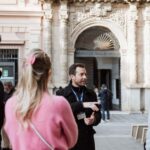
Triana is the part of Seville you can’t rush. This 2-hour guided walk is built to show you the neighborhood’s quiet courtyards and big landmarks side by side, with corrales included. I like how the route is packed with recognizable sights (Torre del Oro, major bridges) but still makes space for lesser-known corners like patios and inner courtyards. I also love that the tour is run by accredited local officials with clear communication, so you get context instead of just pretty photos. One thing to consider: it’s a lot of stops in a short time, so you’ll want to keep your energy up for the full 2 hours.
You’ll start near the Torre del Oro, then cross into classic Triana territory—churches, chapel stops, artisan sites, and the Triana Market area to finish. The tour leans into “living Triana”: legends, traditions, and the everyday fabric of the neighborhood, not just monuments. If you’re hoping for a slow, sit-down experience with long breaks, this probably won’t be your style.
A big practical note: the tour is wheelchair accessible, and the operator says every stop is reachable and comfortable without hills. In summer, they route you through shaded stops; in winter, expect sun more often.
In This Review
- Key things that make this Triana tour worth your time
- Price and time: $14 for a 2-hour Triana education
- Meeting point near Torre del Oro: easy start, clear direction
- Torre del Oro to Triana bridges: Seville’s river edge meets neighborhood identity
- Santa Ana area and Triana’s church icons: faith you can see in the street
- Juan Belmonte stop: a quick pivot toward modern cultural memory
- Corrales de vecinos and courtyards: the part you’ll remember later
- San Jacinto Dominican Convent: serenity in the middle of the route
- Old factories, ceramics, and artisan spaces: craft that explains the neighborhood
- Castle of San Jorge and the Almohad tunnel story: Triana gets dramatic underground
- Betis and San Jacinto streets, old fishing port, and Triana Bridge: the local rhythm
- Capillita del Carmen and the Triana Market finish: devotion meets snack reality
- Logistics that actually affect your day (not just fine print)
- Who this tour is best for
- Should you book Complete Triana Tour Corrales included?
- FAQ
- Where does the tour start?
- How long is the Triana tour?
- Is the tour wheelchair accessible?
- Is corrales included?
- What language is the live guide?
- Where does the tour end?
Key things that make this Triana tour worth your time
- Corrales de vecinos included: you don’t just hear about courtyards—you actually visit them.
- A stop-by-stop Triana story, from riverfront towers to church icons and artisan spaces.
- San Jacinto convent focus: a calmer, more reflective pause in the middle of the walk.
- Castle + tunnels: you’ll get the “why Triana feels layered” feeling with San Jorge and Almohad-era underground passageways.
- Market finish in Triana: you end where locals shop, snack, and plan their next bite.
- All stops accessible without hills: easier logistics than most neighborhood walks in Seville.
Price and time: $14 for a 2-hour Triana education
At $14 per person for a 2-hour guided tour, this is one of those good-value setups where the price makes sense because you’re buying access, guidance, and a structured route. You’re not paying for a single landmark. You’re paying for a chain of places—many of them tied to local devotion, craft, and neighborhood life—connected by a guide who can explain what you’re seeing as you go.
Two things to keep in mind. First, the tour is compact. You’ll cover a lot of ground on foot, even if the route is designed to avoid hills. Second, it’s Spanish-only for the live guide, so plan on enjoying it in that language (or bring a basic “Triana vocabulary” mindset: streets, churches, chapels, courtyards, and legends).
If you want a quick “Triana crash course” that still feels like you’re walking like a local, this format works.
You can also read our reviews of more tours and experiences in Seville.


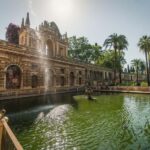
Meeting point near Torre del Oro: easy start, clear direction
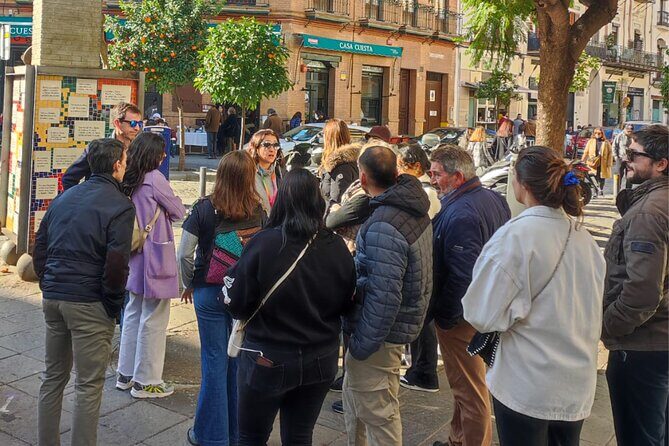
You meet at the TORRE DEL ORO gate, next to the “canyons,” and importantly, not down the river. That one detail matters. Seville has multiple river-adjacent areas that look similar, especially if you’re arriving without a game plan.
The tour ends back in the Triana Market area (with the posted finish point at Pl. del Altozano, 16A, 41010 Sevilla). If you’re pairing this with dinner, plan to keep your meal flexible right after the walk—you’ll be in the right zone to eat.
One practical tip I’d take from the operator’s guidance: include a mobile number with WhatsApp when you book. The operator says they use it to send day-before/same-day arrival instructions and to help with delays or lost-device issues.
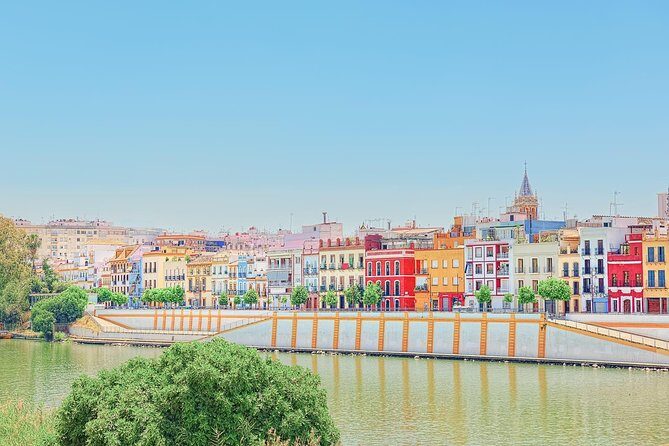
Torre del Oro to Triana bridges: Seville’s river edge meets neighborhood identity

The tour starts at Museo Naval de Torre del Oro and then moves right into the Torre del Oro with a guided stop. This matters because it frames Triana in a broader Seville context: Triana didn’t grow in isolation. It grew next to the river, next to trade, and next to movement.
From there, you walk to Puente de San Telmo and then Puente de Isabel II—both guided stops. Bridges here aren’t just “nice views.” They’re transitions: from the riverfront logic of Seville into Triana’s streets, chapels, and workshops. Even if you’ve seen pictures of these bridges, the guided context changes how you look at them.
A note on walking pace: because the tour is only two hours and includes a long list of stops, you’ll likely keep moving. It’s comfortable by design, but treat it like a guided stroll, not a hop-on-hop-off sightseeing day.
Santa Ana area and Triana’s church icons: faith you can see in the street

Next comes Plazuela de Santa Ana, followed by the Real Parroquia de Señora Santa Ana. Churches like this anchor a neighborhood’s identity. What I like about including these stops is that you’re not only collecting architecture. You’re also collecting community clues: which saints matter here, how devotion shows up in daily life, and how the street feels connected to religious tradition.
Then you’ll visit Hermandad de la Estrella (Triana). This kind of stop is where Triana becomes more than scenery. You get traditions and legends tied to local institutions, which helps explain why Triana’s cultural tone feels specific—less generic “old city,” more lived-in neighborhood.
After that, you stop at the Chapel of Sailors. The name already hints at a Triana storyline. Triana’s relationship with river and sea isn’t abstract. It shows up in the way people organize devotion and remember their past.
Juan Belmonte stop: a quick pivot toward modern cultural memory
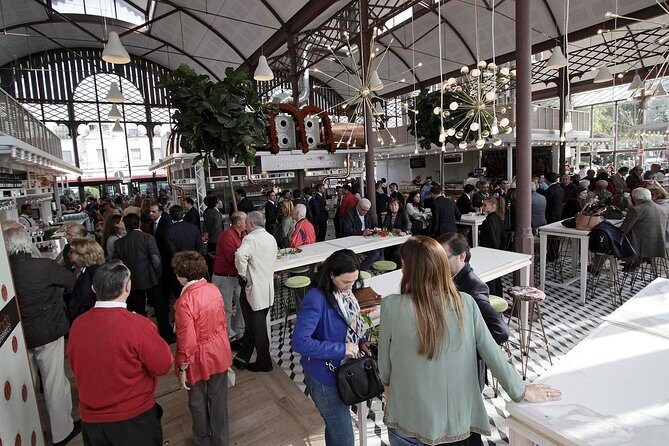
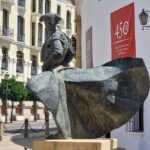
The route includes a stop called Juan Belmonte. The tour doesn’t frame it as just a photo spot. I treat stops like this as a reminder that Triana isn’t frozen in medieval time. It keeps layering new cultural memory on top of the older fabric.
Because the exact details aren’t spelled out in the provided info, I won’t invent specifics. But I will say this: when a tour includes both chapels and a figure like Juan Belmonte, you get a more realistic sense of how neighborhoods evolve—religion and craft plus later cultural icons.
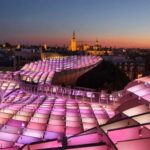



Corrales de vecinos and courtyards: the part you’ll remember later
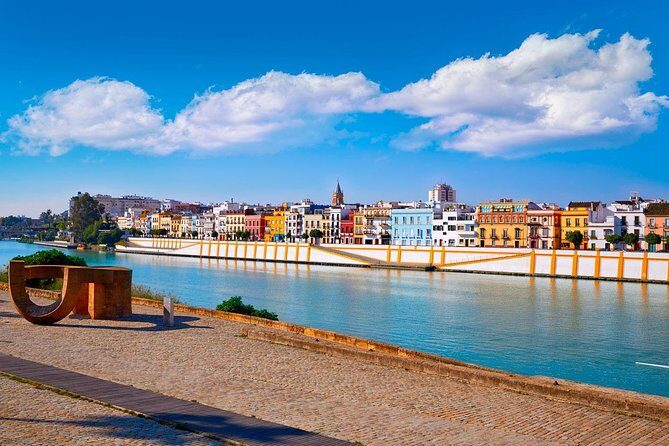
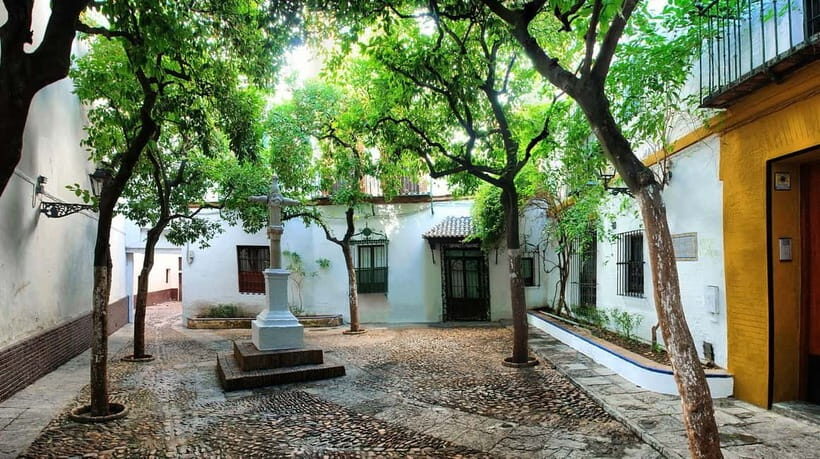
This tour’s signature is the corrales de vecinos experience, described as a unique gift for visitors. Corrales here are traditional courtyards of homes open to the sky—places where family life and neighborhood life intersected in very practical ways.
I love this because it’s the kind of stop that changes your mental map of the area. After a courtyard visit, you start noticing windows, doorways, and how streets lead inward. Triana stops feeling like a line of facades and starts feeling like connected living spaces.
The tour also points out that you’ll see “traditional courtyards of old houses open to the sky.” That phrasing matters: you’re not just going to a decorative patio. You’re seeing an architectural idea that supported everyday life—how people managed light, air, and community within compact urban blocks.
San Jacinto Dominican Convent: serenity in the middle of the route
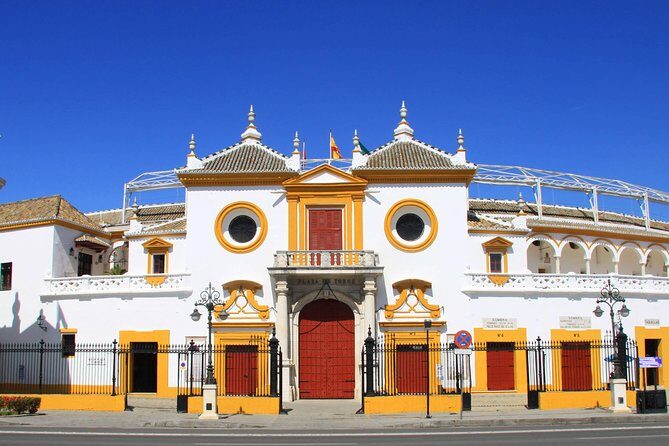
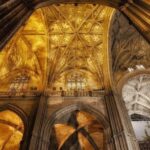
Then you get a calmer chapter: the Dominican Convent of San Jacinto, described as serene and historical. This is a smart scheduling choice. After bridges and churches (more public, more outward-facing), the convent stop provides a breath.
It also helps you understand Triana’s depth. Not everything is loud street life. Some of it is quiet places where history weighs differently.
If your day in Seville has been heavy on crowds, this kind of pause can feel like a reset. And in a short tour, that reset is valuable.
Old factories, ceramics, and artisan spaces: craft that explains the neighborhood
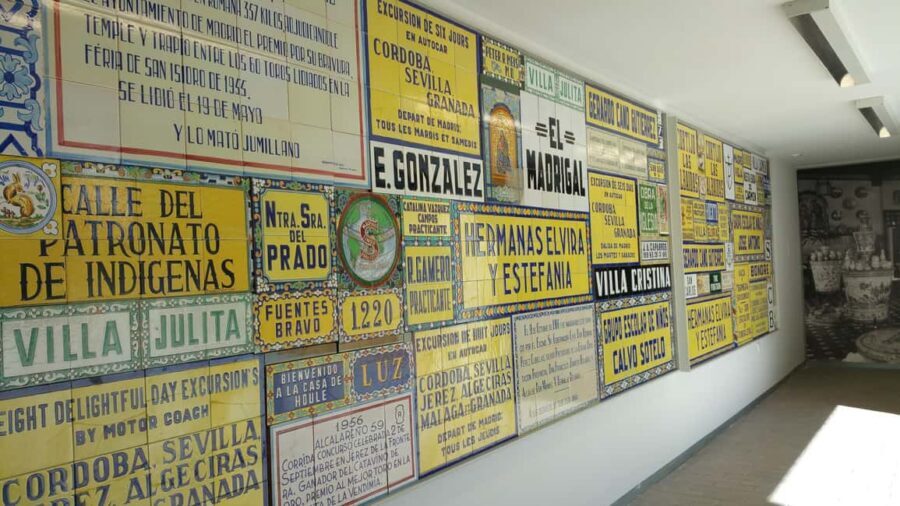
The experience includes stops tied to artisan production, including the San Ana Ceramics Factory. The tour frames it as a place where tradition is still alive. Even if you only catch a snapshot, a ceramics stop gives you something street-level tourism often misses: how Triana made objects, not just how Triana looked.
This section also includes references to old artisan factories and spaces that fit Triana’s identity as a working neighborhood. Pairing crafts with courtyards and chapels is what makes the story feel coherent. You see how belief, domestic life, and production all share the same urban geography.
There’s also mention of a Patio de la Espartería with unique architecture. Patios like this often show off how local design solves real needs—shade, airflow, and community—even before you get to the “beauty” part.
Castle of San Jorge and the Almohad tunnel story: Triana gets dramatic underground
The tour then shifts to something more cinematic: Castillo San Jorge and Calle San Jorge. You’re meant to feel the passage of the sad era of the inquisition, according to the tour description.
After that, you move into the Royal Almohad Almonas tunnels, where the tour says the most popular soap in Europe and America was born. I’d take the phrasing as a strong local claim rather than a lab-certified history lesson—what matters is the vibe and context. Underground tunnels are one of the fastest ways to make the past feel real, because you’re physically under the story.
If you like history but don’t want museum overload, this section hits a good middle ground. It’s memorable because it’s physical.
Betis and San Jacinto streets, old fishing port, and Triana Bridge: the local rhythm
Between major sites, the tour highlights Betis and San Jacinto streets, especially their bar-and-story atmosphere. There’s also an old fishing port and the iconic Triana Bridge, including what they hide—which is a lot.
This is one reason I’d pick this tour over a strictly “big monuments” plan. Triana’s appeal isn’t only in famous postcard angles. It’s in how the neighborhood breathes: the street rhythm, the food culture built around everyday routines, and the sense that places are linked by more than geography.
The tour is explicitly designed to connect those threads so you understand the area’s logic as you walk it.
Capillita del Carmen and the Triana Market finish: devotion meets snack reality
You’ll visit the Capillita del Carmen, described as an emblem of local devotion with secrets. Chapel stops like this tend to be short, but they’re often the kind of thing you remember. Small religious structures can carry a disproportionate emotional weight in a neighborhood like Triana.
Finally, you reach Triana Market, which is positioned as one of the most emblematic places in the neighborhood. The tour ends here, so it’s built for payoff: after a guide has explained what matters, you can use that knowledge to shop or snack with better instincts.
The tour also says you’ll get recommendations for what and where to eat good Triana, Sevillian, and even gypsy tapas. I can’t promise which stalls you’ll be steered toward from this information alone, but I like that the tour doesn’t treat food as an afterthought. Finishing at the market means you can turn knowledge into action right away.
Logistics that actually affect your day (not just fine print)
This is a guided tour in Spanish. The operator notes children and teenagers occupy a seat, which can be useful for families planning a short structured activity.
Also, speakers are not allowed. That sounds minor, but it can make the experience more pleasant—especially in indoor or chapel-like spaces where sound carries.
You’ll want to pack like you’re walking a compact route for two hours. Since the tour is said to avoid hills and keep stops comfortable, you’re not looking at an all-day climb—but you still want shoes you trust.
Who this tour is best for
I’d suggest this tour if:
- You want a fast, guided Triana orientation that goes beyond the obvious photo stops.
- You care about neighborhood life: courtyards, artisan spaces, devotion, and street culture.
- You prefer structured storytelling over wandering alone.
I might skip it if:
- You hate lots of “micro-stops” in a short time and want fewer locations with more free time.
- You don’t enjoy Spanish-guided narration and tours.
If you’re the kind of visitor who loves walking with a plan—so you don’t miss the good stuff—this fits well.
Should you book Complete Triana Tour Corrales included?
I think it’s a smart booking if you’re in Seville and want Triana to feel specific, not generic. The main reason is the corrales de vecinos portion—added value that can be the highlight of the whole area. On top of that, you get a layered route: riverfront landmarks, churches, a convent pause, artisan and ceramics stops, a castle, and even the underground tunnel story, finishing at the Triana Market when you’re ready to eat.
If you’re deciding between doing Triana solo or with a guide, this is the kind of tour that helps you read the neighborhood in real time. The route is compact, but the stops are varied enough that you leave with a stronger sense of place.
FAQ
Where does the tour start?
The guide meets at the Torre del Oro gate, next to the canyons (not down the river).
How long is the Triana tour?
The tour lasts 2 hours.
Is the tour wheelchair accessible?
Yes. The tour is marked wheelchair accessible, and the operator states all stops are reachable and comfortable without hills.
Is corrales included?
Yes. The tour specifically includes corrales de vecinos.
What language is the live guide?
The live tour guide speaks Spanish.
Where does the tour end?
The tour ends in the Triana Market area (finish point listed as Pl. del Altozano, 16A, 41010 Sevilla).