Flamenco starts before the music even begins. You’ll begin with coffee and flamenco background, then get a hands-on 45-minute class, followed by tapas and a tiny, hard-to-find show.
If you care about understanding what you’re seeing (not just watching), this format makes the night click.
I especially liked two things: the way Maria connects flamenco to Seville neighborhoods like Triana, and the fact that the performance feels close-up, almost family-style, on a very small stage.
It also helps that the show line-up is built around the basics (singer, guitarist, dancer), with chances for extra surprises.
One drawback to think about: it’s a 5:00 pm start and it includes multiple food stops, so you’ll want to manage your evening plans accordingly.
Also, there’s a short transfer to the show that may be by taxi if walking is more than 10 minutes, so comfortable shoes still matter.
In This Review
- Key highlights in plain terms
- Coffee, history, and why the start matters in Seville
- The 45-minute flamenco class: what you gain (and what you’ll notice)
- Tapas crawl at two very local bars (with drinks included)
- Getting to the intimate show: taxi when it saves time
- What the show format tells you to watch for
- Who Maria and the performers are in the experience
- Timing, group size, and how to plan your day
- Price and value: is $180.24 fair for what you get?
- Who this tour suits best (and who should skip it)
- Should you book this Seville flamenco experience?
- FAQ
- What’s included in the price?
- Is it offered in English, and is it private?
- How long does the experience last, and what’s the general flow?
- Where do we meet, and when does it start?
- Does the tour handle allergies or dietary needs?
- What’s the cancellation window for a full refund?
Key highlights in plain terms
- Coffee-first storytelling sets up what flamenco is really about in Seville
- Small-group cap of 10 keeps the vibe personal
- A 45-minute class helps you understand key steps instead of just observing
- Two local tapas bars with 3 beverages and 3 tapas means you’re not eating tourist food
- One of the smallest shows in the city puts you close to the artists on a tiny stage
Coffee, history, and why the start matters in Seville
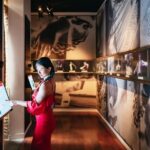
I like tours that don’t treat flamenco like a separate museum exhibit. This one starts at Alameda de Hércules, 19, in Seville’s old center, with coffee or tea and a story that frames what you’re about to learn and watch.
The point isn’t trivia for its own sake. Flamenco has roots in specific communities, and in Seville you can’t ignore how neighborhoods shaped the sound and the dance. During the coffee stop, you’ll get the background on flamenco’s history and the key steps you’ll see later, so the show stops being confusing and starts feeling intentional.
You’ll also notice the group size. It’s capped at 10, and the tour is private, so it doesn’t feel like a conveyor belt. That makes the early questions and conversation actually useful, not just background noise.
You can also read our reviews of more tours and experiences in Seville

The 45-minute flamenco class: what you gain (and what you’ll notice)
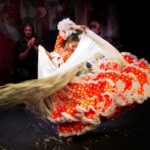
The class runs about 45 minutes, and it’s not just a quick warm-up. You’ll learn core elements of flamenco dance, with a teacher who also performs and leads the evening’s energy.
What you get from a class like this is basic understanding of how flamenco works: rhythm, arm work, foot patterns, and the attitude that goes with it. Even if you don’t become a dancer in one afternoon, you’ll walk into the show recognizing the building blocks instead of watching everything as one big blur.
A nice extra here is that your teacher isn’t only explaining from the sidelines. In the style of the evening, the host/teacher may also be on stage as the dancer. When you later see someone you just studied with, the connection is instant, and you’ll probably watch with more attention.
Tapas crawl at two very local bars (with drinks included)
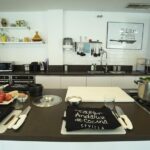
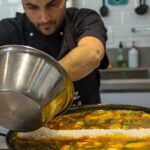
After the class, you’ll head to the tapas part: two local tapas bars, with bites chosen to match each bar’s or region’s specialties. You get 3 tapas and 3 beverages per person as part of the experience.
This matters for two reasons. First, flamenco night in Spain is often paired with eating and socializing, so tapas is part of the rhythm of the evening. Second, tastings from local places give you a better sense of where the night belongs—Seville, not a generic stage somewhere else.
The menu examples show the kind of food you can expect:
- Cazón en adobo (dogfish in a marinade)
- Solomillo al whisky (sirloin in whisky sauce)
- Espinacas con garbanzos (spinach with chickpeas)
- Setas al pedro ximénez (mushrooms with a sweet wine sauce)
You’ll also want to appreciate the practical side: allergies and diets are taken into consideration. That doesn’t mean every ingredient can be swapped in every case, but it does mean they’re thinking about your needs rather than treating food as an afterthought.
A small tip from how this kind of night runs: come hungry enough that you enjoy it, not stuffed enough that you’ll lose the taste of the last bar.
Getting to the intimate show: taxi when it saves time
Once tapas is done, you’ll go to the flamenco show. The plan is either a walk or a taxi transfer, depending on how far it is—if it’s more than about 10 minutes walking, you take a taxi.
I like this approach because flamenco shows are scheduled tightly. You don’t want to arrive out of breath, late, or annoyed because you guessed wrong about distance in old streets. A taxi option keeps the evening relaxed.
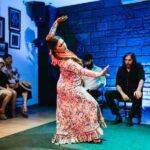
Then comes the big difference-maker: the show is among the smallest in the city, and the stage is just a bit bigger than a square meter. You’ll feel part of what’s happening rather than watching from a distance like you’re in a distant auditorium.
It’s also difficult to find by yourself. That’s not a marketing gimmick—small venues often hide behind everyday storefronts, and without local help you might not even spot the right entrance.
What the show format tells you to watch for
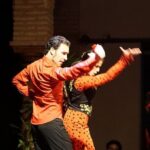
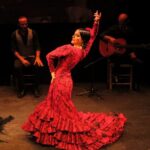
The show has the basic flamenco lineup: one singer, one guitarist, and one dancer. Sometimes you may see additional surprises, depending on the night, but the core structure stays familiar.
That structure is useful for first-time flamenco fans. It lets you follow roles: the singer shapes the mood, the guitarist drives rhythm and harmony, and the dancer translates that into body language and footwork. If you’ve done the class earlier, you’ll likely notice specific moments more clearly—like when the dancer answers the guitar, or how the singer’s phrasing sets the pace.
There’s another detail that can change how you experience the night: your host and flamencoteacher may also join on stage. When the teacher becomes the dancer, the class isn’t a separate activity anymore. It becomes a preview of what you’re about to feel.
And because the venue is tiny, the performance style matters even more. In larger halls, you can still be moved. But in a micro-stage setting, you’ll feel volume, intensity, and timing up close—like the room is part of the show.
You can also read our reviews of more tours and experiences in Seville




Who Maria and the performers are in the experience
Maria is the key face of this evening. She’s described as a teacher and host who lives and breathes flamenco, which makes a difference because you’re not just getting a history speech. You’re getting context that feels personal.
You’ll also learn why Seville’s flamenco identity ties to neighborhoods like Triana. Triana often comes up for a reason: the neighborhood is tied into flamenco’s story and character, and understanding that connection helps you read the performance with more meaning.
On show night, the evening’s artists are typically arranged around the singer-guitar-dancer core. In one featured night, the lineup included Mercedes on singing and Jordi on guitar, with Maria as the dancer. Even if the exact names vary by date, the tour is designed so you get that full, artist-led unit rather than a stop-and-start presentation.
If you love learning while you’re having fun, this is one of the strongest parts of the whole setup: you’re not only watching, you’re being taught how to watch.
Timing, group size, and how to plan your day
This is about a 5-hour experience, starting at 5:00 pm. That timing is ideal for people who want an afternoon that becomes a night, without staying out until late. It’s also a nice antidote to the typical “sit in a theater, leave, and forget” kind of evening.
The group limit is 10, and the tour is private, so you’ll generally get a quieter, more controlled flow than group bus tours. In practice, that makes it easier for your questions at the coffee stop and helps the pacing stay smooth during class and tapas.
Here’s how I’d plan your evening around it:
- Keep dinner plans flexible after tapas, since you’ll already be eating
- Wear shoes you can dance-walk in, even though you’re not performing
- Expect a transfer to the show, either by walk or taxi, depending on distance
Because this runs in the early evening, it also pairs well with a daytime explore of Seville’s central areas. You’ll get the city by day, then flamenco in the evening when the mood is right.
Price and value: is $180.24 fair for what you get?
At $180.24 per person for roughly 5 hours, you’re paying for a bundle: coffee or tea, a flamenco class, transportation to the show, and meals plus drinks—specifically 3 tapas and 3 beverages per person—plus the show ticket.
So yes, it’s more than a standard flamenco ticket. But it’s also not only a show price. You’re buying four real components:
- guided setup with history and key steps
- an actual class (45 minutes, not a photo stop)
- two local tapas bars, not one restaurant
- entry to a small venue that’s hard to find alone
If you’re the kind of person who values understanding and not just spectacle, the value is strong. If you only want a big, high-production show and don’t care about context, you might decide it’s too much for one evening.
Who this tour suits best (and who should skip it)
This experience is a great fit if:
- you want flamenco with explanation, not just entertainment
- you like food that’s tied to place and local bars
- you enjoy small venues where you can feel the artists up close
- you’re happy to spend an evening learning how to watch
You might skip it if:
- you hate eating multiple tapas courses in a row
- you’re looking for a huge, flashy production where the room does all the work
- you prefer to plan everything yourself without guided context
One more honest note: because it’s private and capped, you’re not dealing with crowds in the usual way. That’s a plus. But if you’re hoping for a party atmosphere, you might find the experience more intimate and instructive than rowdy.
Should you book this Seville flamenco experience?
I’d book it if you want the full arc: background at coffee, a hands-on class, real tapas stops, and then a tiny show you can’t easily find alone. The strongest payoff is how the different parts connect, especially with Maria as host/teacher and as part of the on-stage energy.
I’d hesitate if you only want a quick night show and you don’t plan to eat during the experience. In that case, the included class and tapas might feel like extra time you didn’t need.
If you’re curious about flamenco but worried you’ll miss the meaning, this tour is built for you. It helps you understand the rhythm, the roles, and the neighborhood story—so when the singer starts, you’ll know what to listen for.
FAQ
What’s included in the price?
The experience includes coffee or tea, a flamenco class, taxi to the show if needed, the show ticket, and 3 beverages plus 3 tapas per person.
Is it offered in English, and is it private?
It is offered in English, and the tour is always private. The maximum group size is 10 travelers.
How long does the experience last, and what’s the general flow?
It lasts about 5 hours. You start with coffee and flamenco history, then do a 45-minute class, move to two tapas bars for food and drinks, and finish with a small flamenco show.
Where do we meet, and when does it start?
You meet at Alameda de Hércules, 19, Casco Antiguo, 41002 Sevilla, Spain. The start time is 5:00 pm, and the activity ends back at the meeting point.
Does the tour handle allergies or dietary needs?
Yes. Allergies and diets are taken into consideration when ordering tapas.
What’s the cancellation window for a full refund?
You can cancel up to 24 hours in advance for a full refund. If you cancel less than 24 hours before the start time, the amount paid will not be refunded.