REVIEW · SEVILLE
Spanish Cooking Class and Dinner in Seville
Book on Viator →Operated by Taller Andaluz de Cocina · Bookable on Viator
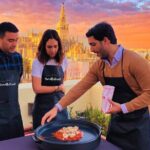
Paella starts with a trip to the market. This Spanish cooking class in Mercado de Triana is a fun, chef-led way to learn classic technique and leave with a real meal: a 3-course menu plus homemade sangria. I especially like that they welcome all skill levels and structure the night so you do meaningful prep (not just watch), and that you get written recipes afterward so you can cook it at home. One watch-out: the experience is still managed by the chef, so some steps are demonstrated and not every minute is hands-on, which won’t match everyone’s expectations.
You’ll meet at Taller Andaluz de Cocina inside the market area at 6:00 pm, then spend about 3 hours making dishes and eating what you cook. The price is $84.69 per person, and for that you get ingredients, tools, your apron and chopping setup, dinner with two included drinks, and recipe notes. With a small cap of 16 people, it tends to feel personal rather than chaotic—and that matters when you’re learning sauce basics like sofrito.
In This Review
- Key things that make this class worth your evening
- Mercado de Triana meeting point and what that means for your night
- The real itinerary: salmorejo, a spinach chickpea dish, and paella Valenciana
- Starter: salmorejo (with occasional swaps)
- Starter options: from flamenco eggs to cod fritters
- Main: paella Valenciana the classic way
- Dessert: lemon sorbet with cava
- Hands-on cooking vs. chef demonstrations (and how to judge your comfort level)
- Drinks and dinner pacing: sangria during class plus two choices at the table
- Dietary restrictions: what’s supported and how to set yourself up for success
- What you learn beyond recipes: technique notes you can actually use
- Price and group size: is $84.69 a good deal?
- Who should book this Seville cooking class (and who might not)
- Should you book Taller Andaluz de Cocina’s Spanish Cooking Class?
- FAQ
- How long is the Spanish cooking class and dinner in Seville?
- Where do I meet, and what time does it start?
- What dishes are included in the meal?
- Are dietary restrictions accommodated?
- What drinks are included?
- Is transportation included?
- What is the group size limit?
- Is there free cancellation?
Key things that make this class worth your evening
- Mercado de Triana location: you learn Spanish cooking right where locals shop and snack
- Three-course structure: starter, main paella, then dessert, so you get a full dinner
- Hands-on participation: multiple steps are built for different comfort levels
- Homemade sangria + two drinks with dinner: the pacing includes drinks during and after cooking
- Dietary accommodations: vegan, gluten-free, and no seafood/no pork options are handled if you ask ahead
- Recipes sent after: practical written instructions you can actually use at home
Mercado de Triana meeting point and what that means for your night
The class starts in Seville’s Mercado de Triana area, at Taller Andaluz de Cocina, on Pl. del Altozano (Locales 75–77). You’ll get a clear meeting place at the market, and the tour ends back at the same spot. That simple “start and finish here” setup helps a lot in Seville, where evening plans can get messy fast.
A big bonus: this is near public transportation, and the meeting time is set for the early evening (6:00 pm). For you, that means you can still do other things during the day—then come back when the city shifts into dinner mode.
One practical detail I like: no private transportation is included. So you’ll want to plan your own way to the market. The upside is flexibility. If you’re already walking around Triana, it’s easy to pair the class with a stroll afterward.
And yes, the market setting is a big part of the vibe. Mercado de Triana isn’t a museum. It’s working and full of real smells and real life. That matters because Spanish cooking is less about fancy presentation and more about ingredients done correctly. Seeing the market environment first helps everything you learn land better.
You can also read our reviews of more cooking classes in Seville
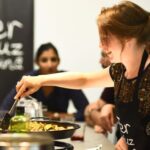
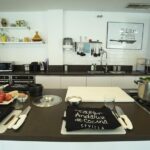

The real itinerary: salmorejo, a spinach chickpea dish, and paella Valenciana
This is a 3-course class, so you’re not just learning one dish—you’re building a dinner. The menu centers on classic Spanish comfort food and a few commonly loved shortcuts that are actually technique, not magic.
Starter: salmorejo (with occasional swaps)
Your starter is typically Salmorejo Cordobés. On some occasions it may be gazpacho instead. Salmorejo is thick and spoonable, built on ripe tomato flavor and the right texture—not just chopped and tossed. That’s a useful lesson because it shows you how “simple” Spanish food still depends on technique.
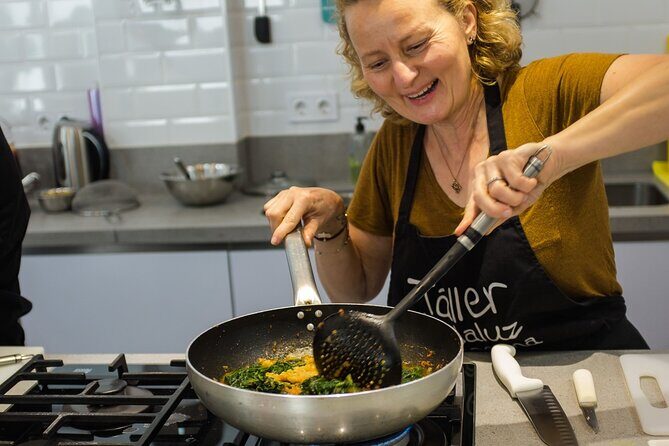
You may also see a different starter depending on the day: spinach with chickpeas is another common option. In one class described by the chef team, the spinach chickpea dish is clearly part of the rotation, and it’s the kind of plate that works even if you’re not chasing meat-heavy food.
Starter options: from flamenco eggs to cod fritters
Some sessions may include alternatives like Flamenco Eggs, Cod Fritters, or Garlic Prawns. If you’re someone who hates surprises, note that the exact starter can vary by schedule and accommodations. The good news is that they’re set up to adapt, and the alternatives are still Spanish and still tied to the same overall cooking skills.
Main: paella Valenciana the classic way
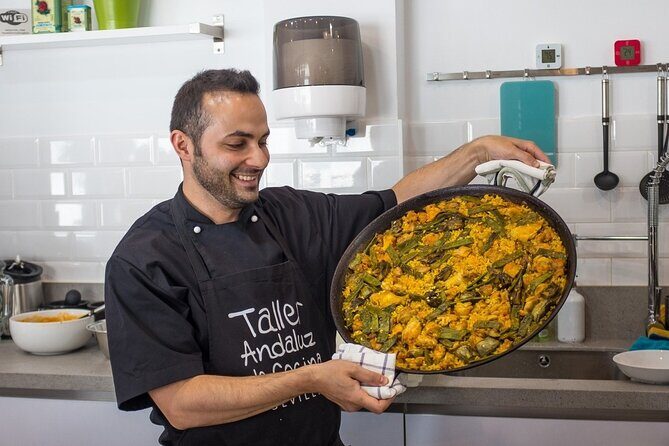
The main is Paella Valenciana, described as the authentic version with chicken and vegetables. For many people, paella is the reason they book this class, and the structure is designed to help you understand what makes paella “right”: the order of prep, how flavors build, and how the dish stays balanced.
Several chefs mentioned in the experiences you provided—like Leo, Carlos, Dom, and Pedro—are praised for explaining steps clearly and keeping everyone involved. That’s important, because paella fails when timing slips or when you treat it like plain rice. In a good class, you learn what to watch for while it cooks, not just what ingredients to toss in.
You can also read our reviews of more tours and experiences in Seville




Dessert: lemon sorbet with cava
Dessert is lemon sorbet with cava. It’s a tidy finish for a hands-on evening: bright, not heavy, and it reinforces the idea that Spanish meals often end with something clean and refreshing rather than a sugar bomb.
Hands-on cooking vs. chef demonstrations (and how to judge your comfort level)
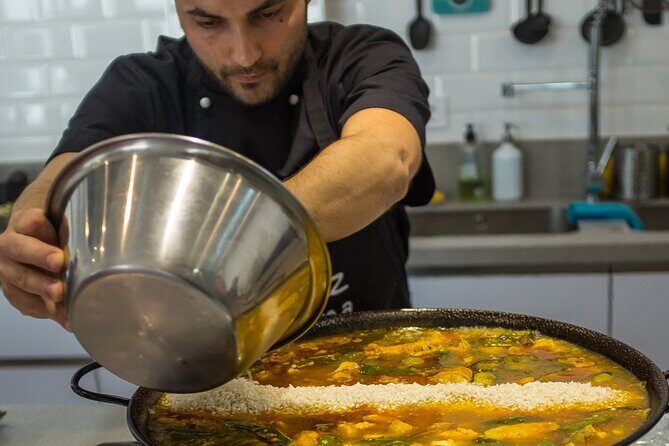
Here’s the honest reality: this class is chef-led, and some steps are demonstrated so timing stays on track and food safety doesn’t get sloppy. That’s normal for a group setting with multiple dishes running at once.
But the key point is the balance. Most of the positive experiences describe chefs and assistants making sure people participate—prepping ingredients, stirring, assembling components, and getting chances to work at the stations. You’ll see names like Maria, Lydia, Sabrina, Belén, David, Anna, and Carlo connected to engaging instruction and an atmosphere where you don’t feel singled out.
One negative note in the feedback says the cooking felt limited and that the experience became more like watching than doing. So if your personal goal is to handle every step, go in with realistic expectations. You should still get a real role, but it won’t be a solo cooking shift.
My practical advice: treat the class like a skill workshop. If you want the most value, pay attention during demonstrated moments. That’s where you’ll pick up technique cues—especially for paella and the starter texture work.
Drinks and dinner pacing: sangria during class plus two choices at the table
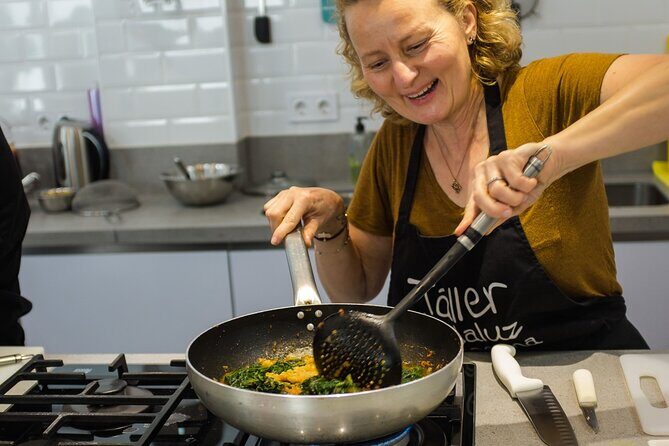
Part of the appeal is that the class doesn’t feel like a dry lecture. You’ll have refreshing homemade sangria during the class. Then, at the end, you’ll sit down to eat the dishes you prepared, paired with up to two drinks of your choice: soft drinks, Spanish wine, or local beer.
That drink setup changes the mood in two ways:
- You get a break from kitchen intensity while things cook and cool.
- Dinner feels like a shared reward, not a separate event.
In the experiences you shared, the drinks are repeatedly tied to enjoyment—people describe plenty of food and sangria that keeps the evening social. For you, this is the difference between a “task class” and a “Seville night.”
One thing to note: the drinks are included, but the class is still scheduled to finish in about 3 hours. So don’t plan to stretch into late-night dining afterward unless you build that time in.
Dietary restrictions: what’s supported and how to set yourself up for success
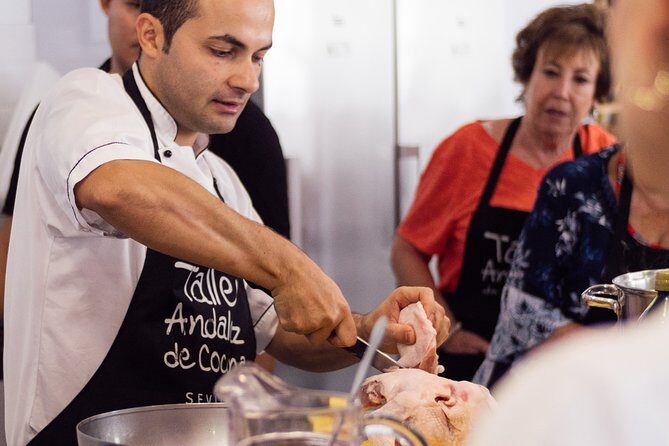
This is one of the strongest practical advantages: the organizers can accommodate all dietary restrictions if you tell them in advance—examples include vegan, gluten-free, no seafood, no pork, and more.
That doesn’t just mean they’ll offer a token alternative. Your menu has built-in flexibility already: starters may swap between salmorejo, gazpacho, spinach with chickpeas, and several other Spanish dishes, some of which may align better with different needs.
To get the best outcome, you should do two things:
- Send your restrictions when booking, not after.
- Mention what you avoid and what you can eat. For example, no pork is different from no meat at all.
One vegetarian-focused experience in your information highlights that the team can accommodate even at the last minute (not guaranteed for every booking, but it shows they take the request seriously). The safest move is still to communicate early.
If you’re cooking for a partner with restrictions, this class is easier than many “learn paella” events, because paella alternatives often become complicated. Here, the class is built around substitutions rather than making you watch everyone else eat.
What you learn beyond recipes: technique notes you can actually use
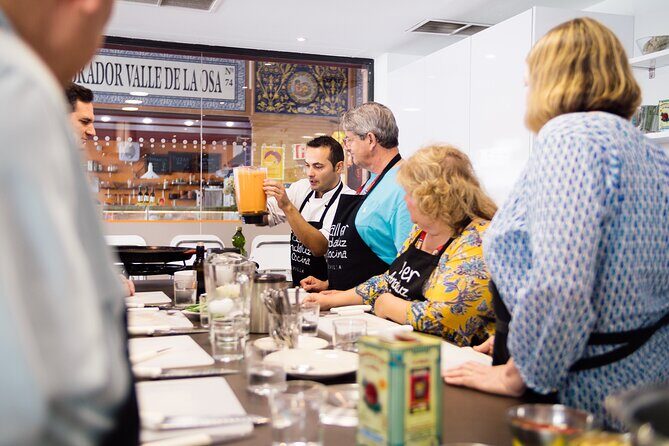
A lot of cooking classes hand you a sheet of paper that no one reads again. This one gives you something more useful: written recipes and tips afterward, designed to help you recreate the dishes at home.
That’s valuable because Spanish cooking is often “simple” only after you learn the technique. Salmorejo and similar starters teach texture control. Paella teaches timing and balance. Even the lemon sorbet with cava pushes you toward a lighter, more refreshing ending that fits the meal style.
The class format also helps you connect the dots. Many positive experiences mention step-by-step explanations and instructors using humor to keep people relaxed. Names like Leo and Carlos show up repeatedly, and the common thread is clear guidance that doesn’t assume you already cook.
If you’re a confident cook, you’ll still get something out of it—especially about how to keep flavors clean and how to keep the cooking process organized. If you’re newer in the kitchen, you’ll likely feel supported because participation is adapted to different comfort levels.
Price and group size: is $84.69 a good deal?
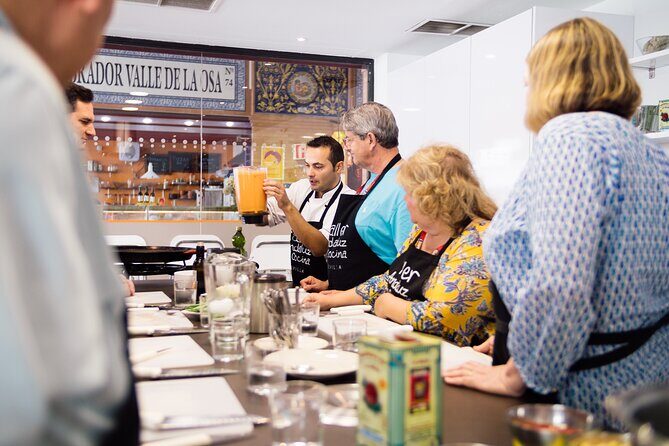
Let’s talk value in plain terms. For $84.69 per person, you’re paying for:
- The 3-course meal (you eat what you cook)
- Two included drinks at dinner (plus homemade sangria during the class)
- Ingredients, utensils, and a provided kitchen setup (apron, knives, chopboards, tools)
- A small group size capped at 16 people
- Written recipes and helpful tips afterward
If you tried to recreate this at home in the U.S., you’d likely spend money just on ingredients, plus you’d need the right kitchen setup and your time. The class compresses a whole evening of learning and meal-making into one organized package.
The group size also matters for learning. With up to 16 people, you’re more likely to get feedback and be pulled into tasks than in larger classes that feel like conveyor belts. Some descriptions mention groups around a dozen, which fits the same idea.
Now for the drawback angle: the negative feedback points out low ingredient quality and a more basic setup. That’s one outlier in the overall rating, but it’s real enough to keep in mind. Also, even in the best version of the class, not every step is fully hands-on for every person. If you’re paying for a participatory cooking spree, you’ll want to go in expecting a mix of doing and watching.
Who should book this Seville cooking class (and who might not)
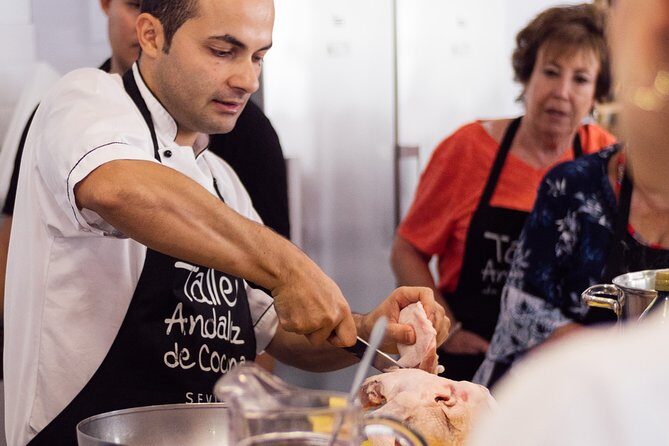
This class is a strong fit if you:
- Want a hands-on evening activity in Seville that ends with dinner
- Like learning Spanish cooking basics such as sofrito flavors and classic paella structure
- Have dietary restrictions and want real accommodation (vegan, gluten-free, no pork/seafood, etc.)
- Prefer a small group night with a friendly chef team
It might be less ideal if you:
- Want to cook every second and hate chef demonstrations
- Have a strict preference about ingredient quality and don’t want to take that gamble in a shared group setting
- Can’t spare about 3 hours starting at 6:00 pm for a full meal flow
Should you book Taller Andaluz de Cocina’s Spanish Cooking Class?
If you want a practical, taste-first way to learn Spanish food in Seville, I’d book it. The combination of market location, three courses, and recipes afterward makes it more than a one-time meal. The small group size also supports that “everyone gets a task” feel, and the dietary flexibility is a big deal if you need substitutions.
Just align expectations: it’s not a free-for-all where you do everything. It’s a guided cooking lesson that balances hands-on work with chef-led timing—especially for paella. If that sounds good to you, this is an easy yes for a memorable Seville evening that you can repeat at home.
FAQ
How long is the Spanish cooking class and dinner in Seville?
It lasts about 3 hours.
Where do I meet, and what time does it start?
You meet at Taller Andaluz de Cocina at Mercado de Abastos de Triana, Pl. del Altozano (Locales 75-77), 41010 Sevilla. The start time is 6:00 pm, and the activity ends back at the meeting point.
What dishes are included in the meal?
The class typically includes Salmorejo Cordobés (or sometimes Gazpacho) as a starter, Spinach with Chickpeas (or sometimes Flamenco Eggs, Cod Fritters, or Garlic Prawns), Paella Valenciana with chicken and vegetables as the main, and Lemon sorbet with cava for dessert.
Are dietary restrictions accommodated?
Yes. The experience can accommodate dietary restrictions such as vegan, gluten-free, no seafood, and no pork. You need to let them know in advance so they can adjust the menu.
What drinks are included?
During the class, you get homemade sangria. At the end of the class, your dinner includes up to two drinks of your choice: soft drinks, Spanish wine, or local beer.
Is transportation included?
No pickup and drop-off is offered, so private transportation is not included.
What is the group size limit?
The maximum group size is 16 travelers.
Is there free cancellation?
Yes. You can cancel for a full refund up to 24 hours in advance of the experience’s start time.