REVIEW · SEVILLE
Holy Week in Seville
Book on Viator →Operated by All Sevilla Tours · Bookable on Viator
Holy Week in Seville is all about sacred streets. This private walking tour helps you make sense of the season with Casa de Pilatos and Salvador, two key landmarks close together in the old center. I especially like how it’s designed to fit real sightseeing time—about 2.5 hours—without turning your day into a marathon.
I also love that the tour isn’t just a facts-only walk. You get a local guide plus a professional guide, and even an art historian in the mix, so you can understand the buildings and the sculpture themes you’ll see.
One consideration: Holy Week processions depend on church schedules, which can change at the last minute. If you’re expecting a guaranteed parade show, you’ll want to keep your plans flexible, and you should also budget for admission since it’s not included.
In This Review
- Key highlights at a glance
- Price and value: what $120.80 buys you
- Holy Week in Seville: why timing can make or break your expectations
- How the private format works (and why it matters near La Giralda)
- Casa de Pilatos: the Holy Week origin story you’ll actually remember
- What to watch for at Pilatos
- Iglesia Colegial del Salvador: brotherhood energy, mosque roots, and sculpted Christs
- Sculpture themes you’ll want your guide to point out
- A practical tip for Salvador
- Customizing the route: make it fit your interests
- What you’re really getting: religious history you can see in stone
- Logistics that affect your experience day-of (without the fine print)
- Who should book this Holy Week churches tour
- Should you book this tour?
- FAQ
- Where does the tour start and end?
- Is this a private tour?
- How long is the tour?
- Are pickup and a mobile ticket included?
- Who are the guides during the tour?
- Are admission tickets included for Casa de Pilatos and Salvador?
- Can the itinerary be adjusted to my interests?
- What type of experience is it focused on?
- What is the cancellation policy?
- Is the tour difficult to join?
Key highlights at a glance
- Two Holy Week anchor stops: Casa de Pilatos and Iglesia Colegial del Salvador
- You get an art historian involved for a clearer read on architecture and religious art
- Salvador’s mosque-to-church story includes a courtyard and a former minaret to look for
- Holy Week tradition, explained simply so you connect processions to the sites
- Private tour with hotel pickup plus a mobile ticket
- Admission isn’t included, so factor that in early
Price and value: what $120.80 buys you
At $120.80 per person for a private tour lasting roughly 2 hours 30 minutes, the price is really about quality of attention, not just entry to buildings. You’re paying for a guide team—local guide, professional guide, plus a professional art historian—so you’re not stuck reading plaques while you hope things make sense.
This is also one of those tours that helps you compress decision-making. Instead of hopping between random churches on your own, you get a focused route through two major Holy Week-linked places. If you have limited time in Seville, that shortcut can feel like good value even before you compare admission costs.
You can also read our reviews of more tours and experiences in Seville.


Holy Week in Seville: why timing can make or break your expectations
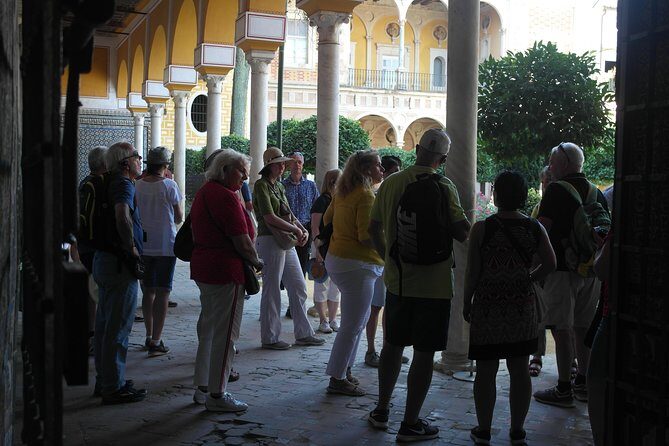
Holy Week is special in Seville, but it’s also complicated. Churches shift their schedules, and processions may or may not run exactly as you imagine. That’s not a failure of the sites—Casa de Pilatos and Salvador are still central to the Holy Week story—but it can affect what you see on the street.
So here’s my practical advice: treat this as a religious-history and art tour first, and a procession-viewing bonus second. If the street schedule cooperates, great. If it doesn’t, you’ll still come away with a stronger understanding of why people gather and what each place represents.
And since admission is not included, double-check your own budget for tickets. On Holy Week dates, you don’t want to be scrambling at the door.
How the private format works (and why it matters near La Giralda)
The tour starts at La Giralda on Av. de la Constitución in the Casco Antiguo, and it ends back at the same meeting point. That matters because you’re not spending your limited time crossing the city.
You also get hotel pickup, which is a big deal on a walking tour in tight historic streets. The tour is private, meaning only your group participates, so you can ask questions without feeling rushed or drowned out.
The tour also notes a mobile ticket, which can simplify day-of entry planning—especially useful when schedules are in flux. Add group discounts if you’re traveling with companions, and you can sometimes reduce the per-person hit compared to solo pricing.
Casa de Pilatos: the Holy Week origin story you’ll actually remember
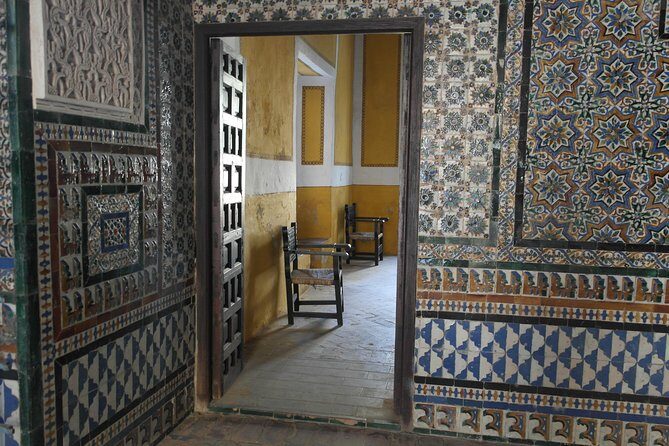
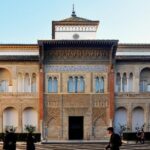
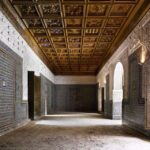
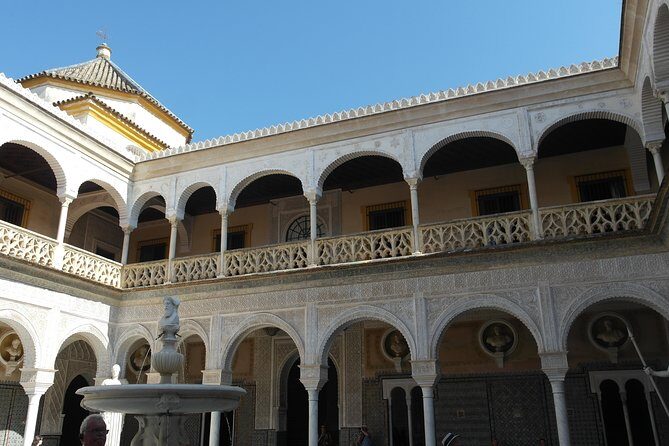
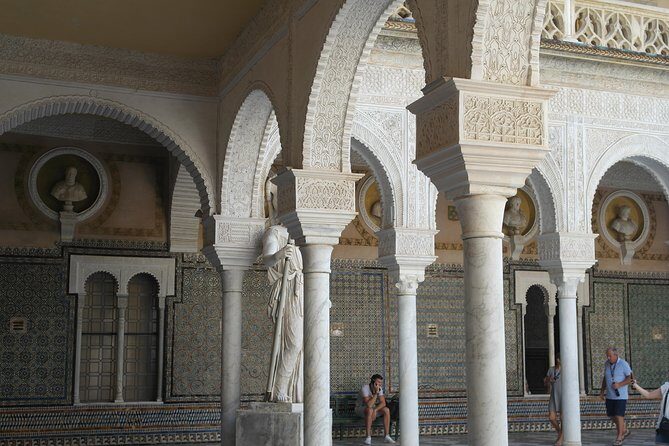
Your first stop is Casa de Pilatos, and it’s placed here for a reason. The palace is described as a reference point for Sevillian Holy Week, tied to a legendary link to the Via Crucis tradition.
One of the most interesting details is the idea that this was the kind of palace someone built to compete on beauty with the Alcázar. Even if you don’t go deep into architectural comparisons, that context helps you read what you’re seeing: this isn’t a random historic mansion. It’s part of how Seville’s elites shaped visible religious identity over time.
There’s also a specific legend mentioned: Don Fadrique, connected with the palace in the 16th century, is said to have started a Via Crucis connected to the Cruz del Campo. Whether you treat it as legend or heritage storytelling, it gives you a narrative thread. When you later look at Holy Week processional traditions, it becomes clearer how local stories attach themselves to places.
Time note: this stop is about 1 hour 30 minutes, and admission isn’t included. So if you know tickets are required, plan ahead so you don’t lose time waiting.
What to watch for at Pilatos
You’ll get the architecture and the meaning, not just a walk-by. Even without a long shopping list of things to photograph, ask your guide what features connect to the Holy Week story you’re hearing. You’ll get more out of the visit if you look with a question in mind, not just with your camera.



Iglesia Colegial del Salvador: brotherhood energy, mosque roots, and sculpted Christs
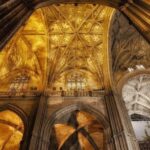
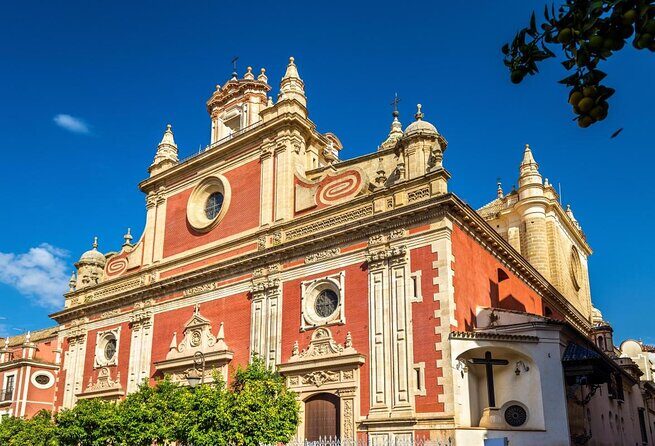
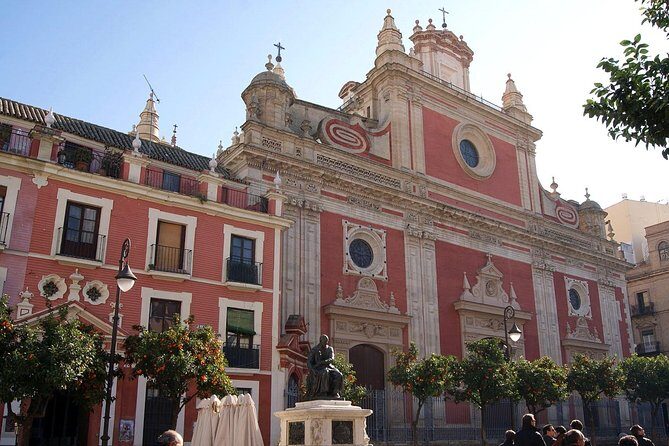
Stop two is Iglesia Colegial del Salvador, and it’s a powerhouse for Holy Week themes. From this church, several brotherhoods come out in procession, and it’s described as one of the highlights of the season. It’s also the second largest church in town, so you’ll feel the scale quickly.
Here’s where your understanding gets sharper: Salvador was built on the remains of an earlier mosque, dating back to the 12th century. The tour specifically points you to the courtyard and the former minaret area, which helps you connect the building’s religious layers instead of treating it like a single, unchanging monument.
Sculpture themes you’ll want your guide to point out
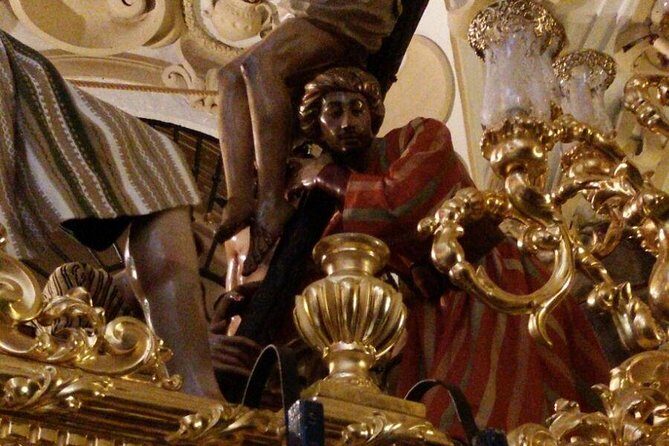
The church is also tied to specific Andalusian sculptors: Juan de Mesa and Martínez Montañez. The tour highlights images attributed to them, including the Christ of Passion and the Christ of Love.
That pairing is a big deal. It’s not just art for art’s sake. It’s theology made visible—two different emotional tones expressed through carved figures. I like when a tour explains why those themes matter to the devotion people bring to the streets.
Time note: this stop is about 1 hour 15 minutes, and again admission isn’t included.
A practical tip for Salvador
When you arrive, don’t rush straight to the most obvious spots. Ask your guide where the story transitions—from the mosque-era footprint to the Christian church identity. That one explanation can make your mental map lock in fast.
Customizing the route: make it fit your interests
The experience can be customized to your interests. That’s valuable on a tour like this because Holy Week can mean different things depending on who you are.
If you care more about religious art, you’ll likely want extra time on the sculptors and the images connected with devotion. If you care more about religious architecture and place-based history, you’ll probably focus on how Salvador’s past is visible in the courtyard and former minaret areas.
Even with a set route, a good guide can shift the emphasis. If you’re picky—like most of us are—tell them early what you want more of.
What you’re really getting: religious history you can see in stone
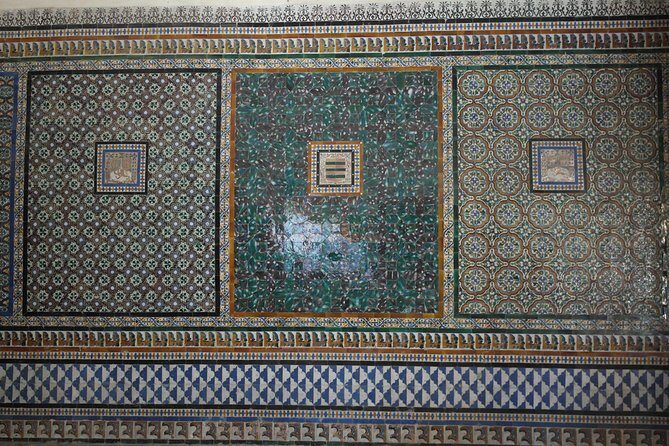
This tour works because it connects story to geography. You start with Casa de Pilatos and its Via Crucis origin legend, then move to Salvador, where brotherhood processions and sculpted devotion come together in a church built over earlier sacred space.
That connection is what turns Holy Week from a calendar event into a lived tradition. Once you understand why a place matters, the street rituals make more sense—even if you don’t catch a procession at the exact moment you arrive.
I also appreciate the way the tour frames architecture and sculpture as part of the same conversation. The religious art isn’t an add-on. It’s part of how people interpret suffering, love, and devotion in the local style.
Logistics that affect your experience day-of (without the fine print)
This is a walking tour with hotel pickup and ends back at the start near La Giralda. That makes it easier to pair with other plans in the historic center.
The total duration is listed at about 2 hours 30 minutes. The two main stops add up to slightly more on paper (1 hour 30 at Pilatos and 1 hour 15 at Salvador), so expect some walking time between sites and time for questions.
Admission isn’t included for both stops, and the description notes that all fees and taxes are not included. In practice, that means your final budget should include entry tickets if the sites require them.
Who should book this Holy Week churches tour
This fits best if you want:
- Religious history and art tied directly to places in Seville
- A focused Holy Week experience that uses expert guidance, not guesswork
- A convenient route starting near La Giralda with pickup
It may not fit you as well if:
- You need a strict guarantee of multiple visible street processions during your exact time window
- You hate plans that depend on church schedules (Holy Week can be unpredictable)
If you’re visiting with family, couples, or a small group who wants meaning and context—not just photo stops—this tour style is usually a strong choice.
Should you book this tour?
I’d book it if you’re the type who enjoys understanding why a city does what it does. Casa de Pilatos and Salvador are the right anchors for Holy Week-linked storytelling, and the guide setup—with a professional art historian involved—can turn ordinary looking walls into a coherent narrative.
But if your top priority is seeing processions no matter what, keep your expectations flexible. Holy Week schedules can shift, and sometimes the best you can do is learn the tradition behind the season and be ready to catch the street moments when they happen.
If you want, tell me your travel dates (or the week you’ll be there) and whether you care more about processions, churches, or religious art. I can help you decide if this is the best fit for your Seville day.
FAQ
Where does the tour start and end?
It starts at La Giralda (Av. de la Constitución, s/n, Casco Antiguo, 41004 Sevilla) and ends back at the same meeting point.
Is this a private tour?
Yes. It’s a private tour/activity, and only your group participates.
How long is the tour?
The duration is approximately 2 hours 30 minutes.
Are pickup and a mobile ticket included?
Yes. Hotel pickup is offered, and a mobile ticket is part of the experience.
Who are the guides during the tour?
You get a local guide and a professional guide, plus a professional art historian guide.
Are admission tickets included for Casa de Pilatos and Salvador?
No. Admission ticket(s) are not included.
Can the itinerary be adjusted to my interests?
Yes. The itinerary can be customized according to your interests.
What type of experience is it focused on?
It focuses on religious history and Holy Week-related churches and monuments, including sites like Casa de Pilatos and Iglesia Colegial del Salvador.
What is the cancellation policy?
You can cancel for a full refund up to 24 hours in advance of the experience start time. Free cancellation is available within that window.
Is the tour difficult to join?
The info says most travelers can participate, and it’s near public transportation.