REVIEW · SEVILLE
Seville In Season- City Highlight Tour
Book on Viator →Operated by Hop On Bike Tours · Bookable on Viator
Seville hits fast when you ride. This 3-hour in-season highlights tour gives you a clear layout of the city on an easy-going route, starting with the Guadalquivir River and sweeping toward the iconic plazas. I especially like the Triana-to-river viewpoints and the way the guide stitches together what you’re seeing with names, eras, and local culture. One watch-out: the tour needs good weather, and the stops are time-boxed, so it’s not the best choice if you want long, sit-down museum time.
You’ll cover a lot of ground for the money: included water, a helmet, and practical “where to go next” help like tapas pointers and information points. I also like that this stays small (up to 12 travelers), which keeps questions from getting lost. If you’re sensitive to sun, plan for heat and make sure you’re comfortable riding at a relaxed pace for the full loop.
In This Review
- Key things I’d pay attention to before you go
- A 3-hour bike tour that helps you place Seville in your head
- Starting at Segway Sevilla Tours: what to expect before you roll
- Puente de Isabel II and Triana: the river’s most dramatic story
- Iglesia de Santa Ana: Mudejar style in a neighborhood you can feel
- Torre del Oro: a watchtower with a defensive backstory
- Palau de San Telmo and Real Alcázar: from sea training to royal walls
- Plaza del Cabildo and the tobacco factory connection to Carmen
- Parque de María Luisa and Plaza de España: built for walking, made for photos
- Price and value: what $36.20 buys you here
- Who this tour suits best (and what to consider)
- Service quality: the guides make the difference
- Should you book this Seville highlights bike tour?
- FAQ
- How long is the Seville In Season City Highlight Tour?
- Where does the tour start and end?
- What language is the tour offered in?
- What’s included in the price?
- Is the tour admission free at each stop?
- What’s the group size limit?
- What should I bring or consider for the day?
- Is cancellation possible if plans change?
Key things I’d pay attention to before you go
- A fast orientation in 3 hours: You get a coherent route, not a random grab-bag of stops.
- Triana + the river theme: The tour builds context around the Guadalquivir and the neighborhood that grew around it.
- Short “spotlight” stops: Great for seeing and learning; not ideal for deep, slow sightseeing.
- Small group feel: Maximum 12 travelers means more personal interaction with the guide.
- Free entry style stops: Many highlights are marked as admission free, so the value comes from viewpoints and interpretation.
- Guides with real local flavor: Names like Marco, Pablo, Veronica, and Antonio come up in past experiences, and the tone is hands-on and helpful.
A 3-hour bike tour that helps you place Seville in your head
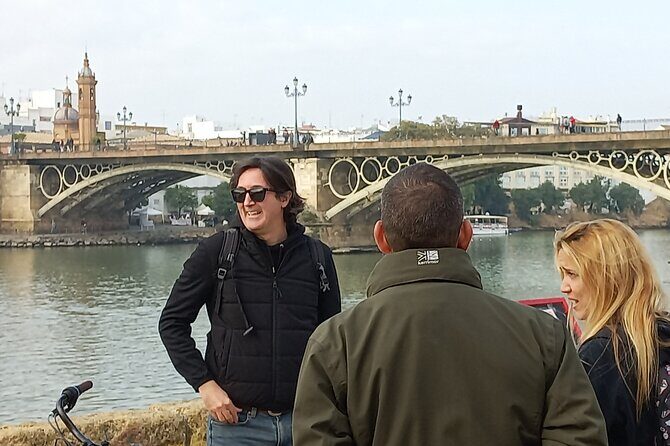
This is the kind of tour that helps you stop feeling lost. In a few hours, you’ll see the river front, the Triana side, and the big postcard spaces that define Seville. The pacing is built for photos and quick context, so when you walk on your own later, you’ll actually know what you’re looking at.
I like that it’s not trying to turn every stop into a lecture. Instead, you get targeted explanations that connect landmarks to real-life Seville: trade routes, religious shifts, bullfighting culture, and the city’s famous expositions.
Also, the experience is priced as an entry-level “get your bearings fast” option. At $36.20 per person, you’re not paying for museum tickets; you’re paying for routing, commentary, and getting around efficiently without fighting city navigation.
You can also read our reviews of more city tours in Seville
Starting at Segway Sevilla Tours: what to expect before you roll
The meeting point is at Segway Sevilla Tours, C. Álvarez Quintero, 44, Casco Antiguo, 41004 Sevilla. The tour ends back at the same spot, which makes planning your day simpler—no awkward “now what?” logistics.
They provide a bicycle, homologated helmet, bottled water, and a map, plus a few information points aimed at things like tapas and key sights. There’s also a basket, which is handy if you pick up something small during your day.
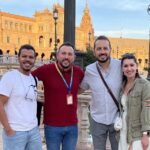
Because the tour runs with a maximum of 12 travelers, I find it easier to assume the guide can keep everyone together without rushing you through the most interesting parts.
Puente de Isabel II and Triana: the river’s most dramatic story
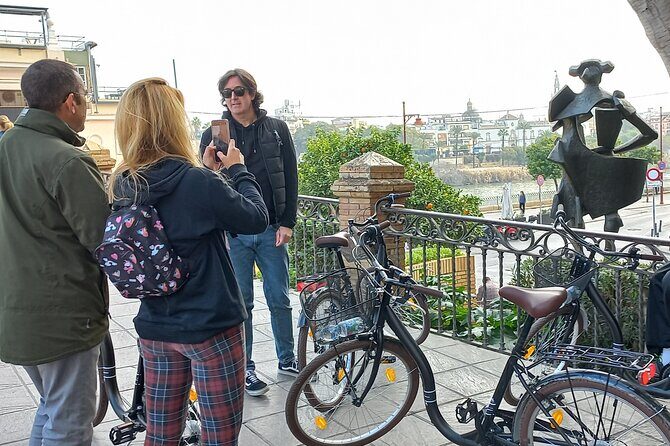
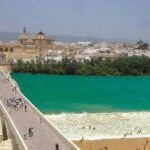
The first stop is the Puente de Isabel II, also known as the Puente de Triana, with a big view toward the Triana neighborhood. This is one of those places where the river suddenly makes sense. You’re looking at the Guadalquivir as a working corridor, not just scenery.
Here’s the payoff: the guide links the spot to Seville’s past as a port tied to Atlantic voyages. The tour highlights the idea that this river area was the Port of the Indies, connected to departures and returns of navigators bringing merchandise from America.
Then you roll into Triana, and the tour uses that location as a shortcut to understanding Seville’s identity. Triana isn’t treated like a side street. It’s framed as a cradle of flamenco, bullfighting culture, and even early Moorish ceramic factories. You don’t need a long museum visit to get the feeling—just good orientation and the right context.
Iglesia de Santa Ana: Mudejar style in a neighborhood you can feel
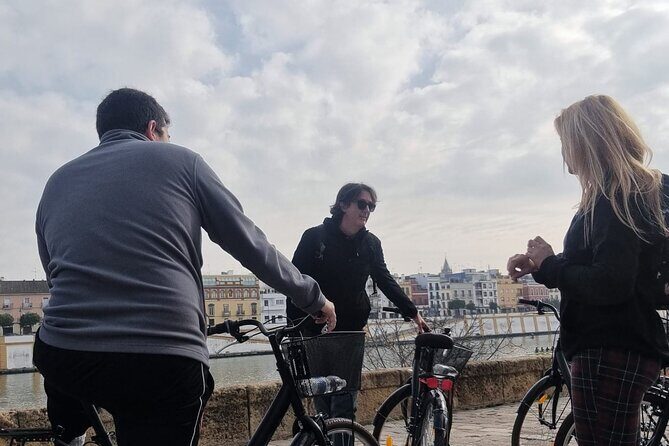
Next comes Iglesia de Santa Ana, described as the Cathedral of Triana by popular sentiment. Even if you don’t spend a long time inside, the stop works because it tells you how Seville layers religions and styles.
The tour points out that this church was the first Catholic church built in Seville after Muslim rule ended in 1248, and it does so in Mudejar style. That combination matters: it’s a way to understand how architecture in Seville often carries older influences even after major political changes.
Practical note: the stop is short, so treat it like a “look closely, take photos, learn the name” moment—not a deep dive into interiors.
Torre del Oro: a watchtower with a defensive backstory
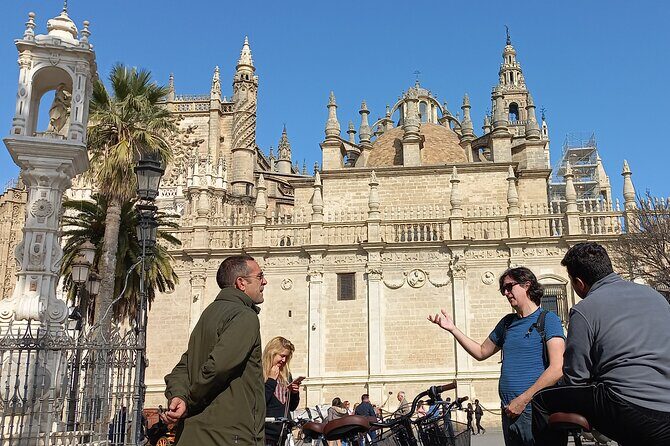
The ride continues to Torre del Oro, one of Seville’s most recognizable landmarks. You’ll learn that it began as an Arabs-built watchtower on the left bank of the Guadalquivir.
The story becomes more interesting when the guide connects it to a defensive system: the tower was originally linked to another across the river by a gigantic defensive chain. It’s the kind of detail that makes a simple viewpoint feel like part of a larger system.
Because you’re also hearing about nearby highlights such as the Real Maestranza bullring, the Maestranza Theater, and mentions tied to Magellan’s early world voyage, this stop acts like a bridge between Seville’s historic power and its cultural identity.


Palau de San Telmo and Real Alcázar: from sea training to royal walls
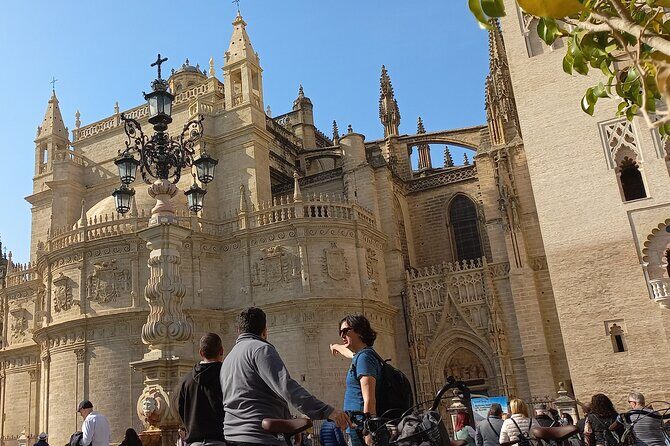
At Palacio de San Telmo, the tour shifts from fortifications to education and maritime influence. The building is Baroque and today serves as the seat of the Presidency of the Junta de Andalucía—but it was originally built in 1682 as a marine academy.
The tour emphasizes what that meant in practice: training ship pilots, navigators, and high-ranking officers. You get another angle on Seville’s relationship to the sea and navigation, especially when paired with the earlier “Port of the Indies” framing.
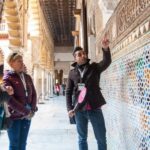
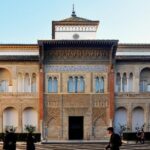
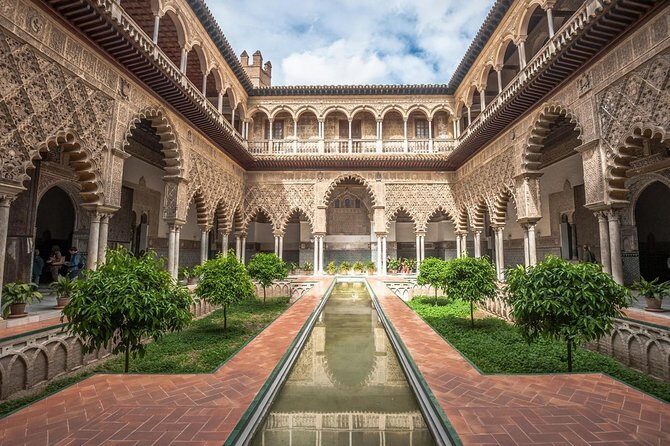
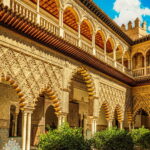
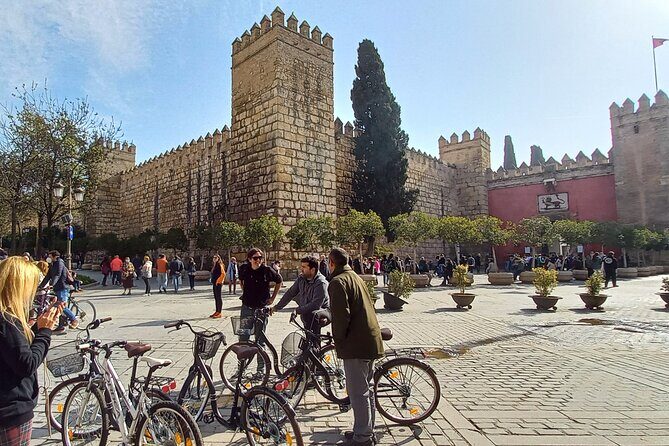
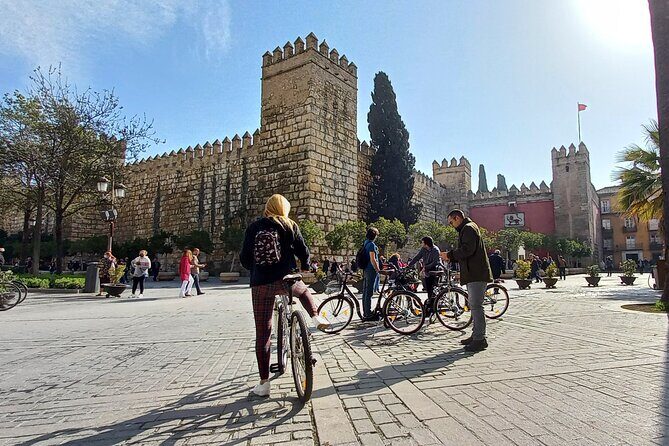
Then you reach Real Alcázar de Sevilla, the fortified palace that has served as royal residence across eras. The tour leans on the big idea of the word alcázar—a fortified palace—and presents the complex as the oldest royal palace in Europe.
You may not have time for a full interior visit, but the stop still helps. It tells you what matters: this is not just a pretty palace; it’s a continuous seat of power, with enough layers to explain why Sevillians get proud about it. The tour also notes its appearance in filming such as Game of Thrones, which gives you a mental image if you’ve seen those sets.
Plaza del Cabildo and the tobacco factory connection to Carmen
One of the most “Seville-feeling” moments comes when you arrive at Plaza del Cabildo. The tour describes it as a quiet haven with roots tied to the old College of San Miguel founded in the 13th century by Alfonso X the Wise.
You’ll also hear that the area was tied to cathedral governance—where masters of the cathedral chapel and choir boys/sixes were associated, with the name connected to cathedral administration (cabildo). The point isn’t to memorize everything; it’s to understand why this plaza feels like a calm pocket inside a lively city.
As the tour rolls onward, it reaches Real Fabrica de Tabacos, linked to the opera story of Carmen. The tour says 75% of all cigars sold on the continent were made in this building, and it connects that setting to the opera’s working-factory backdrop and romance plotline.
Even if you’re not an opera person, this stop helps you see Seville as an industrial city as well as an art-and-plaza city.
Parque de María Luisa and Plaza de España: built for walking, made for photos
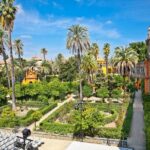
Now the route turns toward the most visually famous part of Seville. You’ll spend time in Parque de María Luisa, tied to the Hispano-American Exposition of 1929 and previously connected to private gardens from the Palacio de San Telmo.
This part is ideal if you like breathing space between architectural “hits.” The tour includes explanatory stops at places such as Glorieta de Bécquer and Plaza de América, which helps you understand what you’re seeing instead of just admiring it blindly.
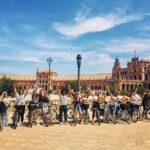
Then comes Plaza de España, designed by architect Aníbal González in Regionalist styles for the 1929 exposition. You’ll also see the statue of González there, which is a nice touch for anyone who likes putting a name to what they’re seeing.
The tour continues to Plaza de América, noting that the three major buildings around the square were built between 1913 and 1916, each with a different architectural style. This helps you see the square as a designed system, not just a pretty background for pictures.
If you’re coming to Seville for the classic images, this section delivers.
Price and value: what $36.20 buys you here
At $36.20 per person for about 3 hours, the value comes from three things:
- Efficient routing: you hit major river-and-plaza highlights without figuring out transport across the city.
- Included essentials: bottled water, helmet, and a map keep the day comfortable and practical.
- Interpretation rather than tickets: many stops are marked as admission free, so you pay for guided meaning, not museum fees.
It also helps that the tour typically books around 21 days in advance on average. If you’re traveling in peak season, don’t treat this as a last-minute “maybe”—choose a time slot that works with your first couple of days so the orientation pays off later.
Who this tour suits best (and what to consider)
This is best for you if:
- You want a first-day orientation to Seville.
- You enjoy learning quick facts tied to what you see in the street.
- You’re comfortable riding a bicycle at an easy group pace.
- You like small groups and direct Q&A.
You might want a different option if:
- You need lots of time for interiors. The stops are short by design.
- You’re sensitive to heat or poor weather, since good weather is required.
One more practical detail: the tour is offered in English, and you’ll receive a confirmation at booking time. The meeting point is in the Casco Antiguo, close to public transportation.
Service quality: the guides make the difference
This tour’s reputation is strongly tied to guide personality and responsiveness. Names you may hear in guides who’ve led past groups include Marco, Pablo, Veronica, Antonio, and Marcos—and the consistent theme is that they’re friendly, accommodating, and willing to adjust to what the group needs.
That matters. When a guide can explain why Triana matters, why the watchtower story matters, and how the 1929 exposition shaped the city’s look, your time doesn’t feel like a list. It feels like a route with reasons.
If you can, ask your guide one practical question early. Something like what neighborhood to explore next or when to visit the biggest stops for calmer light. That’s the kind of value this tour is built to give.
Should you book this Seville highlights bike tour?
I think you should book it if you want a smart, efficient way to see Seville’s most recognizable sights while learning enough context to make your self-guided walks feel confident. The combination of river views, Triana identity, and the big 1929 landmarks is exactly what you want early in a trip.
Also, the price-to-time ratio is strong, especially with water, helmet, and map included. Just go in with the right expectations: you’re getting quick, high-value stops, not hours inside buildings.
If your schedule has room for one “orientation” activity, this is a solid pick—easy to follow, enjoyable on a bike, and tuned to the Seville you actually want to explore next.
FAQ
How long is the Seville In Season City Highlight Tour?
It lasts about 3 hours.
Where does the tour start and end?
The tour starts at Segway Sevilla Tours, C. Álvarez Quintero, 44, Casco Antiguo, 41004 Sevilla. It ends back at the same meeting point.
What language is the tour offered in?
The tour is offered in English.
What’s included in the price?
Included are bicycle use, bottled water, a homologated helmet, liability insurance, a basket, a map, and information points for places like tapas and other interests.
Is the tour admission free at each stop?
The tour info marks each listed stop as Admission Ticket Free.
What’s the group size limit?
The tour has a maximum of 12 travelers.
What should I bring or consider for the day?
Wear comfortable clothing and be ready for good weather, since the experience requires it. The tour provides a helmet and water.
Is cancellation possible if plans change?
Yes—free cancellation is available up to 24 hours before the experience starts for a full refund.