REVIEW · SEVILLE
Seville Hop-On Hop-Off Bus Tour for 48 hours
Book on Viator →Operated by Pancho Tours · Bookable on Viator
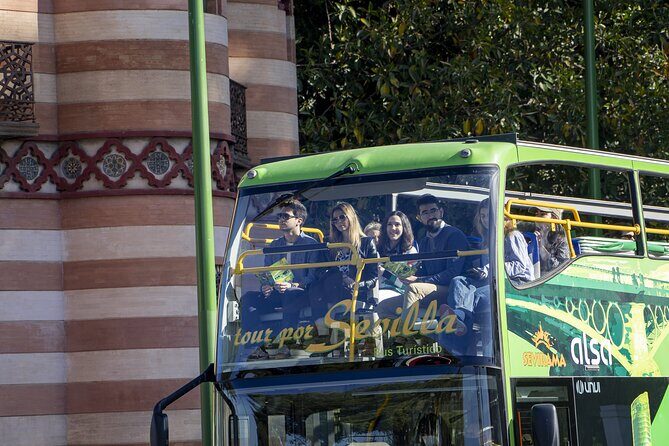
Seville’s streets reward you when you can move fast between landmarks. This 48-hour hop-on hop-off bus route takes you past Seville’s biggest photo stops, from the Torre del Oro area to Triana, Plaza de España, and La Cartuja, with an audio guide in multiple languages. I like that it hits the city’s major sights in one go, and I like the included perks (wine, cava, and discounts) that can cut down your other costs. The main drawback is that the narration can feel more like a checklist than a full guide for what to do once you hop off.
You’ll spend about 1 hour 35 minutes on a full circuit, but the real value is in the flexibility—ride, get off, explore on your own time, then climb back on when you’re ready. One more thing to keep in mind: if you want detailed, stop-by-stop instructions, you’ll need to do a little planning before you go.
Key things I’d plan around before you ride
- 48 hours of freedom: do the highlights once, then return later for a calmer look or a second visit
- Multilingual audio guide: Spanish, English, French, Russian, German, Italian, Dutch, and Portuguese
- Torre del Oro start/finish feel: the route loops back so you’re not left stranded far from your base
- Aquarium stop with real animal variety: 35 aquariums and 400+ species on the Seville Aquarium stop
- Cartuja de Sevilla on La Cartuja island: Expo 92 ties in with the monastery area you’ll pass
- Included food-and-drink style perks: wine at Taberna el Papelón, cava at Casa Carmen Platillos, plus discounts
In This Review
- A 48-hour Seville route that helps you place everything on a map
- Price and what $29.52 covers (and when it becomes a great deal)
- Where the tour begins (and why the starting area is a smart choice)
- The first stretch: Torre del Oro, river landmarks, and getting oriented
- Seville Aquarium: the stop with numbers you can actually remember
- Plaza de España and Parque de María Luisa: the best photo-and-walk combo on the route
- Old Tobacco Factory and the University of Seville: a quick hit of scale and purpose
- La Cartuja, Cartuja de Sevilla, and Expo 92: where the city shifts gears
- Isla Mágica: a smart add-on if your schedule allows
- Alameda de Hércules, Los Remedios, and Plaza de Cuba: where Seville feels younger
- Macarena walls, Plaza del Duque, and the finish at Plaza de Armas
- Audio guide vs. real planning: how to get more from each stop
- Who this tour suits (and who might skip it)
- Should you book this 48-hour Seville bus?
- FAQ
- How long is the bus route?
- Is the ticket valid for 48 hours?
- What’s included with the tour besides the bus ride?
- Where does the tour start?
- What languages are available on the audio guide?
- Can I cancel for free?
A 48-hour Seville route that helps you place everything on a map
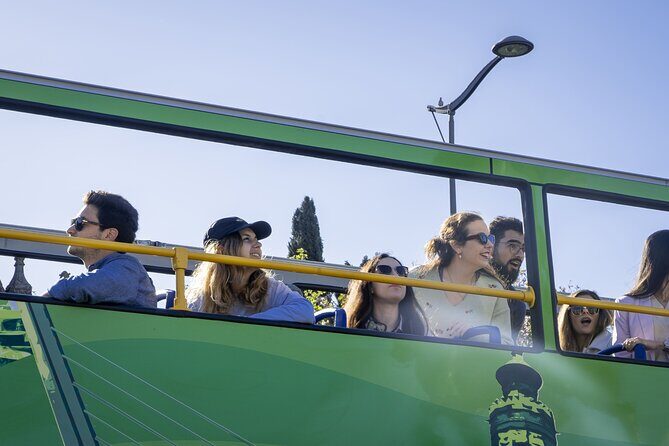
If you’re new to Seville, the first challenge is simple: figuring out how the neighborhoods connect. This hop-on hop-off bus makes that job easier by running you through the city’s big anchors—river views near the Torre del Oro, the postcard-classic Plaza de España, and the Triana area known for flamenco and handicrafts.
I like how the route supports two travel styles. You can keep it efficient by riding the full loop and snapping photos from the bus. Or you can treat it like a practical transit pass: get off where you want, spend real time walking around, then return for the next area.
One practical note: the bus has to handle Seville’s narrow streets. That means the ride itself becomes part of the experience, especially if you’re watching the architecture and rooftops slide by.
Price and what $29.52 covers (and when it becomes a great deal)
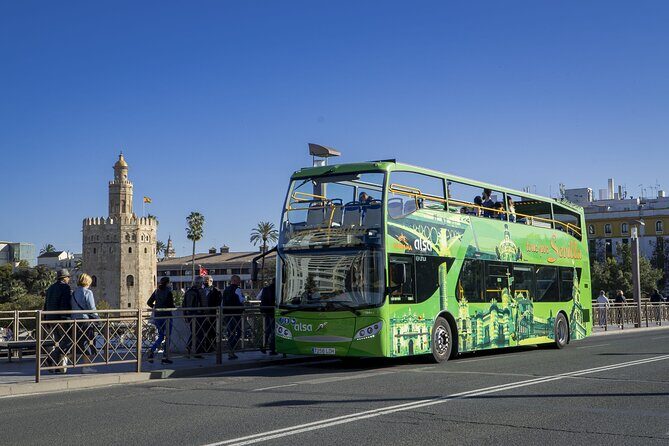
At $29.52 per person for 48 hours, you’re paying for three things: transport, audio narration, and built-in extras. The transport part matters most. For many visitors, a single walk + a few taxis can quickly out-rack the cost of a one-day ticket. Here, you get enough time to spread your exploring over two days.
Then look at the extras, because they can flip the math in your favor. This ticket includes:
- A free drink at Taberna el Papelón (chato of red or white wine)
- A glass of cava at Casa Carmen Platillos Restaurant
- A 20% discount at Plaza de Toros (using your ticket)
- A 20% discount on admission to Hospital de la Caridad
If you plan to use at least one of those food-and-drink perks plus one discount, the ticket starts to feel like more than “just a sightseeing bus.” If you skip most of the included items and you already know exactly where you want to walk, it may feel less compelling.
You can also read our reviews of more tours and experiences in Seville.


Where the tour begins (and why the starting area is a smart choice)
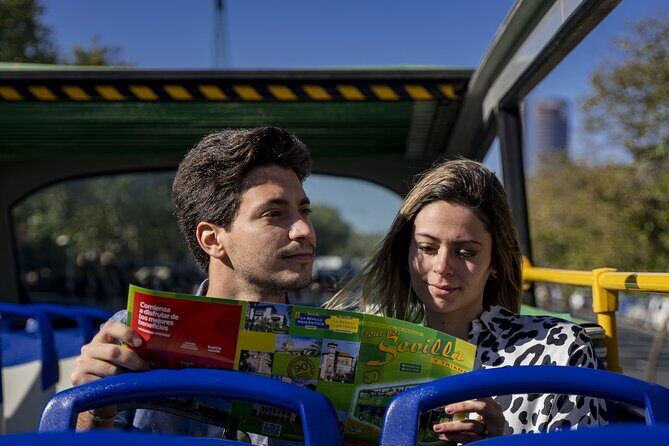
The tour starts at Paseo de Cristóbal Colón (P.º de Cristóbal Colón, Casco Antiguo, 41001 Sevilla). That matters because it puts you near a core visitor zone and makes it easier to link the bus with your own walking plans.
It ends back at the meeting point, so you’re not finishing the day far away. That loop-back is one of those small details that saves time and stress—especially if you’re mixing bus riding with museum or neighborhood time.
Also, this tour uses a mobile ticket, which is handy in the real world. You won’t need to chase paper vouchers when your day is already packed.
The first stretch: Torre del Oro, river landmarks, and getting oriented
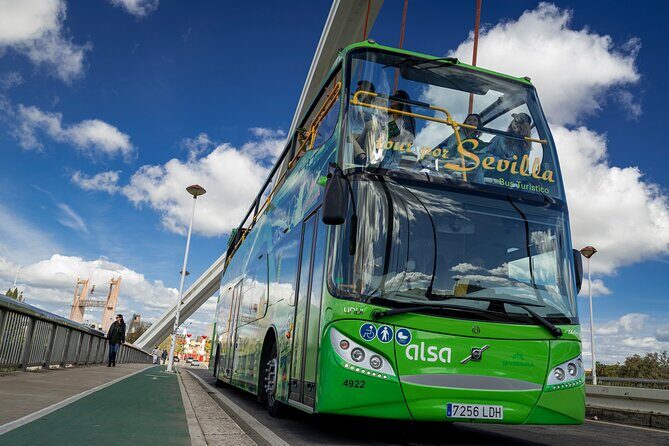
The route is built around emblematic sights, and it kicks off near the Torre del Oro (Gold Tower) area. This watchtower is tied to the riches that came from the Americas, and that theme helps you understand why Seville grew so influential around the river.
From a traveler perspective, the value here is orientation. After your first ride through this river-and-old-city corridor, you’ll start recognizing how the city layers—old defenses, the riverfront, and the main walking zones—connect.
If you’re the type who likes to keep your energy for walking later, this is also where you can get the best “preview.” Watch what’s along the route, then decide what’s worth getting off for.
Seville Aquarium: the stop with numbers you can actually remember
The bus makes a dedicated stop for the Seville Aquarium. The standout detail isn’t just the idea of an aquarium—it’s the scale: 35 aquariums housing animals from more than 400 species.
This is a strong option if:
- You want an indoor plan for hotter days or sudden rain
- You’re traveling with kids or you just like hands-on animal viewing
- You prefer a structured attraction over wandering
Downside? The aquarium is a “time sink” stop compared to viewpoints and squares. If your goal is maximum neighborhood walking, you may choose a shorter visit here or skip it on the first pass and return later during your 48-hour window.
Plaza de España and Parque de María Luisa: the best photo-and-walk combo on the route
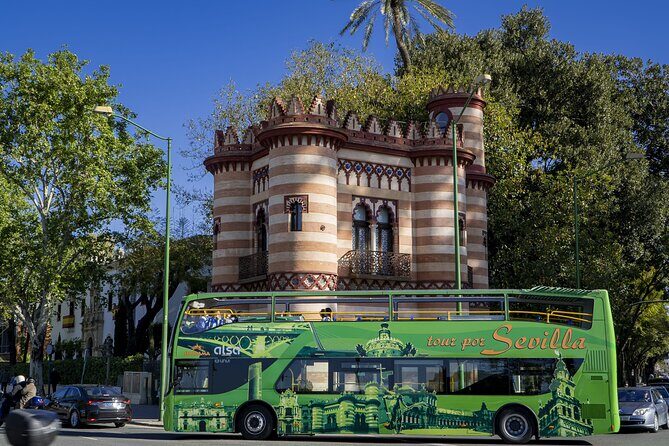
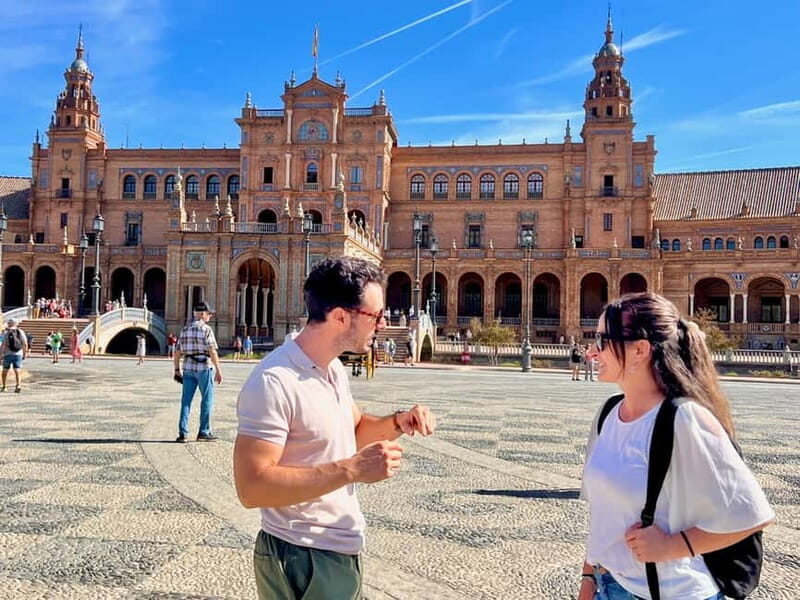
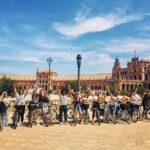
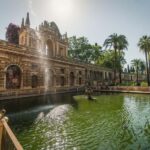
The bus heads into the area around Parque de María Luisa, where you’ll find the landscaped spaces tied to the park. The major draw is Plaza de España, an architectural complex that’s the kind of place where you’ll end up walking more than you expect.
Why it’s worth a hop-off:
- It’s huge, so seeing it from the bus gives only part of the story
- It’s designed for strolling—several corners feel like different rooms
- You can pair it with nearby park time without changing locations
Timing matters. If you hop off when it’s crowded, you’ll spend more time threading through people. If you can go earlier or later, you’ll feel like you have more space to enjoy the details.



Old Tobacco Factory and the University of Seville: a quick hit of scale and purpose
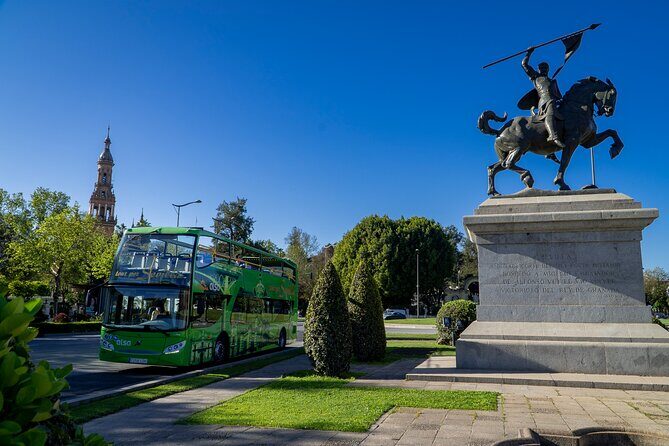
The route passes the Old Tobacco Factory, and the wider area includes the current University of Seville. Even if you don’t go inside a building here, this stop can be useful because it gives you a sense of Seville’s size and institutional gravity.
What to expect if you hop off:
- You’ll be looking at large structures meant for long-term use, not tiny historic storefronts
- It’s a good stop for repositioning—using the bus to move you toward other neighborhoods
Potential drawback: without an additional museum plan, the experience can feel more like passing observation than a “must-do” attraction. If you love architecture, it’s still a worthwhile glance.
La Cartuja, Cartuja de Sevilla, and Expo 92: where the city shifts gears
Next comes the area on La Cartuja and Cartuja de Sevilla, which was tied to Expo 92. This stop is particularly interesting because it mixes a modern event legacy with religious heritage.
Cartuja de Sevilla is described as one of the four Carthusian monasteries in Andalusia, which gives the area a different feel than typical sightseeing squares. The monastery connection means you’ll likely notice more quiet spaces and a sense of separation from the busiest streets.
You’ll also pass by Isla Mágica (the theme park) in this same broad zone, which is handy. You can decide on the spot whether you want adrenaline and rides or calmer walking and architecture.
If you’re not into theme parks, you can still enjoy the stop as a change of pace. Just plan your time so you don’t end up rushing, since La Cartuja is a bit more “arrival” than “blink-and-you-miss-it.”
Isla Mágica: a smart add-on if your schedule allows
Isla Mágica is set in the theme of the discovery of America. That theme can be a nice match after you’ve already seen Torre del Oro’s connection to the Americas story.
This stop makes most sense if:
- You want an afternoon activity that’s easy to understand
- You’re traveling with kids or friends who will enjoy rides
- You want a break from walking
If you don’t like theme parks, you can still use the bus ride to reach the La Cartuja area without committing to it. Since the ticket stays valid for 48 hours, you can keep Isla Mágica as a flexible option.
Alameda de Hércules, Los Remedios, and Plaza de Cuba: where Seville feels younger
The bus travels through the area around Alameda de Hércules, described as a square dominated by that wide plaza and especially popular with students and creative people. That alone is useful information. It tells you that this isn’t just a sightseeing corridor; it’s also social space.
You’ll also pass through Los Remedios, including Plaza de Cuba. Together, these stops help balance the big monuments with everyday neighborhood life.
Best use here: hop off for a walk, then get oriented for dinner. The bus gives you the quick connection between the city icons and the local hangout feel.
Macarena walls, Plaza del Duque, and the finish at Plaza de Armas
As the loop continues, you’ll ride around the thousand-year-old walls of the Macarena area. Walls like this can look abstract from a map, but from the bus they become physical—long lines you can actually trace with your eyes.
Then you’ll enter Alameda de Hércules and reach Plaza del Duque in the heart of Seville, and finally end up at Plaza de Armas bus station as the last stop before returning to the Torre del Oro area.
Why these “endgame” stops matter:
- They keep you near transport hubs
- They make it easier to plan a second day without starting from scratch
- They give you natural break points to reposition for dinner or a walk back to your lodging
Audio guide vs. real planning: how to get more from each stop
The audio guide is included in multiple languages, which is great for comfort and pacing. It can help you connect what you’re seeing with why it matters.
Here’s the key reality: the narration can feel limited in detail, so don’t expect it to fully tell you what to do at every stop. To get the best experience, do this simple thing: pick one or two stops per day where you want to spend real time, and use the rest as orientation or quick visits.
I also like that the bus is on time. That’s not glamorous, but it’s huge. It means you can trust your schedule more than with some informal hop-on routes. And that narrow-street maneuvering is a reminder that Seville isn’t built for big vehicles—so paying attention from the window helps you learn the layout.
Who this tour suits (and who might skip it)
This is a strong choice for:
- First-time visitors who want the main sights with minimal effort
- People who like mixing bus rides with self-guided walking
- Travelers who want two days to explore without over-committing early
It may be less ideal if:
- You only want one major attraction day and you already know exactly where to go
- You want a highly guided, stop-by-stop plan with deep instruction at every stop
- You’d rather spend every minute on foot in one compact area
For most people, the value comes from using it as a backbone. Ride early to learn the geography, then use the second day to slow down where you actually liked what you saw.
Should you book this 48-hour Seville bus?
I’d book it if you want a practical way to see Seville’s top highlights without spending all day deciding on transport. The 48-hour window, the multilingual audio guide, and the included drink/discount perks give it a solid reason to exist beyond sightseeing photos.
I’d hesitate if you’re the type who hates loosely guided formats and prefers one or two attractions with a dedicated deep dive. In that case, you may feel the narration is too light and the stops too flexible.
If you’re on the fence, here’s a simple way to decide: plan to use the bus for orientation plus at least one longer stop (Plaza de España is a great candidate). If you can also use one or two of the ticket perks, the trip becomes easier to justify.
FAQ
How long is the bus route?
The full circuit is about 1 hour 35 minutes (approx.).
Is the ticket valid for 48 hours?
Yes. Your hop-on hop-off ticket is valid for 48 hours.
What’s included with the tour besides the bus ride?
You get an audio guide in several languages and included perks: a free chato wine drink at Taberna el Papelón, a glass of cava at Casa Carmen Platillos Restaurant, plus discounts for Plaza de Toros and Hospital de la Caridad.
Where does the tour start?
It starts at Paseo de Cristóbal Colón (P.º de Cristóbal Colón, Casco Antiguo, 41001 Sevilla, Spain).
What languages are available on the audio guide?
Spanish, English, French, Russian, German, Italian, Dutch, and Portuguese.
Can I cancel for free?
Yes, you can cancel for a full refund if you cancel up to 24 hours in advance of the experience start time.