REVIEW · SEVILLE
Seville Highlights Bike Tour (English)
Book on Viator →Operated by Seebybike · Bookable on Viator
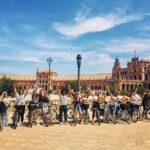
Three hours, and Seville clicks into place. This Seville Highlights Bike Tour is a fun, efficient way to get your bearings fast, with a small-group ride and stops timed for great photo moments. I especially like that guides such as Laura, Ivan, and Marta mix local history with a relaxed pace so you’re not just rushing between landmarks.
You also get practical comforts built in: bikes come with helmets and baskets, and the route hits the Cathedral/Giralda area, Santa Cruz, Triana, and Plaza de España in one smooth sweep. One thing to consider: lots of the famous stops are exteriors, and the whole tour depends on good weather, so plan to pair it with separate ticketed visits if you want interiors.
In This Review
- Key things that make this Seville bike tour worth it
- A 3-hour bike loop that helps you plan the rest of Seville
- Meeting at Mercado del Arenal: what to expect before you roll
- Your first big stops: Catedral de Sevilla and the Giralda story
- Santa Cruz maze time: the old quarter and why it feels different by bike
- Triana: tiles, pottery, and flamenco culture
- Alcázar exteriors and Torre del Oro: the waterways of Seville
- Plaza de España and Parque de María Luisa: where the city slows down
- Real Fabrica de Tabacos, San Telmo, and Plaza de América
- Price and value: what you really get for $42.33
- How to fit this tour into your Seville schedule
- Who this tour suits best
- Should you book the Seville Highlights Bike Tour?
- FAQ
- How long is the Seville Highlights Bike Tour?
- What does the tour cost?
- Where do I meet the tour?
- What’s included with the bike?
- Is there an e-bike option?
- Do I need tickets for the stops?
- What happens if the weather is bad?
Key things that make this Seville bike tour worth it
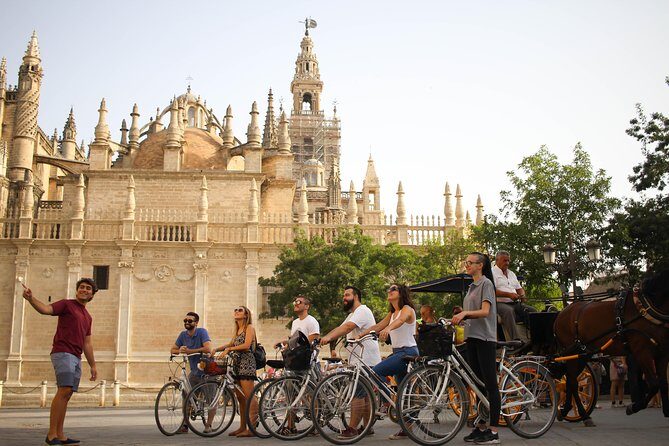
- A tight 3-hour loop of Seville’s biggest icons, from Catedral and Giralda to Plaza de España
- Bike and helmet included, plus an e-bike upgrade option if you want extra help
- Small group size (max 15) for more personal attention and easier navigation
- Free admission at each stop for what you do here, mostly exterior viewing (with a closer look at one building)
- Guides in English who keep it fun, with praised clarity, pacing, and local tips like where to eat tapas and how to plan for flamenco
A 3-hour bike loop that helps you plan the rest of Seville
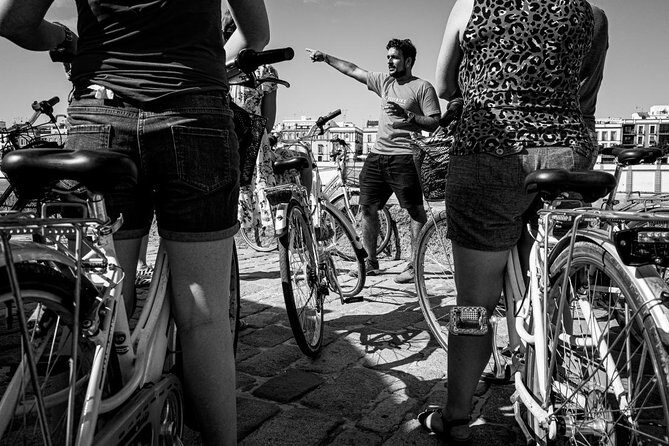
Seville is the kind of city where the streets feel like they have layers: Roman, Moorish, medieval, and modern all sitting close together. This bike tour is designed for the first day mindset—get your bearings fast, see the major landmarks, and leave with a road map for what to dig into later.
You also avoid a common Seville problem: the city looks compact on a map, then you start walking and time evaporates. With bikes, you cover a lot of ground in a short window, and the route keeps you moving so you’re not stuck waiting for long stretches between sights.
The tour’s style is part of the value. It’s not a marathon and it’s not a lecture. Guides such as Daniel and Marco are praised for the mix of humor and clear explanations, which matters when you’re seeing dozens of details in a tight time frame.
You can also read our reviews of more cycling tours in Seville

Meeting at Mercado del Arenal: what to expect before you roll
The tour starts back at the meeting point near the Mercado del Arenal in the Casco Antiguo: C. Pastor y Landero, 4 (at SeeByBike – bike tours Seville). There’s no hotel pickup or drop-off, so you’ll want to make your own way there and treat it like a quick city start.
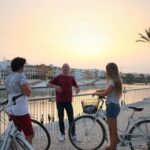
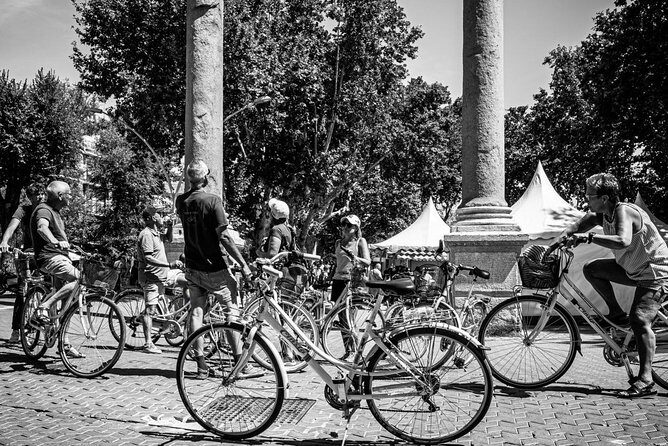
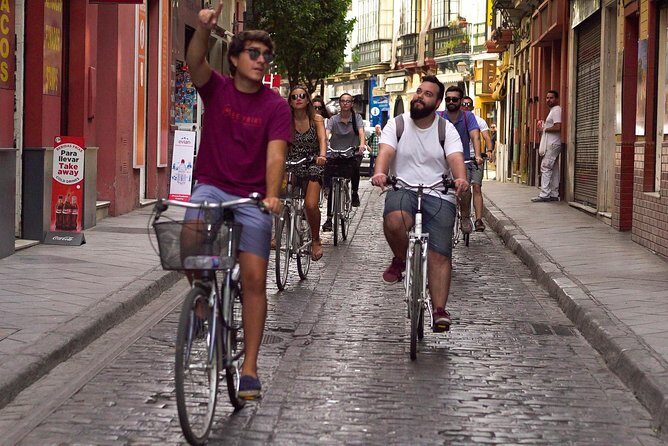
This is also a tour that leans practical. You’ll show a mobile ticket, then get set up with a bike, a helmet, and a route focus on major sights. Reviews mention a quick test ride, and one rider noted a support rider at the rear, which is the kind of small safety touch that makes a big difference on narrow or busy streets.
If you’re wondering whether the ride will feel manageable: most travelers can participate, and the format is short enough that you’re unlikely to feel cooked by the end. Still, if you’re coming with mobility limits, it’s worth considering your comfort on bike lanes and uneven historic paving.
Your first big stops: Catedral de Sevilla and the Giralda story
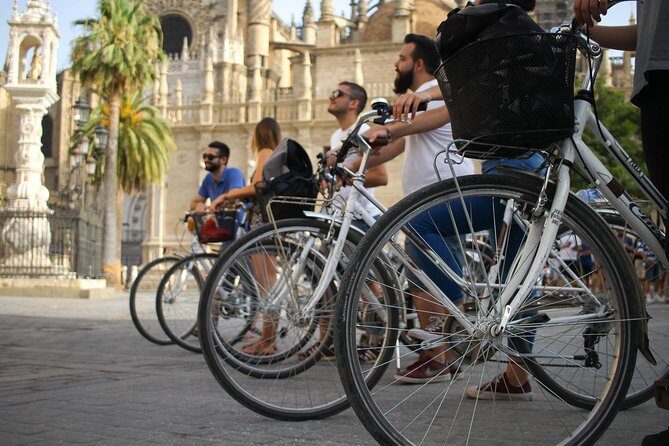
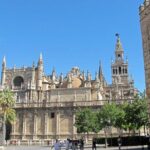
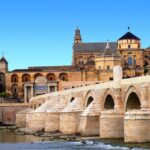
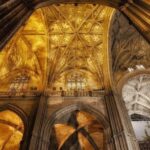
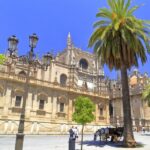
The tour kicks off near the Seville Cathedral, known as the biggest Gothic cathedral in the world, and you’ll see it from the outside. This matters because you’re not spending your entire time lining up or deciding where to go first—you’re getting a strong visual anchor right away.
Soon after, you’ll reach the Torre Giralda, the bell tower of the cathedral. What makes Giralda special is its origin: it began life as the minaret for the Great Mosque of Seville in al-Andalus. Seeing these two together (cathedral exterior impressions plus Giralda) gives you a fast sense of how power and faith shifted here over centuries.
If you love architecture, this is a smart pairing because you’re basically catching one long timeline in a short ride. If you don’t care about details, it still works because the landmarks are unmistakable, and the vantage points are excellent for photos.
A possible drawback: since this is mainly exterior viewing at these stops, you won’t automatically get the full interior experience. If interiors are a must, you’ll want to plan those with separate timed tickets later in your trip.
Santa Cruz maze time: the old quarter and why it feels different by bike
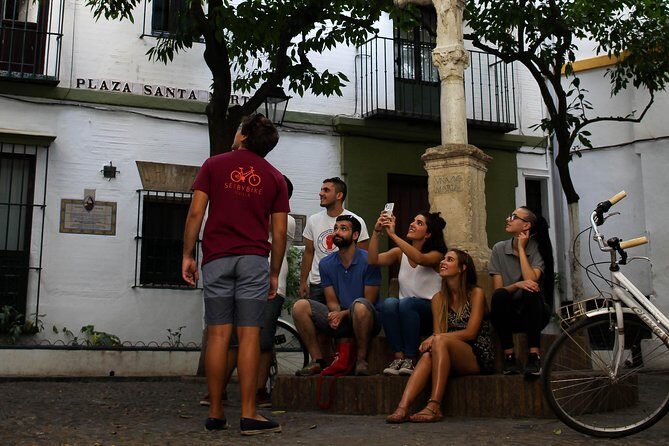
Barrio Santa Cruz is the former Jewish quarter of medieval Seville, and the vibe is all about small lanes, romantic squares, and easy-to-get-lost energy. On foot, it can eat up time. By bike, you get the feel without spending hours stuck in the thick of it.
The value here is orientation. After Santa Cruz, you’ll start to recognize street shapes, sightlines, and how neighborhoods connect. That’s huge when you’re later trying to find tapas spots, viewpoint corners, or the best walking route back to your hotel.
One thing to keep in mind: historic neighborhoods can be tight. The tour’s short stops help you absorb the area, then move on before you feel trapped in a lane with no clear exit.
Triana: tiles, pottery, and flamenco culture
Triana is where Seville turns toward craft and performance. You’ll ride through an area tied to traditional pottery and tile work, and you’ll hear how the neighborhood connects to flamenco culture and local festivals.
Even if you’re not planning to attend a flamenco show the same day, Triana sets you up for understanding the city’s rhythms. Flamenco isn’t just a stage event here; it’s tied to neighborhood identity, and Triana is one of the places where that shows.
The ride also helps you see Triana as more than a day-trip stop. It becomes part of your mental map of where things happen in Seville, not just another landmark checkmark.


Alcázar exteriors and Torre del Oro: the waterways of Seville
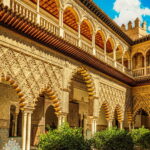
The Real Alcázar is a royal palace blending Moorish, Gothic, Mudéjar, and Renaissance elements, and you’ll view it from the outside. Even from outside, it’s hard not to feel how many styles share the same space. That blend is one reason Seville feels unlike many other Spanish cities.
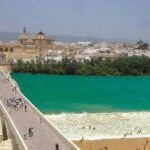
Right after, you’ll hit Torre del Oro, a 13th-century tower built to help control access to the port. The location and shape are strongly tied to Seville’s river-and-trade past. On a bike, you get a sense of movement between eras: palace power nearby, port control in the story.
A practical note: if you’re the kind of traveler who loves interiors, the Alcázar deserves your full attention another day. This tour’s main strength is giving you the visual and historical context so your later ticketed visit feels more meaningful.
Plaza de España and Parque de María Luisa: where the city slows down
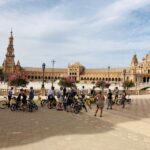
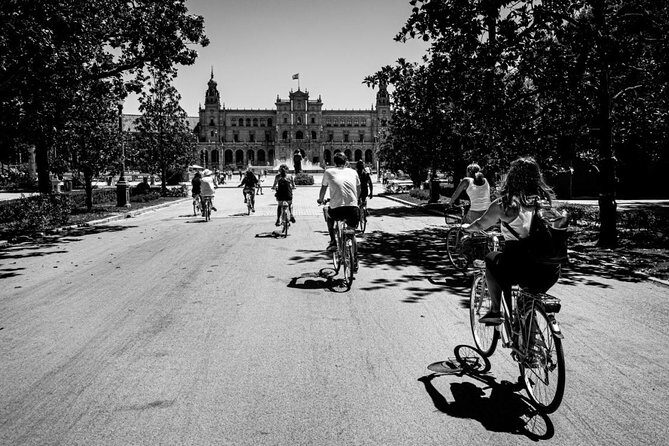
Plaza de España is one of Seville’s most impressive sights, mainly because of scale. You’ll spend time there, and it’s also the site connected to the 1929 Exposiciones Universales.
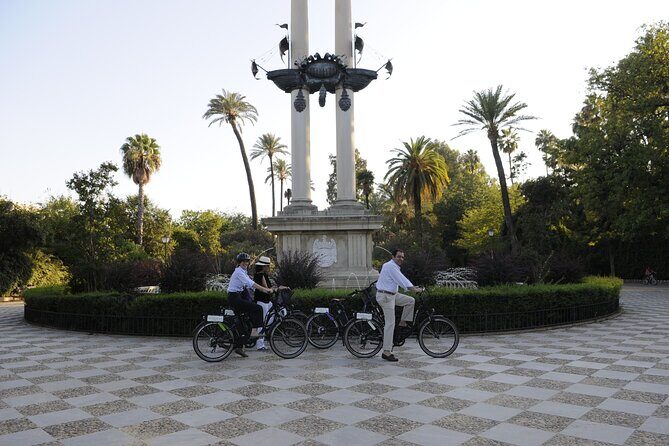
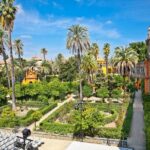
The nearby Parque de María Luisa makes the experience feel complete. You get a large green space right next to the plaza, lined with shady avenues and hundreds of exotic trees. This is also where you’ll notice the decorative details Seville is famous for: colorful tiled benches, Moorish fountains and pools, and fairytale-like buildings.
What I like about pairing these two stops is the contrast. One place is formal and grand; the other is softer and slower. That contrast helps your brain rest while still giving you landmark-quality visuals.
For many people, this is the point where Seville stops being abstract and becomes real. If you only had time for one big photo stop, Plaza de España would be a strong choice—and doing it by bike means you’re not sacrificing earlier highlights to reach it.
Real Fabrica de Tabacos, San Telmo, and Plaza de América
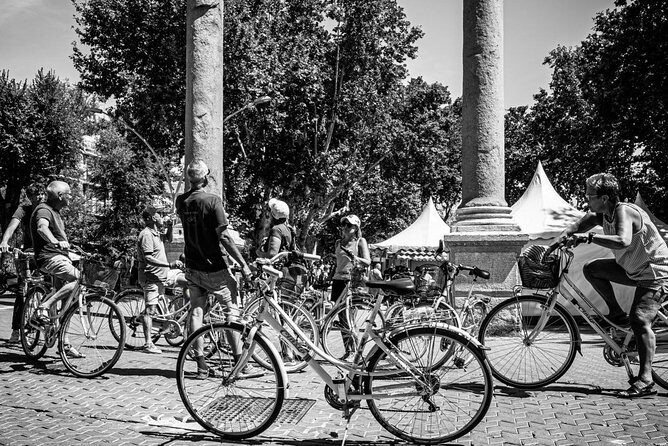
After the big open spaces, the tour shifts into buildings with distinct purpose and style.
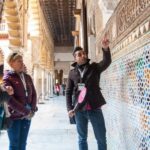
Real Fabrica de Tabacos is especially interesting because it was built as one of Europe’s most important tobacco factories. Today, the building is the University of Seville, and you’ll get time to have a look inside during the stop. That inside peek is a useful change of pace after mostly exterior viewing earlier in the ride.
Next comes Palau de San Telmo, Seville’s finest example of baroque style in the tour’s lineup. It was originally constructed as the seat of the University of Navigators, which gives you a “Seville beyond romance” angle: this city’s identity is tied to trade, navigation, and empire-level movement.
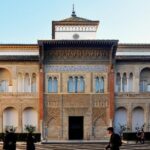
Finally, Plaza de América sits within Parque de María Luisa, flanked by the Museum of Popular Arts (Neomudéjar style) to the north, the Archaeological Museum (Neo-Renaissance style) to the south, and the Royal Pavilion (Gothic style) to the east. It connects to the Ibero-American exhibition in 1929, which helps explain why the architecture feels like a curated snapshot from that era.
This end section is great because it gives you variety. You’re not only seeing the most famous postcards; you’re seeing how Seville uses architecture to brand different moments in time.
Price and value: what you really get for $42.33
At around $42.33 per person for roughly 3 hours, the pricing makes more sense when you see what’s included. You get the bike (with helmet and baskets), a guide, insurance, and a map with recommendations.
That last part is quietly valuable. A good bike tour can be good for photos, but it gets better when you leave knowing where to eat, where to catch flamenco, and what to visit next. The tour also lists that stops are free for the kind of access you’re doing here, which helps control costs when you’re building a tight first-week schedule.
Also, the group size cap (max 15) matters for value. When the group is smaller, the guide can explain more clearly and keep everyone from getting separated.
And if you’re energy-limited, the e-bike upgrade option gives you a way to keep the same route without feeling like you’re battling the city.
How to fit this tour into your Seville schedule
This bike tour is ideal as a first or second-day plan. Do it early, and you’ll know where things are, which saves time when you start hunting for flamenco venues, churches, tapas streets, and river walks later.
It’s also a strong pairing with separate timed visits. Since you’ll mostly view major sights from the outside, use the tour to decide which interior experiences you want to prioritize next. The Cathedral/Giralda and Alcázar are the obvious candidates for a deeper follow-up.
Timing is another reason it works. With only about three hours on the clock, you keep the rest of your day open for slower activities like long lunches, neighborhood wandering, and evening shows.
If you’re pairing it with outdoor time, plan for breaks. Seville can feel intense even in mild seasons, so having your “landmark block” early and your “food and strolling block” later is a smart split.
Who this tour suits best
This is a great match for:
- First-time visitors who want Seville orientation fast
- Travelers who like structure but still want some freedom to look around
- People who prefer covering ground without the friction of constant uphill or long walking loops
- Anyone who wants an English guide and a map that points you to what to do after the ride
It may be less ideal for:
- Travelers who want full interior access at multiple major monuments in one shot (this tour is built around exterior viewing, with limited exceptions like the inside look at Real Fabrica de Tabacos)
- Anyone who’s extremely sensitive to weather, since the experience requires good weather and has a policy response if conditions are poor
Should you book the Seville Highlights Bike Tour?
I think you should book it if you want the quickest path to understanding Seville’s layout and style. The route is packed with the big names—Catedral de Sevilla, Barrio Santa Cruz, Real Alcázar exterior views, Triana, Plaza de España, Parque de María Luisa—and it does it in a way that feels safe and manageable.
It’s also a good value choice because the bike, helmet, guide, and insurance are included, and you don’t have to think about stop-by-stop ticket costs for the viewing portions. And with English-guided routes praised for pacing and clear explanations, you’re likely to leave with more than photos—you’ll leave with a plan.
FAQ
How long is the Seville Highlights Bike Tour?
It lasts about 3 hours.
What does the tour cost?
The price is $42.33 per person.
Where do I meet the tour?
You meet at SeeByBike – bike tours Seville, Mercado del Arenal, C. Pastor y Landero, 4, Casco Antiguo, 41001 Sevilla, Spain.
What’s included with the bike?
You get a bike, including a helmet and baskets, plus a guide, insurance, and a map with recommendations.
Is there an e-bike option?
Yes. There is an e-bike upgrade option.
Do I need tickets for the stops?
Admission is listed as free for the stops in this tour experience.
What happens if the weather is bad?
The experience requires good weather. If it’s canceled due to poor weather, you’ll be offered a different date or a full refund. You can also cancel for free up to 24 hours in advance for a full refund.