REVIEW · SEVILLE
Seville Bilingual Bike Tour
Book on Viator →Operated by Centerbici · Bookable on Viator
Seville gets a lot of attention for its monuments, but the real win here is how fast you can connect them. This Seville Bilingual Bike Tour strings together the city’s biggest sights in about 3 hours, with a guide to explain what you’re seeing as you move between neighborhoods. Two standouts for me: you get an efficient sweep of landmarks (including the Seville Cathedral area) and you finish with the modern-cool contrast of the Plaza de la Encarnación mushrooms.
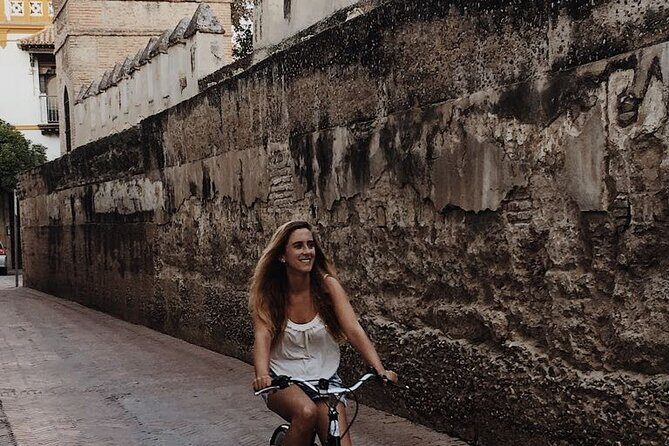
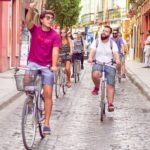
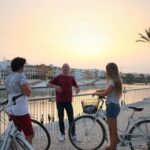
I also like that it’s not just sightseeing from the sidewalk. You’re on bike trails, with stops timed for views and context, plus a route that mixes classic Seville with places that feel more like movie sets—like the Plaza de España zone. One thing to consider: this experience depends on good weather, and you’re doing real time on a bike, so plan for that even if you’re a confident rider.
Meeting point is at Fietstour Sevilla / Centerbici in the Casco Antiguo area, so it’s easy to plug into your day once you’re there. The tour is capped at 20 travelers, which helps keep the pace friendly rather than chaotic.
In This Review
- Key highlights you’ll care about
- Why bike over buses and long walks?
- Meeting at Centerbici and getting set up fast
- Plaza del Salvador to Plaza Nueva: getting your bearings quickly
- Seville Cathedral and the Giralda: what to notice on the spot
- Old tobacco factory, Prado de San Sebastián: Seville beyond the postcard
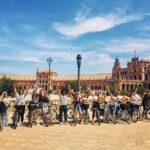
- Plaza de España and Maria Luisa Park: the fun, photogenic core
- New York Dock, Real Maestranza, and Torre del Oro: iconic stops with variety
- Plaza de la Encarnación mushrooms: the old-meets-new finale
- Price and value: what you’re really paying for
- Who this tour suits best
- Should you book this Seville Bilingual Bike Tour?
- FAQ
- How long is the Seville Bilingual Bike Tour?
- What is the price per person?
- Where does the tour start?
- Where does the tour end?
- Is the tour offered in English?
- What’s included in the tour price?
- What is not included?
- How many people are in the group?
- Do children need to be with an adult?
- What if the weather is bad?
Key highlights you’ll care about
- Bilingual guiding in English so you’re not guessing what you’re looking at.
- Bike-based sightseeing that’s much easier than walking between major stops.
- Cathedral + Giralda area included, not just passed from a distance.
- Plaza de España and Maria Luisa Park on a relaxed route with time to take it in.
- Plaza de la Encarnación mushrooms for a sharp old-versus-new finish.
- Small group size (max 20) keeps the vibe practical and personal.
Why bike over buses and long walks?
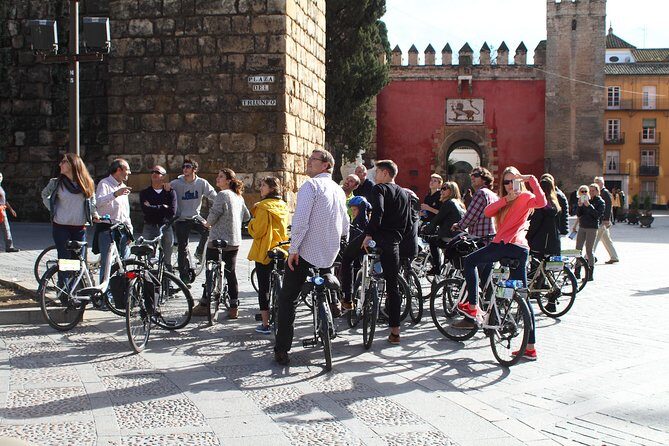
Seville is built for slow roaming—ceramic tiles, shaded corners, sudden views. But if you only have a few hours, walking can eat your time fast. This tour fixes that with a simple idea: cover the big monumental sights without the fatigue. You spend your energy looking and listening, not constantly negotiating distance.
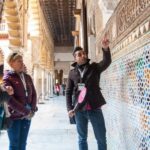
The second reason I like this format is the mix of guide talk and riding. You’re not stuck in a lecture hall, and you’re not left alone with your phone. As you move from square to square, the guide helps you understand what you’re seeing—especially around the Cathedral and Giralda area, where the details matter.
The trade-off is obvious: you need to be comfortable on a bike for the full length of the tour. It’s designed for most people, but your body still needs to keep up with 3-ish hours of cycling and stopping.
You can also read our reviews of more cycling tours in Seville
Meeting at Centerbici and getting set up fast
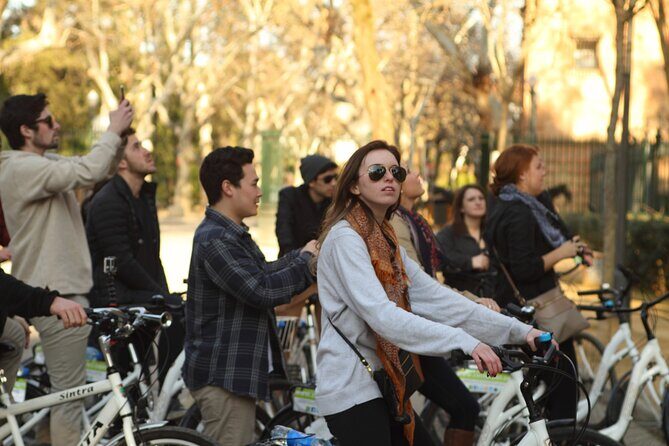
You start at Bike rental & guided tours (Fietstour Sevilla | Centerbici), C. Espronceda, 5, Casco Antiguo, 41004 Sevilla. That location matters because it’s in the historic core, where you want to be if you’re trying to stitch together Seville’s highlights in one go.
This tour uses a mobile ticket, so you’re not hunting for paper. You also get a map and water bottle, which sounds small, but it reduces friction. The helmet detail is interesting too: kids get helmets included, so if you’re bringing younger riders, you’ll have one less thing to arrange.
Group size stays controlled at up to 20 travelers, which usually means fewer bottlenecks at busy viewpoints. You’ll still be in a city with crowds, but the tour rhythm should feel organized rather than packed.
Plaza del Salvador to Plaza Nueva: getting your bearings quickly
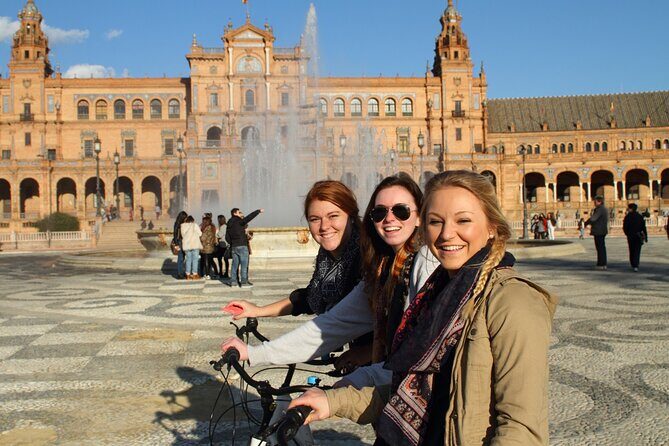
The tour begins in the area around Plaza del Salvador, then heads toward Plaza de San Francisco and Plaza Nueva. This first stretch is all about orientation: you’re placed right into Seville’s historic grid, and the guide helps you read the city instead of just watching it blur by.
At Plaza Nueva, you’ll see the City Hall in plateresque style. That’s a key stop because plateresque decoration can look like decorative frosting until someone explains why it’s worth paying attention to. The payoff here is learning how Seville’s wealth and taste show up in the stonework—then continuing while that context is still fresh.
A practical bonus: because you’re biking, you can cover these squares without doing the stop-start “walk five minutes, wait, walk again” routine. One of the clearest points from past guests is that the bike trails are very nice, which is exactly what you want in Seville, where foot traffic can get intense.
Seville Cathedral and the Giralda: what to notice on the spot
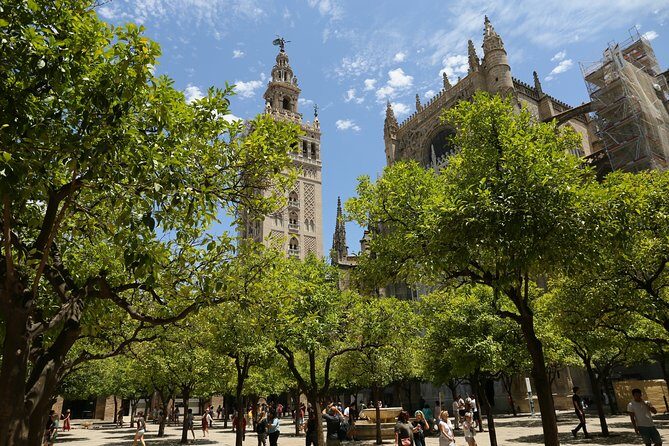
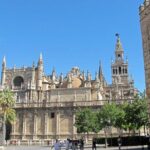
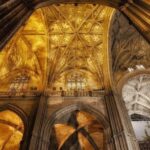
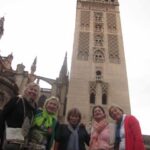
Next comes De la Constitución, where you’ll see Seville Cathedral and the Giralda. This is the heart-of-Seville moment, and the value isn’t just that the Cathedral is there. It’s that your guide points out what matters so the building doesn’t feel like a postcard you’ve already seen.
Even if you’ve studied photos, the Cathedral/Giralda area has layers—different eras, different architectural goals, and that unmistakable tower silhouette. When you visit this area as part of a timed cycling loop, you also avoid the common problem: arriving late, moving too fast, and skipping the details because you’re worried about time.
One consideration: this section is a major magnet for visitors, so it can feel busy. A guided stop is a smart way to manage that. You’re not just standing around hoping you’re looking in the right direction—you have a plan and someone to translate the meaning behind what you’re seeing.
Old tobacco factory, Prado de San Sebastián: Seville beyond the postcard
After the Cathedral area, the route shifts into a broader Seville story. You’ll head to the old tobacco factory, then pass through Prado de San Sebastián and onward to major parade-ground style landmarks.
This part is important because it changes the texture of your experience. Seville isn’t only monuments. It also has spaces that reflect industry, city planning, and how people moved through the city. The old tobacco factory stop is especially useful because it breaks the “all churches all the time” rhythm that many first-timer itineraries fall into.
If you like your sightseeing to have context—why a building exists, what role it played, what it signals about the city’s history—this stop helps balance the day. If you mainly want architecture eye candy with minimal explanation, you can still enjoy it, but the real strength is the guide framing.


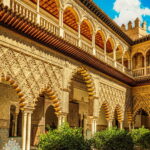
Plaza de España and Maria Luisa Park: the fun, photogenic core
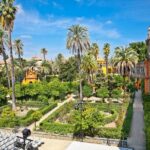
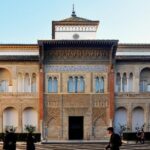
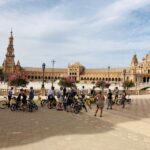
Then you reach Plaza de España and Maria Luisa Park. This is where Seville starts to feel cinematic. The architecture is dramatic, the spaces are wide, and everything is built for leisurely wandering—exactly the kind of place where biking gives you a better overall loop.
Plaza de España is a highlight for a reason. It’s not just pretty; it’s designed as a grand public stage. When the tour includes it in the middle of the ride, you get a reset point: you can slow your pace, take photos, and absorb the scale before the route continues.
Maria Luisa Park is a big deal because it brings shade and breathing room. It’s also one of the easiest places to feel how different this city can be from one street to the next. If you’ve only walked through Seville’s hot sun, park time changes everything.
A practical note: these spaces can be wide open, so you’ll want to stay hydrated. The tour provides water, which helps you keep enjoying without constantly searching for a shop.
New York Dock, Real Maestranza, and Torre del Oro: iconic stops with variety
From the park area, the route includes the New York dock, the Real Maestranza (bullring), and Torre del Oro. This sequence is a strong example of what makes this tour more than a list of famous names.
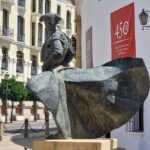
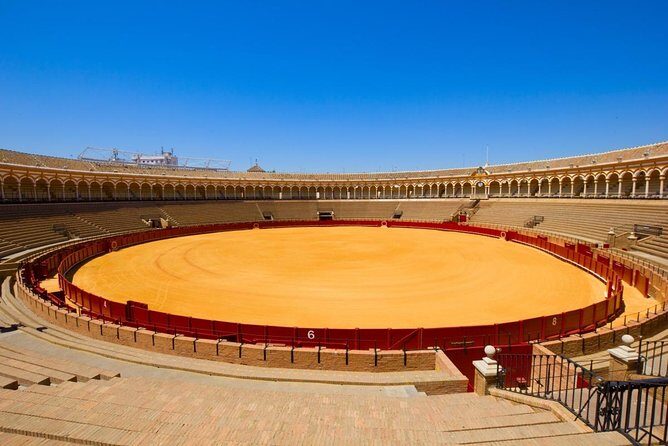
The Real Maestranza bullring adds personality because it’s a recognizable landmark with cultural significance tied to local tradition. Even if bullfighting is not your thing, the building itself is worth seeing for its role in the city’s story and its scale.
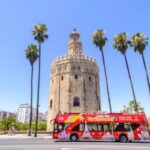
Then you get Torre del Oro, the kind of landmark that rewards quick perspective changes. When you see it as part of a route moving through different parts of the city, you’re not only looking at a tower—you’re watching Seville’s geography come into view.
And the New York dock stop is a nice curveball. It keeps the tour from turning into a single-style march. You get variety in architecture and mood, which helps the whole experience feel longer and richer without dragging past the 3-hour mark.
Plaza de la Encarnación mushrooms: the old-meets-new finale
The tour ends at the famous mushrooms of Plaza de la Encarnación. This finish is smart. You start with monumental classic Seville, move through industrial and civic landmarks, hit the big postcard spaces, and then cap it with something futuristic-looking.
That contrast is the point. The Plaza de la Encarnación area can feel like a shift in time. You walk away with a memory that isn’t only about the oldest stones, but also about how Seville updates itself and builds new landmarks that still work in the city’s visual language.
It’s also an emotional close: instead of ending on another church or another plaza, you end on a structure that feels like it belongs in a different decade. That makes the whole tour feel complete.
Price and value: what you’re really paying for
At $36.11 per person for about 3 hours, the price looks low for the amount of major sightseeing packed in. The included items help too: bike, bilingual guide, water bottle, map, and helmet for kids. You’re not spending extra money on gear, and the guide stops reduce the mental effort of figuring out where to look and what the buildings mean.
The strongest value is not the bike itself. It’s the structure: you’re guided through a route that hits the Cathedral/Giralda area, Plaza de España, Maria Luisa Park, and Torre del Oro in one session. That kind of efficiency usually costs more when you do it solo via taxis or piecemeal entries.
One more practical value: transportation to and from the attractions is not included. That means you should plan to be at the meeting point already. The good news is the meeting point is near public transportation, so you’re not locked into a single transport option.
Who this tour suits best
This Seville Bilingual Bike Tour is a great fit if you want the big highlights without turning your day into a workout. It’s also a solid pick for people who like context while they travel—having a guide explain what you’re seeing at key points makes the whole route feel more meaningful.
It also works well with families. Kids are welcome as long as they’re accompanied by an adult, and kids get helmets included. With a maximum group size of 20, the tour should feel easier to manage with younger travelers than a huge bus tour.
If you hate bikes, or you need long breaks without moving, this may feel too active. Also, because it depends on good weather, you should be ready for the tour to change dates if conditions are rough.
Should you book this Seville Bilingual Bike Tour?
I’d book it if you want a smart, time-saving overview of Seville’s most famous monumental areas, with a guide helping you notice details instead of just passing by them. The route gives you classic highlights like the Cathedral and Giralda area, plus major scenic stops like Plaza de España and Maria Luisa Park, and ends with the Plaza de la Encarnación mushrooms for a strong modern contrast.
Skip it if you’re looking for a super relaxed, slow stroll with no bike involved. Also take the weather factor seriously; plan this on a day where Seville’s forecast looks decent.
If you can, book it in advance. It’s commonly booked about 21 days ahead on average, so earlier planning gives you better chances of matching your schedule.
FAQ
How long is the Seville Bilingual Bike Tour?
It’s listed at about 3 hours.
What is the price per person?
The price is $36.11 per person.
Where does the tour start?
The meeting point is at Bike rental & guided tours | Fietstour Sevilla | Centerbici, C. Espronceda, 5, Casco Antiguo, 41004 Sevilla, Spain.
Where does the tour end?
The tour ends back at the meeting point.
Is the tour offered in English?
Yes, it’s offered in English, and you’ll have a bilingual guide.
What’s included in the tour price?
Included items are the bike, bilingual guide, water bottle, map, and helmet for kids.
What is not included?
Transportation to/from attractions is not included.
How many people are in the group?
The tour has a maximum of 20 travelers.
Do children need to be with an adult?
Yes. Children must be accompanied by an adult.
What if the weather is bad?
This experience requires good weather. If it’s canceled due to poor weather, you’ll be offered a different date or a full refund.