REVIEW · SEVILLE
Ronda and White Villages from Seville
Book on Viator →Operated by Sevilla Moving · Bookable on Viator
Ronda feels like it was built for movie scenes. This day trip strings together Ronda’s cliff-edge sights with classic white villages on a plan that stays comfortable thanks to an air-conditioned vehicle and a small group size. You also get a driver-guide who ties the stops together, so the day feels more like a guided journey than a checklist.
What I really like is the mix of famous moments and smart shortcuts. You walk the Cuenca Gardens for the Puente Nuevo and Puente Viejo views, then you roll into spots like the House of the Moro king area and the Arab Baths for history you can actually see. One trade-off: lunch is not included, so you’ll want to plan for a flexible meal break during the long, mostly walking day.
In This Review
- Key reasons this trip works
- A day that mixes big scenery with real village life
- Getting from Seville: comfort, timing, and how to show up right
- Stop 1: Zahara de la Sierra for castle views and the slow-breathe moment
- Stop 2 and 3 in Ronda: Cuenca Gardens and the Puente views
- Stop 4: Banos Arabes for Arab baths, documentary context, and practical expectations
- Stop 5: Alameda del Tajo promenade for the “romantic edge” feeling
- Stop 6: Plaza de Toros de Ronda and the two included monument tickets
- Stop 7: Setenil de las Bodegas for houses built into the rock
- Stop 8: El Tajo de Ronda viewpoints for the guide’s geology and story
- What you’ll actually be doing all day (walking and pacing)
- Guides make or break this kind of day
- Price and value check for $264.31 per person
- Lunch reality: plan for it or you’ll feel rushed
- Who this tour suits best
- Should you book Ronda and White Villages from Seville?
- FAQ
- How long is the Ronda and White Villages tour from Seville?
- What time does the tour start, and where is the meeting point?
- How many people are in the group?
- Is the tour offered in English?
- What’s included in the price?
- Is lunch included?
- Which admissions are free, and which are not?
- Do I need to bring a paper ticket?
- Is there walking involved?
- Is the tour refundable if I cancel?
Key reasons this trip works
- Max 8 travelers means you can actually hear your guide and ask questions.
- Air-conditioned transport makes the long ride from Seville feel easier in warm weather.
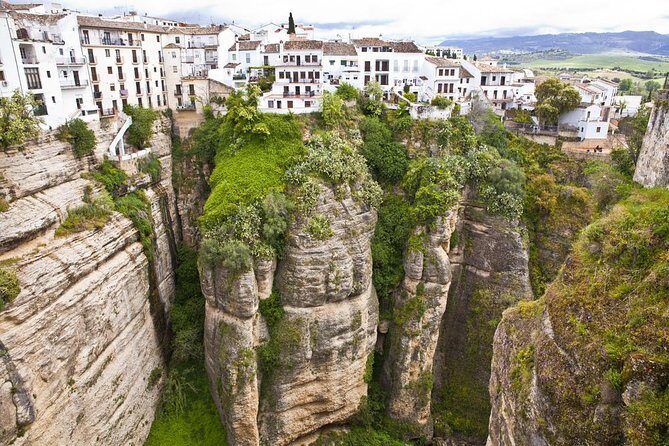
- Ronda viewpoints on foot: Cuenca Gardens, Alameda del Tajo, and El Tajo de Ronda.
- Real monument time with included entry options, including Plaza de Toros.
- White village stop in Setenil de las Bodegas for that rock-carved street scene.
A day that mixes big scenery with real village life
If you only visit Seville and skip Ronda, you miss one of southern Spain’s most dramatic contrasts: city on the edge of a deep gorge. What makes this tour appealing is the pacing. You get guided time in the places that matter, plus shorter stops in villages that are visually strong even with limited time.
Also, this isn’t a huge coach tour. The group size tops out at 8, which tends to mean less waiting around and more comfort when you’re doing short walks and viewpoint stops. For many people, that’s the difference between feeling rushed and actually enjoying the views.
Finally, the itinerary is designed so you see more than just one town. You start with Zahara de la Sierra, then spend the bulk of the day in Ronda, and finish with Setenil de las Bodegas on the way back to Seville. That rhythm helps the “white villages” theme feel real, not like a single quick photo stop.
You can also read our reviews of more tours and experiences in Seville.


Getting from Seville: comfort, timing, and how to show up right
The tour runs about 9 hours, starting at 9:00 am from Sevilla Moving on C. Luis Montoto 19, Local Bajo, 41003 Seville. It ends back at the meeting point.
You’ll ride in an air-conditioned vehicle with a driver-guide and private transportation. That’s a big deal here because the day includes multiple short walks and lots of time spent outdoors looking out over cliffs and valleys. On a hot day, the vehicle comfort is what keeps the energy up when you’re done with the walking and ready for the next stop.
One practical thing: the meeting point is near public transportation, which is helpful if you’re figuring out how to get there on your own. I’d still plan to arrive a few minutes early so you’re not trying to identify your group while everyone else is moving.
Stop 1: Zahara de la Sierra for castle views and the slow-breathe moment
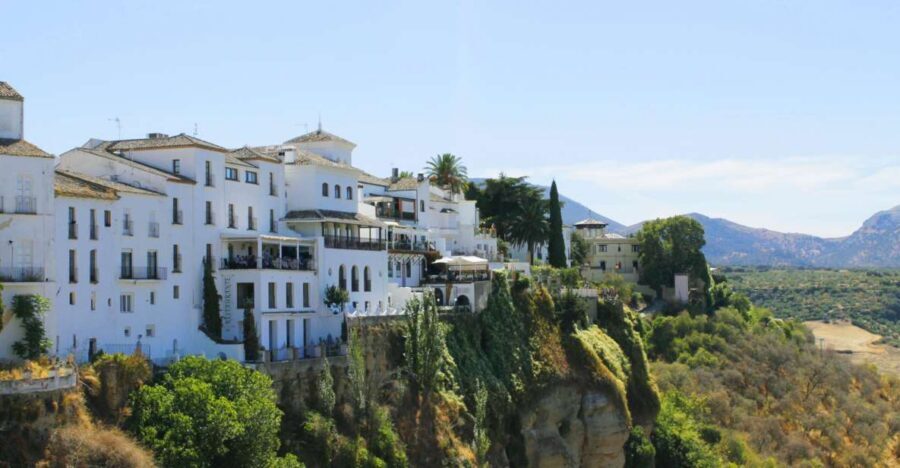
Your first major pause is Zahara de la Sierra. It’s one of those towns where the white buildings feel like they’re stacked for maximum view power. You get about 30 minutes, plus the stop includes admission-free time.
The main reason to care about this stop is perspective. You’re heading toward Ronda, and Zahara gives you a sense of the region’s terrain before you reach the cliff drama. If you like landscape as in views, this is where you start to understand why Ronda feels so exposed and strategic.
This is also a good “reset” stop. A short break early in the day helps you arrive in Ronda with better focus, especially if you plan to spend time at several viewpoints later.
Stop 2 and 3 in Ronda: Cuenca Gardens and the Puente views
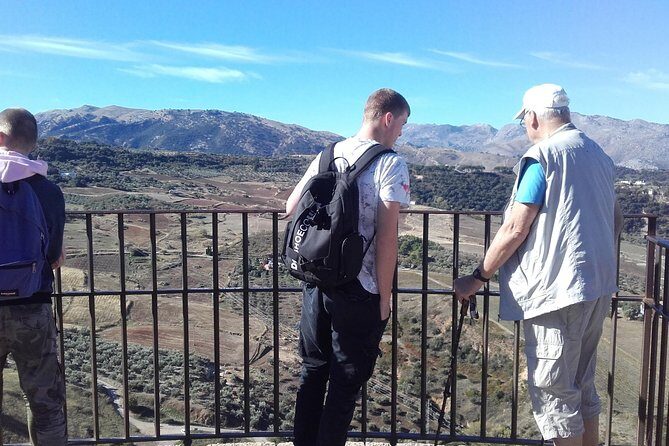
Once you arrive in Ronda, the walking tour starts at the Cuenca Gardens. You’ll have about 15 minutes, and entry here is free.
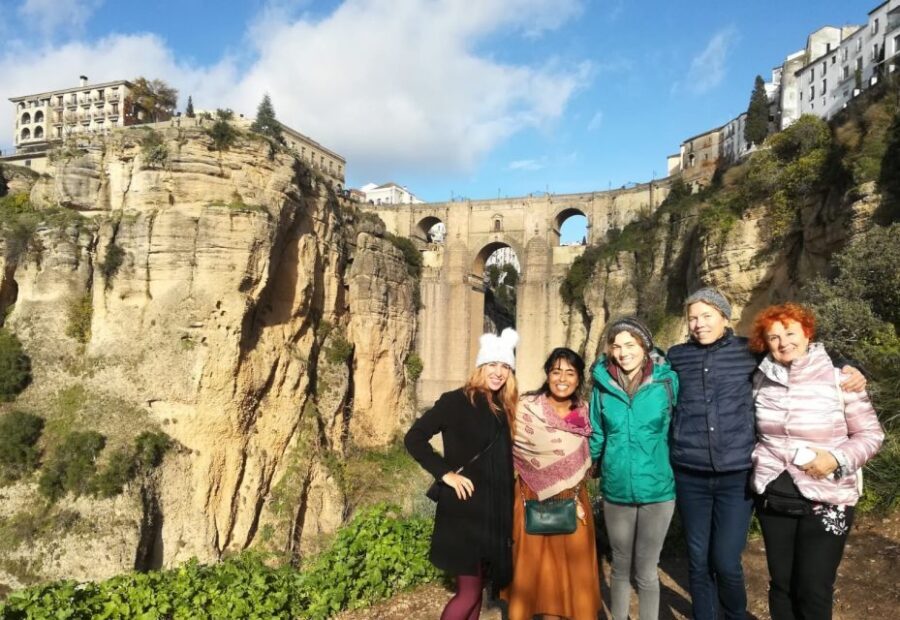
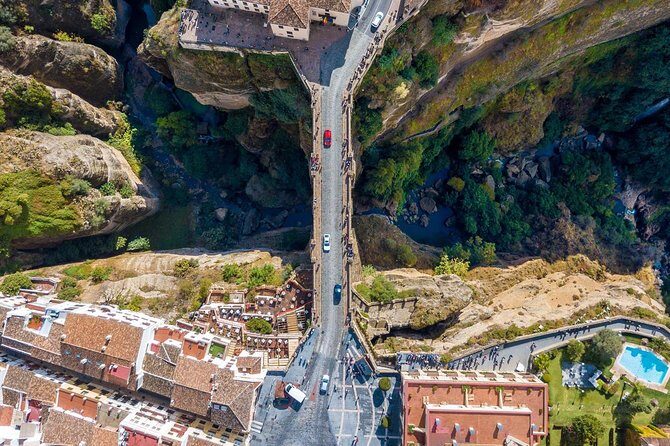
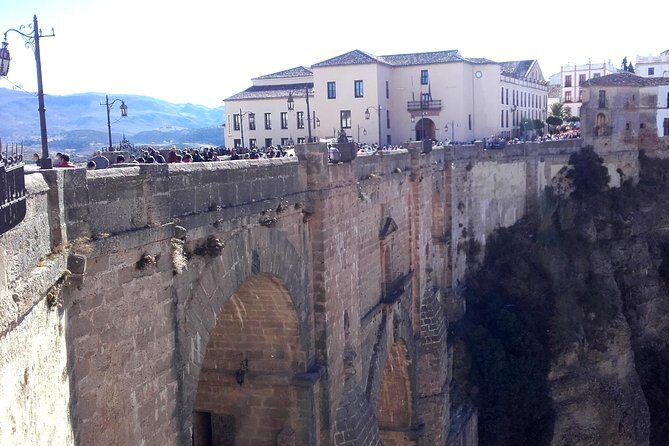
From these gardens, you’re set up for some of the most famous Ronda perspectives: Puente Nuevo and Puente Viejo. Even if you’ve seen photos, being there in person changes the scale. You don’t just see a bridge. You see how the gorge frames the city, and how the bridges connect two sides of a deep cut.
Right after that, you stop near Casa del Rey Moro, also free, for around 10 minutes. This is where your guide’s explanations matter. The House of the Moro king is tied to important water mills hidden in the area. Even with a short stop, it gives you a sense that Ronda’s story is not only about buildings on cliffs. It’s also about water, engineering, and how people adapted to the terrain.
Stop 4: Banos Arabes for Arab baths, documentary context, and practical expectations
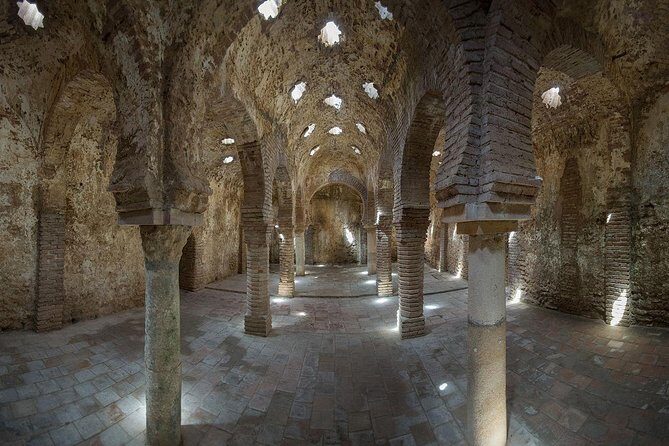
Next is Banos Arabes. Plan for about 45 minutes, and note that admission is not included.
This is one of those stops that works best when you want atmosphere and context, not just outdoor views. Inside the monument, there’s a documentary about the history of the building and the Arab history of Ronda. That documentary setup can help you connect earlier stops to what you’re seeing now—why the site looks the way it does, and how it fits into Ronda’s past.
Because the ticket is not included, you’ll want to budget extra here. If you’re the type who loves structured indoor history, you’ll probably feel the time is worth it. If you prefer mostly outdoor scenery, you may treat this as optional-energy time and keep your pace easy.



Stop 5: Alameda del Tajo promenade for the “romantic edge” feeling
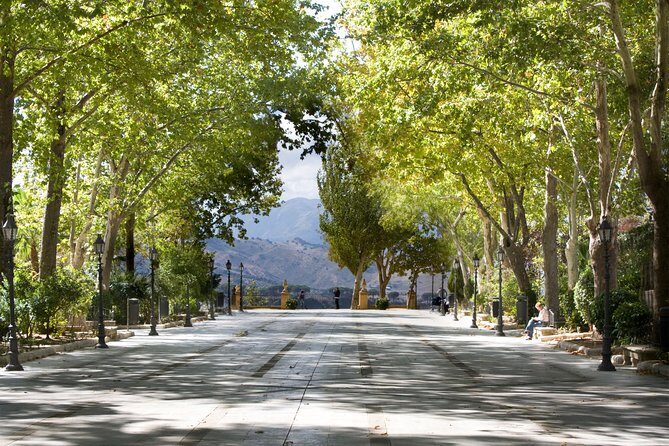
Alameda del Tajo is next, around 20 minutes, and admission is included.
This is a tree-lined promenade along the edge of the Tajo cornice. The payoff is panoramic. Your guide covers Ronda’s history and also the romantic travelers who stood near this same drop-off to take it all in.
What I like about this stop is how it slows the day down. After bridges and indoor history, you get open air and a gentle walking rhythm. You can take photos, but more importantly, you can actually look—down into the gorge and across the Serranía de Ronda region.
Stop 6: Plaza de Toros de Ronda and the two included monument tickets
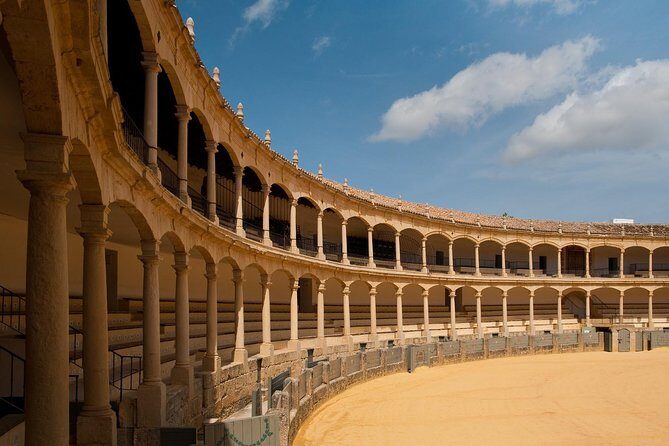
Now for a classic Ronda experience: the Plaza de Toros. It’s about 1 hour, and admission is included—but with a twist.
You get two tickets for monuments to choose from in Ronda, and Plaza de Toros is one of the choices. It’s also described as the oldest bullring in Spain, and the visit includes the museum area.
This is a smart inclusion for two reasons. First, bullrings are easier to appreciate when you understand how they fit into local culture and architecture. Second, the museum time can turn what might seem like a simple landmark into something more substantial.
If you’re choosing the second monument ticket, pick based on your interests. If you love architecture, select the site that best matches that mood. If you want a lighter break, pick something that doesn’t require intense walking after the morning climbs.
Stop 7: Setenil de las Bodegas for houses built into the rock
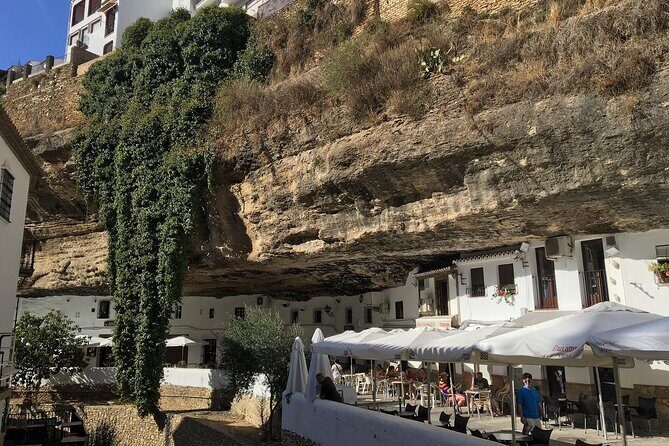
On the way back to Seville, you stop at Setenil de las Bodegas. You’ll have about 30 minutes, and admission is free.
Setenil earns its place fast. The town is famous for white buildings carved into rock. When you walk a short stretch here, you feel the geography driving the architecture. It’s not just scenic. It’s practical—and a little mind-bending.
This is also a great last-photo stop because it looks different depending on where the sun hits. Even with limited time, you’ll get enough variety for it to feel like more than just a quick stop.
Stop 8: El Tajo de Ronda viewpoints for the guide’s geology and story
The final Ronda stop is El Tajo de Ronda, about 25 minutes, and admission is included.
This is a nature and viewpoint finish, with an explanation that’s both historical and geological. The idea is to help you understand why the gorge and cliffs look the way they do, instead of just treating them as dramatic scenery.
I like this kind of closing moment because it pulls the day together. After you’ve seen bridges, promenades, and monument areas, the geology explanation puts the whole structure of Ronda into context. You can see how the city relates to the ground beneath it.
What you’ll actually be doing all day (walking and pacing)
The tour is listed for travelers with moderate physical fitness. That doesn’t mean you’re hiking for hours, but you do have a lot of movement in short blocks: Cuenca Gardens, promenades, viewpoint time, plus the Ronda monument visits.
You’re usually looking at 15–45 minute segments, not long guided lectures. So the day tends to work best if you keep your pace relaxed and use your guide’s commentary as “the thread” while you walk.
If you get tired easily, plan to take your breaks as soon as you arrive somewhere new—don’t wait until you’re already overheated. Carry water, wear shoes with good grip for stone surfaces, and consider light layers for shade changes.
Guides make or break this kind of day
This is where the reviews you provided strongly point. Guides like Miguel and Alfonso show up repeatedly for a reason: they connect the dots. One of the most praised parts is how the guide handles the day, slows down when needed, and explains both local Spanish history and what you’re seeing in front of you.
That matters because this isn’t just a sightseeing loop. You’re bouncing between different types of places: viewpoints, water-mill references, Arab baths, and the bullring museum. A good guide turns them into a coherent story.
The flip side is that on any day-trip format, you can’t control everything. Some people have reported issues with transport condition or with how much historical commentary they were able to hear over noise. My practical advice: if something seems off—vehicle noise, unclear meeting signage, or time pressure—bring it up calmly right away so the guide can adjust.
Price and value check for $264.31 per person
At $264.31 per person, this tour costs more than a basic hop-on bus day. The value comes from what’s included and what’s built into the day.
Here’s the value math in plain terms:
- You have air-conditioned transport and private transportation, so you’re not wrangling public transport across multiple towns.
- The day includes a driver-guide who handles navigation and explanations during viewpoint time.
- Some admissions are already covered (Alameda del Tajo, Plaza de Toros choice, El Tajo de Ronda).
- Several stops are admission-free (Zahara de la Sierra, Cuenca Gardens, Casa del Rey Moro, Setenil de las Bodegas).
What’s not included is also clear: lunch and tips, and the Banos Arabes admission ticket.
So the question becomes: do you want guided structure and included entries, without the hassle of planning transport and admissions yourself? If yes, this is likely a solid deal. If you’d rather roam independently and you already know how to structure your own Ronda and Setenil route, you might be able to spend less. But you’ll also be giving up the small-group pacing and guided context that many people say is the best part.
Also, the tour is commonly booked about 50 days in advance. If your travel dates are fixed, it’s smart to reserve early so you’re not stuck later with fewer options.
Lunch reality: plan for it or you’ll feel rushed
Lunch isn’t included. That’s the biggest practical thing to plan for on a 9-hour day.
In Ronda, you’ll be moving from viewpoints to monuments. If you wait until you feel hungry and then start searching, you’ll probably feel time pressure. The best approach is to stay flexible: ask your guide for timing and keep your expectations realistic. You can absolutely enjoy the day, but you should assume lunch will be more about managing your schedule than about settling into a perfect long meal.
If you’re picky about where you eat, consider bringing a snack so you’re not stuck waiting. Then use the official lunch time to sit down and recover your energy.
Who this tour suits best
This tour fits best if you:
- Want Ronda’s viewpoints plus white village scenery in one day.
- Prefer a small group (max 8) and guided explanations over self-guided wandering.
- Like a structured day with included admissions rather than building your own route.
It’s less ideal if you:
- Need lots of downtime or hate walking around viewpoints.
- Want lunch to be guaranteed and fully planned, because lunch isn’t included.
Should you book Ronda and White Villages from Seville?
I’d book it if your priority is seeing Ronda’s cliff-edge highlights without dealing with logistics. The small group size, air-conditioned ride, and guided stops make it feel efficient while still giving you time to look out and take photos.
I’d think twice if you’re counting on Banos Arabes to be a major part and you don’t want to pay extra for that admission, or if you want total control over lunch timing. In that case, you may want a more independent plan.
If you do book, do yourself one favor: wear comfortable shoes, show up a little early, and keep your day flexible around lunch. Then the focus stays where it should—Ronda’s gorge views, the White Villages vibe, and the kind of guided context that turns the day from sightseeing into understanding.
FAQ
How long is the Ronda and White Villages tour from Seville?
It’s about 9 hours.
What time does the tour start, and where is the meeting point?
The tour starts at 9:00 am at Sevilla Moving, C. Luis Montoto, 19, Local Bajo, 41003 Seville, Spain.
How many people are in the group?
The tour has a maximum of 8 travelers.
Is the tour offered in English?
Yes, it’s offered in English.
What’s included in the price?
Included are an air-conditioned vehicle, a driver-guide, and private transportation. Some monument admissions are included on the day.
Is lunch included?
No, lunch is not included.
Which admissions are free, and which are not?
The stop at Zahara de la Sierra is free. Cuenca Gardens and Casa del Rey Moro are free. Setenil de las Bodegas is free. Banos Arabes requires an admission ticket that is not included. Alamenda del Tajo and El Tajo de Ronda include admission. Plaza de Toros is included as part of two monument ticket choices.
Do I need to bring a paper ticket?
You’ll receive a mobile ticket.
Is there walking involved?
Yes. It’s listed for travelers with moderate physical fitness.
Is the tour refundable if I cancel?
No. This experience is non-refundable and cannot be changed for any reason.