REVIEW · SEVILLE
From Seville: Italica Roman City Tour
Book on GetYourGuide →Operated by GRANAVISION Incoming & DMC · Bookable on GetYourGuide
Roman ruins leave a big impression fast. This 4-hour Seville outing takes you to Italica, Spain’s first authentically Roman city, founded in 206 B.C. and tied to emperors Trajan and Hadrian. You’ll also see the amphitheater that could hold 25,000 people, plus the Roman theater area in Santiponce.
I especially like how the tour balances big-picture storytelling with hands-on details you can actually see: mosaic floors, the Traianeum area, and carved statues including Diana, Venus, and Trajan. Guides such as Jose Luis and Alberto stand out in the way they explain what you’re looking at, and how to picture daily Roman life in these spaces.
One thing to consider: you won’t have much time to wander on your own, and some departures run with larger groups, so hearing every explanation can take a bit of effort. If you’re craving quiet, slow exploring, plan to be comfortable following the pace.
In This Review
- Key highlights worth planning around
- From Seville to Italica: a smooth half-day format
- The big reveal: walking Italica’s old Roman streets
- Founded by Rome, elevated by emperors
- Houses, public buildings, and the kind of detail ruins can still show
- Mosaic floors and civic monuments you can actually spot
- The Traianeum and standout statuary
- Amphitheater time: why Italica is famous for its size
- The Roman theater in Santiponce: partially reconstructed, still understandable
- The pace, the group size, and how to get the most out of the guide
- Extras and meals: what costs extra, what doesn’t
- Weather and comfort tips that actually help
- What kind of traveler should book Italica from Seville
- Should you book this Italica tour?
Key highlights worth planning around
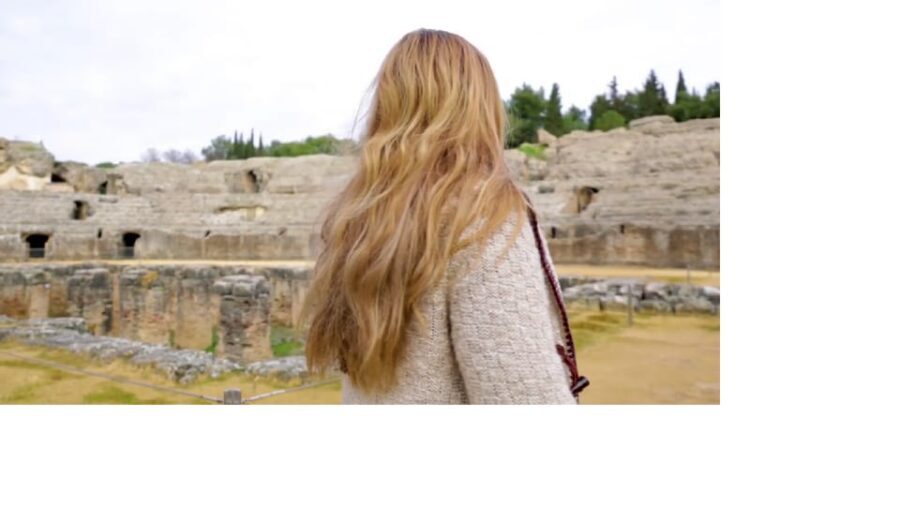
- Italica’s scale and status as Spain’s first real Roman city, founded in 206 B.C.
- The amphitheater with seating for about 25,000, known as the third largest in the Roman world
- Mosaics and major monuments you can spot in the Archaeological Ensemble
- Traianeum and statuary including Diana, Venus, and Trajan
- A look at the Roman theater in Santiponce, partly reconstructed so you can understand the layout
- Guides who bring the site to life in Spanish and English, with extra languages available on request
From Seville to Italica: a smooth half-day format
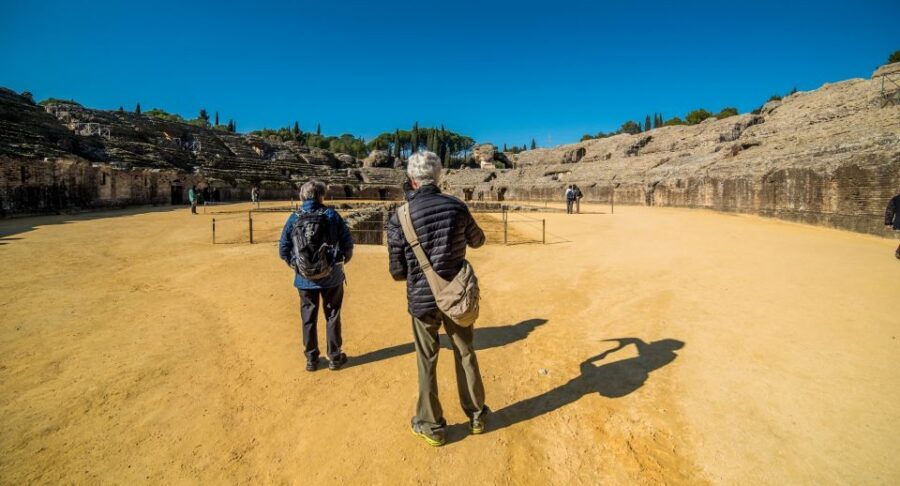
This is a practical 4-hour tour built around minimizing your hassle. You’re picked up in central Seville from one of three locations: Calle Rastro 12A, Hotel Don Paco, or Calle Trajano 6. Then you ride by coach for about 30 minutes to Santiponce, where Italica sits.
Why that matters for your day: Italica is close to Seville (about 15 minutes by road), but arranging your own transport and lining up tickets can eat into time. Here, round-trip transportation and entrance are included, and the tour also includes skipping the ticket line. That means more of your limited time is spent inside the archaeological zone, looking at the things you came for.
You can also read our reviews of more city tours in Seville


The big reveal: walking Italica’s old Roman streets
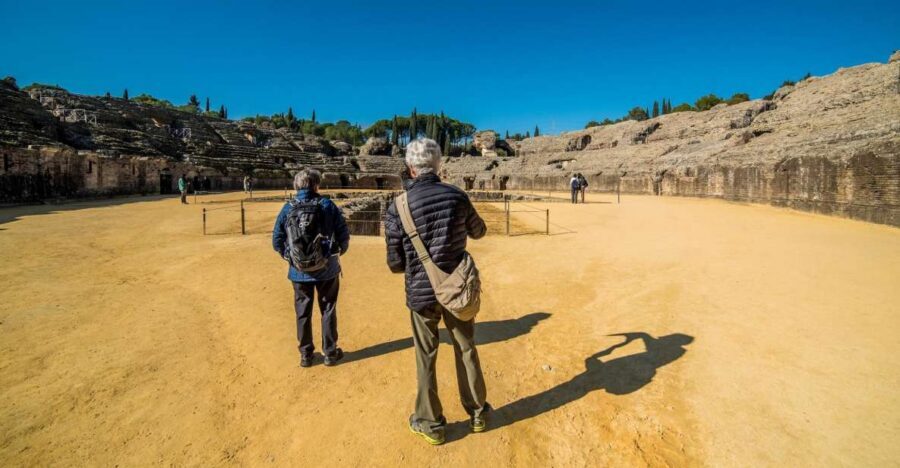
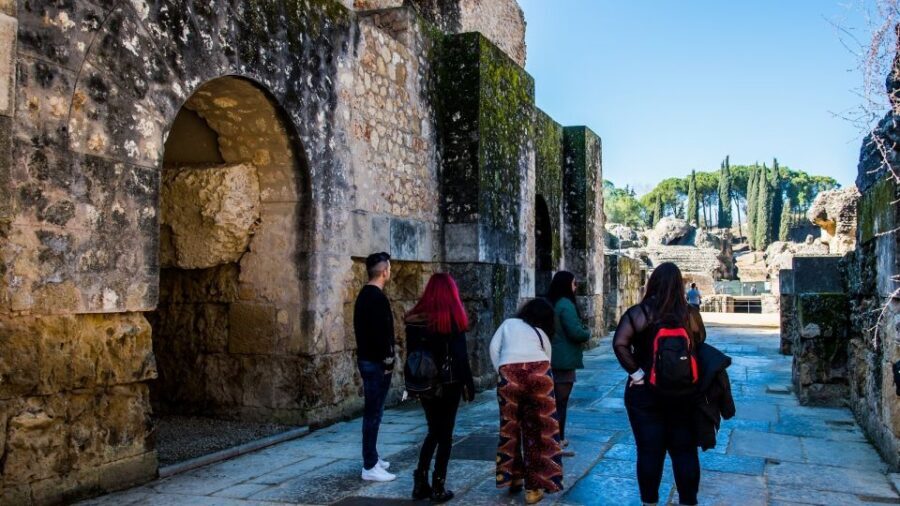
Once you arrive, the main guided portion runs for about 3 hours. Italica is an archaeological ensemble, which means you’re not just seeing one monument. You’re walking through an entire Roman city footprint—houses, public spaces, and key civic areas.
This is where the tour earns its keep: you get help turning ruins into a city. Instead of just looking at stone walls and partial remains, you’re guided to the right spots and given context for what each area likely did in everyday life.
Founded by Rome, elevated by emperors
Italica was founded in 206 B.C. by Roman general Publius Cornelius Scipio Africanus. It later became famous as the birthplace of emperors Trajan and Hadrian. You’ll hear this more than once because it links the site’s layout and prestige back to Rome’s power in Hispania.
If you like seeing how Roman influence really took root outside Italy, this helps. You’re not looking at a distant imitation. You’re looking at a city that grew into something important enough to produce rulers of the empire.
Houses, public buildings, and the kind of detail ruins can still show
The guided walk includes the old streets and the uncovered remains of houses and public buildings. The exact degree of preservation varies across the ensemble, but the point is consistent: you can still track where people lived, where civic activity happened, and where visitors would move through monumental areas.
Even if your Roman knowledge is basic, you’ll have plenty to grab onto. The tour focuses on the parts where details survive.
Mosaic floors and civic monuments you can actually spot
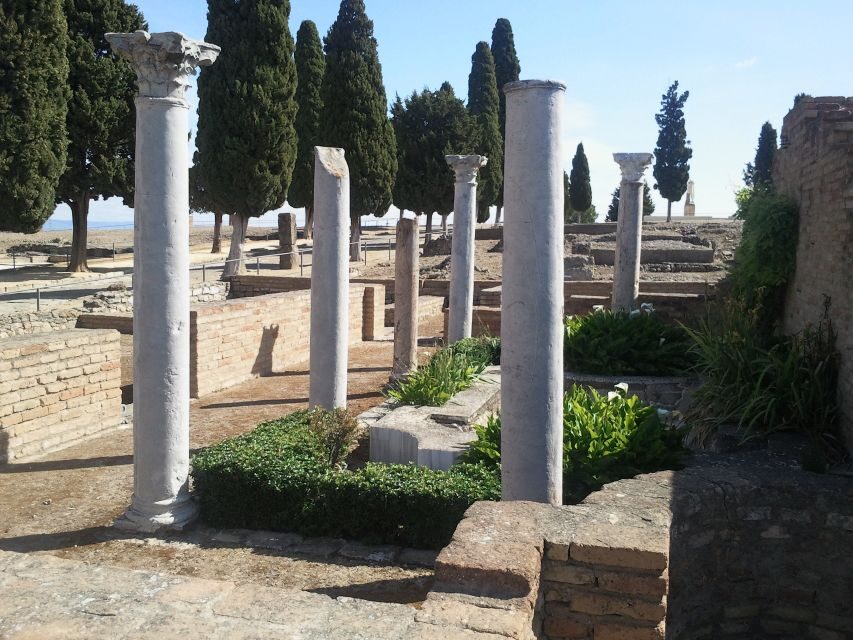
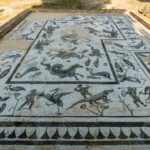
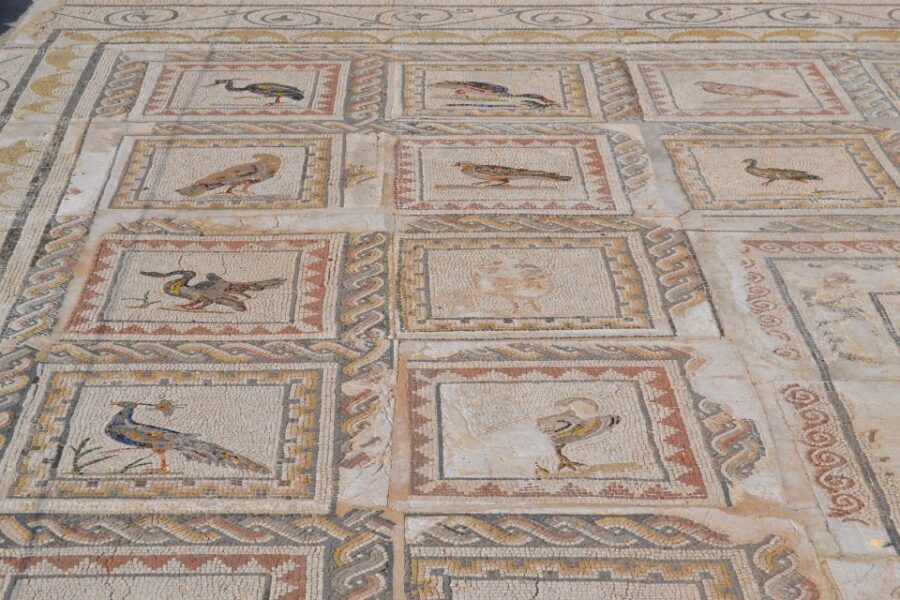
One of the most praised moments is the mosaic work. You’ll see mosaic floors in the uncovered house areas, and they’re the kind of find that makes you pause. Not because they’re perfectly intact everywhere, but because they’re visually strong and easy to understand as a display of taste and wealth.
Here’s what I like about this stop from a value perspective: mosaics are the fastest way for non-experts to feel what the Romans cared about. You don’t need a lecture to appreciate that these floors weren’t accidental. They were art placed in daily movement spaces.




The Traianeum and standout statuary
The tour also includes the Traianeum and notable statuary associated with it—statues of Diana, Venus, and Trajan. If you’ve ever wondered how Roman religion, politics, and public messaging overlapped, the combination of monuments and the names attached to them is a big clue.
The best part of having a guide here is learning what to look for. Without guidance, you may walk past areas that feel similar. With a good guide, those same stops turn into landmarks.
Amphitheater time: why Italica is famous for its size
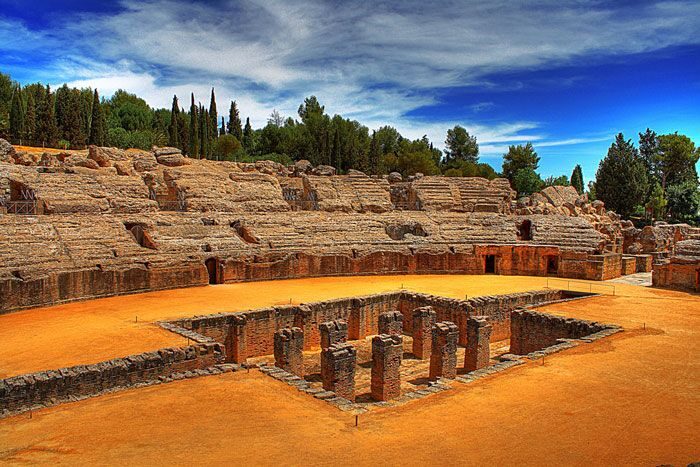
Your biggest visual payoff is the amphitheater. It’s famed as the third-largest amphitheater in the Roman world, with seating capacity around 25,000. When you’re standing near it, the numbers help your brain scale up what the site was built to do: hold crowds for spectacle.
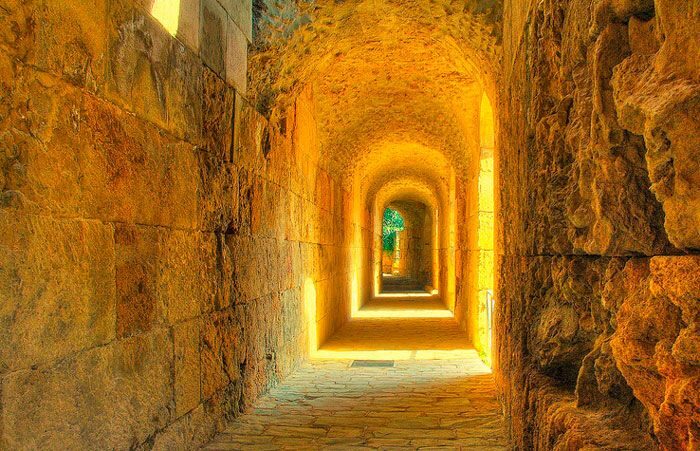
In several guides’ explanations, you get more than just the size. You learn how the space worked, where people would have been seated, and how the monument reinforced civic status. You may also get a chance to walk through tunnels under the seating area—an experience that many people specifically call out because it feels like stepping back into how the building functioned behind the scenes.
I’d treat the amphitheater as your anchor moment. If your feet are tired later in the tour, having this as the highlight means the day still feels worth it.
The Roman theater in Santiponce: partially reconstructed, still understandable
Not far from the amphitheater area, you’ll see the Roman theater in Santiponce. It’s partly reconstructed, so you can better understand the original layout and how performances would have been staged and viewed.
This stop is useful even if you’re not a theater person. Roman theaters weren’t just for entertainment; they were public architecture for community identity. A reconstructed section helps you grasp the geometry, the sightlines, and the relationship between stage and audience.
If you’re the type who loves architectural reading, this part can be especially satisfying because it gives you structure to visualize what you’re seeing.
The pace, the group size, and how to get the most out of the guide
The tour length is fixed around the time the coach ride and the guided walk require. In other words, it’s designed to be efficient, not slow.
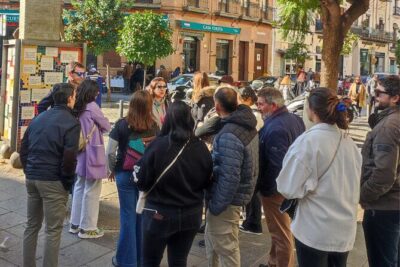
That’s good if you want a straightforward plan. But it can be a drawback if you prefer independent wandering. Some departures run with larger groups, and a few people noted that it can be hard to hear the guide at times. My practical advice: if you’re speaking English or Spanish and want every detail, position yourself where you have the guide in your line of sight.
Also note that the order of visits may shift due to unexpected circumstances. If that happens, it usually means you’ll still cover the key highlights, but the flow can change. It’s a small flexibility tradeoff for having transportation organized.
Extras and meals: what costs extra, what doesn’t
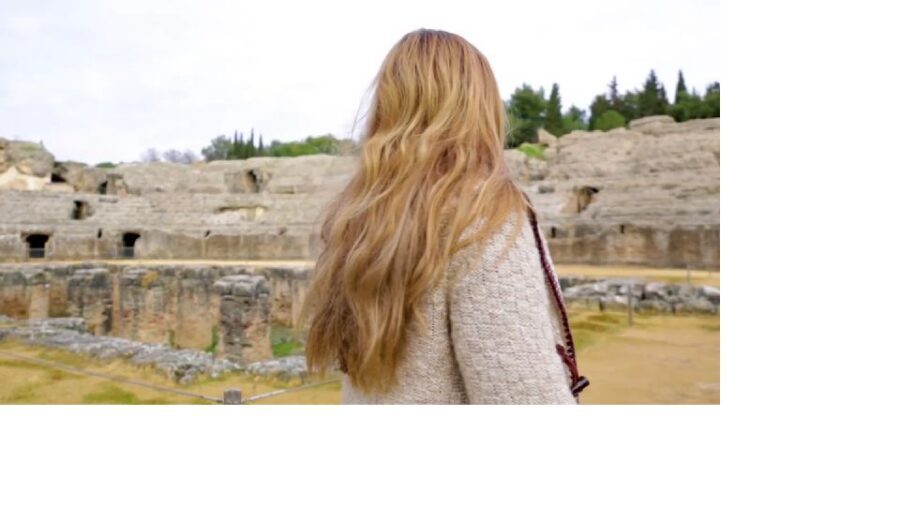
Your ticket includes round-trip transportation, entrance fees, and an official tourist guide. The tour also includes skipping the ticket line, which is a real time saver on busy days.
Lunch is not included. There’s an optional lunch available for €18 if you want to extend your comfort. Some guides also add extra stops on certain departures; a monastery stop came up in multiple accounts, often described as a bonus on the way back. If that matters to you, I’d check the day-of plan with the operator, since the main structure centers on Italica.
Weather and comfort tips that actually help
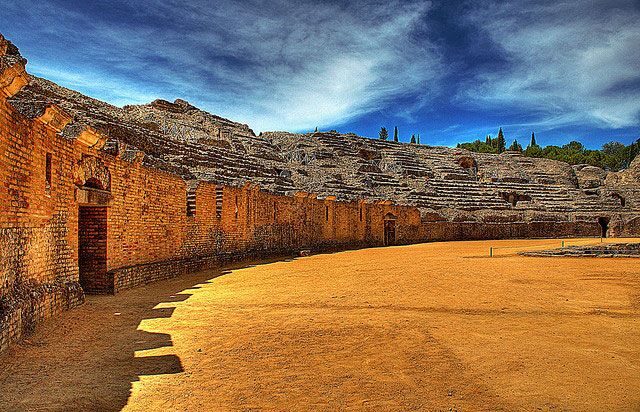
This is an outdoor-and-stone environment tour. Bring comfortable walking shoes because you’ll cover a fair amount of ground on uneven surfaces. If weather is warm, plan for sun exposure. One comment mentioned the weather being manageable, but it’s still smart to show up with water and basic sun protection.
And if you’re traveling with kids, the experience can work, but you’ll want to be prepared for moments when strollers aren’t easy to maneuver continuously. If that’s your situation, plan for short rests and ask the guide where you can pause.
What kind of traveler should book Italica from Seville
I think this tour fits best if you want:
- A classic Roman site without the stress of transportation and ticket timing
- A guide-led experience where someone points out the mosaic work, the Traianeum, and the specific statuary areas
- An efficient way to spend a half day seeing more than just one monument
If you’re the type who likes slow solo wandering and don’t want a schedule, you might feel constrained by the limited free-roaming time. But if you’d rather have context and clear highlights, the structure is exactly what you need.
Should you book this Italica tour?
Yes, if you’re choosing between a day trip option and you want the best value for time: transportation, entrance, and a guided walk are bundled together, and you get to see the amphitheater, theater area, mosaics, and major monument areas in one go.
Book it especially if Italica is on your list for the bigger-than-life reasons—Trajan and Hadrian’s connection, the amphitheater’s scale, or the chance to walk the tunnels under the seating. If you hate group pacing or you want lots of independent exploration, consider adding a little extra buffer time on your Seville schedule or plan a second, lighter visit later.
If you want a Roman city where the guide helps you read the ruins like a map, this one is a solid bet.