REVIEW · SEVILLE
From Seville: Half-Day Guided Bike Trip to Italica
Book on GetYourGuide →Operated by ATD Bike Holidays S.L. · Bookable on GetYourGuide
A Roman amphitheater is better on two wheels. This half-day e-bike trip from Seville links the city’s cycle network with the ruins of Itálica, where Emperors Trajan and Hadrian were born. You also swing through Santiponce, giving you a more human view of the area than you get with a straight bus ride.
What I like most is how the ride stays easy and predictable. The electric bikes take the edge off, and the route leans on bike paths so you’re not stressed fighting traffic. The other big win is the guide quality: people name guides like Rigo and Danny for being friendly and explain-the-why smart, not just read-the-label smart.
One drawback to plan for: even with e-bikes, you’re outside for hours. If it’s cool (or breezy), pack layers—several cyclists noted it can get cold on the ride out and back.
In This Review
- Key highlights at a glance
- Why Itálica is worth your time (and not just another ruins stop)
- The 5-hour flow: how the day actually feels
- From Seville to the countryside: riding on the good roads
- Santiponce: where the tour becomes more than Roman
- Inside Itálica: what to notice when you’re on foot
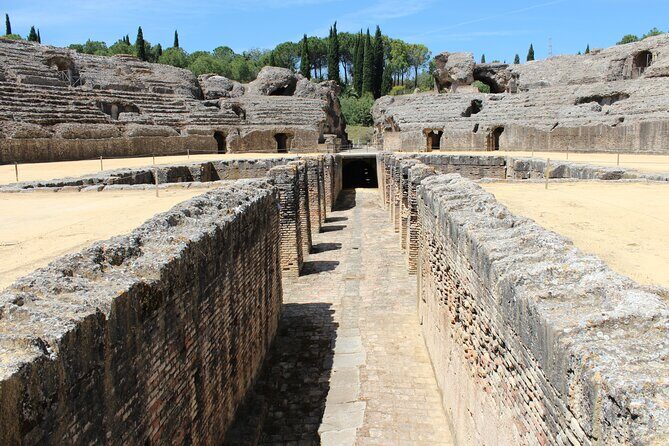
- The amphitheater: where the empire turned spectacle into routine
- Electric bikes in Seville: comfort, safety, and how to plan for the ride
- Price and value: is $53 a fair deal?
- Who should book this bike trip to Itálica
- Should you book this Seville e-bike tour to Itálica?
- FAQ
- How long is the guided e-bike trip from Seville to Itálica?
- Where is the meeting point for the tour?
- What’s included in the price?
- Is lunch included?
- Does the guide speak English?
- Are electric bikes provided?
- Is the tour wheelchair accessible?
- Can I cancel for a full refund?
- Is it possible to reserve now and pay later?
- Is breakfast in Santiponce included?
Key highlights at a glance
- Electric bikes make the ride comfortable without turning it into a taxi
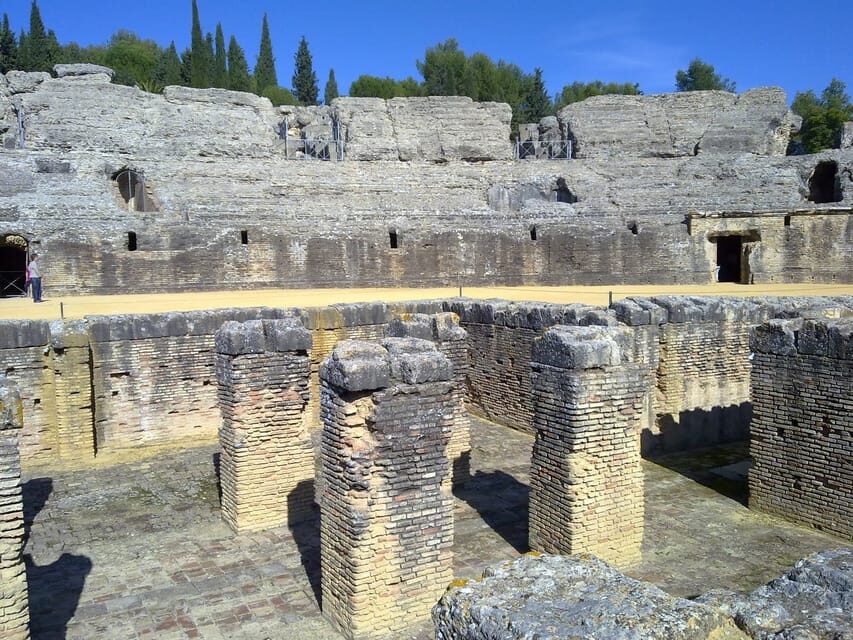
- Itálica’s amphitheater and well-preserved Roman structures
- Santiponce visit for village atmosphere and Andalusian everyday life
- Smooth bike-path routing that keeps things calmer than you’d expect
- A guide-led story that gives context to Trajan, Hadrian, mosaics, and bathing culture
Why Itálica is worth your time (and not just another ruins stop)
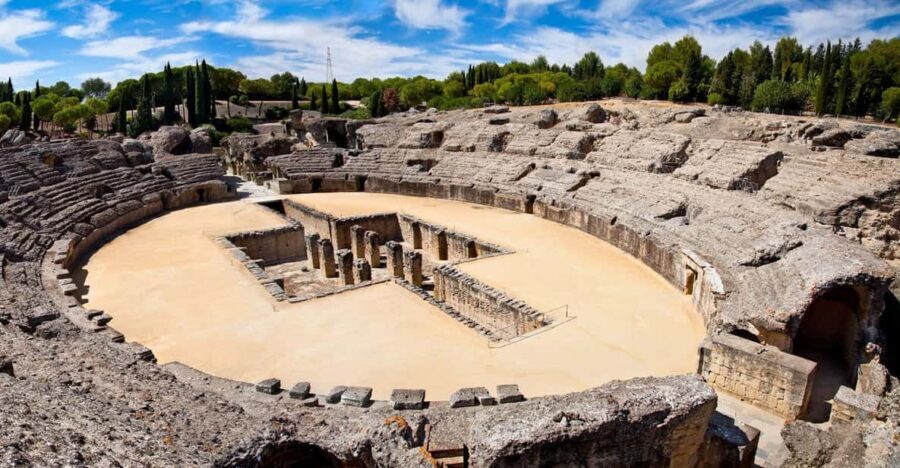
Itálica is one of those Roman sites that feels important even if you’ve never studied Roman history. You’re not just looking at a few broken stones. You’re walking through parts of an old city that still show how people lived—houses with mosaic floors, public buildings, and the big civic showpiece: the amphitheater.
What makes this particular tour smart is the combo. You get the ruins experience, but you also get the journey from Seville as part of the story. By the time you reach the archaeological center, you’ve already transitioned from modern street life to Roman-era geography.
And yes, the names matter. Emperors Trajan and Hadrian were born in this area, which gives the ruins a personal punch: it’s not “a Roman place somewhere in Spain.” It’s a Roman place tied to the people who shaped the empire.
You can also read our reviews of more cycling tours in Seville



The 5-hour flow: how the day actually feels
This is a true half-day outing. The total time is about 5 hours, which is long enough to feel like you left Seville and short enough that you still have energy afterward for tapas and sunset plans.
The overall pacing is built for a bike-and-walk rhythm:
- You pedal or assist on an e-bike out to the ruins area.
- You walk through the archaeological parts with your guide.
- You head back, following a route that’s designed to keep the ride pleasant.
One small-but-valuable detail: the guides often build in moments to reset your brain. You don’t just ride nonstop. Expect stops and explanations that tie the scenery to what you’ll see at each site.
From Seville to the countryside: riding on the good roads
Meeting point is at ATD BIKES shop on a pedestrian street. From there, you’re set up with an electric bike, helmet, bottled water, and a guide who keeps the group moving at a reasonable pace.
Here’s the practical reason I’d choose biking for this route: you get to cover distance without the stress of driving or squeezing into a big vehicle. Several riders specifically note that the bike paths made the journey smooth, and one even highlighted a section that lines up with the Camino de Santiago trail. So you’re not just cycling through boring suburb edges—you’re moving through parts of Andalusia’s outside-the-center rhythm.
Also, you can control how much effort you want. The e-bike support means this doesn’t require hardcore training. Still, you can pedal with moderate effort if you want a little workout. It’s a choose-your-own-intensity setup.
Santiponce: where the tour becomes more than Roman
Santiponce is more than a break in the schedule. It’s a real village stop that helps you understand the living landscape around the ruins of Itálica.
In this part of the experience, your guide shares local traditions and culture. You’ll have time to slow down and look around as a village rather than a backdrop. If you want food before entering the archaeological center, you have the option of a classic Andalusian breakfast at a local place. Important: that breakfast isn’t included in the tour price, so treat it as a nice add-on if you’re hungry.
Why this matters: when you only see ruins, your brain turns everything into “tourist objects.” A village stop helps you switch back to how people live around the site today. It’s the difference between checking boxes and actually understanding context.
Inside Itálica: what to notice when you’re on foot
Once you reach Itálica, the biggest advantage of a guided format shows up. Roman ruins can look like “big piles of history” if you don’t know what you’re looking for. A good guide does two things:
1) explains what you’re seeing, and
2) tells you why it existed the way it did.
At Itálica, the standout is the scale and preservation in the areas that remain visible. You’ll see a Roman city that’s only partially excavated, which makes every surviving structure more valuable. One of the most praised aspects is the mosaics and the layout of houses—many spaces still show mosaics in rooms where you can sense how people moved and gathered.
A few things worth keeping in mind as you walk:
- Watch for the mosaic floors and notice how they sit inside actual rooms, not just museum pieces.
- Pay attention to the public-vs-private feel. Roman city planning shows up in the way spaces group together.
- Look for bathing-related spaces. There’s a massive communal bath-house element at Itálica, and it helps explain Roman social life beyond games and politics.
If you like architecture, you’ll probably love the mix of domestic spaces and civic monuments. If you prefer stories, the guide’s job is to connect those rooms to Roman life—beyond dates and names.
You can also read our reviews of more guided tours in Seville





The amphitheater: where the empire turned spectacle into routine

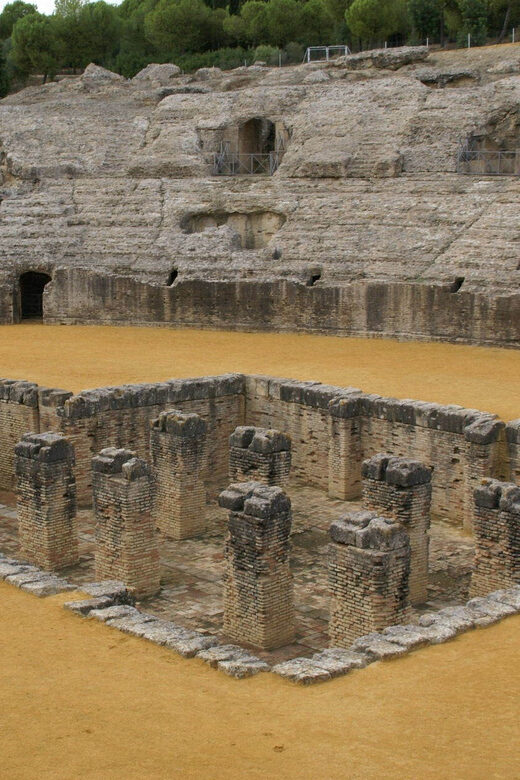
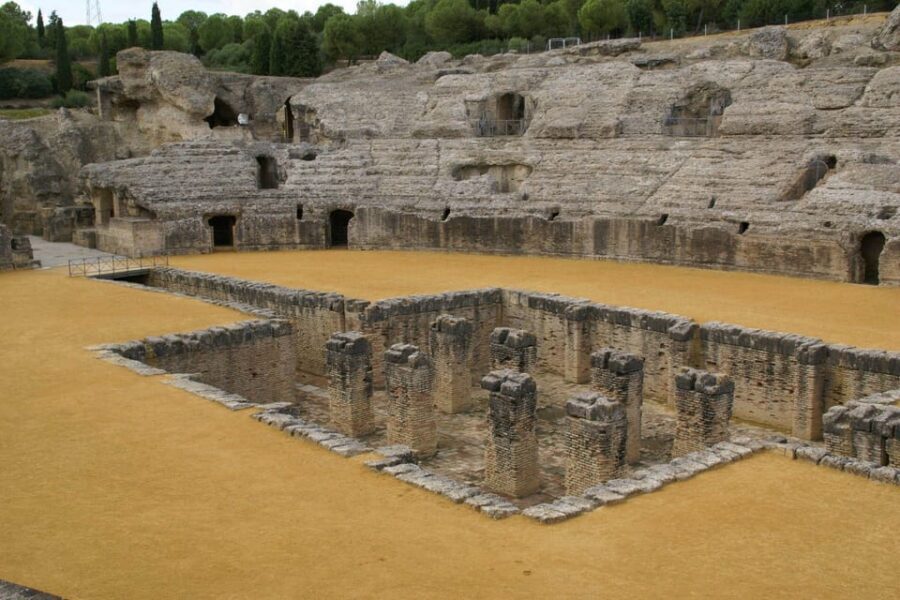
The amphitheater is the star for most people, and it’s easy to see why. This isn’t a tiny local venue. Your guide will frame it as one of the largest amphitheaters in the world, and it’s tied to the gladiator and public-spectacle culture of the empire.
One figure that comes up often is capacity: the amphitheater held around 25,000 spectators. That number is your hint to how Romans designed “entertainment as governance.” Shows weren’t just entertainment. They were a major way power and identity got reinforced.
What I think you should do here: don’t rush the amphitheater area. Stand where the guide points out key entries and waiting spaces. You get a better mental map when you imagine how crowds arrived, where fighters prepared, and how the building guided movement.
And if you enjoy historical realism, the fact that you can walk through key entrances linked with gladiators makes it feel less like ruins and more like a place that once operated daily.
Electric bikes in Seville: comfort, safety, and how to plan for the ride
This tour is built around electric bikes, helmets, and a planned route. That’s the practical equation for a lot of travelers: you still get out of the city, but you don’t need to be a cyclist to enjoy it.
Comfort-wise, multiple riders mention the bikes being in good condition and easy to ride, which matters because a half-day bike trip needs to feel stable from minute one. Safety-wise, the big win is that the ride uses bike infrastructure rather than forcing you onto the most chaotic roads.
Two planning notes that will save you hassle:
- Bring layers. Even in pleasant months, the ride can feel cooler than you expect once you leave the dense city blocks.
- Wear comfortable clothes you can move in. Gloves can help if you feel the chill on longer stretches, especially early or late in the day.
Price and value: is $53 a fair deal?
At $53 per person for a 5-hour guided e-bike tour, this sits in the “worth it” category if you want both sightseeing and reduced transport friction.
Here’s what you’re paying for in practical terms:
- The e-bike rental is handled for you, plus helmets and bottled water.
- You’re paying for a live guide who explains what you’re seeing at Itálica and also helps you understand the areas you pass through.
- You’re getting an efficient half-day format that’s hard to replicate on your own without planning transportation and timing.
Not included: lunch or other food and drinks. That’s normal for this style of excursion, and it also gives you flexibility to eat where you want—especially since the Santiponce breakfast option is available if you decide you want it.
One extra value point: the Itálica site entry itself is described as very low cost in one detailed note (around €1.50). Even if you pay a small fee at the archaeological center, you’re still getting strong value for the guided time and the bike ride.
Who should book this bike trip to Itálica
This tour fits well if you want:
- a hands-on way to see Roman Itálica without turning it into a full-day logistics project,
- an explanation-led visit (especially if you don’t want to play guesswork with ruins),
- an easygoing ride with e-bike support and bike-path routing.
It’s not suitable for wheelchair users, since the activity is built around riding and walking.
You’ll probably love it most if you’re the type who enjoys learning while walking—mosaics, amphitheaters, and Roman daily life. If you only want a quick photo stop and you hate guides, you might find it slightly structured for your taste.
Should you book this Seville e-bike tour to Itálica?
Yes, I’d book it if your goal is a memorable half day that mixes history + motion. Itálica is close enough to Seville to fit easily into a trip, and biking is a smart way to make the route part of the experience instead of just a transfer.
Book it especially if:
- you want help understanding what you’re seeing at Itálica,
- you like the idea of quiet bike paths and an easy pace,
- you’re open to a village stop in Santiponce before the ruins.
Skip it if you hate cool weather outdoors, or if you want a completely self-paced museum-style visit with no guidance.
If you’re flexible, this company also offers convenient terms like free cancellation up to 24 hours ahead and a reserve-now-pay-later option, which makes it easier to lock in a good time slot without stress.
FAQ
How long is the guided e-bike trip from Seville to Itálica?
The tour lasts about 5 hours.
Where is the meeting point for the tour?
You meet at the ATD BIKES shop on a pedestrian street.
What’s included in the price?
Included items are an electric bike, a guide, helmets, and bottled water.
Is lunch included?
No. Lunch and other food or drinks are not included.
Does the guide speak English?
Yes, the live guide provides the tour in English.
Are electric bikes provided?
Yes, electric bikes are included as part of the tour.
Is the tour wheelchair accessible?
No. It is not suitable for wheelchair users.
Can I cancel for a full refund?
Yes, you can cancel up to 24 hours in advance for a full refund.
Is it possible to reserve now and pay later?
Yes. There is a reserve now & pay later option.
Is breakfast in Santiponce included?
You’ll have the option to have a classic Andalusian breakfast in Santiponce, but it is not included in the tour price.