REVIEW · SEVILLE
Monumental Economic tour with booking fee Seville
Book on Viator →Operated by Pancho Tours · Bookable on Viator
Seville feels big until someone gives you the right route. This short 3-hour, English-friendly walking tour helps you orient fast, then layers in legends and stories you may not pick up from a typical self-guided stroll. I especially like how it’s built for first-timers—tight timing, smart central stops, and a loop that makes the map click.
Two things I really like: you get a guide who adds context (not just point-and-shoot facts), and most stops are free to enter, so your cost stays low. The main drawback to plan for is that two big sights—the Real Alcázar de Sevilla and the Catedral de Sevilla—are not included, so you’ll need separate tickets if you want more than a quick look.
In This Review
- Key things to know before you go
- Where the Tour Starts: Plaza de España and a Fast Game Plan
- Puerta de Jerez: The First Landmark That Sets the Scene
- Real Alcázar de Sevilla: A Quick Look With Ticket Reality
- Catedral de Sevilla: When You Need More Time Than Ten Minutes
- Plaza Nueva and Town Hall: A Small Stop With Big Orientation Value
- Puente de Isabel II (Puente de Triana): The Bridge That Links Two Sides
- Real Maestranza de Caballería de Sevilla: Bullfighting History Without the Hassle
- Torre del Oro: A Small Stop That Helps You Read the River Area
- Real Fábrica de Tabacos: The Tobacco Factory Exterior Moment
- Plaza de España: Why the Final Stop Works So Well
- Price and Value: Why $8.43 Can Make Sense in Seville
- Group Size and the Guide Style That Keeps It Clear
- How the Stops Fit Together: A Route Designed for First-Time Orientation
- Who Should Book This Tour (and Who Might Want More)
- Should You Book? My Decision Shortcut
- FAQ
- How long is the Monumental Economic tour in Seville?
- Where does the tour start?
- Where does the tour end?
- What language is the tour offered in?
- Is a mobile ticket provided?
- Is admission included for all stops?
- Which attractions are included for free on the walk?
- How far in advance do people typically book?
- How many people are allowed at most?
- Can I cancel for a full refund?
- Are service animals allowed?
Key things to know before you go
- A smart central loop in about 3 hours, with short photo stops that still add up
- Mostly free sights along the way, keeping the budget-friendly vibe
- Real Alcázar + Cathedral need tickets, so consider buying ahead if you’re keen
- Mobile ticket for a smooth start at the meeting point
- Maximum group size of 100, usually means a lively but not endless walk
- Legends and local stories are part of the point, not just monuments
Where the Tour Starts: Plaza de España and a Fast Game Plan
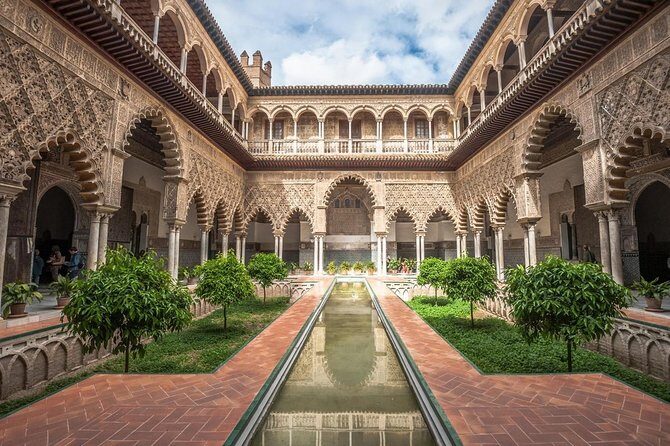
You begin at Plaza de España (41013 Sevilla), and the whole walk loops back here at the end. That matters more than it sounds: it keeps you from zigzagging all over town, and it gives you a clear sense of direction once you’re finished.
Because you’re starting from a major landmark, it’s easier to spot where you are. You’ll also find it convenient that the meeting area is near public transportation, which helps if your day is packed and you don’t want to fight with taxis or long walks through heat.
The pace is built for orientation. You’re not trying to “win” Seville in one afternoon. You’re walking, listening, and learning where the key historic areas sit in relation to each other.
You can also read our reviews of more tours and experiences in Seville.


Puerta de Jerez: The First Landmark That Sets the Scene
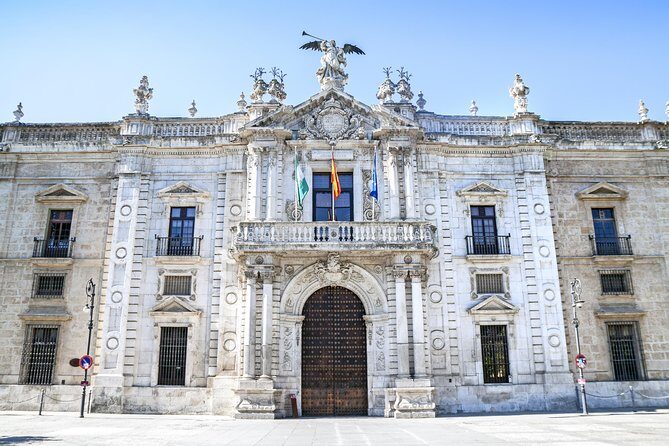
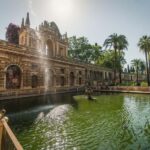
Your first stop is Puerta de Jerez. Even with only a few minutes, it works as a kickoff because it’s a recognizable gateway that signals you’re stepping into the older layers of the city.
This stop is also a good reminder that Seville isn’t only about big-ticket monuments. A place like Puerta de Jerez helps you understand the city’s structure—how gates, streets, and nearby districts connect.
Time is short here (around five minutes), so treat it like a “get oriented” checkpoint. If you need great photos, angle yourself quickly and then shift focus back to the guide’s story.
Real Alcázar de Sevilla: A Quick Look With Ticket Reality
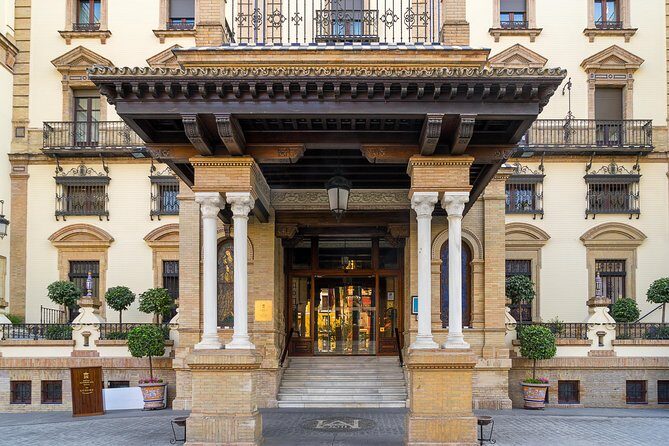
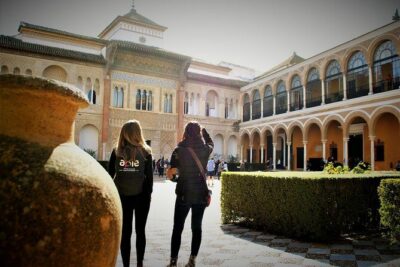
Next up is the Real Alcázar de Sevilla, with about ten minutes on site. This is one of Seville’s headline destinations, so even a brief stop can help you understand why people rave about it.
The catch: admission is not included. That means you’ll likely get an exterior/overview moment rather than a full inside visit during this tour. If the Alcázar is high on your list, plan to come back on a separate outing (and consider booking a ticket ahead when you can).
In a tour like this, the value is not finishing every room. It’s seeing enough to know what you want to see more of later. Use the time to note what feels interesting—gardens, architecture, or the mood of the place—so your follow-up visit is more targeted.
Catedral de Sevilla: When You Need More Time Than Ten Minutes
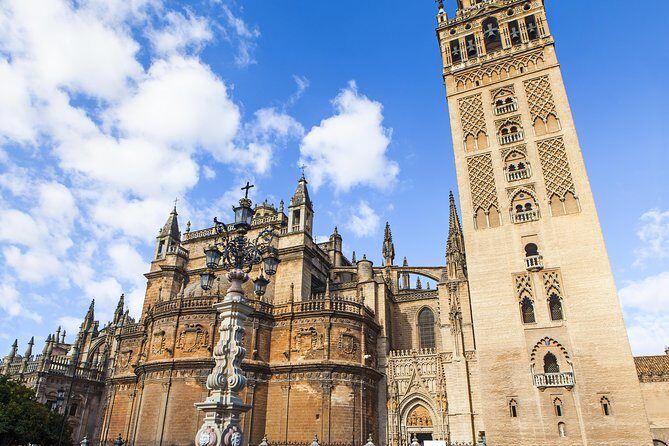
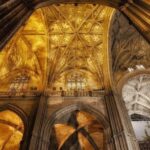
The Catedral de Sevilla is another “big one,” with about ten minutes included and no admission ticket included. This is where the tour’s design becomes clear: it’s not trying to replace a full museum visit. It’s giving you the shape and feel of the site in a short window.
Even if you don’t go inside during the tour, standing there helps you connect the cathedral to the surrounding historic streets. You start to see how Seville’s center is set up for walking and wandering.
If you want the cathedral experience in full—chapels, details, and the long look—this tour won’t be enough by itself. What you’ll get is a helpful, guided introduction that makes a future ticketed visit feel less overwhelming.
Plaza Nueva and Town Hall: A Small Stop With Big Orientation Value
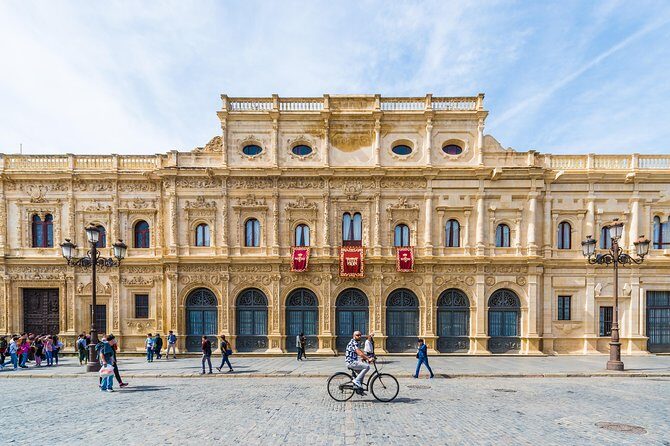
You’ll then reach Plaza Nueva, near the town hall area, with about five minutes. Stops like this are underrated. They break up the heavier monuments and give your feet and brain a reset in a central square.
A plaza stop is also where the guide’s stories often click. Squares are where everyday life happens, and in Seville that’s especially true—people flow through these spaces on their own schedules, and you can feel the city’s rhythm even during a structured walk.
Take a moment here to look around. If you can, locate the direction of your next major landmark in your head. By now, you should be able to “draw the route” mentally, which is the point of an orientation tour.





Puente de Isabel II (Puente de Triana): The Bridge That Links Two Sides
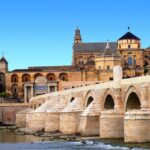
Next is Puente de Isabel II, also known as the Puente de Triana, in the Triana area. You get about seven minutes. Bridges are perfect for a short stop because you’re changing perspectives: city on one side, another neighborhood identity on the other.
Even without lingering, this helps you understand where Triana sits relative to the rest of the historic core. It’s also a naturally photogenic pause—plus it’s a mental breathing space between major monuments.
In practice, aim to stand where you can look both directions. If you only photograph one angle, you’ll miss the “map lesson” the bridge can teach.
Real Maestranza de Caballería de Sevilla: Bullfighting History Without the Hassle
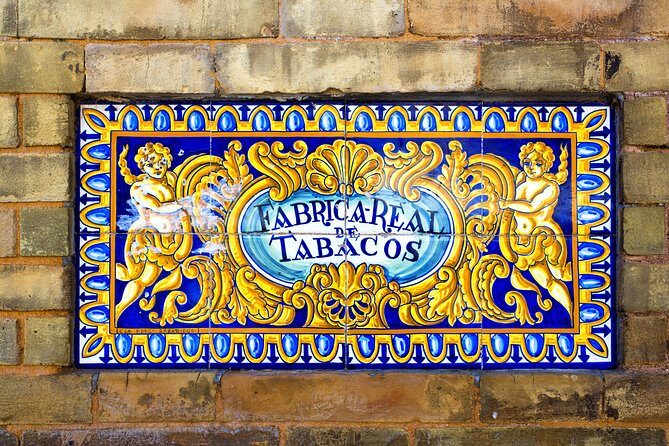
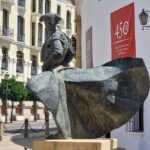
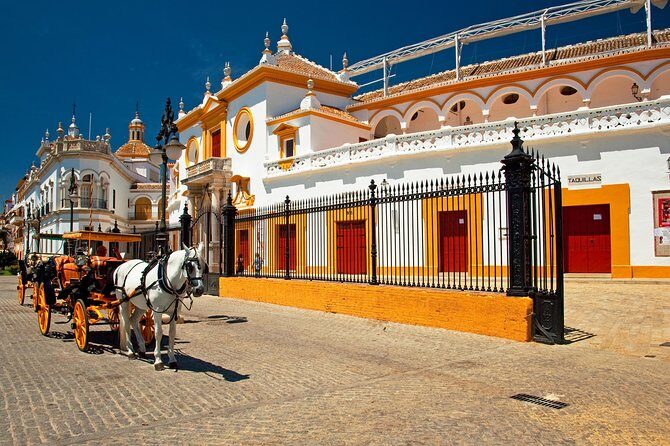
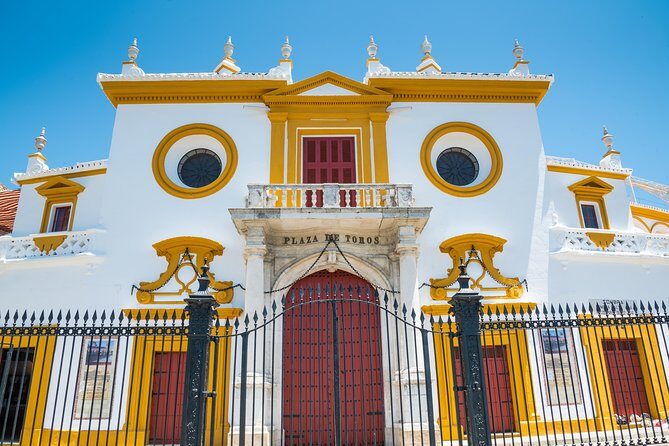
Then you arrive at Real Maestranza de Caballería de Sevilla, the bullring area. The stop is about five minutes, and admission isn’t listed as part of this tour.
This quick view can still be useful. It shows you that Seville’s culture has layers beyond churches and royal palaces. Even if you don’t plan to attend a bullfight, the building and its location help you understand local identity—tradition, ceremony, and community events.
Because the time is short, don’t expect a full explanation of everything surrounding the institution. Instead, think of this as a cultural landmark checkpoint. You can always research more later if it genuinely interests you.
Torre del Oro: A Small Stop That Helps You Read the River Area
The tour continues to Torre del Oro with around five minutes. This is another good example of why short guided stops work: the tower becomes a “reference point” in your head.
Once you recognize it, you can better interpret the river district and nearby streets when you’re wandering afterward. That’s how this style of tour pays off. You leave with mental anchors, not just photos.
If you’re traveling with limited time, this kind of stop is exactly where an orientation guide is useful—no long ticket line hunting, just a clear, guided snapshot.
Real Fábrica de Tabacos: The Tobacco Factory Exterior Moment
Next comes Real Fábrica de Tabacos (Carmen area) with about ten minutes. This is a compelling stop because it broadens your view of Seville beyond royal and religious architecture.
You’ll be seeing it more as a landmark on the route than as a deep dive into exhibits (since entry details aren’t mentioned as included). Still, taking a few minutes to locate it and hear what it represents can make later self-guided reading more meaningful.
The biggest advantage here is that it adds variety. Your eyes and your brain need different textures after cathedral and palace areas. A factory complex, even from the outside, gives you a different angle on how Seville worked historically—industry and city life, not only monuments.
Plaza de España: Why the Final Stop Works So Well
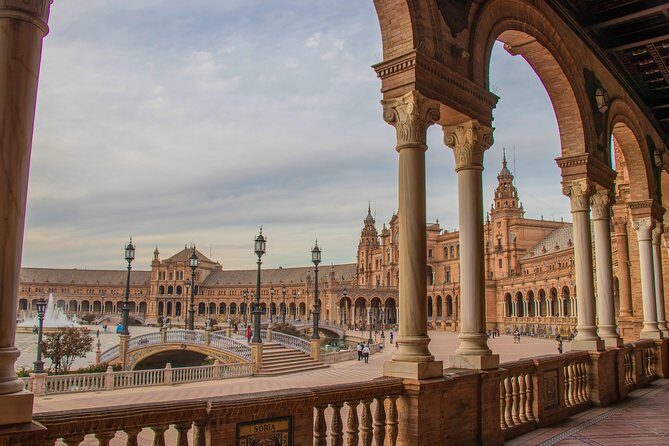
You finish at Plaza de España, with about fifteen minutes. That’s longer than many other stops, and it’s a smart choice because it gives you space to absorb the scale.
If you start here and end here, you naturally compare how your sense of the city changed during the walk. At the start, it’s a meeting point. At the end, it’s a “you understand where you are” moment.
Also, Plaza de España is a great place to slow down for a snack or a coffee afterward. You’re not trapped in a museum timeline. You can keep exploring on your own, knowing you’ve already learned the main connections between key historic areas.
Price and Value: Why $8.43 Can Make Sense in Seville
At $8.43 per person, this tour is priced for travelers who want value without paying museum-level fees upfront. That low cost works because most stops are free or don’t require paid entry during the walk.
The value trade-off is time and depth. You get short, guided looks at big sights rather than full admissions at every stop. But if you’re on a budget, the logic is simple: orientation is often the best first investment because it helps you decide what deserves your paid time later.
If you’re the type who likes planning ahead, you can use this tour to decide your next ticketed visit. If you’d rather wander freely, you’ll still get enough context to reduce the guesswork when you’re walking around after.
Group Size and the Guide Style That Keeps It Clear
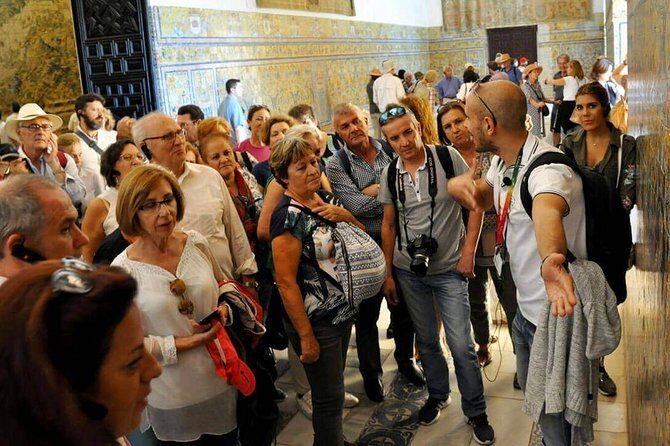
This experience has a maximum of 100 travelers, so it’s not a private stroll. That said, a 3-hour walk with short stops can still feel friendly when the guide uses clear explanations and keeps things moving.
One strongly praised aspect is the guide’s communication style—someone who can explain clearly and answer questions with helpful historical context. There’s also mention of understanding a lot when the guide used a Spanish approach, and that can matter if you’re learning on the go. Even if you booked English, you’ll still benefit from a guide who knows how to turn details into stories you can remember.
My practical advice: bring curiosity and ask one or two questions. This kind of tour works best when you treat it like a guided walking lesson, not a passive parade.
How the Stops Fit Together: A Route Designed for First-Time Orientation
What makes the tour feel “monumental economic” (in a good way) is the way the stops connect.
- Royal and religious landmarks teach you the power centers.
- Squares and bridges teach you the city’s layout and neighborhood transitions.
- Cultural buildings and the tobacco factory teach you that Seville isn’t only about palaces and cathedrals.
By the end, you should be able to visualize how the route you walked relates to the historic center you’ll keep exploring later. That’s where the tour earns its low price: it helps you steer your own time afterward.
Who Should Book This Tour (and Who Might Want More)
This is a strong fit if you:
- are visiting Seville for the first time and want a map in human form
- like guided storytelling with a practical walking route
- want a budget-friendly way to see major landmarks quickly
- don’t need to complete every major site in one day
You might want a different option if you know you want long, detailed visits inside the Alcázar and the Cathedral right away. Since admission isn’t included for those two, you’ll still need separate tickets and time if you want the full experience.
If you’re travel-light and prefer simple logistics, a mobile ticket and near-transport meeting point are also a plus. And since service animals are allowed, it’s a workable choice for many travelers who need that support.
Should You Book? My Decision Shortcut
I’d book this if your goal is orientation first and you want to save your ticket money for the sights you truly want to go inside. The price is low enough that you can treat it like a guided “Seville starter pack,” then build your day around what you discover along the way.
Skip it—or pair it with a second, ticketed visit—if your priority is a deep interior experience at the Alcázar and Cathedral during the same morning. This tour is designed for seeing, learning the route, and deciding what to do next.
FAQ
How long is the Monumental Economic tour in Seville?
It’s listed as about 3 hours.
Where does the tour start?
The meeting point is Plaza de España, 41013 Sevilla, Spain.
Where does the tour end?
It ends back at the meeting point at Plaza de España.
What language is the tour offered in?
It’s offered in English.
Is a mobile ticket provided?
Yes, it uses a mobile ticket.
Is admission included for all stops?
No. Real Alcázar de Sevilla and Catedral de Sevilla are listed as not included. The other stops listed are free.
Which attractions are included for free on the walk?
Puerta de Jerez, Plaza Nueva, Puente de Isabel II (Puente de Triana), Real Maestranza de Caballeria de Sevilla (bullring area), Torre del Oro, Real Fábrica de Tabacos, and Plaza de España are listed with free admission.
How far in advance do people typically book?
On average, this is booked about 12 days in advance.
How many people are allowed at most?
The tour has a maximum of 100 travelers.
Can I cancel for a full refund?
Yes. Free cancellation is available if you cancel up to 24 hours before the experience start time.
Are service animals allowed?
Yes, service animals are allowed.