REVIEW · SEVILLE
Tour Seville Complete and Jewish Quarter Santa Cruz
Book on Viator →Operated by Sevilla&ME · Bookable on Viator
Seville has a way of stacking stories on top of stories, and this walk keeps pace with them. You’ll cover the Historic Center, the heart of la Judería (Santa Cruz), and those high, eye-opening views toward Triana and the river. What makes it work is the mix of monuments you can’t miss and street-level history you usually skip.
Two things I like a lot: you get proper guide storytelling (the kind that makes names and events stick), and you finish with big-picture viewpoints that connect Seville to Triana and the Guadalquivir. The other plus is the value: the itinerary hits major landmarks without inflating the price. One possible drawback: it’s a walking tour with frequent stops, so if you prefer slow museum time, this may feel like a lot of ground in a short burst.
In This Review
- Key highlights worth your attention
- Why this walk feels like Seville’s real story
- Price, time, and group size: the value math
- Meet your route: from Plaza de San Francisco to the Torre del Oro
- Stop 1: Plaza de San Francisco and Seville’s divide
- Stop 2: Placentines and the Giralda photo moment
- Stop 3: Plaza de la Virgen de los Reyes and the Cathedral-Giralda complex
- Stop 4: Palacio Arzobispal and the power-in-architecture vibe
- Santa Cruz / la Judería: the neighborhood that changes how you see Seville
- Stop 5: Plaza de Santa Marta
- Stop 6: Fuente at Plaza de la Alianza
- Stop 7: Plaza de Doña Elvira
- Stop 8: Calle Susona, the legend street
- Stop 9: Calle Vida and the Life-or-Death vibe
- Stop 10: Juderia wrap-up
- Royal Seville and the Giralda icons: power, art, and symbolism
- Stop 11: Plaza Patio de Banderas and Alcázar context
- Stop 12: Puerta del León, meaning in stone
- Stop 13: Archivo General de Indias
- Stop 14: Monumento a la Inmaculada Concepcion
- Stop 15: Giraldillo and the view that can trick you
- Towers, arches, and the Arenal side of Seville
- Stop 16: Torre Abdel Aziz and “photo places”
- Stop 17: Arco del Postigo del Aceite
- Stop 18: Plaza Del Cabildo and the square you don’t skip
- Stop 19: Mercado Artesania El Postigo
- Guadalquivir and Triana: the viewpoint payoff and the walk to Torre del Oro
- Stop 20: Río Guadalquivir viewpoint
- Stop 21: Puente de Isabel II (Puente de Triana)
- Stop 22: Torre del Oro
- What makes the guiding style stand out
- Small practical tips before you go
- Who should book this tour
- FAQ
- FAQ
- How long is the Seville and Jewish Quarter tour?
- Where does the tour start and end?
- Is the tour mainly walking?
- Are tickets and admissions included for all stops?
- How big is the group?
- What if plans change and I need to cancel?
- Should you book this Seville and Jewish Quarter tour?
Key highlights worth your attention
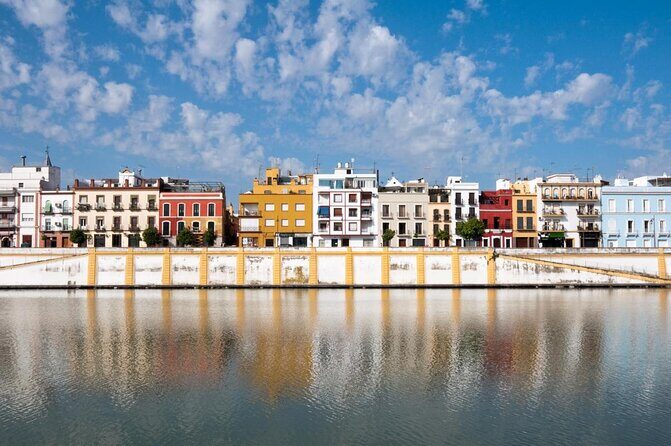
- A tight 2-hour loop that still covers major Seville icons and multiple neighborhoods
- Santa Cruz / la Judería focus, with stops tied to Jewish community life and local legends
- Giralda and Cathedral viewpoints, including photo moments and aftermath stories
- Royal-area checkpoints, from Alcázar-related spaces to the symbolic Puerta del León area
- Guadalquivir and Triana endings, including a prime river viewpoint and the Puente de Triana
- Small-group feel (up to 30 people) that keeps explanations clear
Why this walk feels like Seville’s real story
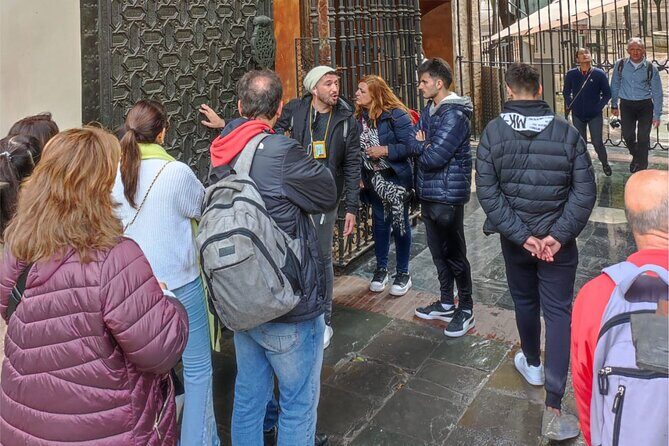
This is the kind of tour that helps you read Seville instead of just looking at it. You start in the center of gravity (old commercial versus monumental Seville), then you slide into Santa Cruz’s quieter corners. By the time you reach the river, the city starts to make sense as a system: religion, power, trade, migration, and memory all in the same streets.
The best part is the way the guide connects places to people. In particular, guides named José and Alejandro show up in the experience history for patient, detailed explanations. You’ll hear stories that go beyond kings and towers, including human stories tied to slavery, artistic apprenticeship, and Jewish life in the city. If you like history you can picture, this is your lane.
You can also read our reviews of more tours and experiences in Seville.


Price, time, and group size: the value math
At $11.86 per person for around 2 hours, the value is hard to argue with. You’re paying for a guide to stitch together a lot of separate sites into one route, including areas where you’d otherwise bounce around with maps. Even if you’re not an “organized tours” person, you’ll likely appreciate how the guide decides what to point out and when.
The tour uses a mobile ticket, which matters because Seville can mean lots of ticket windows and lines. Also, the maximum group size is 30, which usually keeps things from turning into a fast-moving human conveyor belt.
The only consideration is your own pace. With frequent stops (many are around five minutes), you’ll want comfortable shoes and patience for stop-and-go walking.
Meet your route: from Plaza de San Francisco to the Torre del Oro
This tour is structured like a guided timeline you can walk. It begins at Plaza de San Francisco (Pl. de S. Francisco, 17) in the old center and ends at Torre del Oro on the Paseo de Cristóbal Colón. Along the way you cross from the commercial heart to monumental Seville, then spend real time in Santa Cruz, then finish with the river and Triana.
The route also helps you plan your day. You’ll get the “big sights” early enough to still enjoy wandering later. And you’ll end at a spot that’s perfect for a post-tour stroll by the water.
Stop 1: Plaza de San Francisco and Seville’s divide
You start at Plaza de San Francisco, a square that acts like a divider between Seville’s older commercial area and the more monumental zone. Here, the guide ties in the city’s civic side, including a story connected to the local City Hall. This is a smart opener because it tells you what you’re looking at and why you’re there.
Practical note: this is a good place to gather your bearings. If you’re nervous about orientation, use the first minutes to get your “north” straight.
Stop 2: Placentines and the Giralda photo moment
Next up is Placentines, where you walk through tight streets and hear about the collapse of the Giralda. You’ll also get directed toward a best-picture angle of Seville. This is one of those moments where the guide’s local instincts matter more than the monument itself.
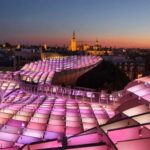
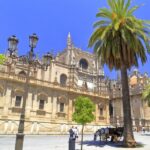



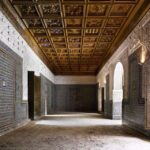
Stop 3: Plaza de la Virgen de los Reyes and the Cathedral-Giralda complex
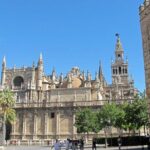
At Plaza de la Virgen de los Reyes, you’re right at the Cathedral attached to the Giralda. The guide’s focus here isn’t just what it looks like. It’s how it fits into the broader history of Seville and how the story of the site was made and finished over time.
If you plan to tour the Cathedral later, this stop helps you “pre-load” what you’ll see. If you don’t, it still gives context to the scale and why people build bigger and grander the moment they claim power.
Stop 4: Palacio Arzobispal and the power-in-architecture vibe
Palacio Arzobispal comes next. The description to listen for is the Horror vacui idea, which you’ll understand when you look straight at the building and notice how visually busy it is. The guide connects that look to how an archbishop could feel out of place in community life, according to the story being told.
Drawback to consider: this stop is not included for admission, so if you were hoping for full interior access, you’ll likely only get the exterior and explanations from the sidewalk.
Santa Cruz / la Judería: the neighborhood that changes how you see Seville
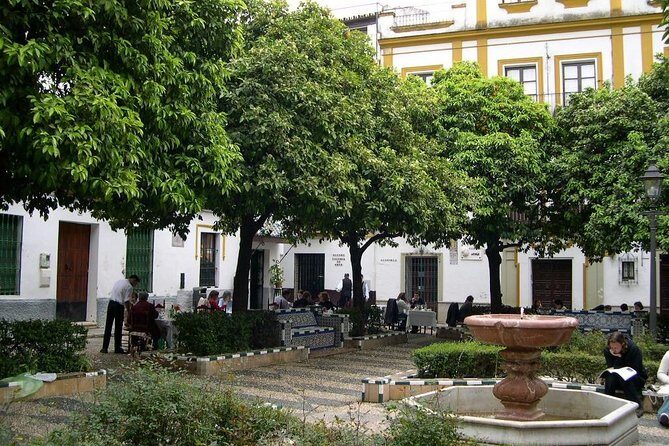
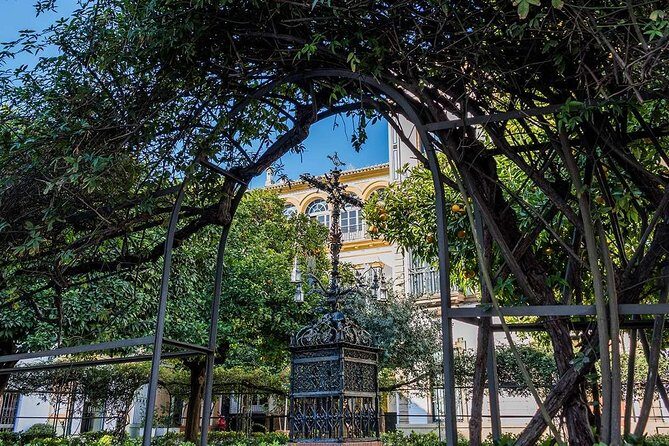
Once you hit Plaza de Santa Marta, the tour finds a different rhythm. Instead of broad monuments, you get a neighborhood viewpoint. This part is what most people come for: Santa Cruz, also called la Judería, the old Jewish quarter.
This segment works because it mixes place names with lived-in meaning. You’re not just hearing “Jewish quarter.” You’re hearing about community life, local stories, and the way Seville’s streets carried overlapping cultures for centuries.
Stop 5: Plaza de Santa Marta
Plaza de Santa Marta is described as a hidden-square moment, and it’s built around the story of one of Seville’s largest Jewish communities. Even if you’ve never studied the details, you’ll hear enough to picture community life in a place you can actually walk through.
Stop 6: Fuente at Plaza de la Alianza
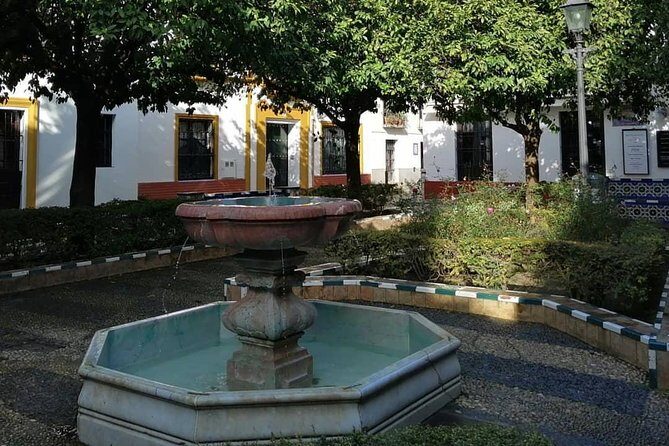
Then you’re at the Fuente in Plaza de la Alianza, where the guide frames Seville as a city of three cultures and connects the square to the idea of many “villages” passing through over time. It’s a place where water, stone, and history meet. You’ll likely pause longer here because it’s easy to look around and feel the layers.
Stop 7: Plaza de Doña Elvira
Plaza de Doña Elvira is a visual payoff. You’re guided to take strong photos of Santa Cruz streets and corners you probably would not find alone. The bigger value, though, is what the guide adds: the minorities of historic Seville and the curious superstitions tied to everyday life.
Stop 8: Calle Susona, the legend street
At Calle Susona, the tour leans into legend and sound. The guide turns the street into a story machine—tuning your senses so you hear and imagine the neighborhood the way locals might have. Expect more “pay attention to details” energy here.
Stop 9: Calle Vida and the Life-or-Death vibe
Then Calle Vida shows up with the other side of the theme: there’s a Muerte street, and you get to decide which crossing you take. It’s playful, but it also underlines how Seville uses language, symbolism, and street-level meaning.
Stop 10: Juderia wrap-up
Finally, Judería gives you the neighborhood finish: after this, you’ll likely notice colors, smells, and street mood more than before. That last impression matters because Santa Cruz can be busy if you’re there at peak times. A guide helps you “lock in” the meaning of what you’re seeing.
Royal Seville and the Giralda icons: power, art, and symbolism
After Santa Cruz, the tour pivots back to major landmarks and symbolic points. This section adds scale: city power centers, official institutions, and art-facing Seville.
Stop 11: Plaza Patio de Banderas and Alcázar context
At Plaza Patio de Banderas, the guide connects the route to the Royal Alcázars of Seville, including how rulers succeeded each other and what they left behind. Even without going inside, the explanation helps you understand why people care about these spaces so much.
Stop 12: Puerta del León, meaning in stone
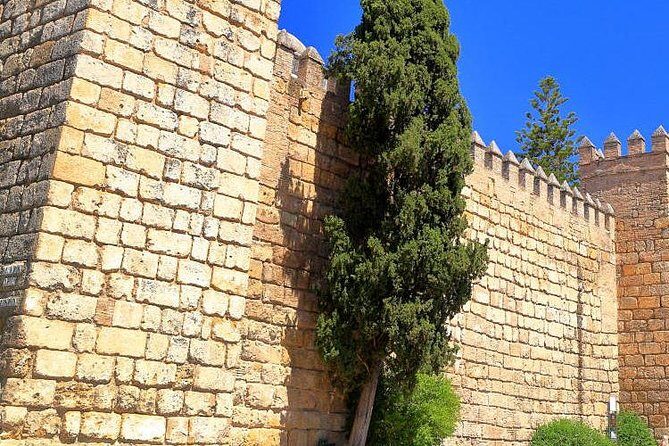
Puerta del León is framed through defense, heraldry, and customs, including the different kings who passed through its walls and where they stayed. This is a good stop for symbolism lovers. It’s also a good stop to slow down if you’re starting to feel tour fatigue.
Stop 13: Archivo General de Indias
Next is the Archivo General de Indias. The guide points out a surprising angle: even today it has the reputation of being linked to pirates, and the story behind that comes from what’s kept there. This is one of those explanations that makes you want to go read more afterward.
This stop is not included for admission, so plan on the explanation and exterior-focused viewing unless you’ve arranged entry separately.
Stop 14: Monumento a la Inmaculada Concepcion
At the Monumento a la Inmaculada Concepcion, the guide pulls Seville’s contradictions into view: crossroads city, painters and artists, Baroque connections, and even a claim about the first marketing campaign in history tied to this context. Even if you don’t catch every term, you’ll get a sense of Seville’s cultural marketing machine—how images sell ideas.
Stop 15: Giraldillo and the view that can trick you
At Giralillo, you’re told to look at the iconic elements up close and to remember that the view can deceive. In other words: don’t assume your first impression from street level matches what the monument really means.
Towers, arches, and the Arenal side of Seville
Now the route heads into areas that balance the grand with the practical. You’re still in the old center, but the mood changes from cathedral power to river-and-trade Seville.
Stop 16: Torre Abdel Aziz and “photo places”
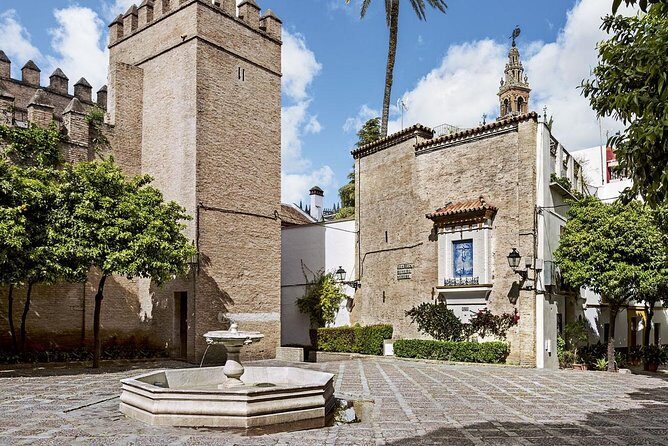
Torre Abdel Aziz is a stop for perspective. The guide teaches you how to spot monument scale from places that look best for photos, and you’ll also learn what to notice about towers, walls, palaces, and houses. It’s less about one single object and more about how to see the whole neighborhood as architecture.
This stop is not included for admission, so you’re enjoying it as a viewpoint and visual education.
Stop 17: Arco del Postigo del Aceite
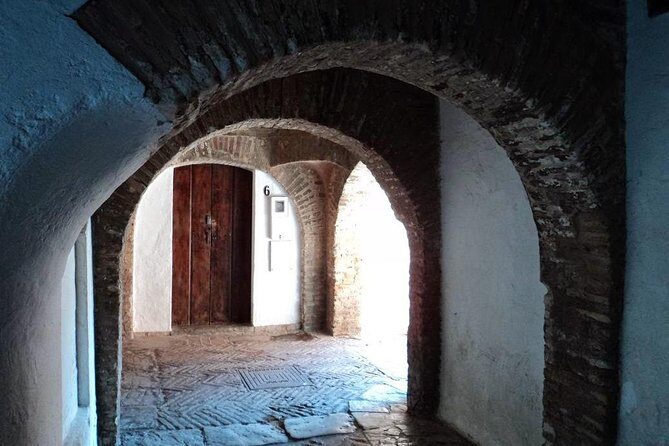
Arco del Postigo del Aceite shows up with a story-driven description: some spots feel like they’re straight out of tales, with “good times and bad times” in the narrative. This stop lists Admission Ticket Included, which suggests at least one portion of what you’ll do here is covered in the experience cost.
If you’re the kind of person who likes payoff stops, this is a good one to be fully present for.
Stop 18: Plaza Del Cabildo and the square you don’t skip
At Plaza del Cabildo, the guide makes the case that if you leave Seville without passing through, you’ll miss a key piece of how it was lived and why it matters. You’ll get a photo-friendly square with a story behind the layout and its role in community movement.
This stop also lists Admission Ticket Included, so it’s worth showing up ready to stop and look carefully.
Stop 19: Mercado Artesania El Postigo
Then you’ll reach Mercado Artesania El Postigo, described as a place where each of the villages that settled here keeps part of their best. It’s a good moment to buy a small souvenir without the “tourist trap” feeling. Even if you don’t buy anything, it’s a useful break in the walking rhythm.
Guadalquivir and Triana: the viewpoint payoff and the walk to Torre del Oro
The tour’s final act is the part people remember most, because it connects Seville to the water. You get a river viewpoint, a bridge crossing, and then the big finish at Torre del Oro—the gold tower vibe that fits the title energy of Seville itself.
Stop 20: Río Guadalquivir viewpoint
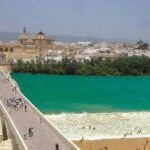
At the Guadalquivir river viewpoint, the guide delivers one of the big promises of this tour: the views are breathtaking, and you get a perspective on Seville and Triana that you might not find on your own. This is where you stop being in “history only” mode and start in “city geometry” mode.
Stop 21: Puente de Isabel II (Puente de Triana)
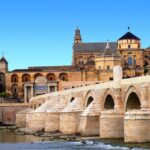
Next is Puente de Isabel II, also known as the Puente de Triana. You get time for photos and the guide ties in pilgrim stories of characters who crossed it. This is also a natural pause to notice how neighborhoods change across the river.
Stop 22: Torre del Oro
Finally, you reach Torre del Oro. The guide keeps the strongest takeaway for the end: once you get there, the understanding comes together. It’s not just a tower. It’s the final visual anchor that helps you make sense of why the river mattered so much.
This stop is not included for admission, so again, you’re likely experiencing it more as a “finish line with meaning” than a full ticketed visit. That said, Torre del Oro’s exterior presence alone tends to land well.
What makes the guiding style stand out
A tour is only as good as the guide’s ability to connect dots. Here, the named guides in the experience history—especially José and Alejandro—show a pattern: they keep explanations clear, patient, and full of detail. You’ll hear stories that people can’t stop thinking about afterward, like silenced lives that later became queens, enslaved apprentices tied to famous art circles, and Jewish love stories of noble households.
If you enjoy local language and legend, Santa Cruz is where it clicks. If you prefer straightforward dates, you’ll still get plenty of structure: the tour is built around specific landmarks and named spaces, so the facts have somewhere to land in your memory.
Small practical tips before you go
- Wear shoes you can stand in for a while. The stops are short, but you keep moving.
- Bring water. Even a 2-hour walk can feel longer in Seville heat.
- If you’re serious about photos, aim to be ready right at the Giralda and river sections, where angles matter.
- Consider saving one of your later wanderings for Santa Cruz after the tour, so the streets make sense on your own.
Who should book this tour
This tour is a great fit if you want:
- a fast orientation to Seville’s main sights
- a real focus on Santa Cruz / la Judería beyond surface-level facts
- a guide who tells stories that feel human, not just dates on a sign
You might want to skip it if:
- you hate walking in tight historic streets
- you want long museum time or deep interior access at each stop (some admissions are not included)
- you prefer quieter pacing with fewer stops
FAQ
FAQ
How long is the Seville and Jewish Quarter tour?
It’s listed as about 2 hours.
Where does the tour start and end?
It starts at Pl. de S. Francisco, 17, Casco Antiguo, 41004 Sevilla, Spain and ends at Torre del Oro on P.º de Cristóbal Colón, s/n, Casco Antiguo, 41001 Sevilla, Spain.
Is the tour mainly walking?
Yes. It’s described as a walking experience through multiple stops across the historic center, including Santa Cruz and viewpoints toward Triana.
Are tickets and admissions included for all stops?
Not all. Some stops say admission is free, while others list admission ticket not included. Some stops list admission ticket included, so you should expect a mix.
How big is the group?
It has a maximum of 30 travelers.
What if plans change and I need to cancel?
Free cancellation is available. You can cancel up to 24 hours in advance for a full refund, and cancellations within 24 hours are not refunded.
Should you book this Seville and Jewish Quarter tour?
Book it if you want the best bargain on Seville storytelling: a compact route with major monuments, a dedicated run through Santa Cruz / la Judería, and a strong finish at the river and Torre del Oro. It’s especially worth it if this is your first or second day in town and you want to understand what you’re seeing before you wander on your own.
Skip it only if you need deep, ticketed interior time at every stop. Otherwise, this is one of the easier ways to leave Seville feeling like you actually learned how the city works.