REVIEW · SEVILLE
Seville: Palacio de Las Dueñas, La Macarena & Las Setas Tour
Book on GetYourGuide →Operated by Naturanda Turismo Ambiental · Bookable on GetYourGuide
Seville can be chaotic in the best way, but this tour gives it structure. You start at Las Setas (Metropol Parasol) and work through Seville’s north-center with a guide, then end at the Palacio de las Dueñas for a proper palace-and-gardens finale. It’s a fast hit of monuments that stretch from very old Roman layers to the more modern city.
What I like most is the mix: churches of different styles, market streets, and then that huge payoff at Dueñas. I also like how the route is story-driven, with clear connections to major Seville themes, including La Macarena and the reign of Alfonso X. One possible drawback: it’s a walking tour with multiple short stops (some are photo-and-pass), so if you want long, quiet time in every place, this may feel a bit “on the move.”
In This Review
- Key Points You’ll Notice Fast
- Metropol Parasol to Antiquarium: Start With a Modern Landmark, Then Flip Back in Time
- Feria Street and the Market Moment in Macarena
- The Church Stop Tour: San Juan de la Palma, Omnium Sanctorum, Santa Marina
- Basilica de la Macarena: The Devotion and the Local “Center of Gravity”
- San Luis de los Franceses: A Smaller Stop With Strong Payoff
- Alfonso X and the Layer-Cake City Logic
- Palacio de las Dueñas: Where the Time Turns Into Art and Gardens
- Price and Value: Does $46 for Three Hours Make Sense?
- Who Should Book This Seville Mix-Route?
- Should You Book the Palacio de las Dueñas, La Macarena & Las Setas Tour?
- FAQ
- How long is the tour?
- What does the tour cost?
- Where does the tour start, and where do I meet the guide?
- Is entry to Palacio de las Dueñas included?
- What else is included besides Dueñas Palace?
- Are food or snacks included?
- What languages is the tour offered in?
- Can I cancel for a refund?
- Is the tour wheelchair accessible?
Key Points You’ll Notice Fast
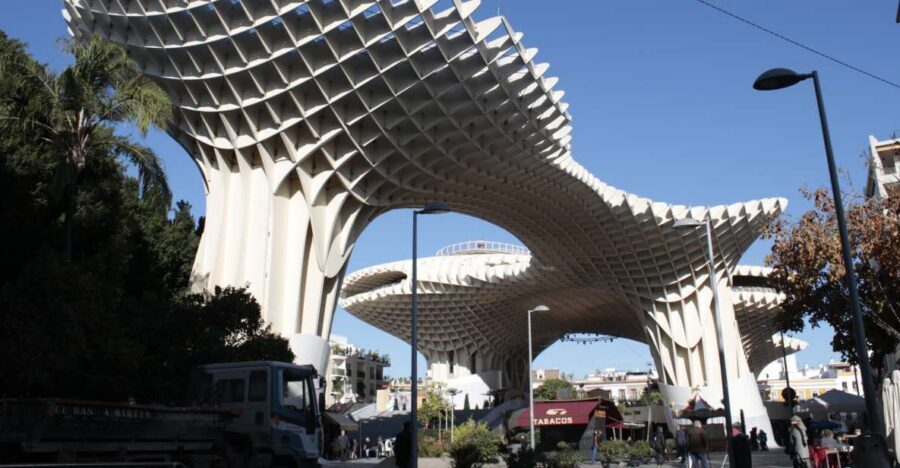
- Metropol Parasol Antiquarium start: you ease into the tour with a museum stop right at the modern landmark
- La Macarena focus: basilica, Arco de la Macarena, and the devotion behind it
- A church-style sampler: you see multiple architectural languages across several stops
- Feria Market on the route: the tour uses real local streets, not just postcard corners
- Dueñas Palace is the time investment: about an hour of guided entry with palace interiors and gardens
- Guides matter here: strong guide energy shows up repeatedly, including Emilio and Jesús in recent trips
Metropol Parasol to Antiquarium: Start With a Modern Landmark, Then Flip Back in Time
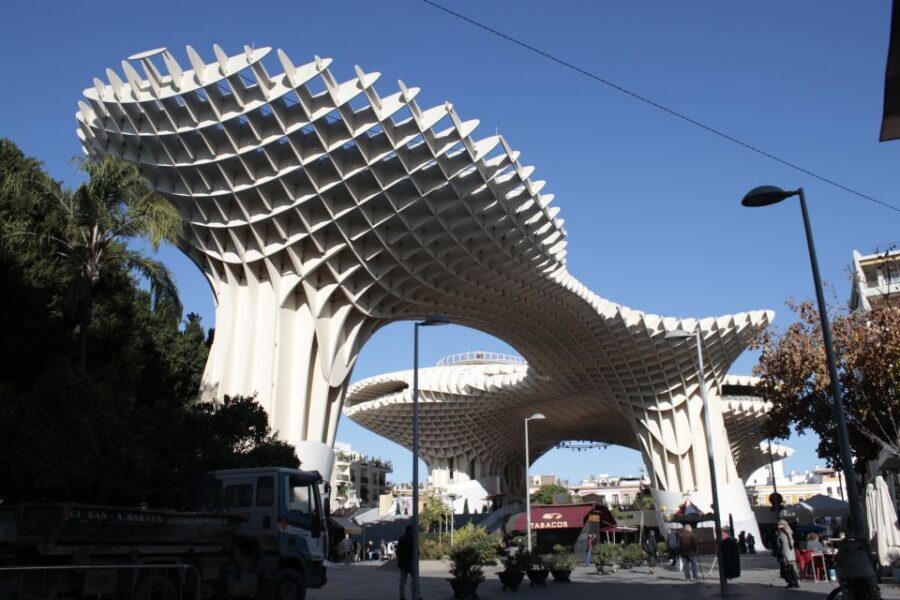
The tour kicks off at Plaza de la Encarnación, with the meeting point at the main stairs of Metropol Parasol. That’s a smart move because Las Setas is one of Seville’s most recognizable modern structures, and it gives you an easy visual anchor before you start weaving into older streets.
Right away, you visit the Antiquarium inside/near Metropol Parasol. This is where the tour sets its tone: you’re not just walking past monuments, you’re getting the “why” behind the layers of the city. It’s a short stop, but it helps you connect what you’ll see later—Roman-era traces, medieval neighborhoods, and the later evolution of Seville—into one timeline you can actually follow.
Practical note: because it’s a guided walking tour that starts with a museum component, it’s best to arrive with your group and expectations ready. Once you’re moving, you’ll keep a steady rhythm.
You can also read our reviews of more tours and experiences in Seville.


Feria Street and the Market Moment in Macarena
After you get your bearings near Las Setas, the route shifts into Seville’s north-center street life. One standout is the way the tour handles Feria Street and the Feria Market area. Even if you’re not shopping, this is a good place to pause and absorb the everyday side of the Macarena neighborhood.
This market stop works for two reasons. First, it keeps the tour from becoming only churches and palaces. Second, it gives you a feel for how neighborhoods function now, which makes historical context easier to picture. When your guide talks about older street life, you’re not imagining it from scratch—you can look around and see the modern streetscape the story lives in.
If you’re a first-time visitor, this is also a helpful kind of navigation training. You’ll learn which streets feel like the city’s living corridors and which spots are more “monument blocks.”
The Church Stop Tour: San Juan de la Palma, Omnium Sanctorum, Santa Marina
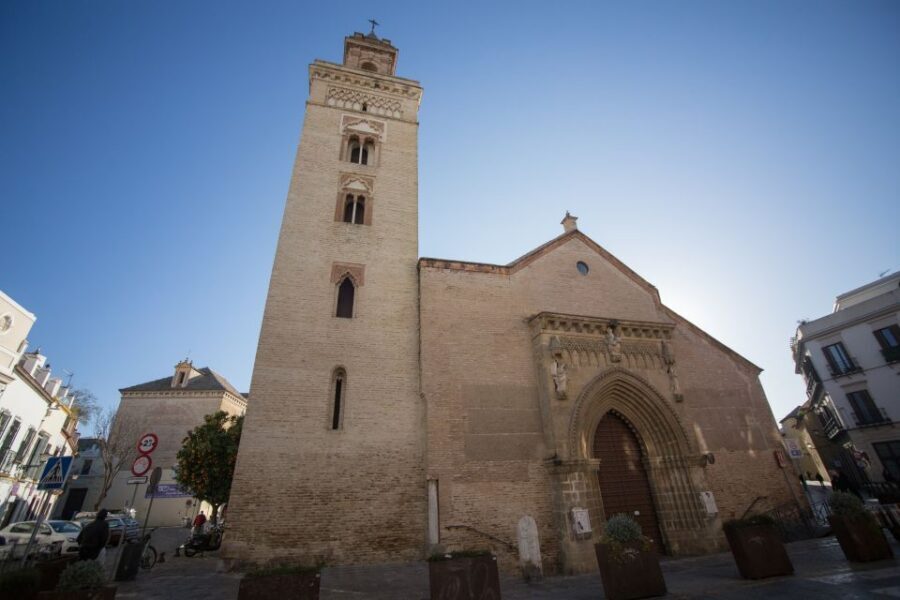
Seville is known for its churches, and this tour uses that strength without turning it into a single-style parade. You’ll make multiple church visits and pass-by moments along the way, including stops tied to San Juan de la Palma, Iglesia de Omnium Sanctorum, and Santa Marina.
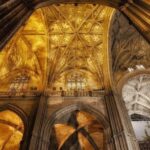
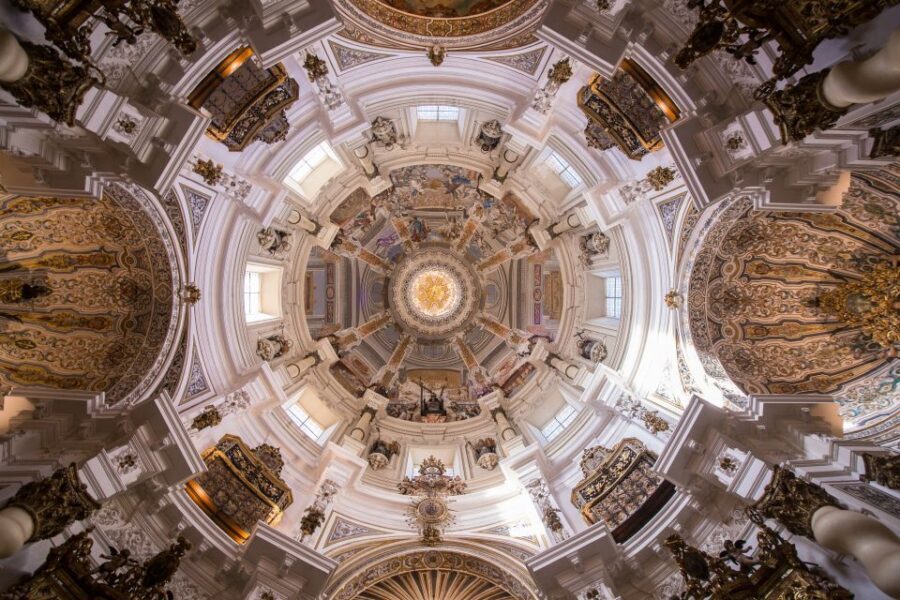
Here’s what makes this part of the itinerary feel worth your time: the tour keeps you aware that architectural style isn’t just decoration. It’s history made visible. Depending on the specific church stop, you’ll run into different influences—Gothic, Moorish, Baroque, Renaissance, and even a 20th-century presence across the set of churches you cover.
Some of these are guided entry moments, while others are photo stops or quick guided look-bys. That can be a drawback if you like to linger. But it also keeps momentum, and for a 3-hour outing, it’s a smart trade. You end up seeing a lot of variety, then you get the time to breathe at the palace.
If you’re church-sensitive (too many long interiors can feel like sameness), I’d still give this tour a chance because the variety is built in. The guide’s job is to connect each stop to the bigger story of Seville’s evolution.
Basilica de la Macarena: The Devotion and the Local “Center of Gravity”
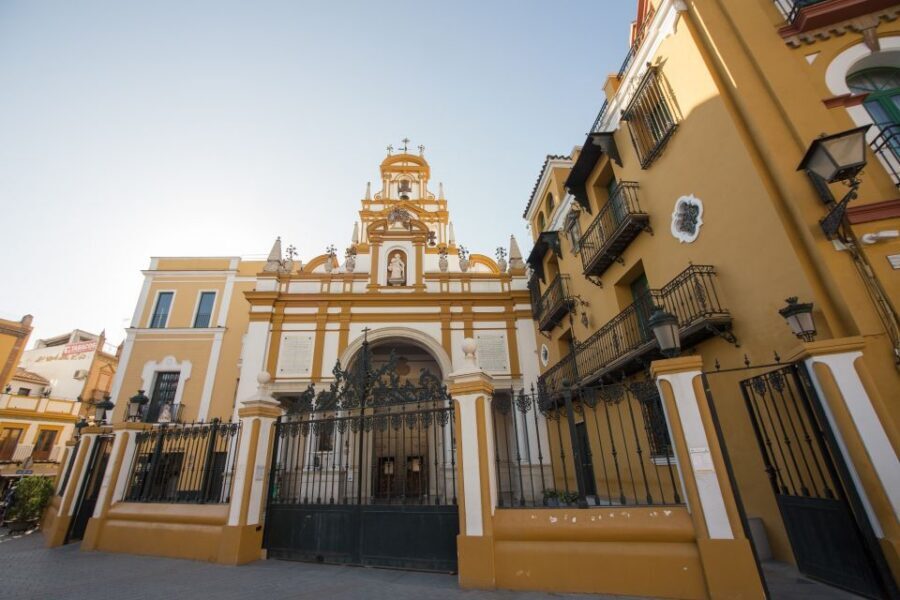
The tour’s heart-on-the-ground stop is Basilica de la Macarena, plus the Arco de la Macarena nearby. La Macarena isn’t just a building you pass by—it’s one of the most venerated images in Seville, and the tour makes sure you understand why that matters locally.
I like how the guide frames this as more than art history. You get context for how places become spiritual and cultural magnets, how devotion shapes a neighborhood, and why the Macarena area feels like it carries its own weight. The route even includes a stop connected to the old Cardo Máximo concept—helping you connect the modern feeling of the neighborhood to older urban structure.
Also, the tour is explicit about the Macarena focus, so you aren’t worried you’ll miss the “main character” of the day. If your Seville bucket list includes La Macarena, this is one of the more efficient ways to see it alongside other major stops in just a few hours.
San Luis de los Franceses: A Smaller Stop With Strong Payoff
After the Macarena emphasis, the tour adds San Luis de los Franceses and also passes by San Luis Street. This portion is a nice counterbalance. While the Macarena basilica is big in presence, San Luis is the kind of church visit where the details can really land once you slow down and focus.
In practical terms, it’s also where the tour rhythm helps you. You’ve already covered several stops with different styles, and now you’re in a moment where the guide can connect what you’ve learned to what you’re seeing. Even if your attention sometimes drifts in long tours, the guide-led context tends to pull you back.
This is also a good place for photos, but don’t treat it like only a photo stop. The value here is the explanation—how the church fits into Seville’s broader architectural and cultural shifts.

Alfonso X and the Layer-Cake City Logic
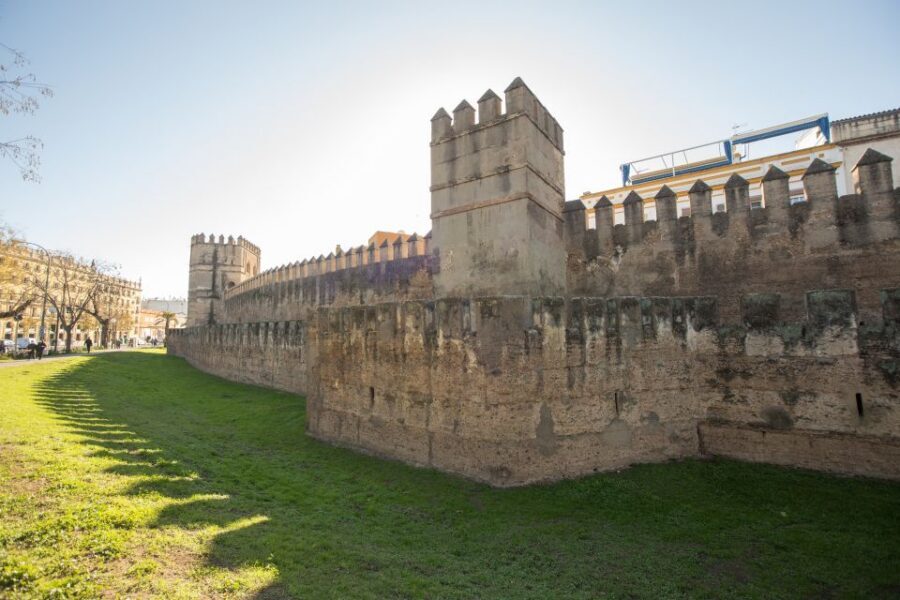
One reason this tour feels more coherent than a random “church-and-palace crawl” is the guide’s use of Seville’s historical through-lines, including Alfonso X. When a tour ties people, rulers, and neighborhoods together, it stops being a list and starts being a map in your head.
I’d especially watch for the way your guide explains old paths and how the city’s older grid and main routes influenced what you see today. Seville has layers: you don’t feel them immediately, but once a guide points out how old structure connects to later development, your walk clicks into focus.
This is also where the start at Antiquarium helps. You’ve already been primed to think in layers, so the history connections during church and street stops feel easier to follow.
Palacio de las Dueñas: Where the Time Turns Into Art and Gardens
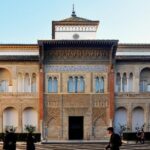
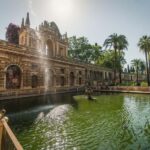
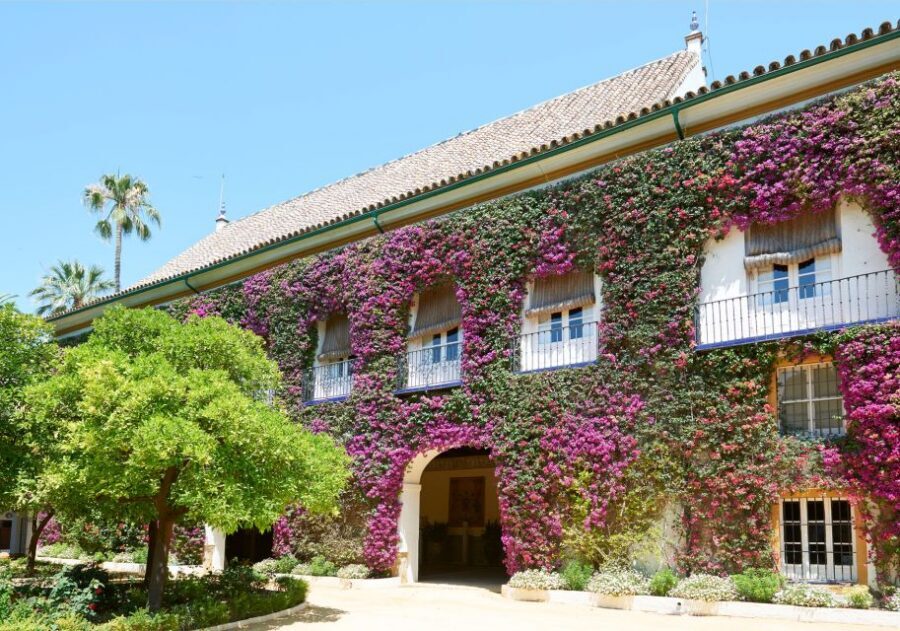
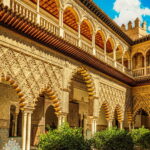
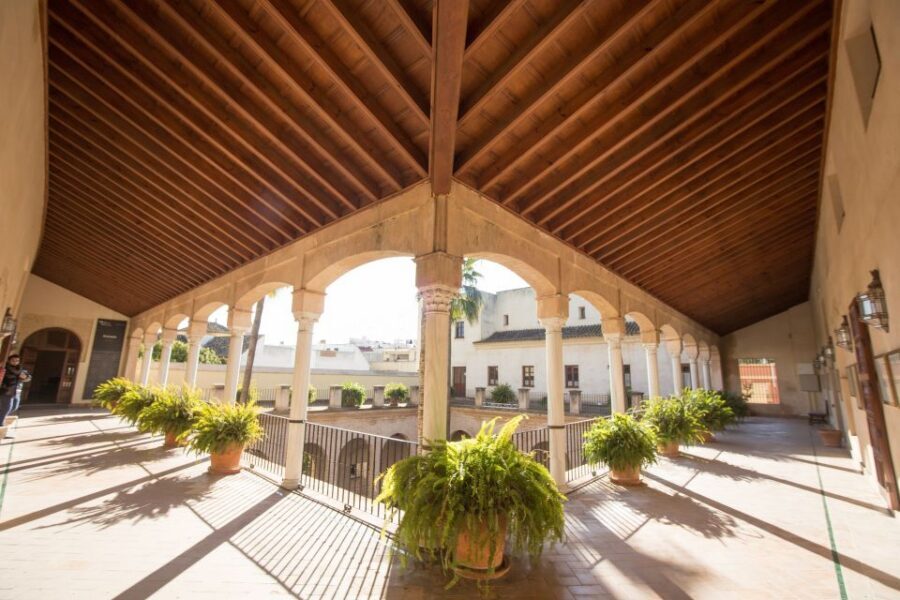
The centerpiece is Palacio de las Dueñas, the old residence of the Duquesa de Alba. The tour builds toward it, and that matters. After churches and street scenes, a palace interior feels like your reward—less like a checkbox and more like a shift into a different kind of Seville.
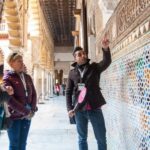
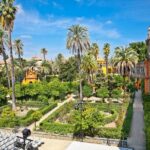
What you get here is a proper guided visit with entry included and about one hour inside. You’ll see the palace’s masterpiece arts, plus personal items connected to the family of Spain’s important ducal line. And you don’t just stay indoors: the palace visit also includes the fabulous gardens, which are a big part of why Dueñas works as a finale.
This is also where the guide quality really shows. In recent trips, guides such as Emilio and Jesús were praised for staying attentive and keeping the group engaged for the full stretch. If you’ve ever had a palace tour turn into a sprint, you’ll appreciate that the Dueñas segment is long enough for real explanation without rushing you out the door.
Tip for timing: aim to pay attention during the palace talk rather than treating it like free-form wandering. You’ll get more out of it if you listen for how the rooms and objects connect to the family and to Seville’s social story.
Price and Value: Does $46 for Three Hours Make Sense?
At about $46 per person for a 3-hour guided experience, this tour can be a strong value if you care about three things: guidance, variety, and getting palace entry done with less friction.
Here’s the value equation I’d use:
- You’re getting a guided walking tour through multiple core areas of Seville rather than one isolated sight.
- You have entry included for the Dueñas Palace, plus museum and church entries that help justify the cost.
- The guide is part of what makes it work. Recent experiences highlight guides who are friendly and highly prepared, including Julian, Emilio, and Jesús.
Could you do these places alone? Yes. But the question is whether you want to spend your Seville time building connections between monuments on your own. For many visitors, the guide explanation is the whole point.
One more thing: the tour has no food service included. If you’ll be hungry after 3 hours, plan to grab a café stop before or after on your own. The good news is you won’t be trapped waiting for a meal on the schedule.
Who Should Book This Seville Mix-Route?
This is a solid choice for:
- First-timers who want Seville’s north-center highlights in a single half-day chunk
- People who enjoy church architecture and want several styles shown in one outing
- Travelers who want both devotion-centered culture (La Macarena) and high-status art and gardens (Dueñas)
- Anyone who likes a guide-led timeline, especially with references like Alfonso X
It may be less ideal if:
- You hate walking and prefer a slower, more relaxed pace
- You want long independent time at each sight (some stops are shorter photo-and-pass moments)
- You expect snacks or a sit-down meal as part of the tour (it’s not included)
Should You Book the Palacio de las Dueñas, La Macarena & Las Setas Tour?
If your goal is a guided, story-connected sampler of Seville’s major characters—Las Setas, La Macarena, and Dueñas Palace—this tour is worth considering. The best sign is the repeated praise for guides who stay engaged and keep the group interested for the full stretch, including Emilio and Jesús.
Book it if you like structure, want the palace visit handled for you, and don’t mind short stops as long as the guide ties everything together. Skip it if you want a slow day with long unstructured wandering and you’re sensitive to lots of movement in a 3-hour window.
FAQ
How long is the tour?
The tour lasts 3 hours.
What does the tour cost?
The price is $46 per person.
Where does the tour start, and where do I meet the guide?
The starting location is Plaza de la Encarnación, and you meet the guide at the main stairs of Metropol Parasol.
Is entry to Palacio de las Dueñas included?
Yes. You get entry for Palacio de las Dueñas and a guided tour.
What else is included besides Dueñas Palace?
Included are entries and guided elements for Antiquarium, Macarena church, and San Luis de los Franceses, plus a local guide.
Are food or snacks included?
No food is served. The tour notes there is a café where you can purchase food.
What languages is the tour offered in?
The live tour guide is available in English and Spanish.
Can I cancel for a refund?
Yes. The tour offers free cancellation up to 24 hours in advance for a full refund.
Is the tour wheelchair accessible?
Yes, it is listed as wheelchair accessible.