REVIEW · SEVILLE
“Seville: Love At First Sight” Private Tour
Book on Viator →Operated by Seville private guide - Sofía Ventura · Bookable on Viator
Seville grabbed me fast. This private tour starts at the Giralda Tower—and you get your bearings right away. I also loved how the route stitches together signature sights with local areas like the Jewish Quarter and Triana, so it feels like Seville, not a checklist.
Two hours moves quickly, but it’s the kind of walk where your guide ties street-level details to the bigger story. The only real consideration: it’s weather-dependent and mostly outdoors, so plan around sun, heat, or rain.
If you want a short, high-impact introduction to Seville in English, this is built for that. The guide I had in mind is Sofía Ventura, and the group is kept to just your party (up to 7), with optional pickup when your hotel is in the list.
In This Review
- Key Things I’d Prioritize on This Seville Private Tour
- Two Hours That Get Your Bearings in Seville
- The Giralda Tower Start: Your Navigation Shortcut
- Cathedral of Sevilla: When the Size Itself Becomes the Lesson
- Real Alcázar: The Old Palace Still in Use
- Archive of the Indies and the Tobacco Factory-to-University Shift
- Maria Luisa Park and Plaza de España: Free Time, Great Photo Angles
- Torre del Oro, the Bullring, and the Triana Bridge Walk
- Mercado de Triana: Taste the Neighborhood Rhythm
- Price and Logistics: Value for a Group of Up to 7
- Who Should Book This Seville Private Tour?
- The Sofía Ventura Factor: What Makes the Experience Feel Personal
- Should You Book This Seville Walking Tour?
- FAQ
- What’s the duration of the Seville Love At First Sight private tour?
- What’s included in the tour?
- Is pickup available?
- Where does the tour start and end?
- What time does the tour begin?
- Is this a private tour or a group tour?
- Is it offered in English?
- Are there any weather or day restrictions I should know about?
- What if I need to cancel?
Key Things I’d Prioritize on This Seville Private Tour
- Start at Giralda Tower so the whole day makes sense once you’re moving through the center.
- Big monuments, short distances: Cathedral, Alcázar, and major plazas are linked by an efficient path.
- Neighborhood context: you’ll pass through the Jewish Quarter and spend time in the Triana area.
- University of Seville in the old tobacco factory: education meets industrial history.
- Seville by river and bridges: you’ll see Torre del Oro and cross toward Triana.
Two Hours That Get Your Bearings in Seville
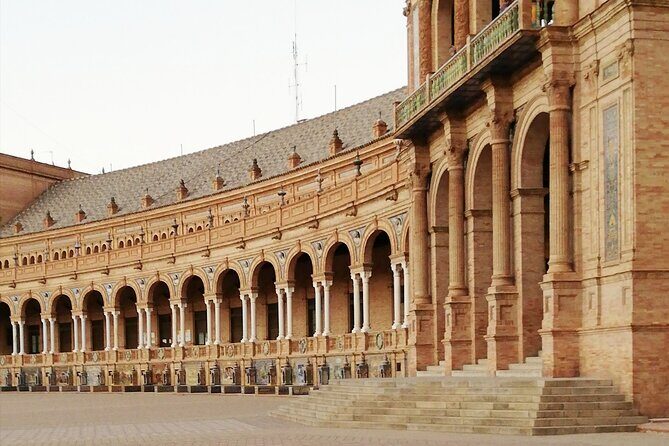
This tour is designed for a fast orientation. Instead of dropping you at one landmark and letting you figure out the rest, it connects key points that help you understand how Seville is laid out—where the center pulls you in, where the river changes the mood, and how neighborhoods like Triana fit into the city’s story.
With a private group (up to 7), the pacing tends to feel human. You can ask questions as you go, and the guide can steer the conversation toward what you care about—architecture, local culture, or just how to navigate the streets without wasting time.
At around 2 hours, you’re not committing your whole day. That makes it a smart pick if you’re also planning a cathedral-ticket time slot later, or if you’re here for a tight itinerary and want your first morning to do real work.
You can also read our reviews of more private tours in Seville



The Giralda Tower Start: Your Navigation Shortcut
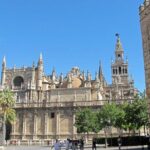
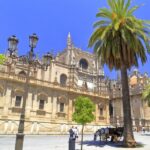
You begin at Plaza Virgen de los Reyes, right by the religious heart of the city. From there, the tour’s idea is simple: start with the symbol of Seville and use it as the anchor for everything you’ll see afterward.
Why this matters: Giralda isn’t just an impressive tower. It’s a visual reference point. Once you’ve seen it and learned the story behind it, the rest of the historic center starts lining up in your head. Streets that feel confusing at first stop feeling random.
Also, starting at the morning time (10:00 am) helps. In many cities, the first part of the day is when you can still think clearly while you walk. Seville is no exception, especially when you’re covering multiple stops within a tight timeframe.
Cathedral of Sevilla: When the Size Itself Becomes the Lesson
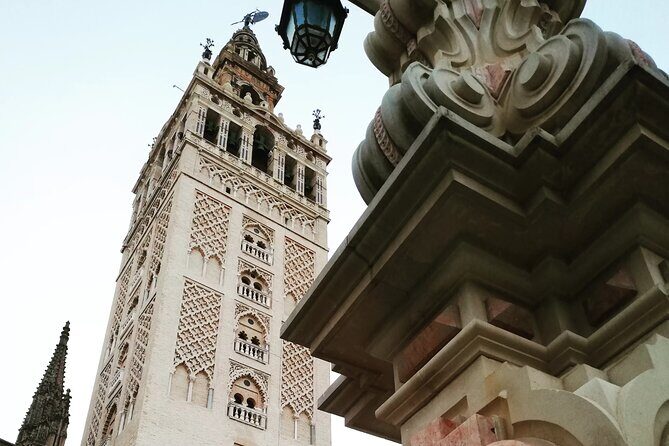
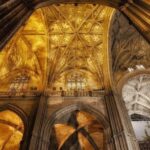
Next up is the largest Gothic cathedral in the world. Even if you’re not chasing every detail inside, the scale tells you something instantly: this is a city that wanted to show power through stone.
You’ll get a guided look at the cathedral as the tour moves through the area. It’s less about a full interior visit here and more about understanding what makes this monument a centerpiece of Seville’s identity—why it shaped the surrounding streets and why it keeps dominating the skyline in photos and in person.
One practical note: parts of the route involve stopping and moving through active areas of the old city. If you’re sensitive to crowds or want long, quiet time inside major buildings, consider treating this tour as your “see the structure and context” session, then doing deeper visits separately when you have more time.
Real Alcázar: The Old Palace Still in Use
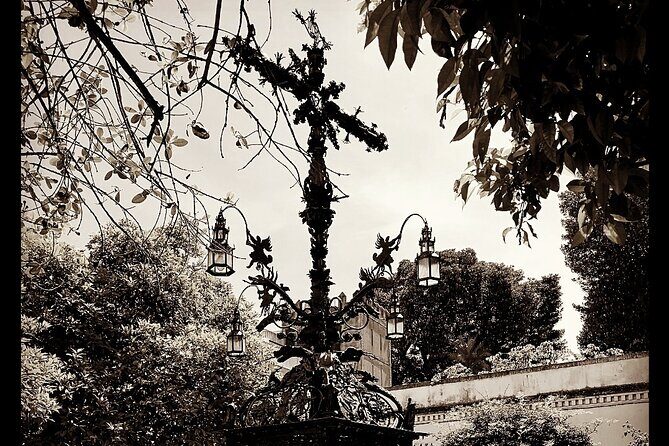
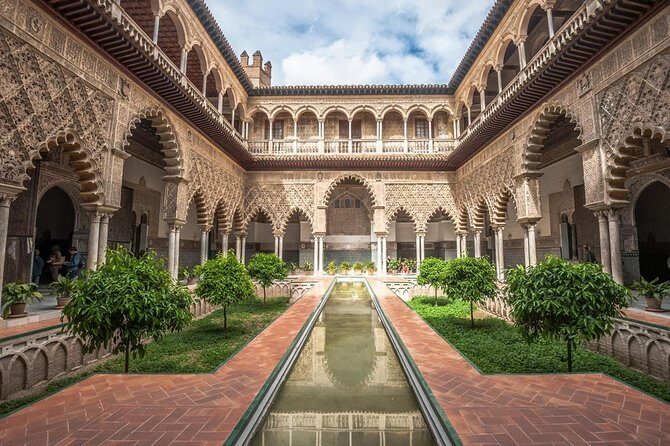
You’ll also pass the oldest palace in Europe still in use—Alcázar of Seville. This is the kind of stop that changes how you think about “historic.” Instead of something frozen in the past, it’s a palace you can feel still functioning as a place with continuity.
In a short guided walk, the value is the way a good guide explains what you’re looking at: what tells you the palace has been used over centuries and how that shows up in the feel of the spaces around it. If you like walking away with a mental map—what’s where, and why each building matters—this is exactly the role Alcázar plays in this route.
Archive of the Indies and the Tobacco Factory-to-University Shift
Two of the most interesting moments on this itinerary are the ones that don’t always get top billing in casual sightseeing plans.
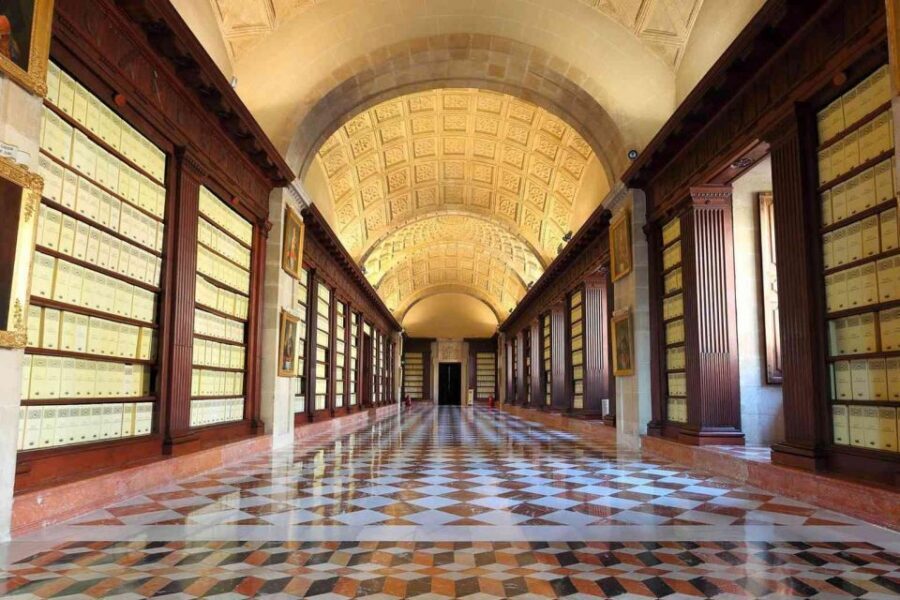
First, the Archive of the Indies. It’s a reminder that Seville wasn’t only about churches and palaces. It was also an administrative and historical hub tied to Spain’s global connections. Even without a deep museum-style visit, the guided framing helps you see why records, trade, and navigation were central to the city’s development.
Then comes one of my favorite “wait, that makes sense” stories on the route: the old tobacco factory, now home to the University of Seville. When you understand the building’s past, the campus stops looking generic. It becomes part of the city’s working-life history, reused by a new generation.
If you enjoy the point where old industry turns into education and everyday life, you’ll like how this stop adds texture to a tour that otherwise focuses on major monuments.




Maria Luisa Park and Plaza de España: Free Time, Great Photo Angles
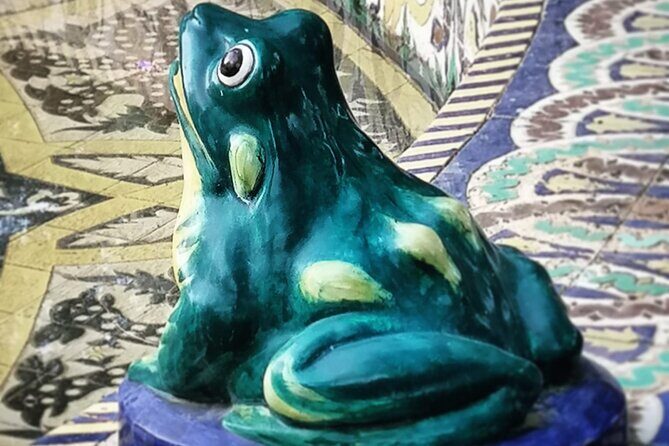
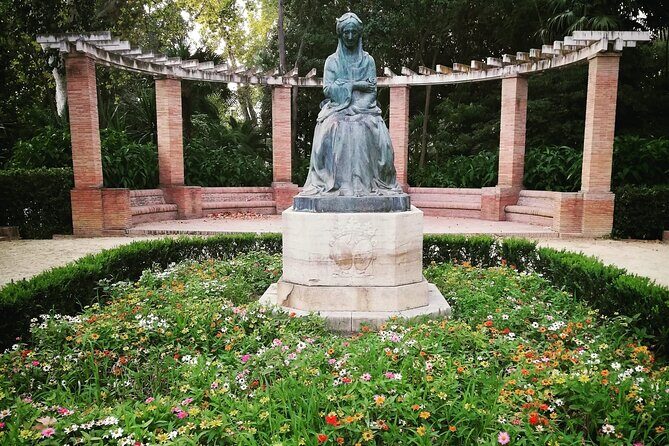
You’ll spend time at María Luisa Park—and the stop is noted as free admission. This is a pressure valve after heavy monuments. The park gives you breathing room while keeping you in the same historic-world atmosphere.
Right after, you’ll head to Plaza de España, one of Seville’s landmarks. It’s one of those places where even a quick stop feels cinematic: wide views, grand architecture, and a layout that makes it easy to understand the city’s ceremonial side.
A practical takeaway: since these are free stops, this is a good use of your tour time. You get scenery without needing extra paid entries during the walk.
Torre del Oro, the Bullring, and the Triana Bridge Walk
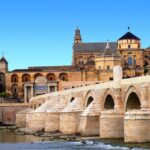
From the central area, the tour moves toward the river. You’ll check out Torre del Oro by the river, a sight that helps you “hear” the city. River edges change how a city feels—trade, movement, and the direction people went for centuries.
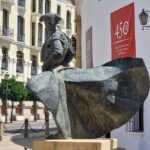
You’ll also pass the bullring. Even if you’re not focused on bullfighting, it’s a useful cultural marker. It shows how the city built major public arenas around local traditions.
Then comes the Triana bridge. This is the moment when Seville starts feeling like it’s divided into distinct “moods” rather than one continuous core. The guide’s job here is to help you notice the shift, not just cross the bridge.
Mercado de Triana: Taste the Neighborhood Rhythm
The final big neighborhood stop is Mercado de Triana. The timing depends on the day: it’s noted as not on Sundays or bank holidays. So if your travel dates fall on those days, you may not get the market atmosphere the way you expected.
Still, even with the day-of adjustment, Triana is a key part of learning Seville. It’s where the city feels more local and less only “museum mode.” This is the stop that often makes people want to return on their own later, because it gives you a sense of daily life, not just famous buildings.
If you like to walk away with ideas for your next meal, you’ll appreciate how a good guide can point you toward what to try around the area once you’re done with the tour.
Price and Logistics: Value for a Group of Up to 7
The price is $178.71 per group (up to 7 people) for about 2 hours, in English. That’s the key number here: it’s not priced per person in a way that punishes a small group. If you’re traveling with family or friends, it can become a very efficient use of time.
Pickup is offered, and the tour uses a mobile ticket. The meeting point is Plaza Virgen de los Reyes, and the tour ends at Plaza del Altozano. That means you’re not closing back at the start, so it helps to already think about your next step—lunch, a museum ticket later, or simply heading back to your neighborhood.
Also, it’s near public transportation, which is useful if your hotel location makes pickup complicated.
One more small but real consideration: it requires good weather. If weather is iffy, plan for a flexible mindset. The route makes sense on foot, but it’s still an outdoor experience.
Who Should Book This Seville Private Tour?
I’d point you toward this tour if:
- You’re visiting Seville for the first time and want your orientation to stick.
- You want a guided route through the city’s major icons without trying to do everything solo.
- You like asking questions and getting local recommendations, not just hearing a script.
- Your group includes people who benefit from a private pacing plan (kids, first-timers, or anyone who hates getting lost).
If you’re an ultra–architecture specialist who wants long interior time in every monument, this might feel short. In that case, treat it as the “map + context” part of your trip, then book longer visits for the places that require time inside.
The Sofía Ventura Factor: What Makes the Experience Feel Personal
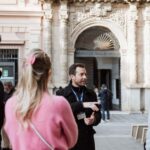
The guide behind this tour is Sofía Ventura. Across her tours, what shines through is how she handles questions in a practical way and keeps things friendly. She’s also flexible based on interests, which is a big deal on a short walking route.
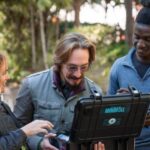
One detail that stuck from earlier experiences with her style: she uses old photos on her iPad (from around 100 years ago) to help you picture how the area looked before. That turns a standard sight walk into a “wait, that’s how it changed” moment—especially when you’re standing in places that people have walked through for generations.
If you want more than facts—if you want the streets to make sense—this is the kind of guiding style that can do it.
Should You Book This Seville Walking Tour?
Yes, you should book if you want a short, efficient, private introduction to Seville’s core sights and neighborhoods. The route hits the big names (Giralda, Cathedral, Alcázar), then adds meaningful context with places like the Archive of the Indies and the old tobacco factory turned University. You’ll also get time in the open-air highlights around María Luisa Park and Plaza de España, plus the Triana side of the river.
Skip it (or pair it carefully) if you need lots of time inside major buildings during those same two hours. This works best as a smart first move—when you want to come away with a map in your head and a sense of where to go next.
FAQ
What’s the duration of the Seville Love At First Sight private tour?
It runs for about 2 hours.
What’s included in the tour?
You’ll have a guide and a mobile ticket. The stops listed include areas like María Luisa Park and Plaza de España with free admission, and Triana Market is noted as free admission (with day limits).
Is pickup available?
Pickup is offered. If your hotel isn’t on the pick-up list, you can contact the provider to ask if pickup is possible.
Where does the tour start and end?
It starts at Plaza Virgen de los Reyes (Casco Antiguo) and ends at Plaza del Altozano.
What time does the tour begin?
The start time is 10:00 am.
Is this a private tour or a group tour?
It’s private. Only your group participates (up to 7 people).
Is it offered in English?
Yes, it’s offered in English.
Are there any weather or day restrictions I should know about?
The experience requires good weather. Also, Mercado de Triana is noted as not on Sundays or bank holidays.
What if I need to cancel?
You can cancel for a full refund up to 24 hours before the experience’s start time. If it’s canceled due to poor weather, you’ll be offered another date or a full refund.