REVIEW · SEVILLE
Seville: Guadalquivir & Secrets of Triana Small Group Tour
Book on GetYourGuide →Operated by Seville Unique Experiences · Bookable on GetYourGuide
The river explains Seville. I love how this Guadalquivir River walk starts at Torre del Oro and then threads directly into Triana, showing how trade and daily life shaped the city’s culture. I also like the small-group feel (up to 10) with an English-speaking licensed guide, so you can actually ask questions without getting lost in the crowd.
One thing to consider: this is still a 1.5-hour walking tour, rain or shine. And while the tour is guided, monument tickets aren’t included, so if you want to go inside specific spots, you may need to plan for that separately.
In This Review
- Key things that make this tour worth your time
- Why the Guadalquivir River Walk Changes How You See Seville
- Starting at Torre del Oro: The Port of Seville in One Spot
- Fundación Nao Victoria and the Early Context You’ll Actually Use
- Crossing Puente de Isabel II: Where the River Story Turns into a Neighborhood Story
- Triana Market: Life and Trade in Street Form
- Centro Cerámica Triana: Crafts That Still Shape the Look of the Streets
- Callejón de la Inquisición: The Street Where Dark History Gets Specific
- Back to the River Shore: Guadalquivir as Seville’s Trade Engine
- Chapel of Sailors: The People Behind the Port of America Story
- Finishing at Real Parroquia de Señora Santa Ana: Next Steps for Your Evening
- Price and Value: What $29 Buys You in 1.5 Hours
- Who This Tour Suits Best (And Who Might Want a Different Style)
- Practical Tips to Get More Out of Every Minute
- Book It or Skip It: My Honest Take
- FAQ
- Where do I meet for the tour?
- How long is the tour?
- What language is the guided tour offered in?
- Is the tour small group or large group?
- Is the tour wheelchair accessible?
- Does the tour run in bad weather?
- Are monument tickets included?
- Is hotel pick-up provided?
- What is included in the price?
- Can I cancel and get a refund?
Key things that make this tour worth your time
- Guadalquivir first, Triana second: you get the river logic before you hit the neighborhood streets.
- Puente de Isabel II as a history shortcut: the bridge frames how Seville and Triana grew together.
- Triana Market + ceramics: you’re not just looking, you’re learning what people used to do for a living and what still carries on.
- Callejón de la Inquisición: the darker side of Seville’s past comes in through a very real street story.
- Sailors’ chapel and the port story: you connect Seville’s trade power to the people who served it.
- Local guides who tell the story like locals: names like Carmen, Marta, Valentín, Miguel, and Carlos come up in the guide rosters for a reason.
Why the Guadalquivir River Walk Changes How You See Seville
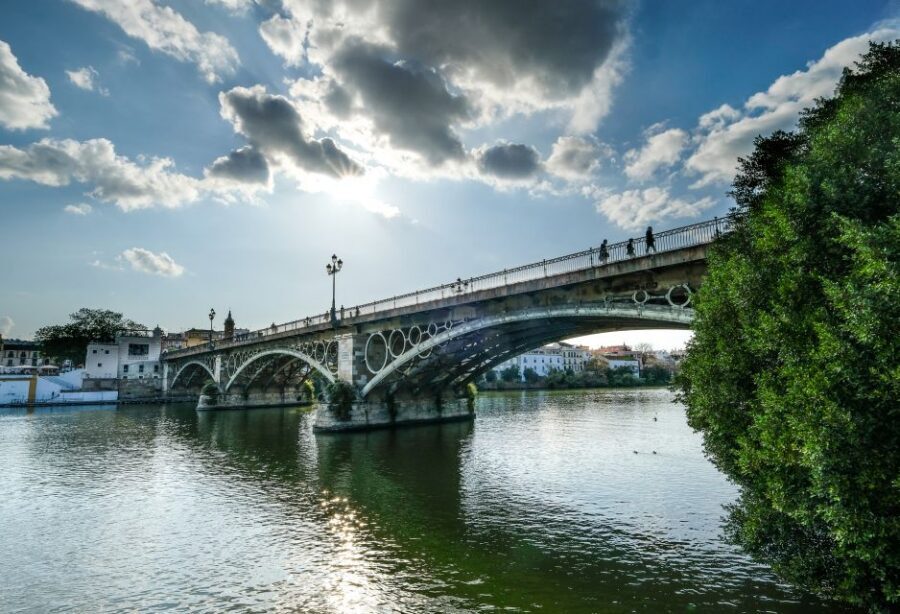
Seville makes more sense when you treat the river like the main character. This tour does that. You begin by the waterfront and hear why the Guadalquivir mattered so much—then you step into Triana with that context in your head.
That order is the difference between a tour that feels like sightseeing and one that feels like learning your way through a city. You’re not just collecting landmarks. You’re building a simple map: river access → trade power → neighborhood crafts → cultural expressions like flamenco.
The Triana part is where the story turns human. Triana isn’t a distant suburb. It feels like a city across the water, with its own rhythm, folklore, and working traditions. The guide helps you connect flamenco and other street-level culture to where people lived, worked, and gathered.
You can also read our reviews of more tours and experiences in Seville.


Starting at Torre del Oro: The Port of Seville in One Spot
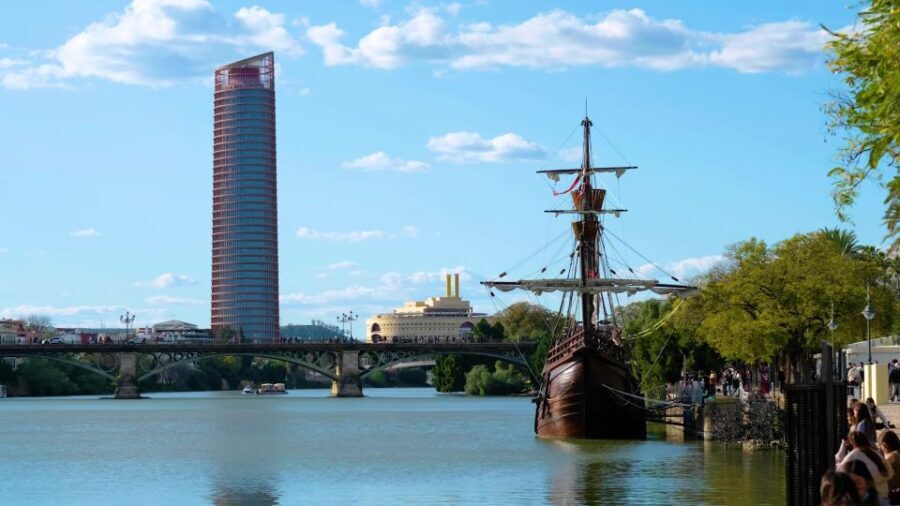
You meet at the base of Torre del Oro, right by the river and next to the cruise ticket office. It’s a practical meeting point, and it’s also a smart one. Torre del Oro is basically a postcard for Seville’s river identity, so it sets the tone immediately.
From there, the early minutes focus on the big picture. You’ll get a short guided introduction and a quick sightseeing moment at Fundación Nao Victoria / Espacio Exploraterra. Even if you’re not a history buff, this kind of setup helps you understand what comes next: Seville’s importance as a trade center didn’t happen by accident. It was built into the river route.
Then you continue with a short stop (about five minutes) that’s meant to give you a better sense of what you’re looking at as you move along. Think of it as getting your bearings fast so the longer explanations land better.
Fundación Nao Victoria and the Early Context You’ll Actually Use
This isn’t the kind of tour that dumps dates on you. The early stop is there to make the rest of your walk click.
Why it matters: once you grasp Seville as a working port, Triana stops feeling like a “pretty neighborhood” and starts feeling like a place that supported the people and industries behind that port. That’s what makes everything from ceramics to folklore feel tied together instead of random.
If you’ve visited Seville before and felt like the city was all about the grand monuments, this is a nice correction. The tour starts by treating daily movement—goods, boats, crews, workers—as the backbone of the city’s story.
Crossing Puente de Isabel II: Where the River Story Turns into a Neighborhood Story
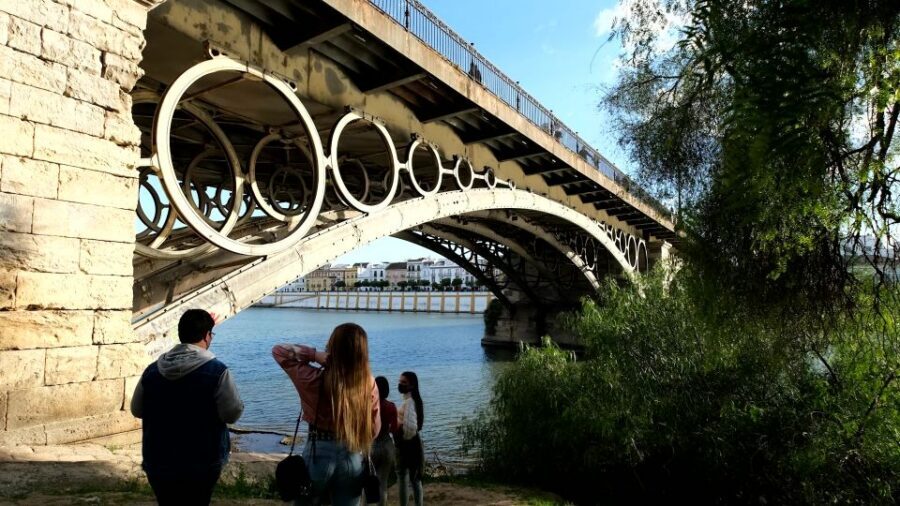
Next, you move to Puente de Isabel II. The guide spends about 15 minutes here, and that’s enough time to do more than take photos.
The bridge is a natural turning point. It marks the shift from Seville’s riverfront view to Triana’s side of the story. You’re also physically crossing into the space where the tour’s themes start feeling personal: crafts, folklore, music, and community life.
This is also where I like to pay attention to angles and landmarks. From the bridge, you can often understand how a neighborhood across the water could develop its own identity while still depending on Seville for trade and connections.
Triana Market: Life and Trade in Street Form
Triana Market is one of the stops that helps the tour feel grounded. It’s about 15 minutes of guided time, and the focus is on traditional professions and everyday life.
What you’ll likely notice: markets tell you what people valued and needed. They also show how a neighborhood stays active, not frozen in the past. For a place famous for culture and performance, this matters. Triana wasn’t only about art. It was also about work—people making a living, serving the city, and building community ties.
If you like tours that connect culture to real places (instead of treating culture like trivia), this stop delivers.




Centro Cerámica Triana: Crafts That Still Shape the Look of the Streets
Centro Cerámica Triana is another about-15-minute stop, and it’s here to explain why Triana’s visual style isn’t random. You get a clearer link between the area’s craft traditions and the decorative feel you’ll notice as you walk.
The tour frames ceramics as more than an object you buy. It’s a sign of local skills and trades that have survived through time. That makes it easier to understand why Triana looks the way it does—tile, ironwork, and design details aren’t only decoration. They’re part of local identity.
This is also a good moment to ask questions about what’s still happening now versus what’s changed. The best guides keep the story moving from then to now, so you can see continuity instead of just fading history.
Callejón de la Inquisición: The Street Where Dark History Gets Specific
Then comes Callejón de la Inquisición, another guided stop of about 15 minutes. This is where the tour adds tension and complexity.
The tour doesn’t present Seville as only glamorous. It also talks about hard times, including the Inquisition. But it does it through a street-level stop, which helps you picture history as lived experience, not just museum walls.
If you tend to remember cities by their atmosphere, this is a key stop. You’ll come away with a more complete mental picture of Triana and Seville—how power and fear sat alongside crafts and community life.
Back to the River Shore: Guadalquivir as Seville’s Trade Engine
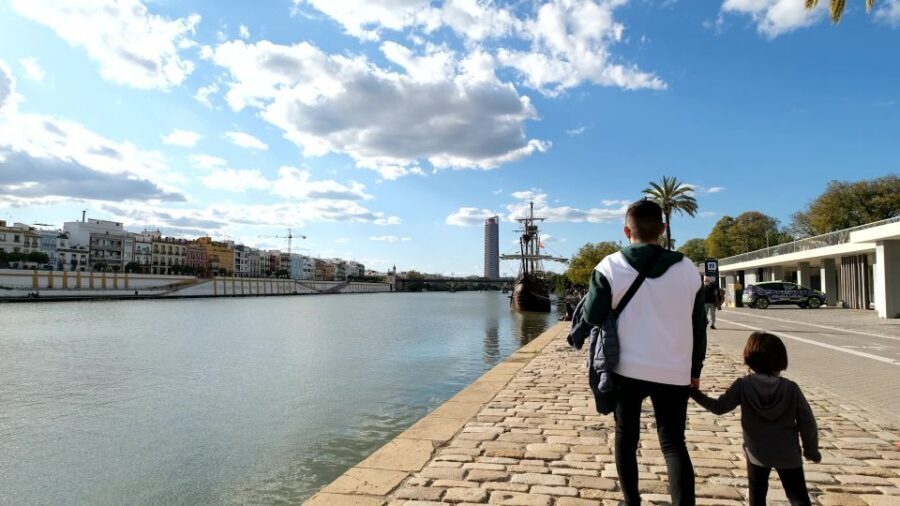
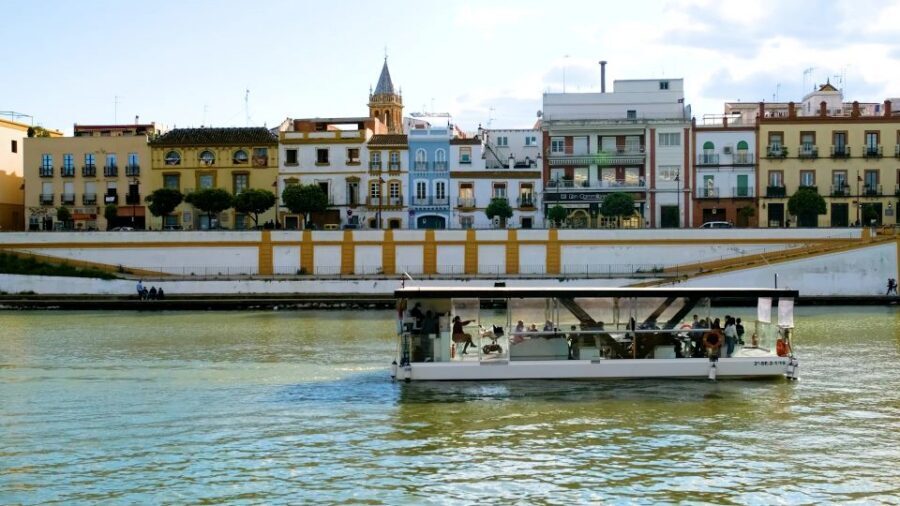
The tour then returns to the Guadalquivir River with another about-15-minute guided moment. This part is about connecting the dots again: why the river shaped Seville as a trade center, and why Triana’s location mattered so much.
This is also where the tour’s logic feels most satisfying. You’ve spent time in Triana’s streets and stops. Now you step back to the river and can see how the neighborhood’s story depended on access to the water.
For me, that’s the “aha” moment of the entire experience. It turns the river from scenery into a mechanism.
Chapel of Sailors: The People Behind the Port of America Story
One of the more memorable stops is the Chapel of Sailors (Sevilla). It’s about 15 minutes with guided sightseeing, and the tour ties it to Seville’s role as a port and the kind of movement sailors brought to the city.
The guide also discusses Seville as the Port of America. Even if you don’t catch every detail, the point is clear: Seville’s river route connected it to far-reaching trade networks, and those connections brought both opportunity and hardship.
This is a good stop if you like human-scale history—where a city’s big power shows up in the way communities organized support for the people doing the work.
Finishing at Real Parroquia de Señora Santa Ana: Next Steps for Your Evening
The walk ends at Real Parroquia de Señora Santa Ana, near the river area where flamenco venues are common. The overall tour flow also leaves you placed well for continuing your night.
This is worth planning around. If you’re the kind of person who wants culture to feel connected—music after you’ve heard the local background—finishing near flamenco venues is a smart move. You’ll already know what to listen for and what to ask about.
It also gives you options. You can keep walking near the river, grab a bite, or settle in for a show if you feel like going from story to stage.
Price and Value: What $29 Buys You in 1.5 Hours
$29 for a 1.5-hour small-group tour is a fair price, mainly because you’re paying for guided interpretation, not just movement between photos.
A few things make the value feel real:
- Small group size (up to 10) means you’re not treated like an audio guide on legs.
- Licensed English-speaking guide means you get explanations with actual care.
- The tour covers two big ideas—Guadalquivir trade and Triana identity—without stretching into a long day.
Also, the tour is structured so the guide’s storytelling has room to build. You’re not rushing nonstop. The time at each stop (mostly 15 minutes) supports actual context, which is where you feel the value.
The only “cost” you might add: tickets aren’t included. If the guide directs you toward places where you’ll want to go inside, you’ll be making a choice at that point.
Who This Tour Suits Best (And Who Might Want a Different Style)
This is a great fit if you:
- want Seville to make sense through the river and the neighborhood on the other side
- like local guides with personal pride in Triana
- enjoy walking tours that explain culture links (crafts and flamenco, not just buildings)
It’s also solid for first-timers. You get enough overview to understand what you’re seeing, without turning it into a lecture.
It might be less ideal if you:
- hate walking for 1.5 hours, rain or shine
- want a tour that spends lots of time inside major monuments (tickets aren’t included, and the focus is street-level and guided context)
Practical Tips to Get More Out of Every Minute
- Wear comfortable shoes. This is a walking tour in real streets, not a moving coach tour.
- Use the first 10 minutes to lock in the river story. It makes Triana feel coherent later.
- Bring your questions. The best guides on this route are known for answering patiently and weaving your curiosity into the narrative.
- If you’re planning lunch right after, it’s smart to ask the guide where to eat once you’re done. Local guides often steer people toward spots that match what you just learned about the neighborhood.
Book It or Skip It: My Honest Take
I’d book this tour if you want Seville to feel connected—river to trade to Triana’s crafts and folklore—without spending all day in transit or waiting in long lines.
Skip it only if you’re looking for a monument-heavy day, or if you’re not up for 1.5 hours of walking in changing weather. Otherwise, this is one of those small-group tours where the guide’s storytelling matters, and the walking route gives you the kind of Seville perspective you can’t get from a quick stroll alone.
FAQ
Where do I meet for the tour?
You meet at the base of Torre del Oro, by the river bank side, next to the tourist cruises ticket office.
How long is the tour?
The tour lasts about 1.5 hours.
What language is the guided tour offered in?
The tour is guided in English.
Is the tour small group or large group?
It’s a small group limited to 10 participants.
Is the tour wheelchair accessible?
Yes, it’s listed as wheelchair accessible.
Does the tour run in bad weather?
Yes, it takes place rain or shine.
Are monument tickets included?
No, tickets to monuments are not included.
Is hotel pick-up provided?
No hotel pick up is included.
What is included in the price?
The guided tour by an English-speaking licensed guide is included.
Can I cancel and get a refund?
Yes. Free cancellation is available up to 24 hours in advance for a full refund.