REVIEW · SEVILLE
Private visit to Casa de Pilatos and Casa Salinas
Book on Viator →Operated by Clara Alarcón · Bookable on Viator
Two palaces, one story of Seville. In this private guided walk, you’ll see Casa de Pilatos and Casa Salinas—and between them, you’ll get stops that explain how Seville’s religious and architectural layers overlap. I especially liked the private guide style (you’re not rushed, and the details make sense), and I loved how the route turns into a small history lesson on the ground; the one drawback to plan for is that entrance tickets for the palaces are not included.
You’ll also get hands-on help buying tickets on-site, plus a mobile ticket for the experience itself. Expect about 2 hours total, with walking through tight, lived-in streets in the San Bartolomé area.
In This Review
- Key things to know before you book
- Casa de Pilatos: the “different eras, same house” effect
- Walking the San Bartolomé neighborhood between palaces
- Iglesia de Santa María la Blanca: a mosque turned into a synagogue, then a church
- Casa Salinas: still lived in, still beautiful
- How private guiding changes what you get from the sites
- Tickets and timing: the “what you need to plan” part
- Where you’ll meet, and how it ends
- Who this tour suits best
- Should you book this private Casa de Pilatos and Casa Salinas visit?
- FAQ
- How long is the private visit?
- Is this tour private or shared?
- Are entrance tickets included for Casa de Pilatos and Casa Salinas?
- Is the Church of Santa María la Blanca ticket free?
- What stops are included besides the two palaces?
- What’s the meeting point?
- Where does the tour end?
- Do you use radio guides?
- What happens if the weather is bad?
- Are service animals allowed?
Key things to know before you book
- Private pacing: it’s just your group, so you can ask questions instead of watching a crowd file past.
- Casa de Pilatos is style-spotting heaven: Gothic, Mudejar, and Renaissance show up in the same complex.
- You’ll connect the dots in San Bartolomé: the walk includes key religious landmarks tied to earlier synagogues and a mosque-to-church transformation.
- Casa Salinas is still a home: restored with care and partly used by the owners, so it feels real—not staged.
- You get ticket assistance: the tour helps you with purchasing entry at each site (but tickets themselves cost extra).
Casa de Pilatos: the “different eras, same house” effect
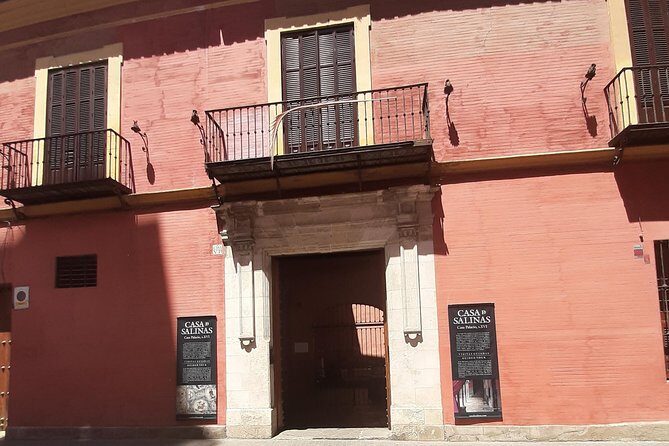
Casa de Pilatos is the kind of place where you stop in the doorway and suddenly understand why Seville gets called a city of layers. Your visit starts here, and the guide focuses on the architectural mix that’s the main attraction: Gothic, Mudejar, and Renaissance elements woven together so they don’t feel like separate buildings. It’s not just pretty plaster and stone. It’s a visual story of taste, influence, and power changing over time.
What I like best is that you’re not left staring at ceilings and wondering what you’re looking at. You’ll get pointed attention for the monumental facade details, the grand staircase that leads to the main floor, and the coffered ceilings that draw your eyes upward even when you’re trying to take it all in.
Then there’s the house’s interior collections and tiled surfaces. The tiles cover walls in a way that turns the space into a kind of continuous artwork. If you enjoy decorative arts, this is where the time disappears.
And yes—there are gardens. The guide frames the gardens as part of how people actually used the residence. You’ll slow down here, and that’s important because the complex can feel busy once you’re moving through rooms. The garden break keeps your visit comfortable and human.
Practical note: Casa de Pilatos is about a 1-hour block, and entrance tickets are not included. That makes ticket timing important—go ready to buy as soon as you arrive.
You can also read our reviews of more private tours in Seville



Walking the San Bartolomé neighborhood between palaces
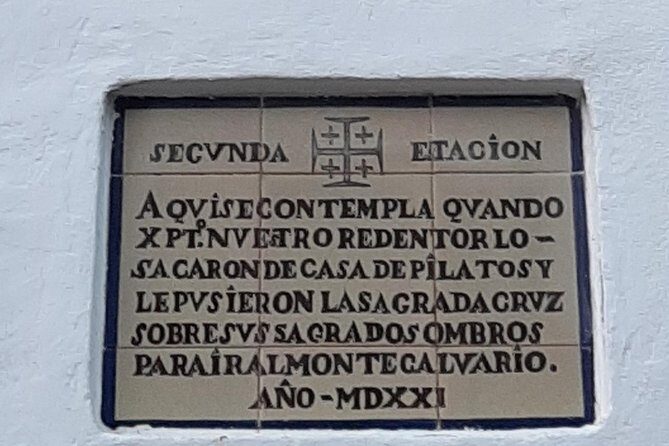
The best part of pairing Casa de Pilatos with Casa Salinas is what happens in between: the route is a walk through the San Bartolomé area, where the streets are narrow and the city feels lived-in.
On the way, you’ll pass the House of Mañara and get near the Church of San Bartolomé. The tour explanation connects the spot to an earlier reality: it was built in the place where one of the three synagogues of Seville stood. Even if you’ve been to churches across Spain before, this stop helps you see the neighborhood as a shared space that changed hands and meanings across centuries.
You also move through the kind of streets where you can feel how locals move—no big open plazas, just close walls and sudden turns. It’s an authentic way to travel from one major attraction to another without treating Seville like a checklist.
A small consideration: if you don’t like crowds, narrow streets can still feel busy at peak times. With a private group you’ll move as a unit, but you’ll still be in the neighborhood’s flow.
Iglesia de Santa María la Blanca: a mosque turned into a synagogue, then a church
This short stop is only about 10 minutes in the plan, but it carries a lot of weight. The Iglesia de Santa María la Blanca starts from a different religious origin than most visitors expect: it was originally a mosque. Later, Ferdinand III ceded it to the Jewish community so it could be used as a synagogue. Much later, it was transformed into a church.
That chain—mosque → synagogue → church—is the story the guide emphasizes. You don’t need to memorize dates to get the point. You just need to look at the building and realize it’s a physical record of shifting communities and changing power.
Even in a quick stop, you’ll understand why this landmark is so often mentioned in discussions of Seville’s Jewish past. It’s not just an architecture stop. It’s a reminder that what you’re seeing often has multiple identities.
Good to know: this stop is free in terms of admission, so it’s a nice value add compared with the paid palace tickets.
Casa Salinas: still lived in, still beautiful
Casa Salinas is the quieter, more intimate counterpoint to Casa de Pilatos. This is a 16th-century palace-house that continues as a private residence. That matters. The restoration has been done with care by its owners, so the place feels less like a museum stage and more like a home that happens to be open for visits.
You’ll spend about 40 minutes here, and you’ll see the centerpiece patio: arched galleries with plasterwork on Genoese marble columns. Those columns are a detail you’ll actually spot, not just hear about. The guide also points out tiled cloths and the Cartuja windows, so the decorative theme stays clear as you move.
The ground-floor rooms are part of what makes Casa Salinas special. They continue to be used by the owners, and the tour reflects that reality rather than treating everything as frozen behind glass. You’ll also head to the courtyard, where a Roman mosaic from the second century appears—one dedicated to the god Bacchus.
That Bacchus mosaic is the kind of thing that makes your brain go, Wait, this is here too? It adds another layer of time depth: this is not only a Renaissance-era palace feel. It’s a site with deeper roots.
Practical note: Casa Salinas entrance tickets are not included, so you’ll want your budget ready for paid admission even though the walking and guiding itself is part of the experience.
How private guiding changes what you get from the sites
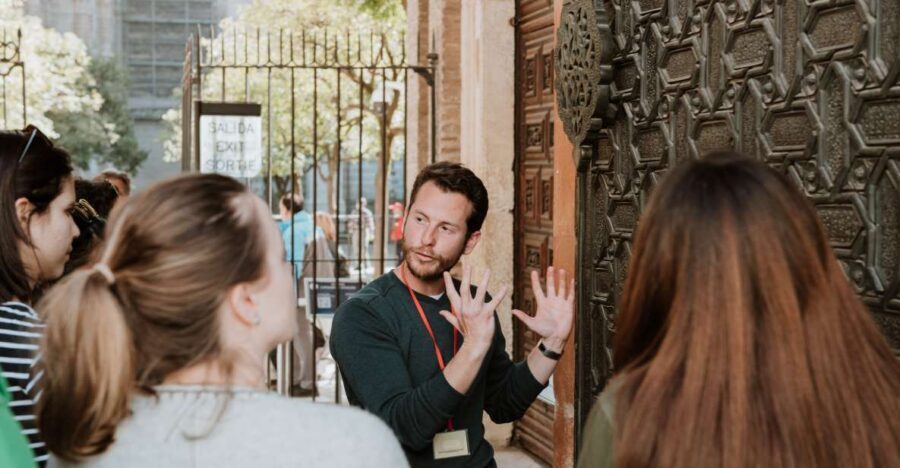
This is a private tour, meaning your group is the only group on the walk. That changes the vibe. Instead of being pulled along by a tight schedule, you can linger when something catches your attention—especially in places like Casa de Pilatos, where small details matter.
I also like the tour’s structure: it mixes big-name sights (two palaces) with connector landmarks (St. Bartholomew area and Santa María la Blanca). Those in-between stops prevent you from seeing Seville as separate attractions. You start seeing it as a network of meanings.
The guides listed for this experience include Clara Alarcón, and you may also encounter guides like Carmen. The standout theme from guide impressions is clear communication and attentive pacing. Clara, in particular, is mentioned for speaking excellent English and for also working well in German, with tours adapted to the group rather than delivered in a one-size-fits-all way.
One thing to keep in mind: if you specifically need a certain language, check that when you book. One past experience flagged a language mismatch issue, so language confirmation is worth doing.





Tickets and timing: the “what you need to plan” part
The experience runs about 2 hours total. Casa de Pilatos takes roughly 1 hour, Casa Salinas takes about 40 minutes, and the landmark stop at Santa María la Blanca is around 10 minutes—plus walking between sites.
Entrance tickets for the palaces are not included, while Santa María la Blanca is free for admission. The tour includes assistance with buying tickets at each site, which saves you time and reduces stress on-site.
Because of that, I recommend you mentally separate:
- the experience cost (the private guiding and the walk),
- from museum/palace admission (which you’ll pay at the sites).
That makes the value clearer. You’re not paying just for entry. You’re paying for context that turns entry tickets into a story you can actually follow.
Also, the tour uses a mobile ticket and runs on the assumption of good weather. If weather is poor, you’ll be offered another date or a full refund.
Where you’ll meet, and how it ends
You’ll start at Casa de Pilatos, Pl. de Pilatos, 1, Casco Antiguo, 41003 Sevilla, Spain. The visit ends at Casa Salinas, C. Mateos Gago, 39, Casco Antiguo, 41004 Sevilla, Spain.
This end point is useful if you want to keep walking afterward. Instead of backtracking to the starting area, you finish near another part of the historic center.
The tour is near public transportation and service animals are allowed. And as a general note from the experience details, most travelers can participate.
Who this tour suits best
This is a strong fit if you:
- like architecture beyond the postcard level (especially when styles overlap),
- want a private pace through Seville’s historic center,
- enjoy the religious history layer—mosque/synagogue/church transformations and the way neighborhoods evolve,
- prefer guided ticket support over figuring it out on your own.
It’s also a smart choice if you only have limited time. You get two major palaces plus meaningful connector sites without turning it into an exhausting day of stand-alone visits.
Should you book this private Casa de Pilatos and Casa Salinas visit?
If you want more than a look-then-leave tour, book it. The biggest payoff is the way the guide connects the palaces to the surrounding religious history as you walk. Casa de Pilatos gives you the dramatic architecture and decorative details, while Casa Salinas adds the quieter, lived-in feel and the Roman mosaic surprise.
Skip it (or ask extra questions before booking) only if you’re trying to keep costs ultra-low and don’t want to pay separate entrance fees at the palaces, or if you need a very specific language and want to double-check that your guide can deliver it.
FAQ
How long is the private visit?
It lasts about 2 hours in total, including time at the palaces and the walking between them.
Is this tour private or shared?
It’s private. Only your group participates.
Are entrance tickets included for Casa de Pilatos and Casa Salinas?
No. Entrance tickets for those monuments are not included, though the tour includes help purchasing tickets on-site.
Is the Church of Santa María la Blanca ticket free?
Yes. The Iglesia de Santa Maria la Blanca is listed as free for admission.
What stops are included besides the two palaces?
Between the palaces, you’ll also stop along the way at landmarks including the Church of St. Bartholomew area and the Iglesia de Santa Maria la Blanca, to learn about their significance.
What’s the meeting point?
You start at Casa de Pilatos, Pl. de Pilatos, 1, Casco Antiguo, 41003 Sevilla, Spain.
Where does the tour end?
It ends at Casa Salinas, C. Mateos Gago, 39, Casco Antiguo, 41004 Sevilla, Spain.
Do you use radio guides?
Radio guides may be necessary for groups from 7 people. If used, they’re charged at the beginning of the tour.
What happens if the weather is bad?
The experience requires good weather. If it’s canceled due to poor weather, you’ll be offered a different date or a full refund.
Are service animals allowed?
Yes, service animals are allowed.