REVIEW · SEVILLE
Private Tour Jewish Quarter, center and Plaza de España
Book on Viator →Operated by Víctor Fernández · Bookable on Viator
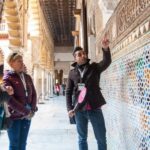
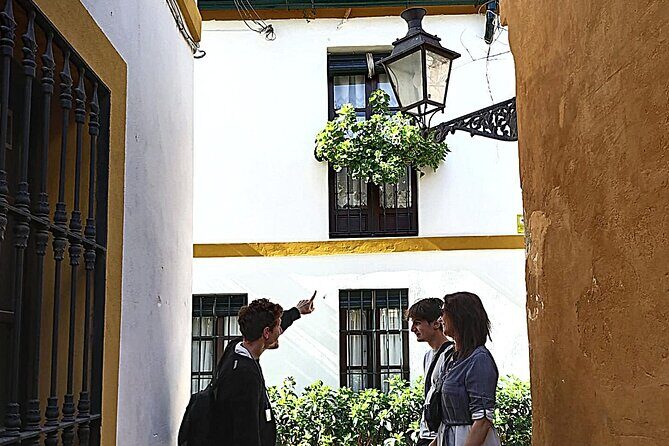
Seville’s Jewish past is written into the streets. This private 2-hour walk pulls you from Plaza de Santa Cruz through the old Jewish lanes to Plaza de España, tying together synagogues, legends, and big-city viewpoints. I especially like how the route uses real buildings (not vague talking points) to explain what life was like for Sephardic communities. I also like the guide pace and storytelling—fast enough to cover key sights, calm enough to actually notice details. One possible drawback: the streets are tight and uneven, and the subject matter includes hard moments like pogroms and expulsion.
For a group of up to 12, it’s an efficient way to get grounded in central Seville. You’ll leave with a clearer sense of where the old city “fits” against the later plazas, avenues, and monuments—so your remaining days feel easier.
In This Review
- Key highlights you’ll feel fast
- From Plaza de Santa Cruz to a Jewish Seville in context
- The city walls, gates, necropolis, and the Don Juan detour
- Iglesia de Santa Maria la Blanca: synagogue origins and Murillo’s presence
- Courtyards, narrow streets, the aqueduct, and a playful opera moment
- Pogroms, expulsion, Susona’s legend, and why the guide’s tone matters
- The City of Opera streets: where art and fiction borrowed real corners
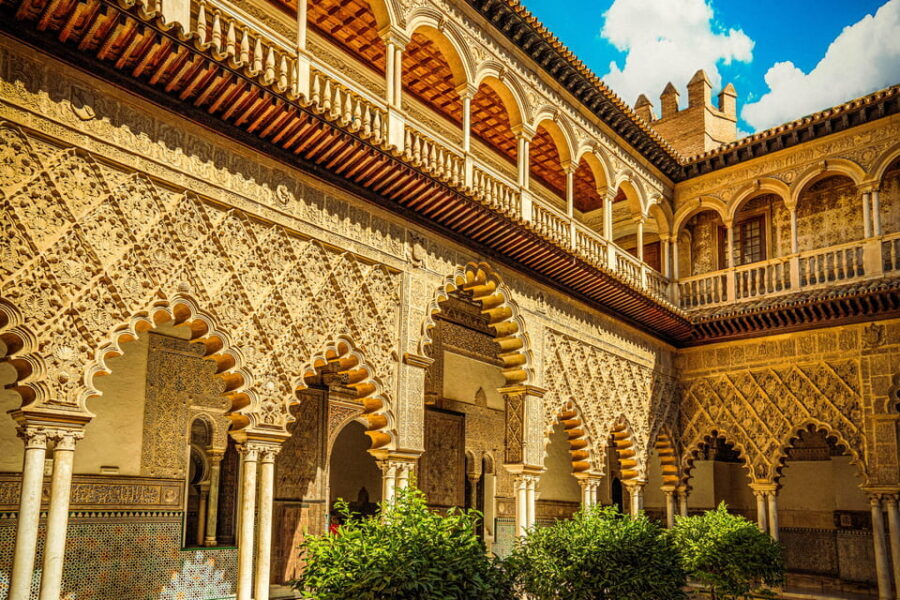
- Cathedral/Giralda/Real Alcázar/Archivo de Indias view: the reward stop
- Torre del Oro and the Ibero-American Exposition era: modern Seville’s origin story
- Royal Tobacco Factory → Universidad de Sevilla: Carmen’s French connection
- Parque de Maria Luisa and Plaza de España: why the park has the origin story you care about
- Price, group size, and why $189.87 can be smart value
- Who should book this tour
- Should you book this private Jewish Quarter and Plaza de España tour?
- FAQ
- How long is the private tour?
- What’s the price for this experience?
- Is this a private tour?
- Where does the tour start and end?
- What time does it run?
- What language is the tour offered in?
- Do I need to bring a ticket, or is it digital?
- Can I bring a service animal?
- Is there free cancellation?
Key highlights you’ll feel fast
- Jewish Quarter in one walk: from the Santa Cruz area toward Plaza de España with a clear thread
- Iglesia de Santa Maria la Blanca: an active church on the site of an older synagogue, plus Murillo-related art
- Plaques of Caminos de Sefarad: story points that connect Seville to Jewish quarters across Spain
- Opera references that make you look up: Rosina’s balcony and Figaro’s world in the middle of real alleys
- Cathedral/Giralda/Real Alcázar viewpoints: a quick “wow” stop without losing the historical focus
- Ibero-American Exposition links: Torre del Oro area to Plaza de España’s origin story
From Plaza de Santa Cruz to a Jewish Seville in context
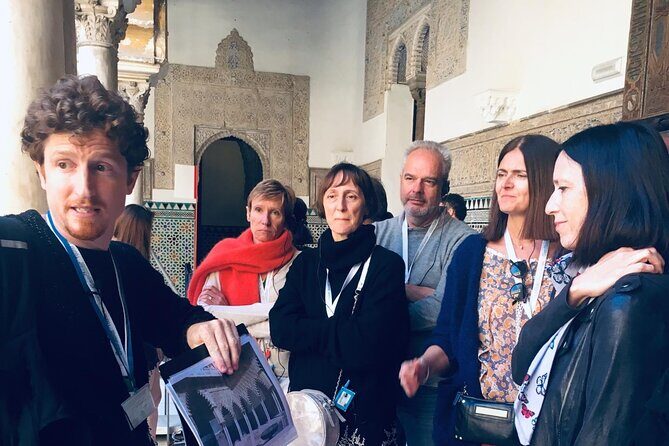
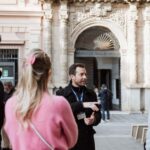
The tour starts at Plaza de Santa Cruz, right in the heart of the old center. That matters, because the first minutes are about orientation: you’re not just collecting sights—you’re learning how Seville’s different religious communities overlapped in the same urban space.
Your guide sets up a key idea: in Seville, multiple eras and faiths left physical traces close to each other. The tour points out how the Jewish presence connects to other landmarks in the same general square area—places associated with a mosque, a synagogue, and a church. It’s a big concept, but it lands because you’re seeing locations, not just reading dates.
Two of the stops in this early stretch also lean into Seville’s broader cultural identity. You’ll connect the Jewish story to art references tied to Murillo, one of Spain’s famous painters, and you’ll hear how art and faith lived side by side in the city’s imagination.
Practical tip: bring comfortable shoes right away. The route keeps you moving through older streets and courtyards where “sturdy footwear” beats style.
You can also read our reviews of more private tours in Seville



The city walls, gates, necropolis, and the Don Juan detour
Next, you shift from intimate neighborhood lanes to the larger urban story: walls, gates, and where people could live and move. This part helps you picture the enclosure where the Sephardim lived, instead of picturing the Jewish Quarter as a single abstract area.
You’ll also locate the necropolis, which gives the tour a weightier sense of the whole life cycle of a community—where people lived, worshipped, and were remembered. It’s the kind of detail that makes the sights around you feel more grounded.
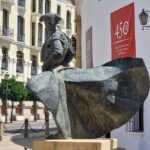
Then comes a quick turn into the Spanish Golden Age via the figure of Don Juan next to his statue. It’s a smart pacing move. After hearing about survival and expulsion, you’re reminded that Seville also produced big theatrical and literary energy. You’ll see how the city’s myth-making still shows up today in public monuments and street culture.
Iglesia de Santa Maria la Blanca: synagogue origins and Murillo’s presence
One of the clearest anchors on the route is Iglesia de Santa Maria la Blanca. The tour treats it as a living lesson: you’ll see the site of an older synagogue and then step into the current temple.
This stop also ties into the larger Seville-to-Spain connection through the Caminos de Sefarad network. You’ll encounter plaques that link Seville’s Jewish Quarter story to other Jewish quarters across Spain—so you start thinking beyond Seville’s borders.
Inside the church, the tour points you toward Murillo-related works. Even if you’re not an art person, the way this stop is framed makes it click: the city’s religious layers aren’t separate chapters. They overlap. That’s what gives Seville its punch.
Admission note: the church entry for this specific stop is described as free via an admission ticket.
Courtyards, narrow streets, the aqueduct, and a playful opera moment
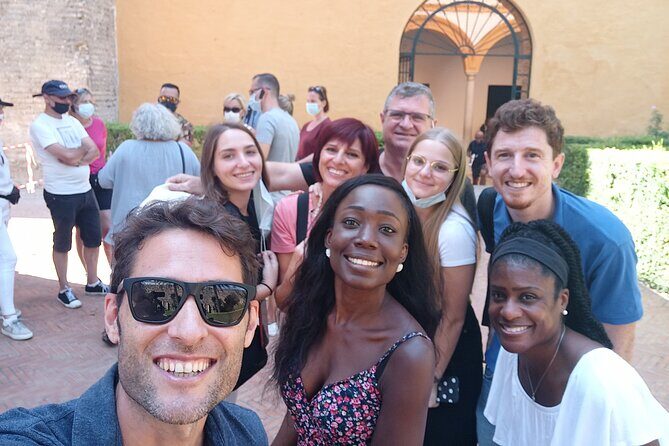
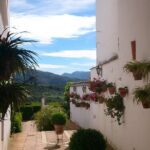
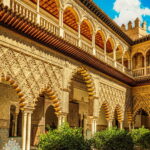
After the main landmark stop, you shift into “look closer” mode. The route moves through the neighborhood alleys and courtyards, where Seville’s charm is practical, not just postcard pretty.
You’ll see the narrowest street in the city, and you’ll also get a cultural prompt: Rosina’s balcony, tied to The Barber of Seville (Figaro). That opera reference works because it makes you lift your gaze. You start noticing balconies, windows, and street bends—things you might otherwise walk right past.
This is also where the tour shows you an old Seville aqueduct. It’s a nice reminder that the city isn’t only about buildings and legends. Infrastructure matters too. When you connect old water systems to human settlement patterns, the Jewish Quarter story feels more “real-life” and less like a museum topic.
Pogroms, expulsion, Susona’s legend, and why the guide’s tone matters
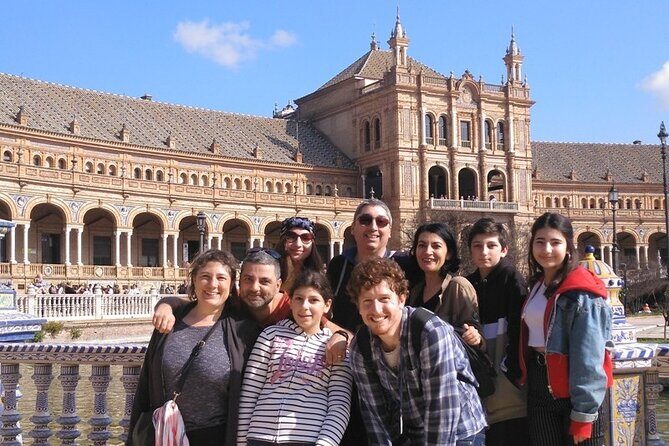
Then the tour takes on the heavy chapters: the vicissitudes of the Hebrew people, including the pogrom and the definitive expulsion of the Jews by the Catholic Monarchs. This section is not meant to be quick trivia. It’s structured so you understand the emotional stakes of the historical turning points.
You’ll also hear the story of Susona, described as a beautiful figure and tied to a legend. Legends can sound like a detour—until you realize they’re a way communities processed fear, love, and identity in their own language. The goal here is to help you read culture alongside events.
How to enjoy this part: if you want the story to land, don’t rush your photos. Pause where the guide points and let the meaning come first. The subject is weighty, and the tour pacing gives it room.


The City of Opera streets: where art and fiction borrowed real corners
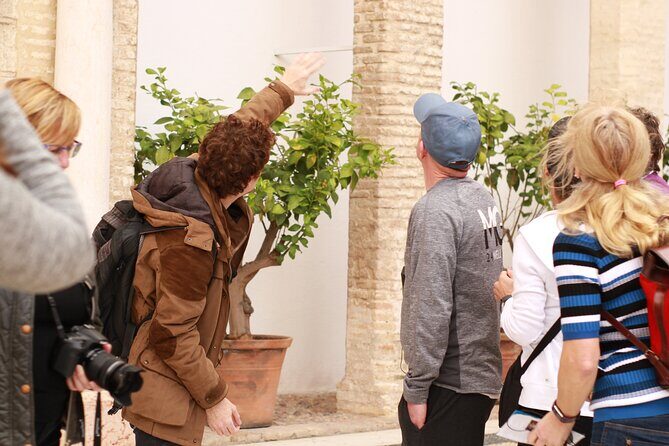
One of the most pleasant surprises is how the tour treats the neighborhood as a creative stage. You’ll learn how this area served as a setting for European artists—plots of novels and plays drawn from (and shaped by) what they saw.
The tour frames this as the so-called City of Opera by UNESCO. Whether you’re a die-hard opera fan or someone who just likes a good story, this idea changes the way you move through the streets. Suddenly you’re not only asking What is here? You’re asking What did artists see here that they could transform into performance?
And you’ll feel that in the walk itself: the route uses backstreets and scenic turns so the neighborhood’s theater-like shape becomes visible. It’s a smart match of topic and terrain.
Cathedral/Giralda/Real Alcázar/Archivo de Indias view: the reward stop
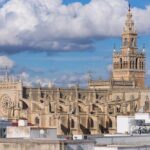
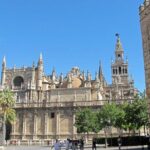
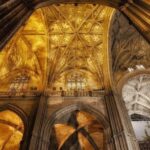
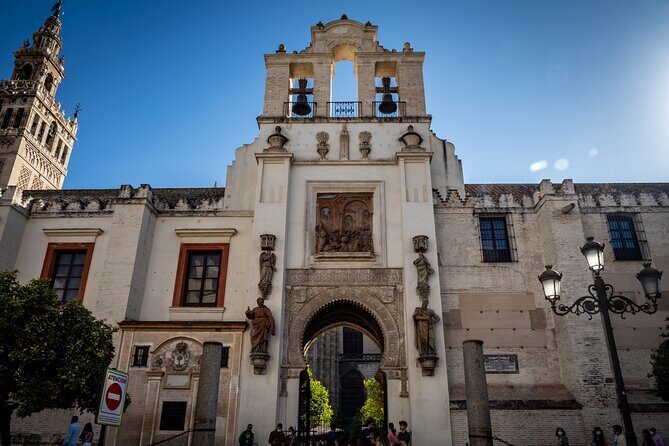
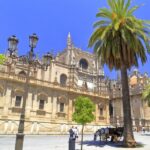
About when you’re starting to feel the miles in your legs (even in a short walk), you get a major payoff: a viewpoint framed around the Cathedral, the Giralda, the Real Alcázar, and the Archivo de Indias.
This is valuable because it turns the tour’s theme outward. You’ve been focused on Jewish Quarter streets and local legends. Now you’re shown how those stories sit inside the wider identity of Seville—monuments, power, empire, and architecture all in one line of sight.
You’ll also understand why these UNESCO-linked buildings dominate postcards. They’re not isolated landmarks; they form the “center of gravity” for the entire city.
Torre del Oro and the Ibero-American Exposition era: modern Seville’s origin story
After you leave the historic center a bit, the tour shifts to a different kind of Seville: the city as it reinvented itself in the early 20th century.
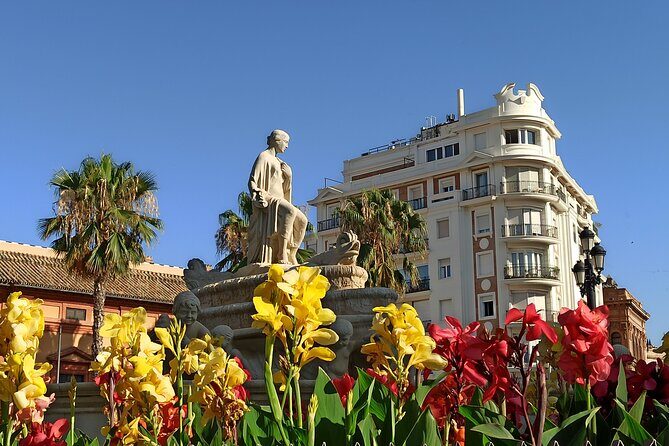
You’ll learn about the relevance of the Torre del Oro, and you’ll connect that with the new urban configuration created around the Ibero-American Exposition. The tour names concrete landmarks you can recognize afterward—like the Alfonso XIII hotel and the layout of key avenues, including Constitution.
This part is useful because it explains why Seville has those wide, confident streets that feel different from the older core. You’ll stop thinking of Seville as one time period. You’ll start seeing layers—medieval narrowness plus planned modern space.
Royal Tobacco Factory → Universidad de Sevilla: Carmen’s French connection
One stop that adds extra flavor is Universidad de Sevilla, housed in the old Royal Tobacco Factory. You’ll hear how this is tied to French influence and to literary inspiration.
The tour connects the factory to the French writer Mérimée, describing how he was inspired to create Carmen. That bridge between industry and art is exactly the kind of connection that makes a city feel personal.
Even if you don’t remember details of Carmen scenes, the practical takeaway is solid: the factory symbolizes trade and manufacturing shaped by European politics, especially under the Bourbons’ spread of these approaches in Spain. The tour ties those ideas to other French authors, giving you a reason to notice language and culture in the city’s buildings—not just in books.
Parque de Maria Luisa and Plaza de España: why the park has the origin story you care about
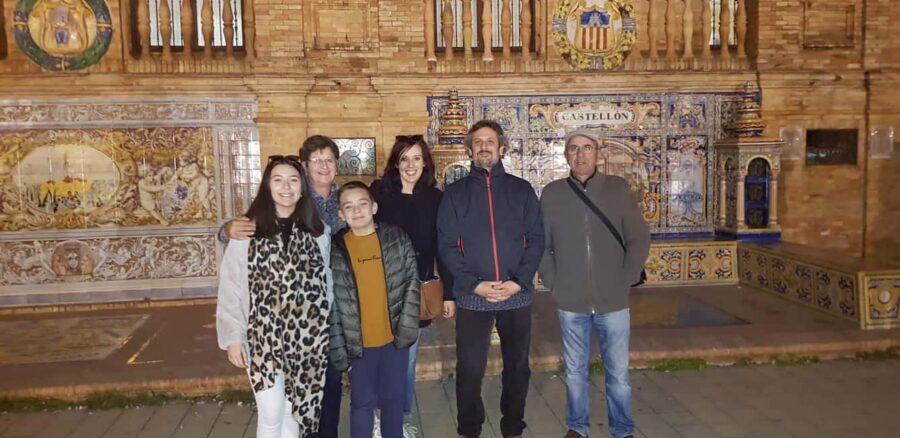
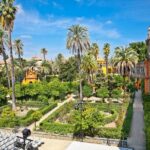
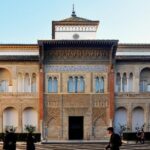
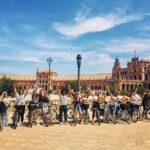
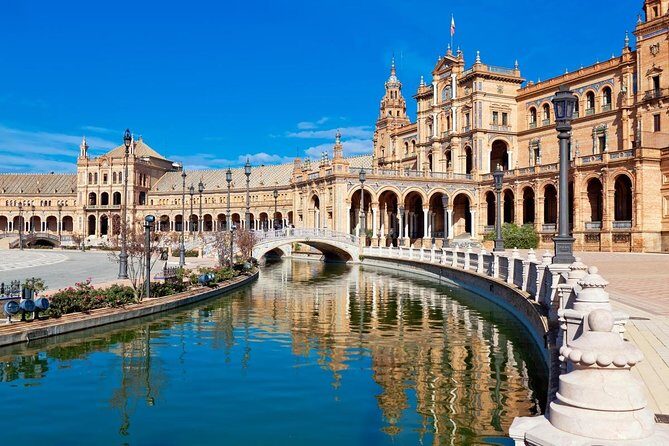
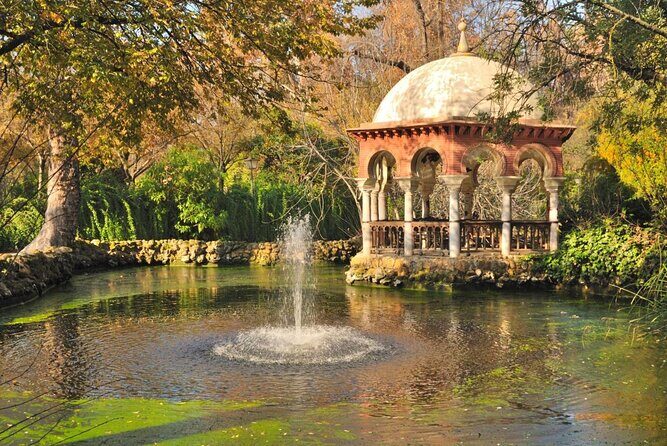
The grand finale is Parque de Maria Luisa and then Plaza de España. The tour credits a prestigious French garden architect, Forestier, for the park’s design. That’s a good detail because it explains why the green space feels intentional, not accidental.
Then you get the link to the Ibero-American Exposition again, this time directly through the pavilions. The tour explains that old exposition buildings still echo in today’s layout—especially the pavilion in Spain, which gives its name to the current Plaza de España.
This ending works well after the Jewish Quarter story. You go from intimate alleys to an open civic stage. And because the tour has already taught you to look for layers, Plaza de España doesn’t feel like a random photo spot. It feels like a finished chapter with context.
Price, group size, and why $189.87 can be smart value
The price is $189.87 per group for up to 12 people, and the tour runs about 2 hours. On paper, that can look like a small premium for a walking tour. In practice, it can be a good deal when you want a private guide for a compact group.
Here’s why it tends to be worth it:
- Private format means the pace can match your questions instead of forcing you into a big-group rhythm.
- You’re covering a concentrated route across major themes: Jewish Quarter context, major monuments, and the Expo-to-Plaza of Spain origin story.
- The tour includes free admission at a couple of key stops mentioned in the itinerary, like Iglesia de Santa Maria la Blanca and Universidad de Sevilla, which helps you avoid extra costs during the walk.
One more practical point: the tour is often booked far ahead (on average, 122 days), so if your dates are fixed, booking early is a real advantage.
Who should book this tour
This is a great fit if you:
- want a first-timer-friendly route through central Seville with real historical anchors
- like walking, photos, and story-driven sightseeing (not just a checklist)
- travel with a small group that benefits from private pace
- enjoy connections between culture and places—especially opera references and French literary links
It’s also a solid choice if your Seville time is short and you want to avoid planning a patchwork of neighborhoods.
Should you book this private Jewish Quarter and Plaza de España tour?
If you want Seville to make sense in a couple of hours, I think you’ll like this. The best reason to book is the way the tour ties together Jewish Quarter landmarks, the hard historical chapters, and then a strong finish at Plaza de España with citywide viewpoints. It’s not only pretty; it explains why the city looks the way it does.
I’d skip it only if you strongly prefer lighter, entertainment-only sightseeing. The route includes difficult historical material like pogroms and expulsion, and it also involves walking through tight old streets where comfort matters.
FAQ
How long is the private tour?
It runs for about 2 hours.
What’s the price for this experience?
The price is $189.87 per group, for groups of up to 12.
Is this a private tour?
Yes. It’s a private tour/activity, and only your group participates.
Where does the tour start and end?
It starts at Plaza de Santa Cruz and ends in the gardens of María Luisa in Plaza de España.
What time does it run?
The opening hours listed are Monday–Sunday: 10:00 AM–12:00 PM.
What language is the tour offered in?
It’s offered in English.
Do I need to bring a ticket, or is it digital?
You’ll receive a mobile ticket.
Can I bring a service animal?
Yes. Service animals are allowed.
Is there free cancellation?
Yes. Free cancellation is available if you cancel up to 24 hours in advance for a full refund.