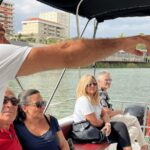
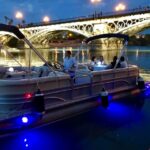
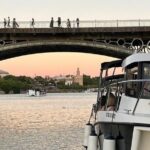
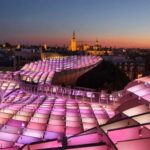
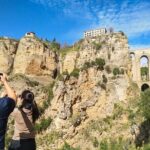
A calm river ride in Seville beats another walking loop. You’ll float past some of the city’s most photogenic landmarks from the Guadalquivir with a certified guide in English, plus you get a live human layer—not just staring at buildings. I especially liked the close-up perspectives on Plaza de España and the way the boat lines you up with Triana and its bridges. One drawback to keep in mind: the narration is not always heavy on back-and-forth conversation, so if you’re hunting for deep Q&A history, you may want to supplement on shore.
You’ll ride for about 1 hour and your boat portion ends at the same dock where you started, starting near Supermercados DIA on Av. Paseo de Cristina. The route makes good use of the river’s turns: start with the 1929-style park sights, then shift to the old maritime vibe of Torre del Oro, and finish with the 1992 Expo area on Isla de La Cartuja. Plan for a straightforward, scenic experience—beautiful, practical, and easy to fit into a busy day.
In This Review
- Key highlights you’ll actually care about
- Why this private eco-cruise is a smart Seville move
- First section: María Luisa Park and Plaza de España from the river
- The shift to maritime Seville: Torre del Oro and Contaderos Dock
- Triana by water: Bétis Street, Isabel II Bridge, and the river angle
- Finishing on Isla de La Cartuja and the 1992 Expo sights
- Guide + narration: why it can feel great, or slightly off
- Price and time: does $75.10 per person make sense?
- Where to meet: finding the dock without stress
- Who should book this cruise?
- Should you book this Seville private eco-cruise?
- FAQ
- How long is the private eco-cruise?
- What language is the tour offered in?
- Is this tour private?
- Where does the tour start?
- Is a guided tour included?
- Are alcoholic beverages included?
- What monuments or areas will I see during the cruise?
- What happens if weather is poor?
- What is the cancellation window?
Key highlights you’ll actually care about
- Plaza de España angles from the water that make the landmark feel huge, not postcard-flat
- Torre del Oro viewed in context from the Contaderos Dock
- Triana + Bétis Street lined up with the Isabel II Bridge as you pass underneath
- Isla de La Cartuja with Expo-era pavilions like Navigation and the bridge views from La Barqueta and Alamillo
- A private format for your group, so you can move at the pace of your questions
- Keep your eyes open for turtles, since wildlife sightings happen on the route
Why this private eco-cruise is a smart Seville move
Seville can feel like it’s all walking, all the time. This ride gives you a break without cutting the fun. You still see the big hitters, but the river changes the scale: buildings look taller, bridges feel closer, and details show up faster.
What makes this one worth your attention is the private setup with a certified guide, plus an experience length that doesn’t bully your schedule. For around an hour, you can get a concentrated visual tour of the city’s “why it’s famous” zones: the 1929 celebration buildings, the historic Torre del Oro area, and the modern Expo island.
The vibe is calm and scenic. It’s not trying to be a marathon history lecture, and that’s okay. You’ll get enough context to understand what you’re looking at, and you can always add depth later with a museum stop or a longer guided walk.
You can also read our reviews of more boat tours in Seville
First section: María Luisa Park and Plaza de España from the river
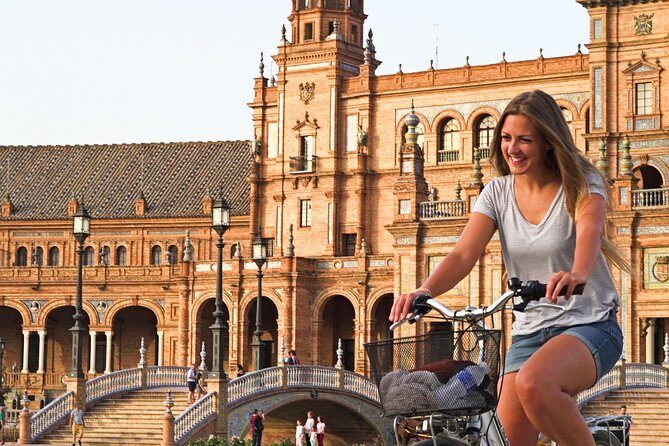
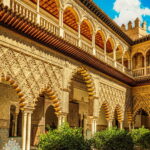
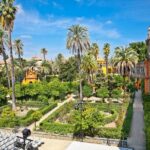
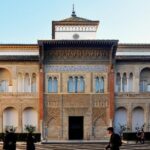
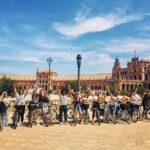
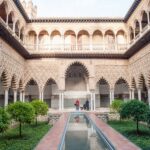
The cruise starts with one of Seville’s most recognizable scenes: the María Luisa Park area and its star attraction, the Plaza de España. From the boat, you see the space in a more dimensional way than you do from the plaza itself. Instead of walking “around” the landmark, you get to look at it as the designers intended—part of a larger ceremonial landscape.
You also pass by pavilions that help you connect the dots to the Ibero-American Exhibition of 1929. On the water, it’s easier to spot where the different pavilion zones sit in relation to the main plaza view. You’ll specifically get perspectives of the Argentina and Chile pavilions, and that makes the whole site feel like a themed city-within-a-city rather than just one iconic frame.
One extra detail that matters: you’ll be able to see the Costurero de la Reina in the same area. It’s the kind of building people miss when they only focus on the grandest views. From the river, it’s there in your field of vision, and a good guide helps you understand why it belongs to the bigger story of the exhibition-era planning.
Tip: Bring your phone camera, but also look up. The best shots here aren’t only about zooming; they’re about timing the angle when the boat lines up with the plaza geometry.
The shift to maritime Seville: Torre del Oro and Contaderos Dock
After the park-and-plaza section, the cruise turns more maritime and historic. You’ll get a unique perspective of the Torre del Oro, one of Seville’s best-known landmarks, located by the Contaderos Dock.
This is a great moment for understanding scale. From the river, Torre del Oro doesn’t feel like a distant monument you “go see.” It becomes part of an active river shoreline scene. The tower’s shape and position make it easier to grasp the defensive-and-trade role the river historically played.
And because you’re on the water, you’re also naturally moving along the city’s “layers.” You just left a 1929 exhibition landscape, and now you’re looking at a structure tied to the older maritime identity of Seville. That contrast is one reason this cruise works even if you’ve already seen pictures online.
What I like about this stop: it’s quick but focused. You get the payoff without needing to walk across town afterward.
Triana by water: Bétis Street, Isabel II Bridge, and the river angle
Then comes one of the most scenic city-crossings in Seville: Triana. From the boat, you can admire the neighborhood and the famous street Bétis across the way, which is a fun way to orient yourself before you ever set foot in Triana later.
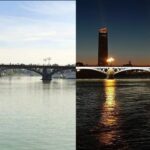
Your route also includes passing under the Isabel II Bridge—people often call it the Triana Bridge. Under-bridge moments are underrated on river rides. You get a quick visual “whoosh” and then—suddenly—the city opens back up on the next stretch. It feels like the river gives you a moving frame for the neighborhood.
This section also helps you understand why Triana has such a distinct character. Even without entering the streets, you can feel how the neighborhood sits in relation to the water and how the bridge functions as a connector.
Practical note: If you’re sensitive to wind or cool air, bring a light layer. Bridges change airflow fast, and you’ll want to stay comfortable for the whole ride.
Finishing on Isla de La Cartuja and the 1992 Expo sights
After Triana, the cruise heads toward Isla de La Cartuja, the island that hosted the 1992 Universal Exposition. This end section is more modern in tone, and it gives you a different Seville picture: less historic street texture, more planned architecture and long river views.
You’ll have perspectives of Expo pavilions such as the Navigation pavilion. Even if you don’t step onto land during this particular ride, seeing the pavilion placements from the water helps you visualize the layout of the island in a way photos rarely do.
You’ll also get bridge views connected to the Expo-era engineering, including La Barqueta and Alamillo. Bridges are the secret sauce here. They add motion and scale—plus they help you understand how La Cartuja connects back to the mainland.
One more thing I’d watch for: wildlife. On the route, people sometimes spot turtles, and it’s the kind of small moment that makes an otherwise “just sightseeing” ride feel alive.
You can also read our reviews of more guided tours in Seville
Guide + narration: why it can feel great, or slightly off
This is a guided experience, and the guide matters because they can connect what you’re seeing to what it means. In English, that helps you catch details you’d otherwise miss—like why you’re seeing specific pavilions in sequence, or what to notice when the boat lines up with a landmark.
That said, reviews and real-world patterns point to a narration style that may lean on audio during parts of the cruise. If your ideal tour is lots of back-and-forth speaking from the captain or guide, you might find it less interactive than you imagined. In one case, the narration didn’t match the scenery perfectly at first, then got adjusted later.
I don’t think that means the experience is bad. It just means you should set expectations: think of this as a scenic guided cruise rather than a live, talky walking tour. If you’re the kind of traveler who enjoys listening while you watch, you’ll likely be very happy.
Also, you may encounter guides who bring energy and comfort. One guide named Leonardo is mentioned as an engaging professional who keeps things easy to follow and fun over the radio-style commentary.
Best strategy: ask one or two focused questions at the start, then enjoy the views. One or two good questions will unlock more meaning than trying to turn the whole ride into a seminar.
Price and time: does $75.10 per person make sense?
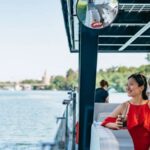
At $75.10 per person for about 1 hour, you’re paying for two things: (1) reserved river time with a guide, and (2) the convenience of seeing multiple landmark zones without moving through heavy walking traffic.
This price can feel different depending on how you’re traveling:
- If you’re in a small group and want a private feel, the cost can start to look more reasonable because you’re not sharing with a large crowd.
- If you’re solo and expecting a long, deep history lecture, you might wish it were longer or more interactive.
The good news is that this duration is practical. You can fit it between other Seville priorities—especially if your legs are tired from plazas, churches, and wandering.
Also, the experience is offered with group discounts and is booked about 15 days in advance on average, which usually signals steady demand rather than a “random last-minute thing.” You’ll also get a mobile ticket, which is the kind of low-friction detail that matters when you’re on foot in a busy area.
One consideration: some people report getting less than the expected time window. That can happen with river scheduling, boarding time, or operational constraints. If timing is critical for your day, build in a buffer.
Where to meet: finding the dock without stress
The meeting point is listed as Supermercados DIA, Av. Paseo de Cristina, 3 (Casco Antiguo), 41001 Sevilla. The experience also notes that customers embark and disembark at the same point, even though an end address appears as Puente de S. Telmo, 7.
In other words: don’t rely on the end address as your wayfinding tool. Go by the dock you’re told at check-in, and give yourself enough time to confirm you’re at the correct river entrance.
One useful lesson from real arrival-day experience: the area around Cristina Mall can be confusing in the moment, so I’d rather you walk up and ask than circle for 15 minutes with your phone battery at 3%. When in doubt, call and get exact directions to the dock.
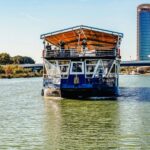
Tip: arrive a little early, then use the time to scan the shore for your boat’s look and markings. That reduces stress and makes the start smoother.
Who should book this cruise?
This cruise is a strong fit if you want:
- Big views with minimal walking
- A private setting for your group
- An easy Seville activity that mixes the classic landmarks with the Expo-era island
- English guidance that gives you context while you relax
It’s also a good match for travelers who like structure but don’t want to feel trapped in a rigid schedule. At about an hour, you’re getting a clear “Seville snapshot” without committing your whole day.
If you’re the kind of traveler who insists on nonstop live narration and constant interaction, you may be happier with a longer walking guide. For most people, though, the combination of river scenery and guided context works nicely.
Should you book this Seville private eco-cruise?
If your goal is to see Plaza de España, Torre del Oro, Triana, and Isla de La Cartuja in one smooth flow, I think this is a smart booking. You’ll get the river’s best party trick: turning landmarks into motion-friendly scenes you can actually enjoy.
I’d book it if you like listening at your own pace, enjoy bridge moments, and want a low-effort way to connect Seville’s eras—from 1929 exhibition vibes to 1992 Expo architecture.
I’d hesitate only if you’re very sensitive to narration mismatch or you’re expecting a highly interactive, captain-led talk the whole time. If you set expectations as scenic + guided, you’ll likely come away happy.
FAQ
How long is the private eco-cruise?
It runs for about 1 hour.
What language is the tour offered in?
The experience is offered in English.
Is this tour private?
Yes. It’s a private tour/activity, and only your group participates.
Where does the tour start?
The meeting point is Supermercados DIA, Av. Paseo de Cristina, 3, Casco Antiguo, 41001 Sevilla, Spain.
Is a guided tour included?
Yes. A guided tour is included.
Are alcoholic beverages included?
No. Alcoholic beverages are not included, though there is a bar on board.
What monuments or areas will I see during the cruise?
You’ll have views of María Luisa Park and Plaza de España (including the Argentina and Chile pavilions and the Costurero de la Reina), Torre del Oro, Triana (including Bétis Street) and Isabel II Bridge, and Isla de La Cartuja with Expo-era pavilions such as Navigation plus views of bridges like La Barqueta and Alamillo.
What happens if weather is poor?
The experience requires good weather. If it’s canceled due to poor weather, you’ll be offered a different date or a full refund.
What is the cancellation window?
You can cancel for a full refund up to 24 hours in advance. Less than 24 hours before start time is not refundable.