REVIEW · SEVILLE
Itálica: 3-Hour City of Emperors Tour from Seville
Book on GetYourGuide →Operated by sevilla inside · Bookable on GetYourGuide
Roman ruins near Seville are a quick time machine.
I love how the Itálica amphitheatre still feels imposing, even after all these centuries, and I especially love the mosaics—sharp, detailed, and surprisingly vivid. Add in the guided story that connects this site to big imperial names like Trajan and Adriano, and the whole place clicks into focus fast.
The main thing to watch is timing. If your group has mixed language needs, you may lose some of the tight time you hoped to spend inside the amphitheatre.
In This Review
- Key things to know before you go
- Getting to Itálica: smooth transport from central Seville
- Priority entry and the first stop: what you’ll see before the amphitheatre
- The amphitheatre: Game of Thrones fame meets real Roman scale
- Mosaics that make ancient daily life feel close
- Thermal baths: comfort, engineering, and Roman routines
- Walking the Roman streets: Trajan and Adriano in context
- Seeing the site through a bilingual guide’s eyes
- How long 3 hours really feels (and how to pace yourself)
- Price and value: what $59 gets you
- Small rules that matter: what to bring and what not to do
- Who this tour is best for (and who should rethink it)
- Booking call: should you choose Itálica from Seville?
- FAQ
- How long is the Itálica 3-Hour City of Emperors Tour from Seville?
- What does the tour cost?
- Is round-trip transport from Seville included?
- Is entrance to Itálica included?
- What languages is the live guide available in?
- What group size should I expect?
- What should I bring?
- Is food or drinks included?
Key things to know before you go
- Small-group pace: capped at about 7 participants, so the guide can keep things moving without feeling rushed
- Amphitheatre in the spotlight: the same setting that showed up in Game of Thrones makes the ruins instantly visual
- Mosaics worth slowing down for: you’ll stop long enough to actually look, not just pass by
- Round-trip transport: you skip the hassle of figuring out buses or taxis for a short Roman day trip
- It’s a compact excavation: the site isn’t huge, so plan on 2–3 hours of focused sightseeing, not wandering all day
Getting to Itálica: smooth transport from central Seville
This tour is built for people who want Roman history without a logistics headache. You meet at the City Expert shop on the corner of Av. de la Constitución and Calle Miguel Mañara, and then you get round-trip transport from Seville. It’s a short trip out to the archaeological area—about 7 km outside Seville—so the day stays efficient.
That matters, because Itálica is best when your brain is fresh. You start with the guide’s framing: what this city was, who ruled here (the tour names Trajan and Adriano), and how the place later lost its momentum. Then you’re walking the streets while the story is still fresh in your head.
One more practical point: in a tight 3-hour window, transportation is part of the value. Paying $59 isn’t only about standing in front of ruins—it also buys time and smooth flow.
You can also read our reviews of more city tours in Seville



Priority entry and the first stop: what you’ll see before the amphitheatre
Right after pickup, you head into the archaeological area with priority entry and your entrance ticket handled. That small benefit adds up. It means less time “waiting around” and more time actually in the site.
Once you start walking, the guide’s job is to connect the physical pieces—ruins, walls, floor remains—with the bigger story. You’ll hear about the rise and fall of this early Roman city on the Peninsula, and you’ll get specific angles on political and economic decisions tied to the site, including references to the 3rd century B.C. in the narrative they share.
If you like history but hate long lectures, this tour fits. The pace is meant to be tour-paced: move, stop, look closely, and let the guide point out what you’d likely miss on your own.
The amphitheatre: Game of Thrones fame meets real Roman scale
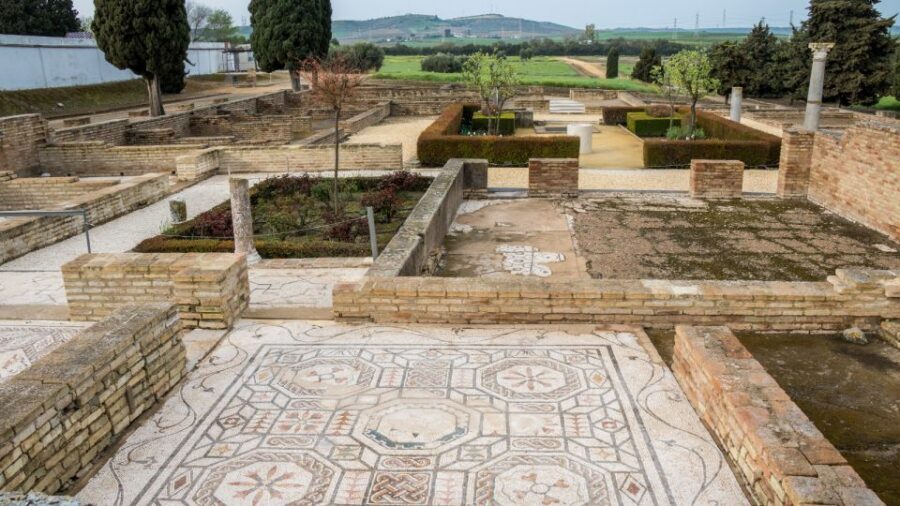
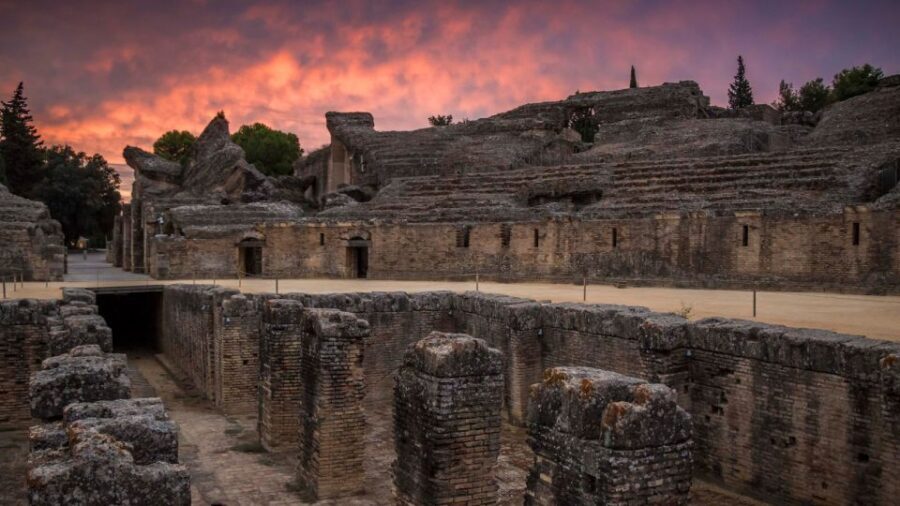
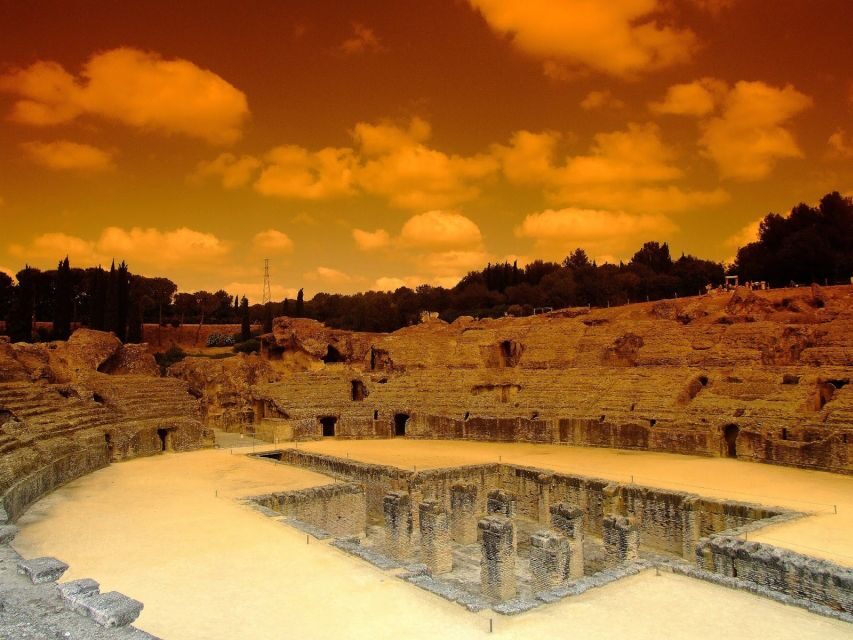
The amphitheatre is the headline, and for good reason. It’s well preserved enough that you can still read the shape of the space and feel its scale. Even if Game of Thrones isn’t your thing, the architecture does the work. You get that Roman “this was built to host crowds” feeling.
The guide also helps you link what you see to why amphitheatres mattered: social power, public events, and the kind of civic life that made cities feel permanent. This is where the tour’s “city of emperors” theme clicks hardest—because the empire’s reach isn’t just politics on paper. It shows up in where people gathered and how they were entertained or controlled.
Now the possible drawback comes into play: inside the amphitheatre, time can be tight. If the group has to split its attention across languages, or if there’s repetition needed, you might end up with less than you expected at the highlight. So if amphitheatre photos and a long sit are your priority, tell yourself to treat it like a focused stop, not a leisurely museum hour.
Still, when the timing works, this is the kind of place you’ll understand instantly from just standing there.
Mosaics that make ancient daily life feel close
After the amphitheatre, the tour shifts into the everyday side of Roman life. The mosaics are a standout here. They’re not just decoration in the background—you can actually see patterns and details that signal status, wealth, and an obsession with craftsmanship.
This is one of the best parts of the experience because mosaics reward attention. You’ll likely pause more than once to look at the floor surfaces and understand why they were worth preserving. For me, it’s the kind of stop that turns a site from “ruins” into “a place where real people lived.”
The guide’s commentary matters too. Without interpretation, mosaics can turn into visual noise. With it, you start to connect the dots: how rooms were used, what kind of household or public building you’re standing in, and why this city mattered enough to invest in art and design.
Thermal baths: comfort, engineering, and Roman routines
The tour also includes the thermal baths area. Even when you’re just looking at remains, baths tell you a lot about Roman culture. This wasn’t only hygiene. It was routine, social life, and an impressive use of space and water management.
The baths section is valuable because it balances the amphitheatre’s crowd-energy with something more human. Instead of crowds watching events, you picture people moving through warm and cooler spaces, staying for a while, and chatting.
You’ll appreciate this more if you’re the kind of visitor who likes infrastructure—how ancient cities functioned beyond monuments. And if you’re traveling with kids or you want a break from the biggest architecture, baths give you a calmer pace to take in details.
You can also read our reviews of more tours and experiences in Seville





Walking the Roman streets: Trajan and Adriano in context
One of the coolest parts of a guided format is that you don’t just see objects—you walk through an explained environment. In Itálica, you get that “streets once ruled by emperors” feeling, because the tour frames the city around figures like Trajan and Adriano.
That framing is useful for two reasons. First, it gives you a mental timeline. Second, it explains the kind of political and economic decisions that shaped the city. The tour narrative ties the rise and fall story together so the site stops feeling random.
Also, you’ll hear about why the city didn’t stay on top forever. Roman prominence could fade for lots of reasons—economic shifts, power changes, and the reality that cities needed constant support. Listening while walking helps you understand that decline is part of the archaeology too, not just an ending note.
Seeing the site through a bilingual guide’s eyes
You’ll have a live guide in Spanish and English, and the tour is structured for a small group. This is a big deal for value. In a larger group, you’re often stuck at the back, catching fragments of information. Here, the guide can pause, correct, and point, which makes your stops more productive.
The guide’s style is also a highlight from real experiences on this tour. I’ve seen examples of guides being engaging from pick-up to drop-off, and I’ve also seen guides adding practical Seville tips—where to go next and what to try—so the day trip doesn’t feel like a separate world. In one case, guides were praised for patience with young children, which tells you the pacing is flexible enough for different ages.
Names that come up in real experiences include Carmen, Maria, and Lara. If you get one of these guides, you’re likely to get clear explanations and a guide who can handle questions instead of sticking to a script.
One note to temper expectations: bilingual setup can occasionally affect flow. In one situation, a mixed-language group led to repetition, and amphitheatre time shrank. If your language is your priority, go with the assumption that the guide will do their best to manage everyone, but time at the very top highlight is still time-sensitive.
How long 3 hours really feels (and how to pace yourself)
The tour runs about 3 hours, and that’s the right length for Itálica. The site is relatively compact, and that’s not a bad thing—it means you won’t feel like you’re rushing through a maze. It’s more like a focused museum visit, only outdoors and built into the ground.
Still, 3 hours means you should plan to move with the group. Comfortable shoes matter. The tour specifically tells you to wear breathable clothing and expect walking. If you want a lot of extra time for souvenirs, take note: there may not be a ton of margin built into the schedule.
My practical advice: treat this like a “choose your moments” day. Spend extra attention at the mosaics and amphitheatre, and don’t try to do side wandering. The guide’s stops are designed to hit the most meaningful parts, and your time is better spent listening, then looking closely.
Price and value: what $59 gets you
At $59 per person, you’re not just paying for a guide. You’re paying for a full package that covers:
- Round-trip transport from Seville
- Entrance ticket
- Skip the ticket line
- A live bilingual guide
- A small group size (around 7 people)
That’s good value for most visitors because it removes friction. If you tried to DIY it, you’d still spend money on transit and probably lose time coordinating schedules. Here, the timing is handled, and you’re guided through the most worth-seeing elements.
Is it worth it? If you enjoy interpretation—someone helping you connect ruins to real stories—yes. If you only want quiet wandering and you already know the Roman background, you might feel the tour limits your pace. But for most people doing Seville for a couple of days, this is an efficient add-on that brings serious Roman context without stealing an entire day.
Small rules that matter: what to bring and what not to do
This is a working archaeological site, so you’ll want to follow the basics. You should bring comfortable shoes and breathable clothing. You’ll also want to keep your hands to yourself—touching exhibits is not allowed.
If you’re the type who likes to take close-up photos, keep an eye on where you’re standing so you don’t accidentally get too near fragile surfaces. The guides will generally keep you in safe viewing areas, but it’s on you to respect the site.
And for comfort: since it’s a short day, think hydration and snacks only if you know you’ll use a little downtime before or after the tour. Food and drinks are not included.
Who this tour is best for (and who should rethink it)
This Itálica tour works best for people who want a guided Roman outing without heavy planning. It’s ideal if you’re doing Seville for 2 or more days, because you can slot the 3-hour trip into a day when you still want time for neighborhoods, tapas, or the bigger Seville sights.
It also fits families better than you might expect. Guides have been noted as patient with young children, and a 3-hour format is often manageable.
On the other hand, it’s not suitable for people with mobility impairments, based on the tour’s guidance. If mobility is an issue, you’ll need to choose a different option that explicitly supports your needs.
Booking call: should you choose Itálica from Seville?
If you like Roman ruins but don’t want to spend your day figuring out transport, I’d book this. The combination of round-trip transfers, priority entry, and a small-group bilingual guide makes it a good value use of your time in Seville.
I’d especially book if:
- You want the amphitheatre and mosaics explained, not just photographed
- You have a tight schedule and want a solid 3-hour hit
- You like when a guide adds helpful recommendations after the tour for what to do next in Seville
I’d think twice if:
- You’re extremely sensitive to losing a few minutes at the amphitheatre
- You prefer a slow, unscripted wander rather than a guided route
- Mobility is a concern for you
If the amphitheatre is your top priority, arrive with the mindset that you’ll see it well, but you’ll still be moving on schedule.
FAQ
How long is the Itálica 3-Hour City of Emperors Tour from Seville?
The tour lasts 3 hours.
What does the tour cost?
It costs $59 per person.
Is round-trip transport from Seville included?
Yes. Round-trip transport from Seville is included.
Is entrance to Itálica included?
Yes. The entrance ticket is included, and you also skip the ticket line.
What languages is the live guide available in?
The guide is available in Spanish and English.
What group size should I expect?
It’s a small group limited to 7 participants.
What should I bring?
Bring comfortable shoes and breathable clothing.
Is food or drinks included?
No. Food and drinks are not included.