REVIEW · SEVILLE
Cordoba City Tour with Mosque-Cathedral from Seville
Book on Viator →Operated by Naturanda Turismo Ambiental · Bookable on Viator
Córdoba is a time machine in one day. This 10-hour coach tour turns Seville’s morning into a full Córdoba hit: Roman Bridge views, the Mezquita-Catedral with skip-the-line entry, and expert live commentary along the way.
I especially like the way the day is structured around Córdoba’s major layers. You get a guided walk through the UNESCO old center, then a focused visit to the Mosque-Cathedral interior where you can follow the story and still have options to self-tour.
One thing to consider: it’s a long day with a lot of walking on uneven, cobbled streets. If you’re sensitive to pace, heat, or long distances, plan carefully and keep expectations realistic.
In This Review
- Key Highlights Worth Paying Attention To
- The Morning Drive From Seville: a guided intro to Córdoba’s big story
- Calahorra Tower and Roman Bridge: start with the river views
- Royal Stables and Patios de San Basilio: the side of Córdoba most people miss
- The Jewish Quarter (Judería) walk: narrow streets, big names, and real places
- Córdoba Synagogue visit: small building, strong atmosphere (watch for Mondays)
- Mezquita-Catedral Skip-the-Line: how to see the building’s layers without getting lost
- The Albolaifa water wheel and the river context
- Free time in Córdoba: use it smart for lunch and one extra stop
- Pace, walking comfort, and group size: what $119.47 really buys
- Price and value: is $119.47 a fair deal for this Córdoba day?
- Who this tour suits best (and who should skip it)
- Should You Book This Córdoba Tour From Seville?
- FAQ
- What time does the tour start in Seville?
- How long is the Córdoba day trip?
- Is the tour offered in English?
- Which tickets are included for major attractions?
- Is the Córdoba Synagogue open every day?
- Do you get free time to explore on your own?
- Can you cancel for a full refund?
Key Highlights Worth Paying Attention To
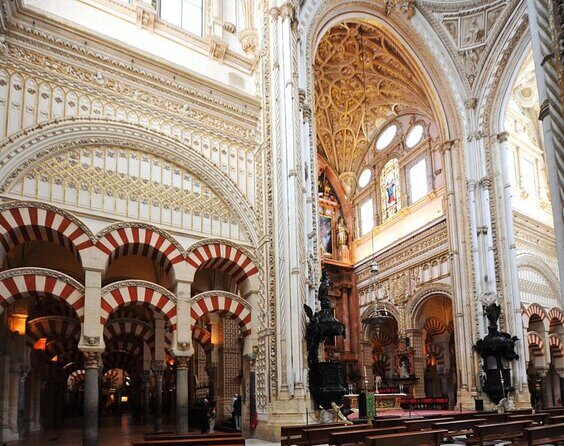
- Skip-the-line entry to the Mezquita-Catedral to keep the day moving
- Calahorra Tower and Roman Bridge set the tone with classic Córdoba river views
- Patios de San Basilio stop brings you into the flower-and-terracotta side of the city
- Judería walk + original synagogue visit (note: closed on Mondays)
- Mezquita-Catedral interior options (audio/self-guided time) so you can move at your pace
- Round-trip transfers from Seville save the hassle of trains for a one-day visit
The Morning Drive From Seville: a guided intro to Córdoba’s big story
You leave Seville in the morning by air-conditioned vehicle, heading east toward Córdoba through Andalusia’s countryside. On the ride, you’ll have live onboard commentary, which is a smart way to start a city that’s built on multiple civilizations stacked on top of each other.
Córdoba is famous for how huge it was in the 10th century, with around 500,000 inhabitants, and for how strongly it reflects its Moorish past. Founded by the Romans and later a major Moorish center between the 8th and 13th centuries, the city’s UNESCO-listed center still shows those Islamic-era architectural fingerprints.
This kind of “start with context” approach matters because the Mosque-Cathedral can feel confusing at first. If you arrive knowing why the building changed over time, you’re much more likely to enjoy what you’re seeing instead of just taking photos.
You can also read our reviews of more city tours in Seville

Calahorra Tower and Roman Bridge: start with the river views
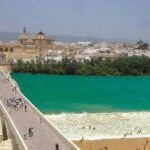
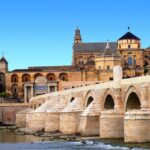
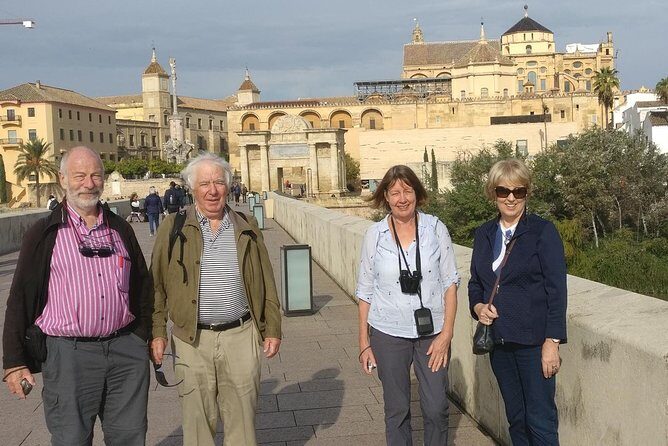
The day begins with a walking segment through Córdoba’s historical center, introduced around the Calahorra Tower and the Roman Bridge. The Calahorra Tower is a 12th-century tower-gate, and together these landmarks give you that instant Córdoba feeling: river, stone, and a city that grew around water routes.
You’ll spend a short time here, with the Roman Bridge itself listed as free. I like this start because it’s not inside yet. Before you get crowded in narrow streets, you get a breather and a set of “reference points” for later.
Practical note: the walking is real. Even when time at each stop is brief, you’re moving through an old city where the ground can be uneven and the sun can hit hard.
Royal Stables and Patios de San Basilio: the side of Córdoba most people miss
Before you head into the Jewish Quarter area, the route includes a pass by the Royal Stables, built in 1570 by King Philip II, tied to his love of horses and the idea of thoroughbred Spanish breeding. It’s a quick moment, but it shows how Córdoba didn’t stop at the medieval period. The city kept changing under new rulers.
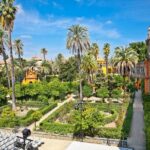
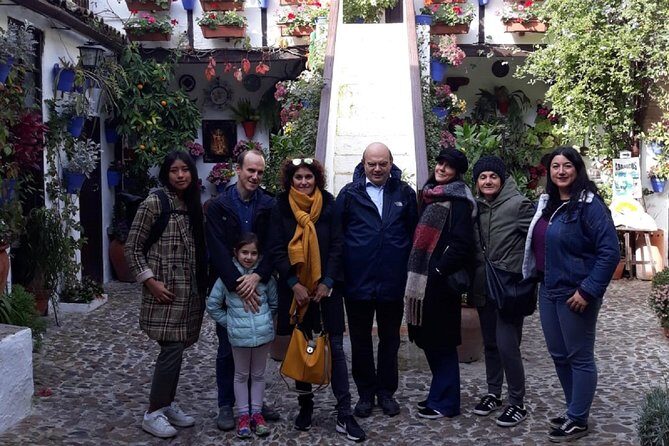
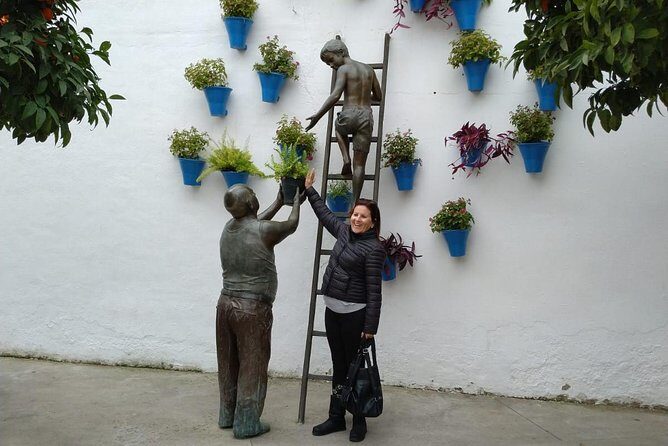
Then comes one of the best energy-shifts of the day: Los Patios de San Basilio. You’ll walk around the San Basilio area near the Judería to admire famous courtyards that show up each year during the courtyard-competition season. Expect flowers, pots, and that classic Córdoba courtyard look where small spaces feel alive.
This stop is listed as having admission included, which is a nice value detail. More importantly, it gives you a break from “big monuments mode.” After the river-and-stone vibe, the patios bring color and scale down to human-sized moments.
The Jewish Quarter (Judería) walk: narrow streets, big names, and real places
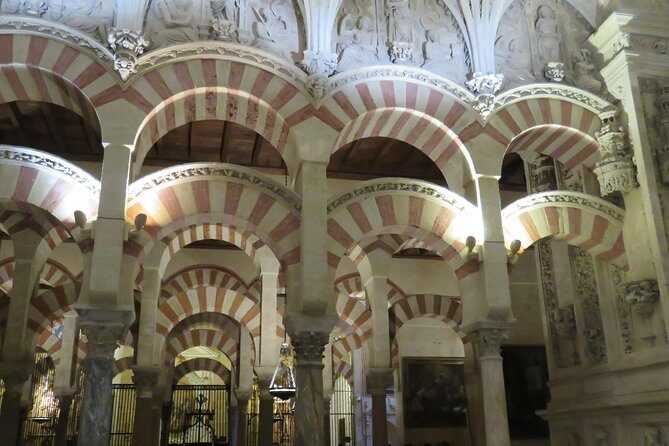
Next is the Judería, described as the largest old Jewish quarter in Spain. You’ll walk narrow streets guided through emblematic areas like Tiberiades Square, and the commentary touches on important Córdoba figures, including Maimonides.
This is the part of the day that really benefits from staying alert. The lanes are tight, the visual cues can blur together, and it’s easy to think you’re “just walking.” But the guide’s job here is to connect street-level scenes to people and community life—how Córdoba’s Jewish community helped drive prosperity in the Middle Ages.
Tip for enjoying it: keep your phone ready, but don’t let photography steal your attention. The value is in what you’re told while you’re walking the actual streets.
Córdoba Synagogue visit: small building, strong atmosphere (watch for Mondays)
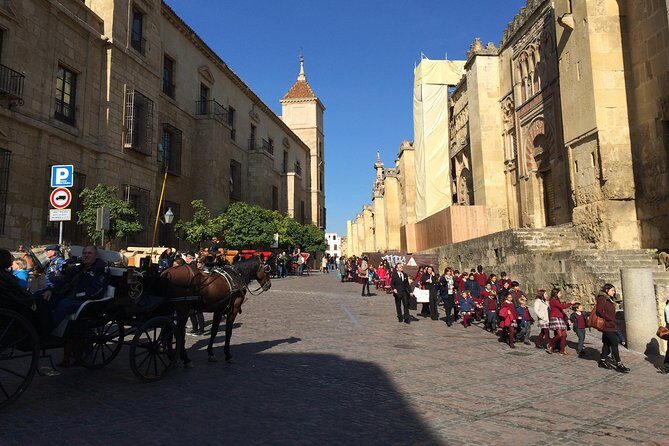
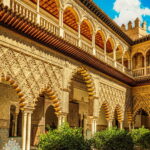
After the Judería walk, you’ll visit the Córdoba Synagogue. This is described as the only original Jewish synagogue preserved in Andalusia, and you’ll see Mudejar-style plasterwork in the heart of the quarter.
Admission here is included, but there’s one key calendar detail: it’s listed as closed on Mondays. If your date falls on a Monday, your plan for this portion changes, so check the day before you go.
I like synagogue visits like this because they’re not trying to overwhelm you with scale. The impact comes from texture, design, and the sense that you’re standing somewhere that has survived multiple historical eras. It’s also a relief from nonstop walking because the visit itself tends to feel more “contained” than street sightseeing.


Mezquita-Catedral Skip-the-Line: how to see the building’s layers without getting lost
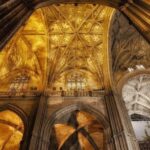
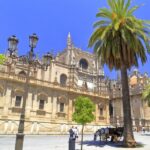
The highlight of the day is the Mezquita-Catedral de Córdoba, a World Heritage Site since 1984 and widely treated as the key monument of the western Islamic world. The description makes it clear why it’s so famous: the building shows the complete evolution of Omeyan-style architecture in Spain, and then later Christian rule added Gothic, Renaissance, and Baroque elements.
You get skip-the-line access and about one hour for the Mosque-Cathedral. That’s plenty if you go with a plan. The interior is massive, and if you wander aimlessly, you can leave with only a blur of red-and-white arches.
Here’s the approach that works best:
- Look for the courtyard first, then orient yourself inside
- Watch for the main visual rhythms: the arches and the repeating design
- Identify the bell tower and the horseshoe-shaped mihrab as anchors for the story
The experience also notes that you can choose between an audio tour or self-guided tour for the interior. That’s a big deal for value: you’re not locked into someone else’s pace for every second.
From past groups, the mosque portion can be led by a specialist guide. Names that popped up include Josė (high praise for explaining the building’s evolution) and other strong guides like Juanra and Ivan. You can’t count on a specific name, but you can expect the Mezquita-Catedral portion to be handled as the main event.
Language note: some reviews mention that group language handling can vary. If you need clear communication, sit close to the guide and be ready that some parts of the day may involve more than one language on mixed tours.
The Albolaifa water wheel and the river context
The tour overview also includes a stop to see the restored 9th-century Albolaifa water wheel on the Guadalquivir. Even if you only get a short look, it helps explain how Córdoba worked as a city—how water was moved, managed, and used to support daily life and gardens.
I like adding one non-ticketed outdoor site to the plan. After a big indoor monument (the Mezquita-Cathedral), it’s satisfying to reconnect the history to geography: river, irrigation, movement, and growth.
Free time in Córdoba: use it smart for lunch and one extra stop
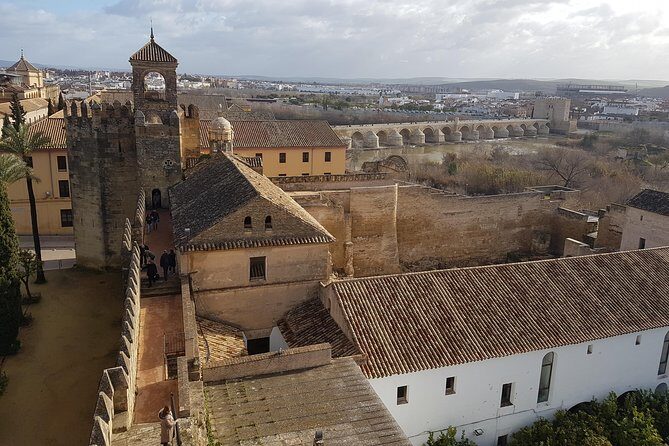
After the main sights, you’ll have time to explore and relax independently. This part matters more than it sounds. Córdoba rewards wandering, but you need breathing space to do it without feeling rushed.
You can use your free time for lunch (own expense), shopping for souvenirs, or visiting other nearby sights. The best move is simple: pick a direction and walk slowly for 30–45 minutes, then come back and regroup. Old streets can feel maze-like, and a “no hurry” stroll is often when you discover the best street corners.
Also, if you want to make the Mezquita-Cathedral experience feel complete, use the free time to revisit one area you loved most. The interior can be visually overwhelming, and a second look can help you notice details you missed the first time.
Pace, walking comfort, and group size: what $119.47 really buys
This is a maximum 55 travelers type of day, with a full schedule built around multiple stops and guided walking. Some reviews highlight that large groups can still feel organized, but others warn the walking can be tiring—especially with cobbled streets and longer distances across town.
So, for comfort:
- Wear shoes with grip
- Bring water and plan for sun exposure
- If you have mobility concerns, this may be tougher than it looks on paper
Also pay attention to communication setup. Some reviews mention that radios weren’t always used during every walking segment, though they were used during the Mosque-Cathedral portion. If you’re near the back of the group, clarity can vary—so choose your spot accordingly.
On the plus side, the schedule includes meaningful “time balance”: a guided walk for the history, included tickets for the biggest entries, and free time afterward so you can actually enjoy the city instead of sprinting from one photo stop to another.
Price and value: is $119.47 a fair deal for this Córdoba day?
At $119.47 per person, you’re paying for three main things:
- Round-trip coach logistics from Seville (so you don’t deal with trains for a one-day timetable)
- Guide + live onboard commentary during the drive and walking segments
- Included admissions for Los Patios de San Basilio, the Córdoba Synagogue, and skip-the-line access to the Mezquita-Cathedral
Food isn’t included, so you’ll still want a budget for lunch and drinks. But the ticket-heavy stops are covered, and that’s where the money usually goes on a day trip like this.
If you’re a first-time visitor and want a “greatest hits with context” route, the value is strong. If you already know Córdoba well and want total independence, you might prefer a smaller-group or self-planned approach where you control every minute. For most people, though, a structured day beats trying to coordinate multiple sites across a historic center in one go.
Who this tour suits best (and who should skip it)
This experience fits you if:
- You want a big hit day from Seville without the stress of trains
- You like guided context for major landmarks like the Judería and the Mezquita-Cathedral
- You appreciate having included tickets and a planned route, plus free time afterward
I’d think twice if:
- You have mobility or stamina limits (there’s lots of walking on old streets)
- You’re extremely sensitive to language clarity in mixed-language groups
- You want lots of free time inside the Mosque-Cathedral itself beyond the guided/self-guided structure
Should You Book This Córdoba Tour From Seville?
Yes, I’d book it if you want Córdoba to feel complete in one day. The best reason is the mix: skip-the-line Mosque-Cathedral, the Jewish Quarter and original synagogue, plus Patios de San Basilio and the river landmarks. That’s a lot of Córdoba, and it’s organized so you don’t miss the core story.
But be honest about the main trade-off: it’s a long walking day. If you can handle that, you’ll likely come away with the right highlights and a clear sense of why Córdoba mattered—Roman beginnings, Moorish power, and the layered Christian transformation of one unforgettable building.
FAQ
What time does the tour start in Seville?
The tour starts at 9:00 am.
How long is the Córdoba day trip?
The duration is listed as about 10 hours.
Is the tour offered in English?
It’s listed as offered in English. Some departures may include more than one language within the group, so communication clarity can vary.
Which tickets are included for major attractions?
Included admissions cover Mezquita-Catedral skip-the-line entry, Los Patios de San Basilio, and the Córdoba Synagogue.
Is the Córdoba Synagogue open every day?
The synagogue visit is noted as closed on Mondays.
Do you get free time to explore on your own?
Yes. After the main guided stops, you’ll have independent free time for lunch, shopping, or extra sightseeing.
Can you cancel for a full refund?
Yes. You can cancel up to 24 hours in advance for a full refund.