REVIEW · SEVILLE
Complete Triana Tour “Corrales included”
Book on Viator →Operated by Sevilla&ME · Bookable on Viator
Triana turns history into street theater. This 2-hour route strings together iconic viewpoints, working neighborhood corners, and culture hits like flamenco and ceramics, plus it finishes near Triana Market. I also liked how the stops lean practical and walkable, though note the Torre del Oro monument admission is not included.
You start near the Puente de Isabel II area (with the Monumento al Arte Flamenco) and end by the market in central Triana. The tour is designed for a small group (up to 30), and a good guide can make the whole walk feel quick—though there’s at least one reported case of a guide not showing up, so arrive a bit early with your ticket confirmation ready.
In This Review
- Key Points You’ll Care About Before You Go
- Triana’s Two-Sided Story: Corrales, Craft, and Faith
- Golden Tower to Milla Cero: Your First Views and Quick Context
- Calle Betis, Calle Troya, and the River Docks with Carmen-Myth Energy
- Bridges and Patios: Puente de Triana and the Courtyard Feeling
- Santa Ana to the Hope of Triana: Sailors, Sailor Chapels, and the Dominicans
- Hermandad de la Estrella to Carmen Chapel: When Art and Patron Saints Meet
- Flamenco and Triana Market: The Stops That Make the Walk Feel Personal
- San Jorge Castle, Ceramics, and the Almohade Soap Story
- Price and Value: What $9.49 Buys You in Real Terms
- Timing, Walking Reality, and What to Bring
- A Balanced Heads-Up: Great Guides and One Serious Failure Mode
- Should You Book the Complete Triana Tour?
- FAQ
- How long is the Triana tour?
- Where does the tour start and where does it end?
- Is the ticket a mobile ticket?
- Are admissions included at all stops?
- What is the group size limit?
- Can I cancel for a full refund?
Key Points You’ll Care About Before You Go
Corrales and patios feel like the real Triana
You get more than postcards; you pass through the neighborhood’s “in-between” spaces.
Flamenco and flamenco landmarks are built into the route
Expect stops tied to singing, dance, guitar, and the cultural heritage angle.
Ceramics culture is part of the walk, not an add-on
You’ll see dedicated spots connected to Triana’s famous ceramic tradition.
You’ll hit bridges and riverside docks with big payoff views
A few short photo stops help you understand the geography fast.
Admission is mostly free, with a notable exception
Many stops are free, but Torre del Oro can require extra payment.
Triana’s Two-Sided Story: Corrales, Craft, and Faith
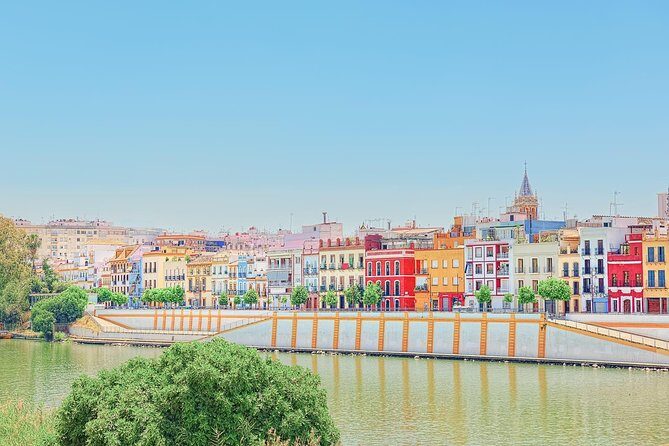
Triana is basically a place with its own rhythm inside Seville. This tour leans into that. You’ll move through “public Triana” streets and also the quieter feeling of hidden corners where patios, courtyards, and local craft history come forward.
What I like most is that the route isn’t only about shiny buildings. It includes everyday Triana markers—market life, tiled facades, and church chapels tied to the neighborhood’s people—so you leave with a sense of how this area actually lives.
One small consideration: you’re walking through a lot of tight streets and short stop after short stop. If you hate moving constantly, pick your pace and build in a little flexibility.
You can also read our reviews of more tours and experiences in Seville.


Golden Tower to Milla Cero: Your First Views and Quick Context
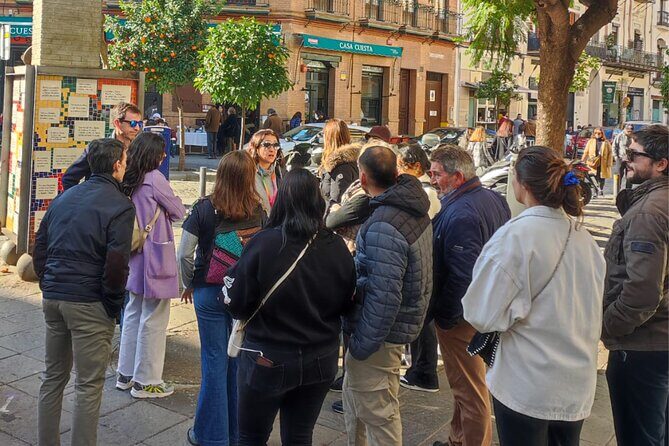
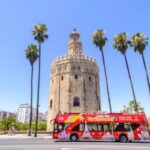
The tour begins at the Gold Tower (Torre del Oro). It’s a defensive landmark and also a beacon—so even if you don’t pay for an internal visit, the setting gives you instant orientation over the river. The catch: the monument’s admission is listed as not included, so decide on the spot if you want to add it.
Next comes the Puente de San Telmo, a quick crossing with views that explain why Triana always mattered to Seville. After that, you stop at the Monumento Milla Cero de la Tierra. This is a neat history-and-imagination moment because it links to the idea of zero mile departures, and it also points you toward the story behind Seville’s April Fair.
Those first stops work well because they’re short and high-payoff. In about 15 minutes you get the river geography, the “why Triana” context, and a few strong photo angles without a big time investment.
Calle Betis, Calle Troya, and the River Docks with Carmen-Myth Energy
Then the walk turns into “street Triana.” On Calle Betis, you get a simple but important idea: Triana was historically separate in daily life from central Seville. That mindset helps later when you’re looking at churches, chapels, and markets—you’ll understand these weren’t just decorative stops. They were community anchors.
A stop on Calle Troya ties Triana to writer Miguel de Cervantes, who lived in Seville for a while. Even if you’re not a literature superfan, it’s a good reminder that Seville’s culture isn’t one-dimensional. It moves through different neighborhoods and identities.
After that, you reach the El Embarcadero area, an ancient port vibe. Here, you’re not just looking at water—you’re placing it into the myth of Carmen and the tobacco factory story. That makes a brief stop feel more meaningful than another riverside photo.
This section is also a good time to check your footing. The route is mostly normal city walking, but Triana’s streets can be uneven and crowded during peak hours.
Bridges and Patios: Puente de Triana and the Courtyard Feeling
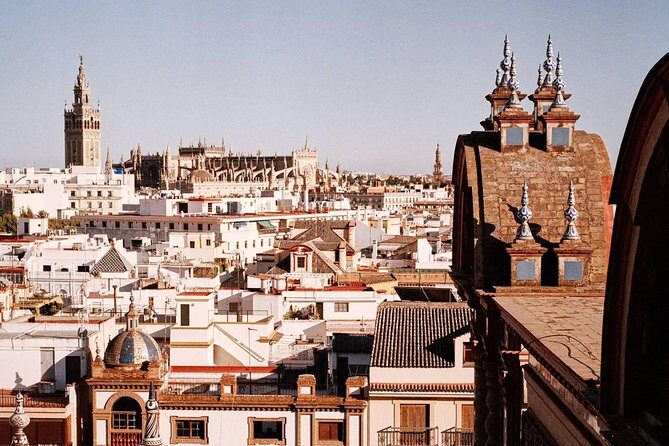
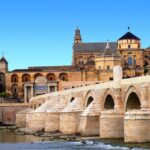
The tour includes Puente de Isabel II (Puente de Triana), noted as the oldest preserved iron bridge in Spain, built in 1852. This is one of those stops where the explanation helps you see the structure with fresh eyes instead of treating it like scenery.
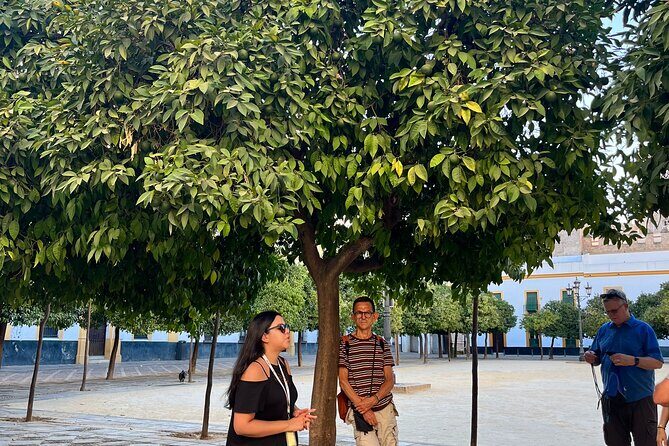
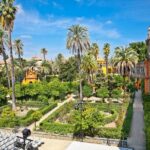
Then you reach the heart of Triana’s neighborhood feel with a stop simply labeled Triana—with a focus on patios. The idea is that patios are life here, and the route nudges you to notice the courtyard culture rather than speeding past it.
Next you move to Plazuela de Santa Ana and the area around Real Parroquia de Señora Santa Ana. This church-centered portion matters because Triana’s identity is braided into religious spaces. It also links to legends tied to the community often referred to as the Trianeros.
If you like places with stories behind the walls, you’ll enjoy this. If churches aren’t your thing, you can still benefit from the explanations—because they connect Triana’s past to what you see on the street today.
Santa Ana to the Hope of Triana: Sailors, Sailor Chapels, and the Dominicans

From there, the route shifts to Capilla de los Marineros. Triana has multiple brotherhoods (sororities in the tour description), and this one is tied to sailors. You’ll see the image known as the Hope of Triana, and the guide’s job here is to connect devotion to the neighborhood’s port past.
After that comes the Parroquia de San Jacinto (Dominicos), the former Dominican convent of San Jacinto. This is where the tour gets heavier: the surrounding area served as a mass grave during a plague epidemic. Even with a short stop, it’s not the usual “pretty church” moment. It’s a reminder that Triana’s history includes suffering as well as celebration.
Then you walk into San Jacinto peatonal, the busiest street in Triana. The description points out where to grab something to drink, but the more useful angle for you is how this street works as a social spine. It’s where the neighborhood funnels together.
There’s also a nod here to the Hispano-Aviación factory, connected to early Spanish reactor work. It’s an unexpected stop, and I love that the route doesn’t just stay in the past. It points at how the area ties into broader modern stories too.



Hermandad de la Estrella to Carmen Chapel: When Art and Patron Saints Meet
On the route you’ll pass Hermandad De La Estrella, in the Chapel of the Star Brotherhood. The patron saint connection is tied to the community of former shippers of the port, and the tour frames it in terms of what religiosity meant in daily life during the 16th and 17th centuries.
Then you hit Calle San Jacinto with old courtyards, tiled facades, bars, and a strong southern atmosphere. This stop is basically your “slow down and feel it” break. Even when you’re moving, you’ll notice the street texture changes.
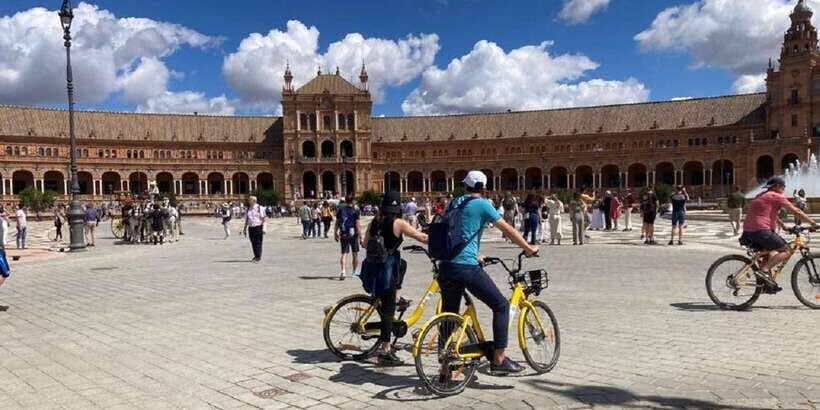
After that is Capilla Virgen del Carmen. The tour highlights it as one of Aníbal González’s later works, and it ties it to the 1929 Universal Exhibition and the Plaza de España area. If you’ve seen Plaza de España before, this can help you mentally connect the dots between Seville’s big landmarks and its local neighborhood chapels.
This part is a nice balance: religious space, street flavor, then an architectural bridge to Seville’s grander public projects.
Flamenco and Triana Market: The Stops That Make the Walk Feel Personal
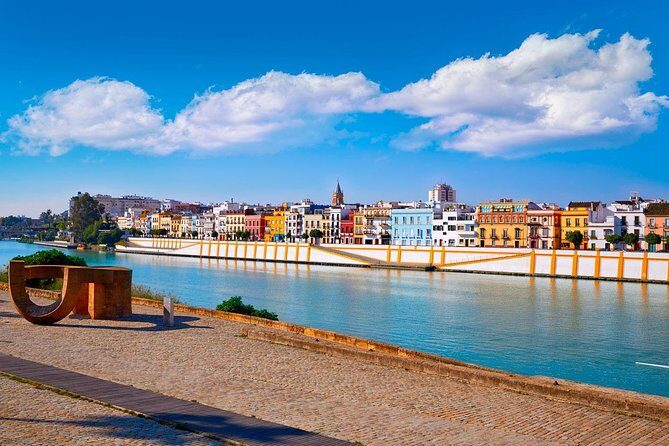
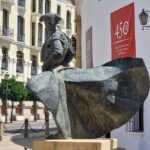
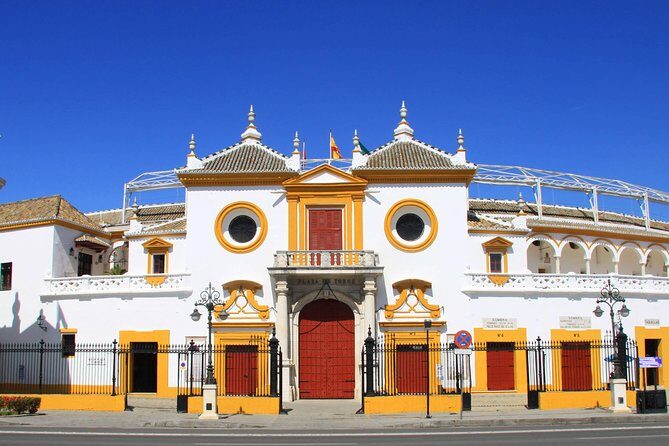
Triana also shows its “non-church” pride. You’ll stop at Monumento a Juan Belmonte, linked to bullfighting, and then at Monumento Triana al Arte Flamenco, a tribute to singing, dancing, guitar, and palms. Flamenco is described as an Intangible Cultural Heritage of Humanity, and the stop is placed so you see it as a living culture, not a museum topic.
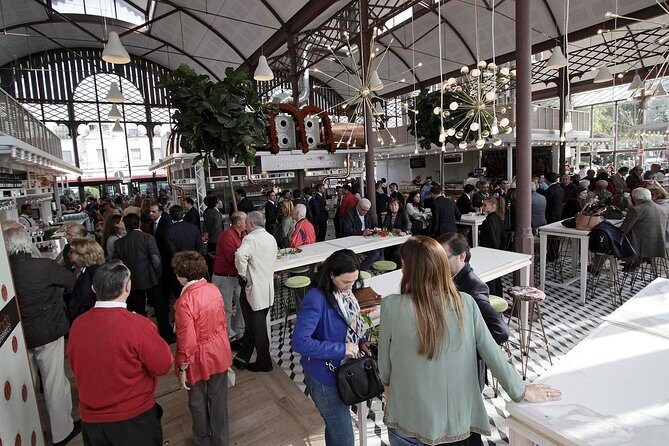
Next is Mercado de Triana. This is where the tour shifts from “history explanations” to “use your senses.” You’ll get a chance to see the market’s life and its reputation for renowned gastronomy. Even if you don’t stop for a full meal, you’ll likely want to sample something small, because this is the part of Triana where food and neighborhood energy meet.
The tour also promises tapas recommendations at the end of the experience. That’s a smart value add, because you’re leaving with a short list of where to eat without guessing from scratch.
San Jorge Castle, Ceramics, and the Almohade Soap Story
The tour reaches Castillo de San Jorge, and the description frames it in terms of persecution and the Inquisition under the Catholic Monarchs. It’s a high-impact stop because it changes the mood: you go from everyday neighborhood life to a darker thread in Spain’s story.
Then you walk down Calle San Jorge, where courtyards tied to old neighborhood furnaces still connect to small ceramic workshops. That’s important because it explains why Triana ceramics became a thing beyond decoration. It was craft infrastructure, right in the neighborhood.
You’ll also visit Centro Ceramica Triana, a dedicated ceramics museum stop. This is one of the best reasons to book this tour if you care about art that isn’t locked behind a single museum building.
The route also references tunnels of the Royal Almonas Almohades, connected to soap described as the most popular in Europe and America. You’re not walking away with technical chemistry facts here—you’re getting the cultural link between place, industry, and everyday objects.
Finally, the tour includes Isla de La Cartuja, described as part of Triana’s evolution and connected to Calle Pages del Corro as yesterday’s Triana, today’s, and tomorrow’s. That’s a good closing theme: you end with the idea that the neighborhood keeps reinventing itself.
Price and Value: What $9.49 Buys You in Real Terms
At $9.49 per person for about 2 hours, this tour is priced like a smart add-on to your day rather than a big-ticket “must do.” The value comes from density. You get a long list of named stops in a tight walking loop, and many are listed as free.
The one notable cost wrinkle is Torre del Oro, where admission is listed as not included. So the real value question becomes simple: do you want the monument interior or just the exterior setting? If you skip the paid entry, you’ll likely feel like you got a lot for very little.
Also, the group size caps at 30 travelers, which usually keeps the experience from turning into a stampede. And since you receive a mobile ticket, you don’t need to hunt for printed paper when you’re on the move.
Timing, Walking Reality, and What to Bring
This is a 2-hour neighborhood walk, so plan on short stops and steady movement. Triana streets can be crowded, especially around popular church areas and the market zone, so give yourself a little buffer.
Wear shoes you can trust on uneven pavement. Bring water if it’s warm. And since this tour touches churches and chapels, it’s wise to dress so you’ll feel comfortable if you pause longer than planned.
If you want maximum enjoyment, go into it with a mindset of noticing details: patios, tiles, small workshops, and how bridges shape the flow between Seville and Triana.
A Balanced Heads-Up: Great Guides and One Serious Failure Mode
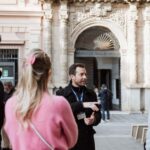
A big plus here is the human side. I’ve seen accounts of guides who explain in a friendly, entertaining way—making the two hours feel shorter. A guide can also help you focus on what matters at each stop, especially at history-heavy locations like the Dominican convent area and Castillo de San Jorge.
Still, there is at least one report of a guide not showing up and leaving people waiting without explanation. To reduce your odds of a bad moment, do two simple things: arrive a few minutes early at the listed start area near Puente de Isabel II, and keep your booking confirmation on hand so you can act quickly if something goes wrong.
Weather can matter too. The experience notes good weather requirements, so if you see rough conditions in Seville, double-check your plan timing.
Should You Book the Complete Triana Tour?
Book it if you want a tight, guided introduction to Triana that covers the big landmarks and the neighborhood texture. The combination of bridges, chapels, flamenco-focused moments, and a ceramics stop gives you a broad view without turning into a long, exhausting day.
Skip or reconsider if you hate walking between many short stops or you strongly want to pay for interiors—because not everything includes admission, and Torre del Oro is specifically noted as not included.
If you’re in Seville for a few days and you want one activity that helps you understand Triana fast, this is a solid pick at the price.
FAQ
How long is the Triana tour?
The tour lasts about 2 hours.
Where does the tour start and where does it end?
It starts at Monumento al Arte Flamenco, Puente de Isabel II, 23, 41010 Sevilla and ends at C. Arfian, 13, 41010 Sevilla, with the end located by Triana Market.
Is the ticket a mobile ticket?
Yes, this experience uses a mobile ticket.
Are admissions included at all stops?
Most stops are listed as free, but Torre del Oro is noted as admission ticket not included. The Milla Cero monument is listed as included.
What is the group size limit?
The tour has a maximum of 30 travelers.
Can I cancel for a full refund?
Yes. Free cancellation is available, and you can cancel up to 24 hours in advance for a full refund.