REVIEW · SEVILLE
Bike tour through the monumental area of Seville
Book on Viator →Operated by Sevilla Moving · Bookable on Viator
One bike, nine Seville highlights.
This ride turns a tight historic-center loop into an easy, guided way to understand what you’re seeing—monuments, stories, and the city’s layers—without spending your whole day in lines. I like that it keeps the energy moving while still stopping for real explanations, and I also like how the route mixes headline sights with lesser-known corners and legends.
What really wins me over is the combination of history explanations on the move and a time plan that hits the big names in about 2 hours 30 minutes. You’ll roll past the most iconic postcard spots and then get the meaning behind them, especially at Plaza de España and around the Cathedral/Alcázar area. The only real caution: this experience depends on good weather, so if skies turn ugly, expect changes (they’ll offer another date or a full refund).
In This Review
- Key points before you go
- Why This 2.5-Hour Bike Loop Feels Smart in Seville
- Price and Value: What $47.71 Really Buys You
- Meeting Point and Timing That Make the Day Easier
- Jardines de Murillo: Alcázar Origins, Now a Park
- Plaza de España: More Than a Photo Stop
- The Duke of Montepensier Palace Area: A Short Stop with Meaning
- Torre del Oro: Seville Through Its Port and Maritime Past
- Puente de Isabel II and Triana: Crossing Into Another Side of the Story
- Real Maestranza de Caballeria de Sevilla: Plaza Views and Cultural Context
- Seville Cathedral Exterior: Efficient Stops for Big Doors and Sculptures
- Real Alcázar Area and Santa Cruz Access: Patio Views and Jewish Quarter Connections
- Archivo General de Indias: The Business Side of Conquest History
- Real Fábrica de Tábacos (University of Letters): A Former Factory With New Purpose
- Private Group Feel: Why It’s Better for Questions
- Weather and Comfort: The One Variable You Can’t Control
- Who Should Book This Seville Bike Tour
- Should You Book This Tour?
- FAQ
- How long is the bike tour through Seville’s monumental area?
- How much does the tour cost?
- Where is the meeting point?
- What time does the tour start?
- Is this a private tour?
- Do I need to buy tickets for the stops?
- What monuments and areas are included?
- Is the ticket digital?
- What happens if the weather is bad or I need to cancel?
Key points before you go
- History while you ride: the guide builds context at each stop, so it’s not just photo ops.
- Big-ticket monuments, short visits: you get exterior focus where time is tight, and you move efficiently between sites.
- Triana access via Puente de Isabel II: you cross into the city’s other side and hear why it matters.
- Free admission at stops: each listed stop has free admission noted, which helps value.
- Ends back at the start: no mystery logistics at the end—just return to the meeting point.
Why This 2.5-Hour Bike Loop Feels Smart in Seville
Seville can be a lot on foot. Distances add up fast, and the heat (even when it’s not extreme) can slow you down. This bike tour solves that by keeping you rolling between key areas, so you spend more time seeing and less time figuring out routes.
The pacing also respects how people actually experience this city. You’ll stop often enough to absorb details, but the overall format stays light and efficient. That’s the big difference between a “see everything” tour that burns time, and one that helps you get your bearings fast—and then keep enjoying the day.
You can also read our reviews of more cycling tours in Seville

Price and Value: What $47.71 Really Buys You
At $47.71 per person for about 2 hours 30 minutes, you’re not paying for a long museum day. You’re paying for a guided route through the city’s most meaningful areas, with a plan that connects each monument to the story around it.
Two value wins stand out. First, the stops listed have free admission noted (so you’re not stacking extra ticket costs on top of the tour price). Second, the tour format is private for your group, which usually means fewer compromises on pace and questions.
One more practical angle: it’s booked about 20 days in advance on average. That’s a good sign the timing works for many itineraries, but it also means you should book sooner rather than later if you want a specific date.
Meeting Point and Timing That Make the Day Easier
This tour starts at 10:00 am and meets at Sevilla Moving – Alojamientos y experiencias, C. Luis Montoto, 19, Local Bajo, 41003 Sevilla. The activity ends back at the same meeting point, which is ideal when you’re trying to plan lunch or the rest of your afternoon.
You also get a useful practical detail: the start location is near public transportation. That matters in Seville because you may not want to taxi back and forth between neighborhoods.
Since confirmation is received at booking and the tour uses a mobile ticket, you can plan with less fuss. The only thing to watch is that this is designed for a smooth day on the move—so arrive a few minutes early and be ready to pedal.
Jardines de Murillo: Alcázar Origins, Now a Park
Your first stop is the Jardines de Murillo, tied to the old Alcázar gardens that exist today as a public park. Even if you don’t know the Alcázar story yet, this start works because gardens are a gentle on-ramp: you get a feel for the area before the tour jumps to big, architectural icons.
Why this matters: Seville’s monuments aren’t isolated objects. They’re part of a larger historical space, and the Alcázar influence spills into nearby viewpoints, courtyards, and the idea of the city as a mix of power, culture, and everyday life.
You’ll spend about 5 minutes here. That’s short, but it’s meant to set context. If you’re the type who likes to linger in green spaces, this is one moment where you might want to stretch your legs afterward on your own.
Plaza de España: More Than a Photo Stop
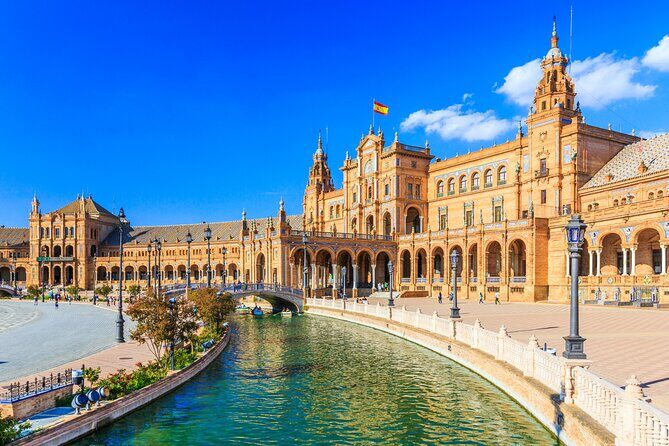
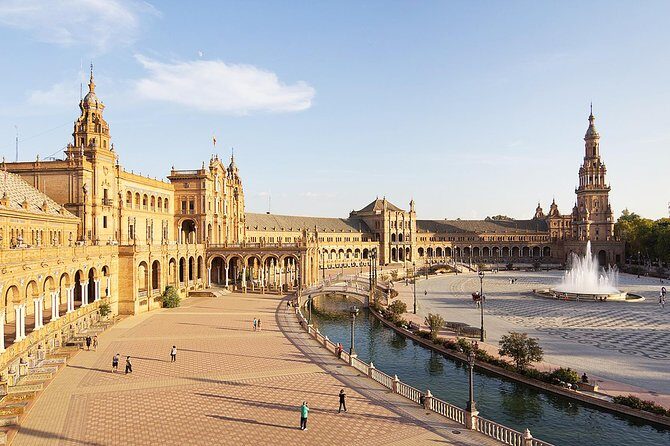
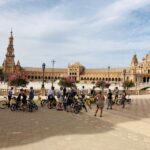
Next up is Plaza de España, one of Seville’s most visited landmarks—and the tour treats it like a lesson, not just scenery. You’ll hear what the Ibero-American Exposition of 1929 meant for the city, which helps you understand why the place looks the way it does and why it became such a symbol.
This is where the “history while getting around” strength really pays off. If you only see the buildings and the tiled details, the square can feel like a stunning set piece. With the 1929 context added, it becomes a story about Seville projecting an image to the world.
You get about 30 minutes at this stop, and that’s a good amount of time for people who want both: a slow walk for details and enough understanding to appreciate what they’re seeing.
If you’re sensitive to crowds, plan to use your time well here. The square is popular, and even in a guided format you’ll want to keep moving between viewpoints so you’re not stuck in one spot waiting for the crowd to thin.



The Duke of Montepensier Palace Area: A Short Stop with Meaning
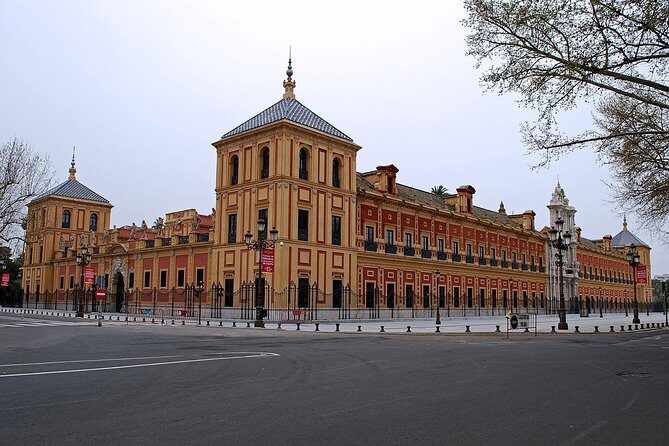
There’s also a stop described as the Palace of the ancient Dukes of Montepensier. Even without a long visit time stated, this kind of placement matters on a bike tour. It typically signals a shift in the narrative—connecting royal presence, architecture, and how different parts of Seville relate to each other.
In other words, you’re not just traveling from monument to monument. You’re getting a guided thread tying the city together—palace life, public space, and the layers that make Seville feel like it grew over time rather than being built in one moment.
Since this stop’s duration isn’t specified in the data, treat it as a brief viewpoint moment. If you want to spend longer in this specific area, you can always follow up on your own later.
Torre del Oro: Seville Through Its Port and Maritime Past
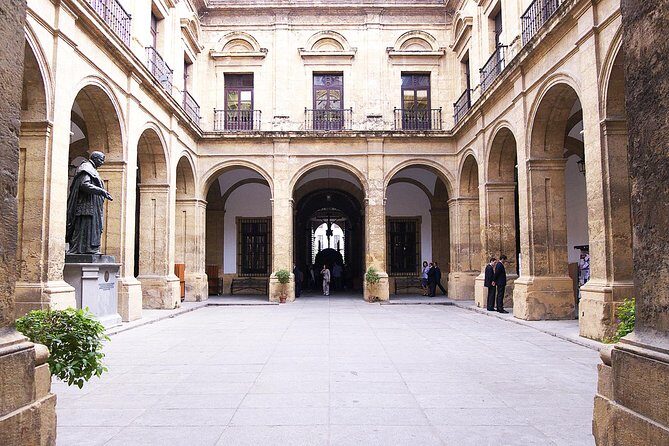
Then you’ll roll into Torre del Oro, the famous tower that served as a former defense tower for the city’s port. The tour’s framing here is smart: it uses the tower to explain Seville’s maritime history, not just its appearance.
That’s a big deal for understanding Seville. People often focus on the city’s architecture and end up missing the economic engine behind it. The port and Atlantic routes helped shape the wealth and the cultural momentum that later showed up in buildings, trade records, and the city’s broader role in the Spanish empire.
You’ll spend about 10 minutes at this stop. Again, it’s brief on purpose. The goal is to give you the key idea quickly, then keep you moving so the afternoon doesn’t turn into one long pause.
Puente de Isabel II and Triana: Crossing Into Another Side of the Story
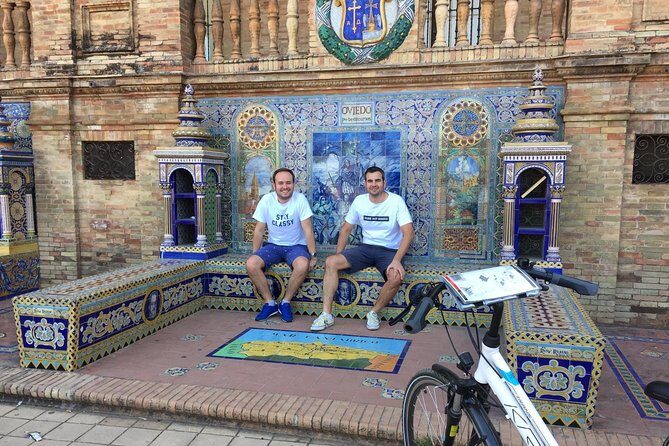
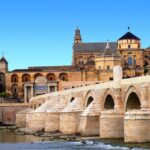
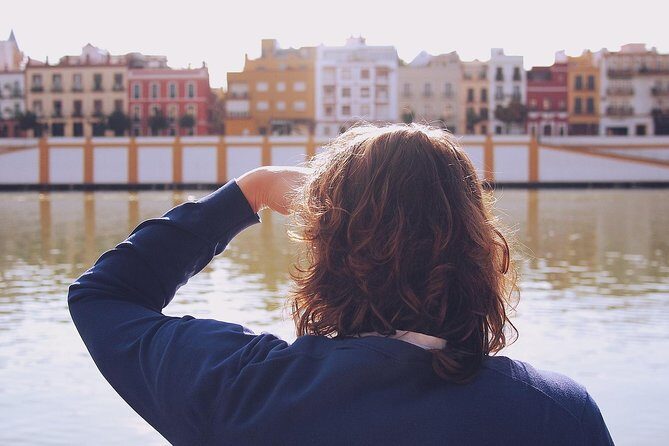
One of the most interesting transitions in the route is Puente de Isabel II, also called the Puente de Triana. This is the bridge built by disciples of Gustave Eiffel, giving you a clear, recognizable structure to orient yourself with.
But the best part is what you hear next: Triana’s history and legends. This isn’t a generic neighborhood mention. Triana has its own identity, and the tour uses the bridge as the moment you switch perspective—from the formal monumental zones to a more local, story-driven Seville.
You’ll spend about 15 minutes here. If you like walking around and watching daily life, this stop is a good chance to do a quick scan—what people are doing, how the bridge connects places, and how the city texture changes when you cross.
Real Maestranza de Caballeria de Sevilla: Plaza Views and Cultural Context
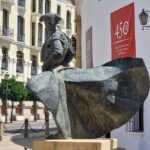
Next is Real Maestranza de Caballeria de Sevilla, with a viewpoint of the Plaza de la Maestranza. The tour gives architectural and cultural explanation for the place, which helps you connect what you see to how Seville organizes big public traditions and community spaces.
Even if you’re not planning to attend an event there, understanding the role of this arena in the city helps. It’s one of those structures that can look purely monumental until you learn how it fits into local life.
The stop is about 10 minutes, which is enough for orientation plus the key cultural points. If you’re especially into architecture or public institutions, you might want to circle back after the tour to get a closer look.
Seville Cathedral Exterior: Efficient Stops for Big Doors and Sculptures
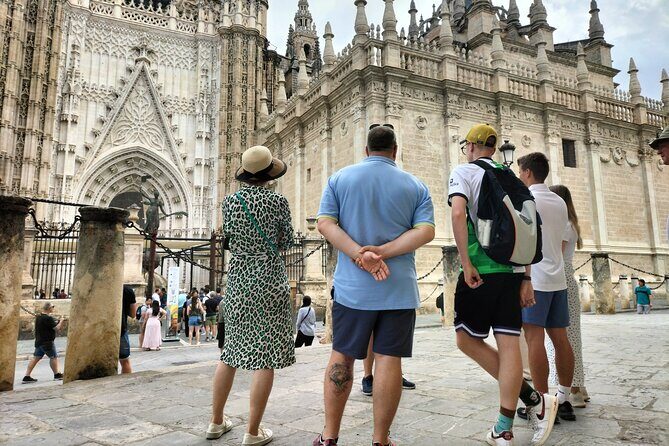
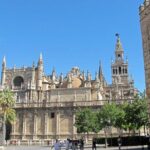
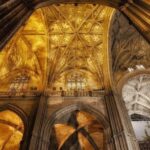
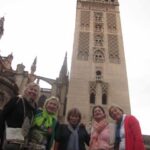
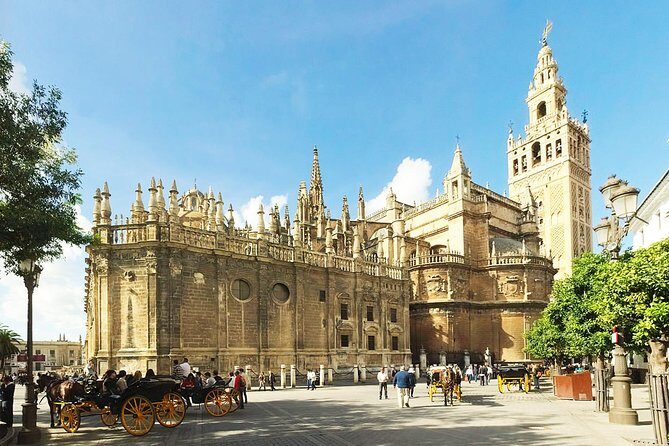
Then you get to the heart of Seville’s monumental identity: the Catedral de Sevilla. This isn’t an interior tour here. The focus is on the exterior, including main doors and major sculptures, plus the surrounding area.
That’s a good choice for this format. Interiors often require timed entry and can eat up your day. Exterior viewing with guided attention means you still get the “why this matters” part without turning the tour into a schedule puzzle.
You’ll spend about 30 minutes. If you enjoy studying façades and iconography, this stop will feel satisfying because you’re not rushing through; you’re meant to observe details that you’d probably miss on your own.
Real Alcázar Area and Santa Cruz Access: Patio Views and Jewish Quarter Connections
After the Cathedral, the tour goes to Real Alcázar de Sevilla with an exterior focus: Patio de Banderas and access to the Jewish quarter of Santa Cruz.
Even if you don’t get full interior time here, the framing is meaningful. The Alcázar is central to Seville’s identity, and the tour uses the nearby paths and transition points to connect the palace world with the city’s older social geography—especially around Santa Cruz.
You’ll spend about 15 minutes. That’s not long enough to do a deep explore of every side street, but it is long enough to help you understand what to look for when you return later.
A practical caution: this part of the city can feel narrow and busy. Keep your pace steady, and if you’re prone to getting turned around, pay extra attention to landmarks the guide points out so you can retrace your steps.
Archivo General de Indias: The Business Side of Conquest History
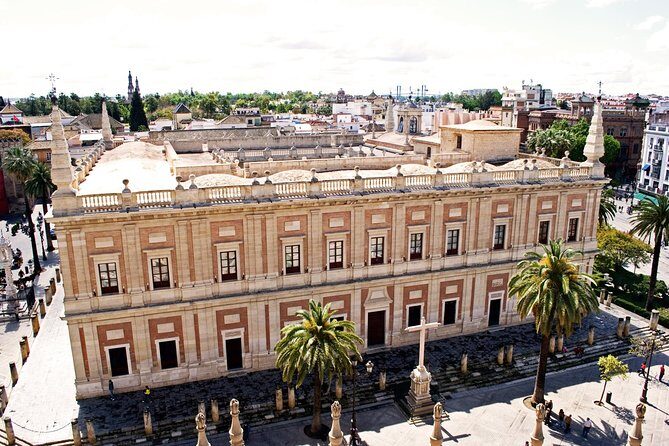
Then comes the Archivo General de Indias, with an external explanation of the building and what it houses: documentation of commercial transactions between Spain and America in the years following the Conquest.
This is one of those stops that quietly changes how you view Seville. The city’s “great monuments” are often explained like art history. Here, you get the administrative and economic thread—how record-keeping and trade shaped real life, power, and movement across the ocean.
It’s an exterior stop, and you’ll spend about 15 minutes. That’s enough to anchor the building in meaning without forcing a long visit. If you enjoy history that explains systems, not just dates, this part is likely to stick with you.
Real Fábrica de Tábacos (University of Letters): A Former Factory With New Purpose
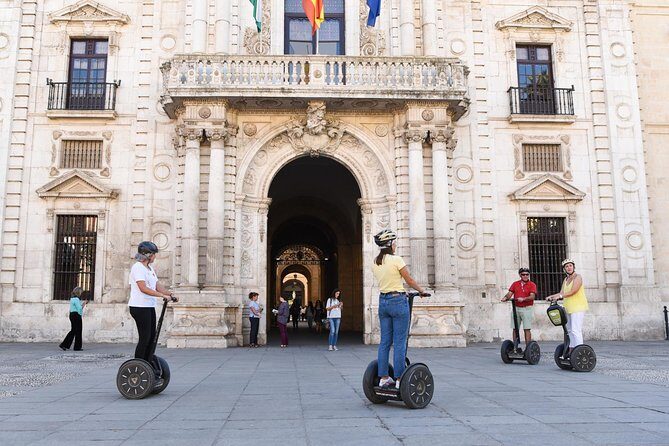
The ride finishes at Real Fabrica de Tabacos, where you enter the interior of the University of Letters of Seville, formerly the Real Fábrica de Tábacos.
This stop is a strong closing note because it reframes the monumental cycle. Instead of only royal palaces and civic squares, you end with a major industrial/power institution repurposed into education. That kind of reuse is one of the best ways to see a city as living, not frozen.
You’ll spend about 20 minutes here, so it likely gives you more time to absorb interior atmosphere than some of the exterior-only stops.
If you like spaces that show layers of function—how buildings evolve—this ending will feel satisfying. It also helps you end the tour with something distinct from the Cathedral/Alcázar cluster.
Private Group Feel: Why It’s Better for Questions
This is a private tour/activity, meaning only your group participates. Even without knowing group size, private usually means less waiting, more direct guidance, and a better chance to ask questions when something catches your attention—like a symbol on a door or the reason one neighborhood gets singled out.
The tour is also described as suitable for most travelers. Bike tours can vary a lot in comfort level, so if you’re sensitive to riding for 2.5 hours, you’ll want to gauge your own stamina and consider asking the provider about pace and breaks. But based on the tour’s general participation note, it’s designed to be approachable.
Weather and Comfort: The One Variable You Can’t Control
This experience requires good weather. That’s not a trivial detail. The tour depends on you moving between multiple outdoor stops, and rain or poor conditions can disrupt the whole route.
If the forecast looks questionable, treat this as a reason to stay flexible in your travel plans. The good news is that if it’s canceled due to poor weather, you’ll be offered a different date or a full refund—so you’re not stuck.
For your own comfort, plan for warm light and sun. Bring water and keep your day simple: comfortable layers and shoes you can walk in for short stopovers.
Who Should Book This Seville Bike Tour
This is a great fit if you want:
- A guided route that connects top monuments with the stories behind them
- A 2.5-hour plan that doesn’t steal your whole day
- A balanced mix of exterior viewing (Cathedral, Alcázar area) and context stops (Port history at Torre del Oro, trade records at Archivo de Indias)
It’s also ideal for first-timers who feel overwhelmed by Seville’s density. You’ll see a lot of the right places in the right order, and you’ll leave with a mental map that makes independent exploring easier.
You might want to think twice if you’re hoping for a long, sit-down interior museum day. This tour keeps things moving, with exterior emphasis and shorter stop durations in several key areas.
Should You Book This Tour?
Yes, if you want a fast, well-guided way to understand Seville’s biggest monuments without turning the day into a transport-and-line marathon. The pricing feels reasonable for the time, the private-group setup, and the fact that multiple stops list free admission, which keeps the total cost from creeping up.
I’d especially recommend it if you care about context—why places matter—because the tour seems designed to explain meaning at each stop, not just point at sights. If you’re going to book only one “orientation” activity in Seville, this kind of bike route is a smart candidate.
FAQ
How long is the bike tour through Seville’s monumental area?
The duration is approximately 2 hours 30 minutes.
How much does the tour cost?
The price is $47.71 per person.
Where is the meeting point?
The meeting point is Sevilla Moving – Alojamientos y experiencias, C. Luis Montoto, 19, Local Bajo, 41003 Sevilla, Spain.
What time does the tour start?
The start time is 10:00 am.
Is this a private tour?
Yes. This is a private tour/activity, so only your group participates.
Do I need to buy tickets for the stops?
The information provided notes admission tickets are free for the listed stops.
What monuments and areas are included?
The tour includes stops at Jardines de Murillo, Plaza de España, the area of the Palace of the ancient Dukes of Montepensier, Torre del Oro, Puente de Isabel II (Puente de Triana), Real Maestranza de Caballeria de Sevilla, Catedral de Sevilla (exterior), Real Alcázar de Sevilla (outside areas including Patio de Banderas and access toward Santa Cruz), Archivo General de Indias (external), and Real Fabrica de Tabacos (interior entry at the University of Letters).
Is the ticket digital?
Yes. The tour uses a mobile ticket.
What happens if the weather is bad or I need to cancel?
The experience requires good weather. If it’s canceled due to poor weather, you’ll be offered a different date or a full refund. You can cancel for a full refund up to 24 hours in advance; if you cancel less than 24 hours before, the amount paid is not refunded.