REVIEW · SEVILLE
Seville: Hospital de los Venerables Ticket with Audio Guide
Book on GetYourGuide →Operated by Hospital de los Venerables · Bookable on GetYourGuide
Seville can feel like one big open-air museum, but this ticket lets you slow down inside a working 17th-century setting. The Hospital de los Venerables Sacerdotes mixes a solemn baroque church, a beautiful Sevillian patio, and major art at the Centro Velázquez—plus a built-in audio guide to help you make sense of it all.
Two things I really like: the church interiors, with their baroque arches and wall frescoes, and the Centro Velázquez paintings where you can see works by Velázquez and Murillo in person. One thing to consider: the experience leans more toward art and architecture than a hands-on story about the hospital’s daily life.
In This Review
- Key Highlights You’ll Actually Care About
- Entering the Hospital de los Venerables: More Than a Pretty Building
- The Audio Guide Turns Strolls Into Understanding
- The Courtyard and Patio: Orange Trees, Wooden Gates, and a Stage for Theater
- Inside the Church: Baroque Arches and Frescoes That Actually Mean Something
- The Centro Velázquez: Paintings by Big Names in a Real Space
- Don’t Skip the Sacristy: Where Architecture Gets Personal
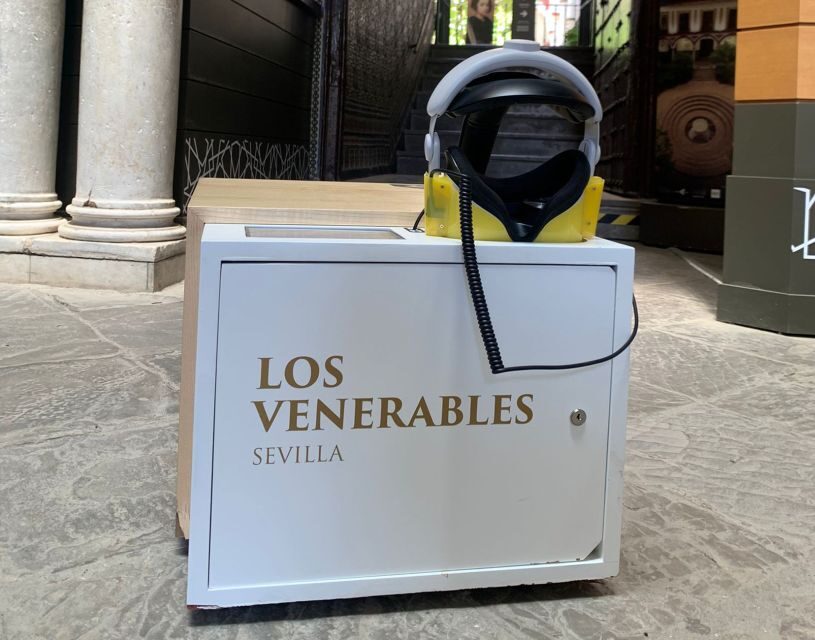
- The 360º VR Virtual Experience: Modern Tech Inside Old Walls
- What the Ticket Covers (and Why That Matters)
- Price and Value: Why $14 Feels Fair Here
- How Long You’ll Need and How to Fit It Into Your Day
- Who This Visit Suits Best
- Should You Book the Hospital de los Venerables Ticket?
- FAQ
- What is included in the Hospital de los Venerables ticket?
- How much does the ticket cost?
- How long is the ticket valid?
- Is the audio guide available in other languages besides Spanish?
- Do I need to buy another ticket for the VR experience?
- Does the ticket allow skip-the-line entry?
- Is the site wheelchair accessible?
- Is there a cancellation option?
Key Highlights You’ll Actually Care About
- Audio guide in multiple languages (Spanish, French, German, Italian) that guides you through church, sacristy, and courtyard
- Centro Velázquez entry inside the baroque complex, featuring famous Sevillian painters
- Baroque church details: arches, fresco scenes, and art in the church space itself
- Sevillian patio with wooden gates and orange trees, a photogenic stop you’ll linger at
- 360º VR virtual experience added to the visit for a modern twist
- Includes church + sacristy + courtyard, so you’re not bouncing between separate tickets
Entering the Hospital de los Venerables: More Than a Pretty Building
This is the kind of place where you immediately feel the age. Hospital de los Venerables Sacerdotes was founded in the 17th century by Canon Justino de Neve, originally to care for elderly people. That purpose matters, because the spaces aren’t just decorative. They were designed for a community function—religion, care, and ceremony all tied together.
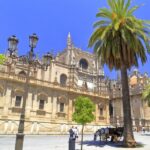
The building itself is baroque, and you’ll notice the style right away once you’re inside: curved forms, ornate church architecture, and an overall “crafted for attention” feeling. And yet it never becomes just theater for tourists. The courtyard and church are calm, architectural, and very “Seville in stone.”
You can also read our reviews of more tours and experiences in Seville

The Audio Guide Turns Strolls Into Understanding
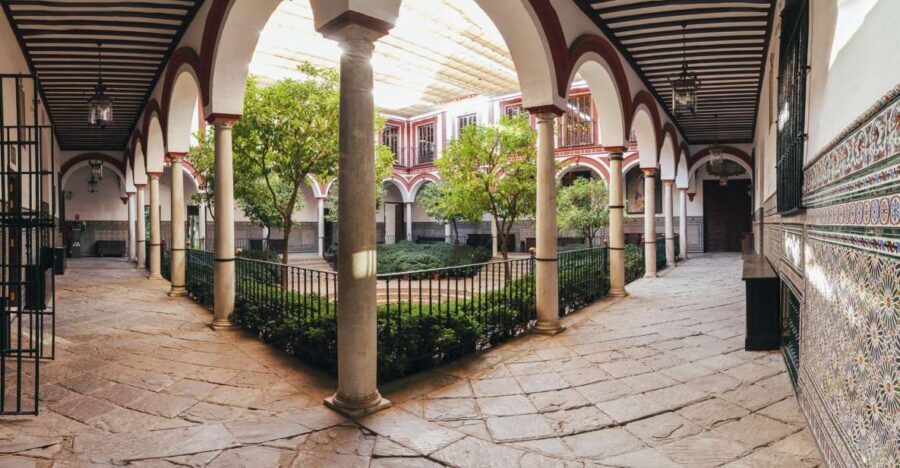
A ticket like this lives or dies by your ability to read what you’re seeing. Here, you get an audio guide included, with options in Spanish, French, German, and Italian. That’s a big deal because much of the meaning—who made what, why it’s here, what you’re looking at—gets lost when you’re only guessing.
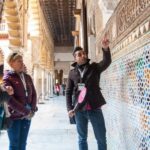
What I like most is that the audio guide is clearly meant to follow your route through the key areas: the courtyard, the church, and the sacristy. You’re not left wandering, hoping someone wrote a sign that makes sense. The result is better pacing: you spend less time trying to figure out what’s important and more time looking at the details.
If you want one extra practical tip, I suggest using the audio guide to help you slow down at the transitions. When you move from patio to church, or from church to sacristy, that’s where you’ll learn the most about how the building was meant to work.
The Courtyard and Patio: Orange Trees, Wooden Gates, and a Stage for Theater
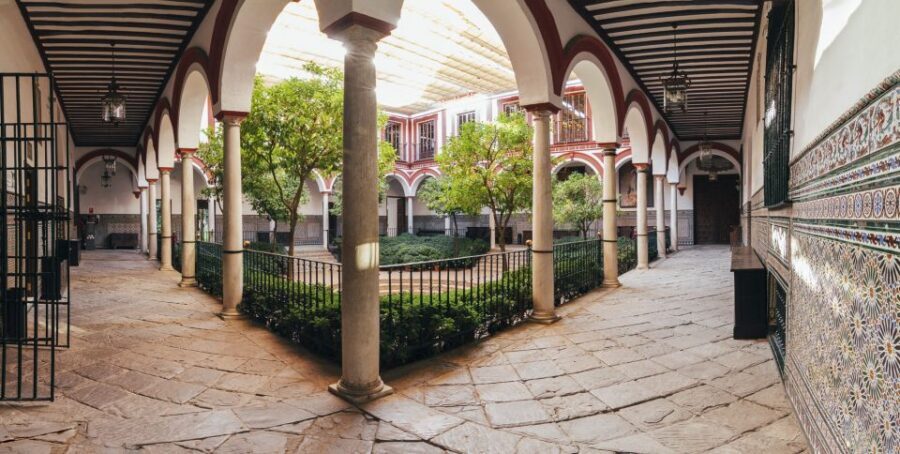
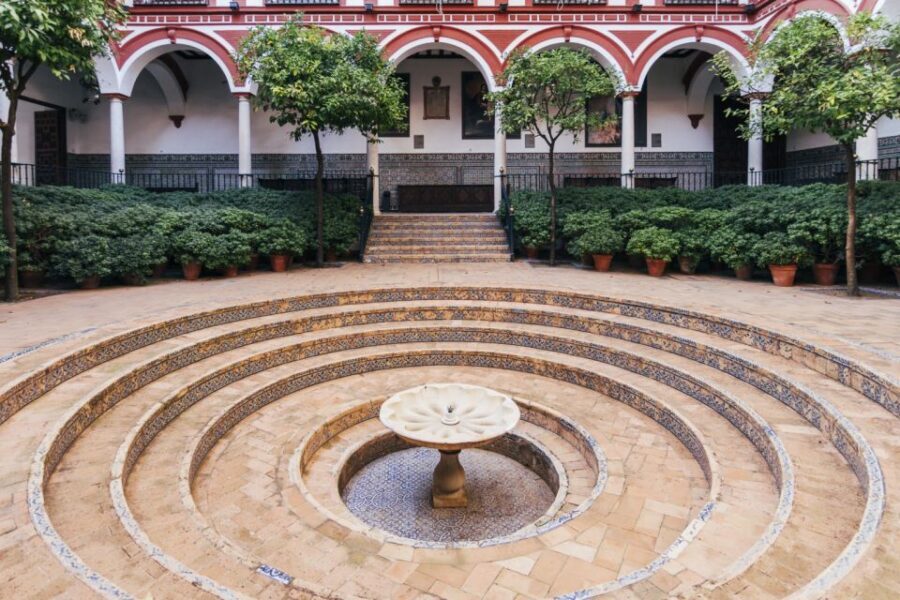
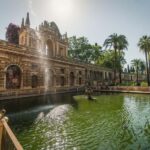
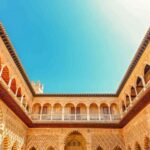
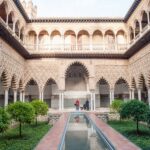
The patio is one of the best “wow, this is Seville” moments. It’s a traditional Sevillian courtyard, built around that in-between space where light, plants, and architecture meet. You’ll see orange trees here, and that little burst of green and fragrance makes the stone feel warmer and more human.
Then there are the wooden gates. They’re detailed and old-looking in the best way—less like modern décor and more like something that belongs to daily life. Even if you’re not visiting for architecture nerd reasons, you’ll appreciate the workmanship because it visually links the patio’s beauty to the building’s original purpose.
There’s also a literary connection: the patio was used for the great plays of Miguel de Cervantes and others. That detail changes how you look at the courtyard. Instead of thinking of it as only a scenic pause, you start seeing it as a space that could hold an audience, sound, and performance energy.
Inside the Church: Baroque Arches and Frescoes That Actually Mean Something
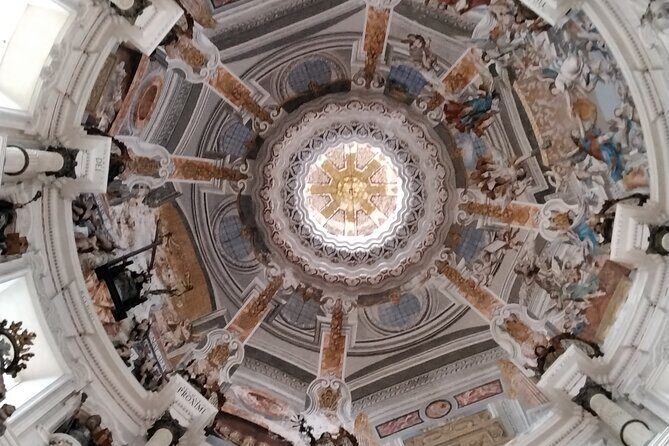
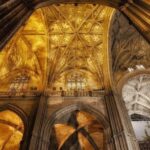
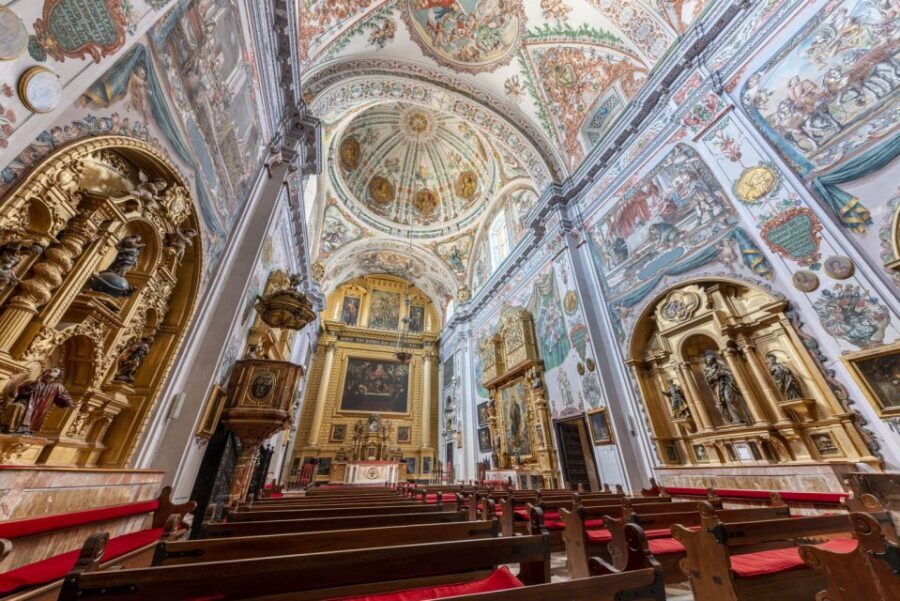
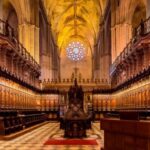
If the patio is your calm warm-up, the church is where you feel the baroque “statement.” The church interior is famous for its many beautiful arches, and you’ll notice how the structure guides your eye upward. It’s not random decoration. It’s designed to make you look, pause, and look again.
The walls are also where the church comes alive visually: fresco paintings cover scenes in a way that feels continuous across the space. These frescoes were designed and made by the Valdés family, and that naming helps you connect the “pretty wall” to the real artistic labor behind it.
As you move through the church, you’ll also encounter works by sculptor Pedro Roldán. That matters because it balances the flatness of paintings and frescoes with three-dimensional work, so the church becomes a mixed-media gallery inside a place of worship.
One practical consideration: when a place mixes art and architecture, it can be easy to mentally treat it all like one big room. Use the audio guide to separate the layers—arches and structure, fresco scenes, and the artworks—so you don’t miss what’s special about each.
The Centro Velázquez: Paintings by Big Names in a Real Space
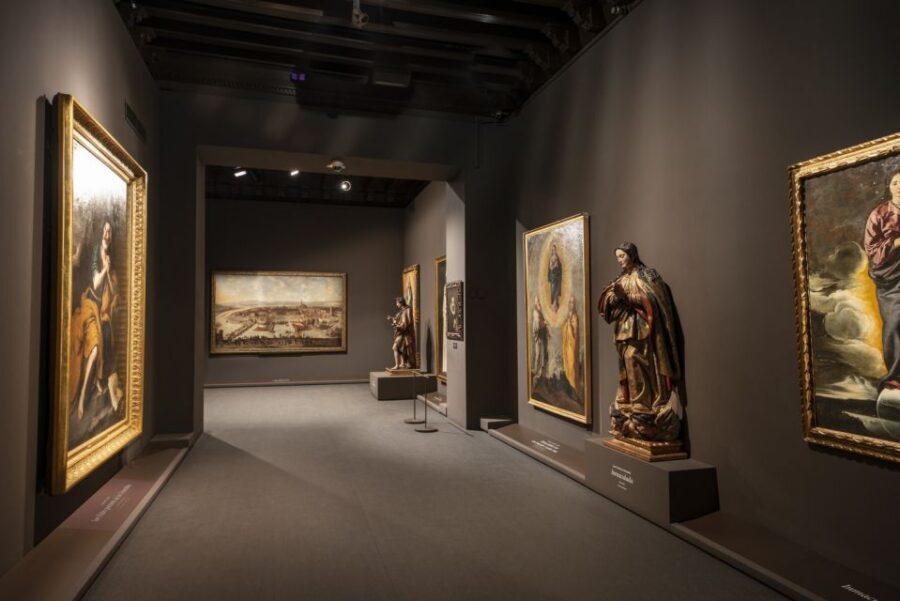
The Centro Velázquez is the art anchor of this ticket. It’s inside the Hospital de los Venerables complex, so you’re not hopping to a separate museum building. That’s a real value advantage: you’re seeing major art in a setting that already has a deep atmosphere.
Here you’ll find paintings by famous Sevillian painters such as Diego de Silva y Velázquez and Bartolomé Esteban Murillo. Seeing Velázquez’s work in person changes things. Even if you’ve seen reproductions before, the brushwork, scale, and color effects hit differently when you’re standing close to the paintings.
And the art theme is broader than just those two names. The overall setup is designed to connect Sevillian painting culture to the building’s identity. That’s why this stop feels like more than a checklist: it turns the Hospital de los Venerables into an art destination as well as a historic one.
A small but important note: because this is a hospital-turned-art-and-church complex, you’ll get the art experience alongside architectural features. So plan to look at the paintings first when you still have your energy, then let the church and frescoes finish the day.
You can also read our reviews of more guided tours in Seville
Don’t Skip the Sacristy: Where Architecture Gets Personal

The sacristy is included, and it’s worth your attention even if you think you’re only here for paintings. Sacristies often feel like the “backstage” of a church, and here you’ll find architecture that’s still impressive despite the passing of centuries.
What I like about sacristy visits is that they reset your focus. Instead of only taking in grand wall decoration, you start noticing practical building choices—shape, layout, and how the space supports religious ritual and artwork storage.
If you want to get more out of it, use the audio guide right there. The sacristy is where those descriptions help you understand the building as a system rather than a pretty backdrop.
The 360º VR Virtual Experience: Modern Tech Inside Old Walls
One of the more interesting inclusions is the new 360º virtual experience. It’s built into the visit, so you’re not required to find a separate platform or extra ticket. The idea is to show venerables in a way you haven’t seen before, which gives you a modern lens on a historic environment.
For some people, VR can be a distraction. For this ticket, it can also be a useful pause between art-heavy rooms. It adds contrast: you go from baroque arches and frescoes to a different way of interpreting the setting.
My suggestion: treat it like a bonus window, not the main attraction. Let the church, patio, and Centro Velázquez do the heavy lifting. The VR is there to add variety, not to replace the real space.
What the Ticket Covers (and Why That Matters)
You’re covered for the core spaces that make the Hospital de los Venerables experience feel complete:
- Entry to the church, sacristy, and courtyard/patio
- Velázquez Art Center (Centro Velázquez) entry
- Audio guide included
- 360º VR virtual experience included
That combination is the sweet spot for a single-ticket visit. You get the architecture, the religious interior, and major painting in one package, which is exactly what makes it good value for a day in Seville.
Also, the ticket includes skip-the-line entry. That matters in tourist-heavy areas because time saved inside the building often means more time actually looking at the details.
Price and Value: Why $14 Feels Fair Here
At about $14 per person, this ticket lands in the “worth it” category for a few reasons. First, you’re getting multiple major components together: the church and sacristy, the patio courtyard area, and the Centro Velázquez art space. Second, the audio guide and 360º VR inclusion add extra layers without pushing you into an expensive guided-tour model.
Could it have been priced higher given the art names and church setting? Sure. But the whole package feels tuned to a one-day visit, and that keeps your cost-to-content ratio reasonable.
One more small value point: the audio guide includes several languages (Spanish, French, German, Italian). If you’re traveling with someone who prefers a specific language, that saves the “finding the right tour” headache.
How Long You’ll Need and How to Fit It Into Your Day
The ticket is valid for 1 day, and you should check availability for starting times. Plan for a visit that feels unrushed enough to enjoy both the art and the architectural details. This isn’t a quick stop like a single facade photo.
If you’re stacking Seville sights in one day, I’d treat Hospital de los Venerables as a “centerpiece” stop rather than a side quest. The church and Centro Velázquez are strong enough that you’ll want time to actually look.
Who This Visit Suits Best
This experience is a great match if you like:
- Sevillian art and the chance to see Velázquez and Murillo in person
- Baroque architecture, especially church interiors with arches and frescoes
- A slower museum-style visit where the audio guide helps you understand what you’re seeing
- A historic building that’s also an art space
It may be less ideal if you’re expecting a lot of explanation about the hospital’s day-to-day operations. Based on the way the experience is set up, you should expect art, church space, and architecture to take the spotlight.
Should You Book the Hospital de los Venerables Ticket?
Yes—if you want a strong dose of Seville culture in one ticket. For the price, you’re not just buying entry to a church. You’re getting a Centro Velázquez art stop, a patio you’ll actually want to photograph, and a church with frescoes and baroque arches, all supported by an audio guide.
Book it especially if you care about seeing famous Sevillian painters and you like having context while you walk. If you’re mainly looking for a hands-on, everyday-history look at how the hospital functioned, you might feel this is more art-and-architecture focused than you want. But if you’re open to that, this is a very satisfying way to spend time in Seville.
FAQ
What is included in the Hospital de los Venerables ticket?
Entry is included for the church, sacristy, and courtyard, plus the Velázquez Art Center. You also get an audio guide and the 360º virtual experience.
How much does the ticket cost?
The price is listed as about $14 per person.
How long is the ticket valid?
The ticket is valid for 1 day. Starting times depend on availability, so you’ll want to check when you book.
Is the audio guide available in other languages besides Spanish?
Yes. The audio guide is available in Spanish, French, German, and Italian.
Do I need to buy another ticket for the VR experience?
No. The 360º virtual experience is included with this ticket.
Does the ticket allow skip-the-line entry?
Yes. Skip-the-ticket-line entry is included.
Is the site wheelchair accessible?
Wheelchair accessibility is included.
Is there a cancellation option?
Yes. You can cancel up to 24 hours in advance for a full refund.