REVIEW · SEVILLE
Seville: Cathedral, Giralda & Alcázar Guided Tour
Book on GetYourGuide →Operated by Naturanda Turismo Ambiental · Bookable on GetYourGuide
Three Seville icons in one smooth afternoon. This tour connects the Seville Cathedral, Giralda, and Real Alcázar with a live guide and pre-arranged tickets, so the city’s Roman, Arabic, and Christian layers make sense as you walk.
I love the skip-the-line entry paired with handheld headphones, which helps you actually hear the guide in busy areas. I also love that the storytelling is practical, not just scenic, with architecture explained step by step by guides like Alvaro, Karlos, and Laura.
The main drawback is simple: the day is only 3.5 hours, so if you want to linger a lot in the Cathedral, you may feel a bit pressed.
In This Review
- Key highlights at a glance
- Why the Cathedral, Giralda, and Alcázar are best seen together
- The 3.5-hour route and how the walking works
- Seville Cathedral: scale, crowd control, and what to look for
- Giralda: minaret-to-bell-tower details that actually click
- Real Alcázar: gardens, palace rooms, and why it still matters
- Getting the most from the headphones and guide-led flow
- Price and value: what $69 buys you in Seville
- Tips to keep the day comfortable (and your photos sharp)
- What kind of traveler should book this
- Should you book this Seville Cathedral, Giralda & Alcázar tour?
- FAQ
- How long is the Seville Cathedral, Giralda & Alcázar guided tour?
- What tickets are included?
- Where does the tour start?
- What languages is the guide available in?
- What should I bring?
- Is there a cancellation option if plans change?
Key highlights at a glance
- Skip-the-line tickets for the Cathedral and Real Alcázar, plus Giralda access
- Headphones so you can follow the guide even in crowds
- Three UNESCO sites in one route: Cathedral, Giralda, and Alcázar
- Garden + palace focus at the Alcázar, still tied to Spanish royal life
- Architecture explained through power changes: mosque to cathedral, minaret to bell tower
- Guides with humor and pacing, including names like Karlos, Emilio, Ivan, and Rafael
Why the Cathedral, Giralda, and Alcázar are best seen together
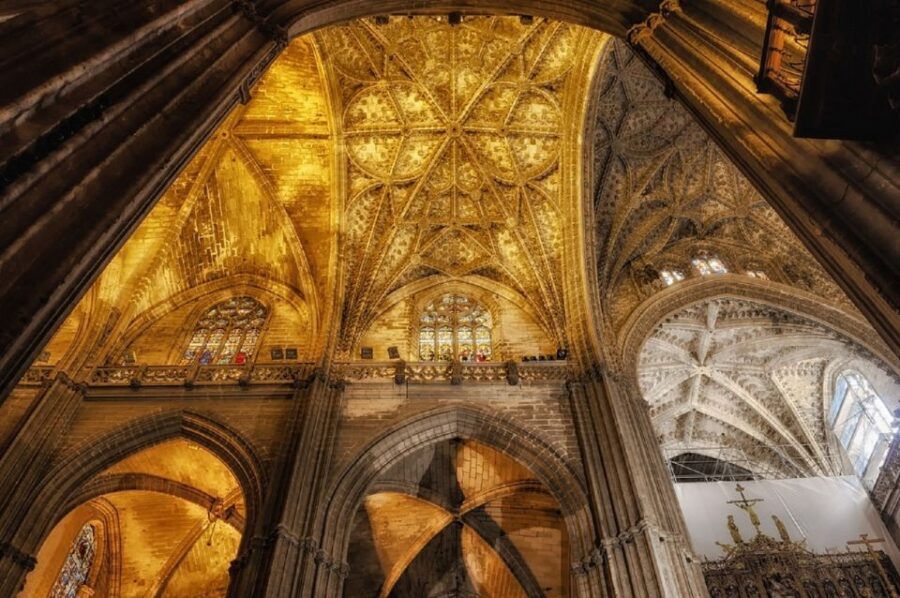
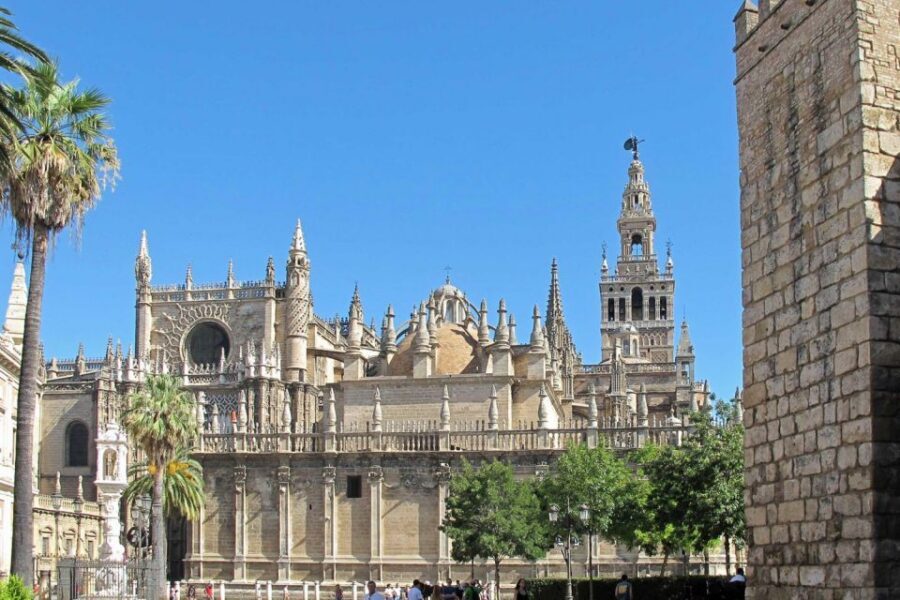
Seville’s big monuments feel separate on a map, but in real life they speak to each other. This tour is built around that idea: the Cathedral and Giralda show you how a Muslim Almohad-era minaret became the Giralda bell tower, and how the Cathedral rises on the site of an earlier mosque. Then the Real Alcázar picks up the thread with palace design and gardens that reflect Muslim-Moorish roots, later reshaped by Christian rulers.
I like that you are not just looking at buildings. You’re learning the logic behind them: why a wall is where it is, what a style shift signals, and what it meant for the people who lived and ruled here. With a good guide, you can walk away feeling like you understand what you saw, not just that you saw it.
You can also read our reviews of more guided tours in Seville

The 3.5-hour route and how the walking works
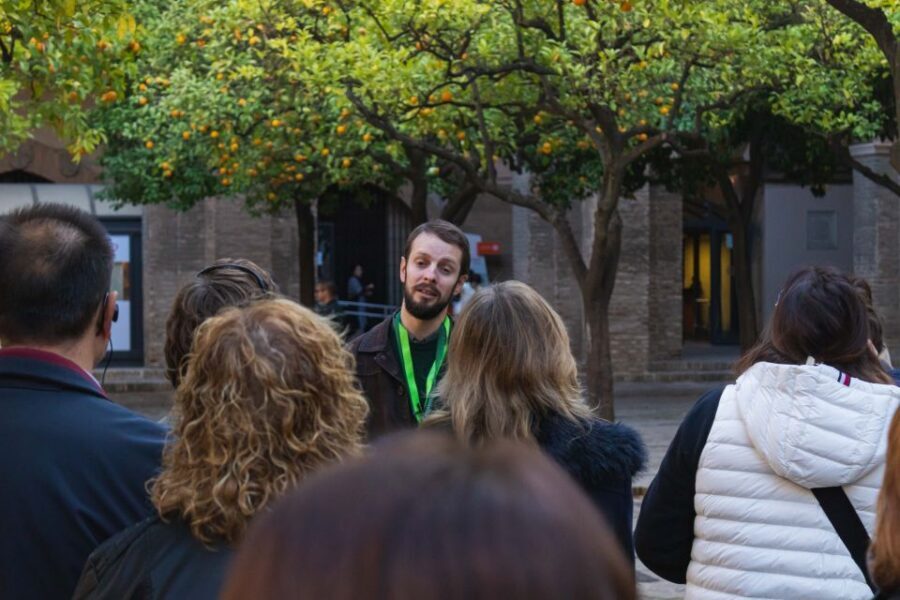
The tour starts near Calle Francos (the exact meeting point can vary based on what you book). From there, you move in short legs on foot with quick photo moments and guided portions at each monument. The pacing is designed to fit into a half-day without turning it into a long museum crawl.
Expect a pattern like this: a guided Cathedral segment first, then Giralda, then the Real Alcázar. The walking between stops is short, but the total time inside key areas is what drives the feel of the day. If you tend to take your time, the best strategy is to plan your photo stops early and save your slow wandering for the Alcázar’s free time.
Seville Cathedral: scale, crowd control, and what to look for
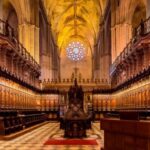
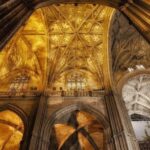
The Cathedral stop is the heart of the tour’s “wow, then explain” moment. You’ll get a guided walkthrough of about an hour, with a photo stop built in, and you’ll be shown how the Cathedral sits on the footprint of an earlier mosque. That one fact changes how you read what you see: you’re not just admiring Gothic grandeur, you’re seeing layers of belief and authority stacked in the same space.
What I love here is that the guide narration turns big spaces into something you can track. You’re not left to guess what matters, especially when the interior gets busy. Many guides also keep the group moving respectfully while still leaving room to pause and take pictures when the light and the crowds allow.
A possible consideration: the Cathedral is famous for a reason, so it’s often crowded, and you’ll be mostly standing or moving slowly. One common complaint from people who did similar tours is wanting either more sitting time or extra time for photos inside the Cathedral. If you know you’ll get antsy standing, plan for shorter observation bursts and come back to your favorite spots during any provided free time.
Giralda: minaret-to-bell-tower details that actually click
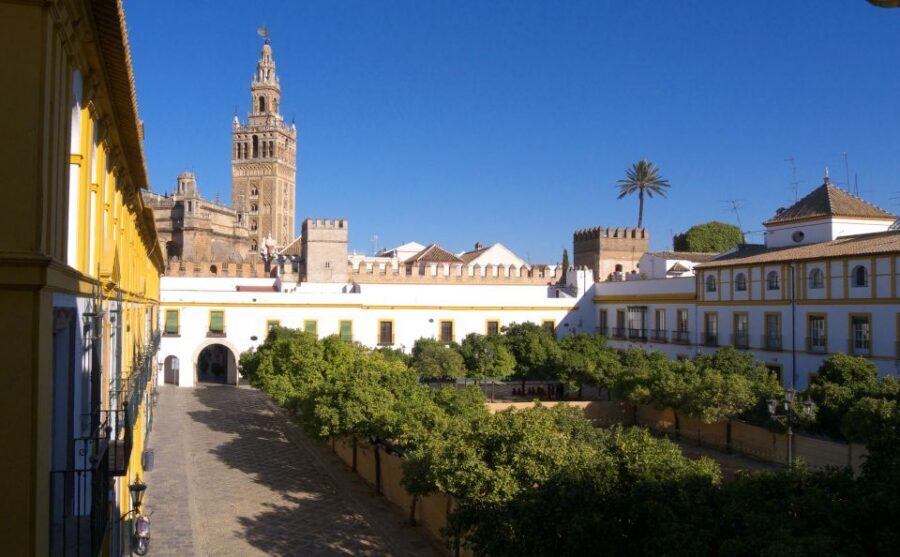
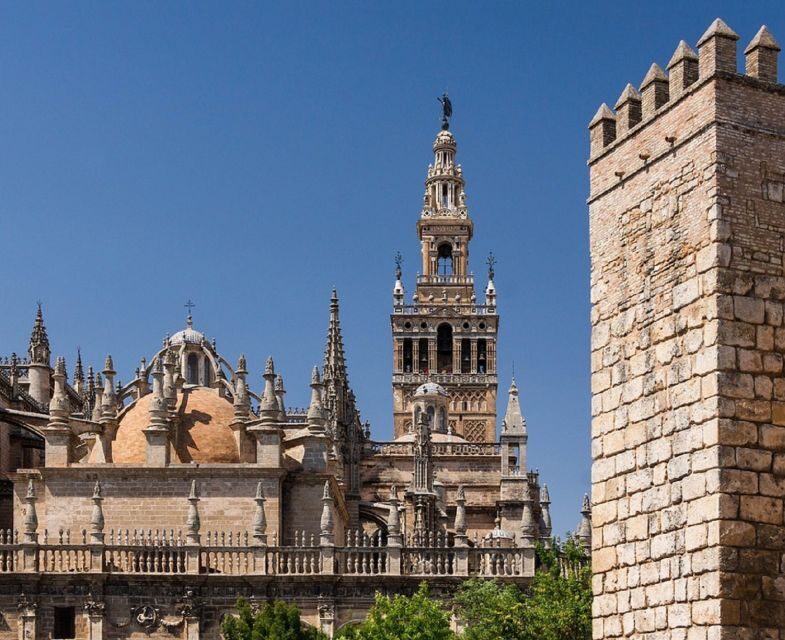
After the Cathedral, the tour shifts to the Giralda area with a shorter guided portion, plus time for photos. The big takeaway is the transformation: the Giralda began as an Almohad minaret, and later became the bell tower you see today. When someone explains that origin clearly, you start noticing design choices that hold the memory of its earlier purpose.
Even if you don’t obsess over architectural terms, you’ll still get value from the guided angle. It gives shape to the building: which parts come from the earlier period, what later changes reflect, and why the tower dominates the surrounding skyline. That’s the kind of context that makes a structure feel more personal, even from the ground.
In practice, you’ll likely spend about half an hour in this segment, which is enough to orient yourself and take photos without turning the tower into an all-day commitment. If you’re the type who could stare at one wall for an hour, keep your expectations aligned with the tour’s structure: it’s a guided overview, not a deep study class.
Real Alcázar: gardens, palace rooms, and why it still matters
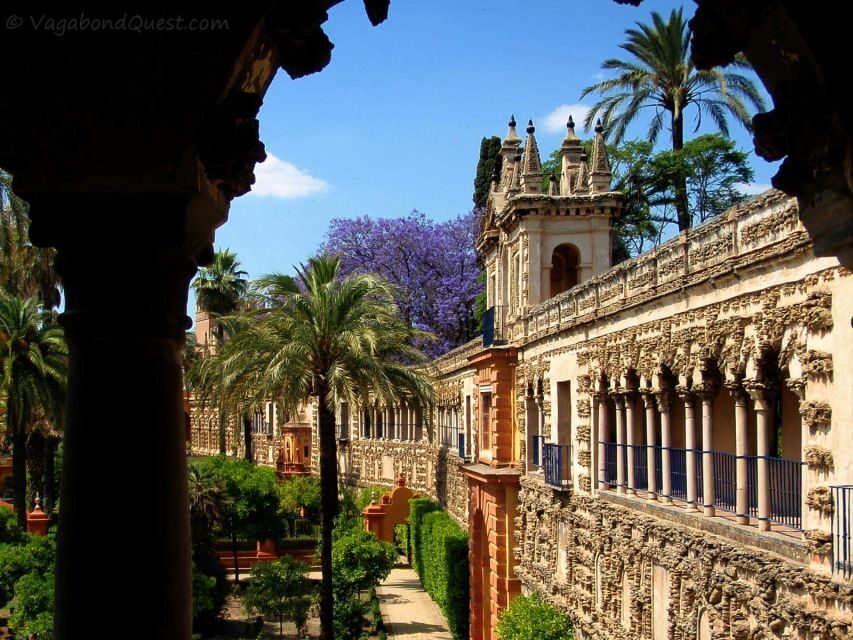
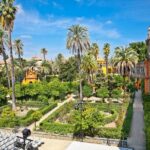
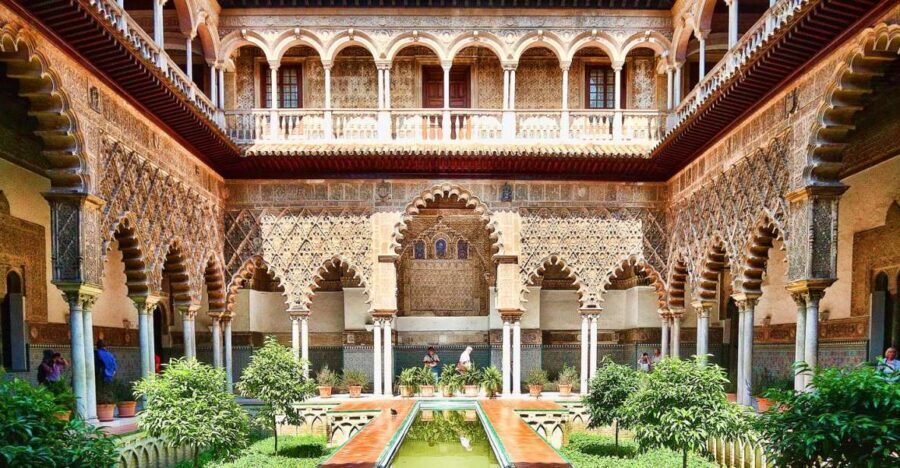
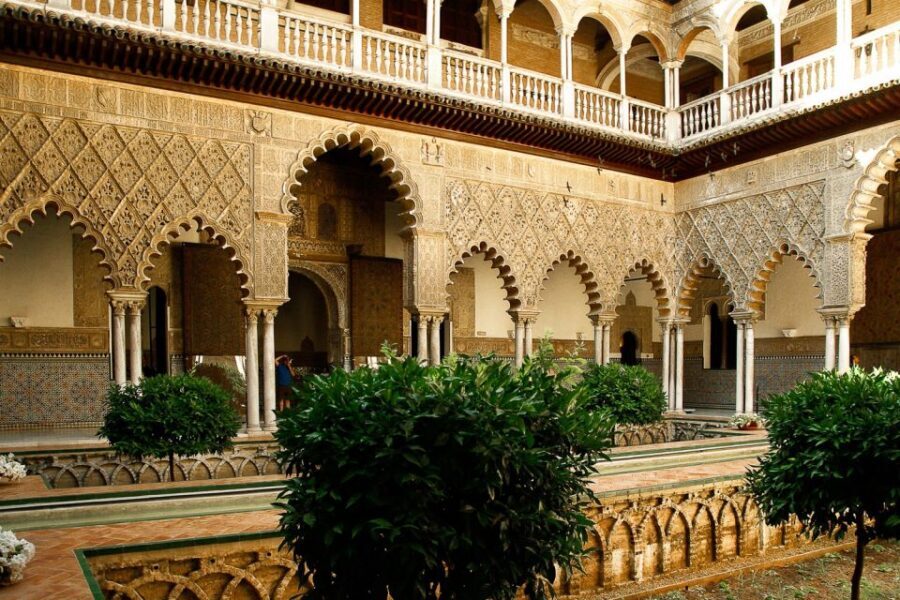
Then comes the Real Alcázar, and this is where the tour earns its “worth it” stamp for many people. You get a guided portion of about 1.5 hours, followed by roughly an hour of free time. That free hour matters because the Alcázar is made for lingering: courtyards, tiled surfaces, and garden layouts that work whether you’re rushing for photos or slowing down to notice details.
The big story you’ll hear is that the Alcázar is one of the oldest European palaces still in use. It also ties into modern life because it remains connected to the Spanish monarchy. That continuity is unusual: so many historic palaces become empty shells for the camera, but here the building still has an ongoing role.
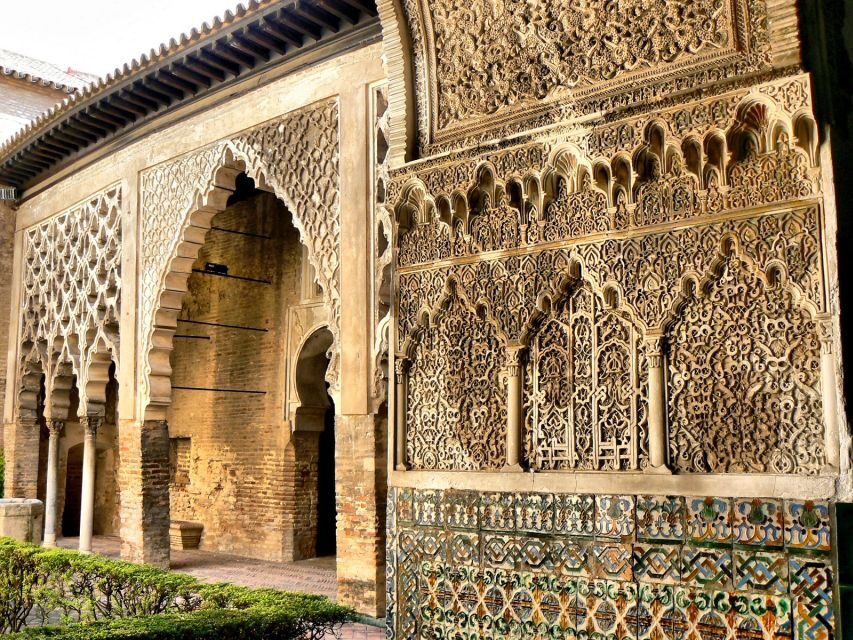
I love the way the tour frames the Alcázar as more than a pretty courtyard stop. You’re shown how the architecture and gardens reflect Moorish origins from the time of the Muslim Moors, then how later rulers adapted it. When the guide explains those shifts, the decorations stop feeling random. They start feeling intentional, like a design language.
A practical thought: the Alcázar is visually dense, so it can be hard to know where to look first. Your guide helps here by pointing out what to notice during the guided phase, so your free time becomes less wandering and more targeted exploring. If you’re serious about photos, the best use of the free time is to return to the spots your guide marked and spend time on angles that felt crowded or rushed during the guided portion.





Getting the most from the headphones and guide-led flow
This tour provides headphones so you can hear clearly as you move. That feature matters more than it sounds, especially in the Cathedral and Alcázar, where crowd noise and echoes can swallow normal speaking voices. The result is that you can keep your attention on the guide instead of on trying to decode bits of information over the din.
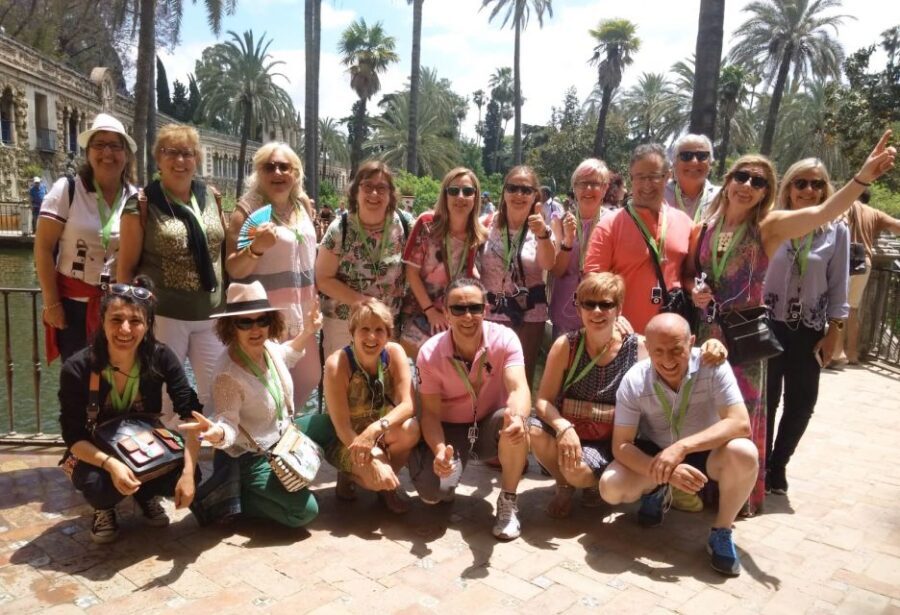
Group flow is also managed by the guide. People who’ve done the tour with different guides often mention that the day felt organized even when crowds were heavy. You may also notice that some guides are especially good at keeping the group together and helping you navigate the next turn without stress. Names that come up repeatedly in guide feedback include Karlos, Rafael, Emilio, Iván, and Ismael, and the common thread is pacing plus an ability to explain how the places connect.
Still, no tour can erase crowds. If your plan is to hit the Cathedral for long, quiet contemplation, build in extra patience. This is structured sightseeing with short photo breaks, and the tradeoff is that you spend less time figuring things out on your own. The 1,794-review favourite is Priority Access Cathedral & Giralda Tour. Science Museum, Seville publishes the current hours and closures.
Price and value: what $69 buys you in Seville
At around $69 per person for about 3.5 hours, you’re paying for three things: a guide, skip-the-line entry to the Cathedral and Real Alcázar, and Giralda access with headphones. If you tried to assemble this on your own, the effort would be more than just ticket shopping. You’d also be juggling timing, finding meeting instructions, and figuring out the best sequence so you’re not losing hours to lines and confusion.
So is it expensive? It can feel that way, especially if you are comfortable doing museums solo. But the value calculation changes if you hate waiting or you want context delivered in real time while you stand in front of the monuments. The guide’s job is to transform “I saw a beautiful church” into “I understand what replaced what here, and why it looks the way it does.”
There’s also a subtle value advantage: time. You’re not trying to cover three major sites separately across multiple days. Even if you only use part of the guided material, the structure can still pay off.
Tips to keep the day comfortable (and your photos sharp)
A few small decisions will make this tour more pleasant.
First, wear shoes that handle uneven stone and lots of indoor-to-outdoor movement. Even the short walking legs add up when you’re weaving through crowds. Second, bring a photo plan. The guided segments include photo moments, but if you wait until the group is already moving, you’ll lose chances at the best angles.
Third, think about when you want your slow time. The tour gives you free time at the Alcázar. Use that hour as your main decompression window, and treat the Cathedral and Giralda as your “guided orientation” phase.
Finally, if you want to ask questions, do it early. The guide time is limited, so early questions about architecture, rulers, or symbolism help you enjoy the rest of the tour more. Many guides on this tour are also good at turning questions into short mini-stories.
What kind of traveler should book this
This tour fits best if you want:
- A guided route through Seville’s top UNESCO sites without wasting time in lines
- Architecture explanations that connect Islamic, Christian, and earlier Roman layers
- A half-day plan that still leaves some breathing room inside the Alcázar
It may be less ideal if you need lots of quiet or long rests, because the structure is tight and crowd conditions can be tiring. If you’re traveling with kids, the monuments will still be incredible, but make sure the group’s energy matches a 3.5-hour schedule that includes both indoor crowds and exterior viewpoints.
Should you book this Seville Cathedral, Giralda & Alcázar tour?
Book it if you want a smart, efficient way to see Seville’s biggest monuments in one arc, with skip-the-line tickets and a guide who explains the architecture so it clicks. For many people, the guide makes the difference between an impressive stop and a genuinely memorable understanding of the city.
Skip it or choose a lighter alternative if you already know Seville well and you mainly want to wander slowly, or if you know you get uncomfortable standing in crowded interiors. This isn’t a slow stroll tour. It’s a focused guided afternoon designed to help you see three icons without the usual hassle.
FAQ
How long is the Seville Cathedral, Giralda & Alcázar guided tour?
It runs for about 3.5 hours. Exact starting times depend on availability.
What tickets are included?
The tour includes skip-the-line tickets for the Real Alcázar and the Seville Cathedral, plus Giralda access.
Where does the tour start?
The meeting point may vary depending on the option booked. The starting area is near Calle Francos.
What languages is the guide available in?
The live guide is available in Spanish, English, Italian, and French.
What should I bring?
Bring a passport or ID card. If applicable, bring a student card, and for children bring the passport or ID card details required by the booking.
Is there a cancellation option if plans change?
Yes. You can cancel up to 24 hours in advance for a 50% refund.