REVIEW · SEVILLE
Seville: 4–Hour Italica Tour
Book on GetYourGuide →Operated by Centerbici · Bookable on GetYourGuide
Roman ruins by bike is a smart change of pace. I love that this Seville tour mixes a scenic ride through parks and along the river with time at Italica, including the standout amphitheatre. I also like that you go with a guide who can pace things so the visit feels smooth, not rushed. One thing to consider: it’s a cycling route, and the streets near the end can feel busy, so it may not suit people who get nervous on a bike.
You start and end right at Centerbici Stire, and the tour includes bike rental, water, and entrance to Italica—so you’re not juggling tickets mid-day. You’ll also skip the ticket line, which matters when you’re trying to fit a lot into a four-hour outing.
In This Review
- Key things that make this Seville Italica tour worth it
- Why bike to Italica beats the usual day-trip rhythm
- Getting out of Seville: parks, the river, and San Isidoro del Campo
- A practical heads-up about the ride
- Meeting Italica: what you’re actually stepping into
- The mosaics, sculptures, and why the details are the point
- The amphitheatre: one of the Roman Empire’s biggest acts
- Rigo and the pacing: why the guide experience is a highlight
- What’s included (and what you’ll still want to bring)
- Price and time: is 4 hours enough at Italica?
- Who should book this tour?
- Should you book the Seville–Italica 4-hour bike tour?
- FAQ
- How long is the Seville: 4–Hour Italica Tour?
- Where does the tour start?
- When does the tour end?
- What is included in the tour price?
- Do I need to buy an Italica entrance ticket separately?
- What languages are the guides available in?
- Is the tour suitable for people with mobility impairments?
- Is bicycle rental included?
- Does the tour provide water and helmets for children?
- Can I cancel and get a refund?
Key things that make this Seville Italica tour worth it
- Riding Seville’s river-and-park route before you reach the ancient site
- Italica’s scale: mosaics, sculptures, and one of the empire’s largest amphitheatres
- A guide who sets the pace: Rigo is highlighted for comfortable speed and clear explanations
- Skip-the-line entrance so your time inside doesn’t get eaten by ticket lines
- Everything you need for the ride: bicycle rental, water bottle, and helmets for children
Why bike to Italica beats the usual day-trip rhythm
Italica is the kind of Roman site that rewards you for slowing down. You want time to look closely at floors, sculpture, and layout—not just a quick stop where you’re stuck reading signs from a crowd.
This tour has a built-in solution: first you get a bike ride that gently shifts you out of “Seville city mode” and into “Roman outskirts” mode. After that, you’re dropped at the entrance with time to actually enjoy what you came for—especially the mosaics and the amphitheatre.
The value is also real for the price. At $57 per person, you’re paying for more than a ticket. You get a guided tour, bicycle rental, bottled water, and entrance to Italica, with skip-the-line access. For a four-hour window, that’s a strong bundle.
You can also read our reviews of more tours and experiences in Seville.


Getting out of Seville: parks, the river, and San Isidoro del Campo
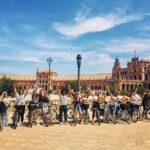
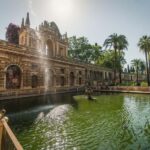
The tour starts at Centerbici Stire (C/ Espronceda. 5, 41004, Sevilla). From there, you ride through central Seville before moving to a path that runs across the river and through parkways.
That routing matters. Seville has a way of feeling like it’s all old streets and big views, but a bike path gives you a different angle—less stop-and-start, more glide. You’ll also get to see the river of the city along the way, which helps you understand where Italica sits in relation to modern Seville.
One named stop along the route is the Monastery of San Isidoro del Campo. Even if you don’t go inside (the tour description focuses on the ride and the Roman entrance later), seeing it on the approach gives you context. Monasteries like this often become quiet anchors in the broader landscape, and it’s a nice “in-between” moment before you hit ancient walls.
A practical heads-up about the ride
This is not a leisurely sidewalk stroll. You’re on a bike for part of the experience, and one of the biggest cautions from actual feedback is that the final biking segment can get challenging due to narrow streets and traffic. If you’re comfortable riding in city conditions, you’ll probably handle it fine. If you prefer wide lanes or hate merging chaos, consider whether you’re ready.
Meeting Italica: what you’re actually stepping into
Italica is described as the first city in the Roman Empire built outside the Italian peninsula—and it’s tied to the emperors Trajan and Hadrian. That’s not just trivia. When you arrive, the site’s scale makes the claim feel believable: this wasn’t a small outpost. It was an important Roman presence far from the center.
The tour brings you from the bike route to the entrance of the Roman ruins, and then it’s straight into the heart of what makes Italica memorable: mosaics and sculptures that look surprisingly well preserved. You’re not just looking at bricks; you’re seeing art that survived long enough to still communicate its original craft.
Here’s what I find most satisfying about the way this visit is set up: you’re given context first, then you’re allowed to look. That sequence helps you notice more—floor patterns, sculptural details, and how the site’s layout supports the big public spaces you’ll see next.
The mosaics, sculptures, and why the details are the point
The standout theme inside Italica is preservation. The ruins include amazing mosaics and sculptures described as perfectly preserved, especially the ones you’ll encounter as you move toward the central monumental features.
Mosaics can be easy to skim if you’re rushed. But guided time changes that. A good guide helps you slow down and notice the structure—where decoration shifts, what themes appear, and how the mosaic floors were meant to be seen from particular angles.
Sculpture also adds “voice.” Even when you can’t interpret every fragment, you start to understand how Roman communities wanted public spaces to feel: polished, planned, and designed for people to gather.
If you enjoy art, architecture, or “how did they build this” questions, this part is where the tour pays off. You’ll get enough time to actually see things, not just pass by them.



The amphitheatre: one of the Roman Empire’s biggest acts
No Roman ruins page feels complete without a major public building, and Italica delivers with its amphitheatre. The tour highlights it as one of the largest amphitheatres in the entire Roman empire—and once you’re there, that claim stops being abstract.
Why the amphitheatre matters on a guided half-day:
- It’s the best place to understand Roman planning in a single glance.
- It anchors your walk through the rest of the ruins.
- It gives you a sense of scale you can’t get from street-level ruins back in a city.
When the amphitheatre is this central, it turns the site from “a collection of remnants” into “an organized world that once operated.” Even if you only catch part of that feeling, the size alone does the job.
Rigo and the pacing: why the guide experience is a highlight
The strongest praise in the reviews points to the guide. One name comes up again and again: Rigo. People singled out his deep understanding of Italica and his ability to explain things at a pace that feels comfortable.
That pacing detail is more important than it sounds. Italica isn’t a tiny stop. If your guide marches you through at a fast clip, you’ll miss the mosaics and the sculpture details that are supposed to be the big payoff. But a comfortable pace makes the whole site feel more like an enjoyable walk and less like a checklist.
Rigo also gets mentioned for excitement and for making recommendations after the tour. That’s practical help, not just chatter—because once you’ve spent the morning cycling and walking through Roman ruins, you want to know what to do next without guessing.
One more detail: one review noted they hadn’t realized the trip involved cycling until they booked, and they still did well. That suggests the guide and the route planning help people get through the ride, even if you’re not a lifelong cyclist. Still, keep the traffic/narrow-street caution in your head.
What’s included (and what you’ll still want to bring)
Included in the tour:
- Bike tour of Seville
- Bicycle rental
- Entrance to Italica
- Bilingual guide
- Water bottle
- Helmet rental for children
That’s a clean package. It reduces friction. You don’t need to hunt for a rental, and you’re not paying separate entrance fees on the spot. The water bottle also helps since the day is partly active.
What you’ll likely want to bring (not specified by the tour, but useful for comfort):
- Sunglasses and sun protection (Seville can be bright)
- Comfortable closed-toe shoes
- A light layer if the weather is breezy
- If you’re prone to motion discomfort, take it easy on the ride segments with busier traffic
Because the tour isn’t listed as suitable for people with mobility impairments, plan to choose alternatives if walking constraints or bike comfort are issues for you.
Price and time: is 4 hours enough at Italica?
Four hours sounds short until you think about how it’s structured: ride out of Seville, transition across the river and through parkways, reach the monastery area, then enter the ruins for the main Roman experience.
You’re not touring Italica for a full day, so you’ll want to match your expectations. This is ideal if:
- You want a guided highlight visit
- You like the idea of pairing city viewpoints with Roman ruins
- You’re okay with a mix of cycling plus walking
It’s not ideal if:
- You want hours of unhurried wandering with no group rhythm
- You dislike being active for part of the itinerary
- You need a fully mobility-friendly format (it’s specifically marked not suitable)
For most people who like a well-timed plan, the four-hour format is a strength. You get the “wow” of mosaics and the amphitheatre without losing an entire day.
Who should book this tour?
I’d point you toward this experience if you:
- Enjoy walking and also feel comfortable enough on a bike
- Want a guide-led approach to Italica’s mosaics, sculptures, and amphitheatre
- Appreciate a route that shows you parts of Seville you might not hit on a typical viewpoint-only stroll
- Value practical inclusions (entrance, bike rental, water, skip-the-line)
I’d steer you away if:
- You have mobility impairments (the tour is not suitable)
- You’re extremely uncomfortable riding in city traffic or narrow streets
- You want a strictly low-movement activity
Should you book the Seville–Italica 4-hour bike tour?
If your goal is a smart Roman hit without wasting time, I think it’s a good booking. The combination of bike transport, included entrance, skip-the-line access, and a guide like Rigo—praised for pacing and clarity—adds up to a tour that feels efficient but not rushed.
The only reason to hesitate is the cycling factor. If you’re the kind of person who avoids bikes or gets stressed in traffic, you may find the narrow street segments tiring. On the other hand, if you’re okay with city cycling for a few stretches, this is a fun way to connect Seville to one of Spain’s most impressive Roman sites.
FAQ
How long is the Seville: 4–Hour Italica Tour?
The tour duration is 4 hours.
Where does the tour start?
The meeting point is Centerbici Stire, C/ Espronceda. 5, 41004, Sevilla.
When does the tour end?
The activity ends back at the meeting point.
What is included in the tour price?
The tour includes a bike tour of Seville, bicycle rental, entrance to Italica, a bilingual live guide, a water bottle, and helmet rental for children.
Do I need to buy an Italica entrance ticket separately?
No. Entrance to Italica is included, and you’ll also skip the ticket line.
What languages are the guides available in?
The guide is available in Spanish, English, French, German, and Italian.
Is the tour suitable for people with mobility impairments?
No, the tour is not suitable for people with mobility impairments.
Is bicycle rental included?
Yes, bicycle rental is included.
Does the tour provide water and helmets for children?
Yes. A water bottle is included, and helmet rental is provided for children.
Can I cancel and get a refund?
Yes. Free cancellation is available up to 24 hours in advance for a full refund.