REVIEW · SEVILLE
Rock art and Ronda
Book on Viator →Operated by Sevilla Moving · Bookable on Viator
Prehistoric art meets a breathtaking gorge. This day trip pairs La Cueva de la Pileta with Ronda, so you get jaw-dropping images underground and then big open views above the city. I especially like the rock art details, from cervids and horses to fish, abstract signs, and engraved figures. I also like that Ronda gives you a real walk through an older feel of Spain, built between Arab-era roots and later city life. One thing to plan around: the schedule moves steadily, and you’ll want moderate physical fitness for the cave visit and guided walking pace.
You start in Seville at 9:00 am, ride in an air-conditioned vehicle, and spend the day with a small group (max 8). The guide is part of the value, and you’ll leave with a clearer story of what you just saw, not just a quick photo stop.
In This Review
- Key Highlights You’ll Actually Care About
- Rock Art at La Cueva de la Pileta: What You’re Looking For
- Ronda’s Gorge and New Bridge Views: A City Built Around a Drop
- How Los Pueblos Blancos Fits In (and How to Make the Most of It)
- The Guide and Group Size: Why It Feels Under Control
- Timing and Pacing: A 9-Hour Day With Real Focus
- Price and Value: Is 270.93 Worth It?
- What to Bring and Who Will Enjoy This Most
- Should You Book This Tour From Seville?
- FAQ
- What is the duration of the Rock art and Ronda tour?
- What time does the tour start in Seville?
- Where do I meet for the tour?
- Is transportation included?
- Which attractions are included, and what about tickets?
- Is lunch included?
- How big is the group?
- What if I need to cancel?
Key Highlights You’ll Actually Care About
- La Cueva de la Pileta ticket included for a full, guided 2-hour rock art visit
- Ronda time focused on the gorge and old vs. new city contrast, including a New Bridge viewpoint
- A small group day (up to 8) makes cave time and questions feel manageable
- English guide throughout, plus help understanding what you’re seeing
- Cave art from Franco-Cantabrian tradition with figures like horses, goats, bulls, a seal, and more
- No lunch included, so plan your appetite and don’t assume it’s handled
Rock Art at La Cueva de la Pileta: What You’re Looking For
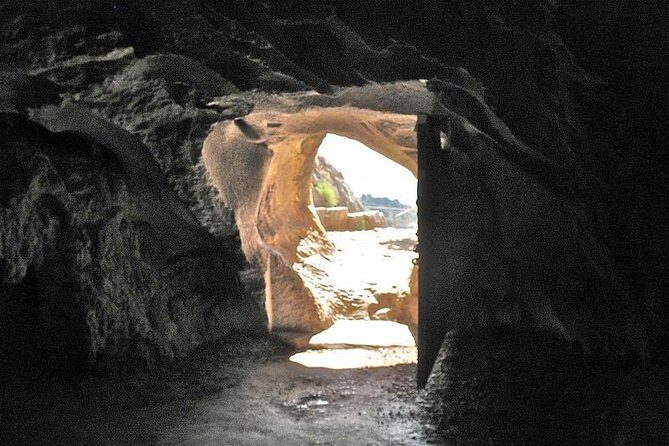
This is the main event, and it’s not just a generic cave stop. La Cueva de la Pileta in Benaoján is a prehistoric site with Paleolithic parietal art and later Neolithic remains. It was discovered in 1905 by José Bullón Lobato, and then studied and explored by names you’ll sometimes see in European archaeology circles, including Willoughby Verner, Henri Breuil, and Hugo Obermaier.
Here’s what makes it worth your time: the art includes paintings and engravings in the Franco-Cantabrian style. In plain terms, that means you’re not only seeing one type of mark. You’re seeing a mix of images and signs that feel like a communication system, not just decoration.
When you’re in the cave, expect to encounter recognizable animals and more puzzling marks. The record includes representations of cervids, horses, fish, goats, bulls, a seal, and a bison, plus abstract signs and indeterminate figures. The timeframe given for this group of art is between 7,000 and 4,500 years, which helps you place the cave in a broader prehistoric timeline outside the “classic” rock art heartlands of northern Spain and southwest France.
What I like about bringing you here by guided visit is that you’re not left to guess. In the cave, guides like Francisco have helped people understand what they’re looking at, and that extra explanation matters. A quick look can produce a few great photos, but guided attention helps you see patterns: how animals cluster, how signs relate, and how engraving differs from paint.
Practical cave advice: wear shoes you’re comfortable walking in, and don’t try to rush. Cave viewing rewards calm focus, especially when you’re listening.
The payoff: you’ll walk out feeling like you saw something specific, not something vague.
You can also read our reviews of more tours and experiences in Seville.


Ronda’s Gorge and New Bridge Views: A City Built Around a Drop
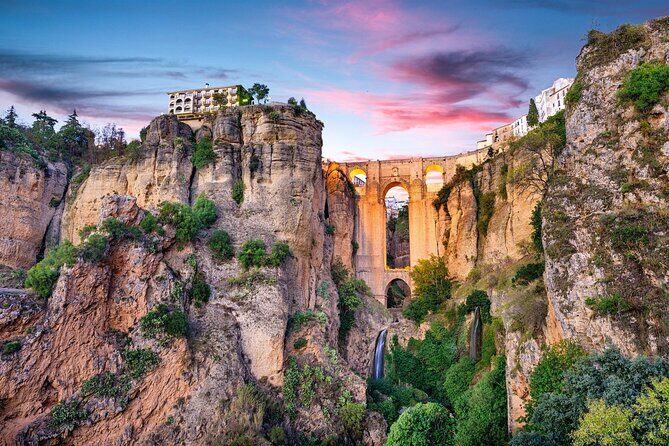
After the cave, the day shifts gears. Ronda sits on a deep gorge, separating older areas from newer ones. The gorge is the defining physical feature here, and it drives the city’s layout and mood.
You’ll spend about 2 hours in Ronda, and the plan is built around key contrasts:
- The old town, which dates back to the time of Arab rule
- The newer city dating from around the 15th century onward
- The gorge itself, which forces the city to grow around a dramatic boundary
The New Bridge is a highlight because it gives you a clean, strategic viewpoint. It’s the kind of spot where you look down and realize why Ronda feels split in two. Even if you’ve seen photos before, the real geography hits harder when you’re there in person.
Ronda’s 18th-century bullring in the new city also figures into the story of the place. Whether or not you care about bullfighting, the structure signals what Ronda became as a social and cultural center.
This stop also tends to feel practical, not just scenic. You’re guided through the old city on foot, which helps you understand how people historically moved through the space rather than treating Ronda like a checklist of monuments.
One note on entry: Ronda admission is free on this day, so you’re not spending time at ticket counters. It makes the 2 hours work harder for you.
How Los Pueblos Blancos Fits In (and How to Make the Most of It)
The day’s highlights include Los Pueblos Blancos, the famous white villages region. Even when you’re not stopping for a long sit-down visit, you still get the value: countryside views and that visual rhythm of small towns with whitewashed walls and dramatic surroundings.
This kind of inclusion works well for a day trip from Seville because it gives texture. Without it, the day might feel like two anchors—cave and Ronda—with little connection between them. With Los Pueblos Blancos scenery in the mix, you get a more complete sense of Andalusian space and how people live between cities and rugged terrain.
How to enjoy it:
- Keep your phone camera handy for quick overlooks, but don’t hide behind it
- Look for how the villages relate to the roads and hills
- Use the ride time to ask your guide what you’re seeing, since you’ll be traveling through the region rather than sprinting only between museums
If your goal is a photo-heavy day, this portion can deliver. If your goal is to learn what the region feels like, it delivers that too.
The Guide and Group Size: Why It Feels Under Control
This trip runs with a maximum of 8 travelers, and that small size is a big deal when you’re doing two very different experiences in one day. Caves require attention and patience; cities require timing and comfortable walking breaks. A small group means the guide can keep the pace reasonable and help you catch up if you fall behind.
The guides named in past experiences include Miguel and Francisco, and both are praised for keeping people oriented. Miguel, in particular, has been described as energetic and full of information during the whole tour. What I take from that: you won’t just hear the facts at one stop and then fade into silence. You’re likely to get ongoing context, especially in the cave where understanding can be the difference between seeing art and understanding art.
There’s also a nice reassurance here: the guide is careful on winding roads. If you get travel-sore easily, having a careful driver on curvy routes makes a difference, even if you can’t eliminate motion completely.
The vehicle is air-conditioned, which matters on hot Andalusian days. You’re not trapped in a sweaty ride while you wait for your next stop.
Timing and Pacing: A 9-Hour Day With Real Focus
You’re looking at roughly 9 hours total, starting at 9:00 am from Sevilla Moving at C. Luis Montoto, 19 (Local Bajo), 41003 Sevilla. The activity ends back at that meeting point.
The schedule is built around two anchored blocks:
- 2 hours in La Cueva de la Pileta (ticket included)
- 2 hours in Ronda (time on foot with key viewpoints)
That leaves additional time for scenic countryside, including the Los Pueblos Blancos element, plus the drive time between locations. This matters because day trips can either feel leisurely or frantic. This one leans toward structured. You shouldn’t plan on lingering forever at overlooks, because the day is designed as one complete route.
Also, the cave time being set means you’ll want to be ready when your group is called. If you’re the kind of traveler who takes 47 minutes to find sunglasses, consider solving that before you leave Seville.


Price and Value: Is 270.93 Worth It?
At $270.93 per person, you’re paying for a full day with transportation, a guide, and key admissions. Here’s what’s included:
- Air-conditioned vehicle
- Tickets for La Cueva de la Pileta
- Guide
Not included:
- Lunch
- Tips
So where’s the value?
- The cave ticket is included, which removes a common friction point on day trips.
- You get roundtrip transport from Seville, which is often what makes rural stops realistic without renting a car.
- You’re paying for someone to help you interpret what you’re seeing, especially in the cave. Rock art is the kind of attraction where a guide can turn confusion into clarity.
If you were doing this independently, you’d still spend on transit and time, and you might struggle to recreate the “what you’re seeing” context you get from a guided visit. This tour is mainly about delivering that context and saving you planning headaches.
Where you need to budget smartly: lunch. Build that into your spending plan. A day like this moves, so hunger will show up on schedule.
What to Bring and Who Will Enjoy This Most
This works best for you if you like:
- Prehistoric art that has meaning, not just pretty pictures
- Seeing Ronda with a guide, rather than wandering and hoping it all clicks
- A day trip that mixes a museum-like focus (cave art) with scenic city walking
You should also know the tour asks for moderate physical fitness. That’s likely about walking and cave conditions, not about extreme hiking. Still, if you struggle with steps, uneven ground, or long standing periods, you should think carefully.
What to bring:
- Comfortable walking shoes
- A light layer, because caves can feel cooler than outside
- Water, especially since lunch isn’t included
- A small amount of cash or card for food and any additional drinks
One small sanity move: wear something you don’t mind getting a little dusty from rural roads and cave entry areas.
Should You Book This Tour From Seville?
Book it if you want a high-meaning day trip: rock art with interpretation, plus Ronda’s gorge views without self-driving stress. The small group size (up to 8) and included cave ticket are strong signs you’re not paying for a “drive-by” experience.
Skip it (or choose a different option) if you’re looking for total freedom and long stops. This day is structured: cave time is set, Ronda time is set, and you’ll spend the rest of the day traveling between them and enjoying scenery at a relaxed pace rather than deep roaming.
If you’re excited by prehistoric art and you’d like Ronda explained as a real place with real geography, this is a solid match.
FAQ
What is the duration of the Rock art and Ronda tour?
It runs for about 9 hours (approx.).
What time does the tour start in Seville?
The start time is 9:00 am.
Where do I meet for the tour?
You meet at Sevilla Moving – Alojamientos y experiencias, C. Luis Montoto, 19, Local Bajo, 41003 Sevilla, Spain.
Is transportation included?
Yes. You get roundtrip transportation from Sevilla in an air-conditioned vehicle.
Which attractions are included, and what about tickets?
Cueva de la Pileta admission is included, and Ronda admission is free. A guide accompanies you.
Is lunch included?
No, lunch is not included.
How big is the group?
The tour has a maximum of 8 travelers.
What if I need to cancel?
This experience is non-refundable and cannot be changed for any reason. If you cancel or ask for an amendment, the amount you paid will not be refunded.