Seville hits different at 7 a.m. This running tour strings together major sights with quick context, mostly outside. I love Mike’s punctual, pace-matched coaching and the early-route feel that helps you see the city before it gets hot and crowded; the trade-off is it’s outside-only, so you do not enter buildings.
It runs about 2 hours and is offered in English. You’ll move between plazas and landmarks on foot with a mobile ticket, and it’s set up as a private group experience, so the pacing can stay focused on your crew.
One more thing to know: the activity calls for moderate physical fitness, and since most stops are viewed from the street, you’ll get the sweep of Seville more than the inside details. If you’re planning around timed tickets for museums, treat this as the fast orientation layer that comes before you choose what to enter later.
In This Review
- Key things you’ll like on this Sevilla running tour
- How a 2-hour Seville run keeps you moving (and thinking)
- From Alameda de Hércules to Plaza Nueva: warm start and water breaks
- Cathedral complex from the outside: Orange Trees, Plaza del Cabildo, and the Archivo
- Bullring and Moorish towers: La Maestranza and Torre de Oro
- River to Parque de María Luisa and Plaza de España
- Real Fábrica de Tabacos, Jardines de Murillo, and Santa Cruz backstreets
- Alcázar and Catedral street views plus Setas de Sevilla and Las Dueñas
- Torre Perdigones and the Arco de la Macarena: finishing with panorama
- Running with Mike: pacing, conversation, and morning energy
- Price and timing: is $53.61 worth it?
- Should you book this Sevilla running tour?
- FAQ
- How long is the running tour?
- How much does it cost?
- Is the tour outside-only?
- What language is the tour offered in?
- What days and times does it run?
- Is this a private tour?
- What fitness level do I need?
- Are service animals allowed?
- Does it offer free cancellation?
- Does the tour end at the meeting point?
Key things you’ll like on this Sevilla running tour
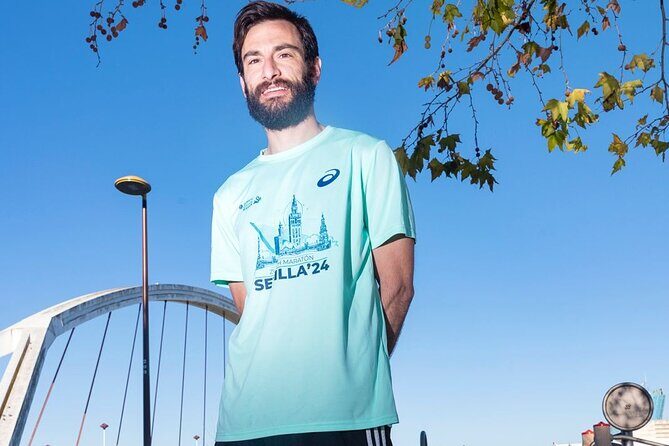
- Mike’s pace matching: he adapts to your level, from steady jogging to slower running.
- Early timing: morning hours help you avoid the thickest crowds and harsh sun.
- Outside views of top sights: Cathedral area, Alcázar, and UNESCO stops without queues for entry.
- A loop through classic Seville: from Alameda de Hércules and Plaza de España into Santa Cruz backstreets.
- Real running satisfaction: you’re not just walking—this is a true run format, not a sightseeing stroll.
- Good photo timing: you’ll hit major viewpoints early enough to work your angles calmly.
How a 2-hour Seville run keeps you moving (and thinking)
The big win here is simple: you cover real ground fast, but you still pause at major stops long enough to connect what you’re seeing with what it means. This matters in Seville, where the top sights are close enough to link—but far enough apart that you’d otherwise spend half your day waiting for buses or backtracking.
It’s priced at $53.61 per person for about 2 hours, which is good value when you consider two things: you’re getting an experienced English-speaking guide and you’re getting a structured route that avoids the guesswork. You also benefit from group discounts (if you’re traveling with others), and you use a mobile ticket on the day.
The practical trade-off is that it’s an outside-only route. You’ll stand outside landmarks like the Alcázar and the Seville Cathedral area, which is great for orientation, but you won’t get the interior experience that many first-timers come for.
You can also read our reviews of more tours and experiences in Seville.


From Alameda de Hércules to Plaza Nueva: warm start and water breaks
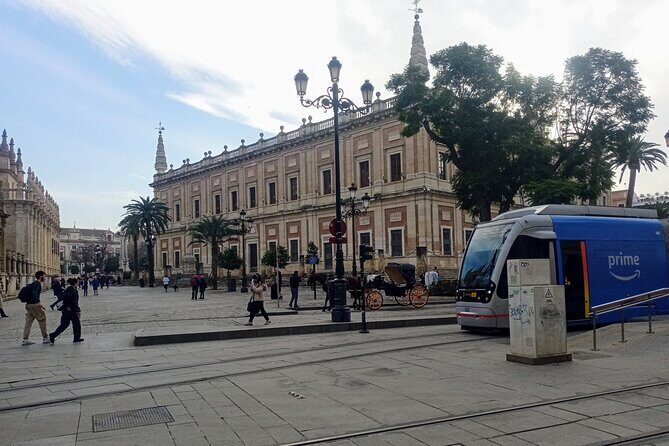
You kick off at Alameda de Hércules, one of Seville’s older public spaces. It’s a place locals actually use, with cafes, bars, and cultural activity around it, so it’s a good first taste of how Seville moves beyond the postcard sights. For runners, it’s also a handy starting point because you’re settling into a steady rhythm right away.
From there, you reach Plaza Nueva, a historically important marketplace area. The tour includes water fountains here, which is a small detail—but on a run, it can make the difference between feeling fine and getting behind your hydration.
One reason this opening stretch works: you’re learning the city’s “shape” before you hit the grand sites. You’ll understand where plazas sit relative to each other and how neighborhoods connect, so later stops feel easier to place in your mental map.
Cathedral complex from the outside: Orange Trees, Plaza del Cabildo, and the Archivo
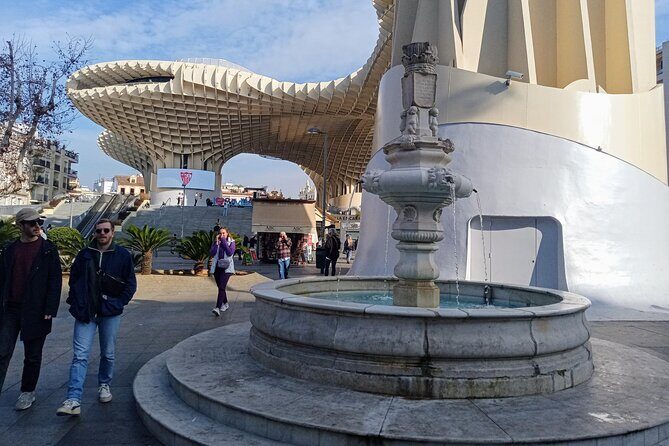
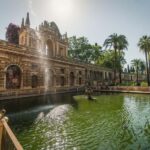
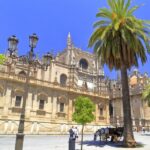
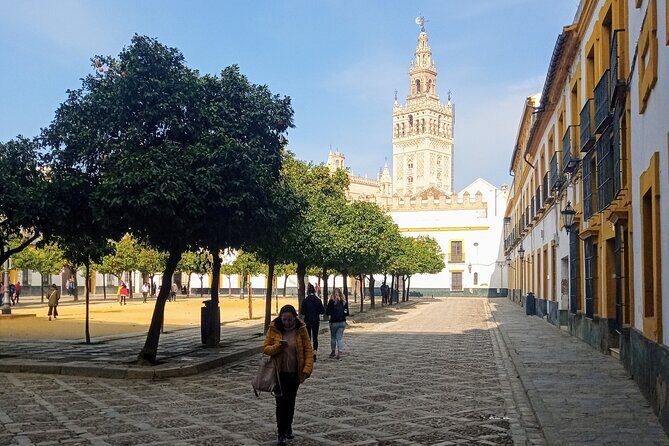
Next comes the Cathedral zone area, but with an important format clue: you’re viewing from the outside. First up is the Orange Tree Courtyard inside the Cathedral complex. Even without entry, the courtyard’s rows of fragrant orange trees are still a great visual anchor for what makes this whole area feel different.
Then you step into Plaza del Cabildo, a photographic square right by the Cathedral grounds. The tour keeps things brief here, but the payoff is perspective: you see how squares and passageways funnel people toward the Cathedral precinct.
After that, you reach the Archivo General de Indias, a UNESCO World Heritage site in a striking Renaissance building by the Cathedral. The value of the outside stop is context—this is where Spain’s documents tied to exploration and colonization of the Americas live. You’re not reading the archives, but you are connecting the landmark to the story that shaped Seville’s global role.
Bullring and Moorish towers: La Maestranza and Torre de Oro
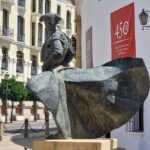
Seville’s cultural mix shows up fast around the bullring. You’ll pass the Plaza de Toros de la Real Maestranza de Caballeria de Sevilla, one of Spain’s oldest and most prestigious bullrings, with origins going back to 1761. There’s no admission included here, and you don’t enter, but the exterior presence still gives you a sense of the scale of this local tradition.
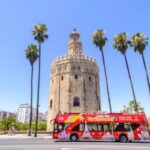
Then you move toward Torre del Oro, the Tower of Gold. This one traces back to the early 13th century and ties to the Almohad dynasty, which gives Seville another layer beyond the Christian monuments. From a running perspective, it’s also a quick “reset” stop: you regroup, check your footing, and keep an easy conversation pace with your guide.
A practical tip for this section: keep your eyes up. Even when you’re concentrating on rhythm, these are skyline moments that are worth quick glances and photos.
River to Parque de María Luisa and Plaza de España
A lot of runners love this part because it shifts from tight streets into space. Along the Guadalquivir River you’ll see Palacio de San Telmo, a standout example of Andalusian Baroque architecture. The river setting gives your legs a psychological break, even if you’re still moving at a steady pace.
Then you hit Parque de María Luisa and do a loop through it. It used to be private gardens connected to the palace, and it’s now one of Seville’s most famous parks. For many people, this stop is the moment where the city feels less like a maze and more like a stroll you can breathe in—even while you keep running.
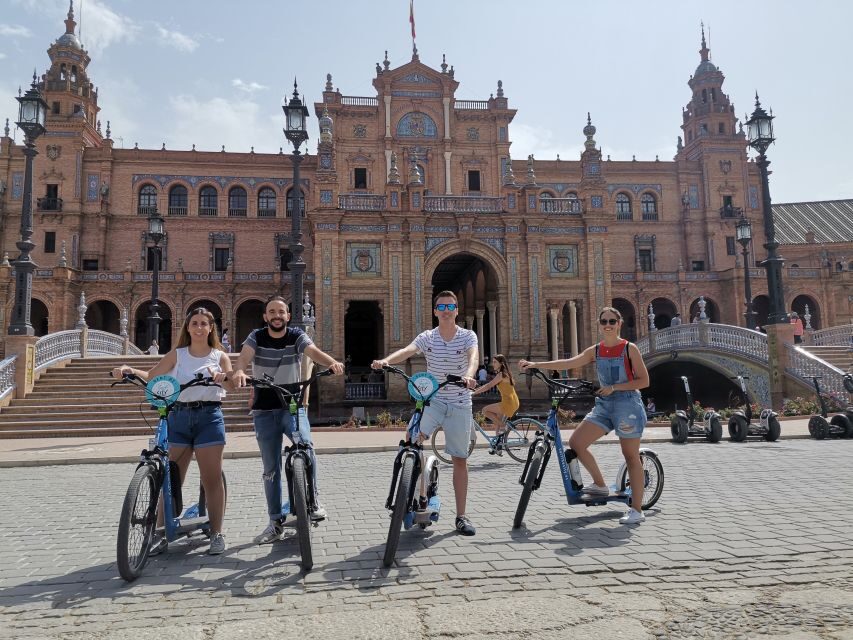
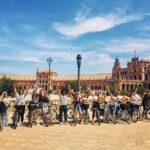
From there, you reach Plaza de España, next to the park. It’s Seville’s best-known plaza, and it’s a must-see. The outside-view format still works well here because the design is the show: the architecture, craftsmanship, and the grand layout are the story.

Real Fábrica de Tabacos, Jardines de Murillo, and Santa Cruz backstreets
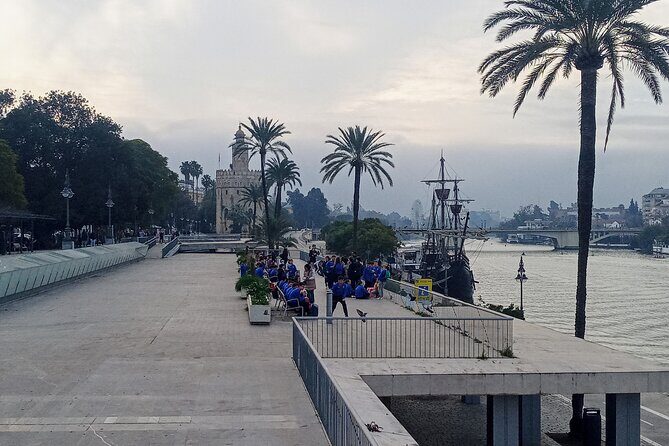
After the big plaza moment, the route threads you into slower-feeling pockets. You pass Real Fábrica de Tabacos, which is now home to the University of Seville. The old factory-to-university transformation is one of those Seville details that helps you understand how the city reuses its monumental past.
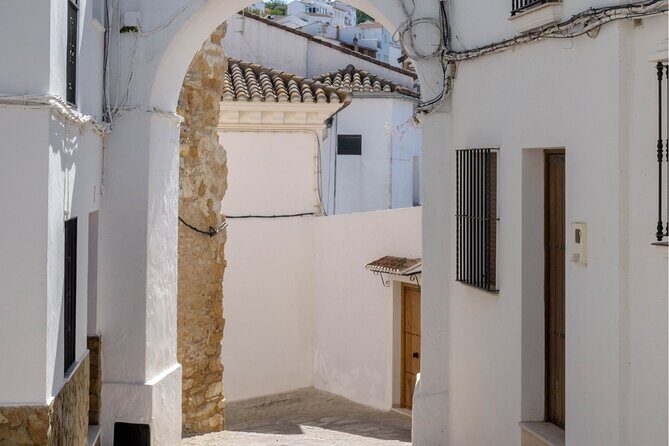
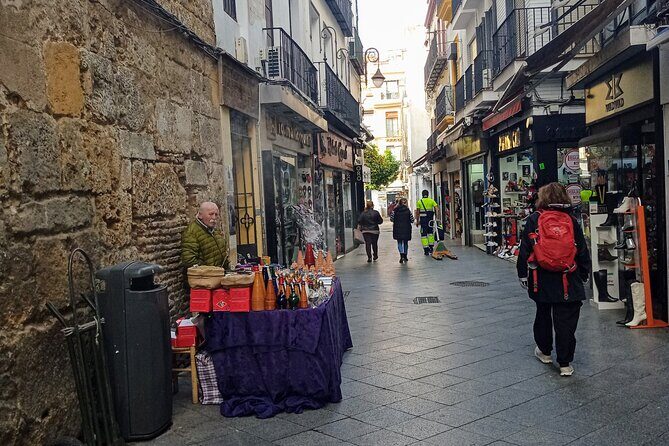
Next is Jardines de Murillo, a calm garden break that gives you shade and a breather from open plazas. Then the tour slides into Barrio Santa Cruz, the old Jewish quarter, where narrow cobblestone streets, small hidden plazas, and whitewashed houses create that classic Seville maze feeling.
You also pass Calle Marmoles, where you can see the site tied to old Roman columns. Even without digging into a museum, it’s a strong reminder that Seville’s layers stack over each other. Then the route opens to Plaza del Salvador, a social focal point for gatherings and events.
If you like the idea of learning Seville’s layout by muscle memory, this stretch is where it starts to click.
Alcázar and Catedral street views plus Setas de Sevilla and Las Dueñas
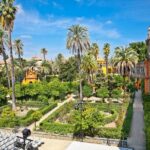
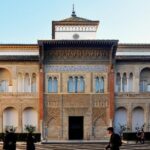
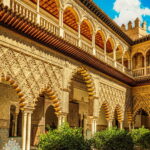
This is the “top sights, no tickets” segment, so manage expectations before you arrive. You pass Real Alcázar de Sevilla, a UNESCO World Heritage palace complex blending Moorish, Gothic, Renaissance, and Baroque styles. The stop includes the area by the main gate, where there is a water fountain in front—handy mid-run. But since the tour does not enter buildings, you get the exterior drama and the layout, not the interior rooms.
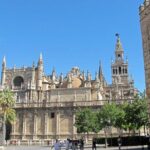
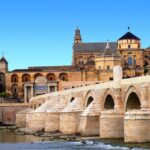
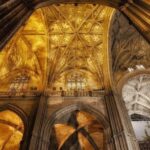
Then you’re at the Catedral de Sevilla, also UNESCO. It’s described as the third largest cathedral in the world and the world’s largest Gothic cathedral. Again, you view from outside, so you’re absorbing scale and location, which is still a win if you plan to return later for entry.
After that comes a modern contrast: Setas de Sevilla (Metropol Parasol), known as Las Setas. It’s a futuristic skyline feature that changes how the old city feels when you see it from street level. You also pass Palacio de las Dueñas, associated with the Duchess of Alba—described as a hidden gem—though the tour stays outside.
This mix of old and new is part of the value: you learn Seville is not one style.
Torre Perdigones and the Arco de la Macarena: finishing with panorama
The route’s later stretch adds two “ending energy” moments. Torre Perdigones is described as a historic tower with panoramic views over Seville and the Guadalquivir River. Since the tour stays outside, you’ll get the sense of why locals and visitors treat heights as the best payoff for walking all day.
You also pass the Arco de la Macarena, a historic arch tied to Seville’s defensive walls and religious devotion. It’s a compact stop, but it works because it pulls the story toward how the city protected itself while still building spaces for ceremony.
Finally, the run ends by returning to the original meeting point. That loop closure is underrated. It means you can plan breakfast, a longer museum visit, or a late lunch right away without another transfer plan.
Running with Mike: pacing, conversation, and morning energy
The strongest praise in the reviews is consistent: the guide, Mike, stays punctual, matches your pace, and reads the group without overtalking. That matters because a good running tour isn’t a lecture—it’s an active way to see the city while staying comfortable.
You should expect frequent stops for short photo moments and quick explanations, but not long delays. Reviews also mention that the route is chosen to avoid crowded areas, which pairs perfectly with the morning timing. That’s how you get a “secret” feel without actually hiding anywhere—you’re simply arriving before the crush and keeping the run moving.
If you’re training for an event, you might like that this can be adapted for steady effort. If you’re new to running in a new city, you’ll still have support because the pace can slow down. The goal is that you leave feeling like you ran Seville, not like you survived it.
Price and timing: is $53.61 worth it?
For $53.61 per person (about 2 hours), you’re paying for three things: guide-led route planning, English explanations tied to major sights, and the convenience of not needing to manage entrances for multiple landmarks during the run. The outside-only format can actually be a value play. You get orientation first, then you decide later which interiors are worth tickets and time.
Timing affects value even more. The activity runs on Monday–Tuesday with morning hours from 7:00 AM to 9:00 AM and an evening slot from 6:30 PM to 7:30 PM. The early runs help with both crowd control and heat management, which is huge in Seville.
Also, tours are often booked ahead (on average 35 days in advance). If you’re set on a specific day and time window, booking earlier usually keeps your options open.
Should you book this Sevilla running tour?
Book it if you want Seville in one energetic morning: grand landmarks, neighborhood texture, and a route that helps you get your bearings fast without wrestling with entrances mid-run. It’s also a smart fit if you like running with structure—stops for sights, pacing support, and a guide who can share practical city tips while you keep moving.
Skip it or adjust your expectations if your top priority is interior access. Since it’s outside-only, you’ll see the Alcázar and the Cathedral area, but you won’t experience the inside spaces on this particular tour. If interior tickets are a must, treat this as the warm-up visit, then plan separate entry tickets for the places that matter most to you.
If you want an active, local-feeling introduction to Seville that doesn’t waste the day, I think this one earns a spot on your list.
FAQ
How long is the running tour?
The tour is listed as about 2 hours.
How much does it cost?
It’s $53.61 per person.
Is the tour outside-only?
Yes. The tour stays outside and does not enter any buildings.
What language is the tour offered in?
The tour is offered in English.
What days and times does it run?
Opening hours shown are Monday–Tuesday, 7:00 AM–9:00 AM and 6:30 PM–7:30 PM.
Is this a private tour?
Yes. Only your group participates.
What fitness level do I need?
You should have a moderate physical fitness level.
Are service animals allowed?
Yes, service animals are allowed.
Does it offer free cancellation?
Yes. Free cancellation is available up to 24 hours before the experience start time for a full refund.
Does the tour end at the meeting point?
Yes, it ends back at the meeting point.