REVIEW · SEVILLE
Italica 2-Hour Private Guided Tour
Book on Viator →Operated by ANDALUCIA EXPERIENCIAS · Bookable on Viator
Roman ruins can feel surprisingly close to the present.
This Italica private guided tour is built for quick, smart sightseeing: you meet in central Seville, ride out briefly, then spend about 90 minutes to 2 hours walking through some of Roman Spain’s best-preserved remains. You’ll also leave with the stories stitched together—why Italica mattered, who was born here, and what daily life looked like when the empire was in full stride.
I especially like two things. First, the guides bring the site to life with real structure, not random facts—people doing this tour in English get clear explanations and steady pacing. Second, the stops that matter most are concentrated in a short time, from the amphitheater and Trajan monument to the mosaic-rich House of the Planetarium.
One consideration: Italica is not a sprawling mega-ruin like some other famous sites. If you’re expecting Pompeii-level coverage, you may feel the route is a bit compact—still, the guide tour format keeps it satisfying.
In This Review
- Key highlights before you go
- Getting to Italica from central Seville (and not wasting time)
- What a private guide changes at Italica
- Anfiteatro de Italica: from Ilipa to the arena seats
- The Planetarium House mosaics: the highlight most people remember
- Thermal baths, gym, bread oven, and Roman houses
- Trajan and Hadrian: why this Roman outpost matters
- Walking time, comfort, and weather realities
- Price and value: is $106.82 worth it?
- Who should book this Italica private tour (and who might not)
- Should you book? My practical take
- FAQ
- How long is the Italica 2-hour private guided tour?
- Where does the tour meet and where does it end?
- Is the tour private, and is it offered in English?
- What’s included in the price?
- What should I bring since food and drinks aren’t included?
- What happens if the weather is bad?
Key highlights before you go
- Private time, not a cattle line: Only your group participates, so you can ask questions and move at a comfortable pace
- Mosaics you can actually appreciate: The House of the Planetarium is a major visual payoff in a short visit
- Empire connections built in: You’ll learn why Italica is linked to Trajan and Hadrian
- Baths + daily-life details: You see more than monuments, including the thermal baths, gym, and bread oven
- Nicer than you expect outside Seville: The site is about a short ride away, and it’s easier than driving yourself
Getting to Italica from central Seville (and not wasting time)
This tour starts at 10:00 am and ends back where you start. That matters because it keeps the day simple: you’re not chasing multiple departure points or timing your return around public transport guesses.
You meet at Italica (the address shown is Italica, 41970, Seville). The tour does not include hotel pickup and drop-off, and transportation to/from the site isn’t part of the standard package (though the provider notes it may be available on request). Practically, plan on getting yourself there.
If you’re figuring out public transport, there’s a helpful option: take the M17OA bus from the city bus station. It runs about every half hour, and Italica is the last stop as the bus turns around—pretty clear once you’re on board.
You’ll also get a mobile ticket, which is convenient if you don’t want to juggle paper documents on your phone.
You can also read our reviews of more guided tours in Seville


What a private guide changes at Italica
Italica is a ruin, but ruins are confusing without context. The difference here is that a professional guide walks you through the site in a way that makes the layout stick.
This is a private tour in English, so you’re not competing with a big group for the guide’s attention. That shows up in the feedback for names like David, Carmen, Alex, Javier, and Miguel—multiple guides are described as punctual, friendly, and organized, with explanations that make the Roman world feel logical rather than random.
One smart detail: guides don’t just point at stones. They connect spaces to what people did there—where visitors bathed, where games happened, and how key monuments fit into the political story of Rome. If you’ve ever stood in a ruin and thought, I don’t know where to look first, this format fixes that.
Anfiteatro de Italica: from Ilipa to the arena seats
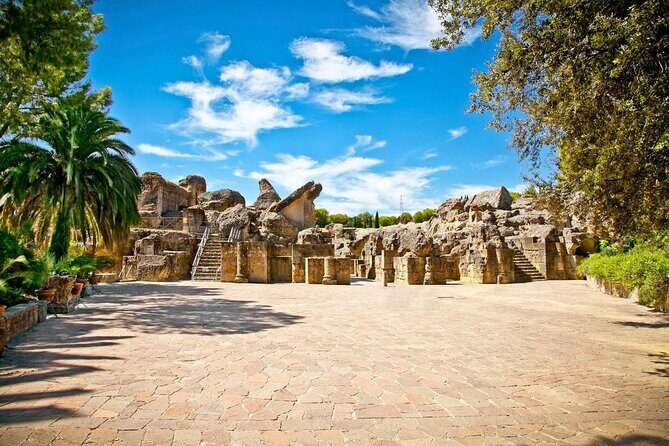
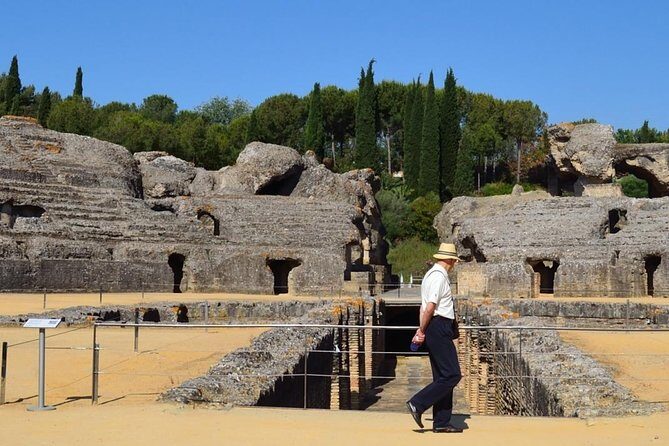
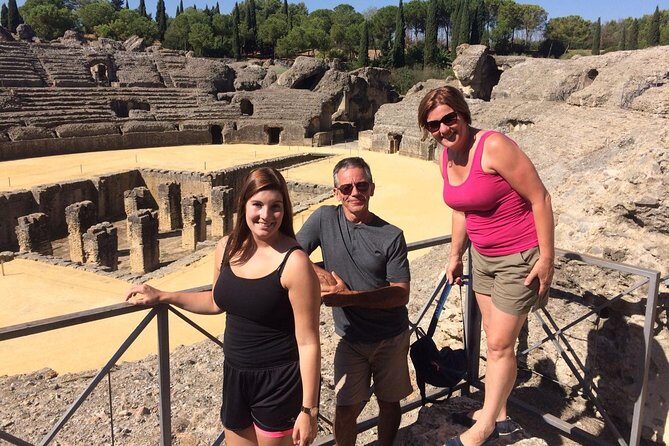
Your core starting point is the Anfiteatro de Italica area. Even if the structure looks quieter than a modern stadium, it’s the kind of place where the past becomes physical once you understand the setting.
You’ll hear the origin story: Italica takes shape around 206 A.D., connected to the general Publio Cornelio Escipión (Scipio), who decided to create a place for wounded soldiers after the battle of Ilipa against the Lusitanians. That gives you a reason to care about the site beyond “cool ruins.” Rome’s military and political decisions show up in the ground you’re walking on.
From there, your guide helps you explore the amphitheater and surrounding landmarks. In particular, you’ll look for the Trajan monument, which is a key thread tying Italica to the emperors that came later.
Also keep an eye on the surviving sections of the building. One helpful perspective from firsthand impressions is that the amphitheater is worth seeing, but it won’t satisfy if you’re chasing huge, fully intact structures. Still, with a good guide, the place feels meaningful rather than incomplete.
The Planetarium House mosaics: the highlight most people remember
After the amphitheater area, you’ll move into a part of Italica that’s built for visual impact: the House of the Planetarium. This is where you’ll see beautifully preserved mosaics, and it’s one of the reasons people love this tour format.
Here’s why this stop is valuable: mosaics work better with interpretation. Without explanation, you might admire patterns for a minute and then move on. With a guide, you start noticing how the scenes and design choices fit Roman taste—especially how wealth and status show up in everyday home spaces.
This is also where timing matters. The tour is short enough that you can linger just a bit, but structured enough that you won’t get stuck missing the rest of the site. If you’re a photo person, this is one of the best places to slow down.
One more practical note: because this is a guided walk, the guide helps you see the “best angles” and avoids time-wasting wandering. Several guides are singled out for being especially helpful with photos—David, for instance, is mentioned as a photographer who helped get great shots.
Thermal baths, gym, bread oven, and Roman houses
Italica isn’t only about big-name monuments. A major part of your route focuses on how city life worked under Rome—especially around the bath complex.
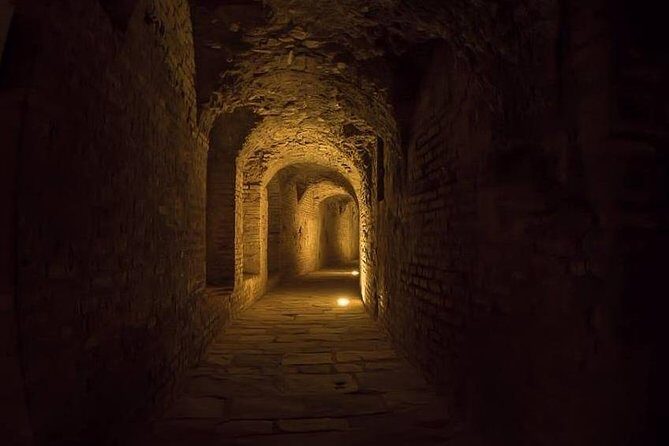
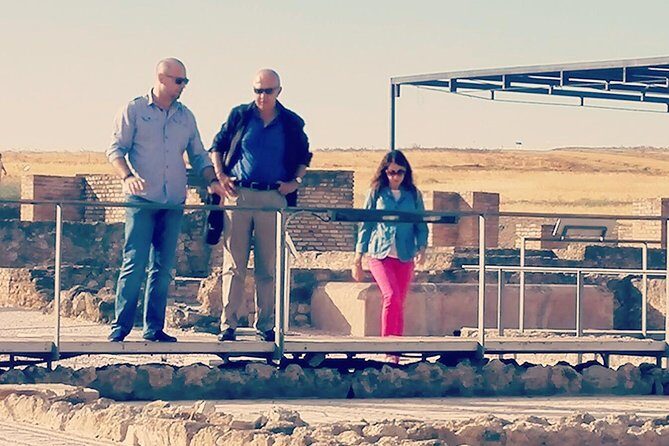
You’ll explore the ruins of the grand baths, including the thermal baths area, where Roman city dwellers came to bathe in thermal waters. This is a big deal in terms of understanding the Roman mindset. Baths weren’t just hygiene. They were social space, routine, and part of the city’s identity.
From the baths, your route continues into other day-to-day structures, including:
- the gym
- a former bread oven
- two restored Roman houses
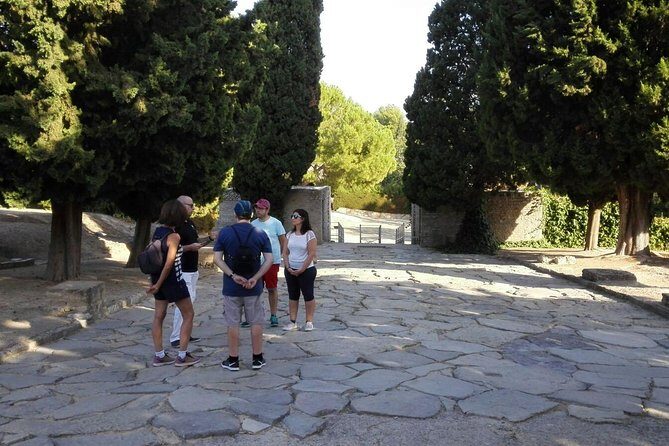
- remnants of city streets
This mix is what makes the tour feel complete in a limited time window. You’re not only watching history happen in stadium-like spaces—you’re seeing the architecture of ordinary routines. And that’s where Italica starts to feel less like “old stones” and more like a lived-in place.
A fair caution: if you’ve visited sites like Pompeii or Ostia before, you might want more scale or more intact rooms. The counterbalance is that Italica’s mosaics and bath-related pieces give you enough visual and thematic payoff that the time still feels worthwhile.
You can also read our reviews of more private tours in Seville






Trajan and Hadrian: why this Roman outpost matters
One reason this tour earns a strong reputation is that it doesn’t treat Italica like a generic Roman ruin. It connects the site to the big-name emperors tied to it: Trajan and Hadrian.
Your guide will explain how Italica functioned as a Roman center in the region and how the empire’s control shaped local life. That’s not just trivia. It helps you understand why an amphitheater, a monumental Trajan link, and well-developed bath and residential areas would exist here.
You’ll also learn about games held in the amphitheater, which adds context to what you’re seeing. Imagine the roar, not just the empty seats. When your guide ties games to empire culture, the structure turns from a shell into a stage.
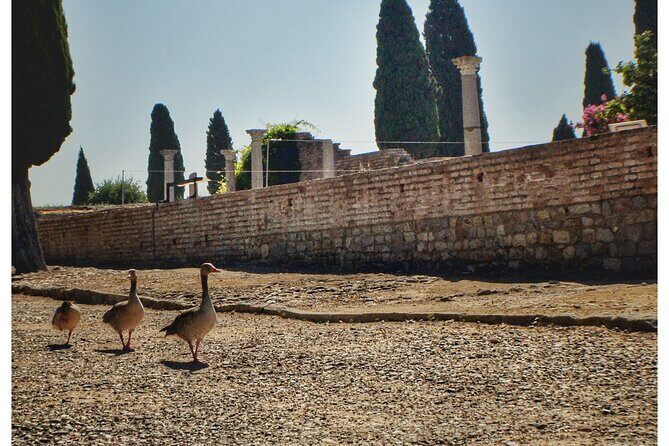
There’s also mention of other practical features you may spot along the route—like the bird house—which adds a small, human scale to the visit. These aren’t the headline items, but they help you feel how Romans organized space for daily needs.
Walking time, comfort, and weather realities
This is a 1.5 to 2 hour private tour. That timing is a sweet spot if you want depth without burning half your day.
The tour is also weather-dependent. The provider notes it requires good weather, and if the tour is canceled for poor conditions you’ll be offered another date or a refund. Since Seville weather can shift, plan for the possibility of heat and sun, especially around midday later in the day.
Bring basics:
- Comfortable walking shoes for uneven stone and outdoor routes
- Water (food and drinks aren’t included)
- Sun protection if it’s bright
Because the tour is guided, you’ll keep moving efficiently. Still, you’ll spend time standing and looking—this isn’t a drive-by.
Price and value: is $106.82 worth it?
At $106.82 per person, this is not a “budget” activity. But value here comes from three clear points: private guiding, tickets included, and a route that hits the most important parts of Italica in a tight window.
Tickets are included, so you’re not paying a second time for entry. You’re also paying for a guide who can translate ruins into a coherent story: what you’re seeing, why it matters, and how the spaces relate to daily Roman life. For many people, that’s the difference between a photo stop and a real “aha” experience.
There are also signals that this tour is in demand—on average, it gets booked about 22 days in advance—which often means it’s a dependable product people return to for a good experience.
One thing to consider: because there’s no included transportation from your hotel, your total day cost may rise if you need taxis or extra time figuring out public transit. If you can reach the meeting point without stress, the price-to-effort ratio usually feels much better.
Who should book this Italica private tour (and who might not)
This tour fits best if you:
- want Roman ruins explained clearly in English
- like mosaics and bath architecture, not just big monuments
- prefer private pacing over crowds
- want an efficient visit that ends back near central Seville
It can also work well for families. The tour notes that children must be accompanied by an adult, and most travelers can participate. Service animals are allowed.
The main “maybe not” situation is if you’re chasing the feeling of visiting the biggest Roman ruin complexes with tons of preserved rooms and long wandering time. Italica can feel compact in comparison, and the guided route is intentionally focused.
Should you book? My practical take
If you want a smart, story-driven way to see Italica in about 90 minutes to 2 hours, I’d book it. You get the right anchors—amphitheater, Trajan monument, Planetarium mosaics, and the bath and daily-life structures—without turning it into a half-day problem.
Also, the guide quality seems to be a consistent theme, with multiple named guides praised for being punctual and clear. That matters because Italica is easier to enjoy when you’re not guessing what you’re looking at.
Just be honest about your expectations: this is a focused route, not a full-day ruin marathon. If that matches what you want, this is a strong choice.
FAQ
How long is the Italica 2-hour private guided tour?
The tour lasts about 1 hour 30 minutes to 2 hours.
Where does the tour meet and where does it end?
You meet at Italica (V)41970, Seville, Spain. The tour ends back at the meeting point.
Is the tour private, and is it offered in English?
Yes. This is a private tour where only your group participates, and it’s offered in English.
What’s included in the price?
The price includes a professional guide, the private tour, and tickets.
What should I bring since food and drinks aren’t included?
The tour doesn’t include food or drinks, so bring what you need for comfort (like water). Also plan for walking outdoors.
What happens if the weather is bad?
This experience requires good weather. If it’s canceled due to poor weather, you’ll be offered a different date or a full refund.