REVIEW · SEVILLE
Guided visit to the Archivo de Indias
Book on Viator →Operated by GuiArte · Bookable on Viator
Seville has an archive that explains the Americas. This guided visit to the Archivo General de Indias is built around one big idea: the building is not just a storage room for history, it grew from power struggles in 16th-century Seville. You’ll pair the architecture with the stories behind it, including how the space ended up becoming a UNESCO World Heritage Site in 1987.
I love the way the tour gives you context fast: you start outside at the façade and learn how the Archivo relates to the Cathedral and the Alcázar. I also like the human touch—my favorite part is listening to the heritage expert Rubén, who keeps the group engaged with humor and clear explanations.
One consideration: it can be a fairly large group (up to 25), so if you prefer lots of personal back-and-forth, you may want to keep your questions short and save your most important one for when Rubén has a pause.
In This Review
- Key highlights before you go
- Why this Archivo de Indias tour feels different
- Price and timing: is $70 worth 1 hour 45 minutes?
- Finding the building: start at the façade, not after
- The origin story that changes how you see the building
- Before it was the archive: how the space got used
- Touring inside: two floors, guided meaning, and priceless documents
- What to listen for in the guide’s storytelling (Rubén’s approach)
- Group size and the feel of the tour
- When this tour is a great fit
- Logistics you can plan around
- Should you book the Archivo de Indias guided tour?
- FAQ
- What is the duration of the guided visit to the Archivo de Indias?
- Where does the tour start?
- Is there a guided expert during the visit?
- What does the tour include?
- Is a mobile ticket used?
- How many travelers are in the group?
- Is the tour suitable for children?
- What parts of the building will you visit?
- Is the experience dependent on weather?
- What if the tour can’t run due to weather or minimum demand?
Key highlights before you go
- UNESCO World Heritage context from day one (declared in 1987)
- A guided look that starts outside at the façade, not after you’re already inside
- An origin story tied to Cathedral-versus-merchants conflict in the 1500s
- A walk through how the building was used before it became the General Archive
- Time on both floors to understand the space, not just one room
- A guide known for staying lively and explaining the hard parts in plain language
Why this Archivo de Indias tour feels different
The Archivo de Indias is one of those places where you can’t really appreciate it by speed-walking. The building sits in a tight historical web—Seville’s religious power on one side, royal authority and court life on another, and the city’s merchant energy pressing for influence. This tour leans into that reality, so you’re not just looking at walls. You’re learning how the walls got their job.
What makes the experience genuinely interesting is the framing. You’ll hear how the site was not even conceived as an archive at first. Its birth came from a conflict involving the Cathedral of Seville and the merchants who shaped the city in the 16th century. That’s the kind of detail that turns a visit from sightseeing into understanding.
And yes, the building is UNESCO World Heritage territory (since 1987). But the tour doesn’t treat that as a stamp. It treats it as a reason to pay attention.
You can also read our reviews of more guided tours in Seville



Price and timing: is $70 worth 1 hour 45 minutes?

At around $70 for about 1 hour 45 minutes, you’re paying for a guided heritage expert plus admission access to the archive. For Seville, that’s a fair price when the tour does two things well: it explains what you’re seeing, and it gives you time across the exterior and interior.
The time split matters. You’ll begin with a focused introduction outside (about 25 minutes) where you get the building’s “neighborhood story.” Then you’ll move through the two floors of the Archivo, where the guide connects space, use, and documents.
If you like your tours compact—no long meandering—this one fits. If you’re hoping for a slow museum drift with optional wandering, you might find the pace a bit structured, since the guide is there to keep the group moving and thinking.
Finding the building: start at the façade, not after
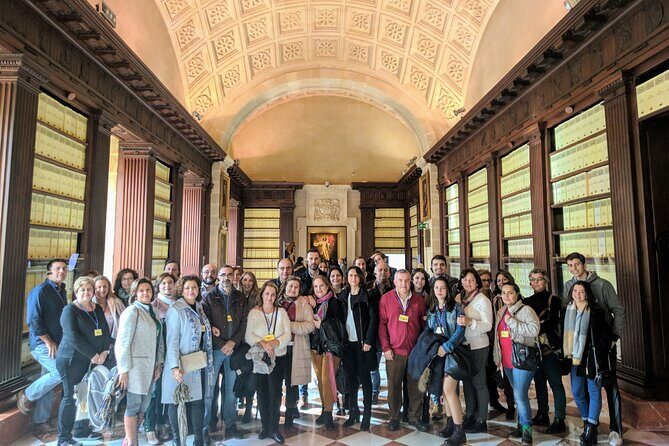
The tour meets at the Archivo de Indias, Av. de la Constitución, s/n, Casco Antiguo, 41004 Sevilla. The visit starts at the main façade, and before going in, you’ll do a brief walk around the exterior.
This is a smart setup. It helps you get your bearings fast. You’ll see how the Archivo relates to the surrounding monuments—especially the Cathedral and the Alcázar of Seville. Even if you’ve visited those landmarks before, seeing the Archivo as part of the same historical stage gives it a new meaning.
Practical tip: plan to arrive a few minutes early. The tour is timed, and getting delayed can make the exterior orientation feel rushed.
The origin story that changes how you see the building
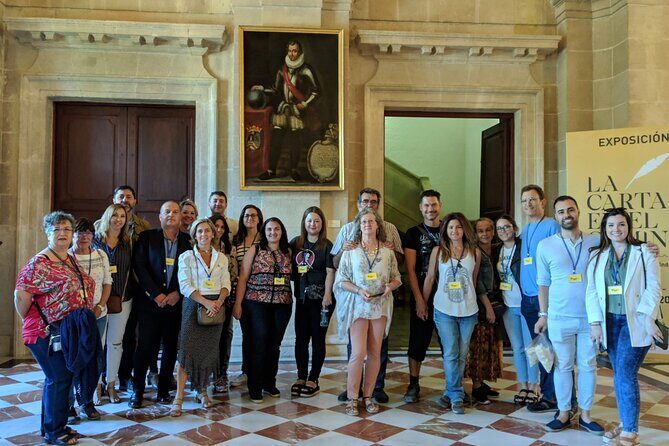
One of the most memorable parts of the visit is the conflict-driven backstory. You’ll learn that the building’s existence wasn’t born from a neat administrative plan called archive. Instead, it came out of a disagreement between the Cathedral of Seville and the merchants who filled the city in the 16th century.
That sounds like dry power politics, but the guide’s job is to make it concrete. You’ll connect the story to the architecture and the way the space was designed to serve needs before it served the function we now associate with it.
It also helps you understand something important for your brain: places like this are rarely built only for knowledge. They’re built for control, authority, storage, and legitimacy. Once you hear that, the visit clicks into place.
A fun detail you may hear about during the explanation is the idea of a chest with 16 padlocks—the kind of story that turns a serious institution into something you can picture.
Before it was the archive: how the space got used
The tour doesn’t freeze the building in time. You’ll hear about the uses given to the space before it was declared the General Archive of the Indies.
That matters because it prevents the common mistake: treating the building as if it always existed to preserve documents for later generations. Instead, you’ll learn it evolved. The guide helps you understand that long before it held what you’d call “invaluable documents,” it had other roles in the life of the city.
As you walk through the interior floors, keep an eye on how the guide frames the space: where the story suggests different functions, and where the building’s form hints at the kind of power it was meant to support.






Touring inside: two floors, guided meaning, and priceless documents
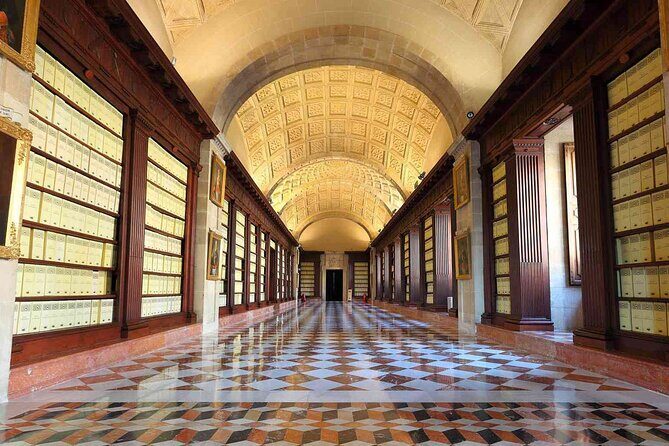
Inside, you’ll visit both floors. The goal isn’t just to show you rooms. The guide explains the most important aspects of this World Heritage space, using the building’s past and purpose to teach you what the documents represent.
You’ll also learn about the types of documents that are guarded in this place—described as having incalculable value. Even without seeing everything up close in the way a reading room might, the guide helps you understand why these records matter for understanding the relationship between Seville and the Americas.
What I like about this approach: it turns “old papers” into a story you can place geographically and historically. You start imagining the flow of information, people, and authority that would require institutions like this.
What to listen for in the guide’s storytelling (Rubén’s approach)
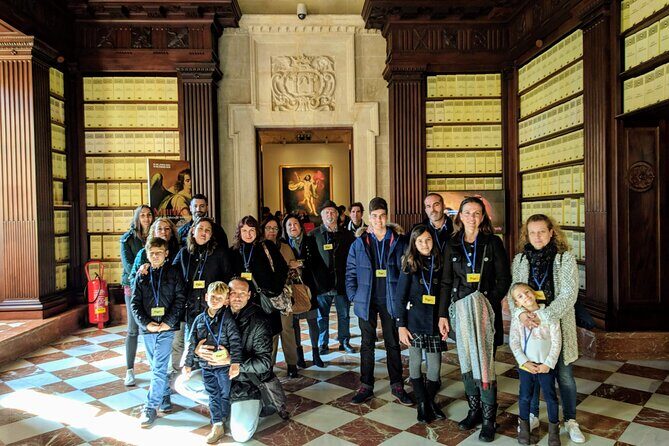
Rubén’s explanations are repeatedly praised for being interesting, well-documented, and easy to follow. The best part is not just the facts—it’s the communication style. You’ll hear history tied to buildings and everyday ideas (like security, storage, and control), which makes the information stick.
If you’re the kind of person who tends to tune out on tours, this one is built to pull you back in. The guide connects past and present with a clear thread and adds humor where it helps the lesson land.
My advice: don’t just watch where you’re walking. Listen for the “why.” Ask yourself questions as you go, like:
- Why would a merchant community care about this kind of space?
- Why would an institution like the Cathedral resist or negotiate?
- How does turning a building into an archive change what people expect from it?
Group size and the feel of the tour
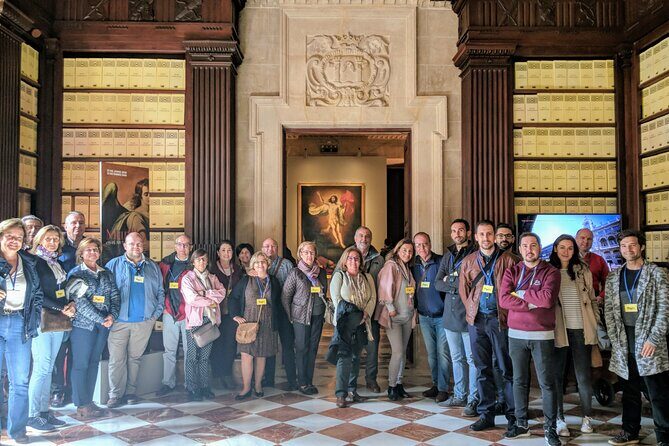
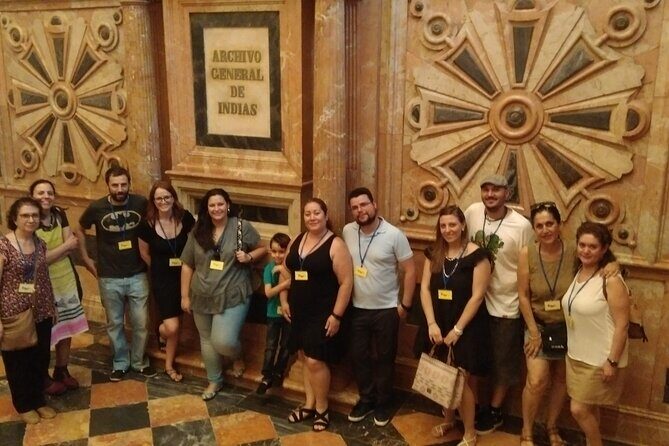
The tour has a maximum of 25 travelers. That’s large enough to feel like a group experience, but small enough that you can still hear the guide without shouting.
Still, the group dynamic matters. If you’re traveling solo and love one-on-one conversation, you might find you want more time for questions. That said, guides like Rubén tend to run smoothly because they anticipate what people will ask, especially when it comes to the building’s origin and how archives operated before today’s expectations.
When this tour is a great fit
This is a strong match if you want more than a photo stop. It’s also a great choice if you like heritage explanations that connect to real institutions and real conflicts.
It’s not recommended for children under 12. That’s likely because the tour focuses on historical context and guided interpretation rather than hands-on activities. If you’re traveling with older teens or adults who enjoy history or architecture, it should land well.
Also, if you’re short on time in Seville, this tour gives you high value in under two hours by combining exterior orientation with interior meaning.
Logistics you can plan around
Because this is a guided visit tied to a specific schedule, it helps to show up ready to walk. You’ll start outside, do a short around-the-facade orientation, and then move through the interior for the bulk of the time.
Good weather is required, so if Sevilla is rainy on your dates, have flexibility. The tour is designed to run outdoors for the first part, so weather matters.
The experience uses a mobile ticket, so have your phone ready for entry. Service animals are allowed, and the site is near public transportation, which is helpful if you’re mixing this with other sights.
Should you book the Archivo de Indias guided tour?
I think it’s worth booking if you care about understanding how Seville’s power worked and how that connects to the Americas. This tour doesn’t treat the Archivo as a background prop. It explains why the building existed, how it changed, and why the documents inside matter.
Book it if:
- You enjoy guided history that connects politics, religion, and commerce.
- You want a structured visit that still feels engaging thanks to Rubén’s delivery.
- You’d rather learn the building’s story than just see it.
Skip it if:
- You hate group tours and want lots of silence and wandering time.
- You’re expecting a casual museum browse with no historical framing.
- You’re traveling with kids under 12 who may struggle with the tone and pacing.
If you land on the right side of those choices, you’ll likely come away with something better than a set of photos: a clear mental map of how a 16th-century conflict helped shape an institution that still holds documents with world-scale importance.
FAQ
What is the duration of the guided visit to the Archivo de Indias?
It lasts about 1 hour 45 minutes.
Where does the tour start?
It starts at the Archivo de Indias, Av. de la Constitución, s/n, Casco Antiguo, 41004 Sevilla, Spain.
Is there a guided expert during the visit?
Yes. The tour is guided by a heritage expert.
What does the tour include?
It includes admission to the attraction and the Archivo de Indias guided tour.
Is a mobile ticket used?
Yes. The tour uses a mobile ticket.
How many travelers are in the group?
The tour has a maximum of 25 travelers.
Is the tour suitable for children?
It is not recommended for children under 12.
What parts of the building will you visit?
You’ll begin at the main façade and then visit two floors of the Archivo de Indias.
Is the experience dependent on weather?
Yes. Good weather is required.
What if the tour can’t run due to weather or minimum demand?
If it’s canceled due to poor weather, you’ll be offered a different date or a full refund. If it’s canceled because the minimum number of travelers isn’t met, you’ll be offered a different experience/date or a full refund.